This week we continued our unit on the American Revolution. We are focused on a compelling question – Was the American revolution avoidable? The lessons this week addressed the supporting questions of – How did British policies worsen tensions? and How did colonial responses and protests worsen tensions?
- Monday – Professional Development Day
- Tuesday – British Taxes and Policies and Quizizz
- Wednesday – British Taxes and Policies Cybersandwich with Quizizz
- Thursday – Colonial Protests graffiti wall, Iron Chef, Story time, Quizizz
- Friday – Colonial Protests, graffiti wall, Empathy Maps
Tuesday
Tuesday’s questions was – How did British policies worsen tensions? Up to this point, the students studied the French and Indian War last week and learned how the relationship changed between Britain and the colonists. With this lesson we moved into the taxes, laws, and punishments the British Parliament passed onto the 13 colonies.
For this lesson I wanted something to review the French and Indian War after a 3 day weekend. I also wanted an engaging lesson. I went to Kevin Roughton’s site and found this great lesson that used the causes of the Revolution as analogies to a teenager struggling with, arguably, overbearing parents.
This lesson was phenomenal as the students were laughing as I read the scenarios between the parents and the child. After I read the scenario, I had the students write down and reflect on how they would feel as the overbearing parents gradually increased control over their lives. Finally, we read the historical event (Navigation Acts, French and Indian War, Proclamation, Stamp Act, Townshend Acts, Tea Act, Intolerable Acts) and students related the scenario to the historical events.
After we finished this lesson, I had students take the Quizizz. Based on the Quizizz results, I felt like students didn’t quite get everything out of the lesson that I was hoping for…..Whatever students are focused on is what they are learning. In this lesson, they were focused on the weird scenarios and crazy parents rather than the historical event. As a result of this, I decided to bust out a Cyber Sandwich for Wednesday.
Wednesday
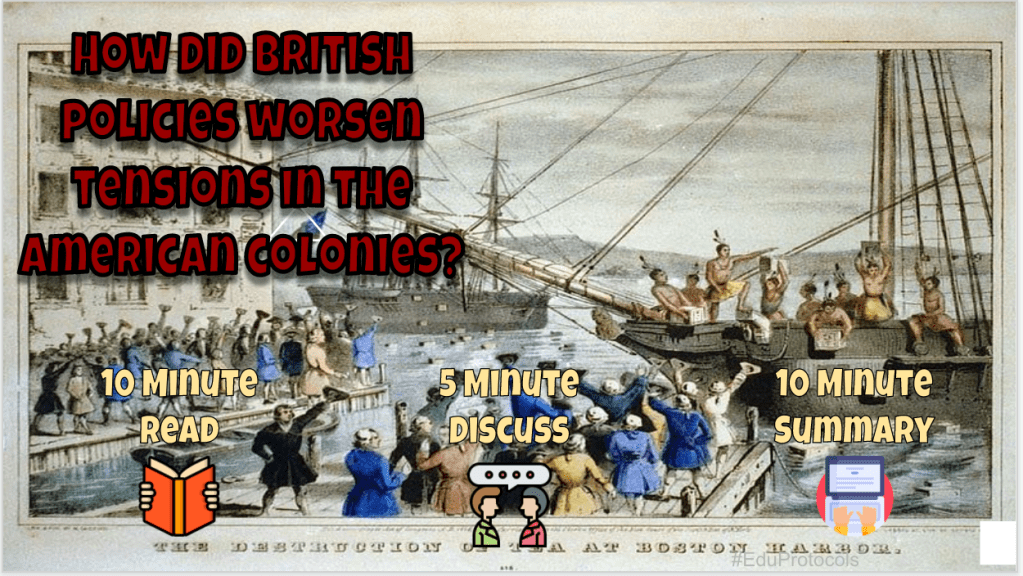
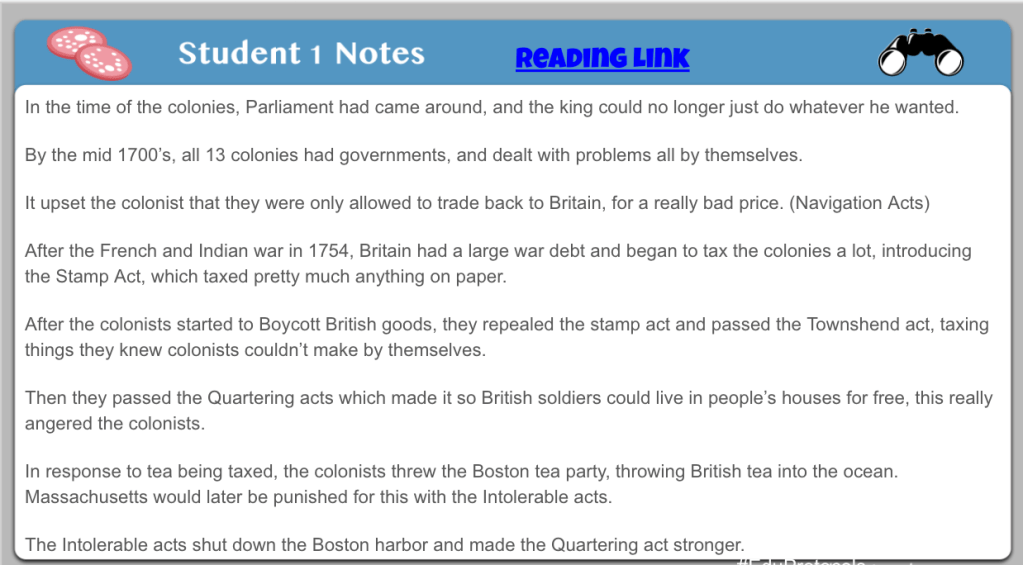
Again, whatever students are focused on and doing is what they are learning. I wanted students to gain an understanding of the British taxes and laws that made colonists mad, so I created a Cyber Sandwich (click here for a copy). I used the same question – How did British policies worsen tensions? and we ran a standard 10 minute read and notes, 5 minute discuss, and 10 minute summary.
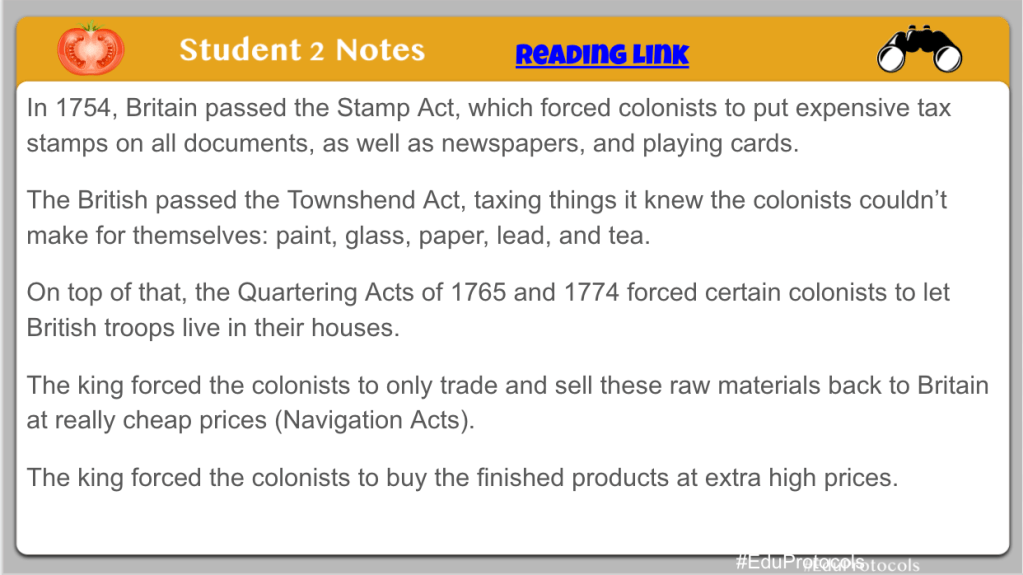
Students read the one page article for 10 minutes and I wanted them to have 6-8 important facts. When the 10 minute timer went off, I shared my notes with students and explained my thought process with my notes. My goal was to take notes that helped me answer the main question.
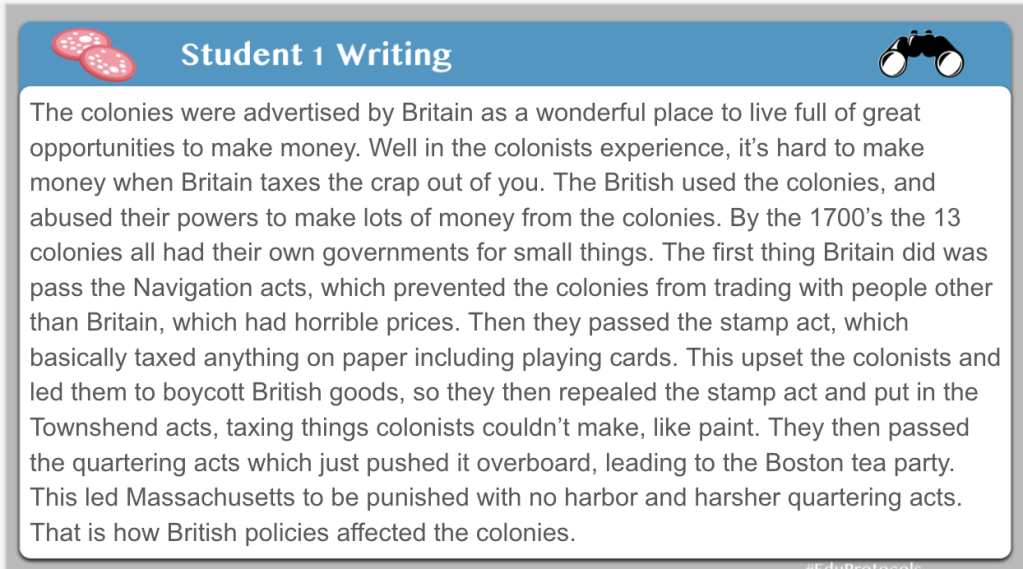
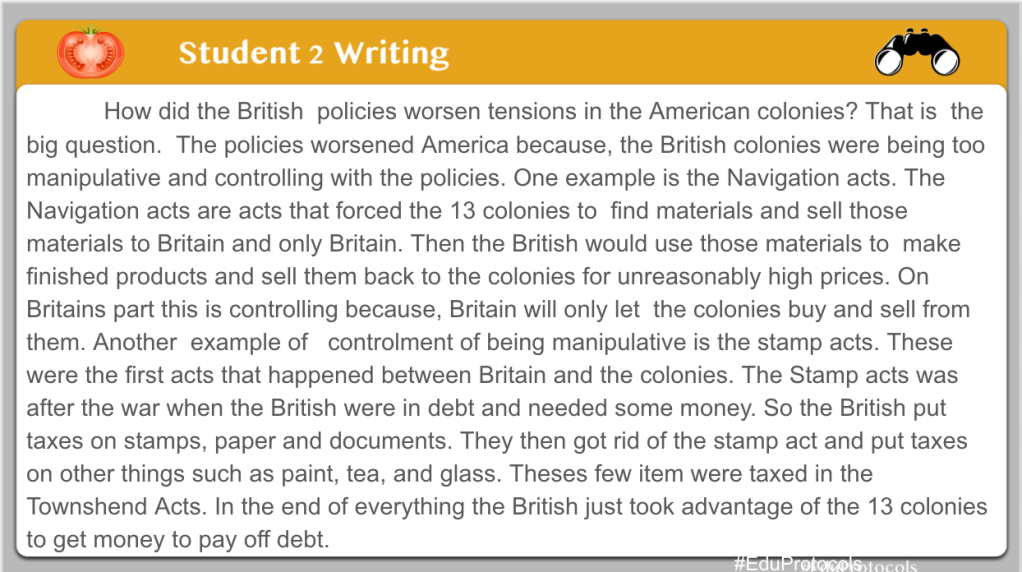
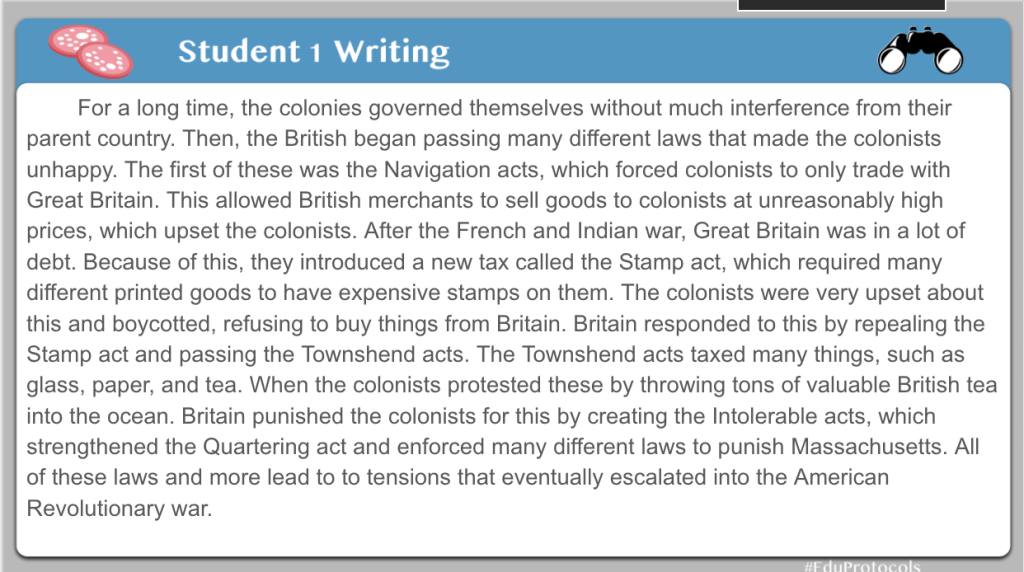
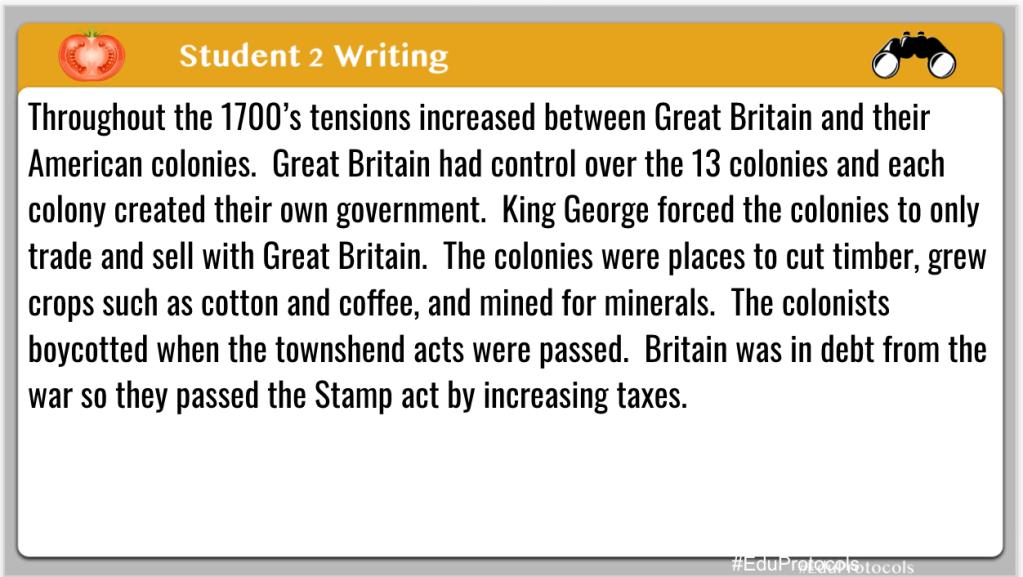
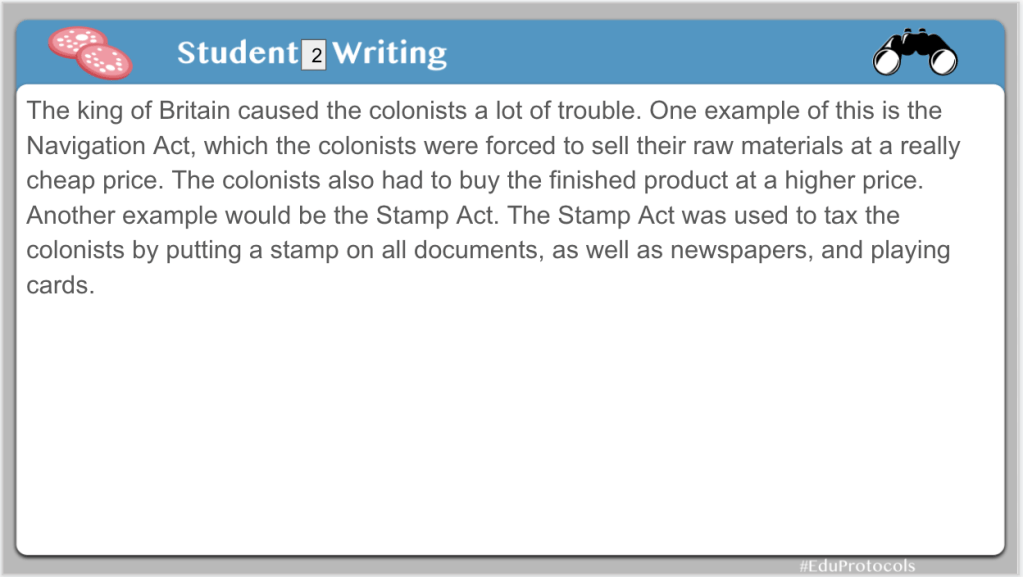
For the summary part of the Cyber Sandwich, I wanted students to write 4 or more sentences. This time I provided a sentence starter sheet to provide a scaffold, or support, for students. The students did a wonderful job with their summaries and we took the Quizizz.
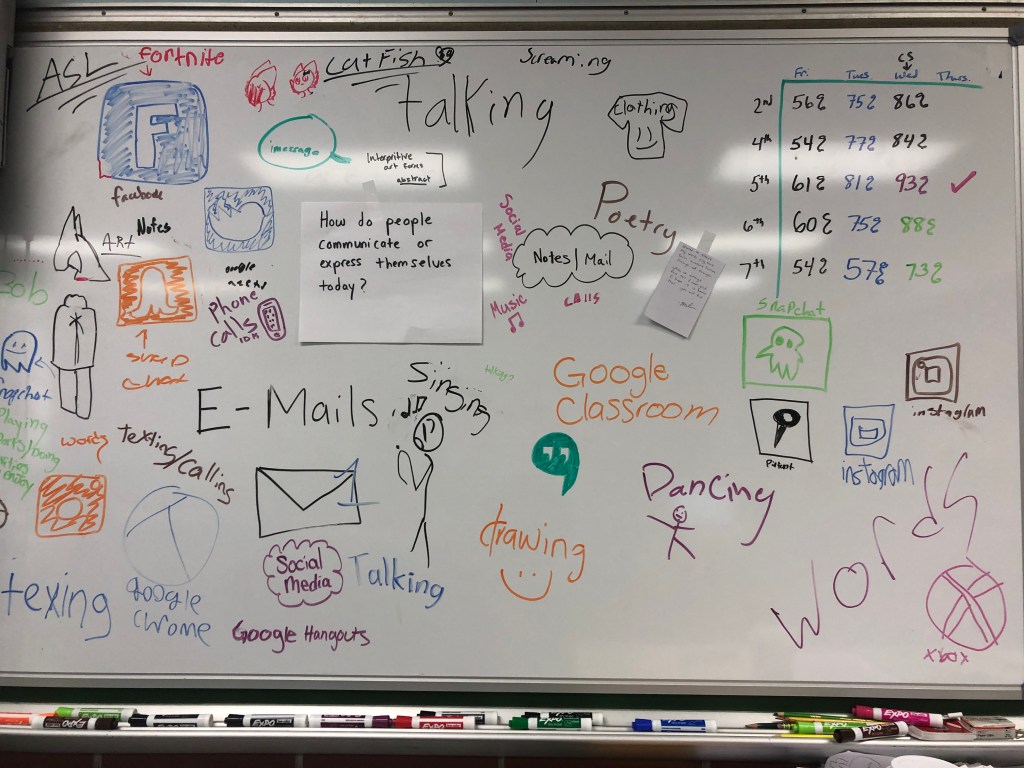
After the Cybersandwich, students significantly raised their class averages. Over 3 days, one class went from 60% class average, 75% class average, to a 93% class average. I will always do a Cyber Sandwich once a week – IT IS AN EFFECTIVE LESSON AND CAN BE ADAPTED WITH MANY NOTE TAKING STRATEGIES!!
Thursday
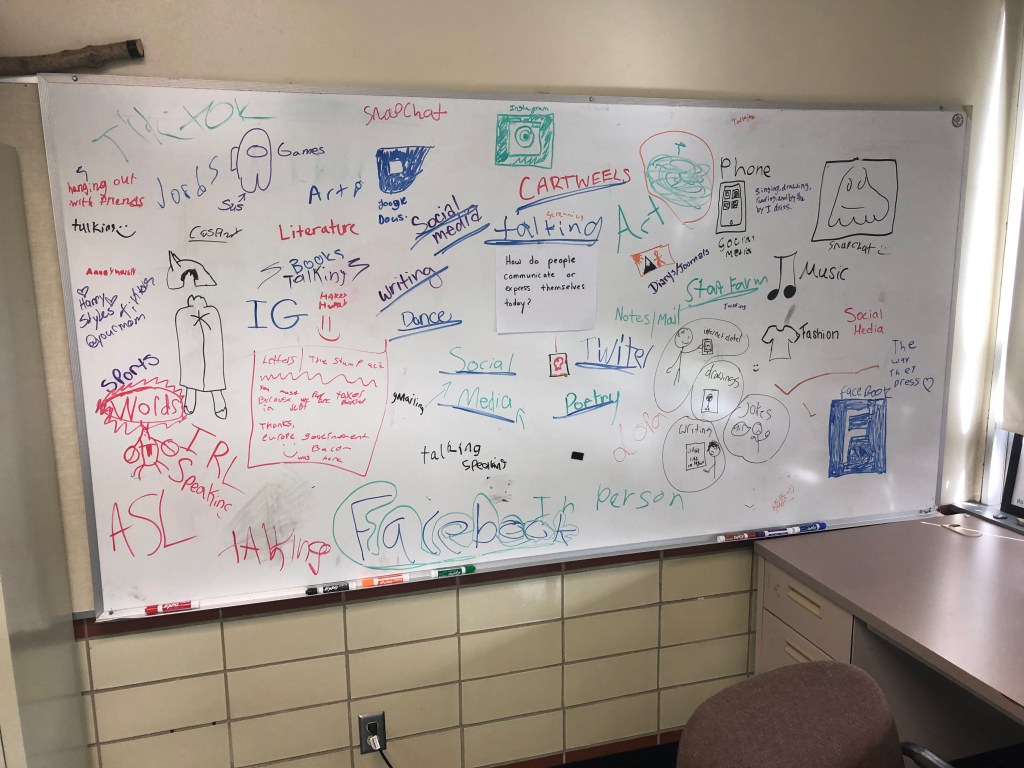
On this day we moved to a new question – How did colonial responses and protests worsen tensions? I began this lesson with a graffiti wall where I posted this question, “How do people express themselves and communicate today?” I gave students 5 minutes to come up and draw, add a word, or add a sentence to the whiteboard. This was followed up with a quick discussion. The goal of this was to help the students realize that communication and expression are not that much different today than it was in 1776.
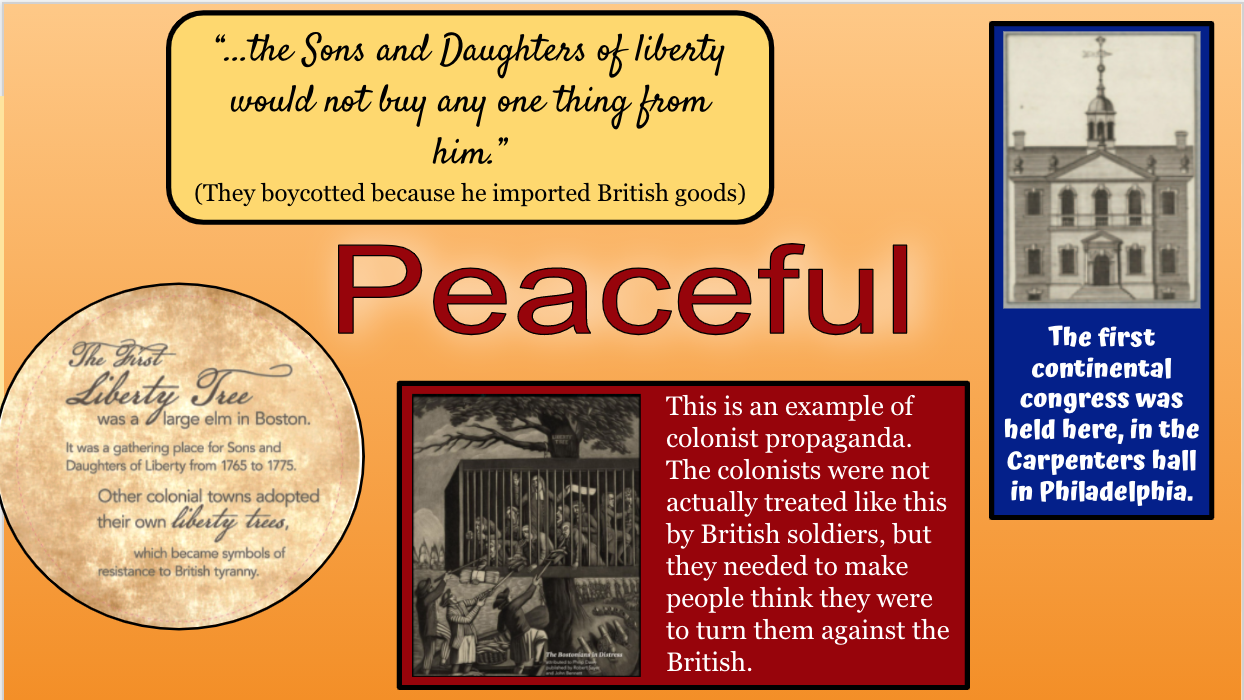
After this, I went through a quick slide deck where I shared stories about different forms of colonial protests. I call this Story Time With Moler. It’s my creative way to avoid saying lecture. Each slide has a picture with a cool story I like to share abput colonial protests (I love this talking about this stuff!). Story time took 15-20 minutes.
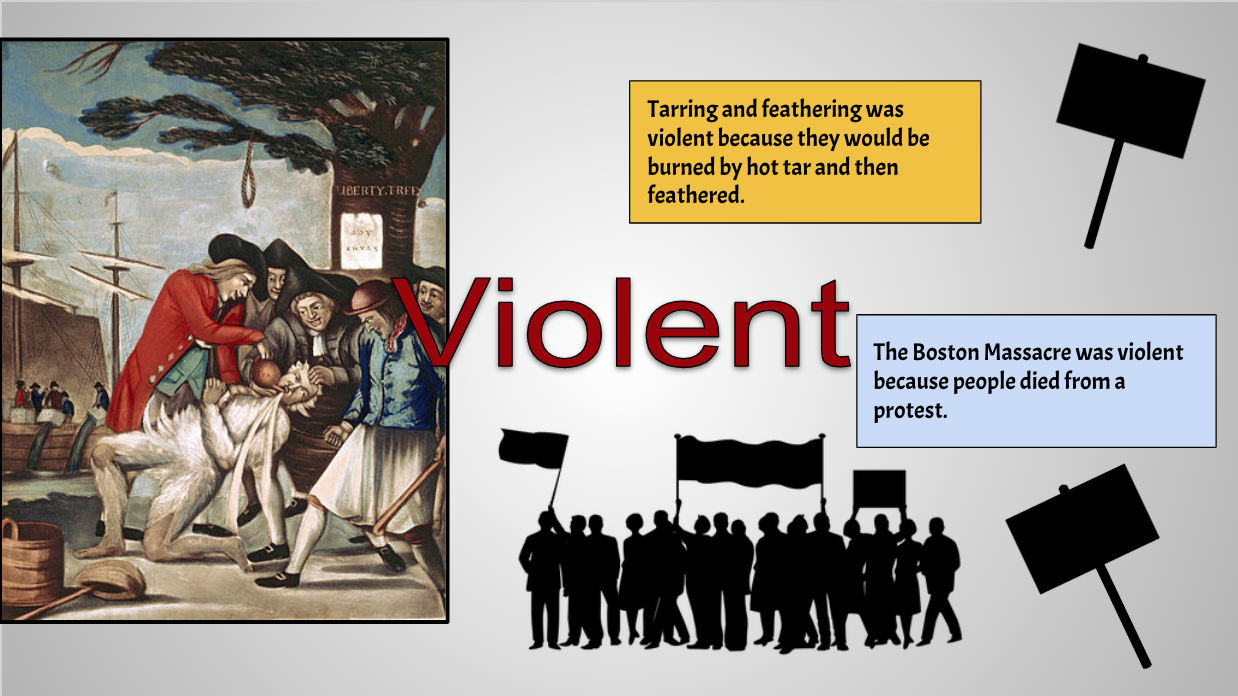
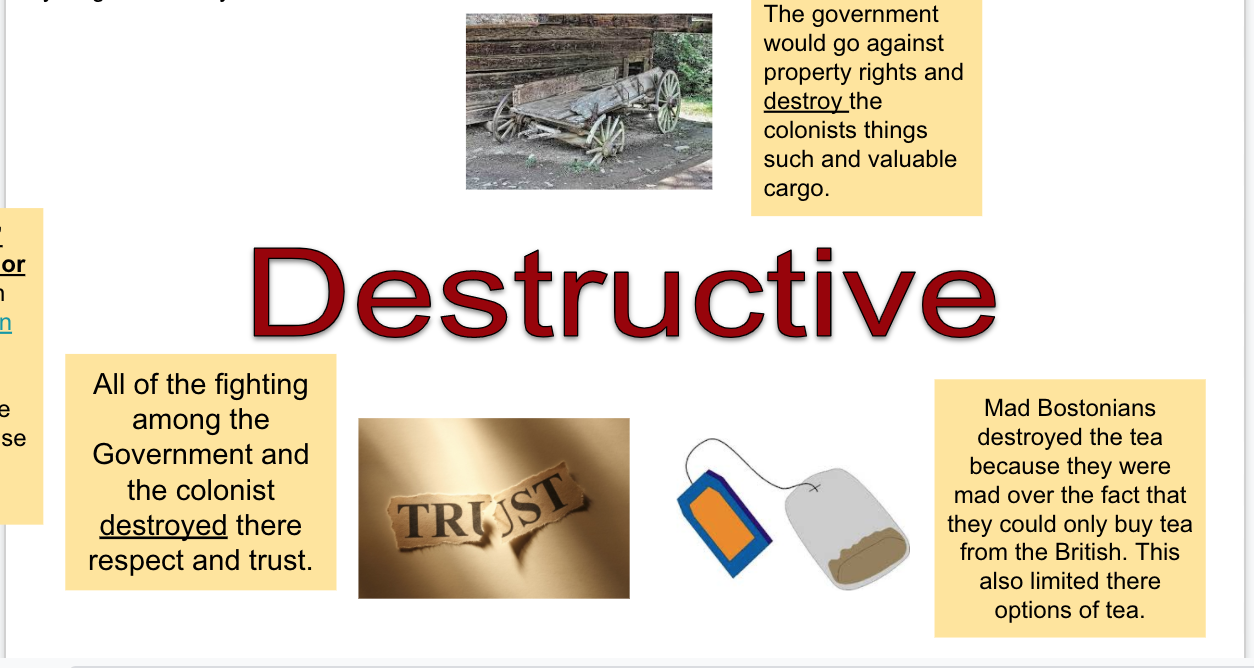
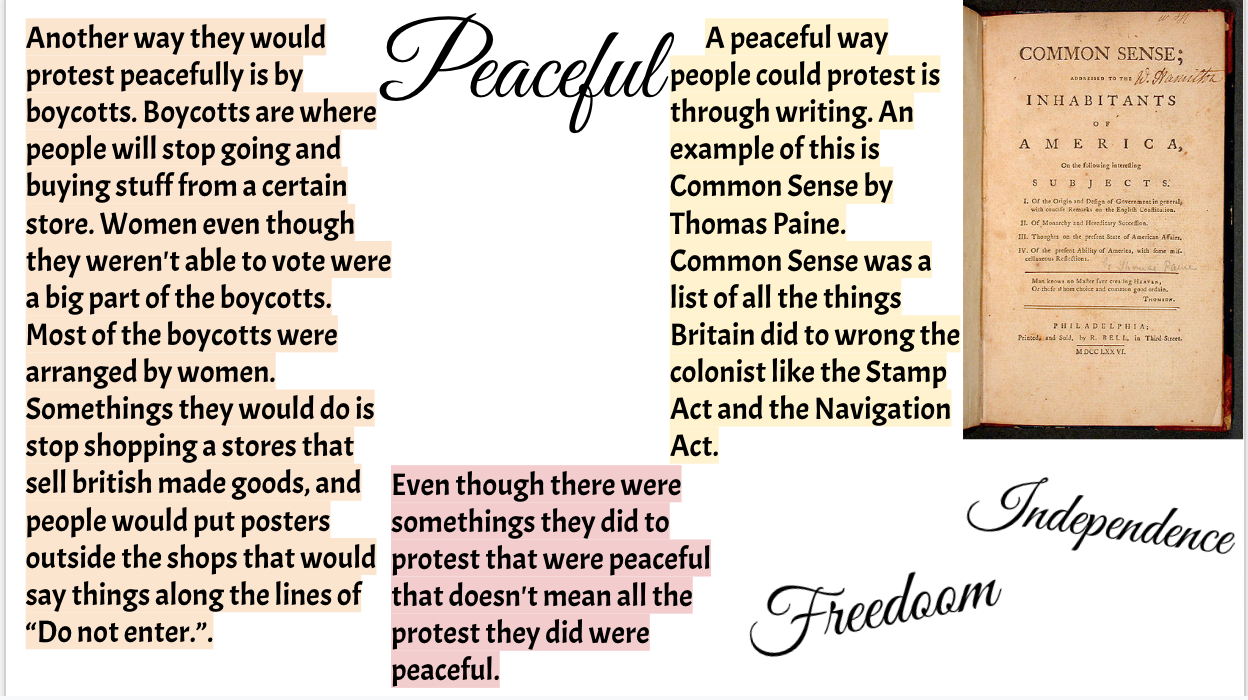
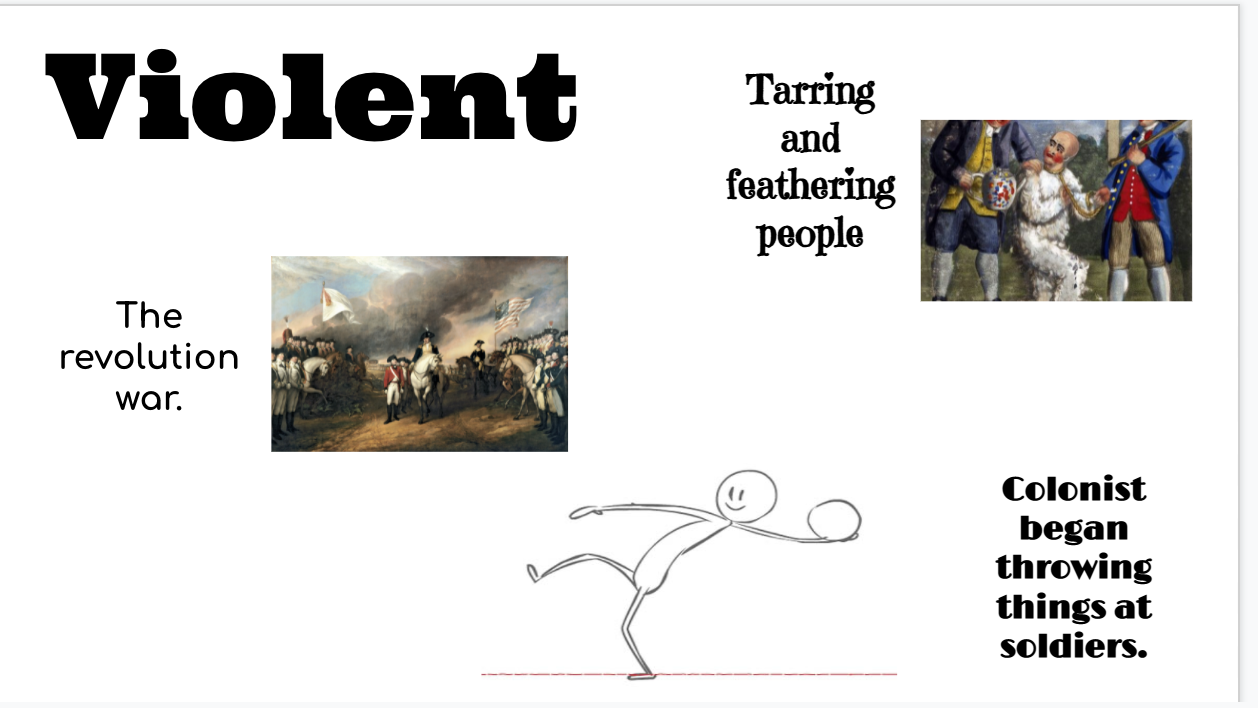
Next we switched to an Iron Chef (click here for a copy) where students did a virtual tour and explored the American Revolution Museum galleries to find examples of colonial protests. I wanted them to treat their slide like a graffiti wall – add pictures, words, sentences. I gave students 15 minutes to explore the galleries and find examples:
Friday
Friday was a continuation of the Iron Chef. I gave 5-10 minutes so students could finish their slides. When the timer went off, I had students contribute examples of protest to a graffiti wall(s). This led to a discussion about the amount of peaceful protests versus violent and destructive protest. Then we related these protests to today. I always mention violent and destructive protests are often done when people aren’t heard. In this case, the colonists weren’t being heard.
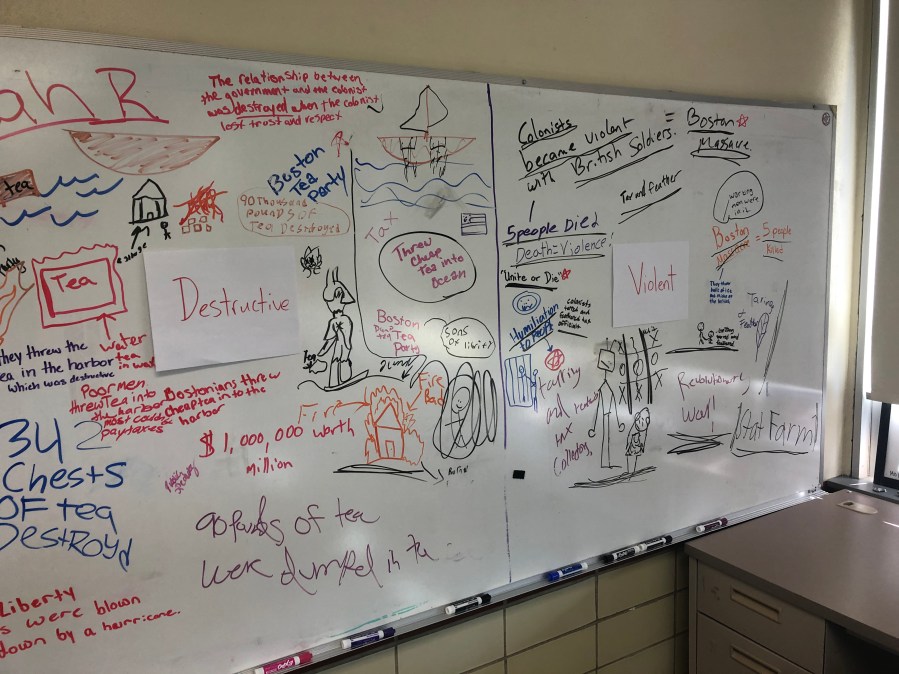
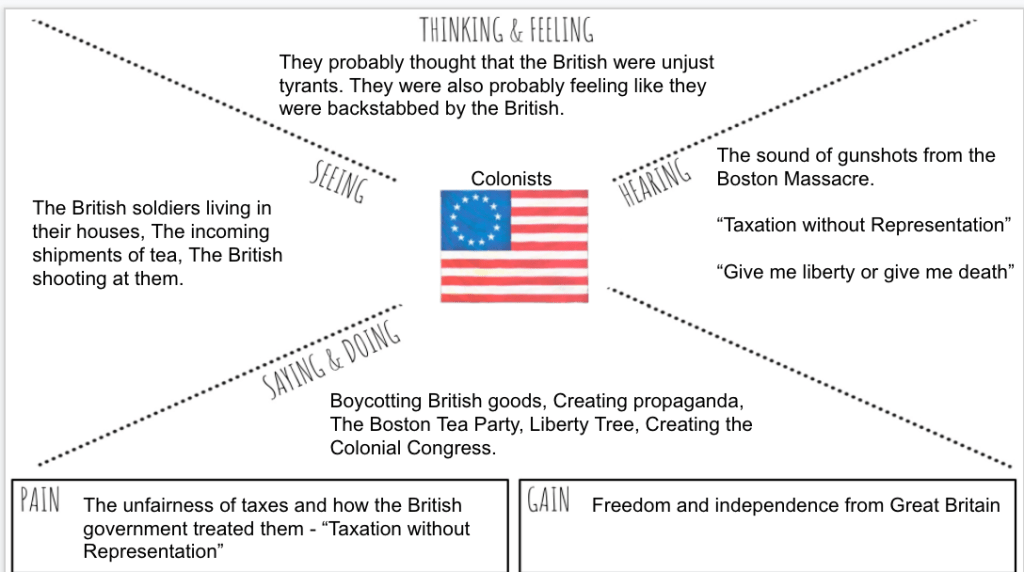
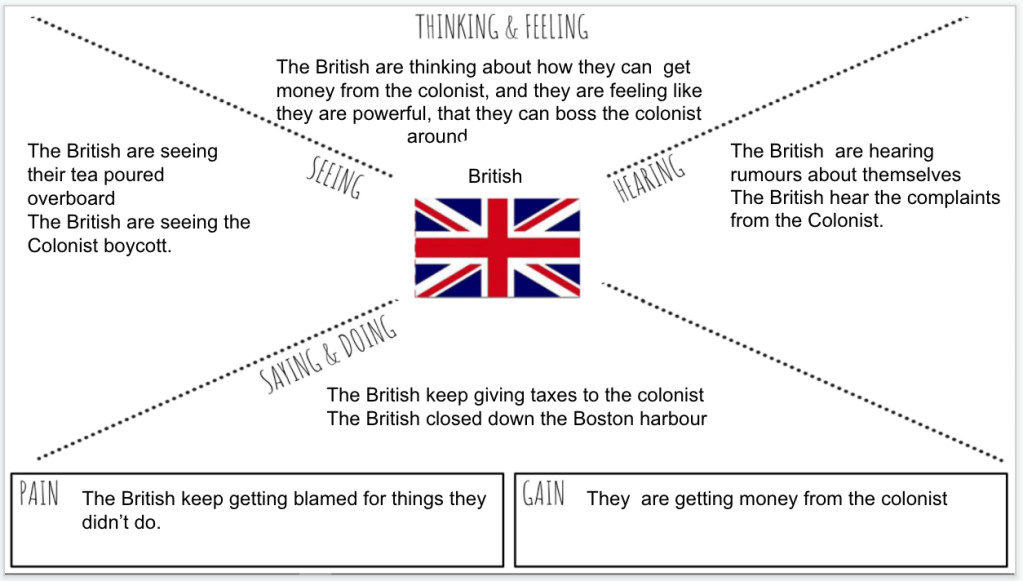
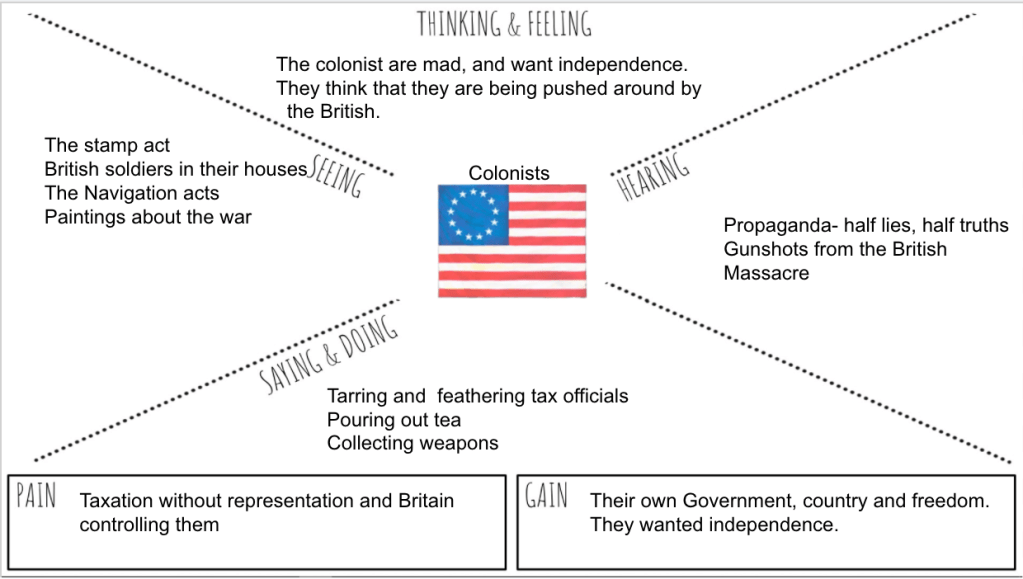
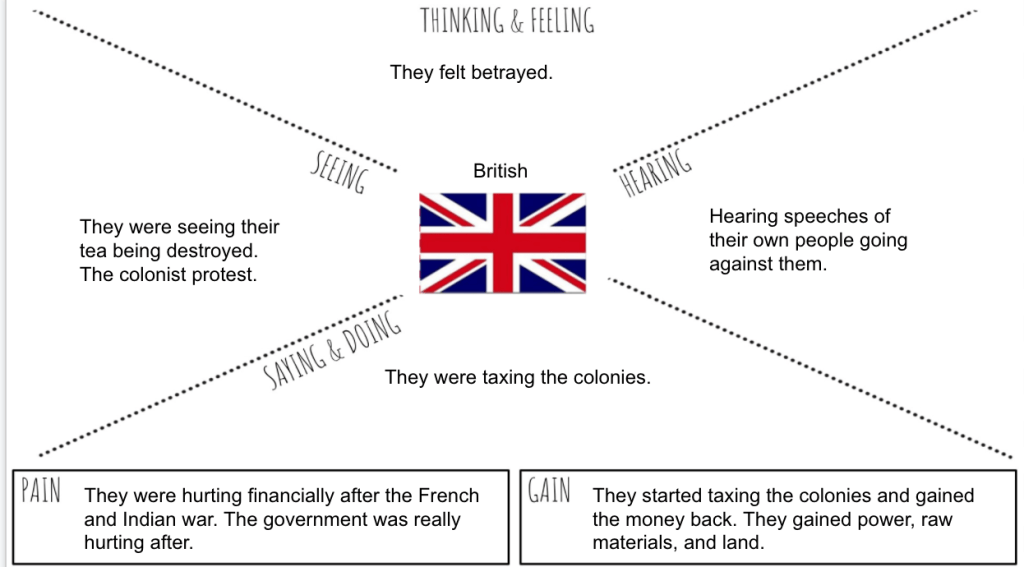
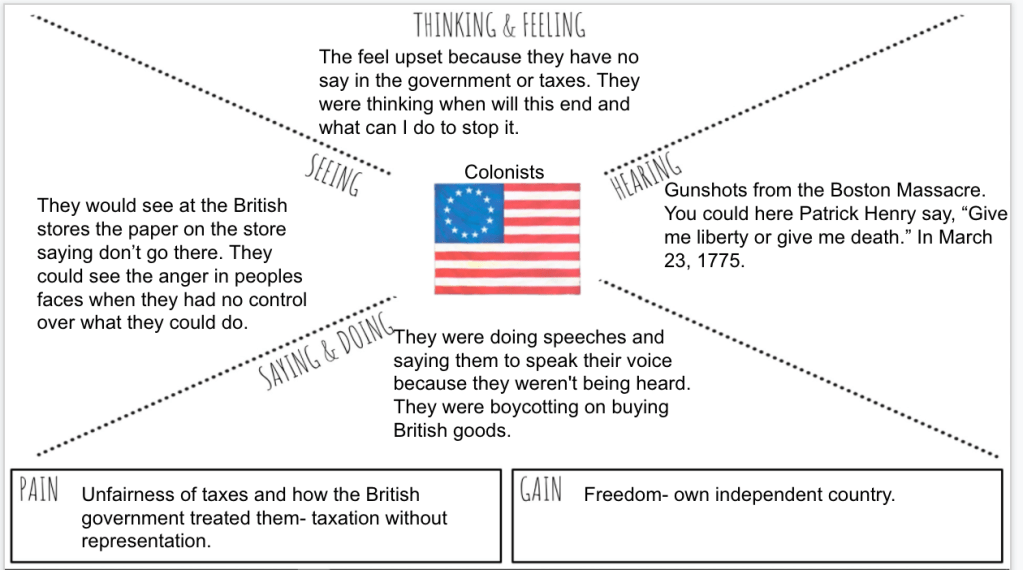
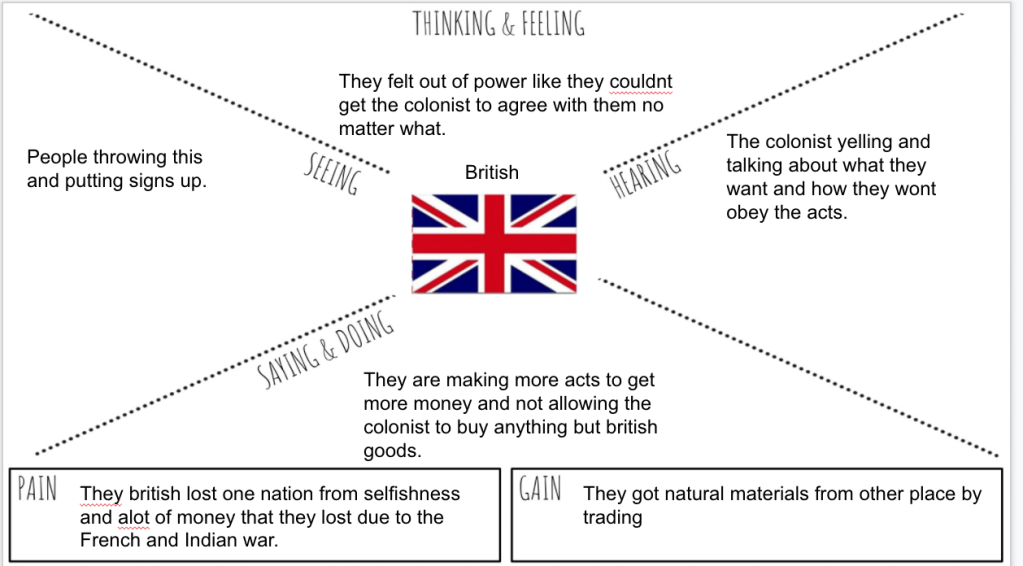
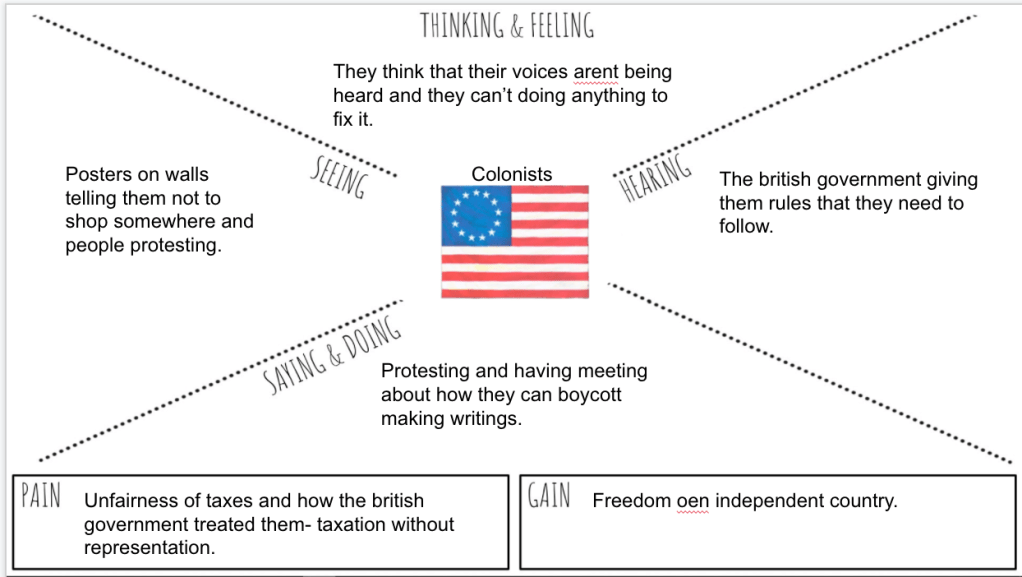
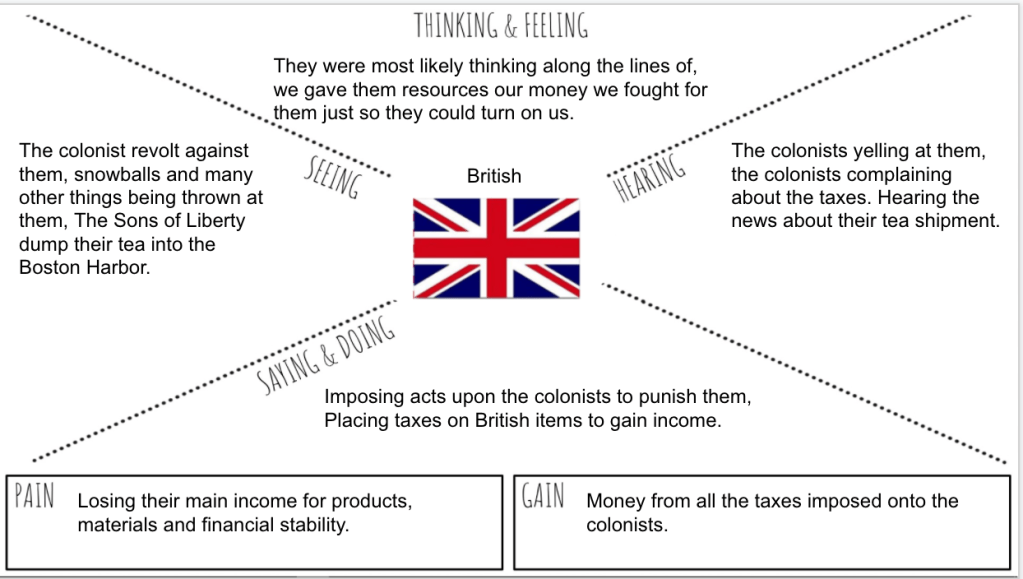
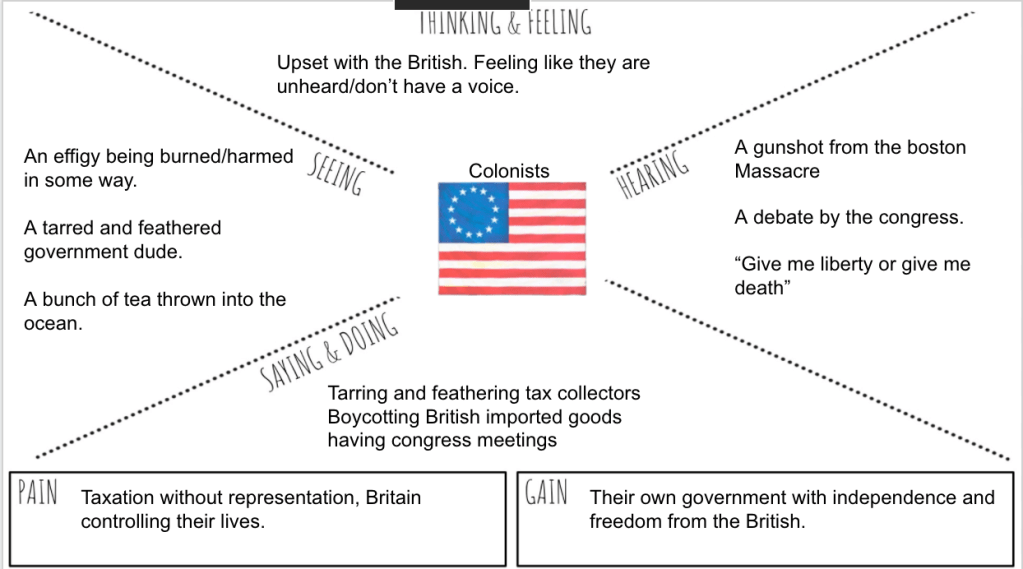
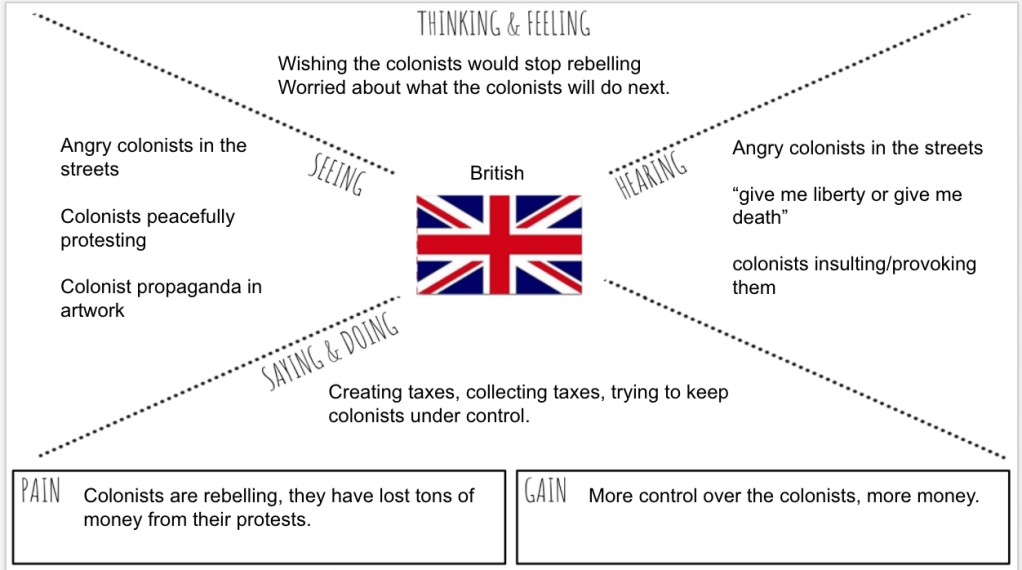
After our graffiti wall discussion, I pointed students back to our question – Was the American Revolution avoidable? I said to them, “You can truly understand this question when you understand the perspective of both sides – the British and the Colonists.” This was a perfect time for an Empathy Map. I got this from http://www.emc2learning.com so I will not share a link.
I had students work in groups to review past learning and new learning with the protests to understand the colonists point of view during the Revolution. I modeled this process and helped guide students to create some examples for the categories:
- Pain
- Gain
- Seeing
- Hearing
- Saying/Doing
- Thinking/Feeling
This was an awesome lesson as students worked together. Plus, there was no single correct answer. The discussions, thinking, recalling, and learning was AWESOME!! Here are some examples:
Reflection
Overall, this was a great week! I’ve been focused on research based, science based strategies to improve literacy skills in Social Studies. Plus, I have been focused on trying new, engaging lessons. The graffiti walls are awesome and my new favorite thing ever – the students loved writing and drawing on the whiteboard. The empathy maps were a great way to get students thinking outside the box. I love using the Cyber Sandwich as a way to build literacy skills in Social Studies.

 Moler's Musings