Sometimes students ask me, “Why do we do the same things all the time?” It’s a question that occasionally bothers me and pushes me to do better. Other times, it’s a question that annoys me.
This week in 505 we went into the motivations and effects of exploration and colonization of North America. We focused on 3 European countries – Spain, France, and England.
I have 47 minute classes. Here is the layout of the lesson I’m describing….
Monday – Fast and Curious, Thin Slide, Frayer
Tuesday – Finish Frayer, Cyber Sandwich, Fast and Curious
Wednesday – Fast and Curious, Gallery Walk or Sketch and Tell
Thursday – Fast and Curious, Hexagonal Learning
Friday – Finish Hexagonal Learning, Annotated Map with 3 Connections
Fast and Curious – Every Day
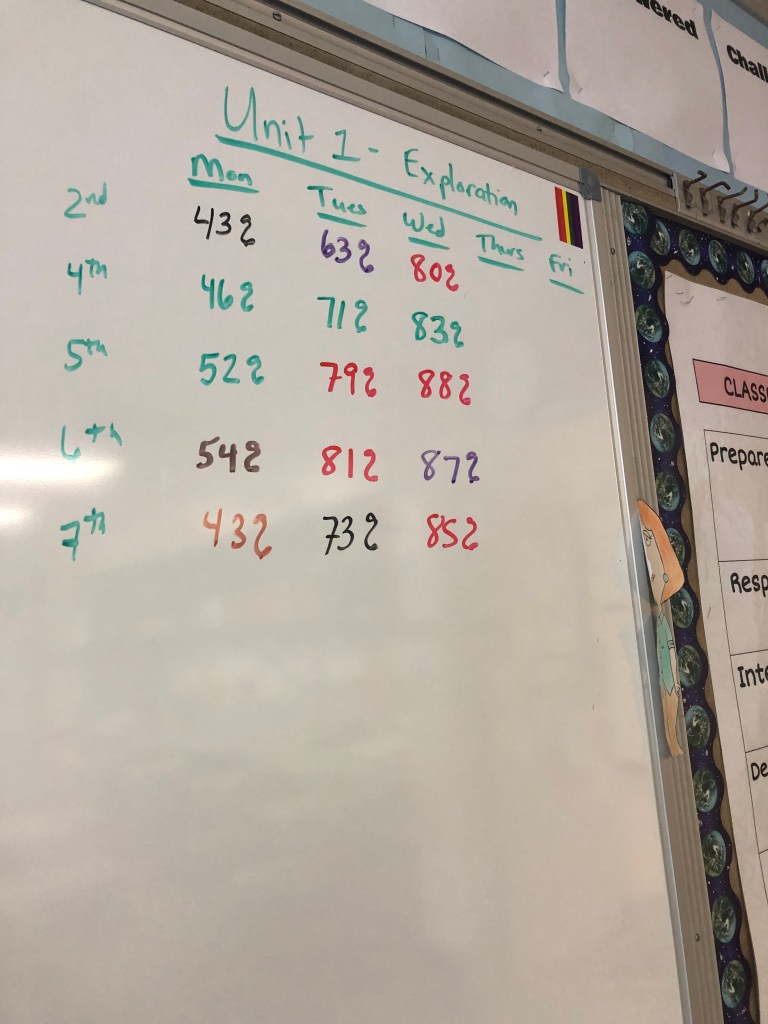
On Monday we began the Fast and Curious with a Quizizz over exploration and colonization of North America. The questions related to vocabulary and content from a reading linked to our eventual Cyber Sandwich. Students took the quiz with very little background information. The results were awful, but I remind students that it’s okay to miss questions and potentially fail. As you can see, the results were not great..
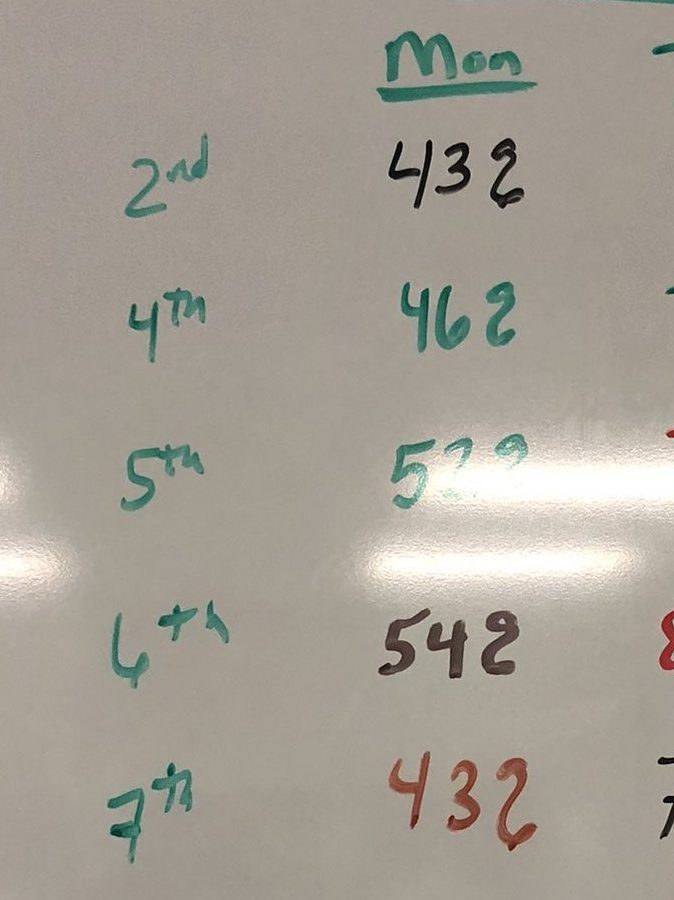
Despite the poor results, I give immediate feedback and I run this same quiz at the start of class each day.
Frayer – Monday
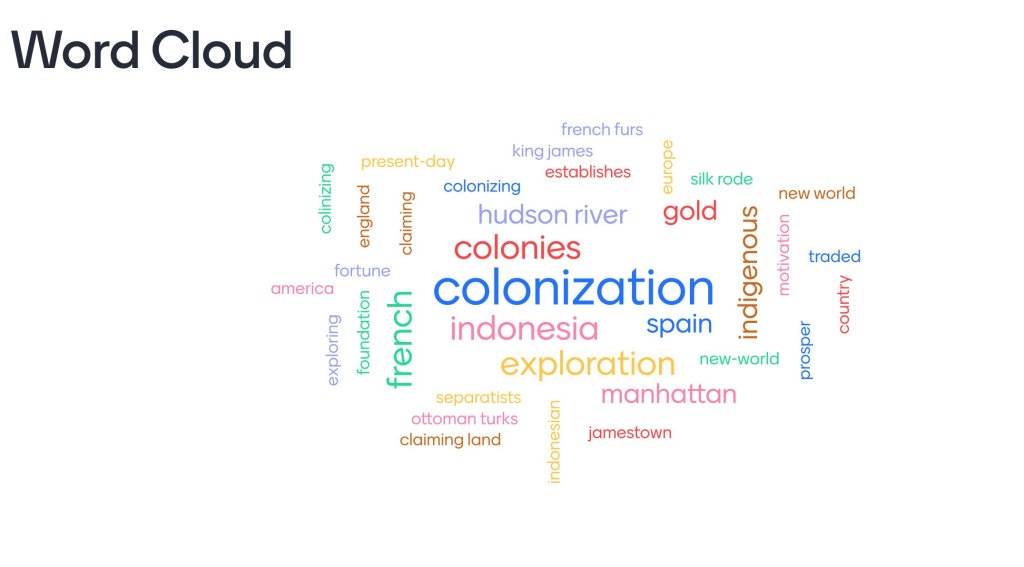
One of my favorite teaching strategies to build vocabulary knowledge and background information is through the Frayer model. Immediately following our first run with a quiz, I have students skim the article attached to the eventual Cyber Sandwich. I set a timer and instruct them to find 3 unknown words that could help them understand the article. They submit their words through a word cloud generator on Mentimeter.
As words are submitted to the Mentimeter word cloud, they show on on the Smartboard. The same words submitted over and over again appear to be larger on the board. It makes it easy to choose those words to Frayer. At the conclusion of the 5 minutes, I quickly go over some of the smaller/lesser words. We often choose the larger words to frayer. In this instance, students chose the words ‘Colonization’ and ‘Indigenous’ as the important words to know.
I like to pair the Frayer with the SEE-IT model. SEE-IT is an acronym that stands for State, Elaborate, Exemplify, Illustrate, and Talk. With our first Frayer, I modeled how to paraphrase definitions, elaborate on the definitions, and how to add 3-4 examples. For the illustration box, I like to use www.thenounproject.com for icons. This practice works best when students are collaborating and talking about the words.

Cyber Sandwich – Tuesday
After Frayering unknown words, and giving students a chance to skim the article, it’s time to do the Cyber Sandwich. I like to do the Cyber Sandwich at the beginning of class then run the Fast and Curious quiz. This way, students can see their growth in learning after the Cyber Sandwich is complete
The Cyber Sandwich I created was paired with a National Geographic article entitled, “Motivations for European Colonization.”Students read the article, and took notes, for 10 minutes. I encouraged them to get 2 important facts from each subheading (6 or more facts). Students then discussed and compared notes for 5 minutes. Finally, students summarized the article with 5 or more sentences for 10 minutes.
Setting a 10 minute timer is a great way to get students focused on reading. This is a practice we use in my school with SSR (sustained silent reading), so it lends itself nicely with a common practice.
With this particular Cyber Sandwich, I chose to do it with paper. This is the nice thing about EduProtocols – they can be used with tech or paper. I was inspired by a podcast called The Science of Reading which discusses a lot of research based practices we should be doing with literacy skills within any classroom. One important takeaway from a recent episode was using a nice blend of paper vs. digital tools for reading comprehension. This inspired me to do my Cyber Sandwich on paper.
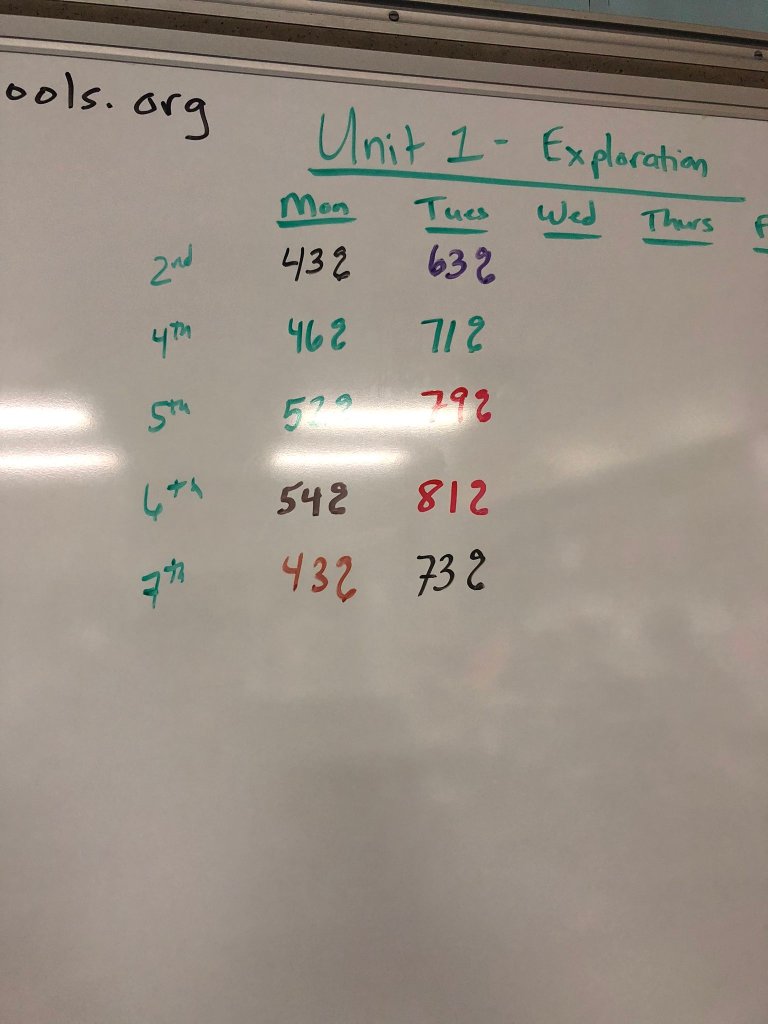
At the conclusion of the Cyber Sandwich, students completed another fast and Curios quiz using Quizizz. Here are those results, with the highest percentage raise being 7th period with a 30% raise:
Gallery Walk or Sketch and Tell – Wednesday
On Wednesday, I began class with a new style of Frayer. I turned the 4 boxes on the Frayer into recall questions and encouraged the students to answer the questions without looking up the answers. After we discussed the Frayer responses, we jumped into another Fast and Curious. By this day, all classes raised their overall class averages to 80% or higher.
For Wednesday, our question was, “What were the effects of colonization on North America?” Students had a choice to do a Gallery Walk or Sketch and Tell. With the Gallery Walk, I used a document based question (DBQ) that I split up and turned into 5 stations. I taped the 5 stations around the room and created an organizer so students could write their responses.
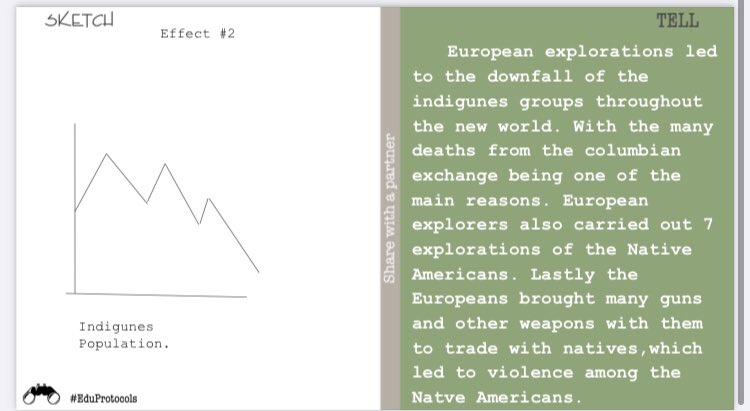
The Sketch and Tell had a mini article attached, and students had to create and tell about 2 effects colonization had on North America. Students could use Legos, Play Doh, or Google Shapes for their creation. Most students chose to use Google Shapes.



Hexagonal Learning
I don’t know who created Hexagonal Learning, but it’s a strategy I learned from social studies teacher Chuck Taft. For this teaching strategy, I typed some of the concepts we learned about into hexagon templates on Google Drawings. Template 1 is here. Template 2 is here.
I love hexagonal learning because it helps create great discussions among students. The hexagon has six sides where connections could be made to other ideas. When you place many ideas on many hexagons, the discussion about where to connect what will be different every time.
I had students get into groups of 2 or 3 and they began to cut out the hexagons (I would suggest having students do this the day before). I gave each group a large sheet of construction paper and explained the idea of making connections between hexagons and ideas. I also reminded the students it’s important to listen to each other as discussions are being made about connections.
After the students had discussions about the placement of the hexagons, they glued the hexagons into place.
At the end of our discussions and glueing, students took another Fast and Curious and quiz with Quizizz and all class averages were raised to 90% or above. This is great because our goals was to reach a 90% class average by Thursday.


Annotated Maps
I’m not going to get into annotated maps, but you can learn more about them here. In short, annotated maps are hand drawn maps where students make connections between geography and history. It seemed natural to combine hexagonal learning with annotated maps.
I had students hand draw a map of North America where they labeled New Spain, New France, and the British Colonies. Next to their map, they wrote about 3 connections they made with hexagonal learning. When everything was completed, they taped their maps to their hexagonal learning papers.

Final Thoughts
Overall, this was a great lesson and students were involved and engaged through the whole process. When I run a Cyber Sandwich in the future, I will mix up the notes and task at the end to keep students engaged week to week.
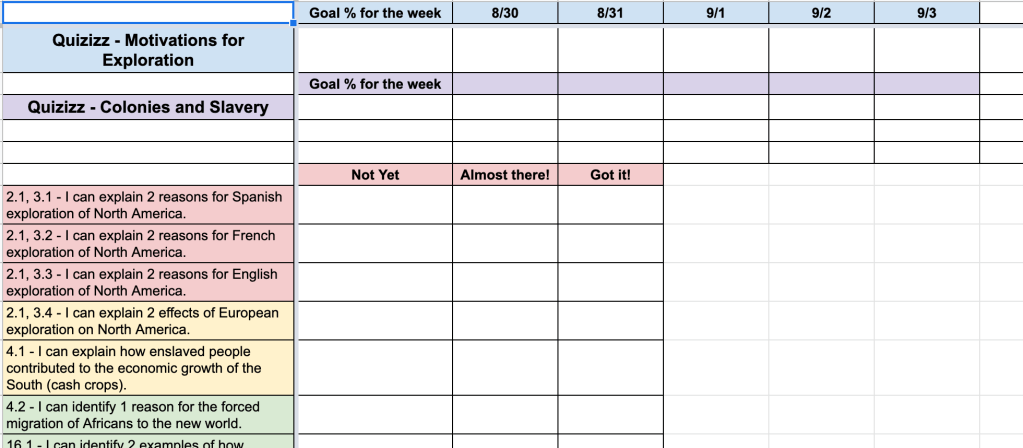
One thing I’m trying to do more this year is self-reflection. I had students self reflecting, setting goals, and keeping track of scores on a Google Sheet.

 Moler's Musings