This week, my focus was all about scaling back and simplifying. I realized I’ve been expecting too much from my students in a short amount of time. Instead of overwhelming them, I shifted to teaching them how to work efficiently, meet deadlines, and build confidence with every task. EduProtocols like Thin Slides, Iron Chef, and Sketch and Tell-O became the foundation for helping students succeed. The goal wasn’t just to cover content, but to teach them how to learn and apply skills independently. Small wins are adding up, and I’m already seeing the results in their engagement and confidence.
Monday
I came into class on Monday knowing I needed to simplify and keep things engaging. I leaned into some tried-and-true strategies to break down the lesson, making it easier for students to digest.
Starting with Gimkit: Fast and Curious
We began the day with a quick 4-minute Gimkit focusing on 8 questions about Jamestown. This activity—Fast and Curious—is all about rapid retrieval and feedback. The class averages ranged between 57% and 70%, but more importantly, it set the tone for the lesson. Fast and Curious is an excellent way to boost content retention while adding a layer of competition. It was a simple but effective way to kick things off.
Breaking It Down with Thin Slides
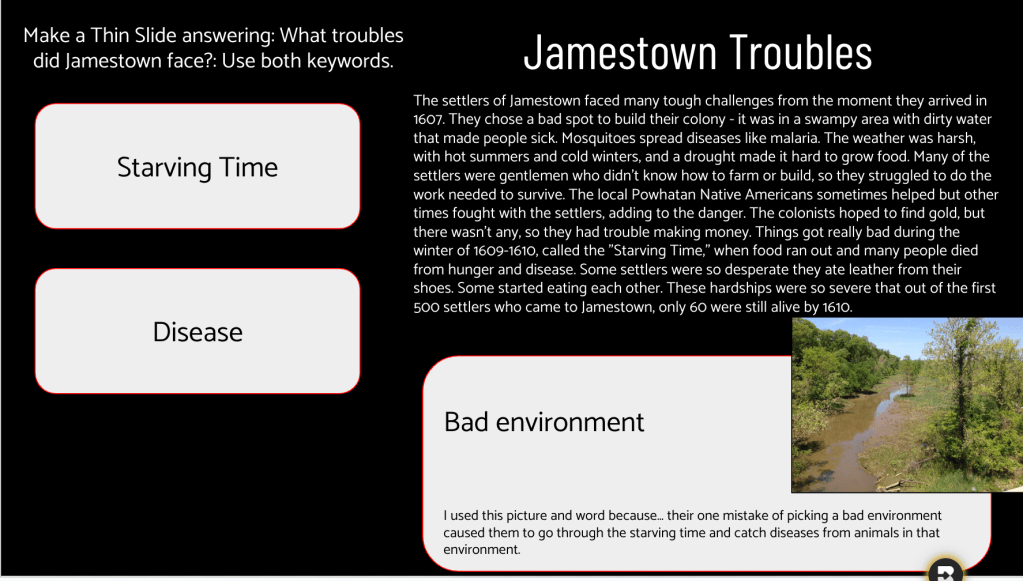
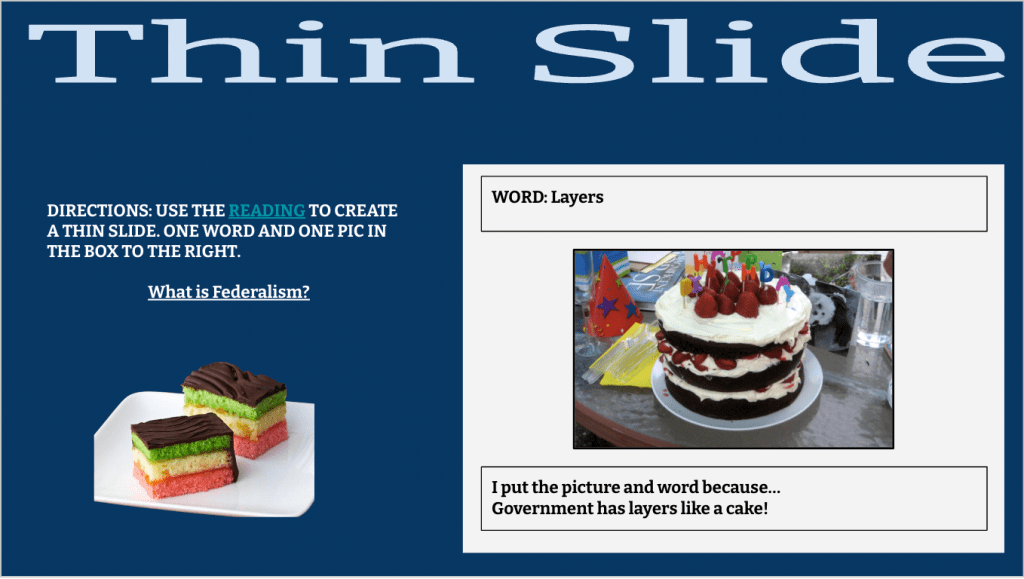
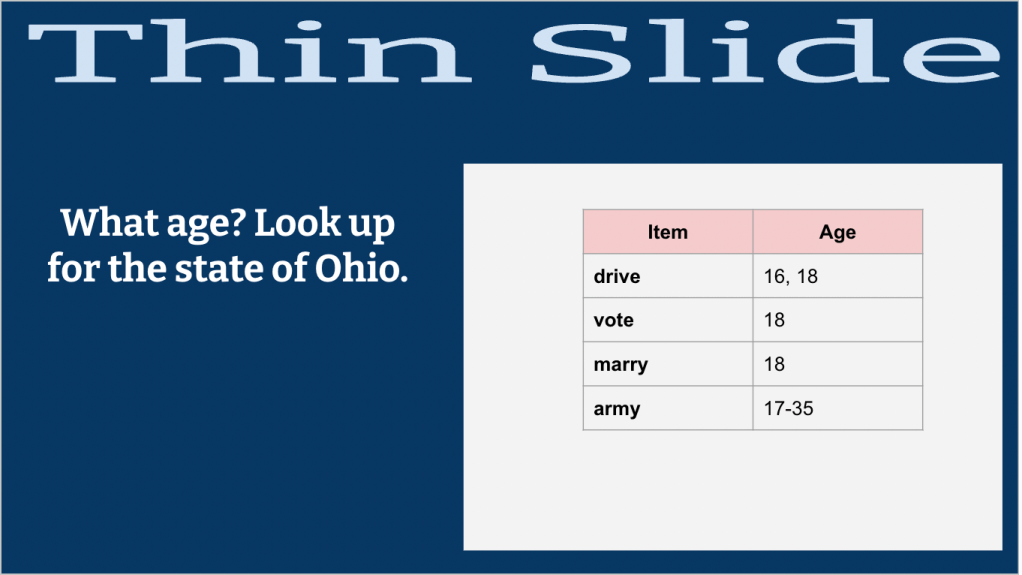
Next, we used Justin Unruh’s Thin Slide template to chunk the reading. Jamestown can be dry, and our textbook doesn’t do it any favors. I used AI to extract the key parts of the reading and then chunked it into manageable sections. Each Thin Slide had one word and one picture, and I modeled how to provide an explanation using the keywords provided. Each slide took about 5 minutes, which kept the class moving while giving students time to process the content.
Somebody, Wanted, But, So, Then Sketch and Tell
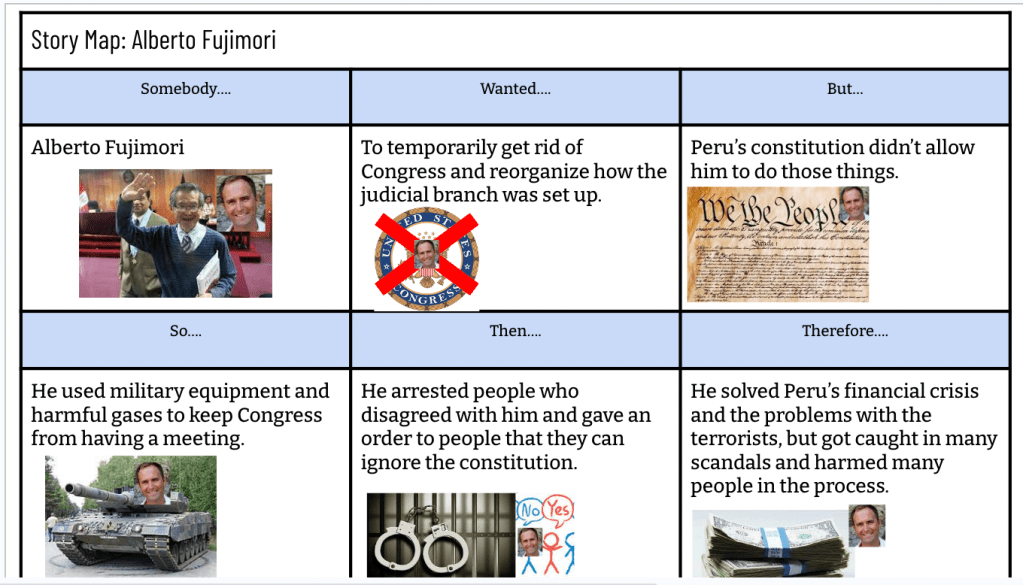
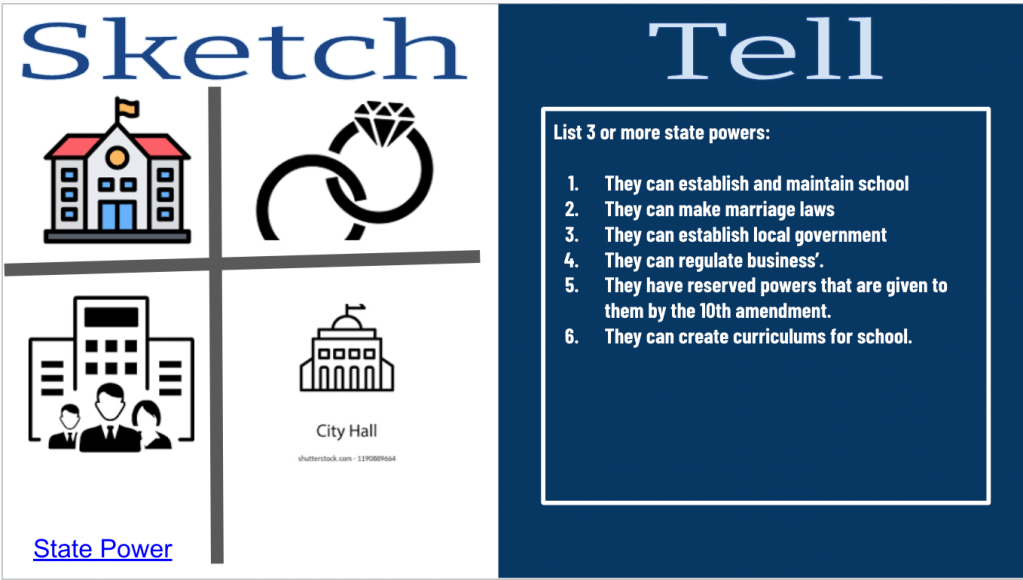
After completing the Thin Slides, I had the students combine their work into a Somebody, Wanted, But, So, Then Sketch and Tell comic. This is basic reading comprehension but framed in a way that’s simple enough for everyone to grasp. The students created a visual summary of Jamestown, which reinforced the lesson’s main points while keeping it creative and interactive.
Breaking the “Right Answer” Mindset
A lot of students were still raising their hands, hoping for the “right” answer, but I’m working hard to break them out of the mindset that social studies is just about filling in blanks. I want them to engage with the content and think critically—there are no simple answers here!
Wrapping Up with Gimkit
To close out the class, we ran the same Gimkit again, and the improvement was clear. Class averages shot up to 85%-94%. This repeated retrieval practice solidified their learning, and the jump in scores showed they were starting to internalize the material.
By keeping things simple and focusing on strategies that chunked the content, I was able to make this lesson engaging and accessible. The results? The students worked through the material effectively, and I didn’t feel like I was overwhelming them. It’s a win-win.



Tuesday
Tuesday’s lesson followed the same structure as Monday, and the results continued to impress. Keeping it simple, consistent, and achievable is key to building student confidence and engagement.
Starting with Gimkit: Fast and Curious on Plymouth
We kicked off the day with a custom Wordle. I made the Wordle “Religion” and asked the kids to figure it out because the word related to Plym outh. Next we did a Fast and Curious Gimkit, this time focusing solely on Plymouth. The quiz was 9 questions, and the class averages ranged from 52% to 65%. It was a great way to gauge what the students already knew and give immediate feedback.
Thin Slide: Chunking the Reading
Just like Monday, we used the Thin Slide template. The readings were chunked into smaller sections, with each slide featuring a keyword and a picture. The students had 5 minutes per slide to process the information and build their slides, using the provided keywords as a guide. The familiarity of the Thin Slide made it an achievable task for the students. There was no need to introduce new techniques or overwhelm them with too much at once.
Somebody, Wanted, But, So, Then Sketch and Tell
Once the Thin Slides were complete, we wrapped up the reading with another Somebody, Wanted, But, So, Then Sketch and Tell comic. This is such a simple yet effective way to summarize content. It allows the students to visually capture the key points of the lesson in a creative format, reinforcing comprehension in a way that feels both achievable and rewarding.
Ending with Gimkit: Building Confidence
We ended the class with the same Gimkit as the beginning. This time, the class averages soared to 86%-94%. The consistency in approach, combined with the immediate feedback and the opportunity to retry, boosted the students’ confidence. And despite the repetition of Monday’s format, there were no complaints. In fact, 90% of the students finished the task, which is a win in itself.
Why I’m Sticking with Thin Slides
The Thin Slide strategy is becoming a staple in my classroom for a reason: it’s simple, familiar, and helps students feel like they can finish something. Pairing that with Gimkit, which builds their confidence through repeated practice, is setting the foundation for a stronger work ethic. These small wins will add up over time, and I’m seeing the early signs of engagement taking root.


Wednesday
Inquiry Lesson Link, Questions, Funko Pop, Gimkit
On Wednesday, we switched gears and used paper for an inquiry-based lesson straight from the textbook. The lesson focused on the hardships and survival stories of colonists in Jamestown and Plymouth, but let’s be real—the textbook readings were way too much. The language was jargon-filled, dry, and not exactly something an 8th grader doesn’t give a damn about.
Simplifying Primary Sources with AI
My goal was to simplify the lesson while still helping students build confidence and learn. To do that, I took the primary sources straight out of the textbook and ran them through Claude AI with a simple prompt: “Keep the primary sourceness of these documents but make them so 8th graders can understand them.” I also had Claude add author names and context since the textbook didn’t bother to provide that crucial information.
The revised documents were a mix of Jamestown and Plymouth hardships and survival stories. With the language made accessible, the students were much more engaged. They worked in pairs, reading the sources and answering questions. This took about 35 minutes and gave them a deeper understanding without the confusion of outdated jargon.
Funko Pop Character Creation
For the final part of the lesson, I wanted to tap into their creativity, so I had them create a Funko Pop character who had journeyed to either Jamestown or Plymouth. The biography for the Funko Pop had to include why their character went to the colony (reviewing the content from Monday and Tuesday), the hardships they faced, and whether they survived—or not. This activity took 25 minutes, and it allowed the students to synthesize what they had learned in a fun, engaging way.
Combining Jamestown and Plymouth in Gimkit
We ended the day with a combined Jamestown and Plymouth Gimkit. This was a great way to reinforce everything from the week so far. The class averages ranged from 86% to 92%, showing solid retention of the material.
Takeaway
The key here was breaking down the overwhelming textbook content, making it relatable, and allowing students to demonstrate their understanding through a creative, personalized project. By the end of the day, they had a solid grasp on both the hardships of colonial life and the survival strategies of early settlers.
Thursday
Thursday was all about pivoting and simplifying—sometimes less is more. I had originally planned to pack the lesson with multiple activities, but it quickly became clear that was overambitious.
Finishing the Funko Pop Characters
We kicked off class by wrapping up the Funko Pop characters from Wednesday. The students had 15 minutes to finalize their creations, adding in the last details about their colonial hardships and survival stories. Once that was done, we shifted focus to something new.
Colonial Regions Mapping
The natural next step was to move into the colonial regions. This is where I initially tried to cram in too much. My original plan was an Iron Chef, followed by a Sketch and Tell, followed by a mapping activity—but it became obvious after the first bell that this was a disaster in the making. I scrapped the Iron Chef and Sketch and Tell, deciding to focus solely on the map and some Wordwall practice.
Using a Mnemonic Device
The map we used came from Howson History, and it featured a helpful mnemonic device for remembering the colonial regions. I explained what a mnemonic device was using examples like ROY G. BIV and DeSSert means strawberry shortcake (never miss that double ‘S’ in dessert!). After that, the students created their own mnemonic device for the colonial regions.
Mapping the Colonies
Once the mnemonic was sorted, we got down to the mapping activity. The students looked up the colonies and labeled them on the map. It was simple but effective, reinforcing both geography and historical knowledge.
Wordwall Practice and Rolling Recap
To reinforce the mapping, I had the students practice using a drag-and-drop map on Wordwall. It gave them some hands-on repetition, which helps with retention. After finishing the Wordwall, we still had some time left, so I pulled out a Rolling Recap. This is a fun retrieval practice where I roll a 20-sided dice and give the kids a prompt. They have to respond to the prompt in exactly the number of words rolled. The questions focused on Jamestown and Plymouth, and it was a creative way to review key content while keeping things engaging.
Takeaway
Thursday reminded me that sometimes, simplicity wins. The mapping activity and mnemonic device were more than enough to carry the lesson. And, as always, building in some creative retrieval like Rolling Recap kept the students engaged while reinforcing their learning.
Friday
Iron Chef with Sketch and Tell-o, Thick slide
On Friday, we continued working on our colonial regions, focusing on reinforcing knowledge and boosting confidence. Here’s how the day went.
Starting with Gimkit: Colonial Regions
We began with a quick 4-minute Gimkit on the colonial regions, which featured 12 questions. The class averages were 68% to 73%. After running the game, I gave feedback, and we quickly moved on to the next activity.
Colonial Regions Iron Chef on Padlet
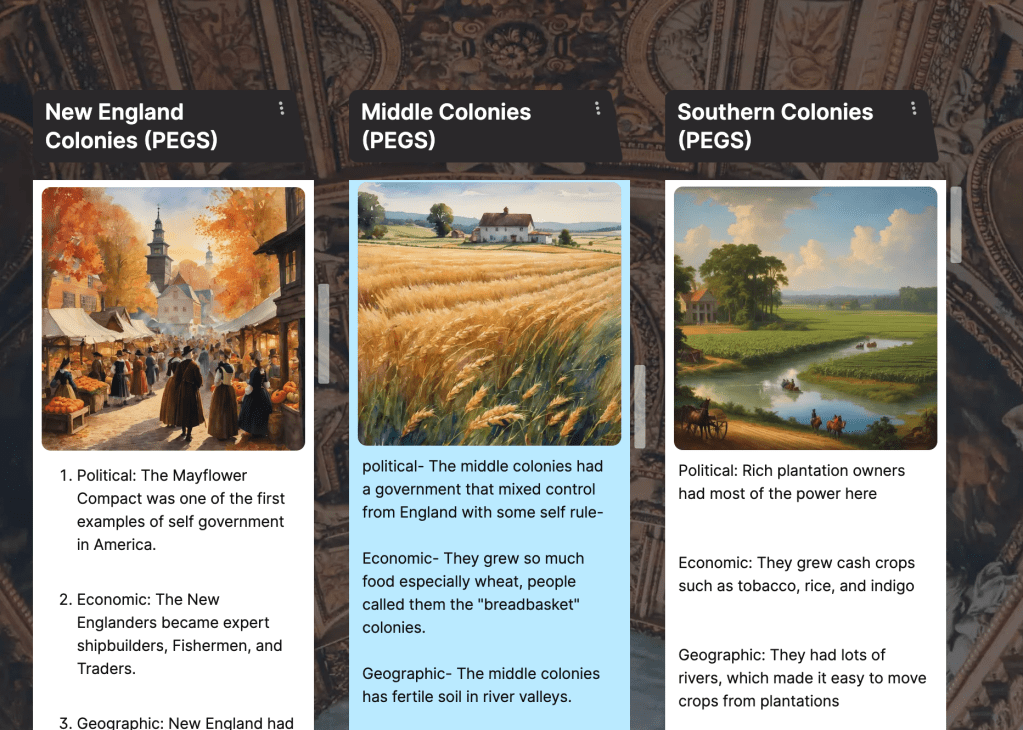
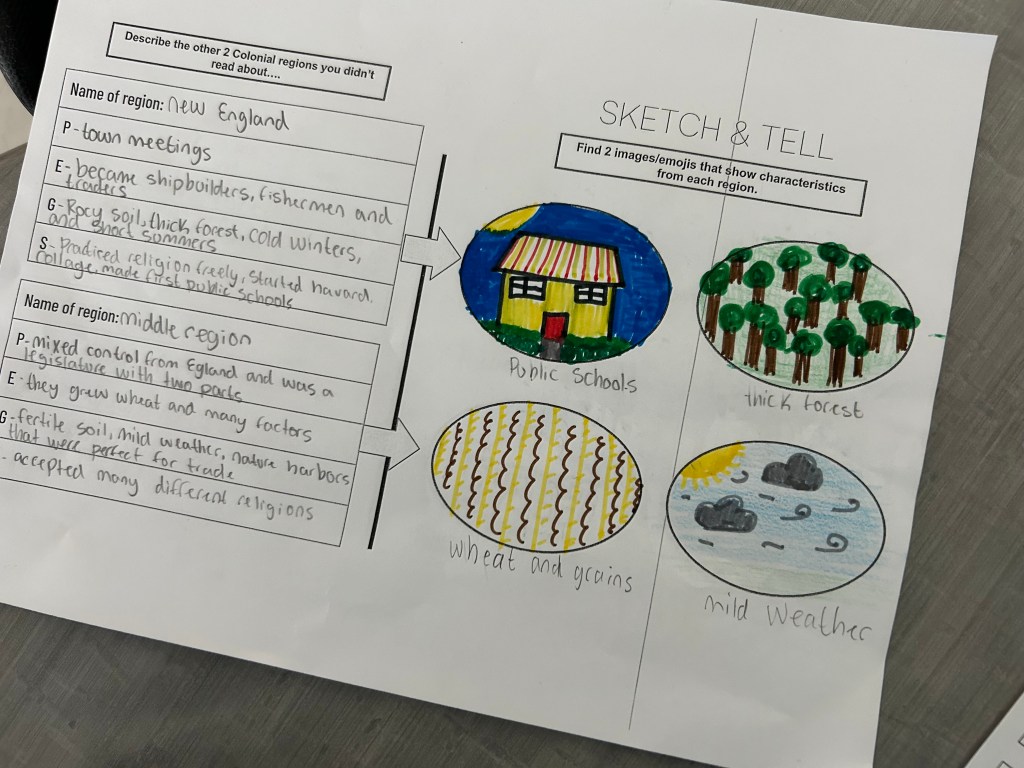
For the main part of the lesson, we did an Iron Chef on Padlet. Each student received a half-page of reading about a different colonial region. They logged onto Padlet and shared four facts related to their region using the PEGS format—political, economic, geography, and social. Once their notes were posted, they used the “I can’t draw” feature on Padlet to create a picture representing their region. This visual aspect gave them a creative outlet to express their understanding.
Experimenting with Thick Slide vs. Sketch and Tell-O
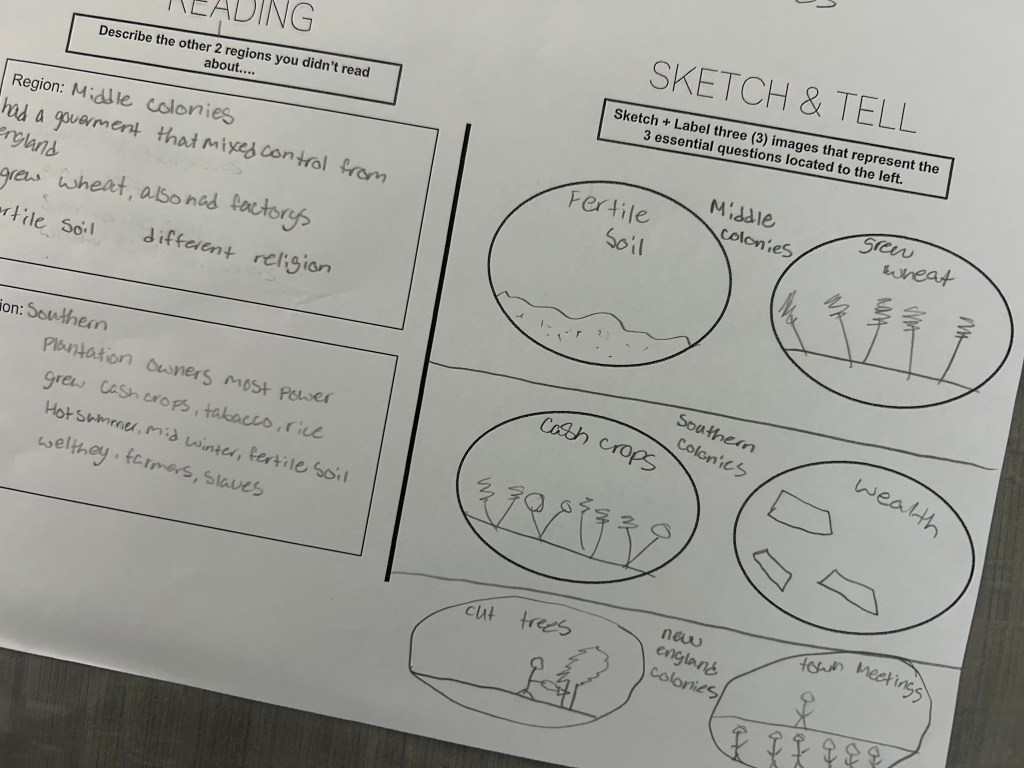
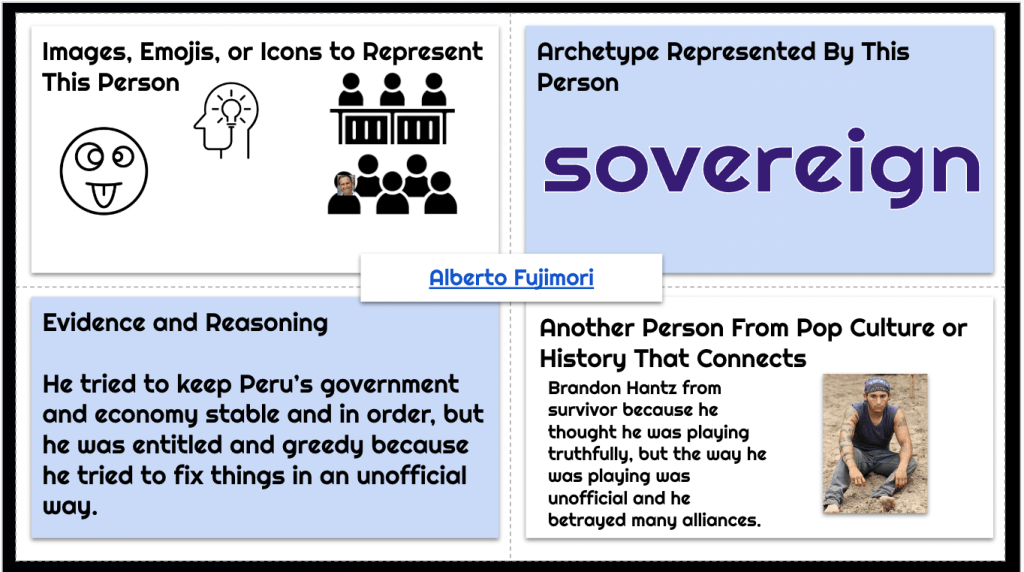
After the Iron Chef, I decided to try an experiment. In two classes, I had students create a Thick Slide using the shared information from Padlet. In the other two classes, I used a Sketch and Tell-O activity instead. The results were interesting—classes that made Thick Slides had second Gimkit scores of 85% and 87%, while the Sketch and Tell-O classes scored slightly higher at 88% and 89%. While the difference wasn’t huge, it was enough to show me that both methods can be effective, depending on the class dynamic.
Finishing with Wordwall
We wrapped up with the same Wordwall practice from Thursday, this time with a twist. I challenged the students to complete the activity without any map help. Many of them surprised themselves by getting 100% on their own! It was great to see that kind of confidence and self-assurance building as we closed out the week.
Takeaway
Friday showed me that the methods we’ve been using—whether it’s Padlet, Gimkit, Thick Slides, or Sketch and Tell-O—are all helping to build both knowledge and confidence. The slight variation in results also confirmed that students respond differently to various activities, but the key is keeping things engaging and accessible.

Experimental Idea
I created a Colony Founder GPT. This GPT is designed to let students immerse themselves in history by interviewing the founders of the original 13 American colonies. Instead of reading static facts, students can interact with historical figures like William Penn, John Winthrop, or Roger Williams and ask them questions directly. It’s an engaging way to explore the personal motivations behind each colony’s founding, the challenges they faced, and their unique perspectives. Whether you’re learning about religious freedom in Rhode Island or the tobacco economy in Virginia, this tool offers a conversational approach to make research more dynamic and memorable.








 Moler's Musings