The Week That Was In 234

This week in Room 234 was packed with a mix of EduProtocols, hands-on activities, and a focus on understanding colonial tensions. From Sketch and Tell-O for visualizing British taxes on Monday to analyzing historic protests with 8 Parts and Cyber Sandwich later in the week, each day brought something new. We tackled the Boston Tea Party with Number Mania to dig into key details and wrapped up with an inquiry lesson on “having a voice in government.” I even worked in guided notes—a rare move for me—to support their understanding of the British Acts. Each protocol helped keep the energy high while pushing students to think critically about the events leading up to the American Revolution.

Monday

Lesson Link

Monday didn’t start out the way I’d planned. I wasn’t feeling well, but I managed to make it to school—until that weird feeling just took over and I had to head home. I can’t believe I’m saying this, but I ended up leaving…guided notes. 😳 Yep, the thing I swear I’m anti- guided notes. But sometimes, you’ve got to roll with what works for the kids you have this year, even if it’s not your ideal plan.

Guided Notes

I’m working with a student population that’s still getting used to taking ownership of their learning. So, while guided notes aren’t my go-to strategy (and honestly, something I’d like to phase out), they’re a starting point. I figured that leaving the notes would help the students review what we’ve already learned about British acts and taxes while introducing some new information like the Townshend Acts, Tea Act, and Intolerable Acts. I could’ve covered all the British acts and taxes at once, but knowing the group I have this year, I wanted to avoid overload. Small doses, steady progress—that’s the plan.

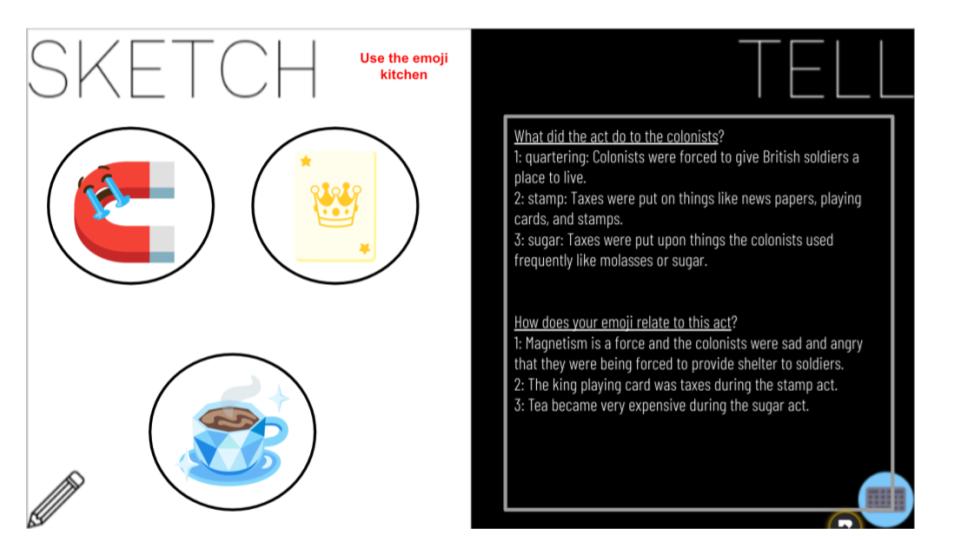
Sketch and Tell-o: Emoji Kitchen Edition

To follow up the guided notes, I left a Sketch and Tell-o activity. I had the students use the Emoji Kitchen to create visual representations of the British acts. The goal was for them to combine two emojis into one new emoji that represented each act, like using a tea cup and an angry face to illustrate the Tea Act. It’s a fun and creative way to get them thinking beyond the text, and I was hoping it would engage their imaginations a bit more than traditional worksheets.

Gimkit

I set up a Gimkit as an assignment and left it for them to complete. It was meant to reinforce the acts we covered, testing their recall and giving them that competitive, game-based edge they enjoy. I figured it was the perfect way to end the lesson independently—keeping it interactive even while I was out.

The Results: Progress, but We’ve Got Work to Do

Here’s what happened:

  • About 80% of students completed the guided notes, which isn’t bad considering it’s what they’re used to.
  • 50% made it through the Sketch and Tell-o, which shows me they’re still warming up to that format.
  • Only 30% completed the Gimkit—but of that 30%, the overall average score was 82%, so they’re retaining the info, which is a positive takeaway.

Not the most productive day, but it’s progress. The plan is to ease them out of guided notes and into more interactive and student-led learning activities as the year goes on. We’re building stamina and confidence, one small step at a time. This class is growing—slowly but surely—and I’m adapting my approach to meet them where they’re at while pushing them forward. It’s all part of the journey.
Tuesday

Mr. Roughton’s Site

Tuesday, I was back in action and ready to keep building on the momentum (even after a rough Monday). To really drive home the idea of British acts and taxes, I used a classic Mr. Roughton lesson called “Of Parents and Children.” It’s a gem that uses a humorous, relatable approach to connect the build-up of the American Revolutionary War with the students’ own experiences.

“Of Parents and Children”: Bringing the Revolution Home

In this lesson, the premise is simple but effective—compare historical events to everyday situations that students can relate to. I read scenarios that mimicked the British acts and taxes but presented them as if they were happening between parents and children. For example, one scenario had the “parents” making their child pay the family Netflix bill (which, of course, got a lot of groans and eye rolls). The students wrote down how they would feel if that happened to them—most of the responses ranged from “unfair” to “totally unreasonable.”

After each scenario, we flipped the script and connected it to the actual historical event, like the Stamp Act or Townshend Acts. The students then made connections between the two, understanding how colonists might have felt and why they were so angry. It’s always great to see the lightbulbs go off when they realize how similar these feelings of unfairness are to the colonists’ experiences.

Taking Longer Than Expected

The activity ended up taking longer than I anticipated—students were really into it, and we had some great discussions about fairness and control. We didn’t have time for all the follow-up activities I had planned, but the engagement and dialogue made it worth it. It was one of those moments when slowing down felt right, even if it meant changing the pace of the day.

Fast and Curious Wrap-Up

To wrap things up, we did a quick Gimkit Fast and Curious. It was a great way to reinforce what we’d discussed in a fun and interactive format. The class averages ranged from 90% to 76%, showing that even with a more hands-on, discussion-based approach, they were retaining the key information.

It was a solid day of learning that tied the content to something personal and familiar for the students, making the history feel less distant and more relevant. Onward to the next lesson! 💥🔥

Wednesday

Lesson Link

Wednesday, I could tell the energy in the room was running low after all the talk about British acts and taxes. It was time to pivot and move on. I decided to shift the focus to how the colonists protested these taxes and why they chose to take action. And, to really hook them, I wanted to start with something dramatic—violence.

Kicking Off with a Hook: “The Bostonians Paying the Excise-Man”

To grab their attention right off the bat, I used the famous cartoon, The Bostonians Paying the Excise-Man. This picture tells a pretty wild story—perfect for keeping 8th graders interested while diving into the deeper meaning of protest and rebellion. I knew the image’s intensity would catch their eye and drive home the point that sometimes people resort to violence when they feel unheard.

I started the lesson with a quote on the board:
“He picked off his charred skin, kept it in a box, and showed it to King George III to prove his loyalty.”

It was just the hook I needed. Eyes went wide, and hands shot up. The curiosity was sparked, and we were off to a solid start. This lesson was done entirely on paper because I’ve noticed that my students engage more with physical materials than with digital ones—so we’re rolling with what works.

8Parts: Analyzing the Cartoon

We kicked off with an 8Parts activity. The goal? Analyze the cartoon with no background information—just raw observation. I asked them to list nouns, verbs, adjectives, and adverbs they saw. This helped them start thinking critically without immediately jumping to conclusions. After they’d had some time to work through their observations, I filled them in on the historical context behind the cartoon and had them consider: Why would someone create this?

To wrap up the 8Parts, they crafted a summary using all the parts they had identified. It was cool to see them start piecing together how protest could turn violent and why.

Frayer Models: Sons of Liberty & First Continental Congress

Next up, we switched gears and worked on two Frayer Models—one for the Sons of Liberty and one for the First Continental Congress. I provided the Google definition for each term, but I wanted them to make it their own. They had to create their own definitions, jot down two examples of people they might have heard of who were part of each group, and sketch a picture to represent each one. It was a solid way to build context and give them some hands-on work that helped reinforce the key players in these protests.

CyberSandwich: The Story of John Malcolm

For the main event, we dove into a CyberSandwich about the cartoon The Bostonians Paying the Excise-Man. The story focused on John Malcolm, who was tarred and feathered by the Sons of Liberty. This narrative always grabs attention—it’s intense and dramatic, exactly the kind of thing that gets 8th graders engaged. They took notes using the who, what, when, where, why structure. They were all in, and you could see the gears turning as they made connections between the story and the broader context of colonial protests.

To wrap up the CyberSandwich, I tried something different. I had AI create a really bad summary paragraph for the students to fix. They nailed it—picking it apart, rephrasing, and turning it into something meaningful. It was awesome to see them take ownership of their corrections and really focus on improving the content.

The last task was to write a caption for the cartoon, but from the perspective of a British loyalist. This was a challenge for them. They struggled to switch perspectives, and it was clear that empathy mapping is still something we need to work on. But it’s all part of the process, and I’m confident that with more practice, they’ll get there.

Reflection

Wednesday was an active day that pushed the students to connect personally with history while developing key skills like analysis, summarization, and empathy. The energy in the room was definitely better, and I felt like the shift in focus was just what we needed to keep the momentum going. On to the next! 💥🔥

Thursday

Lesson Link

Thursday was all about continuing the theme of protest, shifting from violent and intimidation protests to destructive protests when people felt their voices weren’t being heard. Our focus? The Boston Tea Party—a classic example of colonists taking drastic measures to make their point.

Intro to Number Mania

I love using Number Mania for events like the Boston Tea Party, but I realized I hadn’t introduced this activity to my students yet. So, before diving into the history, I set up a practice round to get them comfortable with the concept.

To start, I had each student create a slide with 3 numbers that were significant to them. It could be anything—like their birthday, favorite sports jersey number, or the number of pets they have. Then, I taught them how to use Word Art, change colors and fonts, and add drop shadows to make everything pop on their slides. This creation time took about 12-15 minutes, but it was worth it. They got into the groove of designing and making their numbers stand out.

This step was crucial; it got them familiar with the process and built confidence so when we moved into the actual content, they’d feel ready.

The Real Deal: Boston Tea Party By the Numbers

With the practice under their belts, it was time for the real Number Mania experience. I had Claude (AI) create a “Boston Tea Party By The Numbers” reading. Of course, I fact-checked everything before handing it over to the students—got to keep things accurate!

To set the stage, I gave them a quote:
“The Boston Tea Party was a massive and well-organized protest that required careful planning, involved many people, and had huge consequences.”

Their goal? Find 4 numbers and facts in the text that supported this quote. We read the text together, and they highlighted the numbers that stood out. Then, they created a slide with their findings, just like we practiced.

Success with Number Mania

Thanks to the practice run, they nailed it. I was hearing a lot of “This is easy!” as they worked, which is exactly what I want—confidence and engagement. They connected the numbers back to the larger idea of the Boston Tea Party being a well-planned protest, and it was great to see them make those connections independently.

This approach worked wonders. It wasn’t just about understanding the history; it was about reinforcing the process, building confidence, and making it feel achievable. We’re definitely keeping Number Mania in the rotation!

Onward to the next chapter in our revolutionary journey! 💥🔥

Friday

Primary Sources Lesson Link, Thick Slide Summary

Friday was a day off for me, so I set up an inquiry lesson for my students—a deep dive into the question, “Why is it important to have a voice in government?” This inquiry question felt like the perfect way to wrap up everything we’d covered throughout the week about colonial protests, representation, and rebellion.

Tackling Inquiry with a Little Help from AI

Now, I actually like some of the inquiry lessons from the textbook, but the problem is they’re often a bit much. These lessons can be overly complicated, and many of the primary sources aren’t exactly written at an 8th-grade-friendly level. Sure, I want students to stretch their thinking and be challenged, but there’s a fine line. Most students don’t have the stamina for hours of “critical thinking” with material that feels too complex or abstract.

So, I decided to give this inquiry lesson a boost to make it more accessible. Here’s what I did:

  1. Streamlining the Primary Sources: The lesson had five primary sources, so I took screenshots and ran each one through Claude AI. I asked it to rewrite the sources at a 7th-grade reading level, but still maintain the original tone and style. This way, the students could understand the essence without getting bogged down by archaic language.
  2. Adding Context & Guiding Questions: For each source, I had the AI add context to set the stage—who wrote it, why, and how it fits into our big question. I also had it extract any guiding questions from the textbook and even create one additional question for each source to push the students’ thinking just a bit further.
  3. Final Synthesis Question: The ultimate goal was for students to answer the question, “Why is it important to have a voice in government?” After they’d worked through the sources and guiding questions, they were meant to summarize their findings on a Thick Slide.
The Real-Life Results

Did most students finish the work on paper? Honestly, I’m not sure. I saw that about 30 out of 90 students got to the Thick Slide summary. My guess is that the majority were working through the sources at their own pace, which is totally fine. The focus was less on “getting to the end” and more on engaging with each source meaningfully.

This setup was a bit of an experiment, but I’d say it was worth it. Having simplified sources and targeted questions helped make the inquiry more manageable. Even if they didn’t all finish, I’m hopeful that they took away some understanding of why representation matters—a key theme we’ll keep building on as we move forward in our revolutionary timeline.

The Week That Was in 234

This week was all about leveraging EduProtocols to simplify learning, foster creativity, and reinforce key concepts. From using Thin Slides and Cybersandwich to explore complex topics like Bacon’s Rebellion and race-based slavery, to engaging students with retrieval-based activities like Graph and Tell and Thick Slides, the focus was on making learning more accessible and engaging. Whether students were interacting with AI chatbots or diving into historical data, these protocols helped break down challenging content into manageable, meaningful tasks. Here’s a breakdown of how we used EduProtocols to keep the momentum going this week:

Monday

Lesson Link

On Monday, I decided to try out something new and set up a free trial with Magic School. In the past, it seemed like a promising one-stop shop for classroom tools, though my previous experiences were inconsistent. But with a new school email, I created a fresh account and set up a chatbot for the 13 colonies.

My vision was to have a chatbot that would take on the persona of one of the founders of the 13 colonies. All students had to do was type, “Who founded <enter colony name>?” A few people have already asked how I set up the chatbot, so here’s how I did it: Instead of app smashing, I was AI smashing. I went to Claude AI and asked for a set of instructions for a chatbot that would take on the persona of one of the founders of the 13 colonies—geared for 8th graders. It even provided a knowledge base for each founder!

For this lesson, I didn’t think it was important for students to memorize every detail about every colony. Instead, I wanted them to understand the colony’s region, its geography, and its economy.

Starting with Gimkit: Colonial Regions Review
We kicked off with a quick Gimkit on colonial regions, a review of Friday’s lesson. The class averages ranged from 82% to 90%—pretty solid, especially for a Monday.

Frayer Model Activity
Next, I handed out paper Frayer models where students wrote a colony name in the middle and added information about its government, geography, economy, and religion. Looking back, I should’ve just aligned it with the PEGS acronym we used on Friday, but live and learn.

Introducing Magic School
I showed students how to use Magic School, where I had set up a classroom that allowed me to add AI tools. I added both the chatbot and an image generator, then shared the Magic School link with the students—super easy!

I loved this activity because it got kids asking good questions, which is such an important life skill. They could ask the chatbot about their colony and get personalized answers. For example, they could ask the founder to use simpler language or even to relate the colony’s geography to basketball! It was cool, and the students were hooked—many didn’t know AI could do this kind of stuff.

Students wrote down notes from the chatbot on their Frayer models.

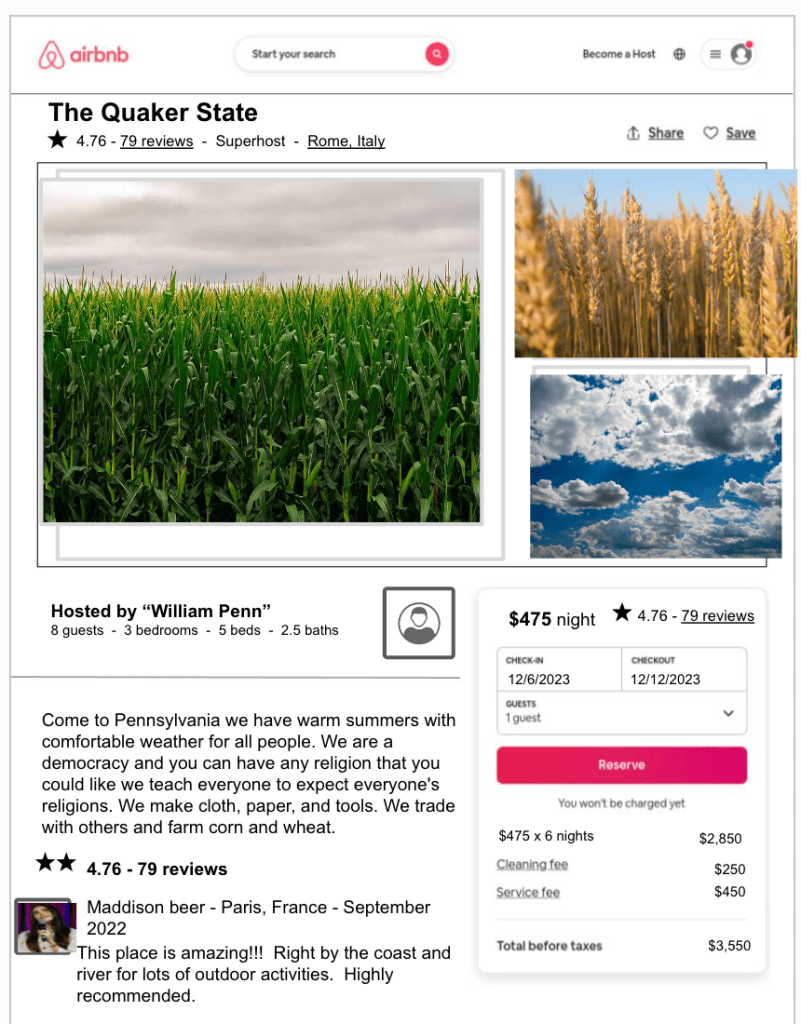
Airbnb Advertisement Activity
The next step was to use those notes to create an Airbnb advertisement for their colony. I got this idea from Ditch That Textbook, and it was super easy to adapt. However, the students struggled a bit with this task. Getting them to think creatively and step outside the box is still a work in progress, but I see improvement.

Takeaway
The chatbot was a win—it allowed students to engage in inquiry-based learning and step away from the textbook. The creative thinking piece is still a challenge, but I’m confident that with practice, we’ll get there. The biggest takeaway? Learning how to ask good questions and use AI to personalize that learning was a game changer for my students.

Tuesday

Lesson Link

Tuesday, I needed a bit of an easy day, but still wanted to create a meaningful learning experience. We started the lesson by emphasizing the importance of using person-first language when discussing slavery. Instead of using terms like “slave,” we replaced them with “enslaved person,” and “master” or “owner” with “enslaver.” It’s a small shift but a crucial one, and I’ve learned it requires explicit teaching for students to fully grasp its significance.

Station Rotation Activity: The Triangular Trade and Middle Passage
The core of today’s lesson was a station rotation activity centered on the essential question: “How did Europeans exploring North America for trade, religious reasons, and competition with each other affect the history of the continent and the people who lived there?” This question has been guiding our exploration of European colonization’s impact on North America.

Students rotated through four stations, each engaging with a different aspect of the Triangular Trade and the Middle Passage:

Station 1: EdPuzzle Video
We kicked off with a 5-minute EdPuzzle video—a Ted-Ed lesson on the Middle Passage. The video was followed by questions to ensure comprehension and introduce students to the topic. The video laid the foundation for the rest of the activity.

Station 2: SlaveVoyages.org Interactive Map
At this station, students used the SlaveVoyages.org database, an incredible resource featuring a timelapse map of ships departing West Africa for the New World. The interactive map allowed students to explore individual ships, their cargo, and survival rates. It was a powerful, visual way to understand the horrific journeys endured by enslaved people. The database, built through collaborative efforts, was an invaluable resource for our class.

Station 3: Slavery Statistics
In this station, we focused on statistics related to slavery. Tying back to our previous Number Mania lesson, students saw how statistics have real historical context. They used data from the Slave Voyages database and connected it to the numbers we’ve been exploring.

Station 4: Slavery in the Northern and Southern Colonies
At the final station, students read about slavery’s presence in both the Northern and Southern colonies and how enslaved people managed to build their own culture despite their circumstances. A map illustrating the Triangular Trade routes accompanied the reading, helping students visualize the geographic connections.

Students worked in pairs at each station, discussing and answering questions. The stations ended up taking longer than expected, but seeing the students engaged and actively learning was more important than sticking to a rigid timeline.

Thick Slide Assessment
To wrap up the lesson, I posted a Thick Slide task. Students condensed the information from their station rotations into essential facts, answering the question, “How did the triangular trade and the Middle Passage transform North America?” They also used the Slave Voyages database to find a ship that traveled to North America and gather relevant statistics. As a final touch, they included a quote from Olaudah Equiano and an image with a caption.

Takeaway
This was a more laid-back day, but it was packed with meaningful content and reflection. The stations allowed for deep engagement, and the students rose to the challenge of condensing complex ideas into manageable pieces of information. Even though we didn’t stick to the exact schedule, the engagement and learning made it all worth it.

Wednesday

Lesson Link

On Wednesday, I wanted to introduce how race-based slavery came to be in North America. I started with a picture of Anthony Johnson on the board. Johnson was a Black man and former indentured servant in Jamestown who earned his freedom, owned land, and even enslaved people to work on his tobacco farm. This example illustrated that slavery wasn’t originally race-based in the colonies. But then came Bacon’s Rebellion, and things began to shift.

Graph and Tell: Analyzing Slavery Census Data
We began with a Graph and Tell activity where students analyzed census data about slavery. They made inferences based on the data, which served as a review of the colonial regions and their economies. This exercise helped students make connections between the regions and how slavery impacted their development.

Introducing Bacon’s Rebellion
Next, I introduced Bacon’s Rebellion. The textbook mentioned that the rebellion showed how the Virginia government couldn’t ignore its citizens, but I thought, “Bacon’s Rebellion goes way beyond that!” To help students understand, I used a Somebody, Wanted, But, So, Then activity, giving them more practice with sequencing and comprehension. This scaffolded their understanding of the rebellion’s role in the shift toward race-based slavery.

Cybersandwich: The Start of Race-Based Slavery
After introducing Bacon’s Rebellion, we read about how race-based slavery began in Virginia as a consequence of the rebellion. I had students work through a Cybersandwich activity for this reading. They wrote down five important facts, condensed their notes, and then compared and discussed with a partner. This paired learning helped students process the material more deeply.

Struggling with Summary Writing
To wrap up, I wanted students to write a quick summary of what they had learned about the shift to race-based slavery. Oh boy—the summary writing was a struggle. I’m not sure if it was the content itself or just the act of writing, but many students found it challenging to condense their thoughts into a clear, concise summary.

Takeaway
Wednesday’s lesson introduced some complex ideas, and while the Cybersandwich activity helped students grasp the content, the summary writing showed me that we still have some work to do. I’ll need to continue working on breaking down writing skills and building confidence in expressing complex ideas in shorter formats.

Thursday

Lesson Link

Thursday was a special reward day for the students since it was the end of the quarter. With limited time and a more relaxed atmosphere, I decided to do something simple but beneficial: a Retrieval Practice Grid activity that doubled as an opportunity for extra credit.

The Retrieval Practice Grid
I created a grid of questions that covered topics from 7th grade, Unit 1, Unit 2, and our current unit. Each question on the grid was worth a different amount of points based on its difficulty. Students could work through the questions, and depending on how many points they earned, they could unlock different levels of extra credit.

To ensure this was true retrieval practice, I didn’t allow Chromebooks—it was all about what they could recall from memory. The goal was to reward students for what they’ve learned over time, and it was a great way to wrap up the quarter while still reinforcing key content.

Takeaway
This activity worked perfectly for the day’s time constraints while still keeping students engaged and focused. It also showed me how much they’ve retained from not just this year, but even last year’s content. A win for both students and teacher!

As the week comes to a close, I’m impressed with how the EduProtocols have streamlined our lessons while keeping students engaged and thinking critically. The combination of Thin Slides, Cybersandwich, and Graph and Tell not only made complex topics like race-based slavery more approachable, but also fostered deeper understanding and retention. The students are gradually getting more comfortable with creative tasks, and I can see their confidence growing as they interact with both the content and each other. Moving forward, I’m excited to keep building on this momentum with even more dynamic and student-centered activities.

The Week That Was In 505

Introduction

This week we continued and finished our unit on the constitution. We incorporated some eduprotocols such as Frayer, Hero’s Journey, and Archetypes with limited government. For example, we used an iCivics article about Alberto Fujimori to illustrate concepts of limited versus unlimited government. Next, we followed this up with a lesson on federalism. For federalism, I brought in Oreos for a mystery box lesson. I used Thin Slides, sketch and tell, and a 3xPOV challenge. On Wednesday, we began part 1 of our 2-part constitution assessment. I shared a CyberSandwich and an article about how the constitution limits the power of government. On Thursday, we did part 2 of our assessment which was the citizenship test questions that I originally gave on January 4th. We began a new unit with a Geography challenge on Friday—the New Republic—where I focus on the decisions and the presidencies of the first 5 presidents.

Monday – Limited Government

Tuesday – Federalism

Wednesday – CyberSandwich, Reading

Thursday – Citizenship Test

Friday – Geography Challenge

Monday

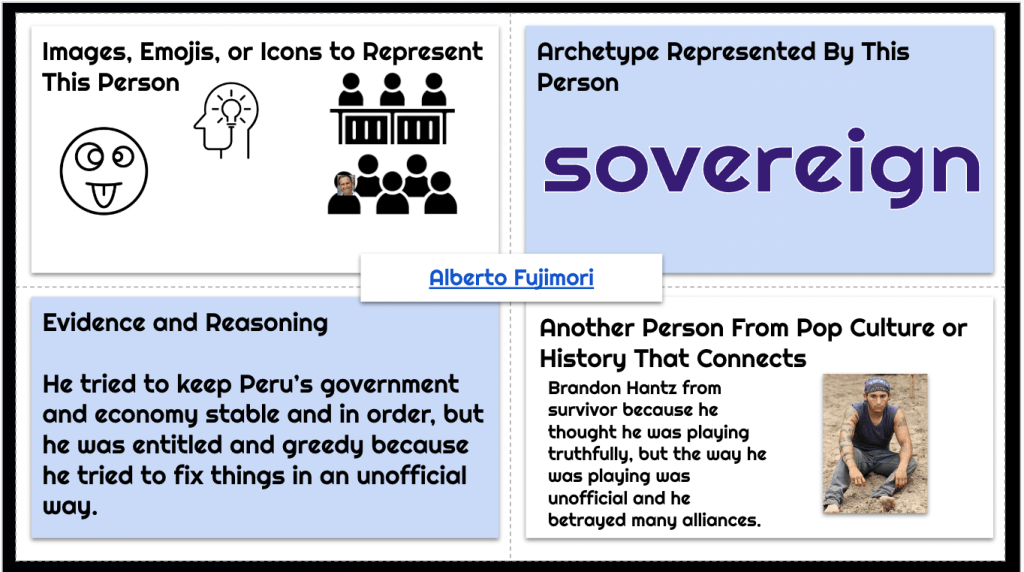
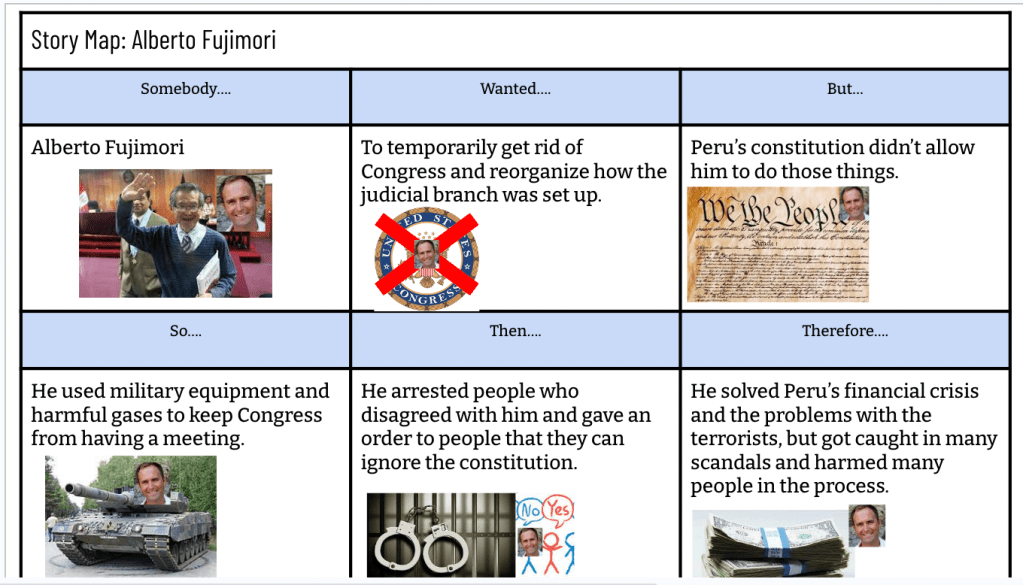
On Monday, we had a lesson on limited government. This was an extension from Friday’s class. For this lesson, I used an iCivics lesson about limited government. The first part of the reading involved words we already knew—such as separation of powers, rights, and popular sovereignty. I selected the word “rule of law” because the students had never heard that word before. So, students completed a Frayer model for that word and paraphrased the definition, found 3 connecting words, and found an image to represent it. Next, students read the article and sorted characteristics of limited and unlimited government. Next, students read an article on Alberto Fujimori who was elected President of Peru and eventually made himself a dictator. He got rid of separation of powers, removed people’s rights, abolished the Constitution in Peru. I took a Hero’s Journey template and changed it to a different format for comprehension—Somebody, Wanted, But, So, Then. I added a 6th element…..Therefore. Students read the article and mapped out the story. Students followed this up with a 4-square archetype about Alberto Fujimori. What’s interesting on the archetype is the number of students who read that Fujimori fixed Peru’s financial problems and terrorism problem and viewed him as a hero. Some even tried relating Rosa Parks and others to him. I intervened and said, “No, no—sorry that connection does not make sense.” I had to explain that Alberto Fujimori made himself a dictator, had opponents killed, and ended a democracy for his selfish interests. Maybe the students seeing him as a hero is a product of the world we live in now…..I do not know. With the archetypes, students chose images to represent Fujimori, chose an archetype, used evidence, and made a connection to another person in pop culture or history.

Tuesday

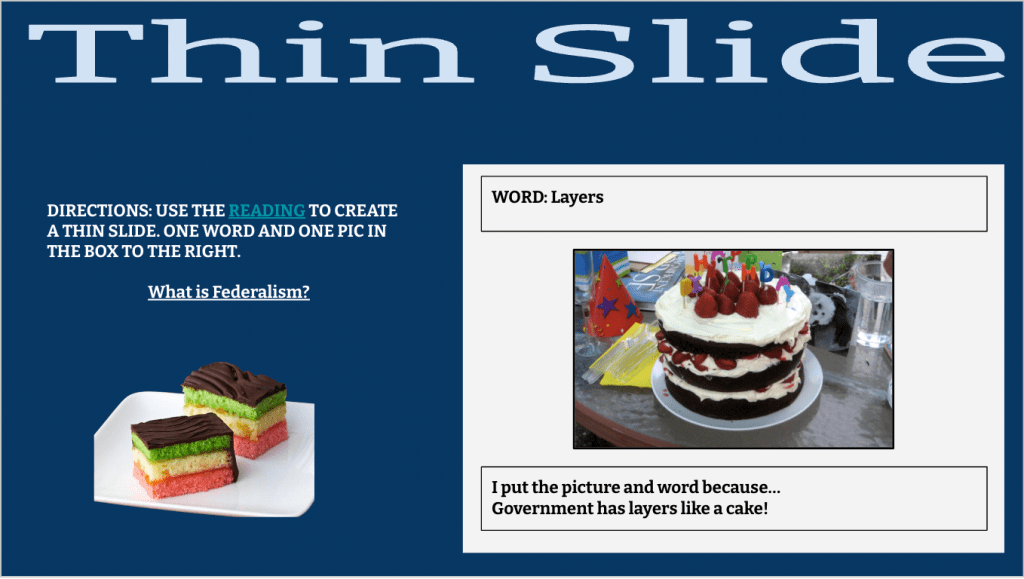
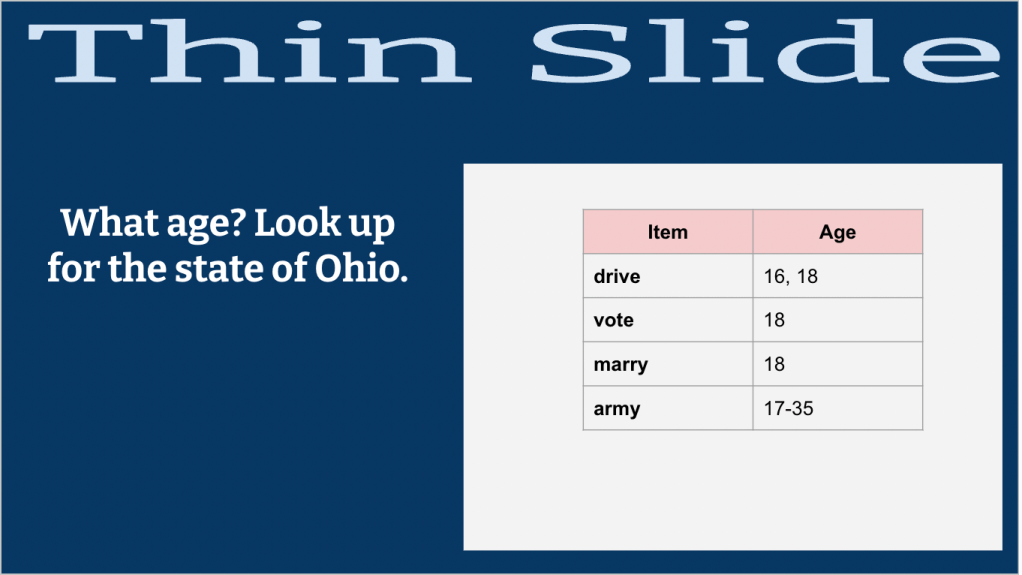
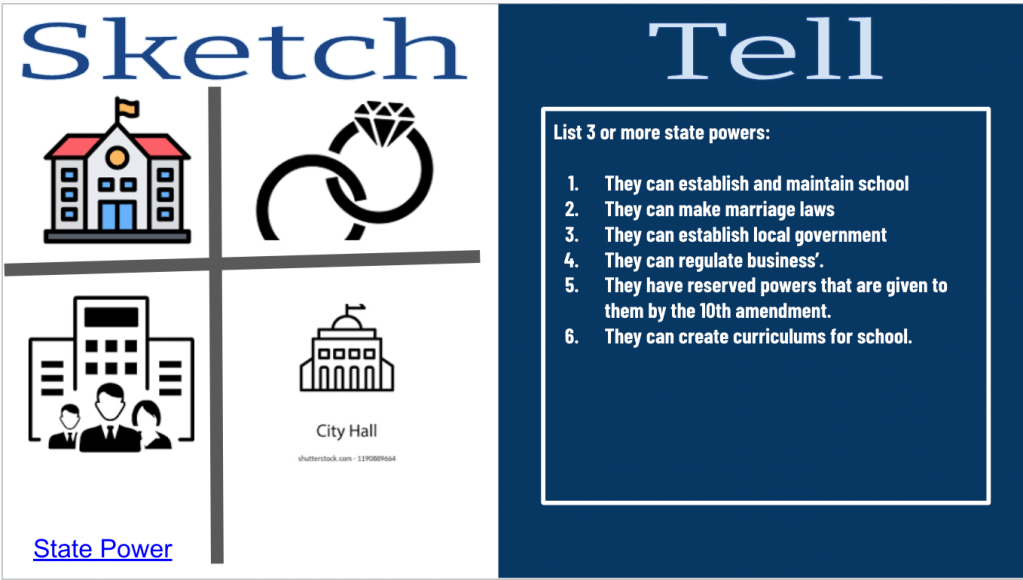
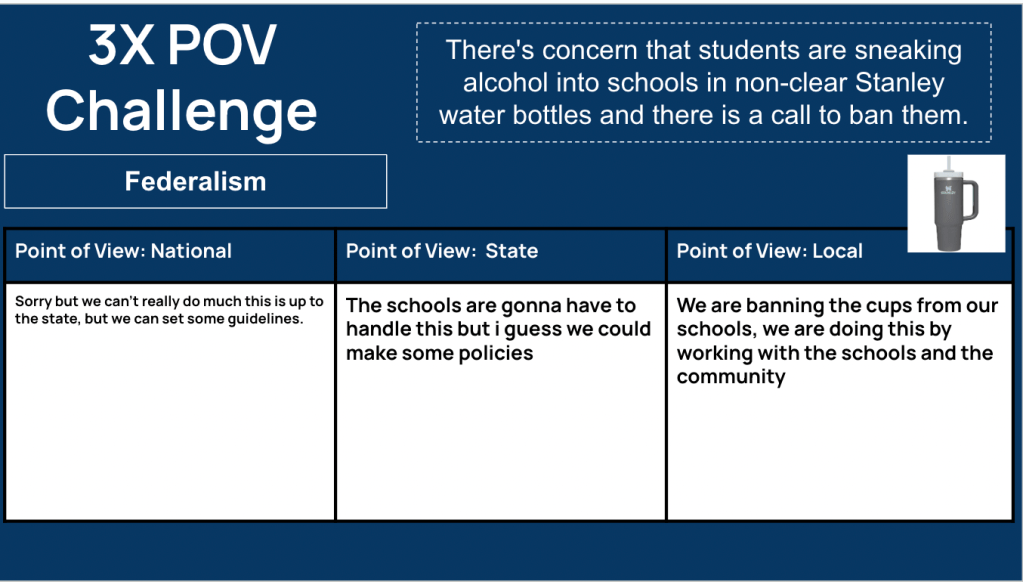
With my federalism lesson, I switched it up this year. I still did a mystery box lesson and I dropped hints about the Oreos in the mystery box. Without the lesson, I was still dropping hints about the Oreos inside the mystery box. However, this year I decided not to have the students use the Oreos in their sketch and tell. I began the lesson with a thin slide where I had the students read a brief description of federalism and they chose one word and one picture and then explained why they chose that word and picture to represent federalism. Next, we did a second thin slide where I had the students look up the ages in Ohio if they wanted to drive, vote, get married, and join the army. We then had a discussion on who sets these age limits—whether it is the state or national government. Next, I had the students use a sketch and tell template and they pulled information from an infographic I found on federalism. Students created pictures on the sketch and tell or found icons to represent expressed powers, state powers, or concurrent powers. Finally, I ended the lesson with a 3xPOV eduprotocol where I gave the students a scenario and asked them to consider the perspective of the national government, state government, and local government. I used a scenario involving the school wanting to ban Stanley tumblers, but as we started that activity, the students struggled to put themselves in the position of the different levels of government. I understand this difficulty because they are 8th graders. I also thought about what was missing from the lesson that could help them better grasp this concept. Ultimately, it is going to be tough for 8th graders to envision how national, state, and local governments would respond. Although I tried to guide them, they struggled, which is understandable at their age. However, I am reflecting on how to improve their perspective-taking ability on this topic.

Wednesday

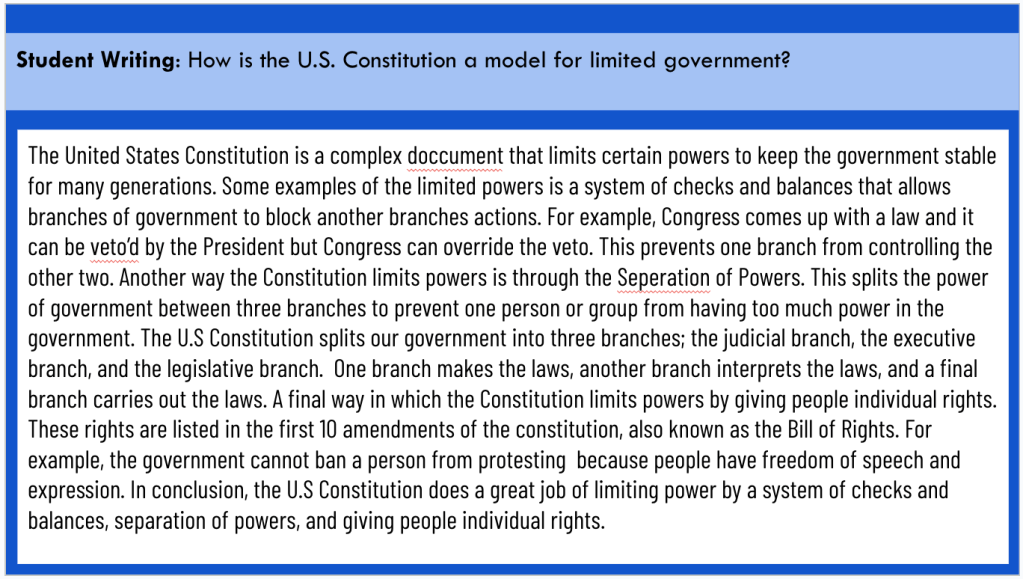
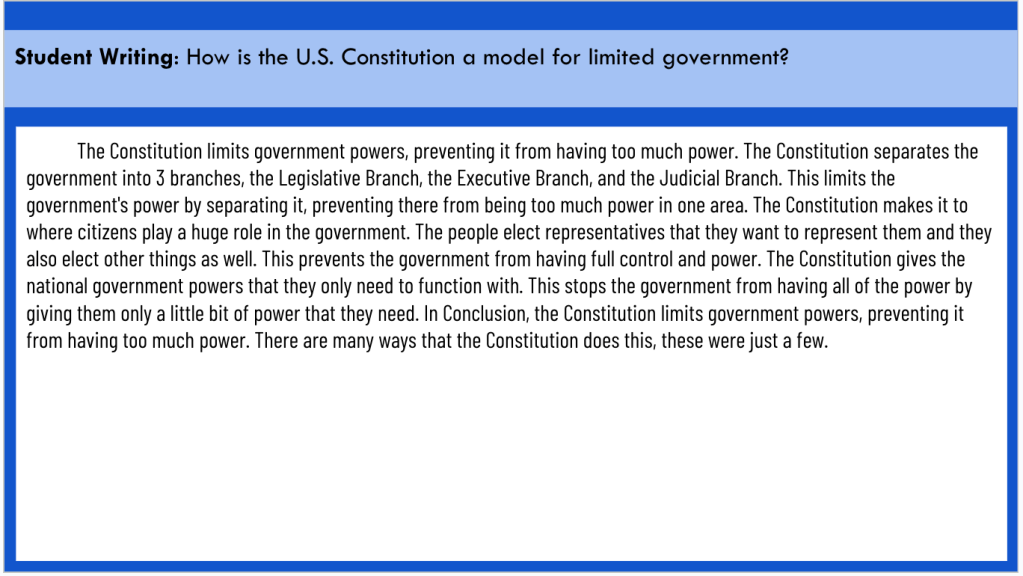
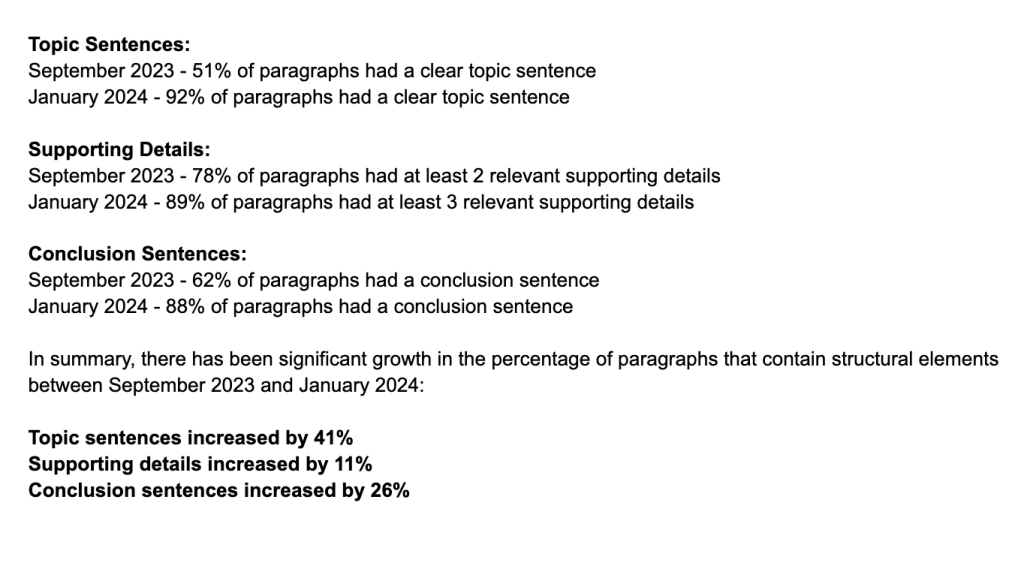
On Wednesday, we began our final assessment for the constitution unit. I like to do two-part assessments because some students enjoy creating projects to demonstrate understanding while others prefer taking quizzes. So my units always contain both types. Part one of our assessment was a cybersandwich where I asked “How is our constitution a model for limited government?” During the cybersandwich, I linked to a reading that I had AI generate because I believe AI allows personalized lessons. I copied and pasted our unit essential question into AI, mentioned what we learned about popular sovereignty, federalism, separation of powers, checks and balances, individual rights, and limited government. Then I asked AI to write an article for 8th graders incorporating details from our specific activities like the tug-of-war on separation of powers and the Oreos representing federalism. AI helps tailor content for students, so that’s why I used it here. Students read the article, took notes, discussed in groups, and then created a paragraph answering how the constitution exemplifies limited government, with a topic sentence, 3 supporting details, and conclusion. I had AI scan their paragraphs and compare them to our first cybersandwich paragraphs of the year because I want to track their paragraph writing progress in regards to using evidence. The results are in the image below. After finishing the cybersandwich, we did a Gimkit review in preparation for part 2 of the assessment on Thursday.

Thursday

On Thursday, we completed part 2 of our assessment using the same citizenship exam questions from January 4th. I read the questions aloud while students wrote down answers. After 10 questions, they input their scores into a Google Form. I analyzed the results with AI—their average improved from 3.1/10 to 7.5/10! We closed with retrieval practice games where their averages were in the low 70% range, which is decent.

Friday

On Friday, I introduced our new early republic unit with a geography challenge from TCI. I pondered using a MapWich EduProtocol but opted to keep the activity simple since it was Friday. However, I had AI modify TCI’s original questions because I did not like them. On Claude, I explained what content students were analyzing and asked for DOK 1, DOK 2, and DOK 3 questions. While I dislike premade maps, I know when students need a bit of a relaxed day. The challenge allowed them to label maps and answer basic questions on the population increase, which sufficed for a Friday. Additionally, I incorporated a claims-evidence-reasoning question asking them to evaluate expansion as positive or negative—so they still did higher-order thinking.