The Week That Was In 505

This week we broke away from the French and Spanish colonization and we focused on British colonization with Jamestown and Plymouth. This week I wanted the students to complete another Thick Slide. The interesting aspect of this year is the fact that I have never had these students in past years. Every student is new to me and new to EduProtocols. As a result, when I introduce a new protocol, I follow it up with a second rep.

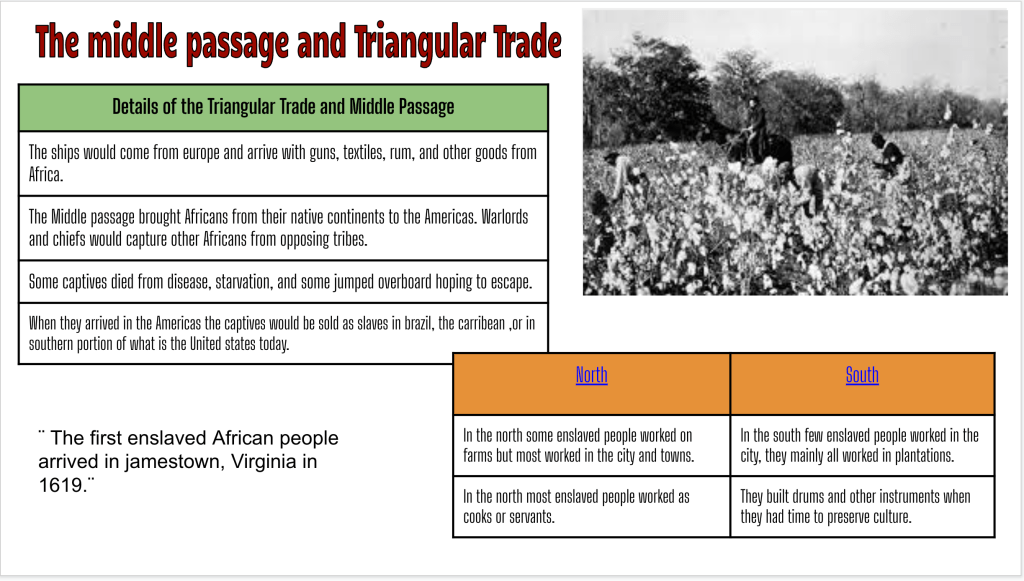
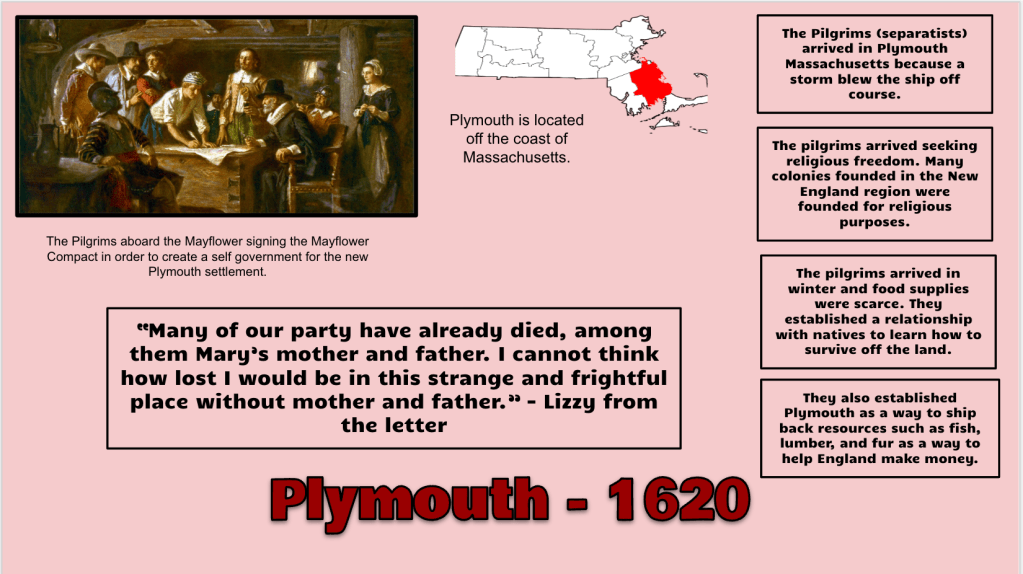
In this example, the students did a Thick Slide on the Middle Passage last week. This week, we followed that up with a Thick Slide on Jamestown or Plymouth. I also wanted the students to share their slides and contribute to each other’s learning.

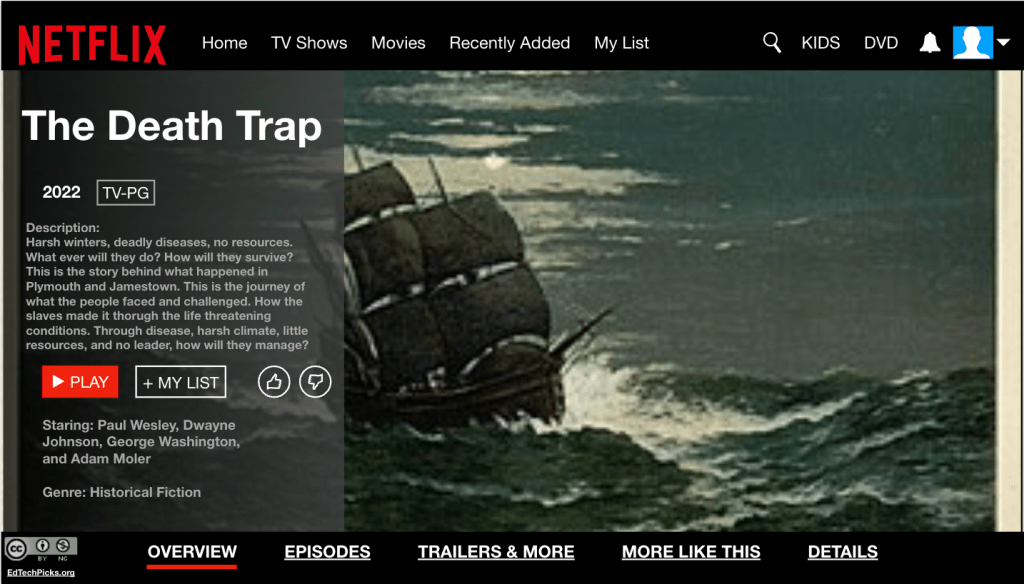
We finished the week with a creative Netflix template. The students love this template and it’s super engaging for most content.

Monday – Thick Slide, Fast and Curious (Gimkit)

Tuesday – Fast and Curious, Frayer

Wednesday – Netflix template, Fast and Curious

Thursday – Netflix, 3xCER

Friday – Gimkit, Add to Portfolios

Monday

This week we began to learn about Jamestown and Plymouth. Last year I didn’t focus on either colony. Instead, we did an investigation on the disappearance of the Roanoke colony. The Roanoke investigation is engaging, however, the students I have this year would struggle with the content. Plus, this lesson requires a lot of planning and printing stuff, and my head is barely above water now. I decided to keep it simple and went back to Jamestown and Plymouth.

I knew I wanted a lesson to get the students to contribute to each other’s learning. The best, and most, familiar way to achieve this in my room is through a Thick Slide. I created a quick Thick Slide, found a quick reading, and shared the stuff with the students.

Before students began creating their Thick Slide, I ran a Gimkit for 5 minutes. Most class averages were between 52-58%. After some feedback, I gave students 20 minutes to complete a Thick Slide on either Jamestown or Plymouth. I had them focus on these items:

  1. Why was the colony founded?
  2. What hardships did the colony face?
  3. What made the colony successful?
  4. What kinds of people went to these colonies?

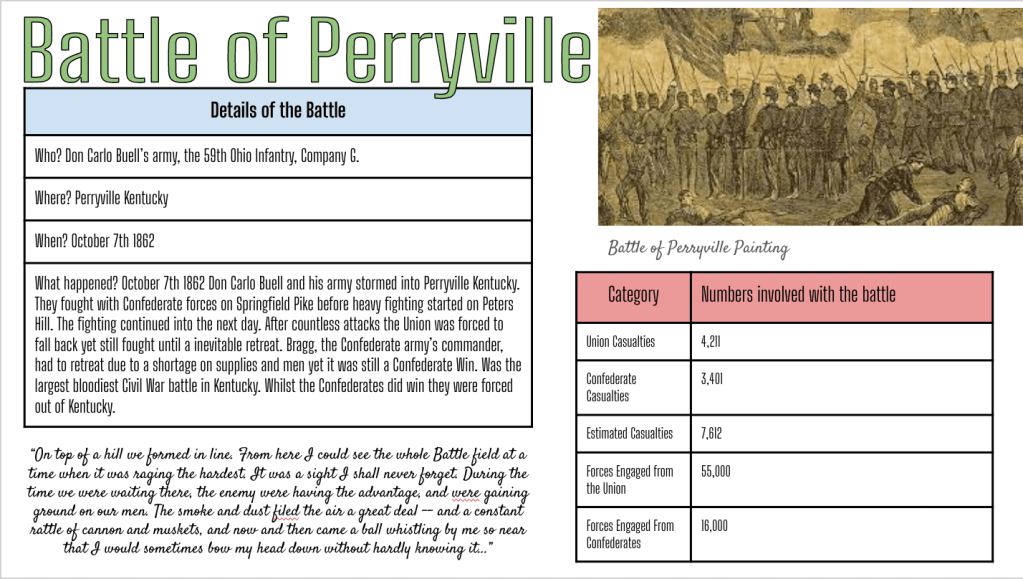
With this being the 2nd rep of Thick Slides, here are some student examples:
We finished class with another Gimkit and all classes raised their averages between 75%-80%.

Tuesday

Tuesday I began by showing the students how to change the share settings on their Thick Slide. I do this so the students can access each other’s slides after we share. I’ve been asked many times, “How do you have students share slides for contributing learning?” Here’s how I do it:

  1. I share a Google Form.
  2. Students fill out the Google Form – which colony did you do? Paste a link to your slides.
  1. I turn the Form data into a SpreadSheet.
  2. I share the SpreadSheet on the Google Classroom assignment.

After students shared their slides, I gave each student a Frayer model. I print out the Frayer models for this because it’s easier write down the information. On the Frayer I filled in the 4 boxes with the same 4 questions mentioned above:

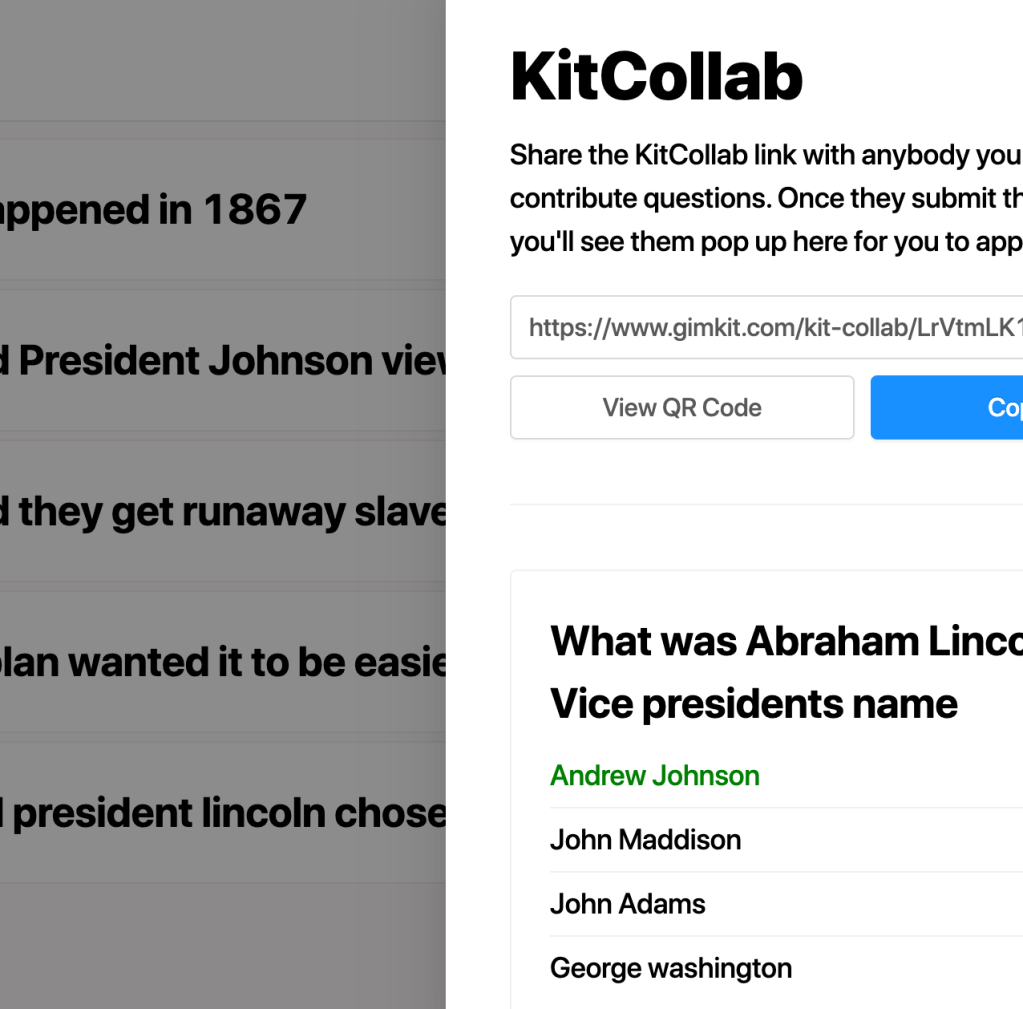
When students were finished, I had them create new Gimkit questions with the Gimkit Kitcollab. I shared a link through Gimkit and students began creating and submitting questions. I establish 1 rule: The same question cannot be repeated twice.

As students start submitting questions, I can accept or reject the question. At the end of time, we had a 20+ question Gimkit entirely made by the students.

Wednesday

Now that students had their thick slide completed, as well as the Frayer completed, it was time to create. I thought about giving students a choice, but I reminded myself that I have never had these students before. As a result, I dropped that idea. I needed something engaging and effective which meant the Netflix template came out.

I love the Netflix template and the students love it as well. When I put the template up on the Newline TV thing I have, one student said, “Are we watching a movie?” When I showed the students it was an editable tem[plate, they were instantly enthralled.

With the Netflix assignment, I listed out success criteria on the board:

  1. A Creative Title.
  2. The pictures relate to Jamestown and/or Plymouth.
  3. You included in your description and episodes 3 or more of the following:
    – Year(s) founded and location.
    – Why it was founded.
    – Hardships they faced.
    – Why did the settlements become successful.

Here are some of the students examples:

Thursday

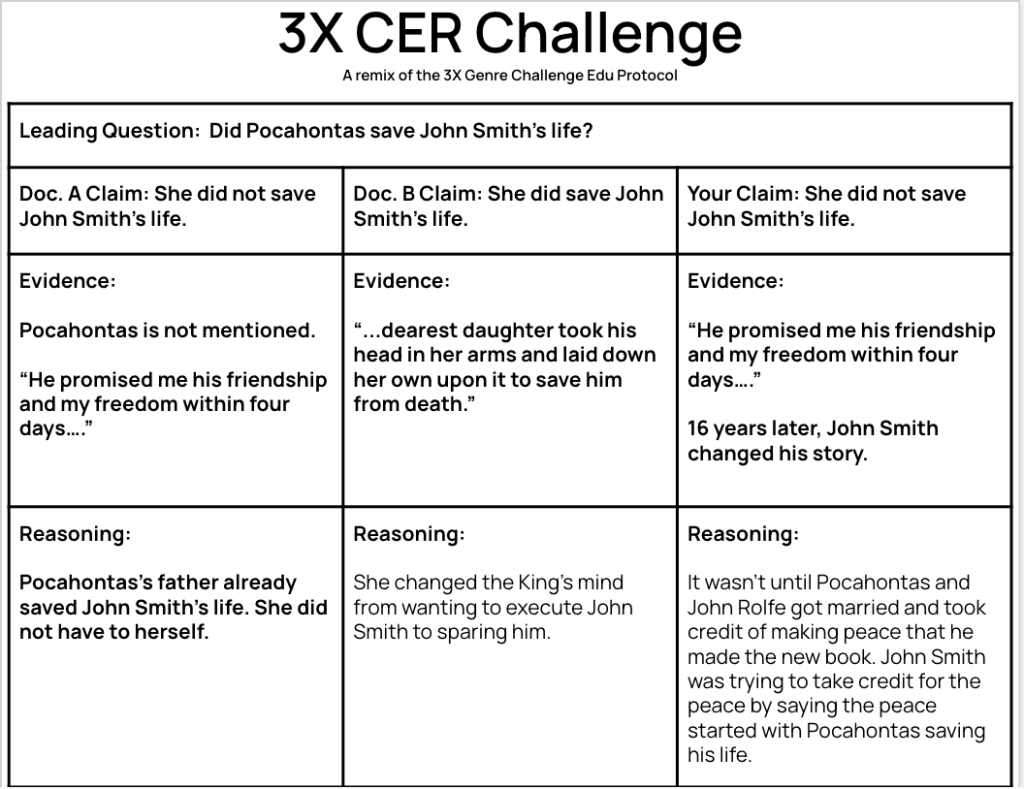
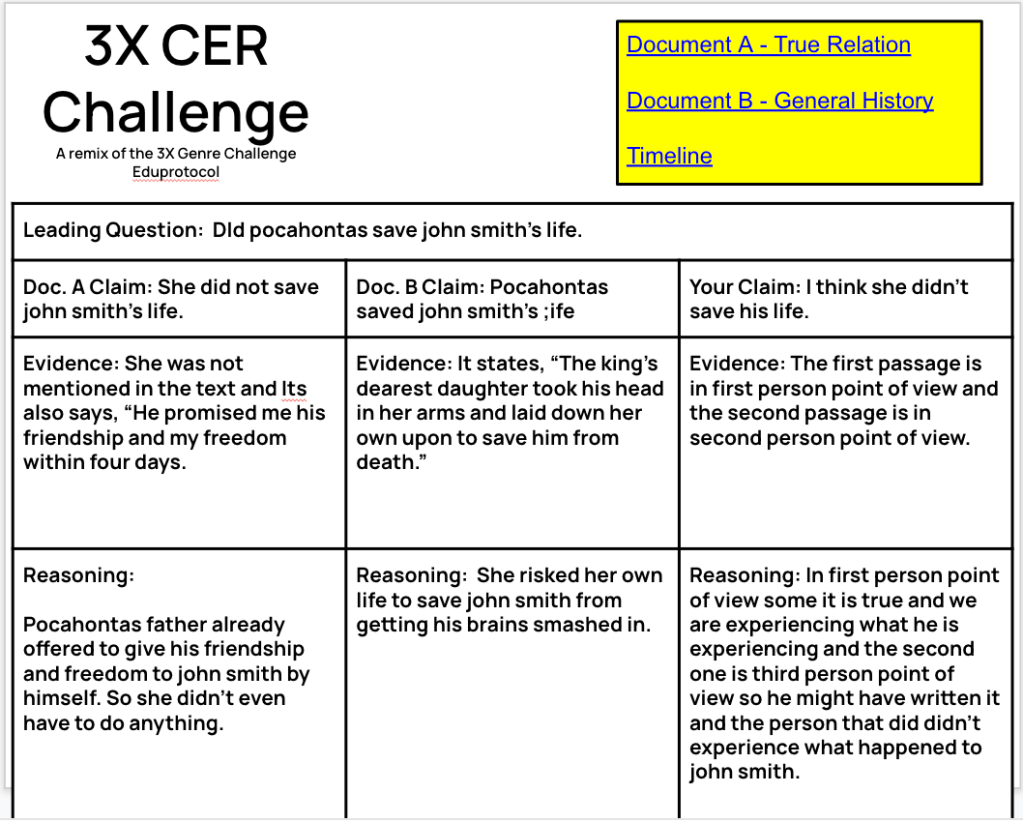
Thursday was used for taking 10 minutes to finish up the Netflix assignment from Wednesday. After the 10 minute timer went off, I introduced a new EduProtocol – 3xCER. I learned this from Ariana Hernandez and adjusted it to fit with social studies.

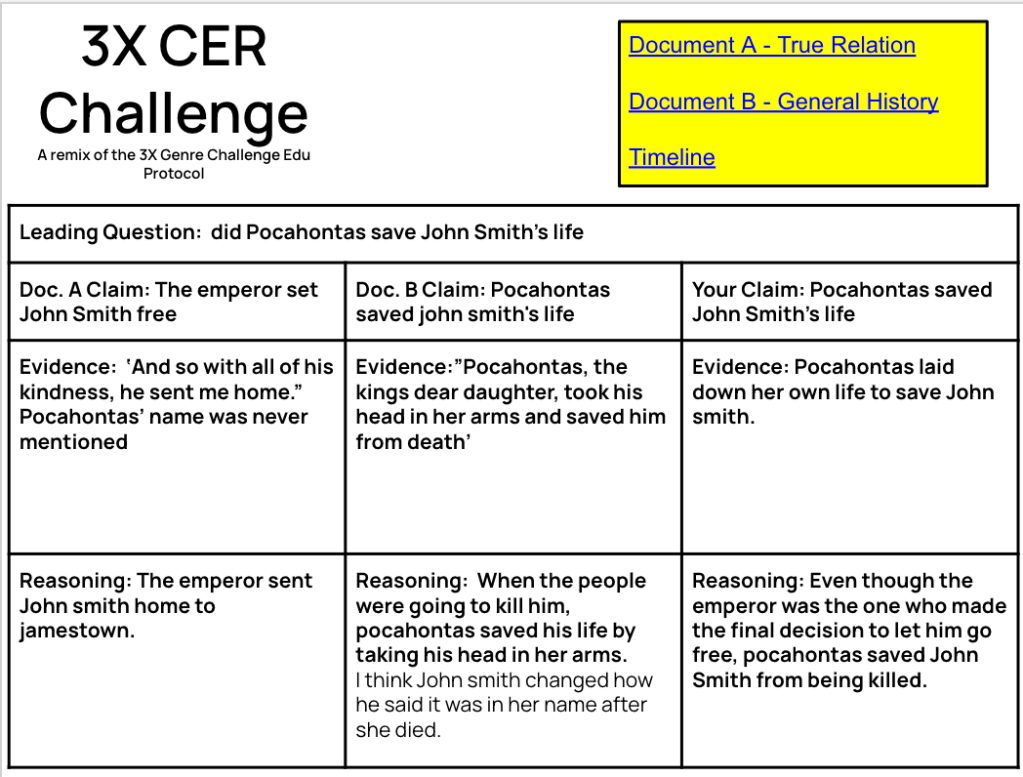
The 3xCER is a remix of the 3xGenre found in Kim Voge’s Deploying EduProtocols book. In the original 3xGenre students have a picture, small reading, video, or some topic they learned and they write a quick poem, an persuasive piece, and an informational piece in one class. With the 3xCER, students work on writing claims, using, evidence, and reasoning three different ways.

In my case of using 3xCER, we used the John Smith and Pocahontas lesson from SHEG. This is a perfect lesson to fit with Jamestown. Before we even began, I ask students a question, “What is a claim?” To my surprise, not many students knew. Here is your weekly reminder: don’t assume your students know basic things.

On our first rep, we read the timeline to place people and events in context. Many students were surprised that Pocahontas was a real person. We also discussed that her real name was Amonute, sometimes known as Matoaka. Then students typed the question – Did Pocahontas save John Smith’s life?After reading the timeline and typing our main question, students read document A which implied that Pocahontas did not save John Smith’s life. From this, I asked a ton of questions to help students write a claim, find evidence, and use reasoning.

The students were on their own for document B which implied Pocahontas did save John Smith’s life. However, with this document, John Smith completely changed his story 16 years after the fact. After they finished document B, students had to write their own claim. I stated, “Document A implied a claim, Document B implied a claim, now what is your claim? What do you think happened?” I encouraged the students to go back to the timeline to help them develop reasoning to add more to their evidence and prove their claim. Here are those results:
Anyclass time leftover was spent playing the student developed Gimkits from the previous day.

Friday

For Friday I developed a brand new lesson on 3 colonial regions. I thought about starting it, but I thought – why? Instead, a new thing I’m doing this year is a student portfolio. I’m teaching students how to use Google Sites to keep all of their work readily available. I can use this portfolio for parent-teacher conferences, they can use it to see their growth, or students could use it to reflect. Part of the class period was spent adding documents to the site.The other part of class was spent playing gimkit or finishing missing work.

The Week That Was In 505

This week was a shortened week with Labor Day on Monday. I also missed Tuesday to give myself one more day of recovery from Covid. I’m still not right and still trying to recover. Last week I was out as the students learned about the motivations and effects of European exploration. I wanted to review and build upon the theme of last week.

Last Thursday, while learning about the effects of European exploration, students completed a Frayer on the Columbian Exchange. Many students asked more questions about the Columbian Exchange on the Check-In form I share every Friday. I used that opportunity to find a Nearpod Lesson about the Columbian Exchange.

The Nearpod lesson was excellent as it had some ELL scaffolding built in, and it introduced the Transatlantic Slave Trade which is another topic I wanted to cover this week.

Monday – No School

Tuesday – Nearpod Lesson, finish Hexagonal Learning

Wednesday – Nearpod Lesson and questions

Thursday – Thick Slide, Gimkit

Friday – Gimkit, Monument Sketch and Tell, Primary Source Parts

Tuesday

As I mentioned above, many students asked questions about the Columbian Exchange. I try to respond to all the questions they ask. Sometimes, I just create (or find) a lesson to respond with. In this case, I found a great lesson on Nearpod about the Columbian Exchange. This lesson had ELL scaffolding built in, as well as some SEL-related questions. The lesson also introduced the Transatlantic Slave Trade.

I discovered the ELL version of the Columbian exchange lesson is for Nearpod premium users only. If you don’t have a premium account, then you will only see the regular version of the lesson here. This lesson doesn’t have the scaffolding such as sentence starters available for students.

With this lesson, since I wasn’t at school, I set it to student-paced mode. Students clicked the Nearpod link I shared on my Google Classroom, typed their name, and they were good to go. If they didn’t finish, it wasn’t a problem as their progress was saved. I also like Nearpod because all the data is saved in one spot.

Wednesday

I finally made my return to school. Whenever I’m out for a couple days, or more, I like to have a review and question day to get everyone on the same page. For the most part, the students did a nice job when I was out. It helped that they were familiar with Sketch and Tell and the Fast and Curious with Quizizz. I took a chance with with Hexagonal Learning last week. This was unfamiliar to the students, however, I provided an example slide and a Screencastify video of directions. Ironically, the students who struggled with the Hexagonal Learning were the students who never finished the Sketch and Tells and had low scores on the Fast and Curious.

With my return, some students were working on the Nearpod lesson with the Columbian Exchange. Some were finishing the Hexagonal Learning. In all classes, I had small groups working with students on Hexagonal Learning. I used a variety of question and recall strategies to help them make connections with the hexagons.

At the end of the day my goal was to ensure students finished the Sketch and Tells and the Hexagonal Learning. In regards to the Nearpod, it was okay if students did not finish the assignment. I had a plan for the next day.

Thursday

The end of the Nearpod lesson was an introduction to the Transatlantic Slave Trade. Most students didn’t get to that half of the Nearpod, so I reserved Thursday for a Gimkit and an introduction to a Thick Slide. I broke EduProtocols rules and introduced a Thick Slide with content. But, I like to take these chances because I have some awesome students.

When class began, I ran a Gimkit about the Transatlantic slave trade for five minutes. The class averages were 52%, 57%, 60%, 55%, and 68%. Please coach your students to understand that Gimkit, Blooket, or Quizizz is a learning tool and NOT JUST A REVIEW TOOL. Also coach the students that it’s not a race to answer thousands of questions in 5 minutes. The goal is too slow down, read, and learn.

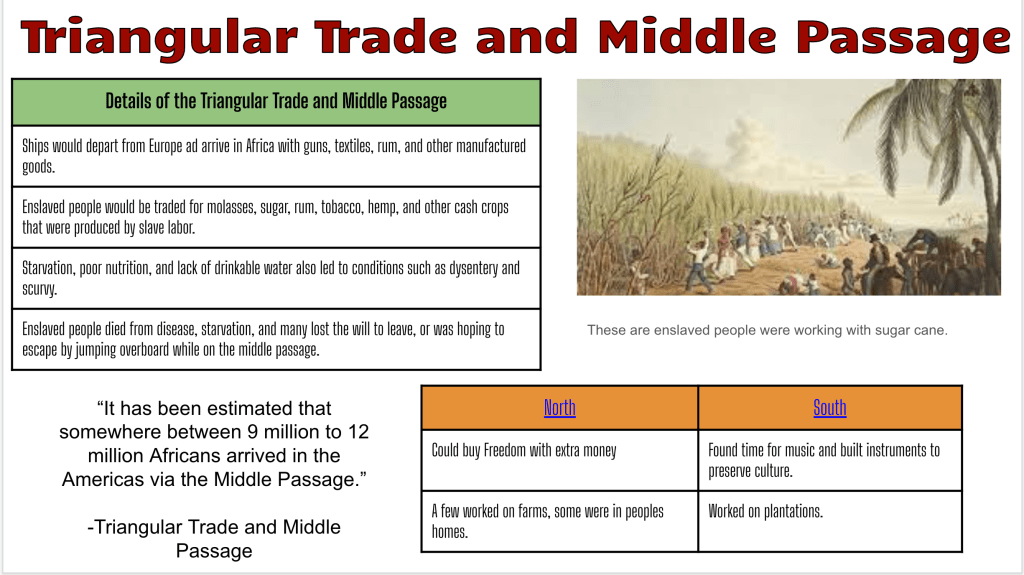
After the Gimkit, I introduced the Thick Slide to students. I had a reading on the Transatlantic Slave Trade and the Middle Passage. Here was my procedure as I gave the students 15-20 minutes to create their slide:

  1. Read and highlight four important facts.
  2. Add the 4 paraphrased facts to the slide.
  3. Change the Title.
  4. Add a relevant picture and caption.
  5. Compare slavery between the North and South.
  6. Add a quote that surprised you.

The students did really well with creating their Thick Slide. As students created, I walked around the room asking questions, offering suggestions, and offering technology tips. When time was up, every students was finished, and I had all the slides graded. In an effort to create a contribution learning atmosphere, I created a Nearpod collaborative slide and I had all the students share one fact from their slide. This helped students add more information to their slides and finish their slides. At the conclusion of the lesson, I ran the Gimkit again for 8 minutes and students raised their scores across all classes – 80%, 75%, 80%, 73%, and 88%.

Friday

For this day, I had a plan to run the Gimkit again. This time I added 6 new questions about Jamestown. I added these questions because we are getting into Jamestown and Plymouth next week. However, with the Gimkit, I did different stuff with all my classes…

1st and 8th Periods – Sketch and Tell Monuments

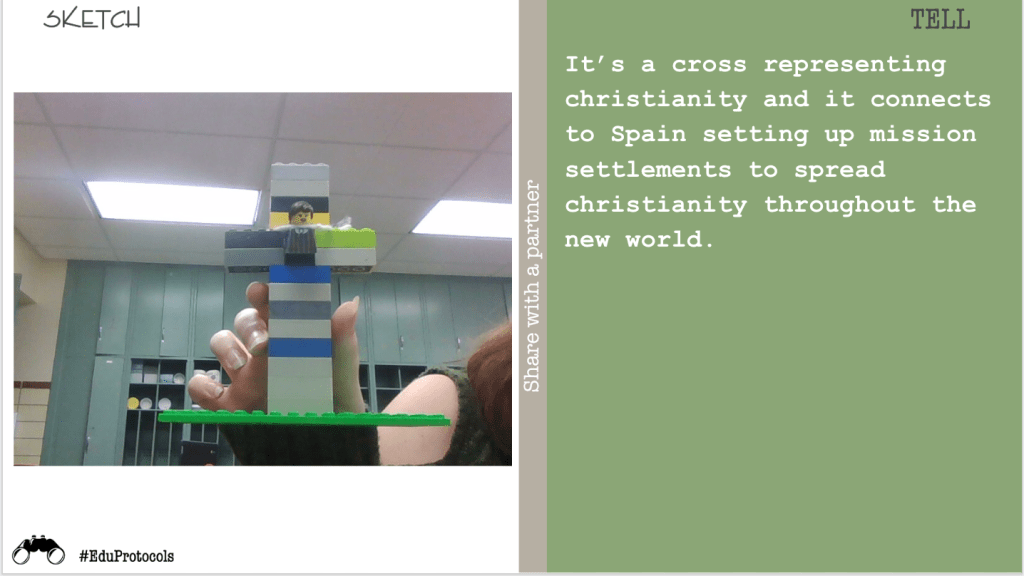
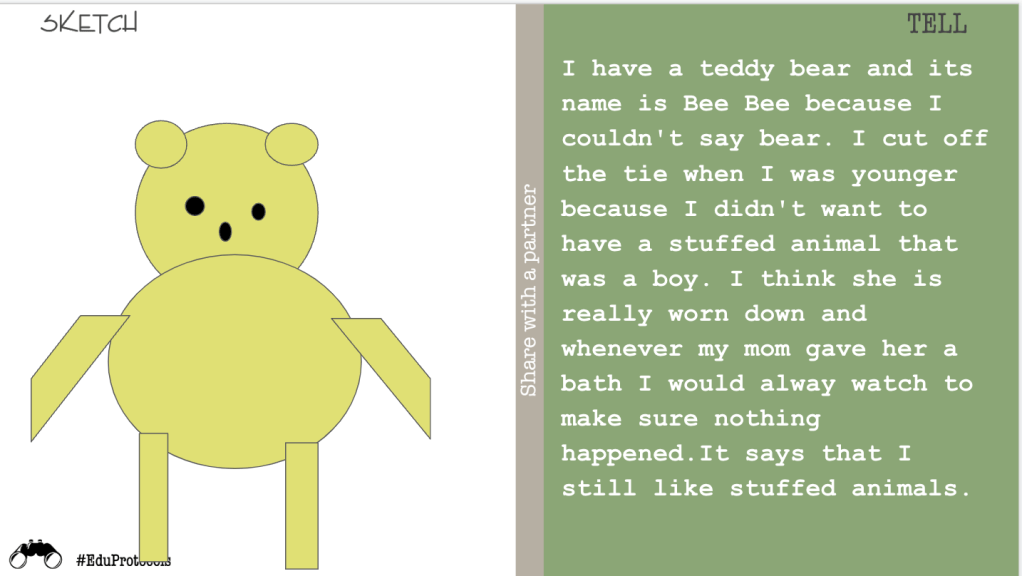
In these classes, the students can have a little more choice and less structure. The students all work super well together. So, I created a Team Gimkit and I said, “Whatever your team is will be your team the entire class.” Then I stated, “The first place team gets their own bin of Legos, 2nd place gets four handfuls of legos, 3rd place gets three handfuls of Legos, and so on.” At the conclusion of the Gimkit, students grabbed their Legos and I had them create a monument or some creation related to anything we learned about in the last 2 weeks. Students had 15 minutes to create. When the timer sounded, one student made a copy of the Sketch and Tell. I showed them all how to add a picture using their Chromebook camera. Then they discussed their creation as a group and wrote about their creation. Here are two examples:

3rd and 5th Periods – Primary Source Parts

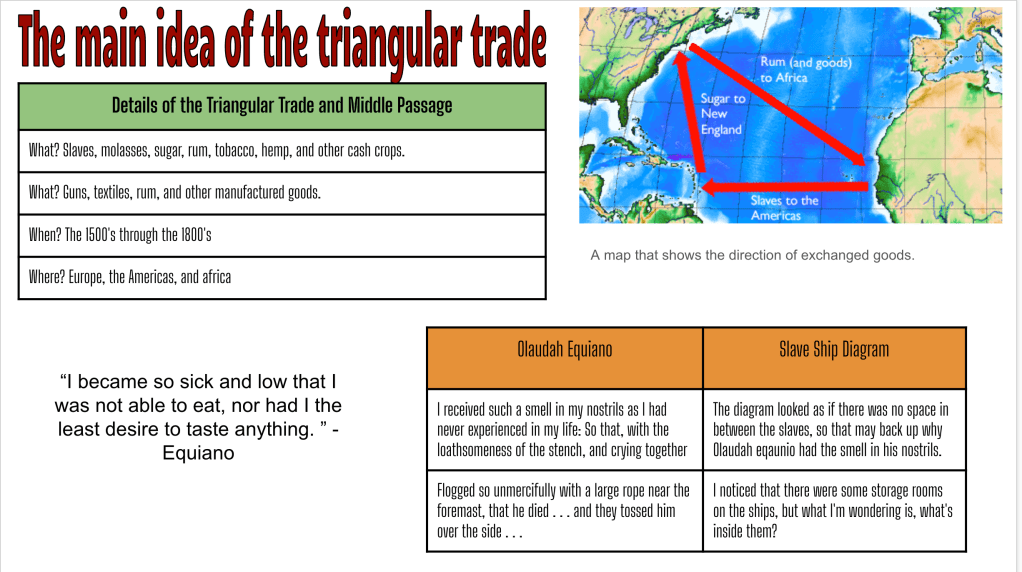
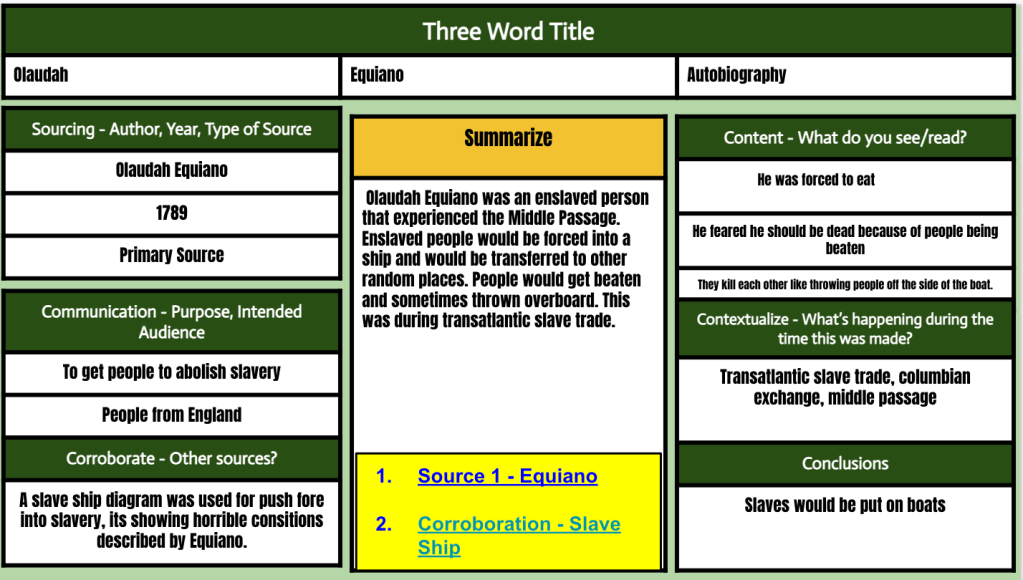
These classes need structure – one class has 29 students while the other class is right after lunch. I ran the same Gimkit as yesterday, but I ran Fishtopia mode. Fishtopia mode works best when it can run for 15-20 minutes. Students love this mode. After Fishtopia, we ran 2 primary sources through Primary Source Parts using SHEG’s historical thinking skills of sourcing, close reading, corroborating and contextualizing. In this instance, we corroborated a Slave Ship Diagram and Olaudah Equiano’s autobiography excerpt. It led to a nice discussion, we worked on historical thinking skills, and summarizing skills. Here are some examples:

These still some need some work. Plus, I’m still trying to figure out what to do with this Primary Source Parts. For example – what do I want to read or have the students do with the summary part? Is there anything I need to add? It’s not perfect, but it’s a start in the right direction to helping the students make better sense of primary sources and practice their writing skills.
7th Period – Gimkit and Outside

I’m pretty good at getting a read on most situations and reading my classes. This class was done and wanted nothing to do with social studies. So, we played Gimkit Fishtopia mode for 20 minutes. Then we went outside to the cemetery behind the school. I discussed the difference between a cemetery and a graveyard, we talked about the gravestone of one of the founders of New Richmond, and we talked about the gravestones of Civil War Veterans. It was a nice mix-up and the students enjoyed it.

The Week That Was In 505

If anyone knows how I go about writing my blog, I usually write it after school on Friday while sitting at a local brewery. However, this time, I’m writing it from the bedroom while quarantined. I came down with Covid on Tuesday, and it’s terrible. Once one thing seems to get better, something else gets worse or something else comes back. It’s a neverending battle.

This week we finished our mini-unit on historical thinking and began our unit on European exploration of North America. Due to covid, I had to switch up some lessons and cancel some ideas I had in mind.

To begin with European Exploration, I wanted to introduce the time period known as the Age of Exploration. Often times we jump from unit to unit skipping over characteristics and facts related to the time period, or era, the students are studying. Then we focused on the motivations and effects of European exploration of North America. Finally, we closed out the week making connections with our learning. I didn’t want to begin anything new since I hadn’t been at school since Tuesday.

If this blog doesn’t make sense, I blame Covid brain fog……

Monday – Finish historical thinking infographics.

Tuesday – Fast and Curious, Number Mania Timeline, Nearpod (countries)

Wednesday – Fast and Curious, Frayer, Sketch and Tell (motivations)

Thursday – Fast and Curious, Frayer, Sketch and Tell (effects)

Friday – Fast and Curious, WordWall Sort, Hexagonal Learning

Monday

When Monday began, I realized several students needed to finish work from Friday. On Friday, we began creating historical thinking posters as a teaching tool for primary and secondary sources as well as analyzing sources. I created two sets of infographics. Some were blank and students had to visualize where they wanted their information. On the other hand, some were premade templates where students could plug in their information and change colors as needed. Students took about 15-20 minutes to finish.

After students finished, I wanted to get back to having students make portfolios. I asked students, “Who has used Google Sites?” I discovered that not many students have used Google Sites before. The goal of using Google sites is to have students upload their work throughout the school year to see their growth with creating and writing throughout the school year. Despite the steep learning curve, students uploaded their historical thinking posters to their site. These sites can be used to share with parents for positive emails home or shared during conferences.

Tuesday

Tuesday brought about a new unit – European Exploration of North America. Instead of jumping into the unit, I wanted to place it in context with a Number Mania timeline. Placing it in context also allowed me to refer back to the historical thinking posters and the term contextualization. Furthermore, I wanted students to understand the countries and continents that were mentioned in the unit. So, I created a Nearpod with the drag and drop feature so students could locate and label countries.

In the Number Mania timeline, I shared a premade slide and a Google Form. I asked students to share 2-3 events that shaped America. However, the events had to happen between 1492 and 1700. As students shared information through the form, I created a spreadsheet with the data.

The stuff shared by students was interesting and led to great discussions. For example, some students shared 1666 – The Great London fire. I asked, “Does this seem like something that would shape America?” They also shared, 1732 – George Washington born. I asked, “Was 1732 before or after 1700?” Yes, I had to ask that question. Don’t assume your students know basic stuff. After 10 minutes, we had a list of events to choose from to create timelines.

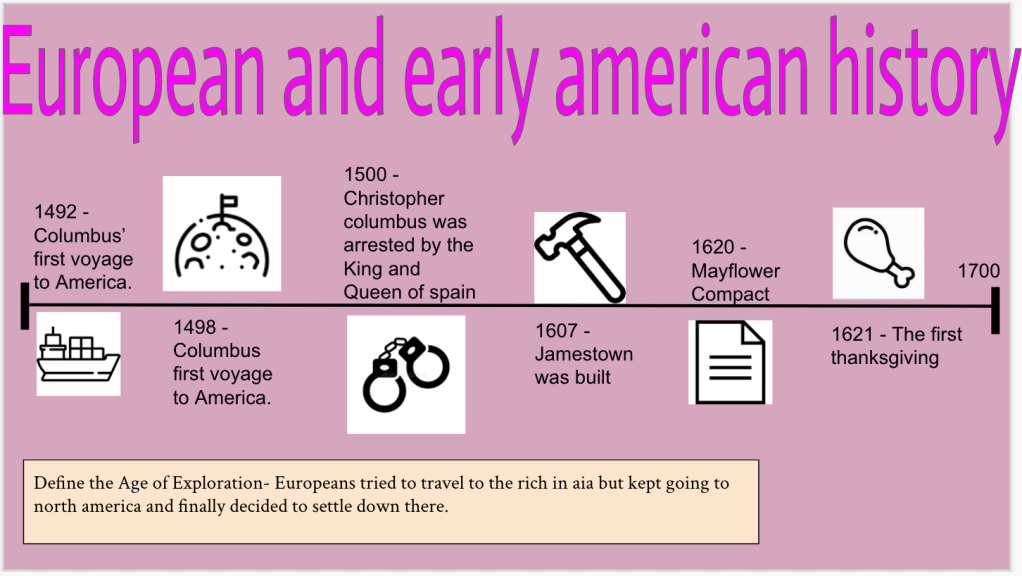
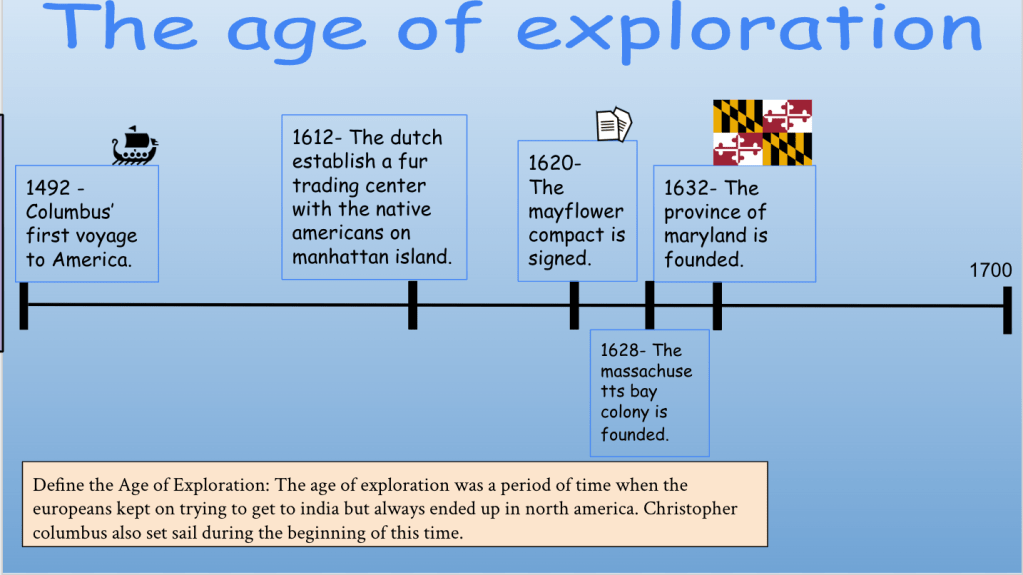
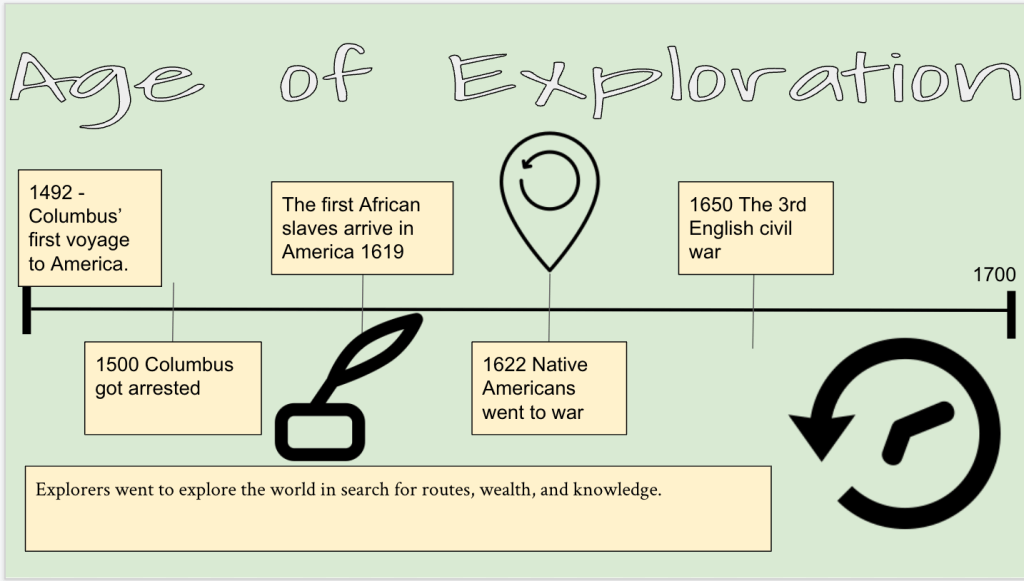
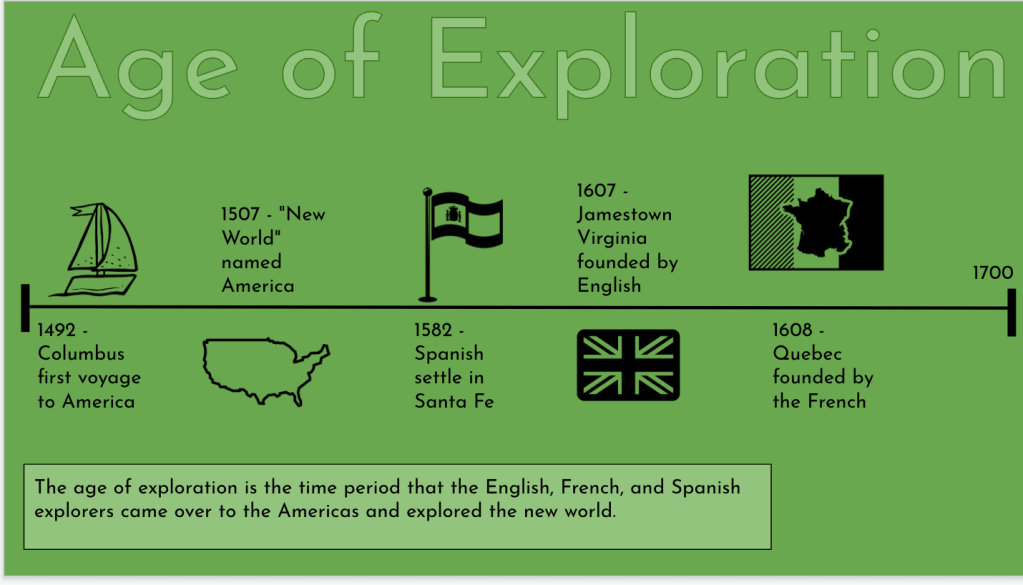
For 15-20 minutes, students created timelines with events they felt shaped America. Keep in mind, this is the third Number Mania/infographic that students have created this year. I have shown them how to duplicate shapes, change colors, add textboxes, change fonts, add pictures, and use word art. They will be pros by the end of the year. Here are some of their Number Mani timelines about the Age of Exploration:

The last thing we did in class was identifying countries and continents. The students need an understanding of where places are in the world. I created a Nearpod where students had to identify North America, Europe, Spain, France, Britain. At first they laughed, but they quickly realized why I chose to do this activity.

Wednesday

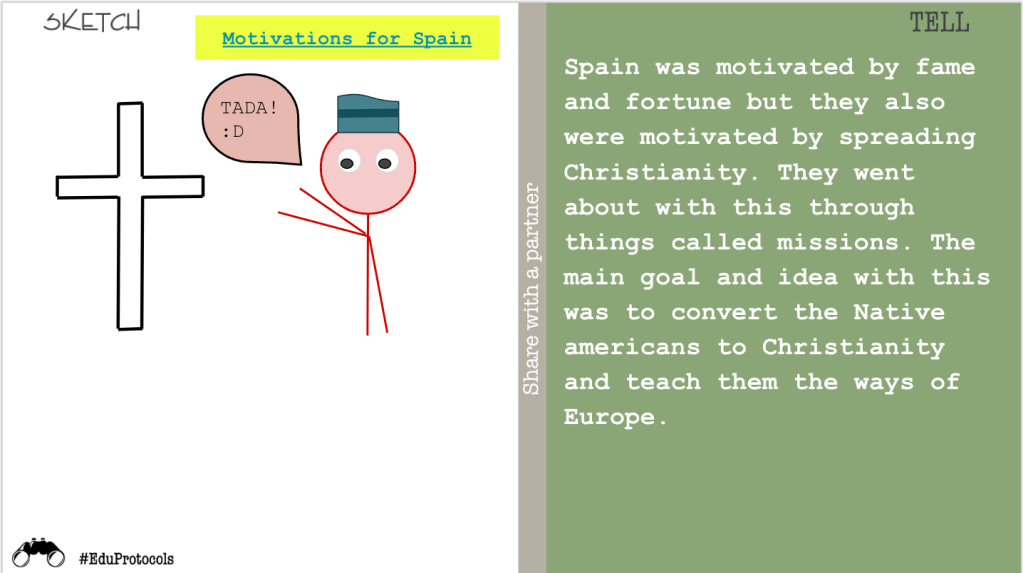
Wednesday I began my quarantine at home. My original plan was to teach a CyberSandwich before using it with exploration. This wasn’t possible. So I went back to a classic – Sketch and Tell. The students are familiar with a Sketch and Tell and it made sense as a simple reading comprehension activity. The goal for today: sketch and tell about what motivated Spain, France, and Britain to explore and colonize the Americas.

When students arrived in class, I had a Quizizz homework assignment set up. I was feeling bad, and lazy, so I just shared one Quizizz link across all classes. I do not recommend this because you will be searching for student names for days. The class average across all classes for the day was a 53%. When setting up a Quizizz homework, I do recommend:

  1. Turning off “show answers” after the quiz because students will keep the answers up and cheat.
  2. Allow students to take the quiz once or twice – this forces them to use their Google account and not use goofy names.
  3. Use a redemption question.
  4. Turn off powerups – it affects original scores. Use powerups on the 3rd or 4th rep of Fast and Curious.

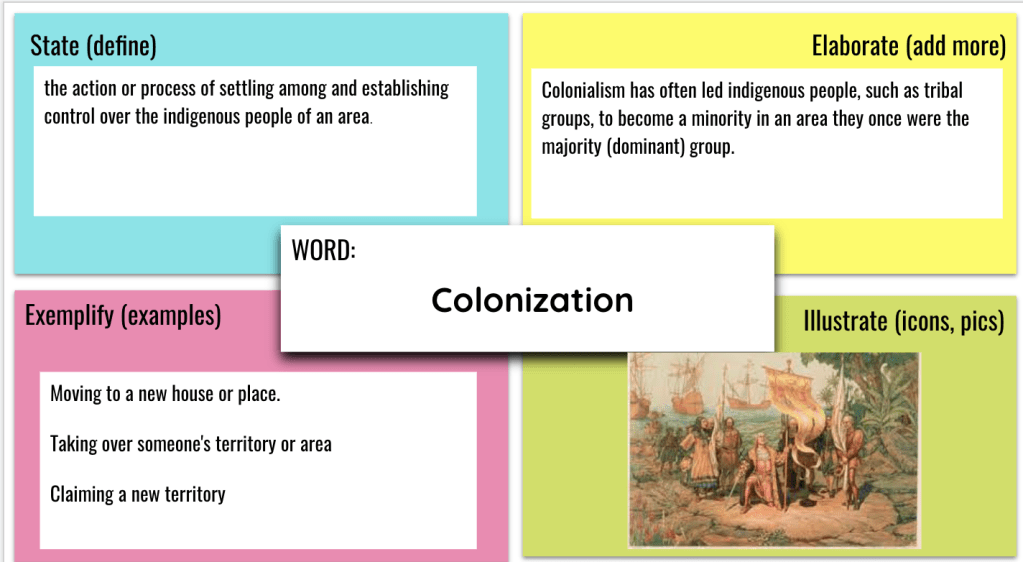
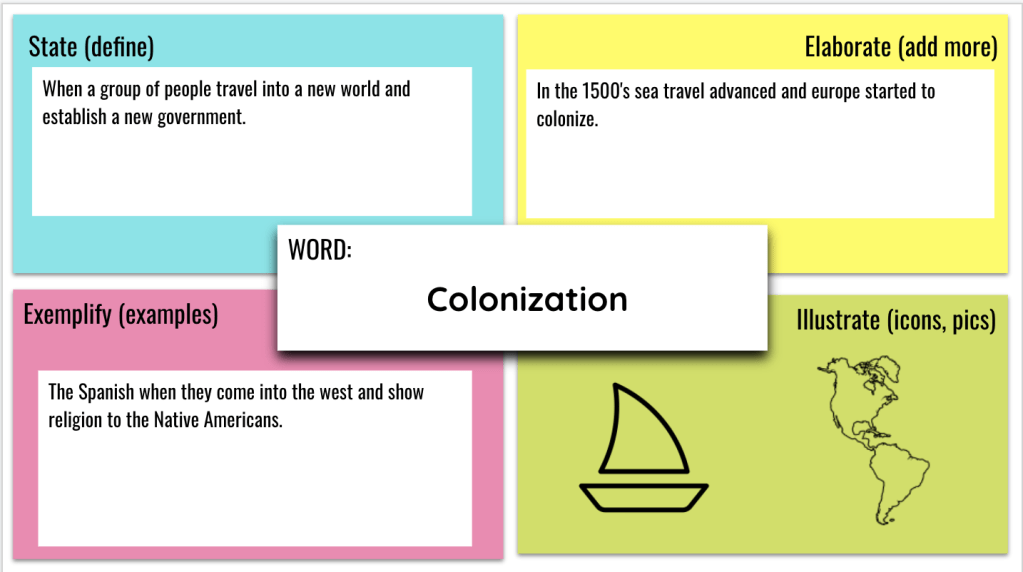
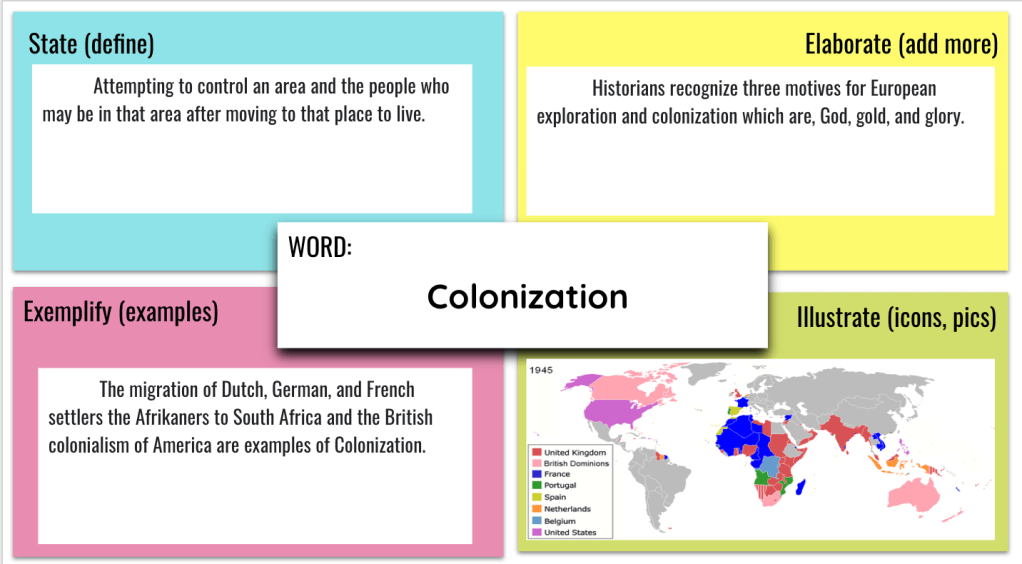
Next, I had students complete a Frayer with the word Colonization. Typically I would have students skim the reading, submit words, and then we would choose 3 and Frayer them. The word Colonization was in the article and important for understanding this unit.

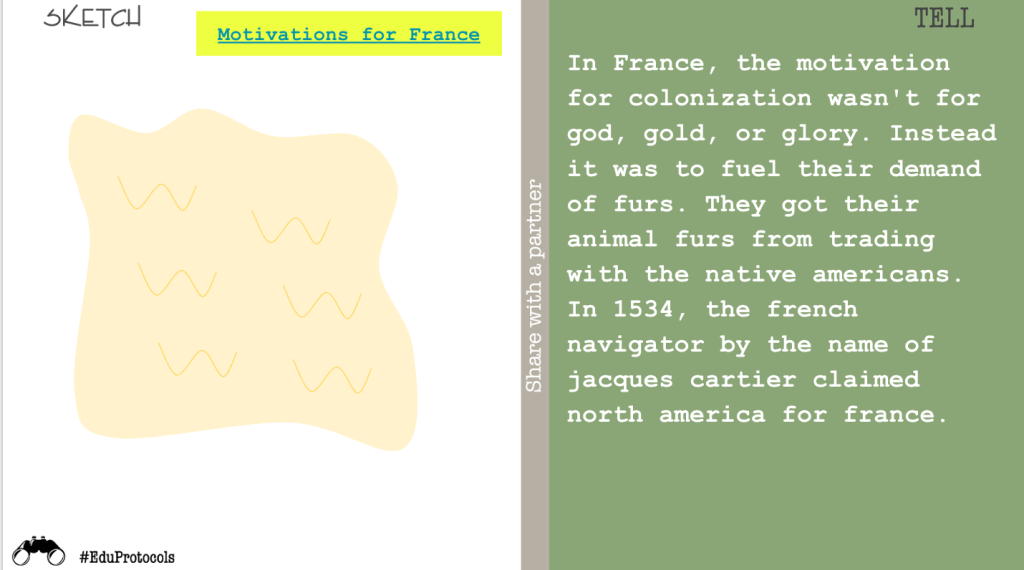
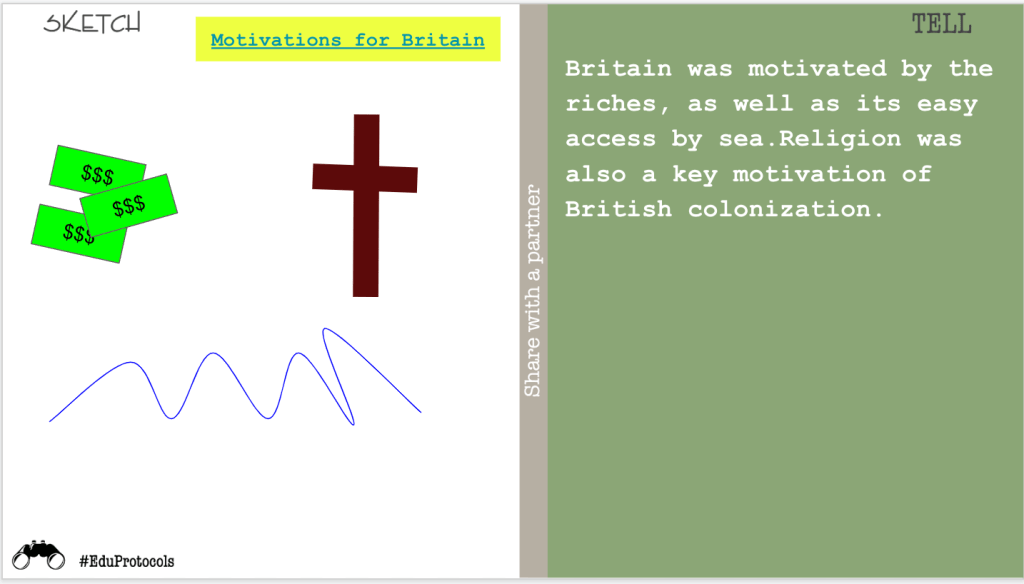
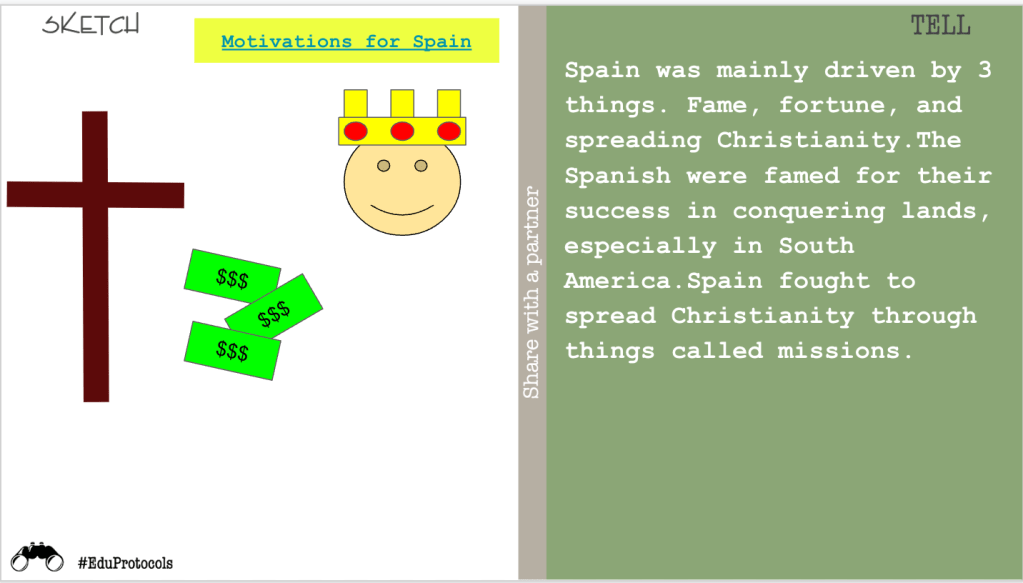
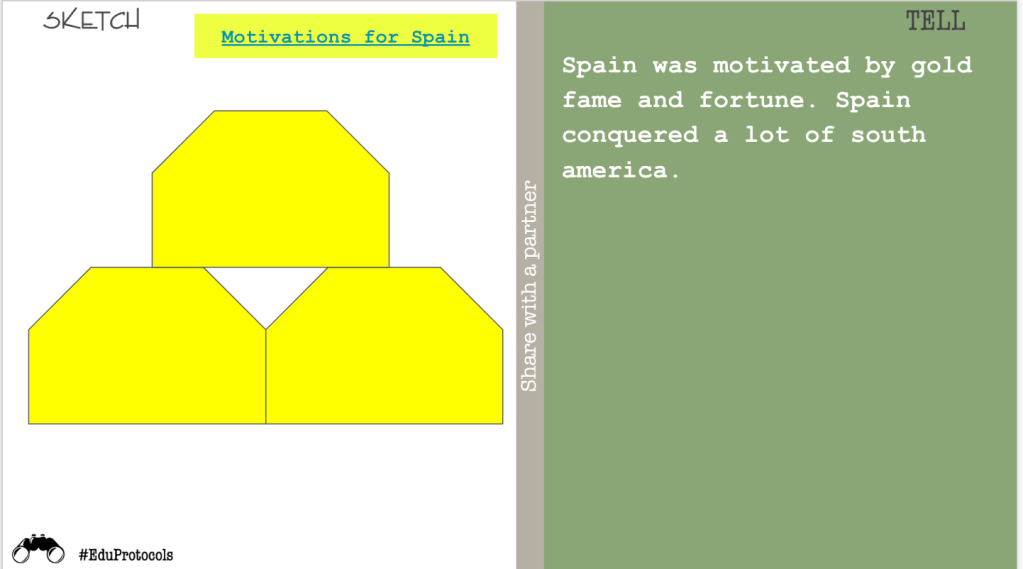
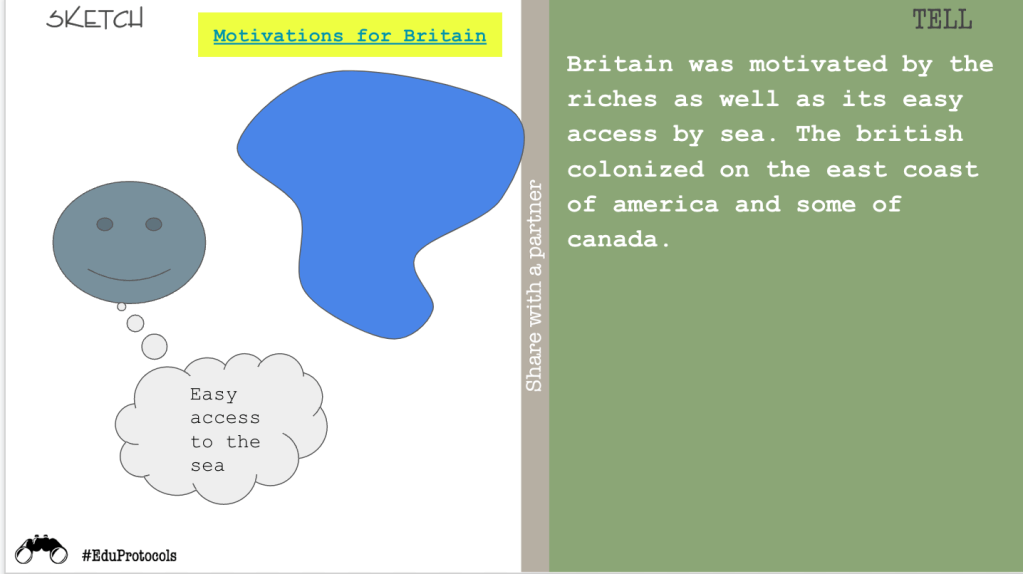
The last thing students did in class was the Sketch and Tell paired with a reading. Students read the article and answered the question – What motivated European countries to explore and colonize North America? Students created three slides – one for Spain, one for France, and one for Britain. They created a sketch about European motivations and then summarized their learning. This, to me, is way better than choosing multiple choice comprehension questions. Plus, no two answers are the same. Students are processing and internalizing their learning in their own unique way.

Thursday

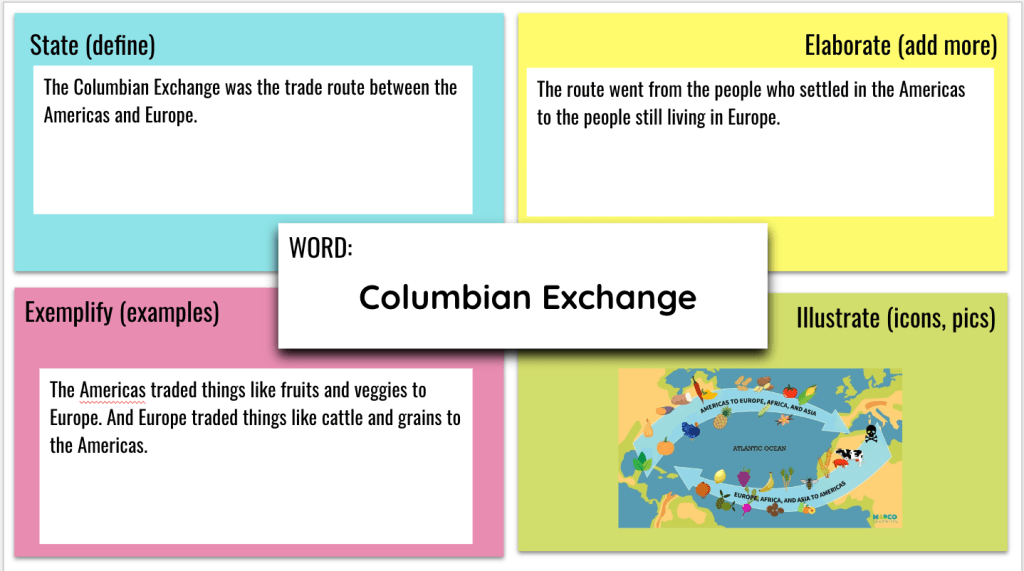
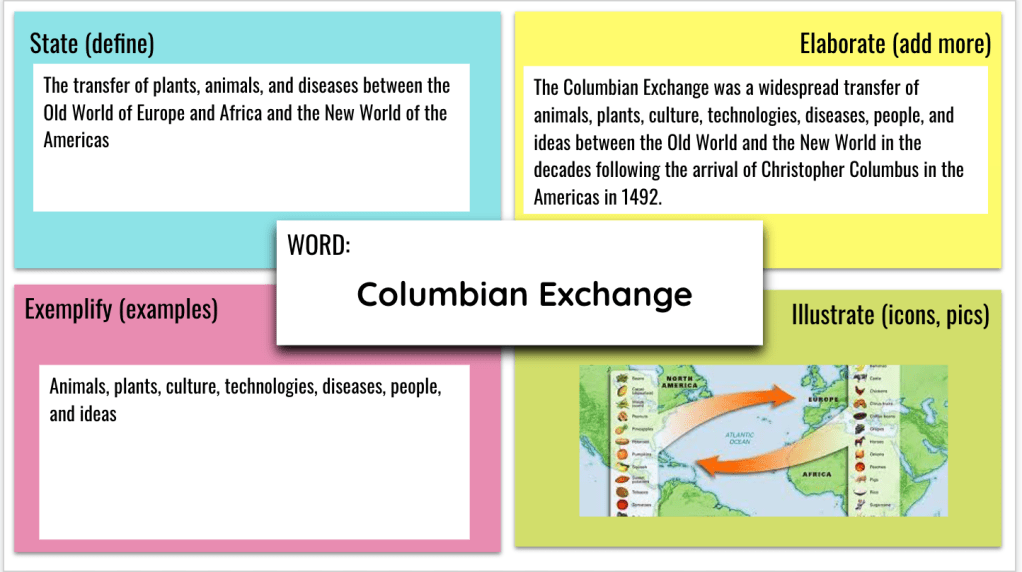
On Thursday, class began with another Fast and Curious on Quizizz. Tghis time the class average across all classes shot up to 67%. The students are starting to figure out how I run class. This was followed up with another Frayer with the word Columbian Exchange. This word was a major part of the article on the effects of the European exploration.

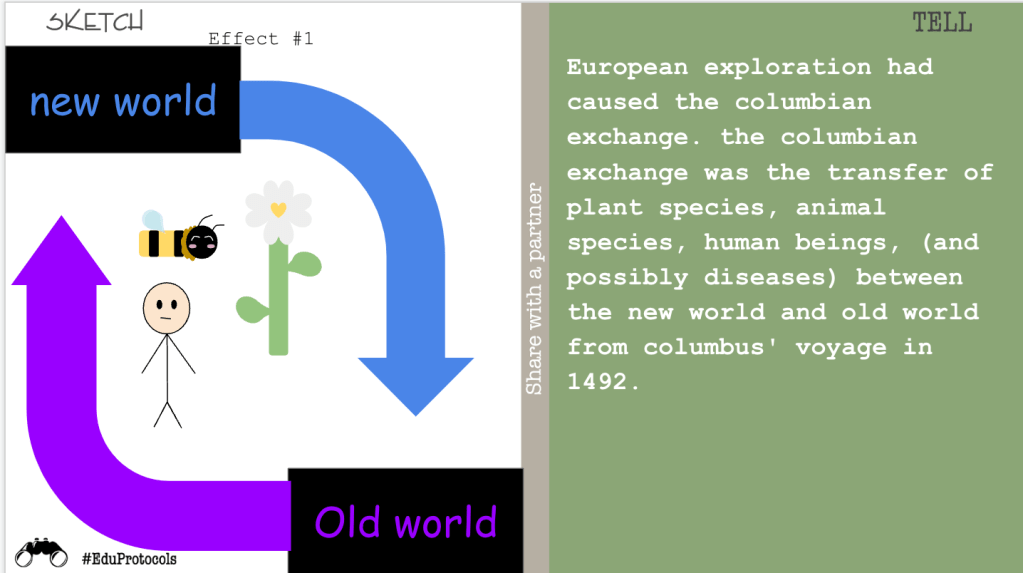
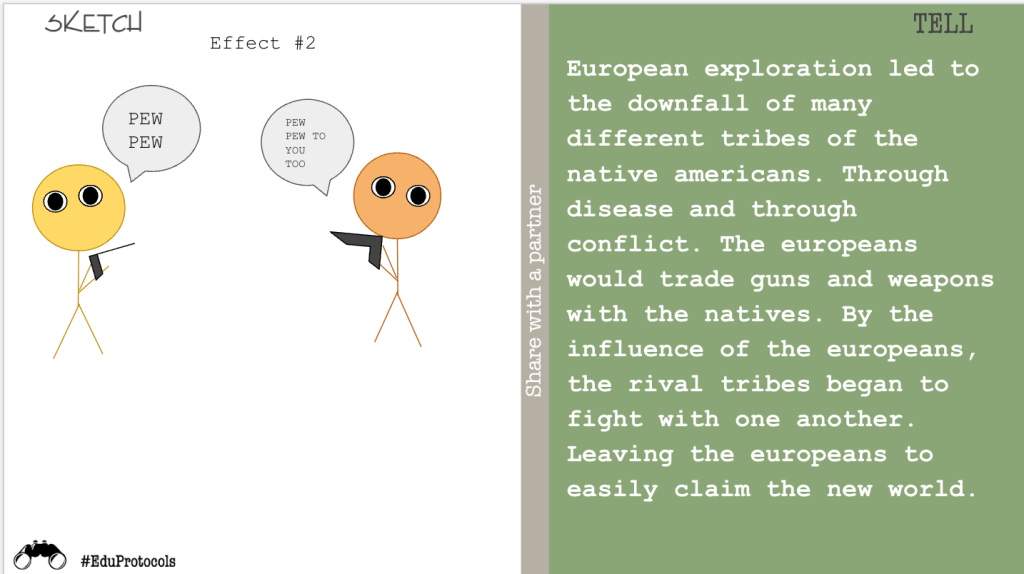
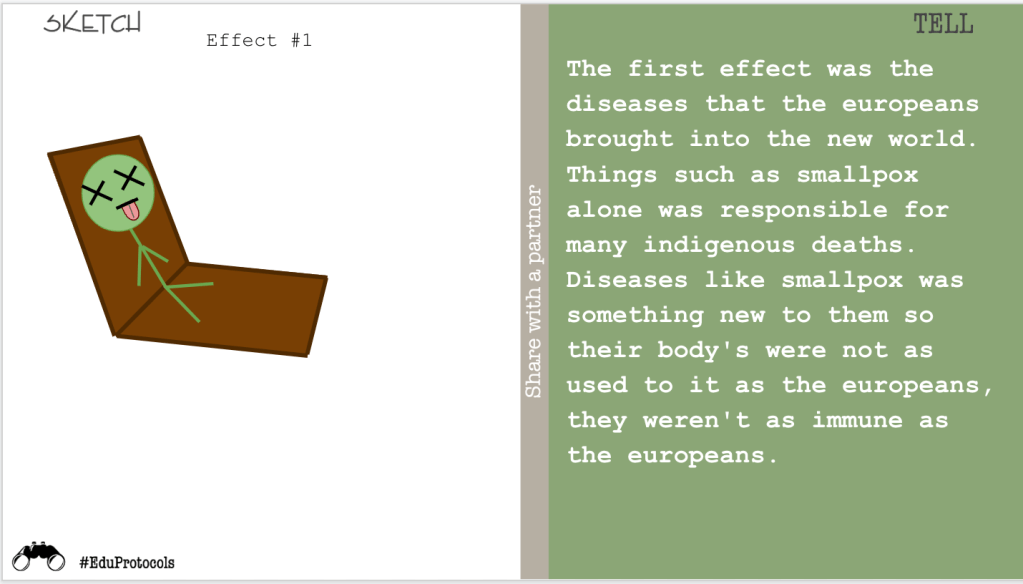
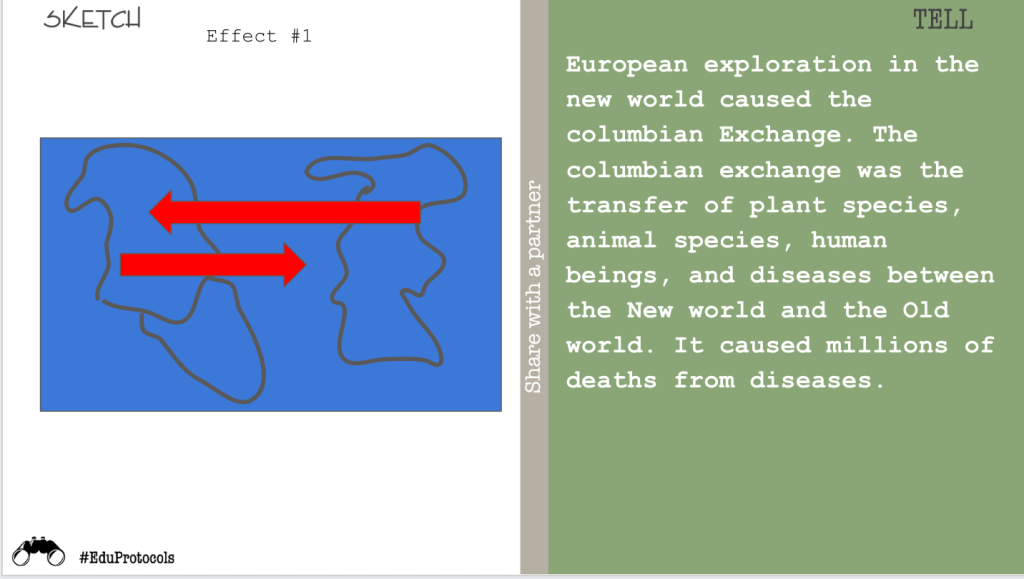
Last year, I used a sketch and tell with the effects of European exploration. Since I used a skecth and tell on Wednesday, I tried to think of a new assignment. I wanted a mix up. Then it hit me – I was making things complicated. There is nothing wrong with going back to back days with skecth and tell. If anything, it’s all about the reps and I keep the lesson the same. Here are some students samples:

Friday

For Friday I didn’t want to start anything new. I began thinking to myself, what is a good activity with a DOK level of 3? I wanted students to make connections and process their new learning. My mind went to a “Which One Doesn’t Belong?” activity. So, I created one here. Each slide contain four images, students select which one doesn’t belong, then they justify their choice using evidence from what they have learned. However, I decided this wasn’t it and would be fi nished too quickly. Then i remembered Hexagonal Learning – the digital version!

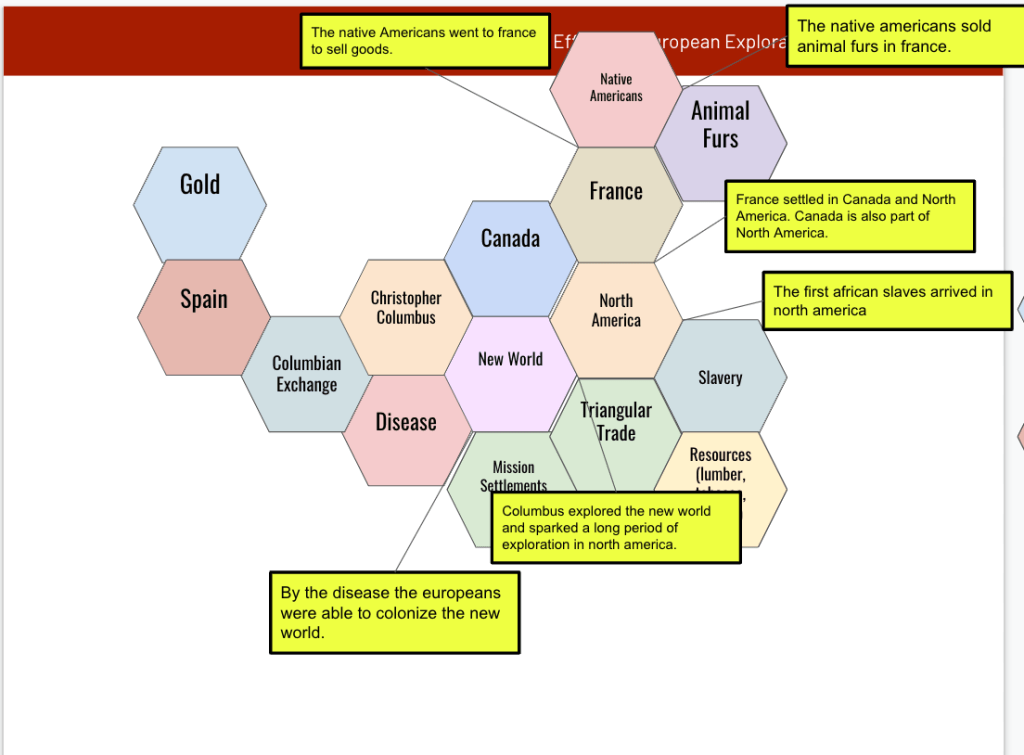
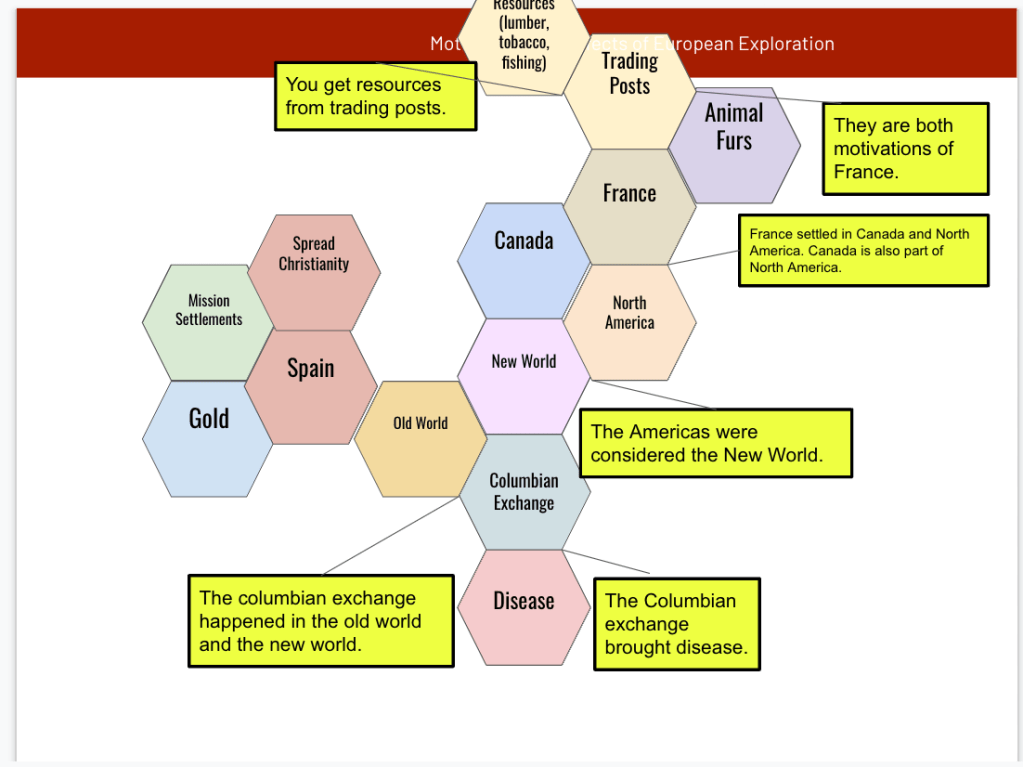
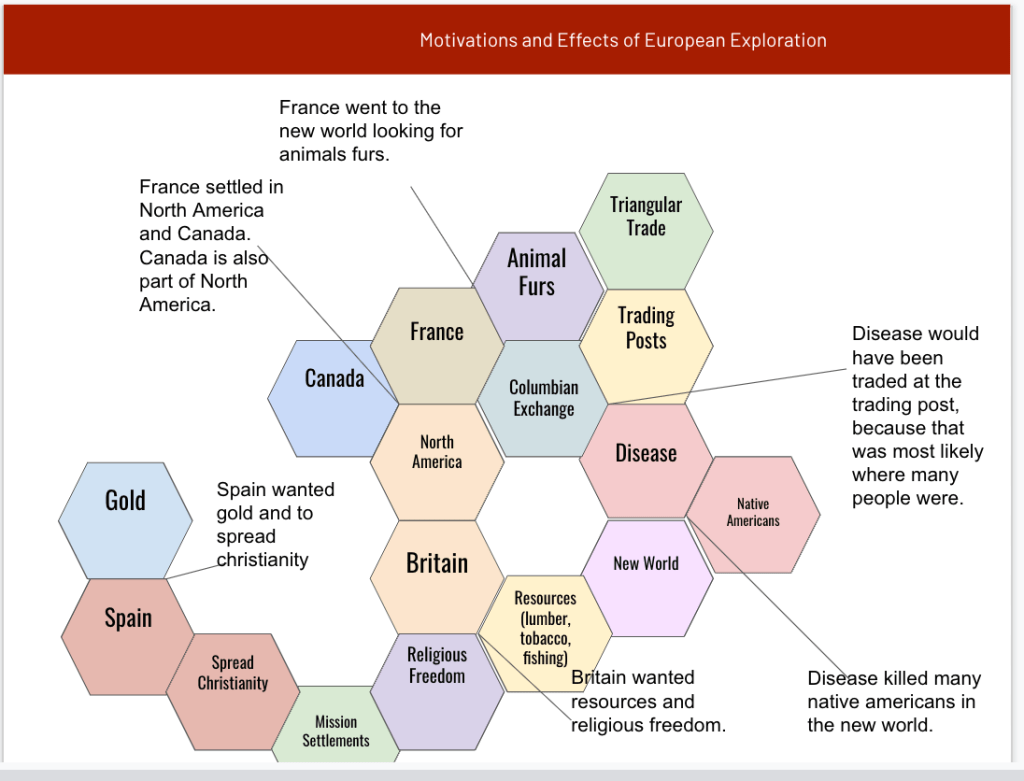
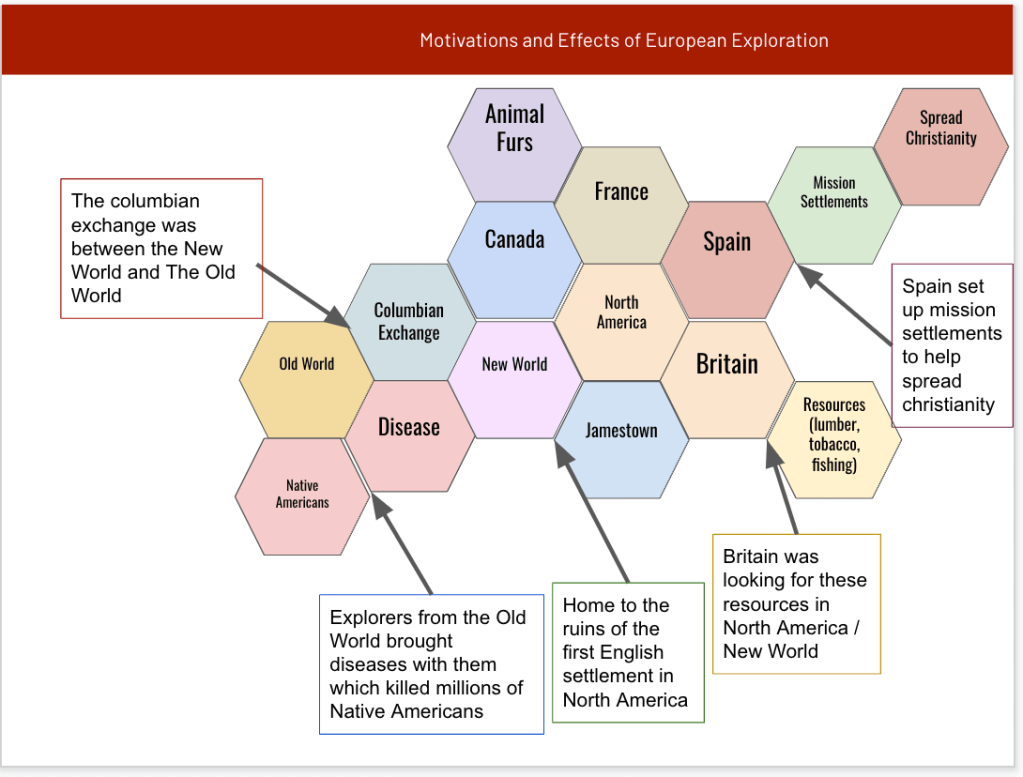
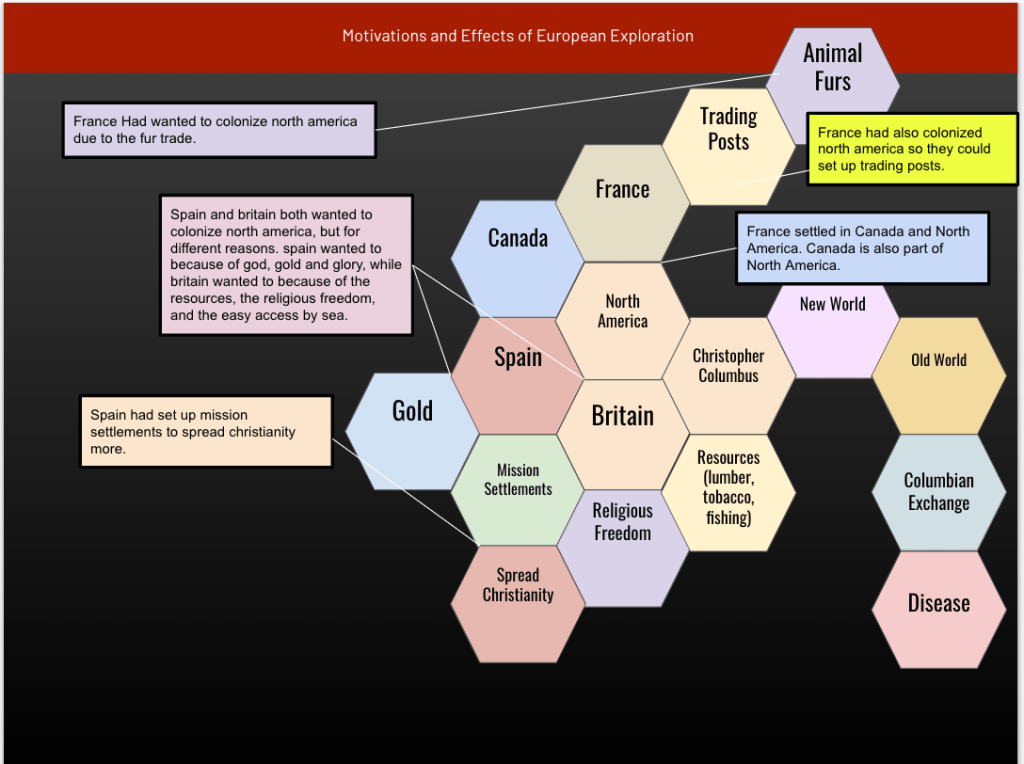
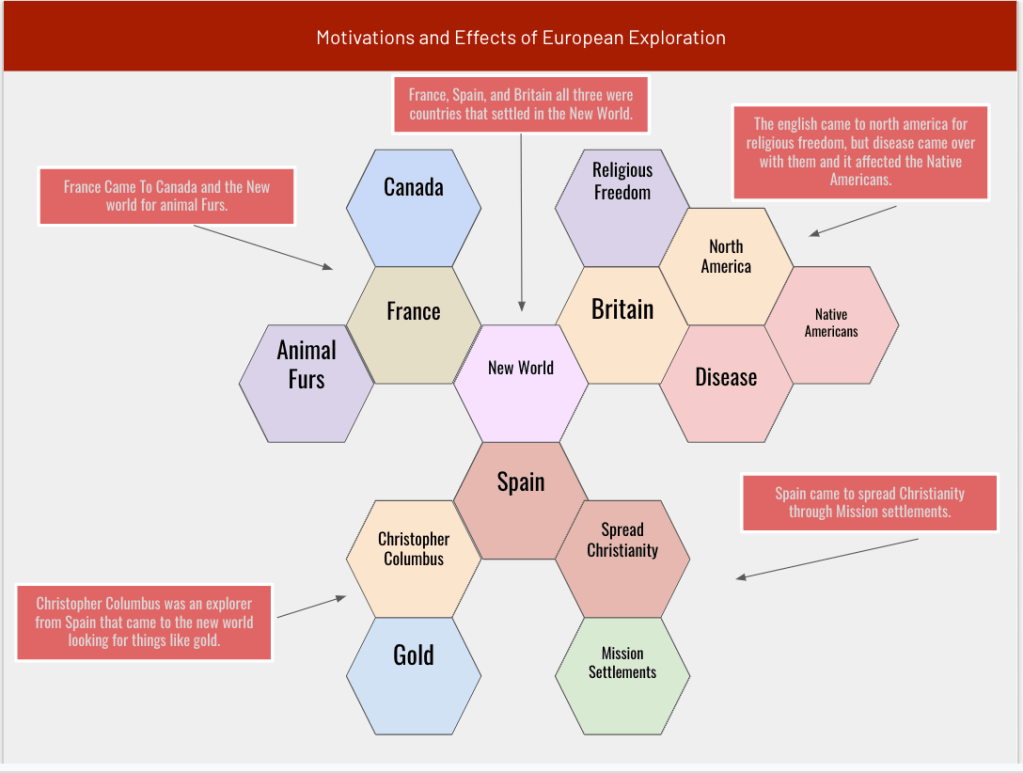
I went through the fast and curious quizizz, and the readings and I added basic concepts to the hexagonal learning template. I added basic things such as countries, old world, new world, disease, furs, etc. I provided a basic example, and let students try it out. For their first try, they did an excellent job making connections and writing some explanations. Here are some student samples:

At the conclsuoj of class, the all class average for the fast and curious finished at 85% which is great for 115 total students.

The Week That Was In 505

Back at it……..and it was the longest week ever. We added an Advisory period this year which now gives us 8 periods a day. I’m used to 7 periods, and this will take some getting used to.

Every year I want to add new things to my teaching and into my classroom. This year I wanted to incorporate more reflective things for my students. For example, I have students reflecting on their attitudes and feelings towards meeting goals within lessons. I’m doing this with the Magana Mastery Tracker (I cannot share the link but you can find this awesome tool in Dr. Magana’s book, Learning in the Zone).

I used this first, full week of school to teach students about some EduProtocols. The students I have this year I have never had and they are not familiar with EduProtocols. I’m used to having some of the same 7th graders from the previous year which makes for a nice school year. As a result of never having these students, I’ve already noticed some interesting things which I mention later…

Monday – Number Mania Intro, Thin Slide

Tuesday – Sketch and Tell reps, Thin Slide

Wednesday – Historical Thinking Skills (HTS) Fast and Curious, Frayer

Thursday – Historical Thinking Skills Practice with 8Parts

Friday – HTS Infographic (Original) (Scaffold) (Number Mania style)

Monday

The theme for Monday was getting to know each other. I began class with a fast and Curious about me. Then I introduced the Number Mania EduProtocol to get to know the students. On Google Classroom, I shared a premade Google Slide so I could introduce the students to Word Art, changing fonts, and changing colors. Please…….don’t assume that students know how to use basic Google functions. Google has been a part of my district for 10 years, and I still need to teach basic Google knowledge.

Before students began, I established success criteria such as changing fonts, changing colors, adding 4-5 numbers with facts, adding 2 pictures, and adding a title. Basic stuff. As the year progresses, I change the success criteria to focus more on content and organization. Once students open the Number Mania, I explain that they must use 5 numbers related to their lives. I don’t give any ideas, hints, or examples.

Here are some of the most creative numbers the students came up with: the number of states the student visited, shoe size, siblings, graduation year, etc. After the students chose numbers, they added a story about themselves at the bottom of the Number Mania. I had the students pause, and I asked, “If these numbers told a story about you, what story would it tell?”

Something I incorporated into the lesson this year (I could tell the students needed it) was stopping the students halfway through the Number Mania and having them check their work against the success criteria.

All in all, this is a great lesson to introduce basic Google skills, introduce the Number Mania, and get to know the students.

Tuesday

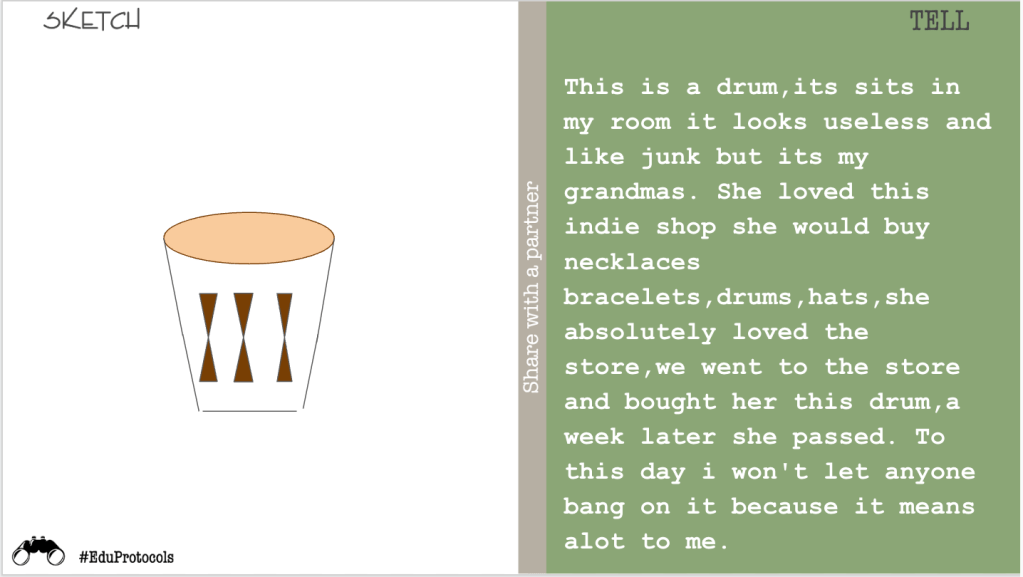
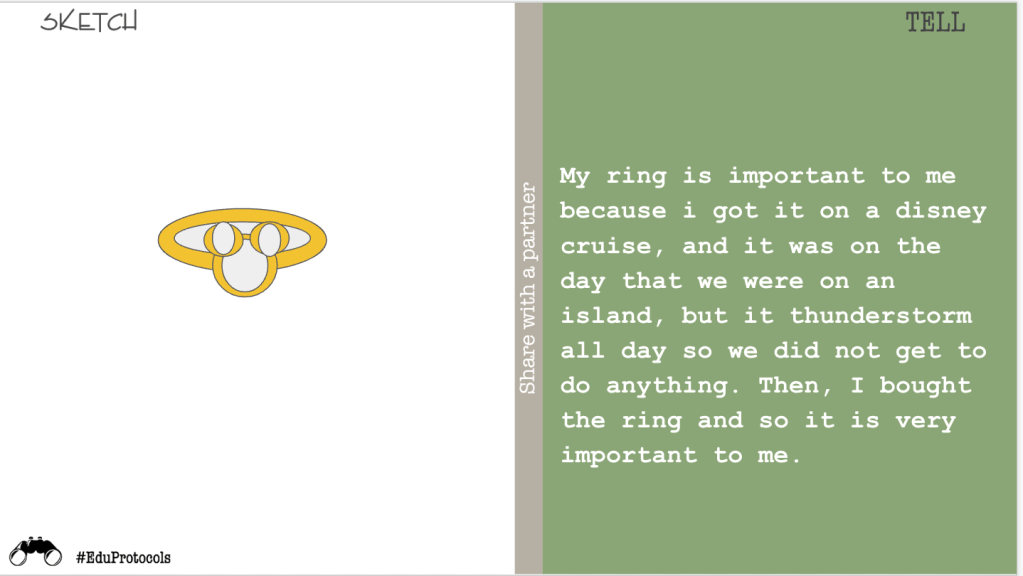
On this particular day, I wanted to introduce students to Sketch and Tell. Class began with a simple Sketch and Tell prompt: What is your hobby or talent? I use the first rep to go over Google Shapes and I introduce ctrl+D for duplicating shapes. The only success criteria I established were using multiple shapes and using multiple colors. The first rep lasted 8 minutes (I sometimes do things in eights – it’s my lucky number). I had the students partner up and explain their sketches to a partner. Then students wrote about their hobby or talent after sharing it with a partner. This was followed up with a 2nd rep.

The 2nd rep of Sketch and Tell is called The Town Dump. I created this lesson because a student pissed me off. (I often think of my best stuff when pissed off or with a beer). Three years ago I had several letters written by students taped on my wall and door. One day I noticed that someone wrote all over one of the notes on the wall. Pissed me off, and I created a lesson tied to history. Here is that lesson:

  1. I ask students, “Does everything have a story?” Most respond with yes, and some respond with no.
  2. I then read the story called the Town Dump by Wallace Stegner. This story is about a man reflecting on items of his he found in the Town Dump – some of the items can reveal what life in the town was like. Other items were his that were discarded because other people didn’t care for those items in the same way he did. He reminisced about the stories behind some of those items in the story.
  3. At the conclusion of the story, I mention items in my room and the stories behind them. My laniards from conferences. The broken globe on my desk that belonged to a colleague that passed away 5 years ago. The student notes on my door. I make a point to say these items might be junk to you, but they mean the world to me because they have a story and I have an emotional attachment to them.
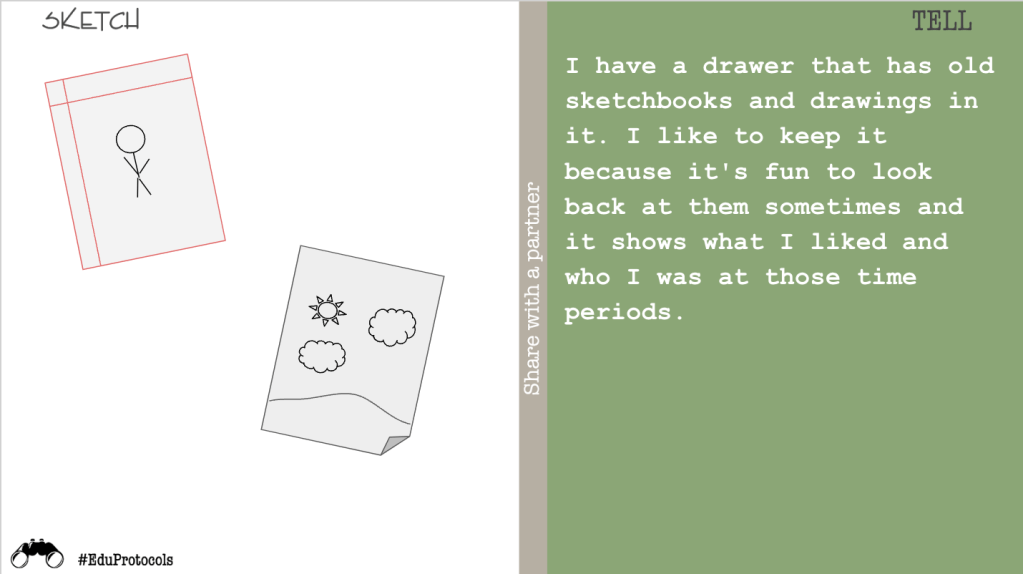
  4. I then transition to Sketch and Tell and ask them to sketch an item that most people would view as junk, but it would mean the world to them.

This is a powerful lesson and a great way to get to know your students at the beginning o the year. Plus, this is a nice transition to teaching historical thinking skills. Using historical thinking skills is the way to bring artifacts and various sources to life with their stories.

thinking skills. Using historical thinking skills is the way to bring artifacts and various sources to life with their stories.

Wednesday

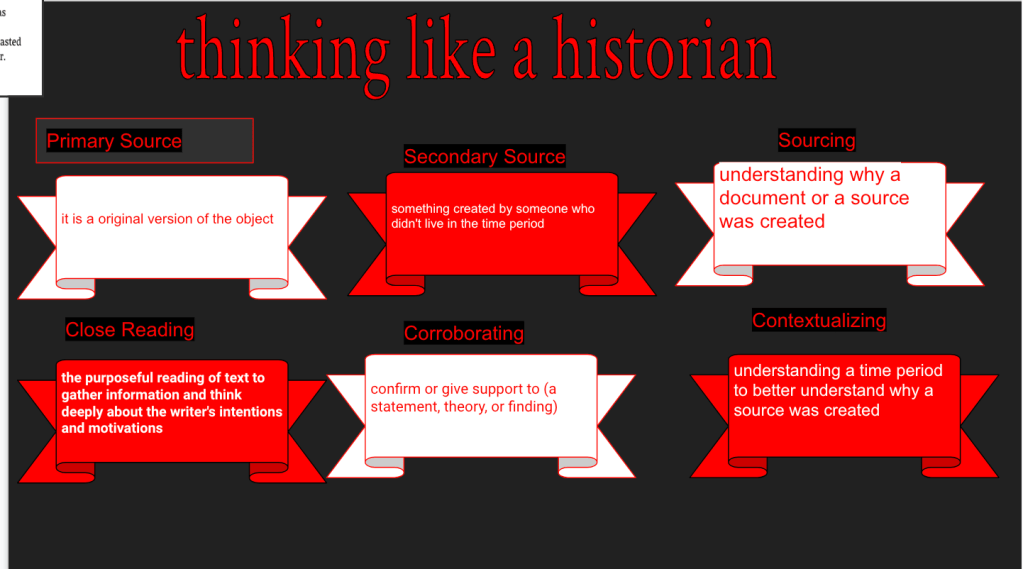
On this day I began with a Fast and Curious with historical thinking skills. I created a 12 question quiz featuring primary sources, secondary sources, sourcing, contextualizing, corroborating, and close reading. The class averages were 52%, 52%, 57%, 60%, and 57%. I quickly gave feedback and then we switched gears to a Frayer.

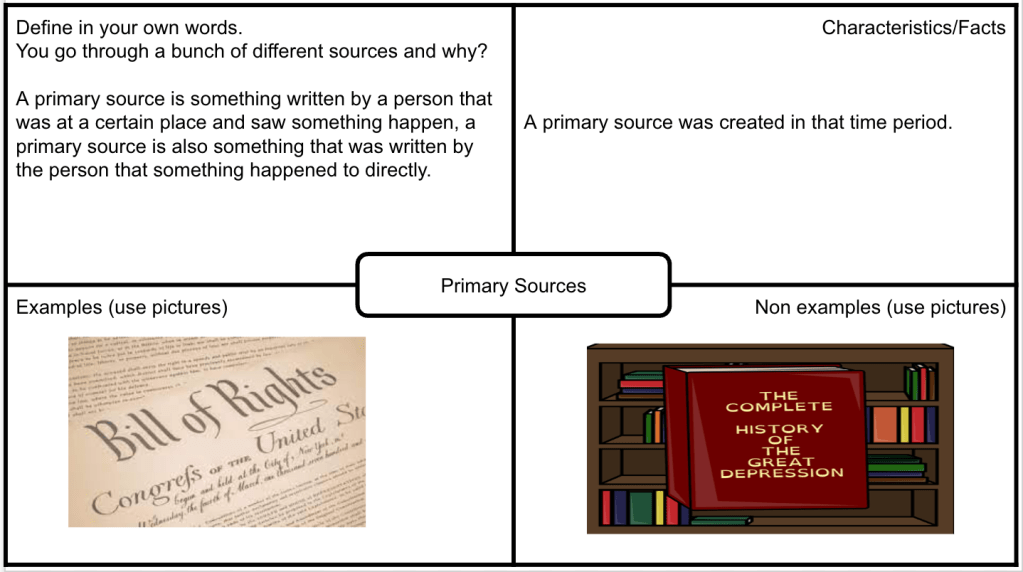
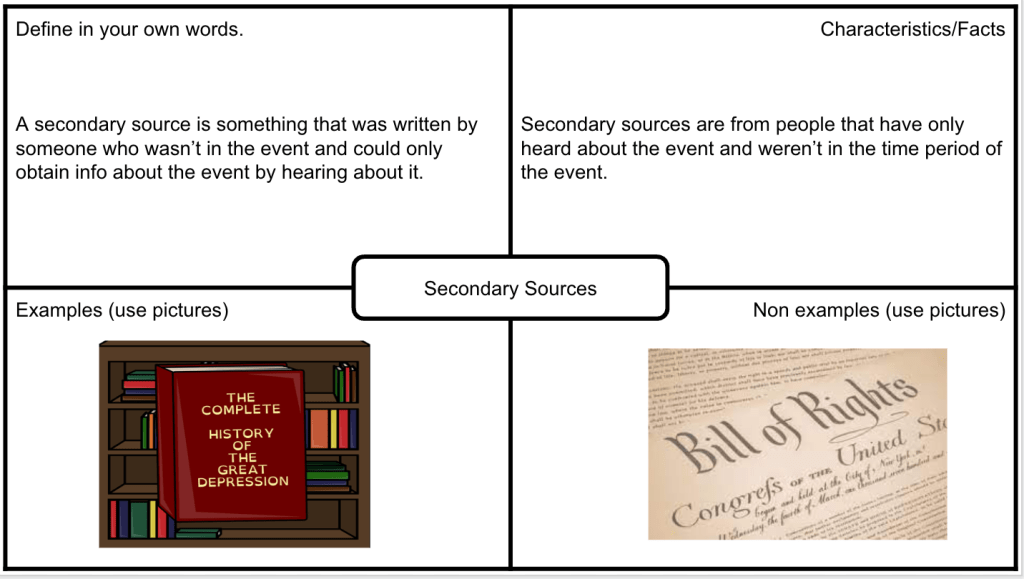
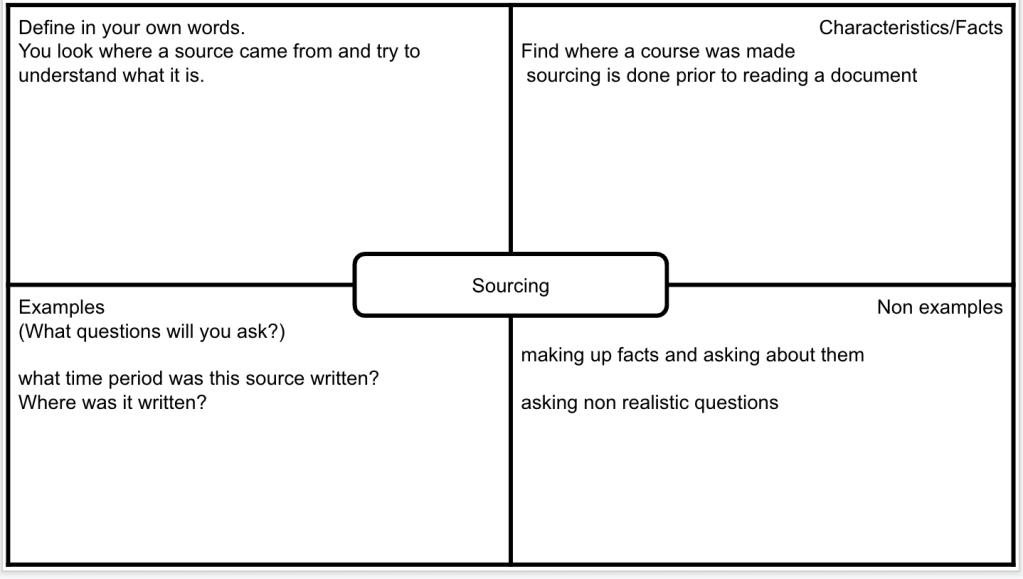
Last week students did 3 frayers so they were ready for this protocol. I had four Frayer models with primary sources, secondary sources, sourcing, and contextualizing. Last year I used a Sketch and Tell for these words, but I wanted to switch it up this year. Students defined the words, shared examples, nonexamples, and characteristics. For reference, I shared a slide presentation with information. I gave students 15 minutes to Frayer all 4 words. I quickly learned that I should have given 20 minutes. After the timer went off, I had students share their slides to the Newline interactive tv in my room. Some students came up and presented their Frayers while others wanted me to present. We took the Fast and Curious again and the scores were now 62%, 62%, 67%, 62%, and 70%. To me these scores were an improvement, but they weren’t as high as I expected them to be.

At the conclusion of the lesson, I had students track their progress with the Magana Mastery Tracker. Students set a goal for the lesson then rate their feelings, progress, and effort on a 1 to 3 scale.

Thursday

I began class Thursday with another rep of Fast and Curious. The scores this time were 60%, 59%, 62%, 62%, and 68%. I was completely caught off guard by these scores. I took some time to go over the Frayer models with my own examples.

I thought to myself, maybe if we practice the skills of sourcing, contextualizing, corroborating, and close reading then maybe the scores would go up. When I give feedback, I could reference our practice.

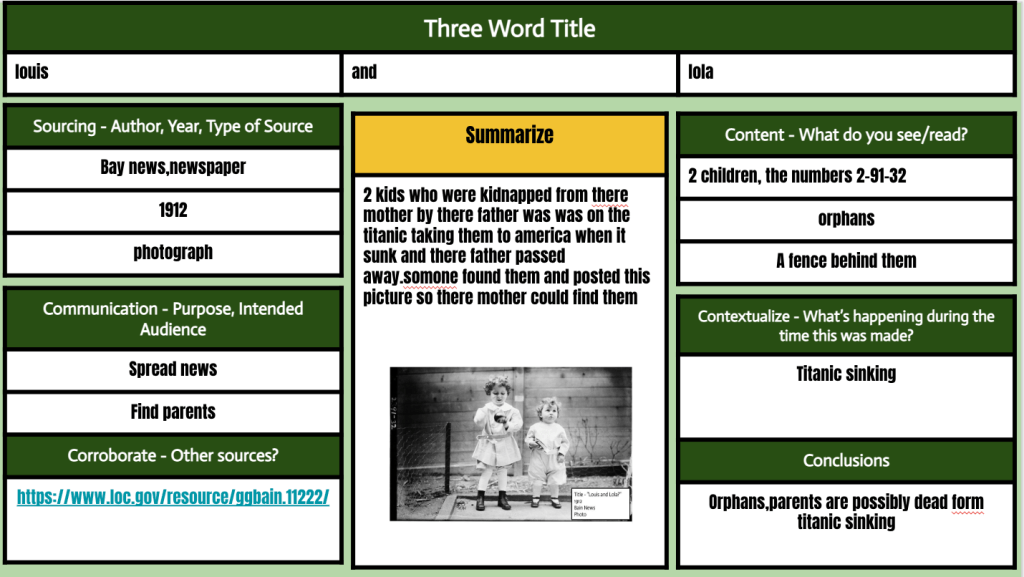
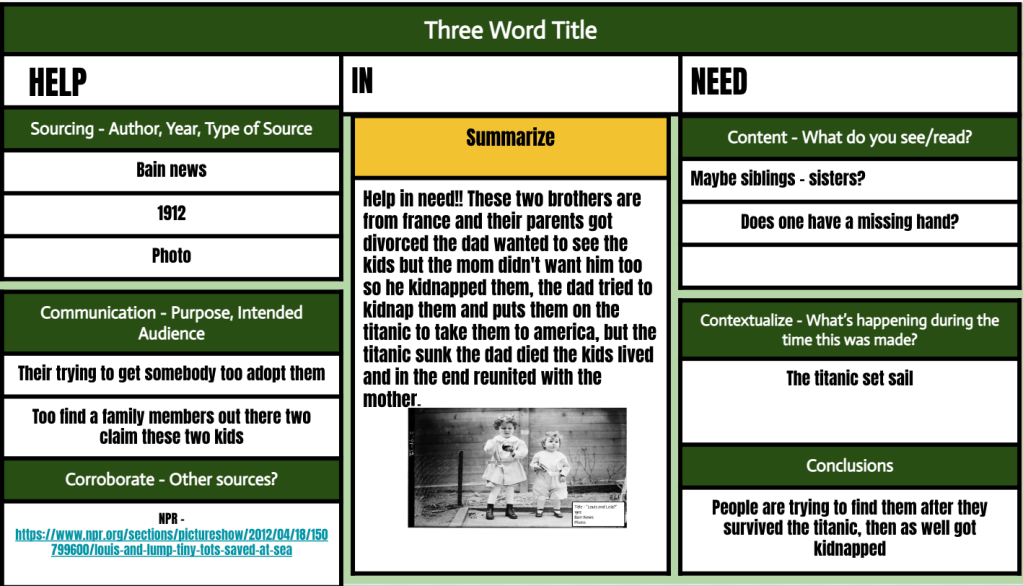
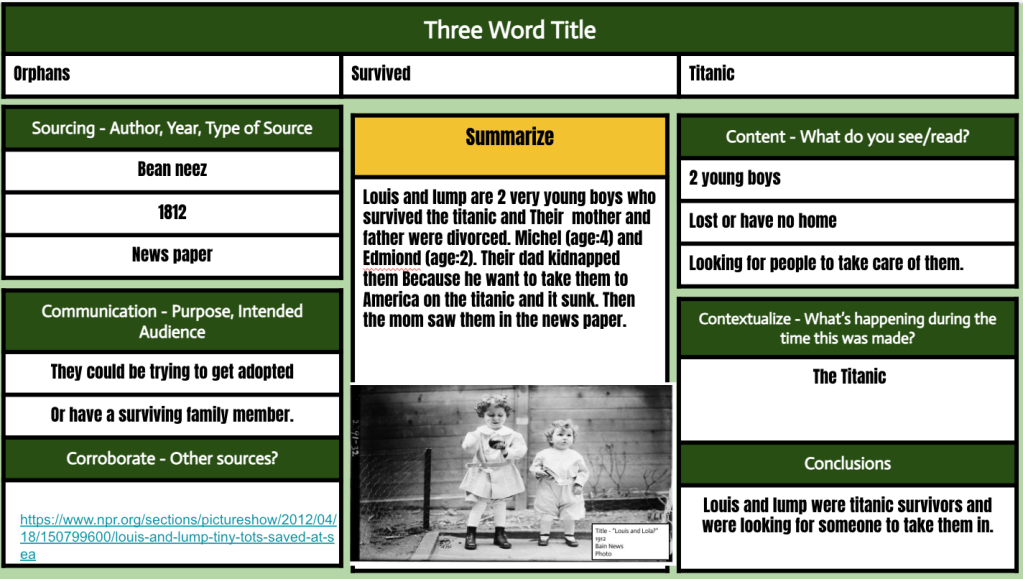
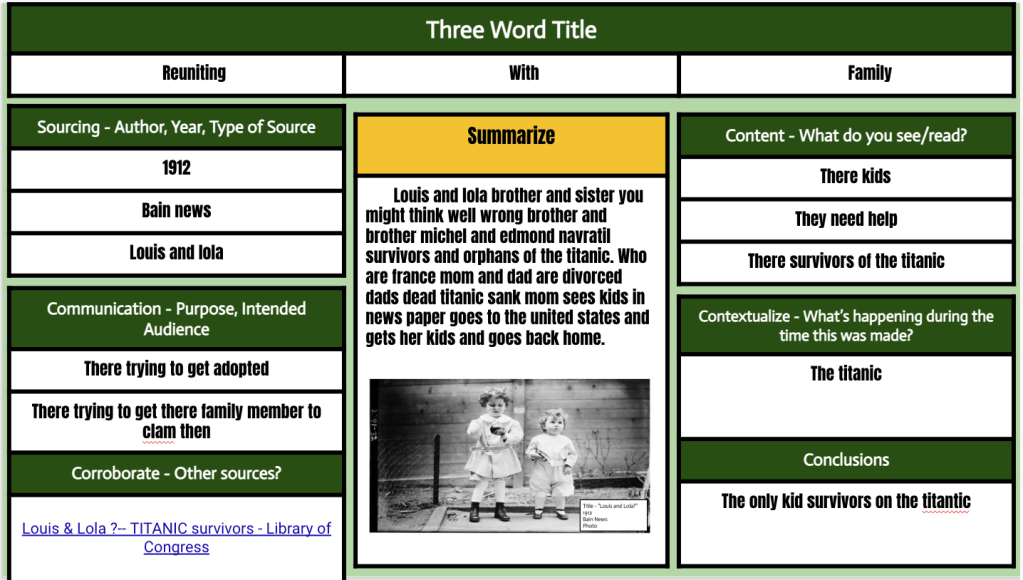
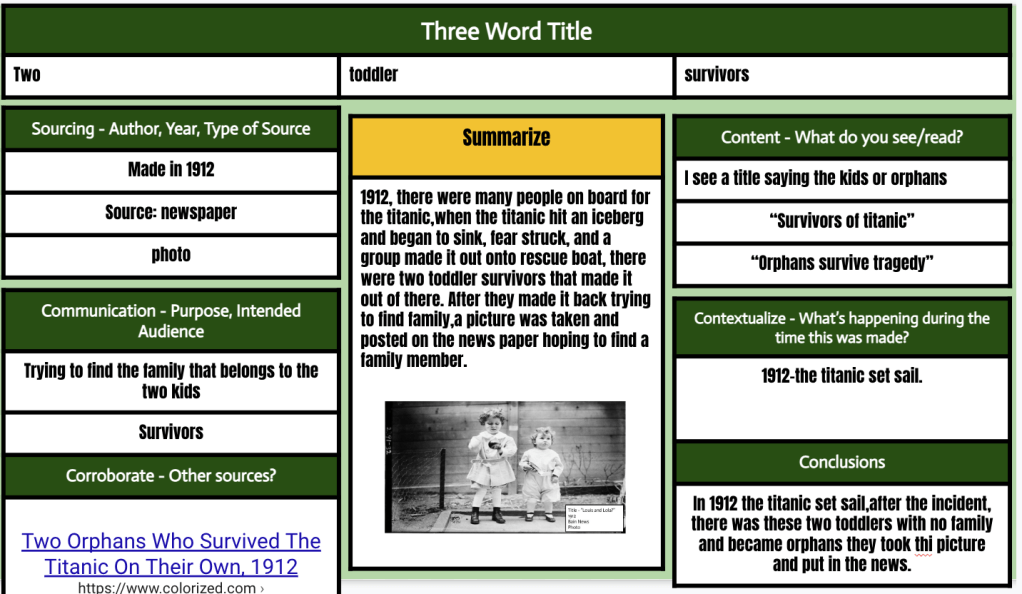
As a result, I created an iteration of 8Parts with historical thinking skills. I don’t know if it could be applied to photos, but I took a chance anyway. On Google Classroom, I shared my iteration along with a picture called Louis and Lola?. As you know, I take risks, I reflect, and I attempt to do better next time.

With this being our first rep, I walked students through the process of analyzing a photograph. I coached them up. The first thing we did was source the image, we wrote down the author, year, and title. Then I asked, if anything seemed stranbge about the title. Some students raised their hands and stated the question mark seemed strange because maybe their names aren’t Louis and Lola. Next we close read/analyzed the photo for details. Then students contextualized by searching the date 1912. I asked them., “What major event happened in 1912?” We discovered the Titanic sank. Then I asked, “What is the purpose of this photograph?” MANY students struggle with author’s purpose and point of view with informational sources. I waited a long time and across all classes I got, “The photo was made to share the news.” We thought about it and figured that if the Titanic sank, maybe they are trying to find the parents of these kids. Finally, students corroborated the information and found another source related to the photo. I made the point that if we never corroborated another source, all we would know is what we guessed about the photo. At the conclusion of the lesson, I had students write a summary about the photograph. We were unable to take the Quizizz once more.

Friday

We started off class with the same Quizizz again. This time the scores were 68%, 68%, 62%, 59%, 76%. Earlier in this post, I made reference to never having these students before. These low scores were eye opening to me. I looked at last year’s scores and my classes were at 90% or higher on the 4th rep of Fast and Curious. We had discussions in every class about using Quizizz, Gimkit, or Blooket as a learning tool. It’s not a review and forget tool. I’m hoping this is a phase and result of students getting used to me and my style.

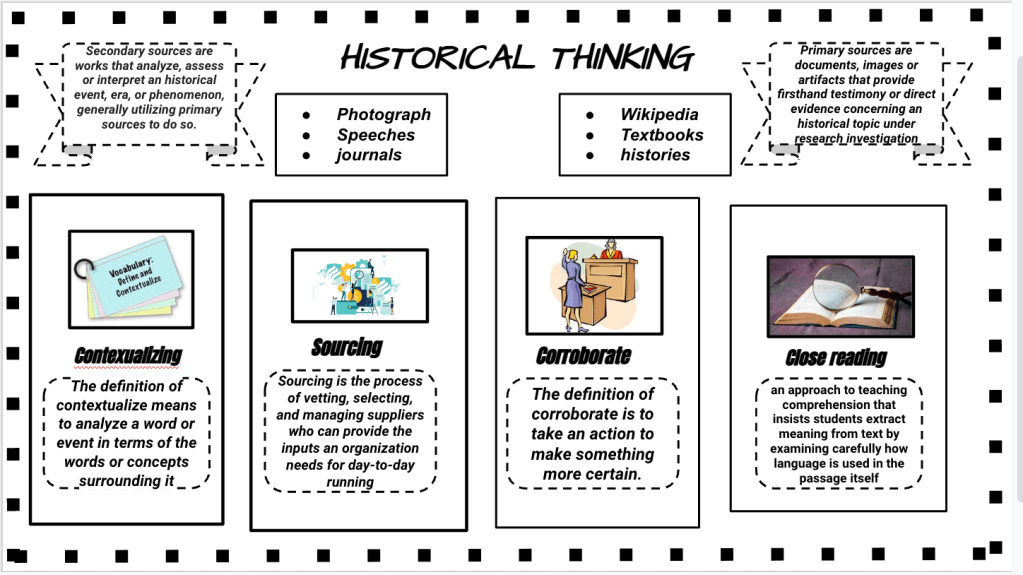
To conclude this unit, I had students creating an infographic about Historical Thinking Skills. Some classes, I shared a blank slide presentation and let them create. Other classes, I shared the scaffolded version of the slides to help them visualize where information should go. I gave the classes 30 minutes to create. On Monday, they will have 10 minutes to finish up their infographics.

They’ll Be Fine

“What if they don’t do it correctly? I’m going to have to take an entire class period to go over their slides,” a colleague said to me. 

I replied, “They’ll be fine.” 

They replied, “What if they forgot something? I would have completed everything in the directions.” 

To which I replied, “I have a Masters degree. You have a Masters Degree. They’re all 11 and 12 years old. We would make the most creative slides the world has ever seen. We would follow every direction.  They’re learning a process.” 

     I share this conversation because too often we get caught up in the day to day content and compliance of learning. We all want to do better for our students. We all do so much and are called upon to do more. At times it’s the weight of the world pushing down at us and it’s stressful. However, we must remind ourselves about the core of any classroom – the human child. 

     The children who come to our classrooms are all from different walks of life. I’ll never forget when a student questioned my teaching and use of a worksheet. Rather than be offended, I began to reflect. Ultimately, I asked myself this question, “What experiences am I creating for my students?” My classroom ran like a “one size fits all” machine which didn’t place the emphasis on each individual student. 

     We are all unique individuals with unique skills and talents. My job as an educator is to discover students strengths and talents and bring them to life. As a result, I created a classroom based around students and creating, critically thinking, collaborating, and communicating (The 4 C’s). However, while students are creating, I’m walking around giving feedback. I’m talking. I’m joking. I’m teaching students. 

     When I revamped my classroom, I took a major risk and it began with creating lessons where students were creating their own learning. I stopped assigning textbook sections with comprehension questions. Instead, I changed it to students reading a textbook section, finding 5 important facts, discussing and comparing their facts, and then creating a summary of their learning. I will run this framework around fifteen times a year. This repetition allows students to grow and get better throughout the year. 

     My classroom is also a place where students are creating learning artifacts to share with each other. I really wanted students learning from each other. Oftentimes, my students are designing slides to help them learn new information. These slides are unique to them and their own strengths. They are also sharing these slides with their peers and across all my class periods.  Students should not hide behind Chromebook screens. We should be leveraging technology to get students sharing knowledge, and giving feedback, to each other.  

     Since I switched to a student focused classroom, I noticed several changes. Students were happier and more confident. With the design and repetition of lesson frames, students were able to recognize their growth and learning through the year. This made me a happier teacher as well. I no longer am the teacher that states, “This week is moving so slow.” 

     Now I’m back to my conversation from above. The entire focus was on every student having correct slides and following directions. The focus was on content and compliance. My focus is on individual students. How did I help ease my colleague’s mind? I had every student partner up and they gave feedback to each other. They had one minute to tell each other something they liked about their slides. Then students had one minute to tell each other something they would change on their slides. As a result, students helped each other find missing quotes or misinformation. Students did the work. Students did the learning. 
     Why does this work for me? I began trusting my students and helping them understand their unique strengths, talents, and skills. I didn’t sign up for teaching so I could brag about being the first to get through a textbook. I didn’t sign up to talk at students all day. Rather, I chose this profession because I want to help make a difference in the lives of students and create change for everyone. 

The Year That Was In 505

Year 10 in the books! What a year it was in 505 – I made some changes and set a goal to teach Reconstruction by the end of the year. Throughout the year, I made some small changes to units and lessons and achieved the goal. Here are my units with some thoughts:

  1. Unit 1 – Exploration of North America
  2. Unit 2 – Road to the Revolution

With these 2 units, I can get carried away with Jamestown and Plymouth, French and Indian War, and all the little acts and taxes that were passed by British Parliament. I cut out all the small details and focused on the important pieces. For example, I focused on who fought the French and Indian War, the debt that was accrued, and the Proclamation of 1763.

  1. Unit 3 – Constitutional Convention
  2. Unit 4 – The Constitution

These are 2 of my favorite units. I rarely teach the same way year to year, but I really like and reuse a lot of the lessons. Government and the Constitution are passions of mine, and I try to make these lessons as hands on as possible. I cut down Units 1 and 2 so I could focus more on the Constitution.

  1. Unit 5 – The New Republic
  2. Unit 6 – Westward Expansion

These 2 units I’m always trying to tinker with and perfect a bit more. I really enjoyed the blogging aspect of the New Republic Unit, but it needs something else (what that is, I don’t know yet). I focus on the first 5 presidents which covers a lot of material and takes us to Westward Expansion.

Once I begin westward expansion, I begin to think, “Should I include Andrew Jackson?” He’s intriguing, engaging, interesting – but is it important?

  1. Unit 7 – Industrial Revolution and Reforms
  2. Unit 8 – Civil War
  3. Unit 9 – Reconstruction

Despite me questioning whether I should teach about Andrew Jackson, Westward Expansion is a nice transition to the Industrial Revolution and reform movements. Westward expansion and reform movements are a nice transition to the Civil War.

3 Positives

1. EduProtocols

EduProtocols are constantly evolving from year to year. I love it. These lesson frameworks are engaging, familiar, and are easily adaptable to different levels of students. The creativity and collaboration among students was at an all time high in 505. Here are my top EduProtocols this year:

CyberSandwich – I love this protocol because it can easily be created and scaffolded in a variety of ways. This year I used a Main Idea note taking strategy:

Students partnered up and read to each other. As one student read, the other student took notes. After both students read and took notes, they discussed their notes. The summary at the end of the CyberSandwich was a newspaper article creation.

Another way I used CyberSandwich was through Nearpod. This was a great way to control the pace of the CyberSandwich and provide scaffolding strategies. I often used the Nearpod CyberSandwich in my class with a high percentage of students with IEP’s. Here is what I did to set this up:

  1. The 10 minute reading was set up as an open ended question. I linked the reading and had students take 6-8 important facts/notes. I also added a 10 minute timer in Nearpod.
  2. Next I had students add important notes to a collaboration board. This was followed up with a brief discussion.
  3. Finally, I had students summarize their learning with an open ended question. I also added a 10 minute timer to this slide.
Thick Slides

My favorite EduProtocol this year, hands down, was the Thick Slide. This protocol is so versatile with any lesson. I used Thick Slides to help students form and create an essay. I used Thick Slides as a way for students to share and learn from each other. I used Thick Slides as a way to just be creative. Here are some awesome student examples:

Here are the ways I used Thick Slides:

  1. Monroe Doctrine – this was used as a way for students to develop a thesis statement, and write a small essay. Out of the EduProtocols students used for helping them write their essay, most enjoyed the Thick Slide.
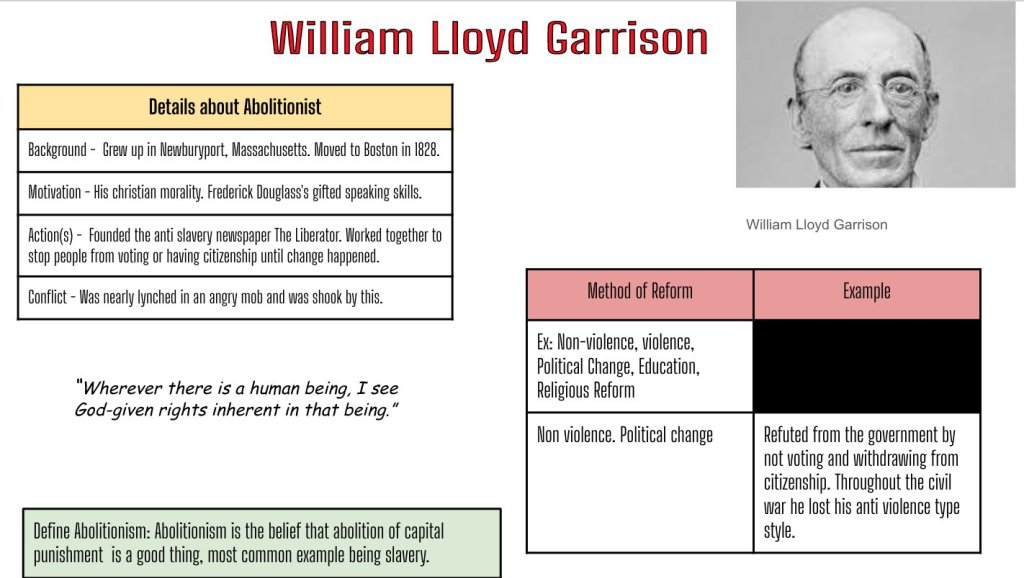
  2. Abolitionists – students created this Thick Slide, changed the share settings, and shared their slide with other classmates through a Google Form. I gave students a Frayer model and they used each other’s slides to learn about other abolitionists.
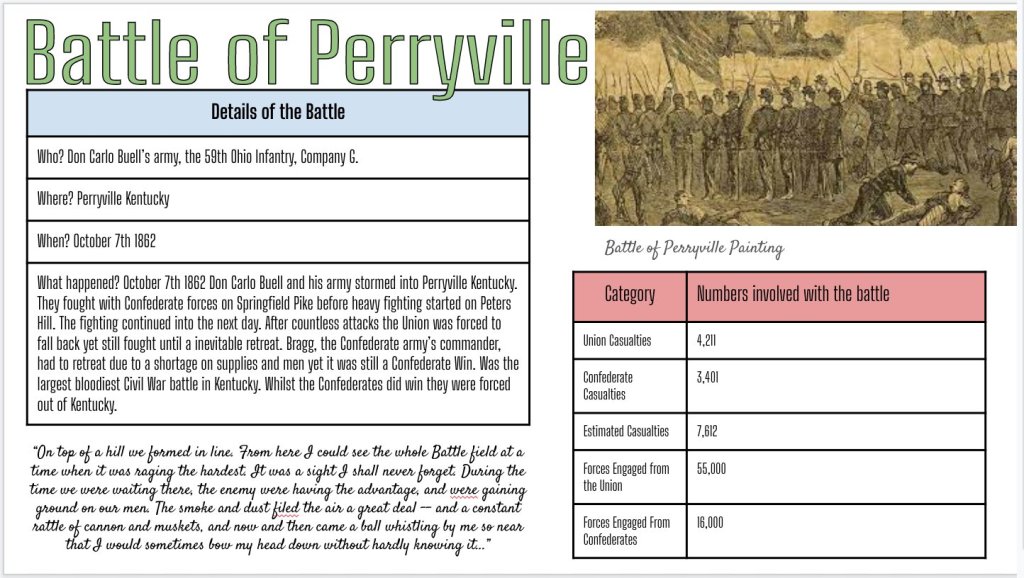
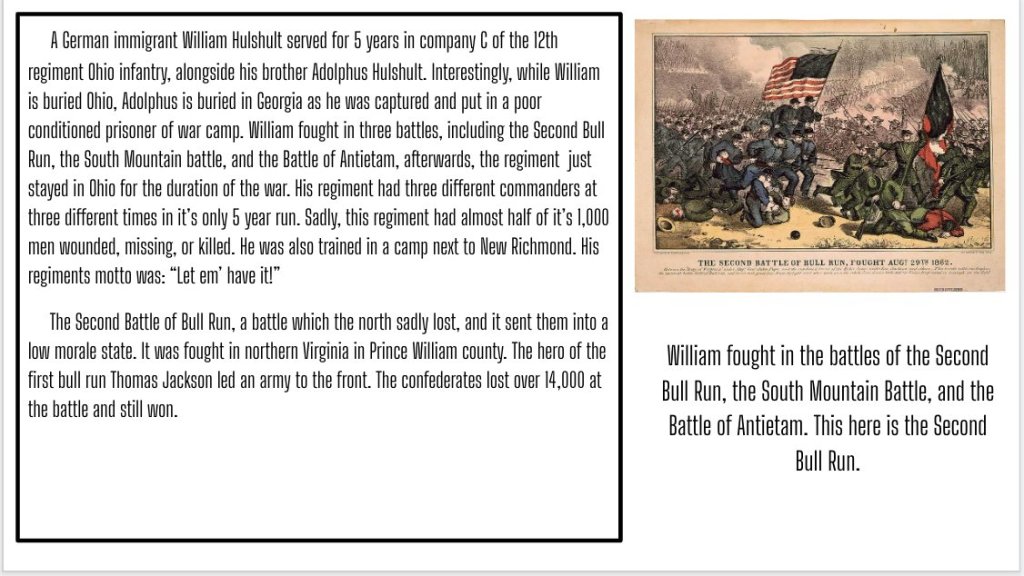
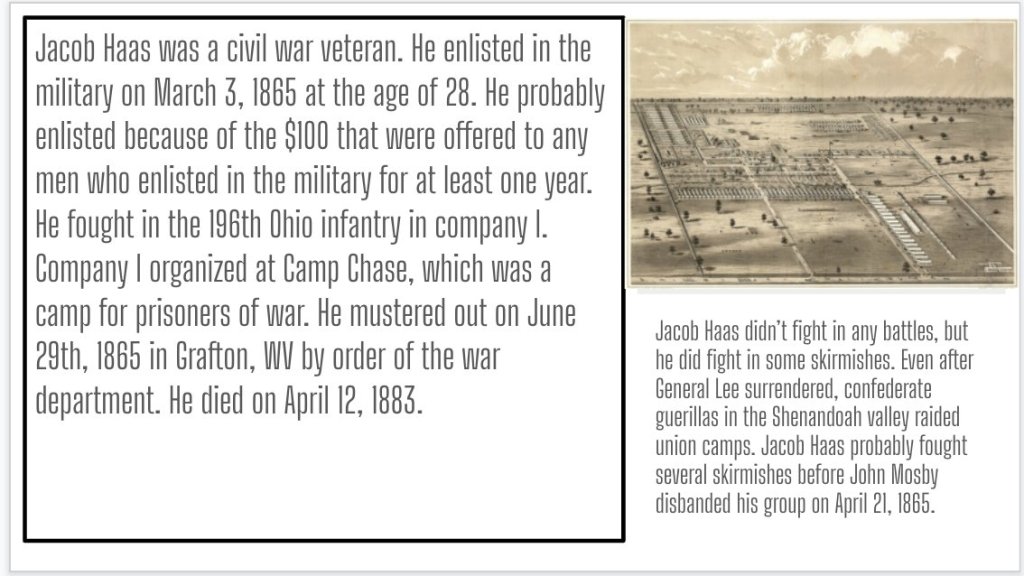
  3. Civil War – students used the Thick Slide to help them collect information about a battle that a local Civil War veteran fought in. This was used to help create a tribute to that Civil War Veteran.
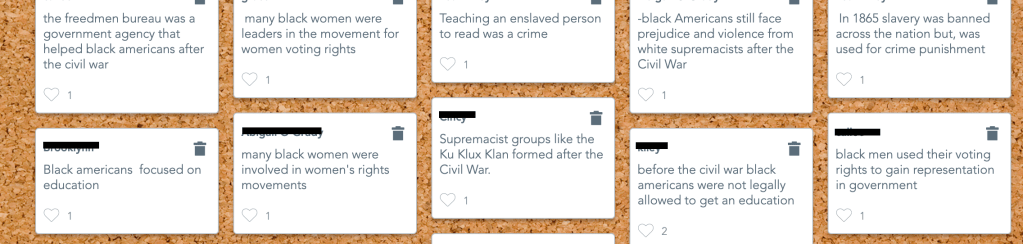
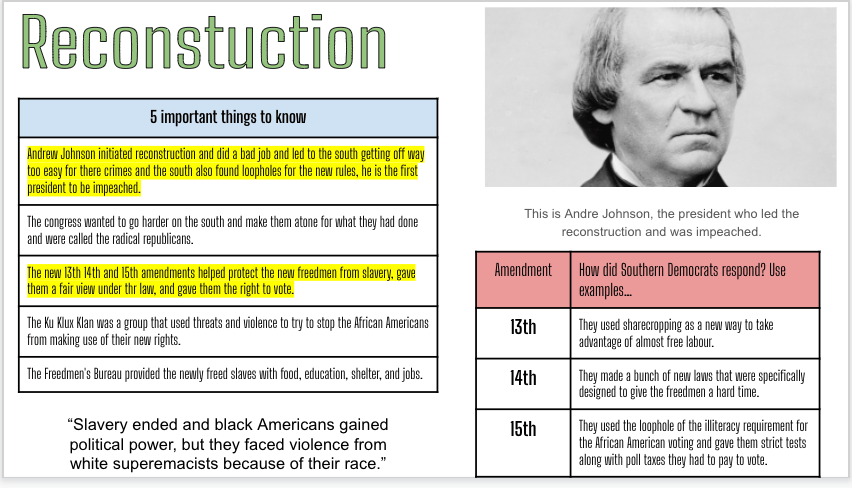
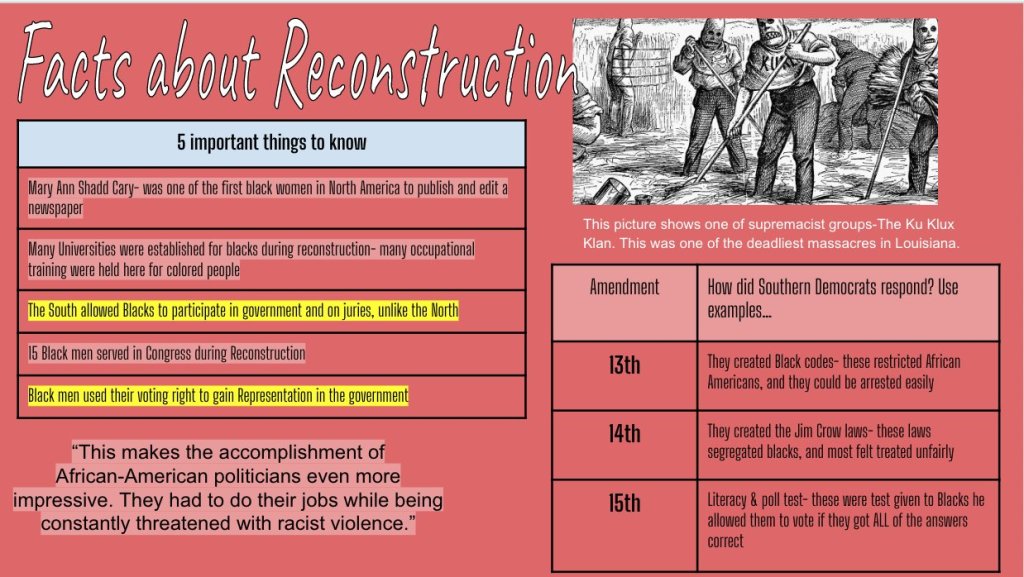
  4. Reconstruction – students used this Thick Slide to collect information. I had them give each other feedback about their slides. Then I had students reflect on which information was important versus not important. They used this to help them create a news story about Reconstruction.
2. Civil War Veteran Project

For the longest time I was obsessed with the cemetery near my school. It was one of the original village cemeteries with numerous old gravestones. I was always curious about the names, people, and gravestones. However, I never knew where to start or where to look. I just let it go until this year……

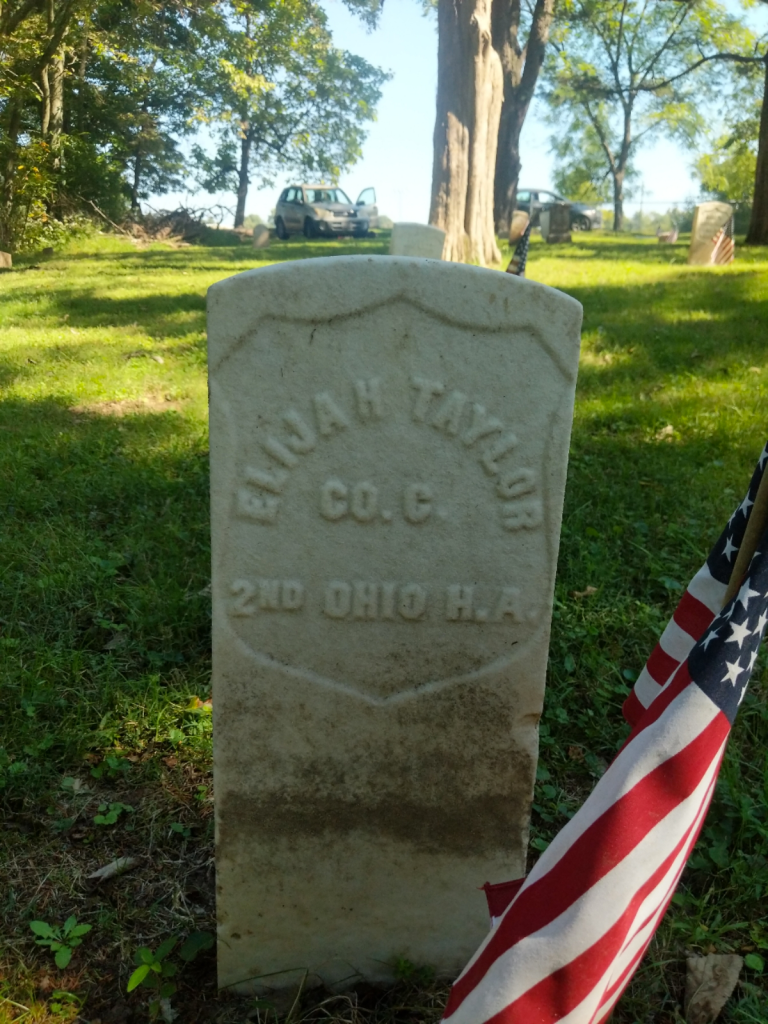
I had a student teacher who informed me what a Civil War veteran’s grave stone looks like. In 1879, Congress passed a bill that would honor Civil War Veterans throughout the United States. Their grave stones would be made of white marble, rounded top, with a Union Shield, and contain the veteran’s name, company, and rank. With that bit of information, I knew it was time to do the project. With EduProtocols in my back pocket, the project was easy to plan and design.

To begin the project, we walked to the cemetery and collected names. I had students write down the full name, company, rank, and years for 3-4 veterans. When we went back to the classroom, we began searching Ancestry.com, Civil War Index, NPS database, and other Civil War databases. Students created an Iron Chef, Thick Slide, and recorded a tribute to a local Civil War veterans on FlipGrid. It was a great way for students to connect history to their community. Here are some examples:

3. Lifelines and Messages

I have mentioned this before – I don’t care about Social Studies. I’m not driven by content. I’m not driven by pacing guides. I’m driven by anyone who steps foot in room 505. I care about the success and well being of anyone I’m around.

It’s important to me to talk with every students 2 or more times per class. It’s important to me to begin every class by asking students how they are doing. It’s important to me to show kindness and gratitude.

I grabbed an idea from Monte Syrie – Lifelines. I handed out a lifeline to every student this year. The lifelines were used by students when they were having a bad day and couldn’t possibly focus on work. As a result, they could use a lifeline and trade the class period for time to rest, reflect, and do nothing. However, they knew they had to make up the work. Most teachers would be apprehensive about this, but it’s important to me to show a little grace. The students did not abuse this, and I was amazed at how responsibly they handled the lifeline.
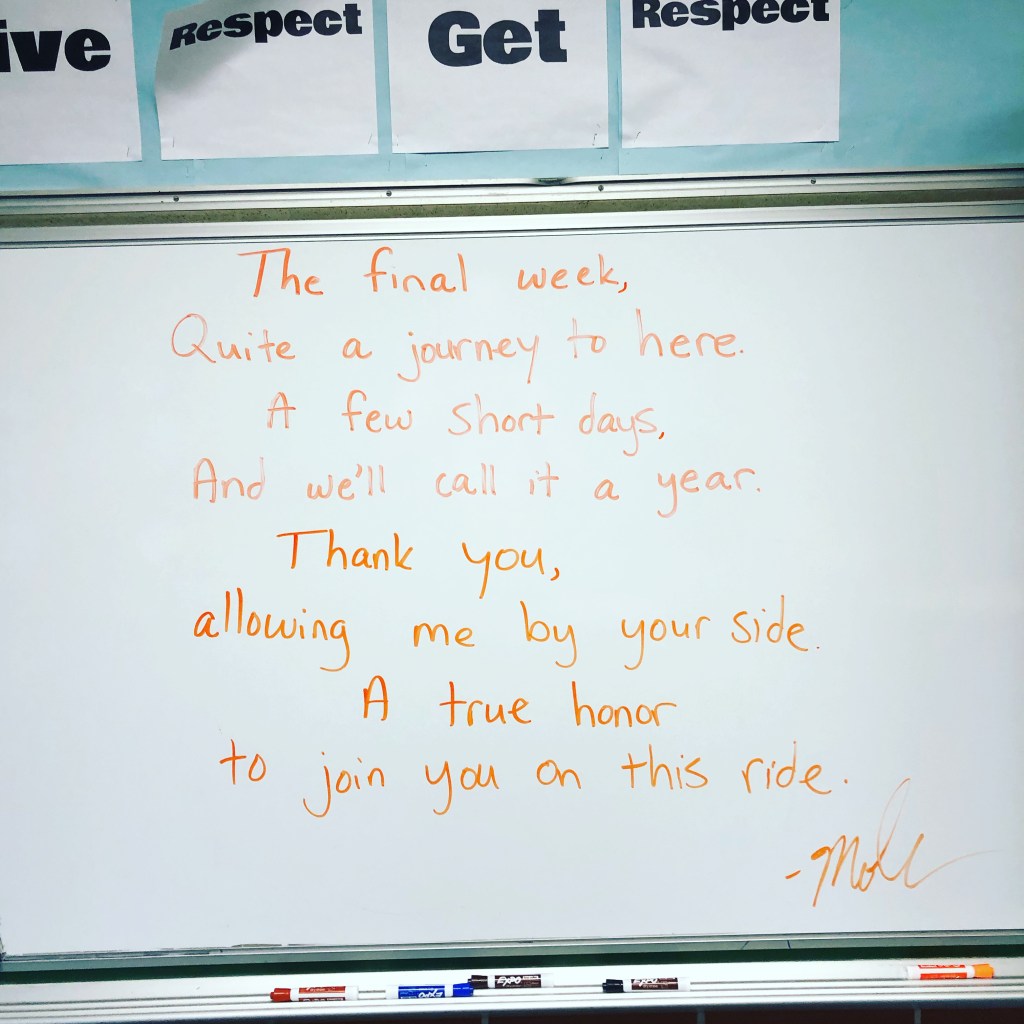
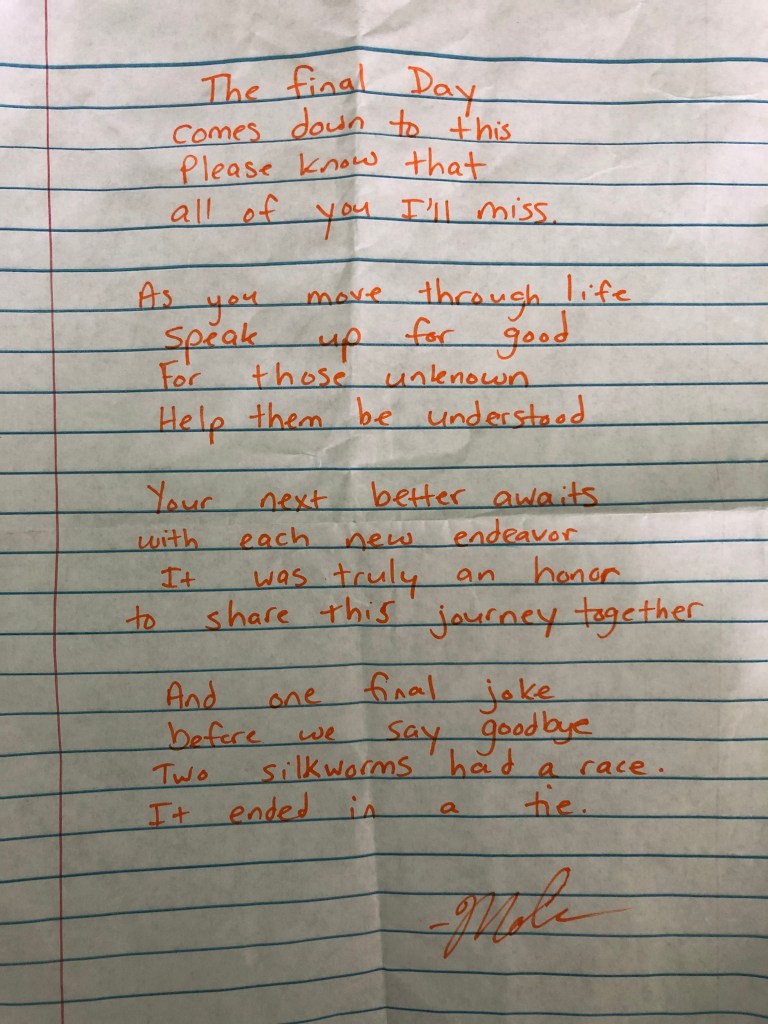
Students often love the daily messages I write on the board. I don’t bring attention to them. I simply write them and let the students read them on their own. Occasionally, I will leave the board blank to see their reaction. A blank board is often met with disdain and a lot of questions. Here are my messages from the last week of school:

Needs to be Better

Everything needs to be better. It never feels like enough and I have a drive to make 505 better and better. Here is my list of finding better:

  1. More student to student feedback.
  2. More positive contacts home. I always begin the year doing great with this, and then it drops off.
  3. More student created assessments.
  4. More writing skills (we write ALL THE TIME), but more revising and editing techniques.
  5. More “in the moment” feedback from me.

Despite it never feeling like enough, please take time to read a Letter of Recommendation a student wrote for me. Yes, this is a talented 8th grade student…..

To whom this may concern,

     I am writing to recommend Adam Moler for Ohio Teacher of the Year. It was a pleasure to have him as a teacher for the past two years, and having him as an educator is surely a blessing to any student.  

     Mr. Moler has an aptitude for improvisational teaching during challenging circumstances, and has the natural ability to make students feel heard and appreciated while being in class. For instance, he holds a “Friday Check In” once a week to listen to the needs and thoughts of his students, while fully understanding feedback with a non judgemental understanding. If he finds that a particular lesson may not be thoroughly understood by everyone, he modifies the lesson according to the students needs.

     For example, students are able to pick their pathway of learning by completing work that leaves leeway for creativity. In the document  5.3 Assessment Options, the following are represented:

  1.  contemporary themes for assessment items that cater to younger generations, to better advocate the educational subject with his audience
  2. A concise expectation of what items should be included (allows for the student to better reflect on learning expectations)
  3. Rhetorical questions that grant a deeper thinking

     Many assignments also require creativity and adapt to the needs of those with Neurodivergency (having conditions such as ADD, ADHD, ASC, ect.) by recognizing strengths and allowing for diverse skills found in these disorders to be utilized. In The Great Western Race Assignment, Mr. Moler gave myself and fellow students the ability to define concepts with the input of our own knowledge and way of thinking. 

     To further prove that his teaching skills are astonishingly effective, the Learning Statistics document records my personal increase in knowledge, commonly grown by 40%-61% from the first attempted quiz.

     While being skilled in the education department, Mr. Moler has an inclination for being an inspiring and knowledgeable role model in the lives of many, by writing words of guidance and support to his students. Some of many of these quotes can be found in The Inspiring Quotes of Adam Moler documentation. 

     After being a student of Adam Moler for 2 years, my fellow students (see Student Feedback Link for more information) and I can confidently recommend him as the Ohio Teacher of the Year. 

The Week That Was In 505

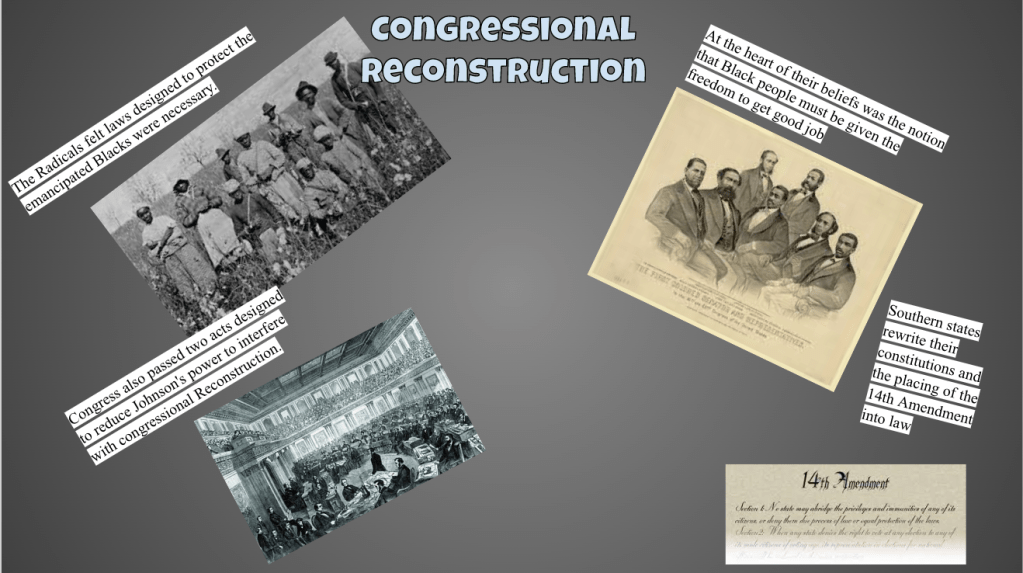
This week we moved into the 2nd week of the new unit about Reconstruction. Again, I’m using this unit to explore some of the topics to gain a better understanding of how everything works together. Next year, I’ll have a better understanding of the content and hopefully create an intriguing essential question.

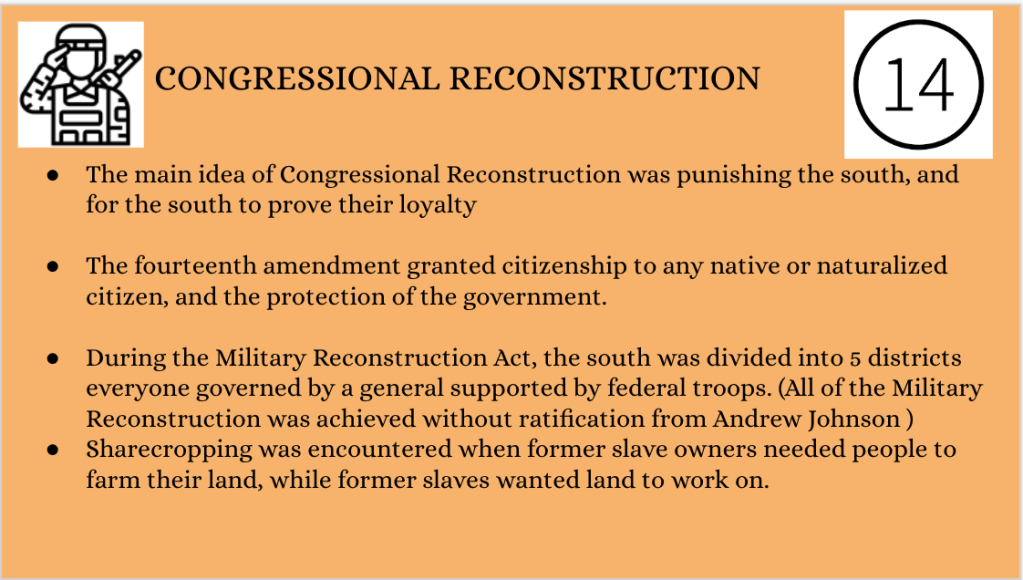
I wanted the main focus of this unit to be on Reconstruction plans, Reconstruction Amendments, people and groups involved, and the Compromise of 1877. This week, we focused on Reconstruction Amendments, people, and the Compromise of 1877.

Aside from the content, I wanted to focus on using EduProtocols as LEARNING ARTIFACTS. I liked this terminology used by Dr. Sonny Magana. It gives the work a purpose. The EduProtocols allow students to develop their own knowledge, have conversations about the content, give each other feedback, and create. Protocols win against crappy question worksheets any day of the week.

Monday – Fast and Curious, Sketch and Tell

Tuesday – I lectured the entire class (Yes, I did that. Sometimes it’s needed) – presentation created by @corywwalker.

Wednesday – Thick Slide with NewsELA reading, Fast and Curious

Thursday – Choice of Fact Mania or Somebody – Wanted paired with a NewsELA article, Fast and Curious

Friday – Final Project of the Year – News Frenzy (EMC2Learning)

Monday

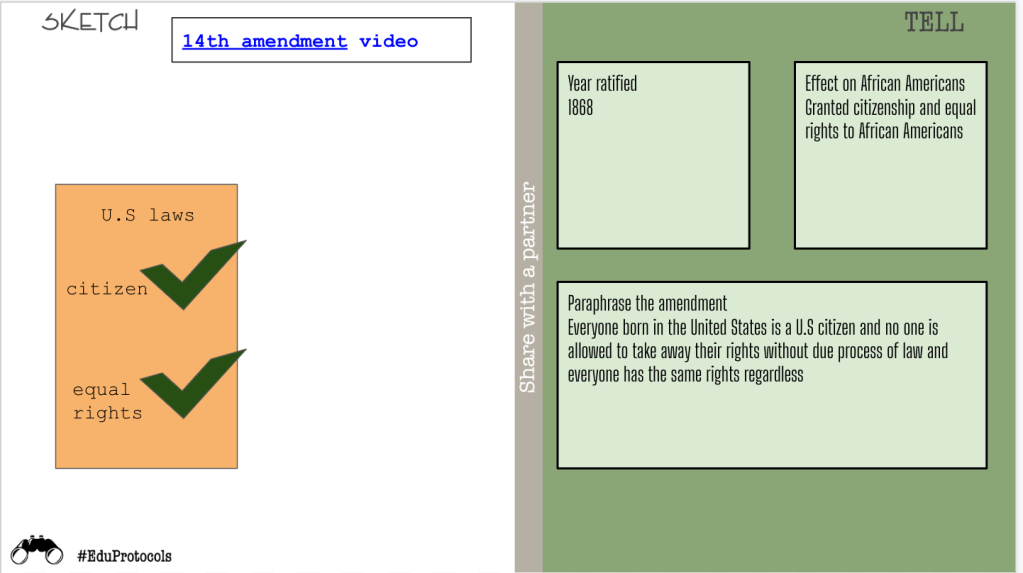
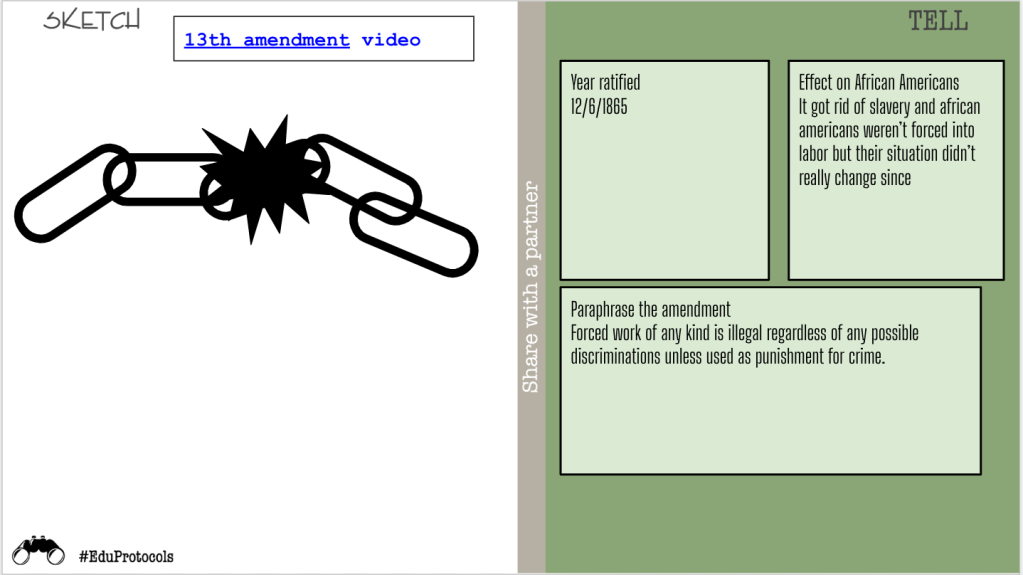
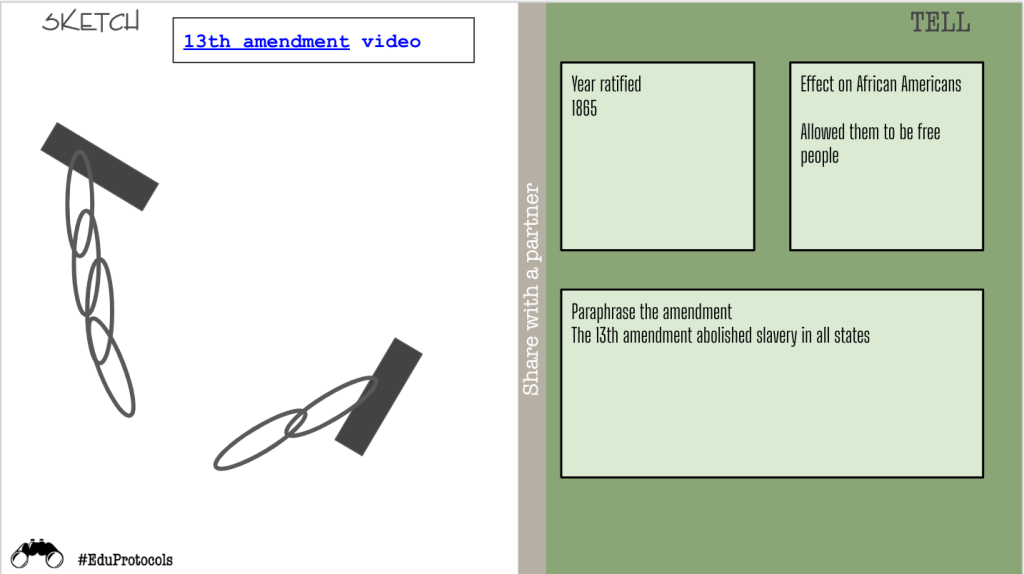
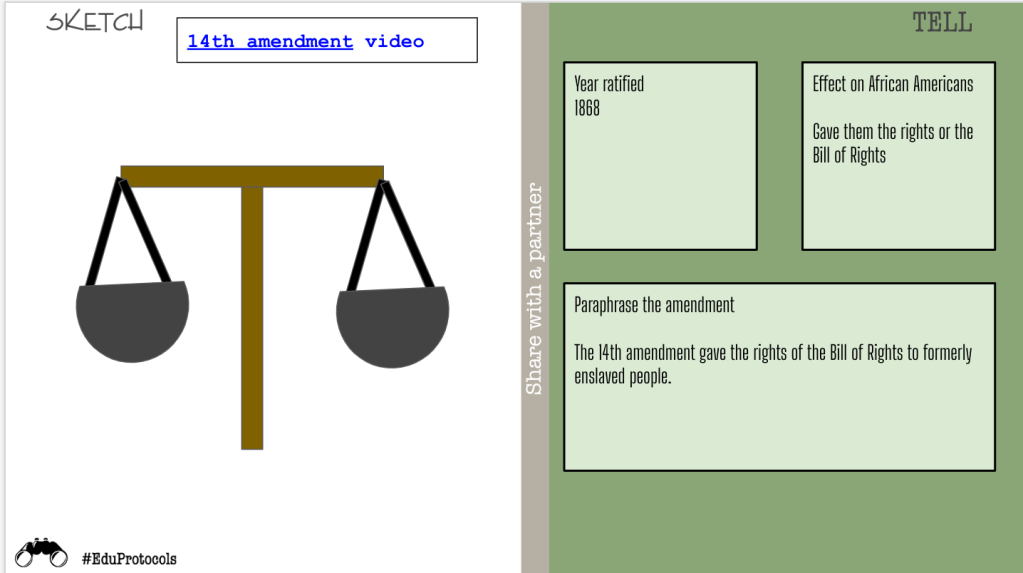
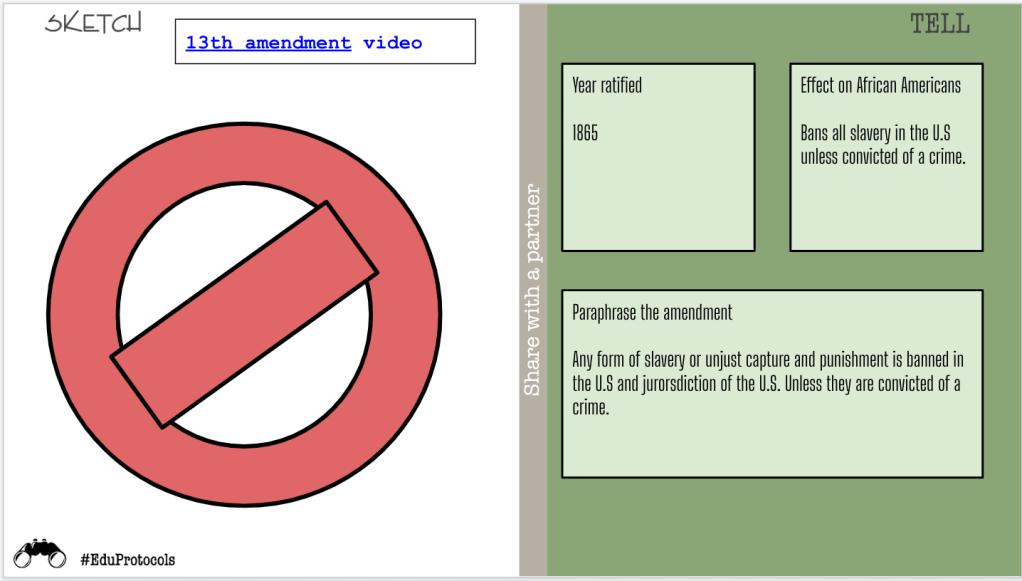
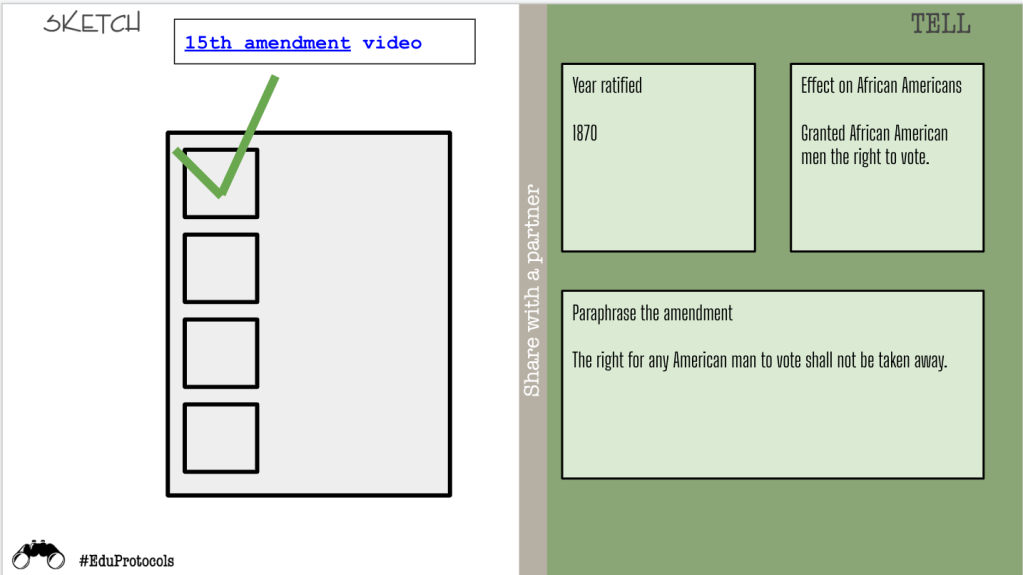
Monday I was absent, but I wanted the focus to be on the Reconstruction Amendments. An easy go to lesson for me when I’m absent is a Sketch and Tell. Students are familiar with it and stay engaged with it. I put together a quick Sketch and Tell that focused on the ratification year of the amendments, definition of the amendments, and effects of the amendments. I paired a 3 minute video with the Sketch and Tell. The video was ideal because it was short, it began with information students previously learned, and it did an excellent job of explaining the 13th, 14th, and 15th amendments.

The fast and curious I set up was through Gimkit. The Gimkit included 30 questions about Reconstruction Plans, amendments, and people. I like to mix up the platforms I use for fast and curious. Quizizz is great, and, in my opinion, provides more accurate results. Gimkit is good, and a nice mix up as it provides lots of reps with questions. However, the students get caught up in the game aspect of Gimkit and don’t focus as much on the content. You definitely need to coach them through using Gimkit properly and be able to explain the purpose of Fast and Curious. The fast and Curious scores were as follows: 62%, 52%, 63%, 51%, 56%.

Tuesday

Based on the Gimkit results from Monday, and being absent, I needed to get everyone on the same page. I found 2 great Peardeck presentations from a teacher in Virginia named Cory Walker (@corywwalker). Going into class Tuesday, I had several goals:

  1. Get the students on the same page.
  2. Reteach the Reconstruction Plans.
  3. Go over Amendments.
  4. Discuss and analyze the loopholes in the language of the amendments.

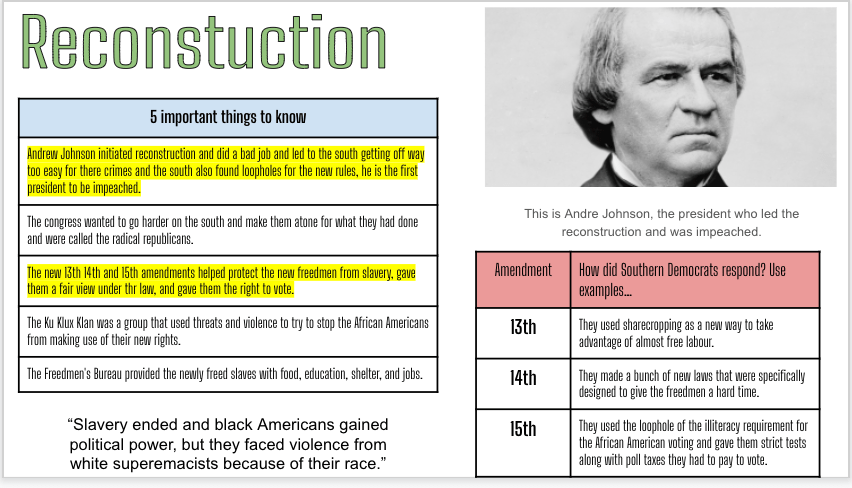
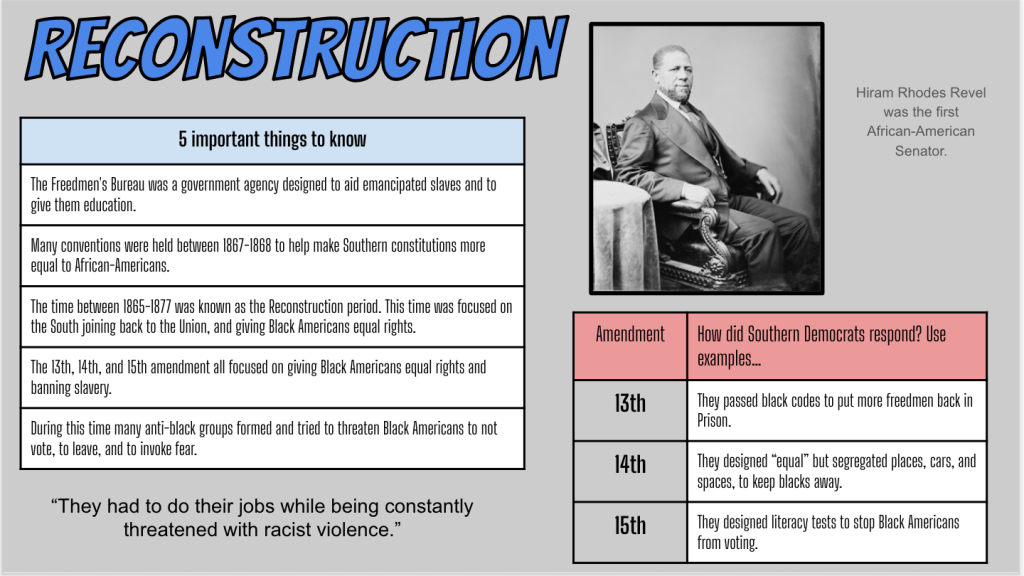
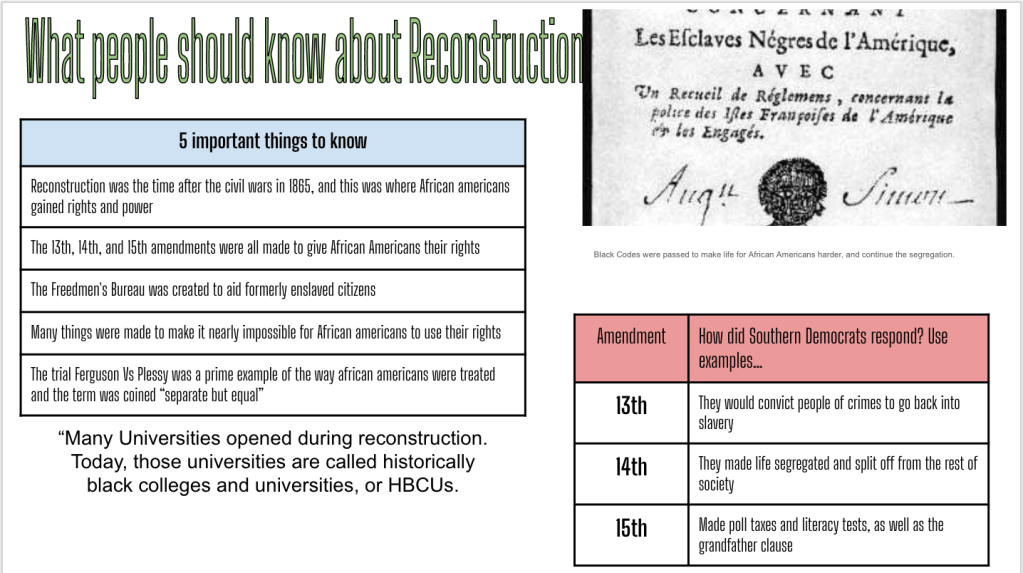
I copied the 2 presentations I found from Cory and combined them into 1 peardeck. I rearranged the slides to show how southerners responded to the 13th amendment with Black Codes, 14th Amendment with Jim Crow laws, and the 15th amendment with voter restrictions.

What’s sad to me is the entire time I was teaching about the amendments, I felt like I was breaking some sort of rule or law. This is the sad nature of our country now.

After I combined the 2 presentations, I lectured the entire class. The Peardeck aspect of it made it interactive. It’s unlike me to lecture, so I started off class apologizing. As I lectured, I was inspired by this 15 Minute History podcast on Reconstruction that Dr. Scott Petri shared with me.

After my lecture, did I bore students? Yes. However, many students said they actually liked that I took time to lecture. I shared a Google Form asking students why they liked me taking time to lecture. Here are some responses:

  1. “You made some things clearer.”
  2. “You’re really good at telling stories.”
  3. “You explain history really well.”
  4. “I like the stories.”
  5. “It reminded me of story time.”
  6. “I feel I learn better this way.”
  7. “We didn’t have to really do anything.” – 🤦

The only class that had time for the Fast and Curious Gimkit was 5th period. They raised their class average from 63% to 85%.

Wednesday

On Wednesday we got back to creating “learning artifacts” for the Reconstruction unit. I wanted to do a follow up with the lecture from Tuesday with an article I found on NewsELA entitled, What everyone should know about Reconstruction 150 years after the 15th Amendment’s ratification, written by Tiffany Mitchell Patterson, PhD, a professor at West Virginia University. I liked this article because it added new information to my lecture from the previous day, and it covered much of the same content. I paired this article with a Thick Slide.

On the Thick Slide, I had students include a picture with a caption, 5 important things to know, a meaningful quote, and I included a review of southern responses to the amendments. As students were working I was giving feedback on their 5 important things to know. A lot of their information was stuff they already knew. I wanted the students to focus on new information. Some students included information about the 19th amendment ratification in 1920. We discussed the 19th amendment as being important, but it might not be relevant to notes on Reconstruction. Ultimately, I was trying to help them understand how to choose relevant information.

We finished class with a Fast and Curious Gimkit. The scores were as follows: 72%, 71%, 77%, 78%, and 68%.

Thursday

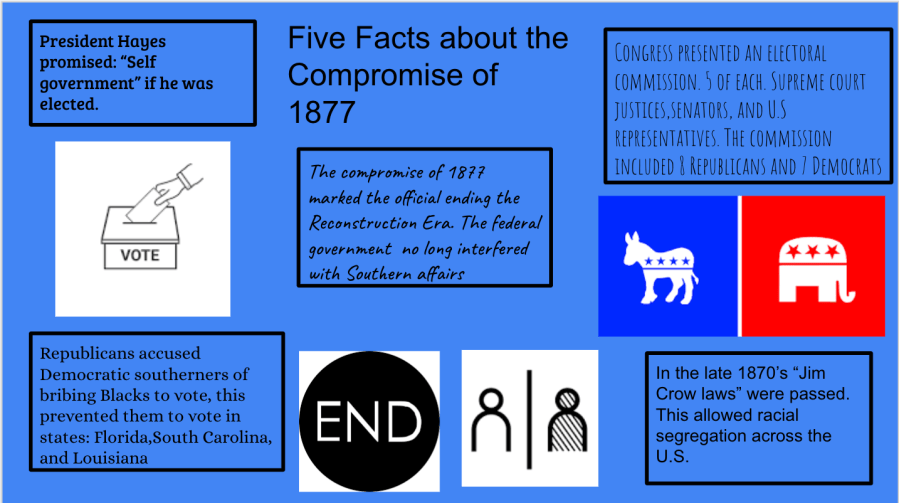
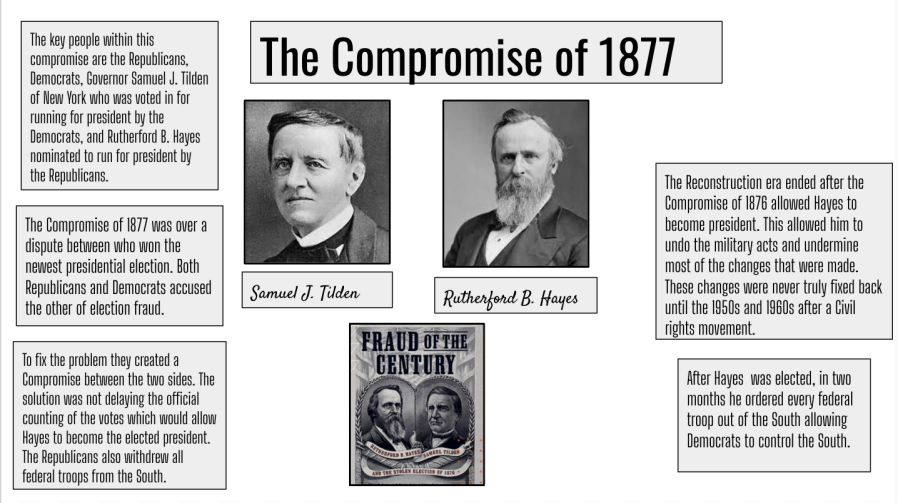
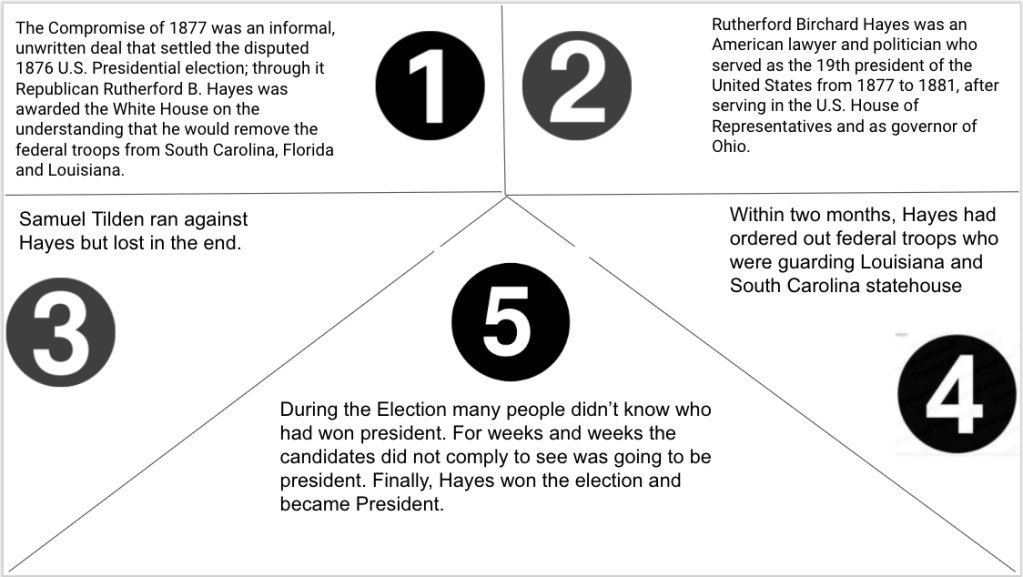
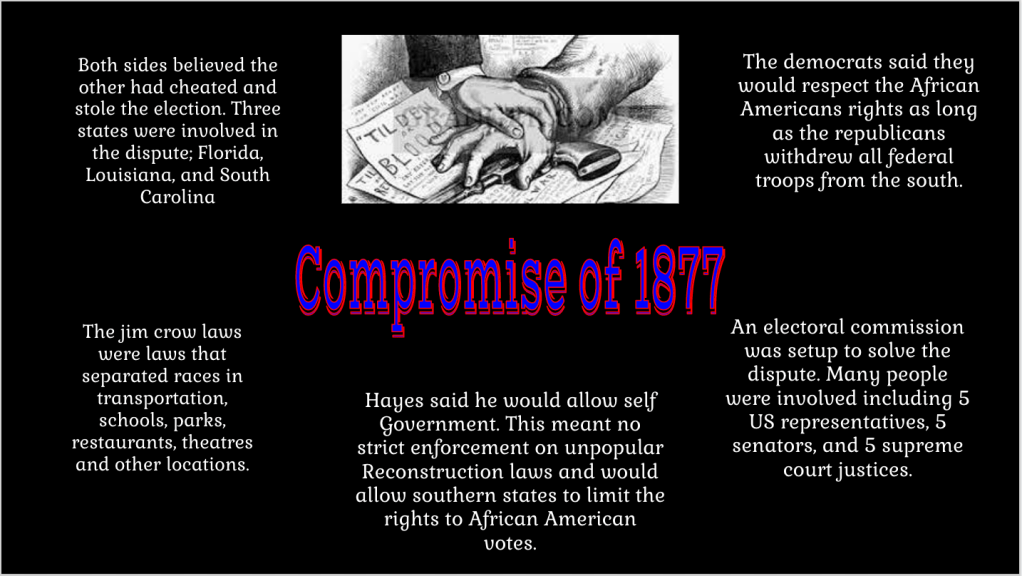
Today was reserved for the Compromise of 1877 and the end of Reconstruction. I gave students a choice for learning about the compromise – a reading I found on NewsELA or an EdPuzzle featuring a segment from the CBS Sunday Morning Show. (I love the segments from the CBS Sunday Morning Show featuring Mo Rocca!!!) Students also had a choice to create their learning artifact – Somebody – Wanted – But – So – Then, or Fact Mania. Most students chose Fact Mania. I had students focus on the who was running for president, what was the compromise, and why did the compromise end Reconstruction? For the Fact Mania, students had to choose 5 important facts to highlight, include pictures, and add a title.

We concluded class with another Fast and Curious Gimkit. The class averages were: 76%, 74%, 79%, 79%, 71%. The questions missed the most were questions from the Reconstruction plans. Upon review, I noticed the 2 classes with the highest averages we focused on the Reconstruction plans the longest. The other 3 classes I rushed through Reconstruction plans. The other aspect to this is the amount of absent students lately. It seems Covid is making a comeback and more students are getting sick.

Friday

Today was used for finishing up the Compromise of 1877 and beginning the final project. I thought about giving students a choice, but I kept it at one thing – The Fake News Frenzy from EMC2Learning. I cannot share this file, so check it out on their site.

I explained to students that they made learning artifacts to go back to and use for their final project. I prefaced everything with this, “If Reconstruction were featured on a news show, which aspect of Reconstruction would be highlighted?” This seemed to help students with the open-endedness of the project.

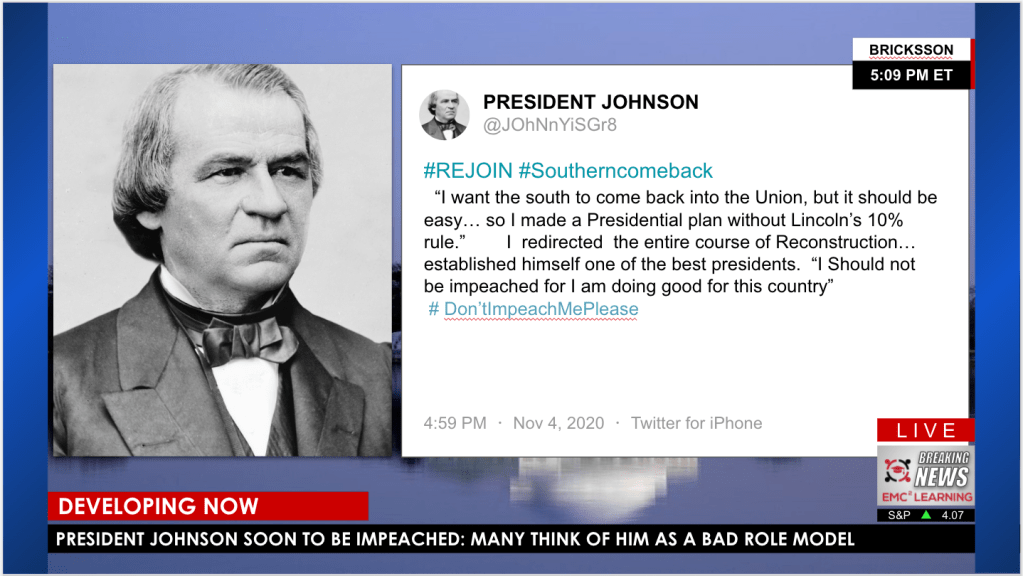
I love the News Frenzy file because it has students creating headlines, using social media posts, creating interviews with people, and creating tabloid headlines. A lot of creativity and thought must go into their creation.

Student Feedback

I shared my final Friday check-in with the students and I asked this question, “What advice can you give me about how to be a better teacher?” Here were some responses:

  1. “I think you’re a pretty good teacher already. The only piece of advice I can give to teachers is to try and understand the kids. Try and understand why they didn’t get their homework done or why they were sleeping in class. Being a student isn’t the easiest thing so having a teacher who understands makes all the difference.”
  2. “Not much. In my opinion you are an amazing teacher and there isn’t really a lot to grow off of. As a teacher you are great at most things you do.”
  3. “Be patient with us you are already an amazing teacher but we have a lot going on throughout middle school that is stressful and hard to explain but please just be patient.”
  4. “I think you could maybe teach a little more to the whole class out loud because when you explain things out loud it becomes clearer than reading a paper sometimes.”
  5. “I really cant think of anything you can do better. You are the best teacher i’ve ever had and you are the most understanding and funniest.”
  6. “nothing because honestly I need to be a better student and you have been so good to us”
  7. “i don’t think i can, you already are by far the best teacher i’ve had”
  8. “None, you are one of the best teachers I have had.”
  9. “there is no advice i can give when you’re already best teacher at teaching in this school, at least in my opinion”
  10. “Create more material so that some activities are repeated as much. Like less number manias and Iron chefs.”
  11. “No advice. You are single handedly the best teacher I have ever had throughout my educational journey.”

The Week That Was In 505

My goal this year: cut out the fluff, get to the point, and reach Reconstruction. In my 7 years of teaching Social Studies, I have reached Reconstruction one time. I rushed through it in 3 days. It was pointless. This year, I gave myself 12 school days for Reconstruction (2 1/2 weeks).

This is unchartered territory for me. Honestly, it’s something I don’t remember much from school. The lessons I am designing for the unit are meant to help me figure out how the topics/content are connected. Furthermore, the lessons are designed to help the students gain some background information.

I wanted to begin the unit by having the students research and define the Reconstruction Era. I learned from my good friend, and co-author, Dr. Scott Petri that we often don’t focus on helping students understand and define historical eras. From here, I wanted to focus on these topics:

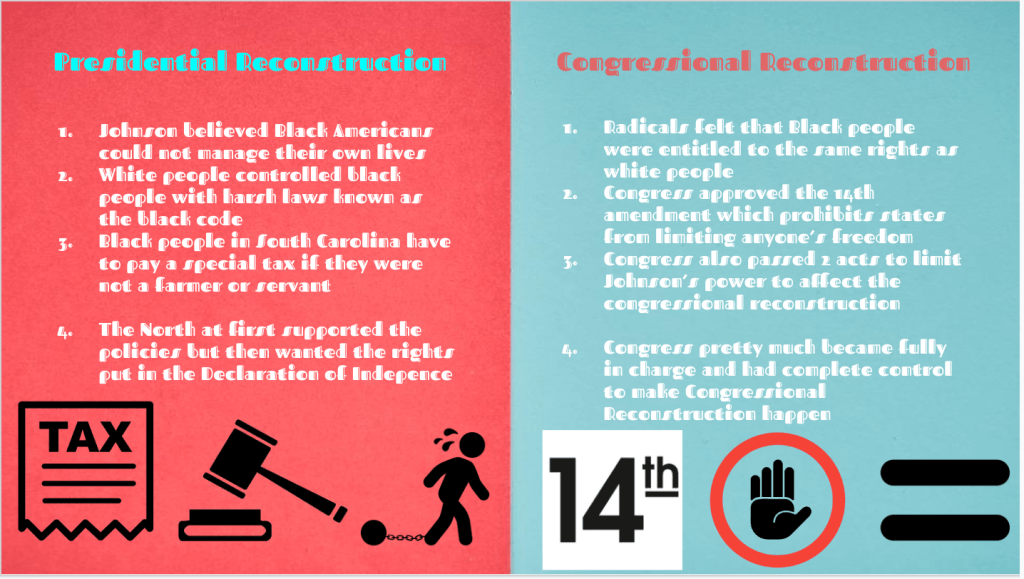
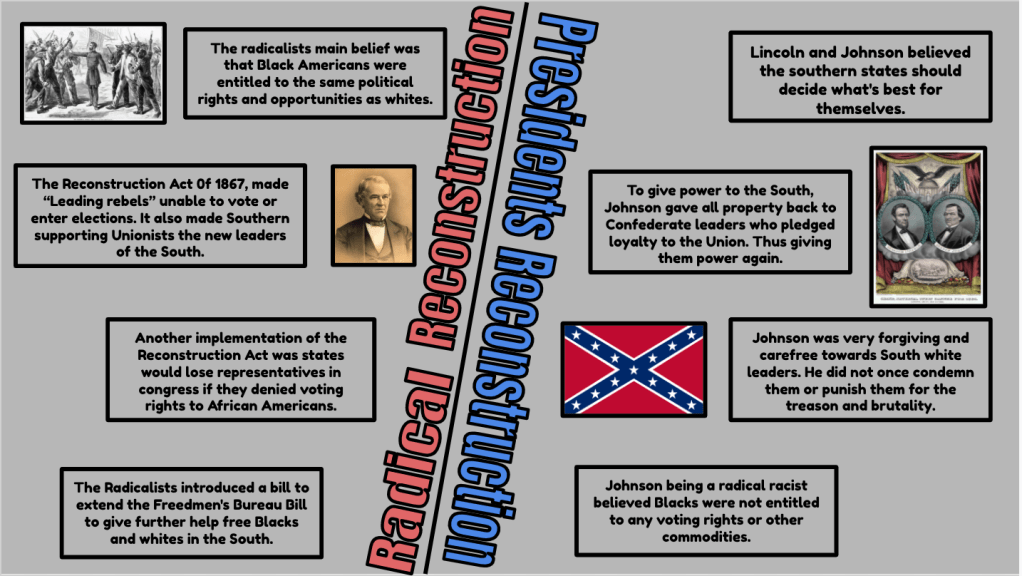
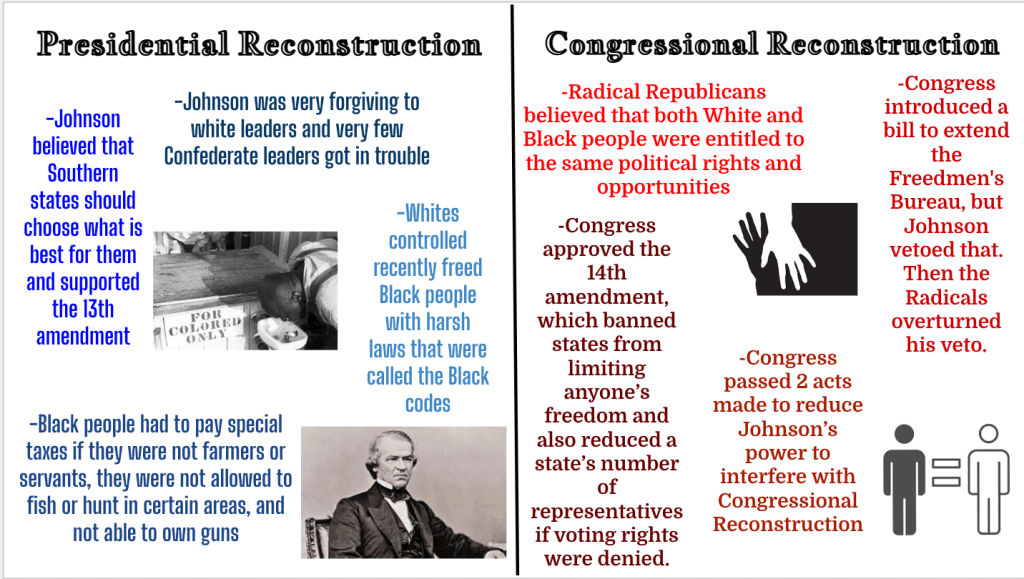
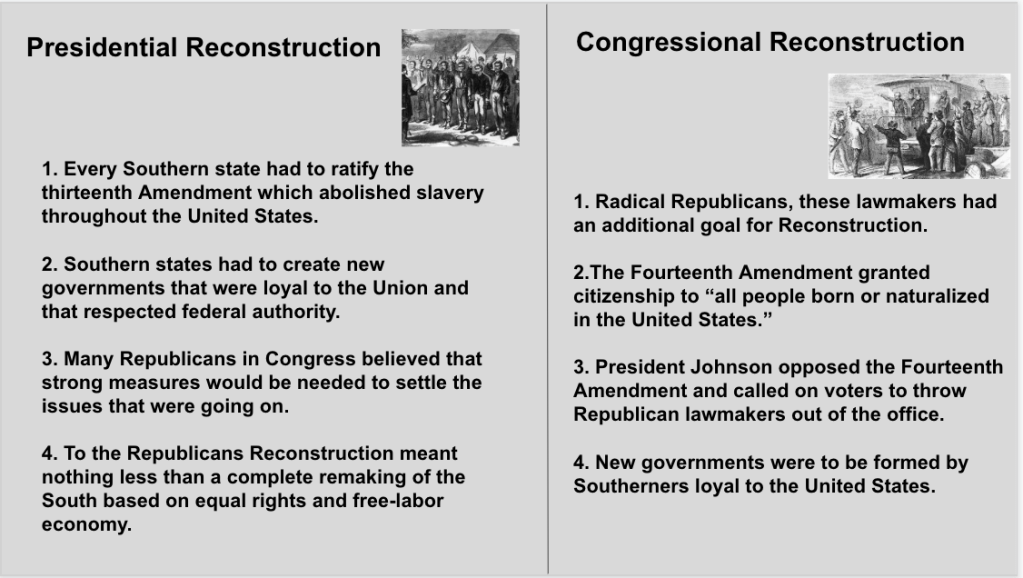
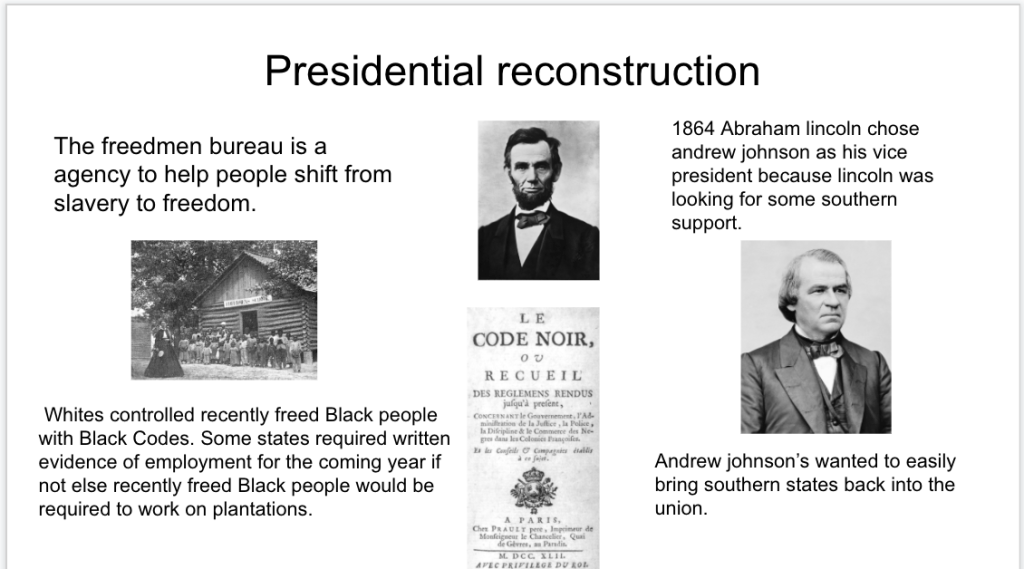
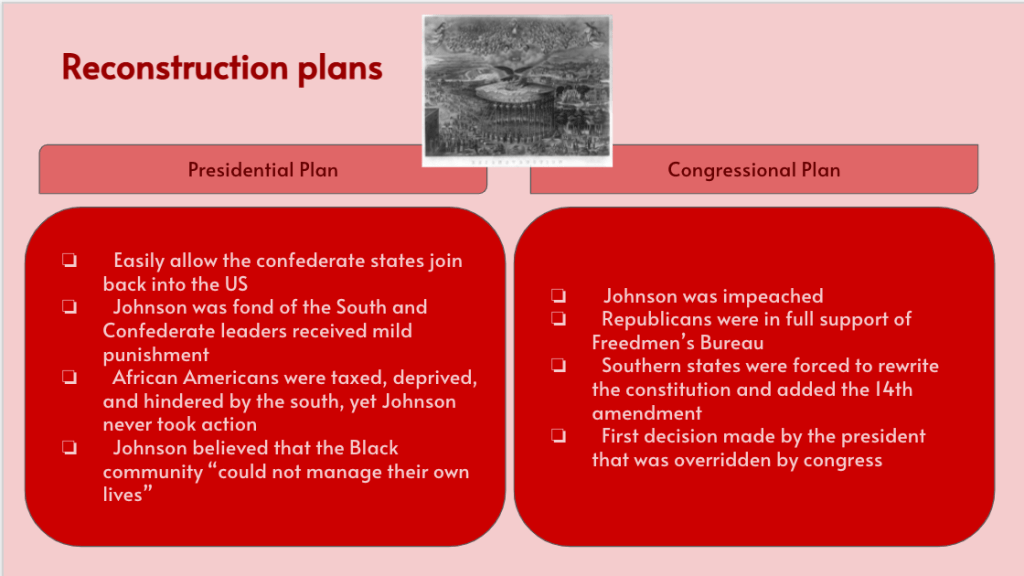
  1. Reconstruction Plans – Presidential and Radical.
  2. Reconstruction Amendments and Southern Responses.
    1. Black Codes
    2. Jim Crow Laws
    3. Voter Suppression
  3. People from the Reconstruction Era.

I need to think of a better way, and a better essential question for this unit. There are some awesome Reconstruction units I have seen, and would like to use. But, for now, I’m content with myself, and students, finding their way through new territory.

Monday – Reconstruction Era Iron Chef, Fast and Curious

Tuesday – No instruction (walk-a-thon)

Wednesday – Fact Mania

Thursday – No instruction (Field Trip)

Friday – Finish Fact Mania

Monday

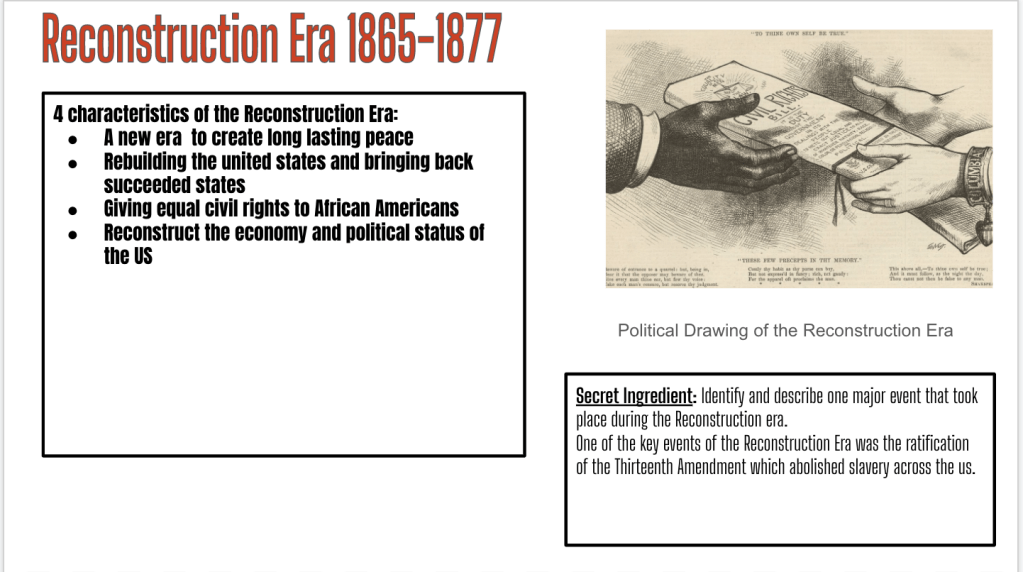
Today I used class to introduce the Reconstruction Era. The first we completed in class was a Fast and Curious with Quizizz. After the Quizizz finished, I had students leave the questions and answers up on their screens. They were going to use the questions and answers for their Iron Chef on the Reconstruction Era.

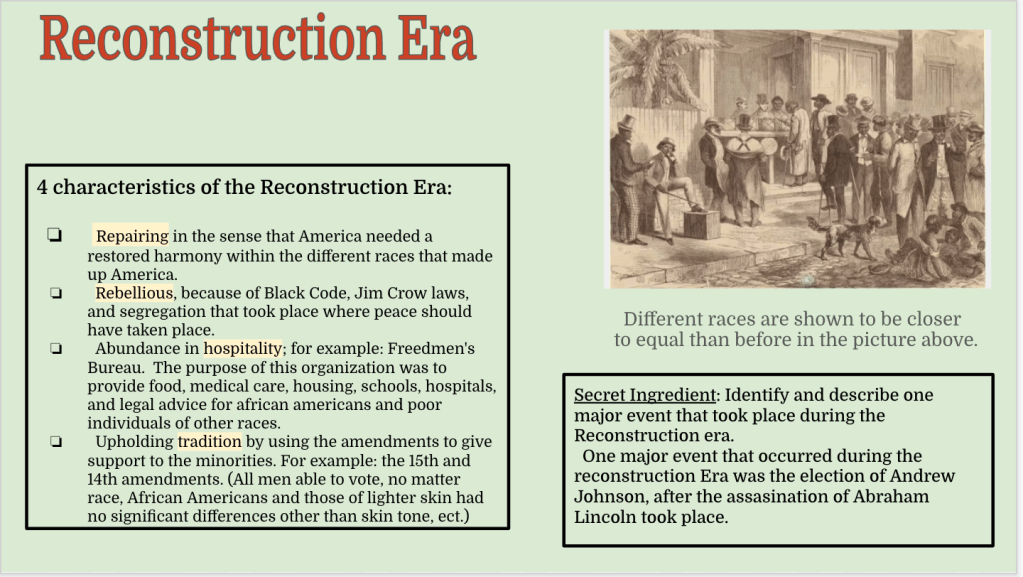
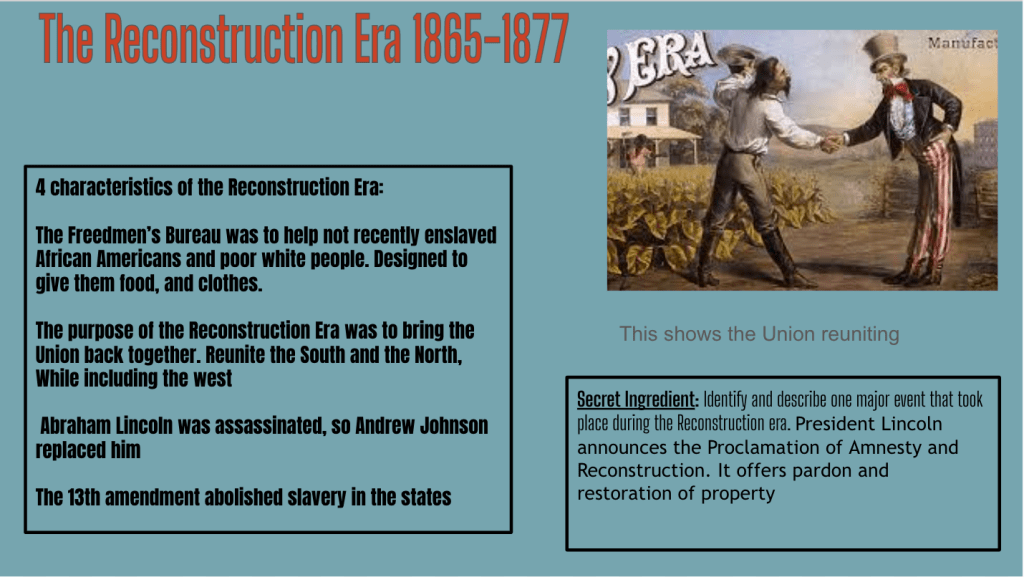
Next, I shared an Iron Chef slide for students to design. In the speaker notes, I copied and pasted a brief introduction on Reconstruction. The secret ingredient question was, “What was an important event from Reconstruction?” We read the brief introduction and discussed. Then I had students take 20 minutes to share 4 characteristics of the Reconstruction Era, a relevant picture with caption, and an important event. They could use the information from the Quizizz for help.

Introducing historical eras is something we often overlook. It helps place events in context and helps with sequencing. After students completed their Iron Chefs, we switched to a Thin Slide.

With the thin slide, I simply had the students share 1 characteristic and 1 picture related to Reconstruction. This was meant to help students add any information they may have missed, clear up misconceptions, and give students a chance to discuss Reconstruction in their own words. After our Thin Slide, we finished class with the same Fast and Curious Quizizz.

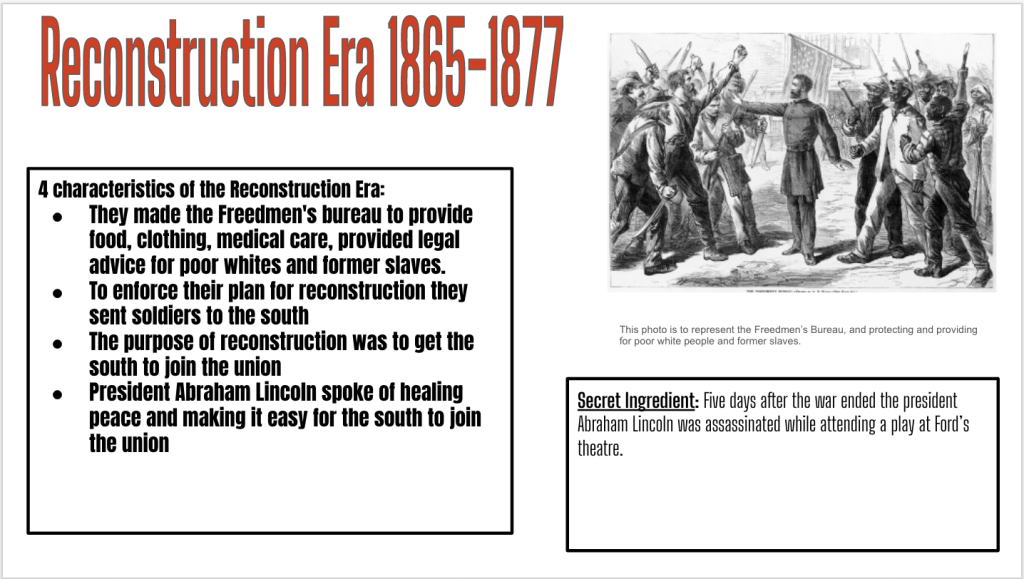
Here are some student Iron Chef examples:

Wednesday

Tuesday night I have a Zoom meeting with some educators – Dr. Sonny Magana, Marlena Hebern, Jacob Carr, Ariana Hernandez, Gabor Kertesz, Jen Goodman, Dr. Scott Petri, etc… We talk about ideas, student learning, effect sizes, and everything education. A great discussion with great ideas. In this particular meeting, Gabor Kertesz shared shared an activity completed by a student that was called Fact Mania. No numbers, just facts, pictures, and a title. This caught my eye and had my mind churning.

When Wednesday’s classes began, I started with the same Fast and Curious Quizizz. After the quiz, I asked students, “We are going to learn about Reconstruction plans. How do you want to learn it?” I shared a Mentimeter with 3 options – Fact Mania, Iron Chef, or CyberSandwich with Nearpod. A majority chose Fact Mania.

I created the assignment right there in class. Think about that for a second… I’m not completely comfortable teaching Reconstruction (because it’s been forever), I asked the students how they wanted to learn, and developed the assignment in class. That is the power of EduProtocols. Students reflect and decide how they want to learn. Students create “learning artifacts” and do the work. As a result, Fact Mania was born….

  1. I shared a blank Google Slide and a Newsela Article on Reconstruction Plans.
  2. Students needed to think about 4 BIG (important) facts related to each plan. I framed it with, “If you need to fully understand this topic, what are 4 main facts that you would need to know?
  3. Design a slide – add pictures, title, 4 facts for each, and organize it. Be creative.

That’s it. I admitted to the students that I was developing this as I went. That’s usually how I roll – I fly by the seat of my pants. Students are used to it. I’m used to it. It’s all good. However, I needed something more with this lesson…

Friday

What more did Fact Mania need? I love when students collaborate and communicate their learning with each other. I love creativity. I love games. It hit me…

  1. Have students reflect on their important facts and share them through a Google Form.
  2. Have students create questions using the Gimkit Kitcollab.

When class began, I set a timer for 15 minutes to finish up the Fact Mania slides. I also asked the students to share 2 facts from their slides. For this process, I created a Google Form where students could select which Reconstruction plan and type their fact to share. Then I created a Google Sheet of information and shared with the students. I like having students share their learning because it makes for nice discussions, feedback opportunities, and helps other students who might be a bit behind.

After 15 minute timer ended, I created a new Gimkit quiz, but I didn’t create any questions. I hit the Kitcollab option and it generated a link I could share with students. This link allowed students to create Gimkit questions to make a class Gimkit quiz. The Kitcollab allowed me to accept or reject questions. Plus, I could provide feedback in real time on the questions, wording of questions, and answer choices. This was super cool!! Onl 1 class was able to play the Gimkit, and they did a nice job with a class average of 83%.

The Week That Was In 505

Have you ever had a lesson idea only to kick it aside and do something else? This happens to me all the time. However, I write these ideas down and sit on them for a while and the time is right. Or, until the lesson is ready. The time was right on Monday. I could have easily taught about some Civil War battles, the Anaconda Plan, strengths and weaknesses of the North and South. Why though? It’s the end of the year and I wanted something new and engaging.

There is an old cemetery next to my school named Watkins Hill Cemetery. This was the original cemetery created for the village of Susanna before it was merged into the village of New Richmond. It’s a historic cemetery and I have always been interested in the people buried there. The cemetery contains a few Revolutionary War veterans, Civil War veterans, WW1 veterans, etc. However, I never knew where to begin with uncovering some of the stories surrounding these people. I didn’t know how to spot Civil War veterans buried in the cemetery.

All of the above was true until I learned a few things from the student teacher in 505. We took a trip to the cemetery and he pointed out some gravestone commonalities for students.

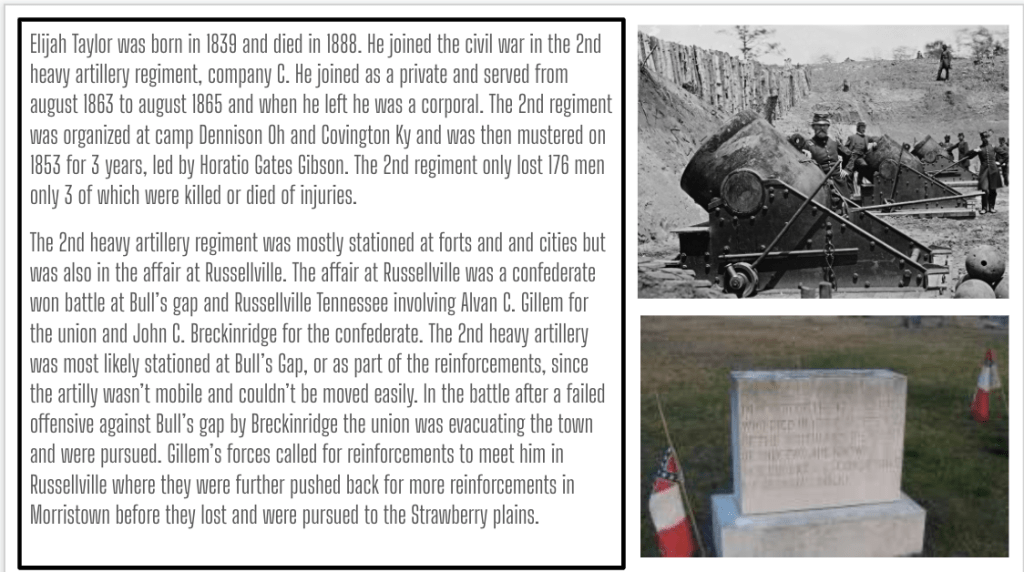
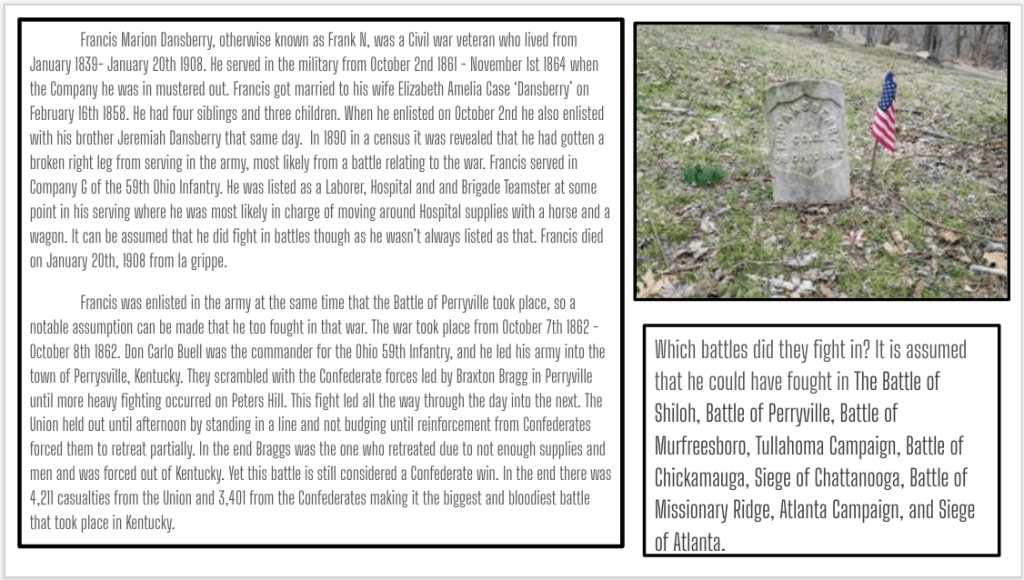
For Union soldiers, he pointed out to look for marble headstones containing a shield. We also discussed Co. C stands for Company C. The 2nd Ohio H.A. stands for 2nd Ohio Regiment, Heavy Artillery division. This was an awesome learning experience for everyone and we visited the cemetery with a purpose. This was the start we needed to shed some light on these Civil War veterans and tie some local history into the Civil War.

Monday – Cemetery visit and name collection, Fast and Curious

Tuesday – Research, Iron Chef

Wednesday – Research, Iron Chef, bio

Thursday – Thick Slide Battle, add to bio

Friday – Finish bios and record tribute

Monday

To begin the Civil War, and out local history research project, I created a Fast and Curious Quizizz with some basic information. In the quiz I included terminology such as Company, Regiment, mustered, and basic information about the Civil War. Students took the Quizizz and all classes ended up with a low 40% class average. I gave some feedback and we took the Quizizz immediately and raised class averages to 60% or a bit higher.

After the completion of the Quizizz, we took a class trip to the Watkins Hill Cemetery. Here we asked students to find Civil War veterans. The goal was to write down 3-5 names and all of the information from the gravestone (company letter, regiment number, etc). After 20-25 minutes, we returned to the classroom with information to begin research on Tuesday.

Tuesday and Wednesday

Now that students had their 3-5 names, we began research for people. WE used the National Park Service site (NPS), Ancestry, and Civil War Index. I encouraged students to find as much information as they could – enlistment date, age at enlistment, rank, discharge date, battles they fought in. I explained the ultimate goal was to explain how this local Civil War veteran contributed to the Civil War.

At first, students were caught up in only using one site. Some were confused by the terminology. Other were bound and determined to find something out about 1 soldier. We encouraged students to try another soldier, try another site, or ask questions. When this entire project began, I knew as much as the students knew. As a result, this experience created a collaborative environment for the students and me. We worked together researching and sharing information with each other. It was fun as we tried to unravel some mysteries.

During this process, here are some cool things we discovered:

  1. Some of these veterans never fought in battles.
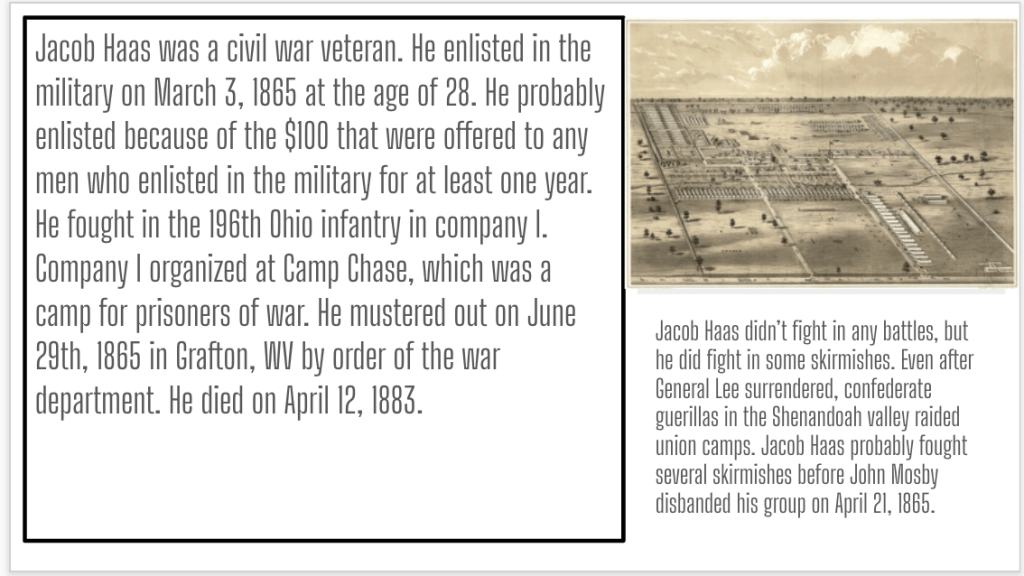
  2. Some veterans signed up near the end of the war for a $100 enlistment check.
  3. One veteran had the rank of musician.
  4. One veteran’s brother was captured and died at Andersonville prison.
  5. One veteran was wounded in the Battle of Shiloh.

Once students collected 8-10 facts, I had them rank their facts from the most interesting to the most boring. The goal was to use some boring facts to set up the veteran’s life, but use the interesting facts to enhance the bio. It was cool to watch this experience play out and to discover new information about local veterans. Here are some biographies typed up by some of the students:

Thursday

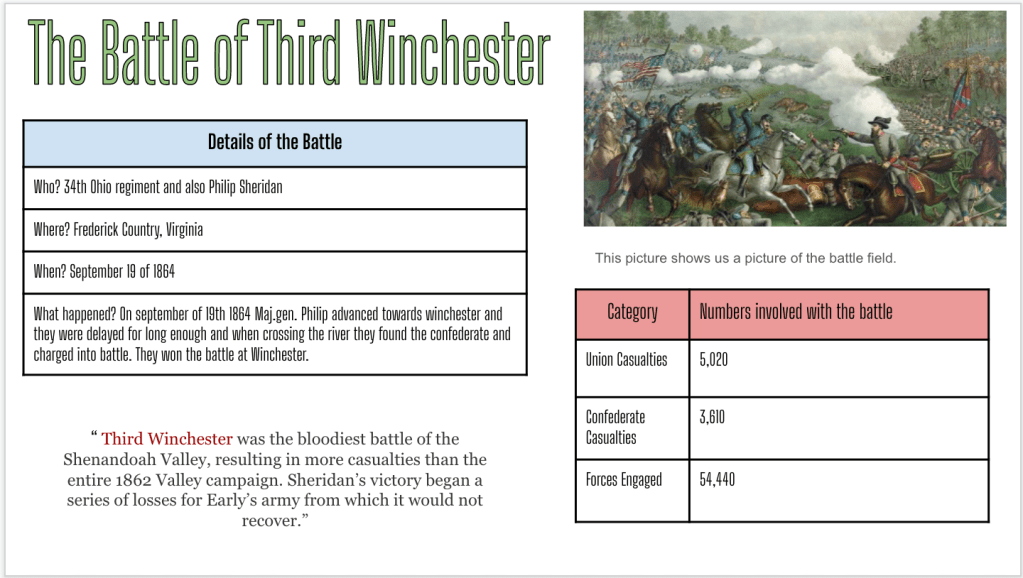
After finding some enlistment and discharge dates, it was time to figure out how these Civil War veterans contributed to the Civil War. To do this, I created a Thick Slide with places to include basic battle info, numbers related to the battle, a relevant picture, and a quote.

As the research continued, we discovered that many veterans fought in the Battle of Shiloh as many men from New Richmond fought in the same regiment. Some of the men only fought in minor “skirmishes” in Tennessee. In order to learn more about these battles, a great site we used was American Battlefield Trust. After students researched a battle and completed their Thick Slide, they went back to their biography and added a new paragraph.

Once their 2 paragraph bio was complete, I had the students revise/edit and think about recording a tribute to their veteran with Flipgrid. Here are some Battle Thick Slides:

Some students asked what to do if their veteran didn’t fight in any battles…..here was my suggestion, “Change the heading on the Thick Slide to make it work you.” They followed my suggestion and did an awesome job!

One idea I changed during this project was a paraphrasing idea. I originally had the idea of students paraphrasing their original biography paragraphs. However, they were cutting out too much information and important details. I stopped paraphrasing and focused on having them record a tribute on Flipgrid.

Friday

I hoped research and biographies would be finished for Friday. I set up a Flipgrid so students could record a tribute to these local Civil War veterans. Here is that link: https://flipgrid.com/b79d05a5

It’s amazing how we started with a simple gravestone, researched some information, and created a small story about these local Civil War veterans.

This project is something I’ve had on my mind for years and I finally made it happen. I love flying by the seat of my pants and trying things out. It’s exciting and I plan to add more to this project in the future.

My Role – A Reflection

My role is not just about teaching social studies content or preparing learners for state tests. In fact, one of my daily messages I write says, “I”ve come to terms with the fact that you will forget most of what I taught in 505. However, you will always remember how you felt. When I’m faced with content and connections, I will always choose connections.” 

As a teacher, I see my role as motivating the learners in 505 to develop their abilities and aspirations to learn. My role involves inspiring students to change and develop their personal, social and professional skills to the best of their abilities. My role is to help learners to understand how to own their learning and development. I fulfill these roles by planning and preparing teaching and learning activities that take into account the needs and well-being of each individual student.

As a former special education teacher, I’m not a fan of labels. I understand the purpose of labels in education – to help provide services, to gain a better understanding of the student, etc.  However, once a label is applied, teachers tend to focus on the disability instead of the child. They focus on the students’ limitations and not their strengths. In the case of gifted students, we tend to see the student as a straight A, intelligent, hardworking student rather than a student. 

Yes, I read IEP’s and WEP’s. However, I do not read these documents until a few weeks into the school year. I want to get to know every student for who they are instead of what some paper is telling me. Maybe that’s not the best approach, but it works for me. 

I’m going to go back to my role as an educator – motivating the learners in 505 to develop their abilities and aspirations to learn. I will accommodate and modify for any student at any time to help them learn. I will do whatever I can for any student because they will always remember how they felt in 505 when the year ends.