Category: Uncategorized
Introduction
Last Friday I wanted something easy and laid back – so we did a geography challenge where students labeled states and got an introduction to the New Republic unit. In the past years, I have done a blogging unit where students create a character who is part of the Federalist or Democratic Republican (DR) party. Then they learn about the first five presidents and blog about the presidents’ decisions from that party’s point of view. I decided to mix it up a bit this year but keep it somewhat similar. My essential unit question is, “How well did the major decisions under Washington, Adams, and Jefferson live up to the Federalist and Democratic-Republican visions for America?”
Monday – Federalists vs. DR, Gimkit
Tuesday – Hamilton and the Bank
Friday – Washington, Farewell Speech
Be sure to find the new EduProtocols Primary Edition from Jenn Dean and Ben Cogswell
Monday
To break down my unit, I first introduce the beliefs of the parties to the students. They learn about Jefferson and Hamilton. Next, I teach them about Hamilton and the national bank. Then we learn about Washington, Adams, and so on up until Monroe. On Monday, we began with a Fast and Curious where students completed a Gimkit about Federalists and DRs. The class averages ranged from 45% to 60%. The Gimkit had 12 basic questions.
Next, we followed up the Fast and Curious with a CyberSandwich where students read a one-page reading about Federalists and Democratic Republicans. Students read for 8 minutes and took notes. Then they compared their notes with a partner and thought of similarities. The differences were obvious. They struggled to think of similarities but they came up with: they were both political parties, they both had presidents representing their parties, and they both wanted what was best for America. Pretty good!.
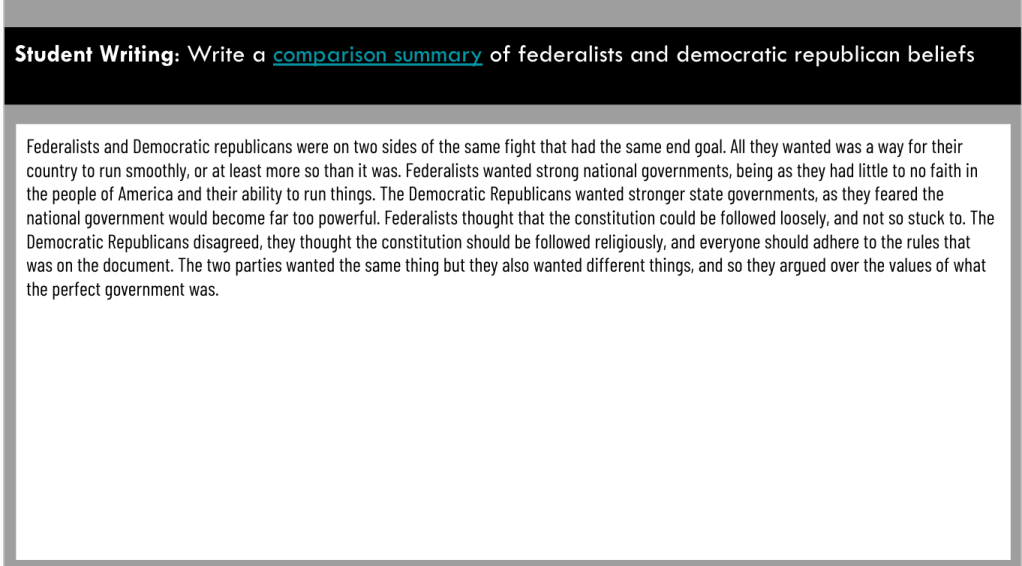
I decided to up the DOK level of the summary writing by asking the students to write their summary using a compare/contrast text structure. This built off a skill they were learning in Language Arts. I showed them they were getting great at writing paragraphs; now it was time to include transitional phrases that worked with a compare/contrast text structure.
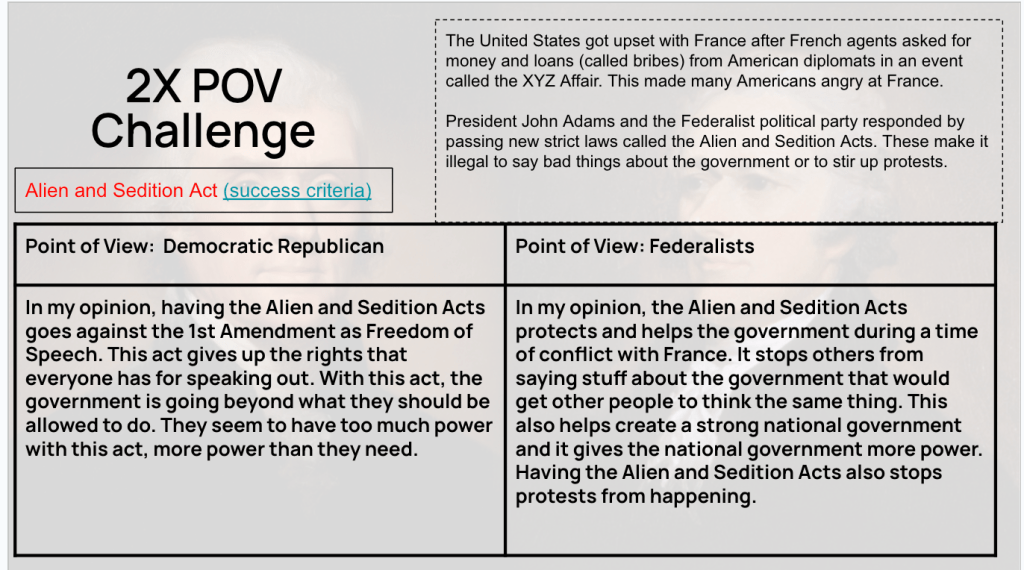
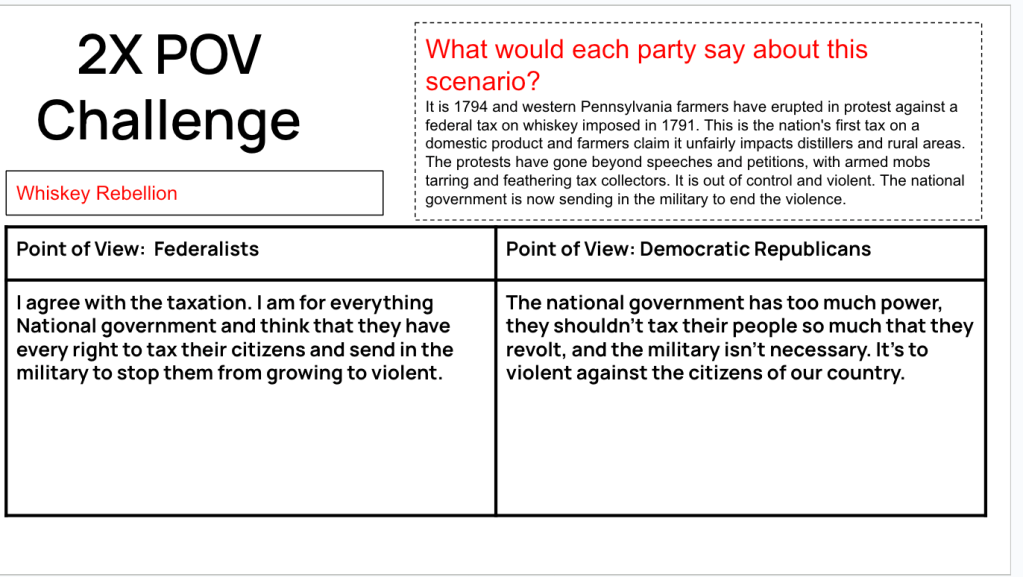
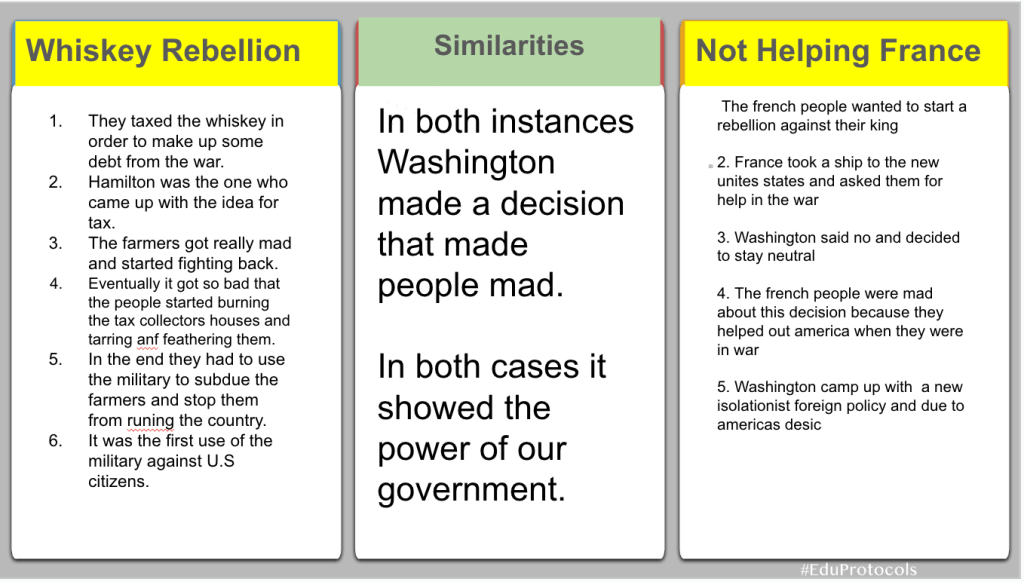
Lastly, we used a 2xPOV template from Josie Wozniak and I gave the students a scenario to practice writing from the perspective of a Federalist or Democratic Republican. I used Claude to generate a basic 3 sentence scenario about the Whiskey Rebellion. Students had to take the beliefs they learned about and apply them to understanding how a Federalist or Democratic Republican would respond to the Whiskey Rebellion. I was looking for responses that showed the Federalists wanted a stronger national government and that farmers needed to pay the tax. The Democratic Republican response I was looking for was that the government was too strong and the use of the military was too much for such a minor event. The students struggled with this a lot. I understand why………The start of this lesson with a Gimkit for recall was at a DOK 1 level. The concept sort and CyberSandwich are DOK 2. The 2xPOV is a DOK 3 level of learning, requiring strategic thinking and justification beyond factual recall. Students had to put themselves in the shoes of political party members to voice informed perspectives on an event. They would have to synthesize their understanding of party stances, priorities and fears to construct an argument around the Whiskey Rebellion from each viewpoint. So the students were struggling because sometimes classrooms fail to get past DOK 1 or 2. We ran out of time for another Fast and Curious activity.


Tuesday, Wednesday, and Thursday
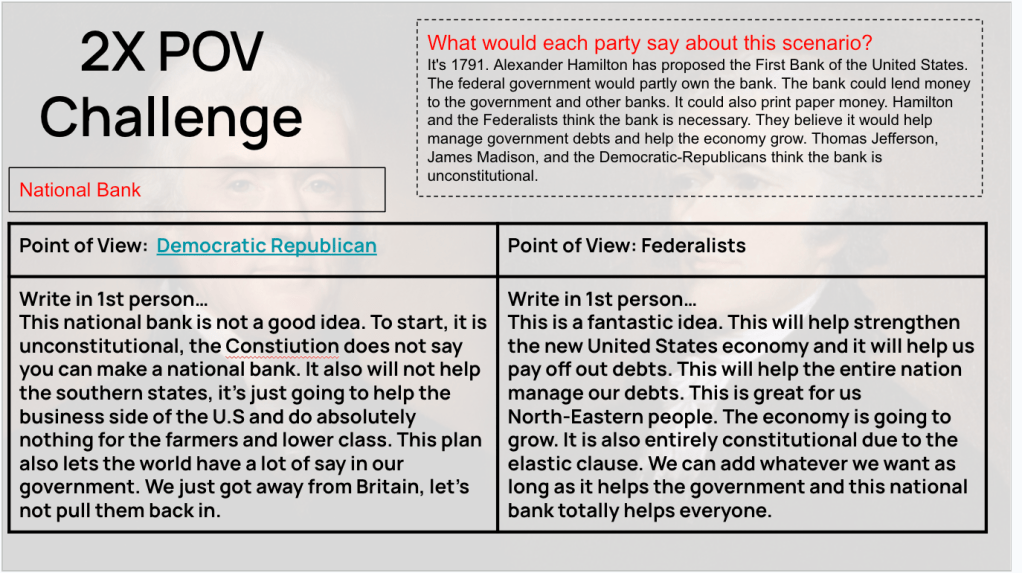
We had an unusual schedule this week. I had a lesson on Alexander Hamilton with some Justin Unruh templates. The question for this lesson is: “Did Hamilton’s National Bank match the Federalists’ goals for the country’s economy?” The lesson for Alexander Hamilton had multiple parts:
- Archetype Four Square – Students watched a song from Hamilton the Musical or read a brief bio about Hamilton and applied an archetype to him. We use this for multiple reasons: to help students apply an archetype, making a claim and then using evidence from the video or reading to back up the claim. Then they make a connection to someone else in pop culture or history. Students are now making connections between people and/or events. The final reason we use this is that it helps with comprehension. When students can think of characters in terms of archetypes, it helps them predict behaviors and predict outcomes in a story.
- I provided context for the lesson, helping students understand that Hamilton was in charge of figuring out how to get the country out of debt after the Revolutionary War. I explained how he wanted to help people see the new government under the new Constitution was stronger and better and could resolve issues.
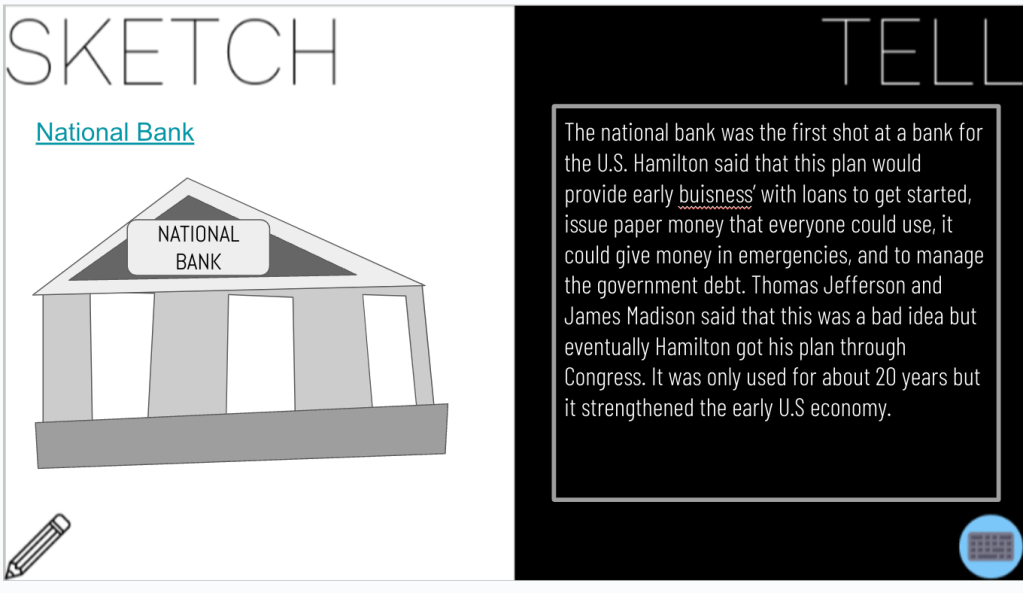
- Sketch and Tell – To help students understand Hamilton’s financial plan involving complex, abstract ideas like taxes and money, I had Claude AI create basic, quick readings about assuming debts, tariffs, excise taxes, and the national bank.
- I created a video explaining strict vs. loose interpretation and why Washington D.C. is located in the South between Virginia and Maryland.
- 2xPOV – Students completed another 2xPOV analyzing the bank from the perspective of a Federalist and a Democratic Republican.
Honestly, this lesson should not have taken over 3 days. But it did because my classes were all off schedule and I’m trying to get them closer together. For example, 2 of my classes are 2 days ahead of everyone. 2 classes are even in terms of scheduling and 1 class is 2 days behind.


Friday
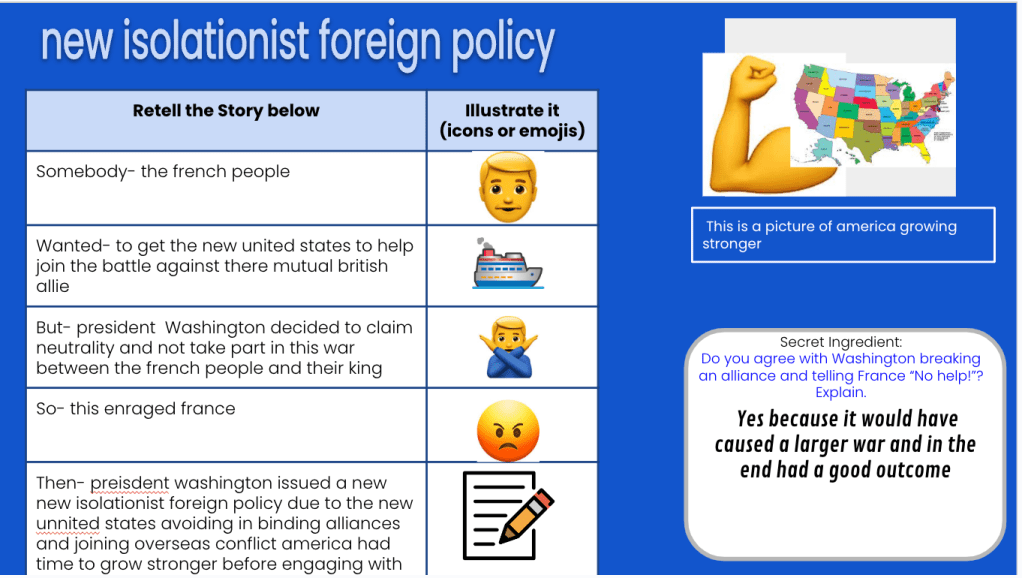
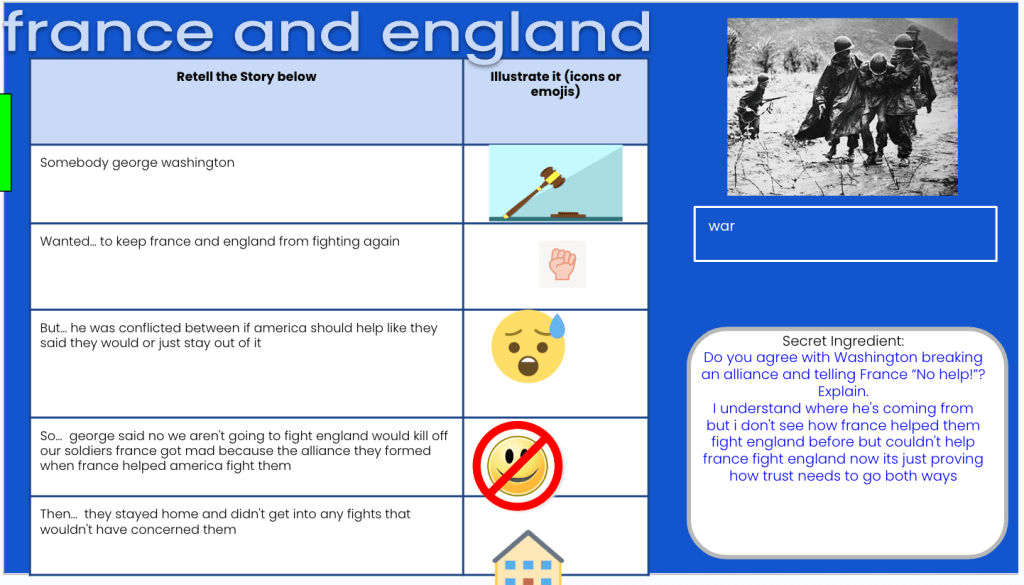
On Friday, we moved into Washington’s presidency. I asked: “Did Washington’s crackdown on the Whiskey Rebellion and neutrality stance favor the Federalists or Democratic-Republicans?” Students shared an Iron Chef slide with a partner. I explained if you can keep this “Somebody, Wanted, But, So, Then” framework in mind as you read, it will help you comprehend and remember what you read.
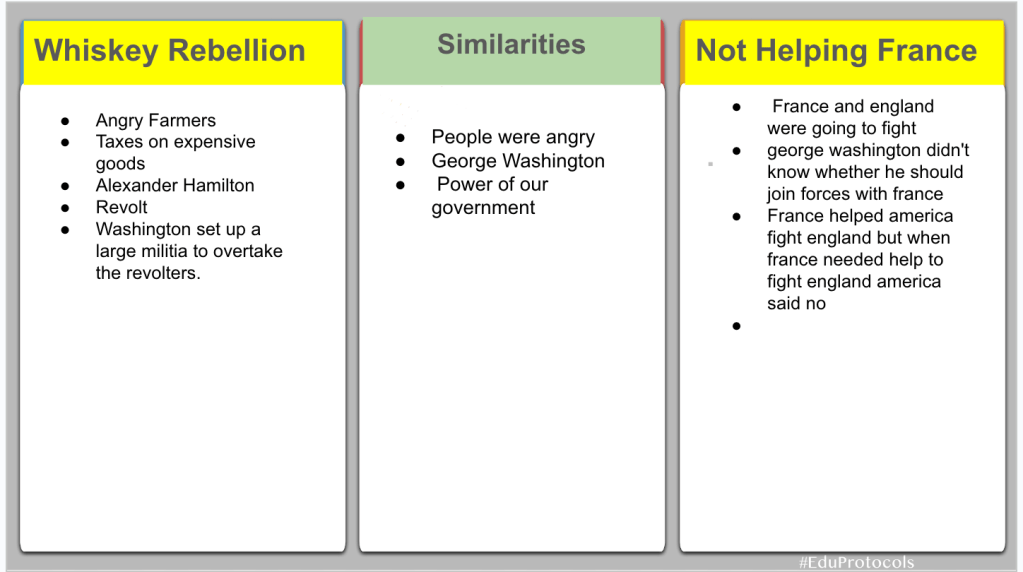
First, we discussed what a precedent is and what it meant. Then students had 3 minutes to find and share a precedent Washington set. Next, students shared a slide, with one reading and creating a slide about the Whiskey Rebellion and the other reading about neutrality. After 14 minutes, they taught each other their topics and compared the domestic (Whiskey Rebellion) and foreign policy (neutrality) issues.
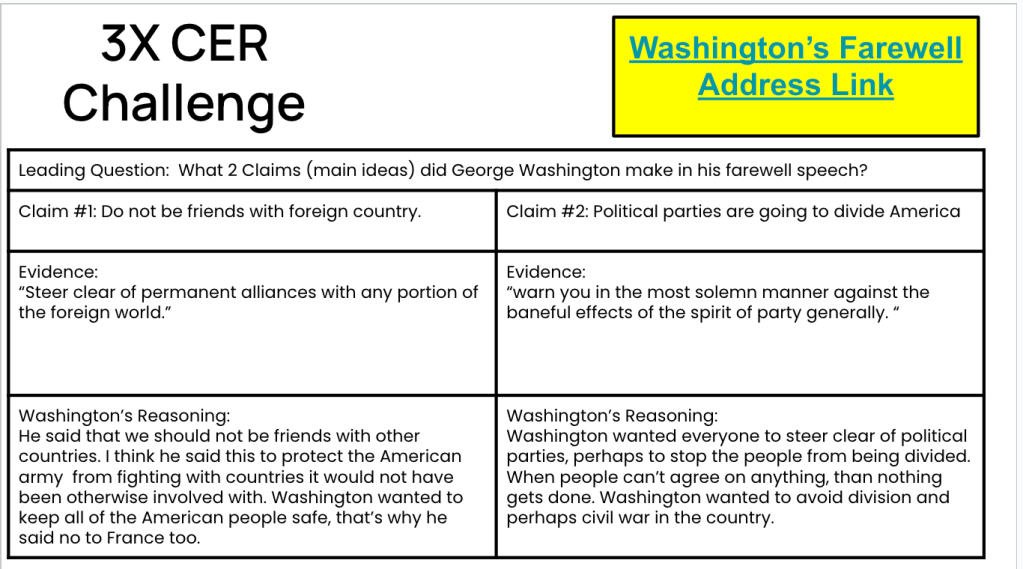
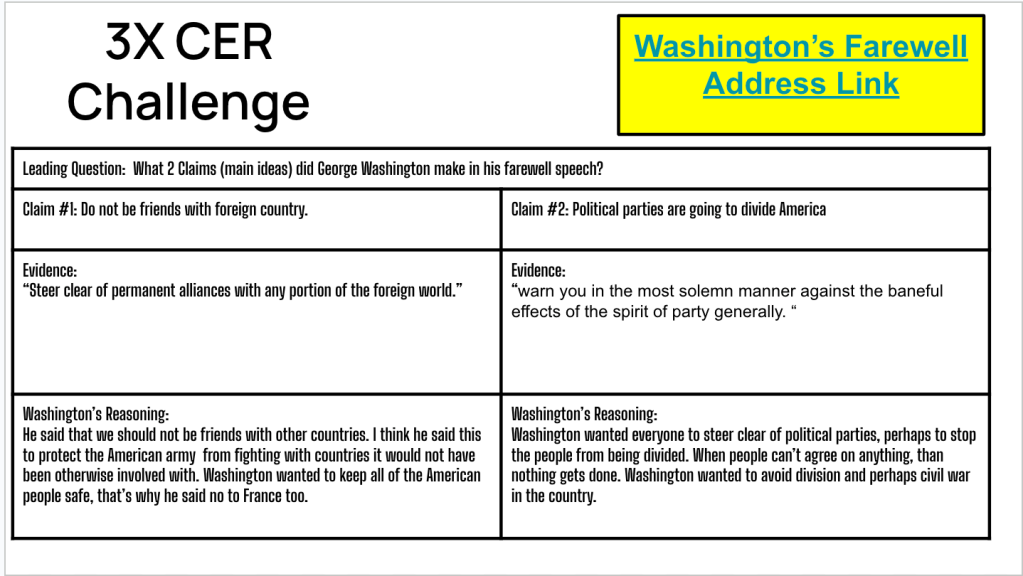
Finally, they completed a 2xPOV responding to either topic from the Federalist and Democratic Republican perspectives. For one class, we had 15 minutes left and completed a 3xCER about Washington’s Farewell Address, with students matching paraphrased parts to quotes from the speech. Then they used claim, evidence, and reasoning to answer: “What 2 main ideas did Washington make in his speech?” I was impressed!


Introduction
This week we continued and finished our unit on the constitution. We incorporated some eduprotocols such as Frayer, Hero’s Journey, and Archetypes with limited government. For example, we used an iCivics article about Alberto Fujimori to illustrate concepts of limited versus unlimited government. Next, we followed this up with a lesson on federalism. For federalism, I brought in Oreos for a mystery box lesson. I used Thin Slides, sketch and tell, and a 3xPOV challenge. On Wednesday, we began part 1 of our 2-part constitution assessment. I shared a CyberSandwich and an article about how the constitution limits the power of government. On Thursday, we did part 2 of our assessment which was the citizenship test questions that I originally gave on January 4th. We began a new unit with a Geography challenge on Friday—the New Republic—where I focus on the decisions and the presidencies of the first 5 presidents.
Monday – Limited Government
Tuesday – Federalism
Wednesday – CyberSandwich, Reading
Thursday – Citizenship Test
Friday – Geography Challenge
Monday
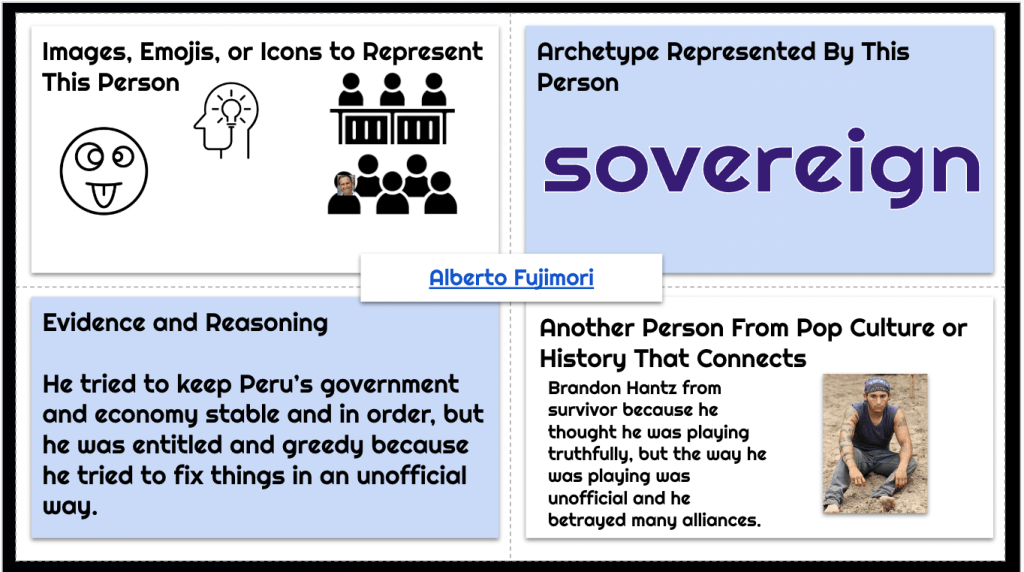
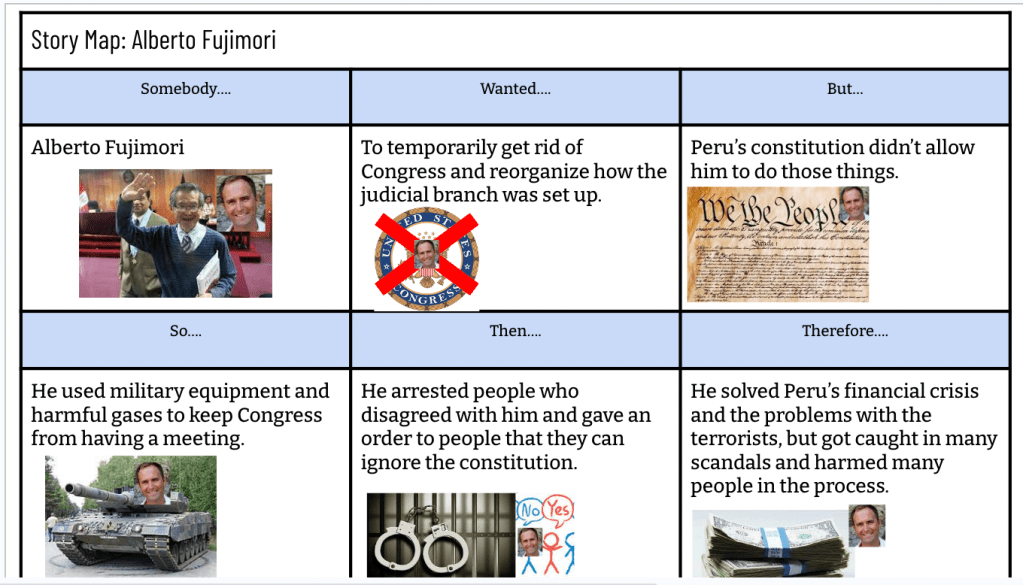
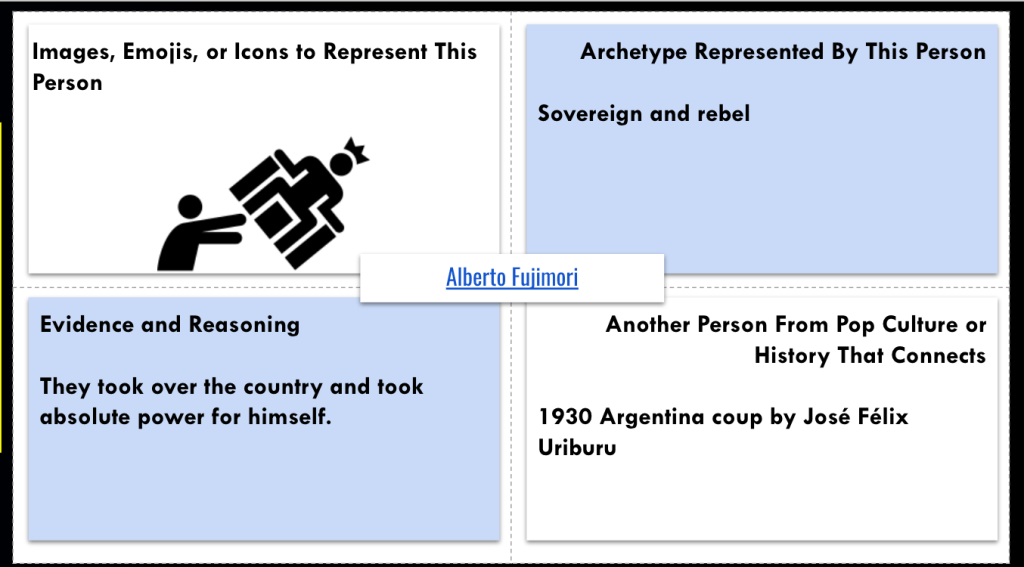
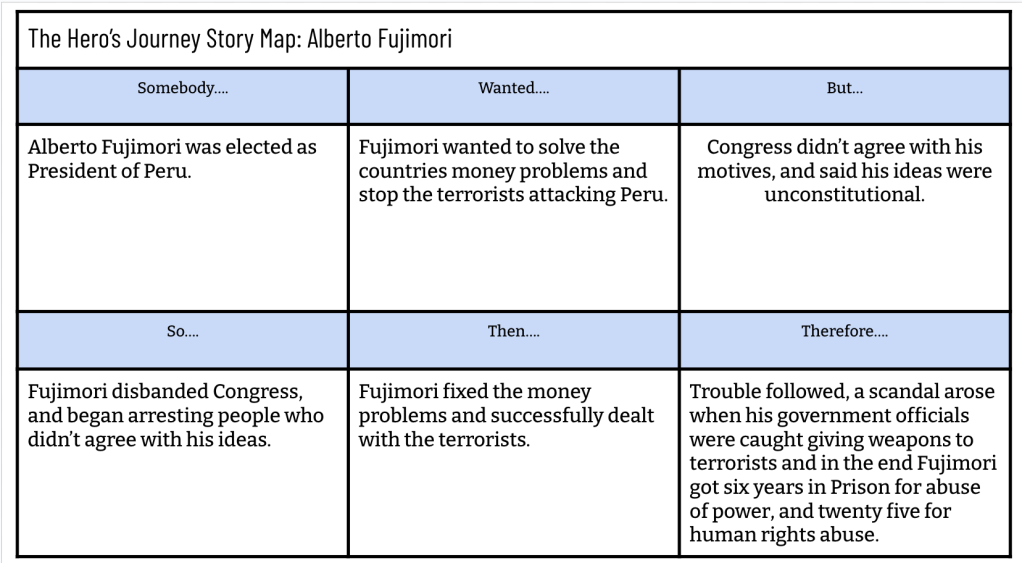
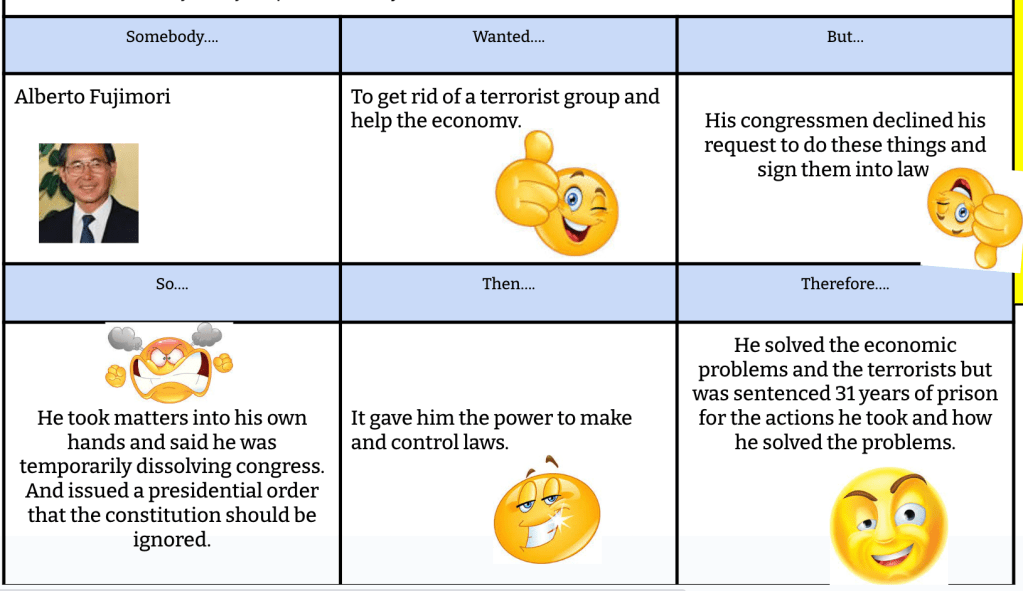
On Monday, we had a lesson on limited government. This was an extension from Friday’s class. For this lesson, I used an iCivics lesson about limited government. The first part of the reading involved words we already knew—such as separation of powers, rights, and popular sovereignty. I selected the word “rule of law” because the students had never heard that word before. So, students completed a Frayer model for that word and paraphrased the definition, found 3 connecting words, and found an image to represent it. Next, students read the article and sorted characteristics of limited and unlimited government. Next, students read an article on Alberto Fujimori who was elected President of Peru and eventually made himself a dictator. He got rid of separation of powers, removed people’s rights, abolished the Constitution in Peru. I took a Hero’s Journey template and changed it to a different format for comprehension—Somebody, Wanted, But, So, Then. I added a 6th element…..Therefore. Students read the article and mapped out the story. Students followed this up with a 4-square archetype about Alberto Fujimori. What’s interesting on the archetype is the number of students who read that Fujimori fixed Peru’s financial problems and terrorism problem and viewed him as a hero. Some even tried relating Rosa Parks and others to him. I intervened and said, “No, no—sorry that connection does not make sense.” I had to explain that Alberto Fujimori made himself a dictator, had opponents killed, and ended a democracy for his selfish interests. Maybe the students seeing him as a hero is a product of the world we live in now…..I do not know. With the archetypes, students chose images to represent Fujimori, chose an archetype, used evidence, and made a connection to another person in pop culture or history.


Tuesday
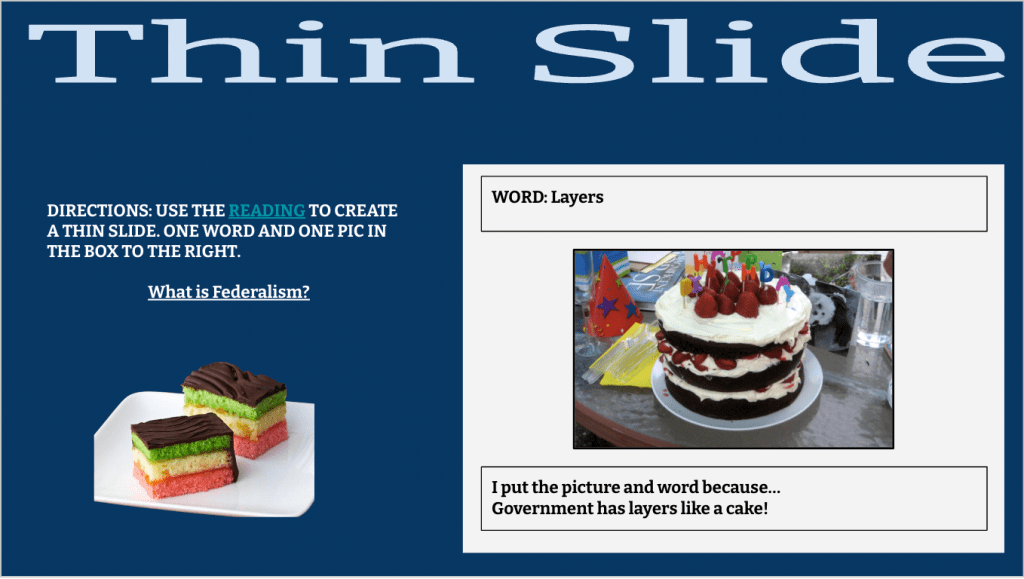
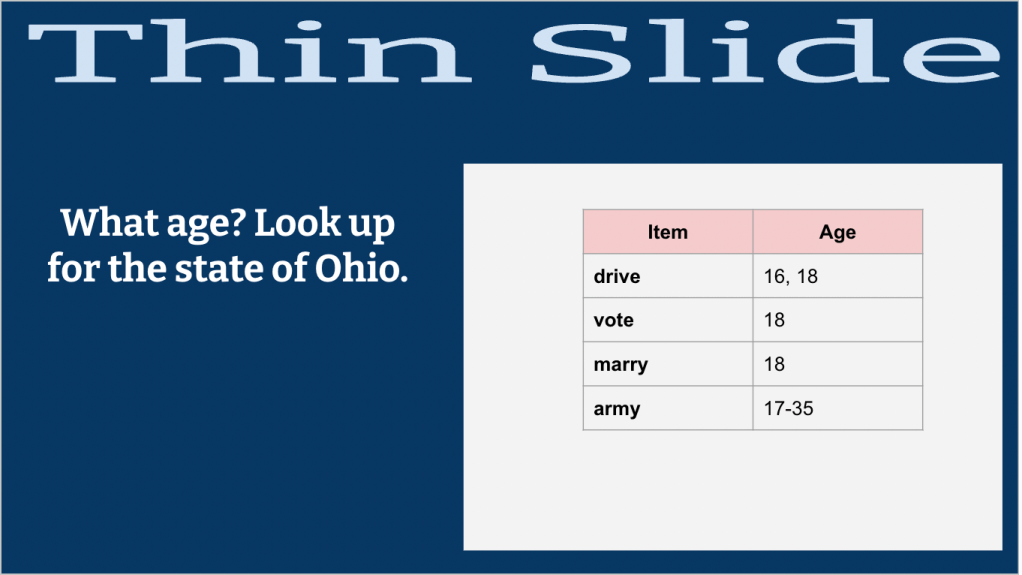
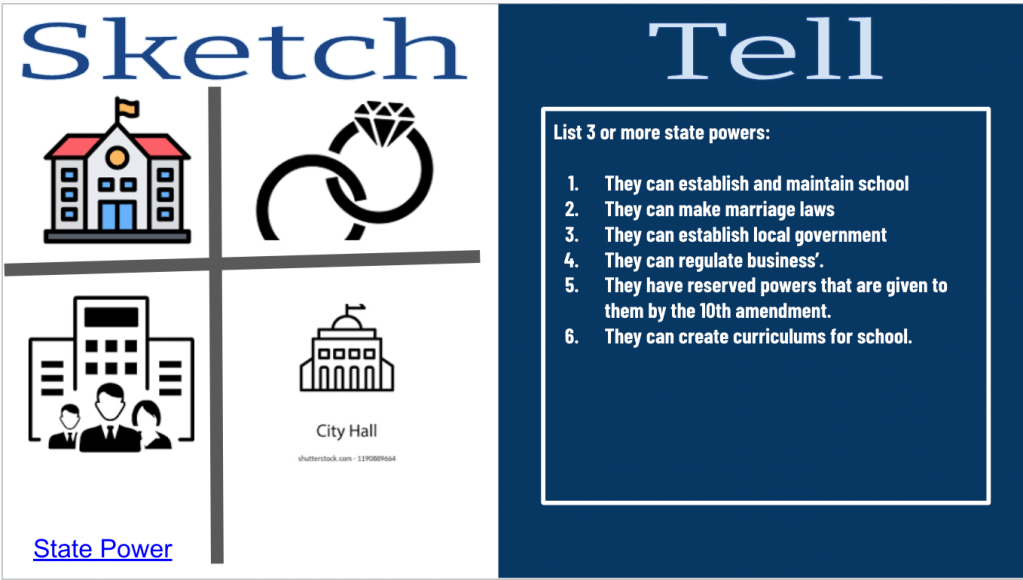
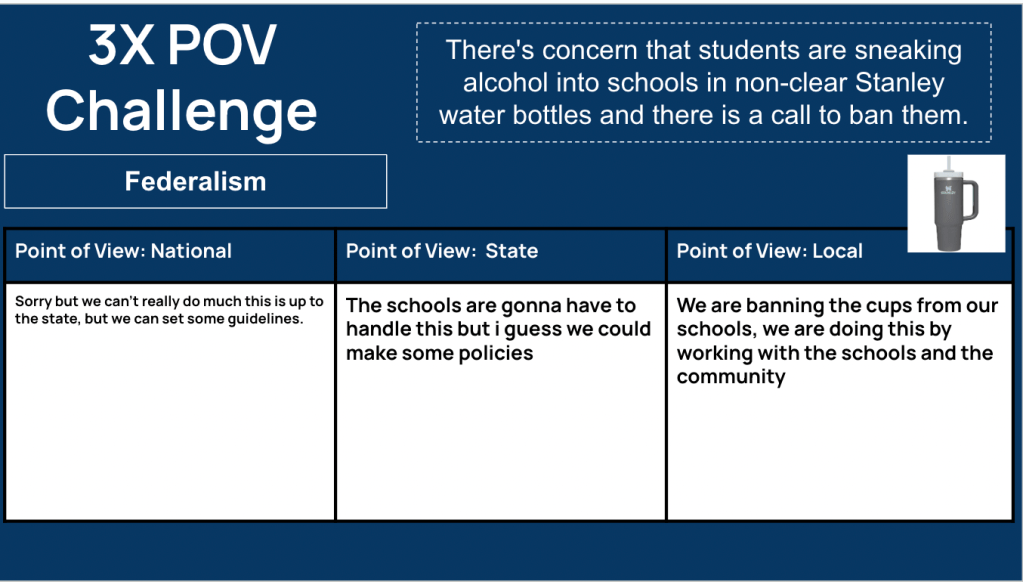
With my federalism lesson, I switched it up this year. I still did a mystery box lesson and I dropped hints about the Oreos in the mystery box. Without the lesson, I was still dropping hints about the Oreos inside the mystery box. However, this year I decided not to have the students use the Oreos in their sketch and tell. I began the lesson with a thin slide where I had the students read a brief description of federalism and they chose one word and one picture and then explained why they chose that word and picture to represent federalism. Next, we did a second thin slide where I had the students look up the ages in Ohio if they wanted to drive, vote, get married, and join the army. We then had a discussion on who sets these age limits—whether it is the state or national government. Next, I had the students use a sketch and tell template and they pulled information from an infographic I found on federalism. Students created pictures on the sketch and tell or found icons to represent expressed powers, state powers, or concurrent powers. Finally, I ended the lesson with a 3xPOV eduprotocol where I gave the students a scenario and asked them to consider the perspective of the national government, state government, and local government. I used a scenario involving the school wanting to ban Stanley tumblers, but as we started that activity, the students struggled to put themselves in the position of the different levels of government. I understand this difficulty because they are 8th graders. I also thought about what was missing from the lesson that could help them better grasp this concept. Ultimately, it is going to be tough for 8th graders to envision how national, state, and local governments would respond. Although I tried to guide them, they struggled, which is understandable at their age. However, I am reflecting on how to improve their perspective-taking ability on this topic.


Wednesday
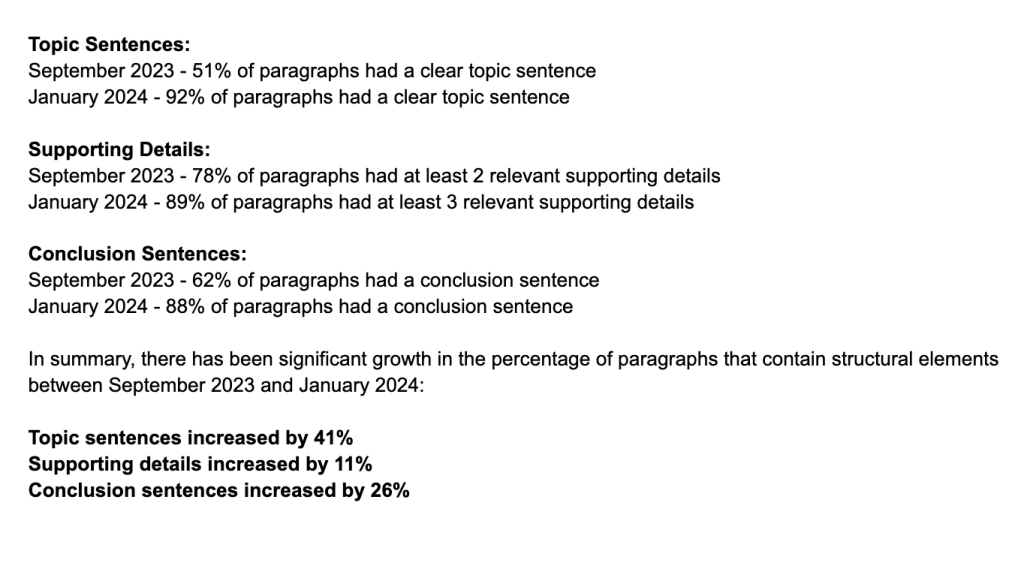
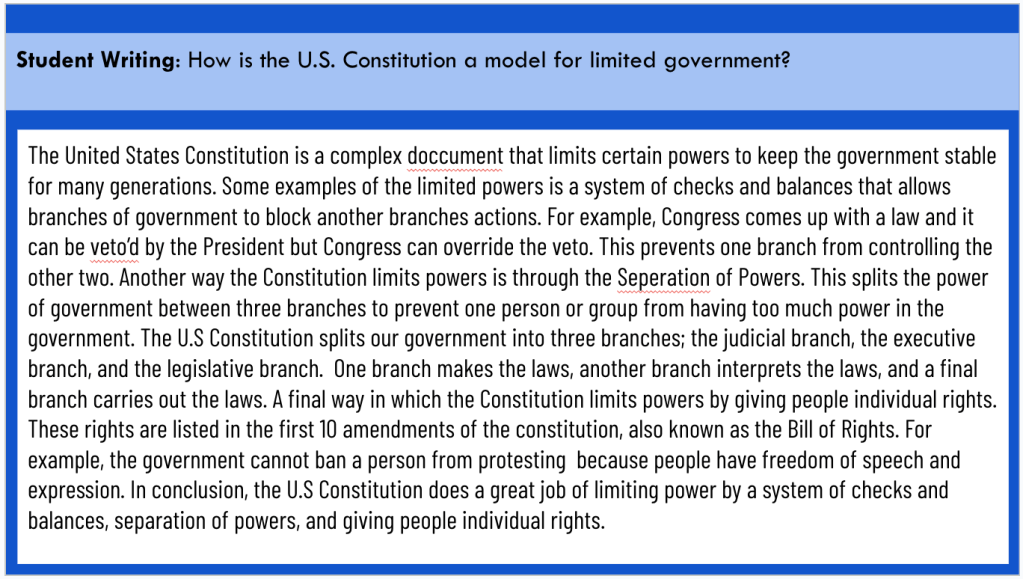
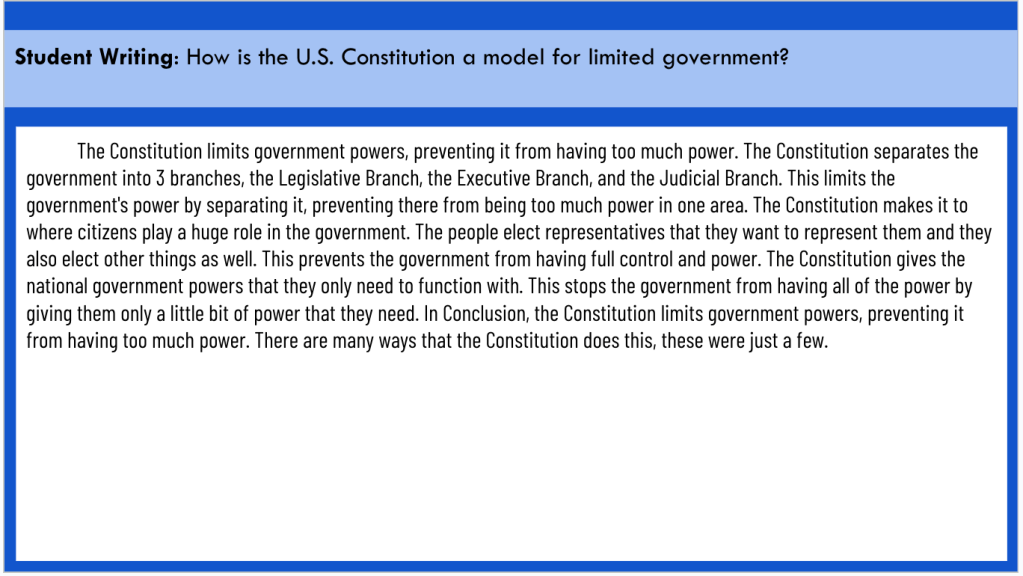
On Wednesday, we began our final assessment for the constitution unit. I like to do two-part assessments because some students enjoy creating projects to demonstrate understanding while others prefer taking quizzes. So my units always contain both types. Part one of our assessment was a cybersandwich where I asked “How is our constitution a model for limited government?” During the cybersandwich, I linked to a reading that I had AI generate because I believe AI allows personalized lessons. I copied and pasted our unit essential question into AI, mentioned what we learned about popular sovereignty, federalism, separation of powers, checks and balances, individual rights, and limited government. Then I asked AI to write an article for 8th graders incorporating details from our specific activities like the tug-of-war on separation of powers and the Oreos representing federalism. AI helps tailor content for students, so that’s why I used it here. Students read the article, took notes, discussed in groups, and then created a paragraph answering how the constitution exemplifies limited government, with a topic sentence, 3 supporting details, and conclusion. I had AI scan their paragraphs and compare them to our first cybersandwich paragraphs of the year because I want to track their paragraph writing progress in regards to using evidence. The results are in the image below. After finishing the cybersandwich, we did a Gimkit review in preparation for part 2 of the assessment on Thursday.


Thursday
On Thursday, we completed part 2 of our assessment using the same citizenship exam questions from January 4th. I read the questions aloud while students wrote down answers. After 10 questions, they input their scores into a Google Form. I analyzed the results with AI—their average improved from 3.1/10 to 7.5/10! We closed with retrieval practice games where their averages were in the low 70% range, which is decent.
Friday
On Friday, I introduced our new early republic unit with a geography challenge from TCI. I pondered using a MapWich EduProtocol but opted to keep the activity simple since it was Friday. However, I had AI modify TCI’s original questions because I did not like them. On Claude, I explained what content students were analyzing and asked for DOK 1, DOK 2, and DOK 3 questions. While I dislike premade maps, I know when students need a bit of a relaxed day. The challenge allowed them to label maps and answer basic questions on the population increase, which sufficed for a Friday. Additionally, I incorporated a claims-evidence-reasoning question asking them to evaluate expansion as positive or negative—so they still did higher-order thinking.
This past week was filled with innovative lessons and activities as I taught my 8th graders key concepts in social studies and civics. I tried to make each day interesting and interactive as we covered checks and balances, the Bill of Rights, Supreme Court cases, and the importance of limiting government power.
On Monday, I facilitated an engaging escape room activity to reinforce students’ understanding of checks and balances. Tuesday involved fun skits and memorization techniques to help the amendments really stick. By Wednesday, we were applying that Bill of Rights knowledge to analyze real Supreme Court cases. Thursday we explored the power of judicial review and how the courts check other branches. Finally, Friday challenged students to examine threats to democracy when governments hold unchecked power.
I continuously tweaked activities and materials to fit my students best. My goal was to promote active learning, collaboration, and engagement with civics across the week. The students seemed to enjoy the variety of lessons and games as much as I enjoyed creating them! It was a week full of creativity and insight in my 8th grade social studies class.
- Monday – Checks and Balances Escape Room
- Tuesday – Bill of Rights Quizizz, Sketch and Tell-O
- Wednesday – Supreme Court Answer Sheet, Supreme Court Stories
- Thursday – Vox Video (edpuzzle), Judicial Review
- Friday – Limited Government
Monday
I started this week needing an engaging new activity to reinforce checks and balances concepts for my 8th graders. While I easily could have done a standard lecture or game review, I wanted something that would get students actively collaborating, communicating, and moving around.
I suddenly remembered that my friend and fellow teacher Dominic Helmstetter shared an awesome escape room activity on Twitter that he does with his freshman. Eureka! I quickly located the files and decided to customize the escape room to best fit my students’ needs.
Dominic’s original escape room had some great components – review content, guided notes, an assessment, and a series of four locks to solve through a Google form. I adapted these elements by tweaking the guided notes sheet, simplifying some assessment questions, and reworking the Google form lock combinations.
The end result was a polished, 3-step escape room process for my class:
- Fill-in-the-blank Clues/Notes Sheet: Paired checks and balances concepts with the answers that would unlock the Google form
- Assessment: Evaluated student understanding of branches of government and checks/balances
- Google Form Locks: Provided the lock combinations from unscrambled words in the assessment for students to break out
I also set up my lockbox with a Congress-related question to spur some friendly competition. If students successfully passed all the escape room steps, they could compete to unlock the box.
On Monday morning, I gave a quick briefing then let my students loose for 40 minutes of engaging critical thinking, teamwork, and fun. The escape room format facilitated so much energetic learning and collaboration. What a way to begin an exciting week of lessons!
Tuesday
I kicked off class on Tuesday with a 10-question Quizizz to assess students’ baseline knowledge of the Bill of Rights amendments. As expected, most remembered the 1st two then got fuzzy on the rest. Class averages were fairly low: 39%, 33%, 45% and so on. Time for a memorable amendment upgrade!
I handed out a Sketch and Tell-O template with 10 empty circles for sketching or jotting amendment concepts. Then I dove into the engaging amendments mnemonic devices and activities I learned from the brilliant Dave Burgess.
For each amendment, I share an animated story, song, or physical prop/gesture to help cement understanding. For the 3rd Amendment, I describe Goldilocks making herself at home in the Three Bears’ house, linking it to soldiers improperly being “quartered.” For the 6th Amendment, I show a clip of an NFL player’s quick “pick six” interception for the idea of a speedy trial.
The students love these zany strategies and anecdotes! They are fully engaged as I coach them to listen for the memory aids that correspond with each amendment. Lots of laughter all around too – though I can’t share all Dave’s secrets here. 😉
After completing the amendment “show,” I had students tuck away their new sketches and notes. I launched the same Quizizz again to see growth. This time, class averages jumped way up: 82%, 80%, 82% and so on. The memory tricks worked! Of course, the scores were actually lower than last year, so I may tweak a few things for next time. But overall, active learning FTW!
Wednesday
Now that my students had built foundational knowledge of the Bill of Rights amendments, I wanted them to apply that learning to real-world Supreme Court cases. Specifically, I curated a selection of landmark cases related to students and school issues that would resonate with their 8th grade experiences.
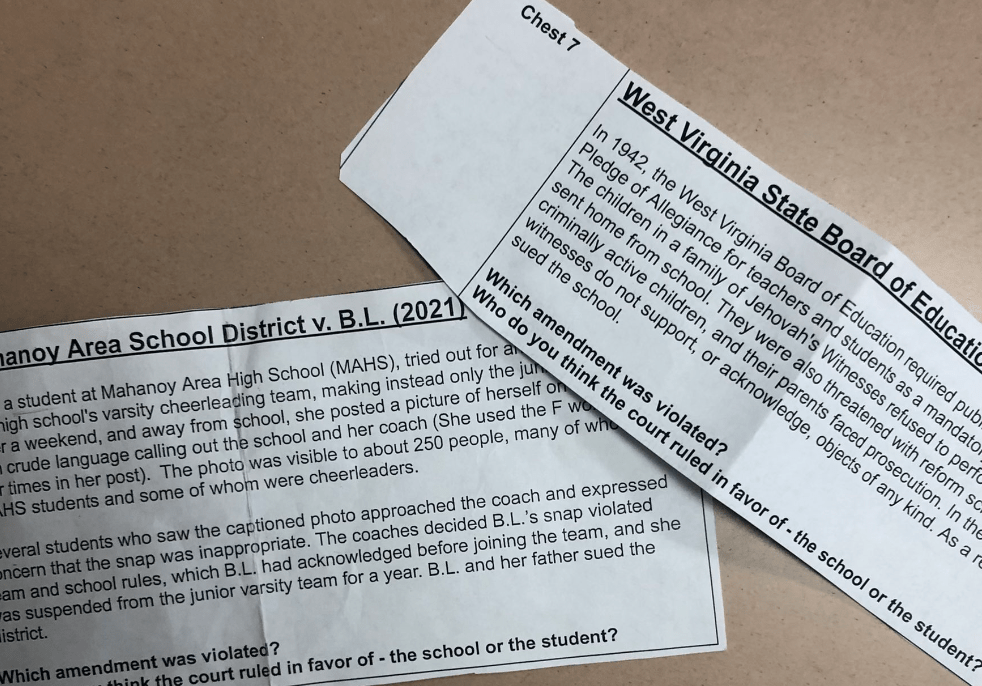
The cases I pulled focused on timely topics like the Pledge of Allegiance, social media speech, school punishment policies, and praying in school. I printed each case summary onto cards and placed them into envelopes around the room, along with one envelope that contained a bonus Bill of Rights Quizizz (which the classes now averaged 91% on!).
I put students into small groups and gave them 40 minutes to circulate and analyze as many Supreme Court case envelopes as possible. Their tasks were to:
- Guess which Constitutional amendment was in question for each case.
- Predict how they thought the Supreme Court ruled on the case.
The student groups did a great job picking out the relevant amendments that applied to each situation. But when I shared the actual Supreme Court rulings, the students were shocked! The decisions often surprised them or conflicted with their assumptions and personal opinions. This made for rich discussion and insight into how amendments are interpreted.
As an added bonus, I had the groups piece together a question which they then used to try unlocking a box filled with QR codes. Only 1 winning code scored them extra credit points! However, some groups somehow chose the 1 winner among 9 losers – I still don’t know how they beat those odds.
I did tweak the lockbox question and code throughout the day knowing how much students love sharing intel. The alternative question was: “Which amendment limits the president to two terms?”
Overall, it was extremely rewarding to see my students connect classroom knowledge of rights and freedoms to real court cases impacting students just like themselves. The relevance and surprise factors made for deep engagement and critical thinking.


Thursday
After Wednesday’s deep dive into intriguing Supreme Court cases, I wanted to zoom in on the key concept of judicial review for my 8th graders. Rather than just lecture at them about this pillar of our government system, I strived to make it interactive and tangible.
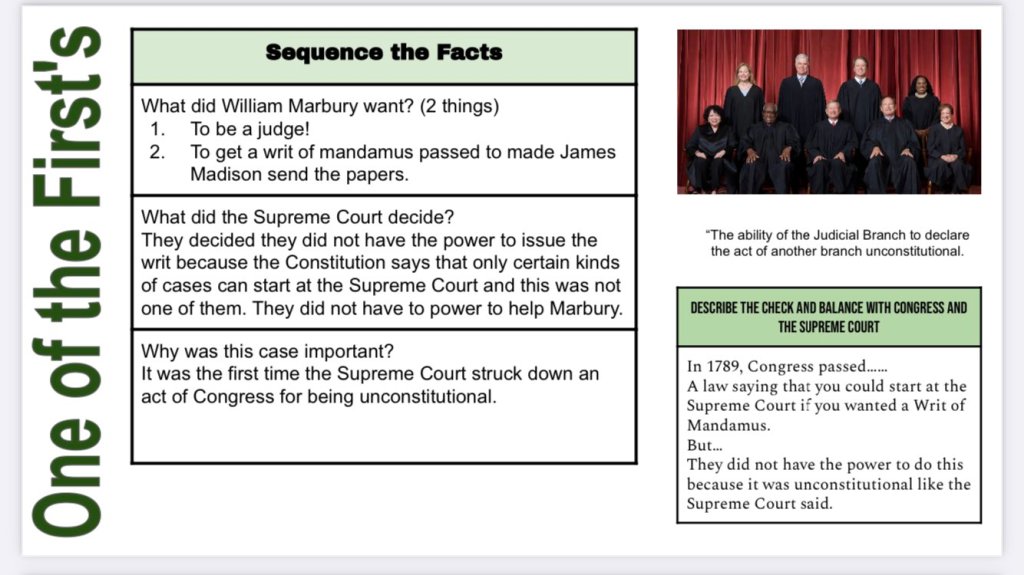
I started class with an edited EdPuzzle video introducing how cases ascend to the Supreme Court – crucial context. Then, I had students complete a Frayer Model for the terms “writ of mandamus” and “judicial review” to cement shared vocabulary.
Next, we analyzed the landmark Marbury v. Madison case which established judicial review in 1803. I actually tweaked the reading to optimize for 8th grade comprehension – rewording sentences, adding clarifications, highlighting key subtleties. This ensured students could grasp the significance of the ruling.
After a timed reading and highlighting session, I had students recall and share out critical case details: What did Marbury want? How did the Court respond? Why was the decision so impactful? We documented responses on a visual Thick Question slide to emphasize the role judicial review plays in the system of checks and balances.
For one section that was a day behind, I also had them map out the story on an engaging “Somebody, Wanted, But, So, Then” template to practice comprehension and sequencing.
While light on flashy games today, the lesson offered an essential dive into judicial review using multiple learning modalities from video to vocabulary building to customized reading.


Friday
While I was out on a field trip with some students, I left meaningful civics content and activities for my remaining 8th graders focused on the question: “Why is limiting government power so vital?”
I curated a reading from iCivics on Peru’s alarming Fujimori saga in the 1990s. Students first categorized healthy ways democracies constrain authority to establish rule of law norms. This grounded context made the subsequent reading detailing Fujimori’s authoritarian power grab even more stark.
The profile revealed how, once elected president, Fujimori slowly seized near-dictatorial control: dissolving Congress, rewriting the constitution, and severely curtailing civil liberties. To process this complex chain of events, students mapped out Fujimori’s escalating actions on a template I customized for narrative sequencing.
Specifically, I reframed the standard storytelling “Hero’s Journey” format into a more explicit “Somebody – Wanted – But – So – Then – Ultimately” flow. Organizing the details this way enabled students to methodically break down how concentrating unchecked rule in one man’s hands enabled corruption and tyranny.
As a final analysis task, I had students assign Fujimori an archetype to encapsulate his spirit and actions, citing specific evidence to justify their categorization. Many comparisons emerged between Fujimori and iother people throughout history.
Though less flashy than my Supreme Court games or Bill of Rights dramatizations, Friday’s lesson served up vital perspective. By examining a real-world account of governance gone awry, students glimpsed the founding fathers’ wisdom in crafting checks and balances to distribute power. Understanding the threats unchecked authority poses to liberty is essential context for engaged citizenship.


Introduction
This week was a short school week due to the MLK Day holiday and a couple snow/cold weather days. We only had classes on Tuesday and Wednesday. This has prolonged our unit on the Constitution, but such is life sometimes.
I’ve been focusing lessons on the separation of powers and system of checks and balances between the three branches of government – legislative, executive, and judicial. Based on informal assessments, it seems many students are still struggling to grasp the distinct roles and powers of each branch.
When I asked my classes why they think they’re having trouble with this topic, here’s some of the feedback I received:
“It’s hard to relate to this old government stuff.” “The questions about what each branch does are confusing.” “Some of the test questions don’t seem to match what we talked about in class.”
I’m still puzzling over these challenges a bit. I tried to make the content more engaging and relatable by using a lesson that compared the branches of government to the Avengers. Students seem to connect better when there’s a pop culture hook. The quiz questions came straight from the readings and class discussions, using the same key terms and concepts. I aimed to keep the ideas basic and straightforward.
It’s possible the interrupted schedule lately disrupted continuity for learning. Or maybe this group of students just needs more concrete examples and connections to grasp the concepts. Every class has a different dynamic. I rarely teach the exact same way year to year since each group of kids comprehends ideas differently. While some concepts click right away with students, others require more refinement of lessons and activities over time. This is all part of the learning process!
Tuesday – Fast and Curious, 3 Truths and 1 Lie, Branches SuperHero
Thursday – Checks and Balances
Tuesday
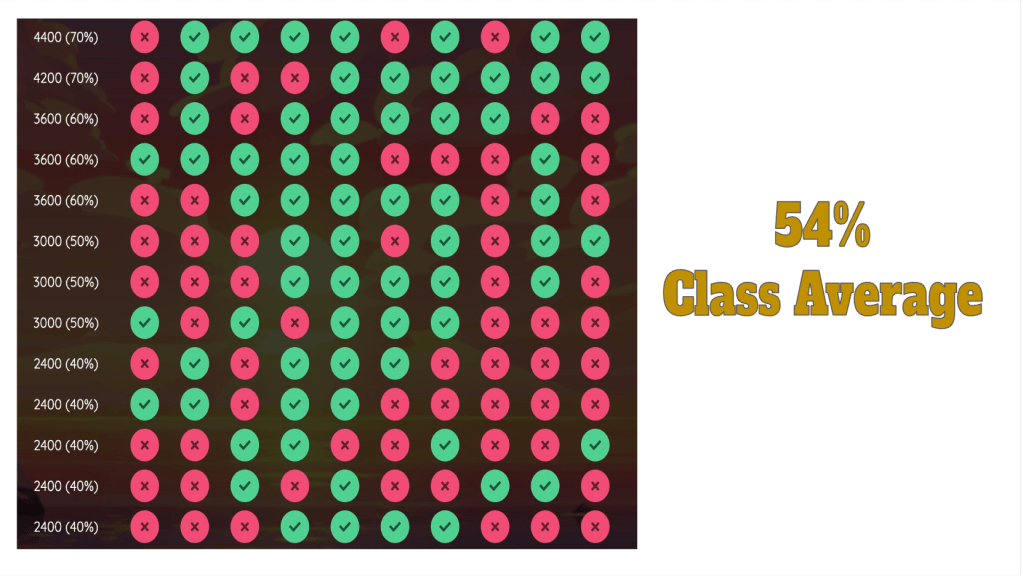
On Tuesday, we returned from a long holiday weekend ready to get back into our Constitution unit. I started off classes by having students complete a Gimkit called “Fast and Curious” for the third time. The goal was to see if scores improved after more time spent learning the content. The class averages were 71%, 72%, 76%, 64%, 70% and 75%. There was a bit of a range, but overall the scores remained fairly consistent.
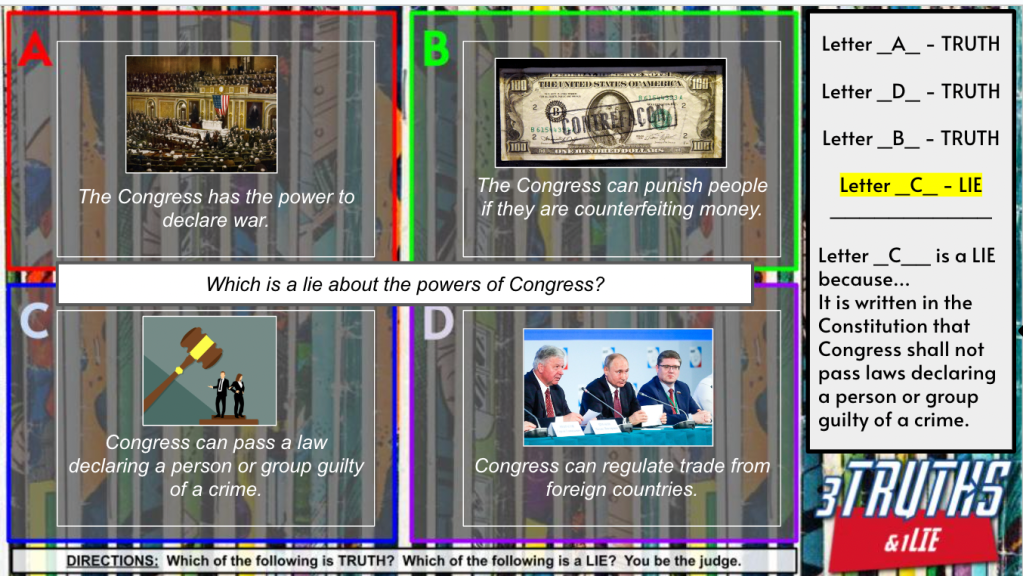
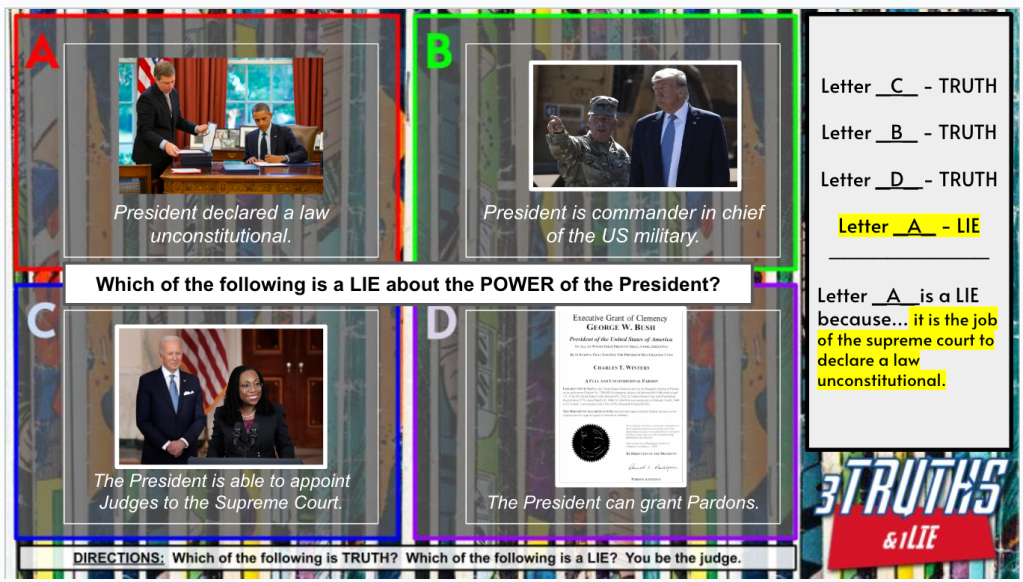
After that quick review, we went over the “3 Truths and 1 Lie” slides (template created by Dominic Helmstetter) about the branches of government that students completed last Friday. I compiled their work into an 11 slide deck that I displayed in slideshow mode. For each slide, students had to analyze the 4 statements and decide which one was the lie. They recorded their guess and reasoning on an organizer worksheet. Once everyone made their prediction, I advanced to the next slide that revealed the correct answer.
To wrap up class, students had time to finish up their “Branches of Government Superheroes” project. For this creative assignment, they chose one of the three branches and developed a superhero alter ego to represent that branch. Their job was to name their superhero, design costume accessories, and come up with 3 unique super powers connected to the roles and responsibilities of their branch.

Thursday
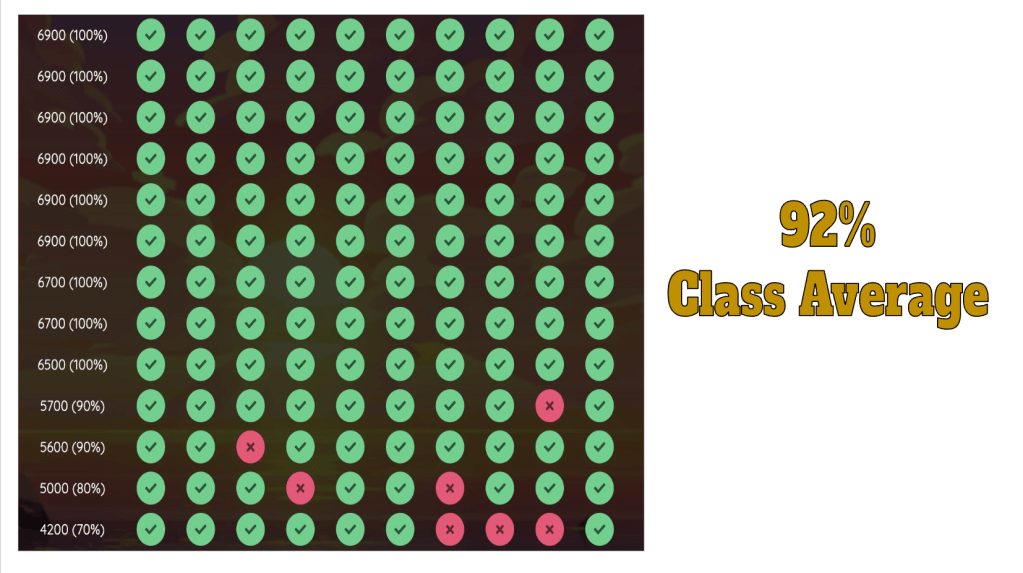
On Thursday, we took the “Fast and Curious” Constitution quiz yet again. I informed all classes that if we could get above 80% overall AND everyone answers at least 15 questions, we’d be done with the quiz for good. The class averages this time were: 81%, 83%, 84%, 74%, 81%, and 83%. Success!
Last year when we started checks and balances, I jumped right into an escape room activity. However, reflecting on that, I realized more scaffolding was needed first. So I put together a series of protocols using templates from Justin Unruh to build background knowledge.
- First students completed Frayers for the vocabulary words “impeach” and “override.” We reviewed the definition of a Frayer Model and why analyzing key terms helps reading comprehension. For both terms, students paraphrased meanings in their own words, provided examples, and demonstrated proper usage by writing original sentences. I emphasized that vocabulary knowledge aids retention of civic concepts.
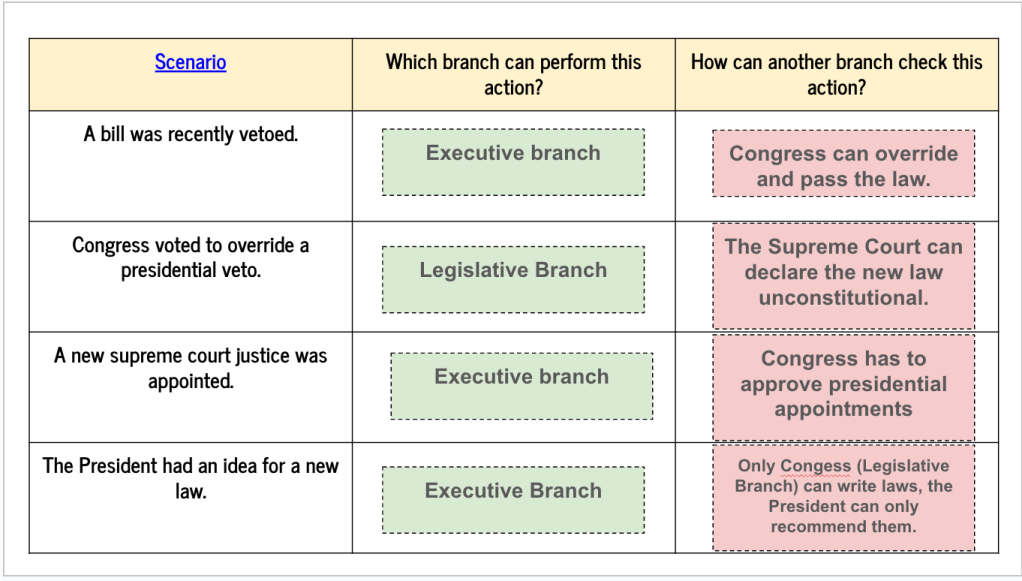
- Next, I gave each student a detailed checks and balances chart categorizing actions available to each government branch, alongside branches with checking power. Students read three basic scenarios that required inferring nuanced applications of checks and balances. For example, I had the scenario of, “A potential bill was vetoed.” Students ahd to figure out which branch of government could veto a bill. Then they had to figure out which branch of government could check that action.
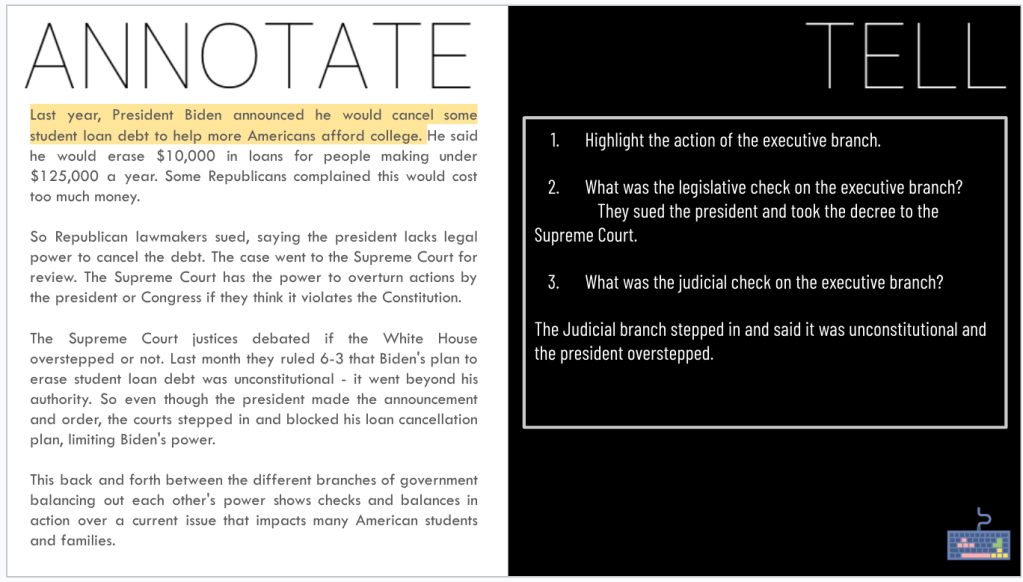
- Students then examined 3 AI-generated short stories based on recent controversies that activated checks and balances: Trump’s impeachment, Obama’s gun orders, and Biden exploring student debt cancellation. After annotating key executive actions, students completed analysis questions per story such as: How did the legislative branch check the president here?
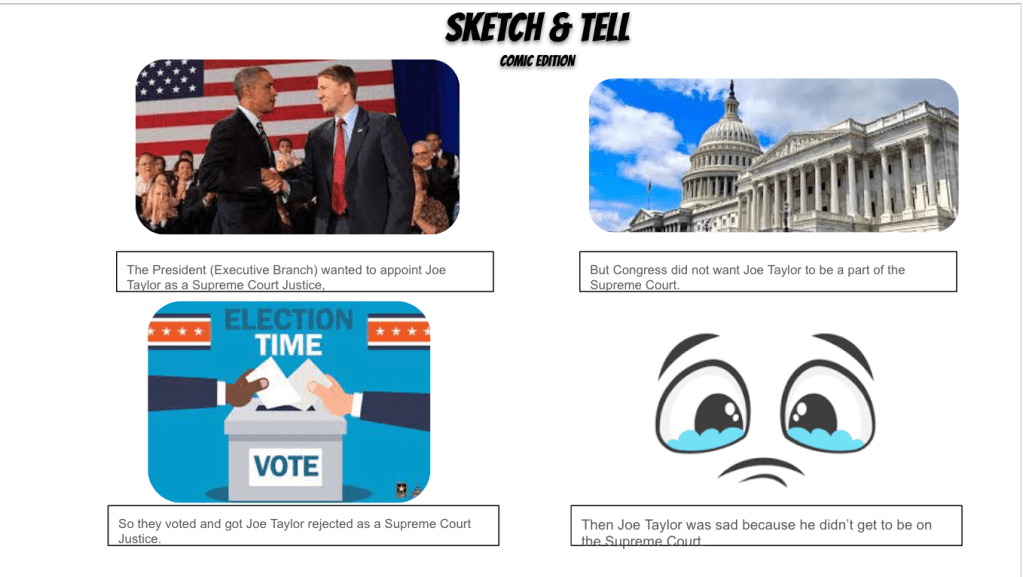
- Finally, I used a Sketch and Tell comic framed with “SWBST” (Somebody, Wanted, But, So, Then) storyboarding technique. Students illustrated either an original scenario demonstrating checks/balances or chose one AI generated story from the earlier activities to depict visually. As they shared out creations, they articulated detailed descriptions of multiple characters across branches interacting via through checks and balances.
I really liked how all the racked and stacked EduProtocols worked with each other. The vocabulary, sorting examples, and AI stories set them up to demonstrate understanding by creating their own check/balance tales. Everything intertwined for deeper comprehension.


Introduction
This past week our school administered the MAP testing, so we had shortened 30-minute class periods at the beginning of the week. Despite the modified schedule, I was still able to teach lessons on the Constitution and incorporate some fun activities. My essential question for the week was “How is the United States Constitution a model for limited government?” We specifically focused on ideas like popular sovereignty, separation of powers, checks and balances, individual rights, and federalism that limit governmental power. The students even got to vote on the specific concepts they wanted to study! Read on to learn more about what we covered each day.
Monday – Great American Race, Gimkit
Tuesday – Great American Race 11 Slides
Wednesday – Popular Sovereignty (CyberSandwich, Annotate and Tell)
Thursday – Iron Chef Separation of Powers
Friday – 3 Truths and 1 Lie, SuperHero Template
Monday
Since we had shortened 30-minute classes on Monday due to MAP testing, I structured an efficient review lesson. First, students did a Repuzzler EduProtocol where they worked in groups sorting vocabulary term cards and matching them up. This collaborative matching activity took about 10 minutes. Next, we spent another 10 minutes on Gimkit, playing a fast-paced quiz game that tested their knowledge of last week’s key vocab terms. To wrap things up, we used the remaining 10 minutes to prepare materials for the following day.
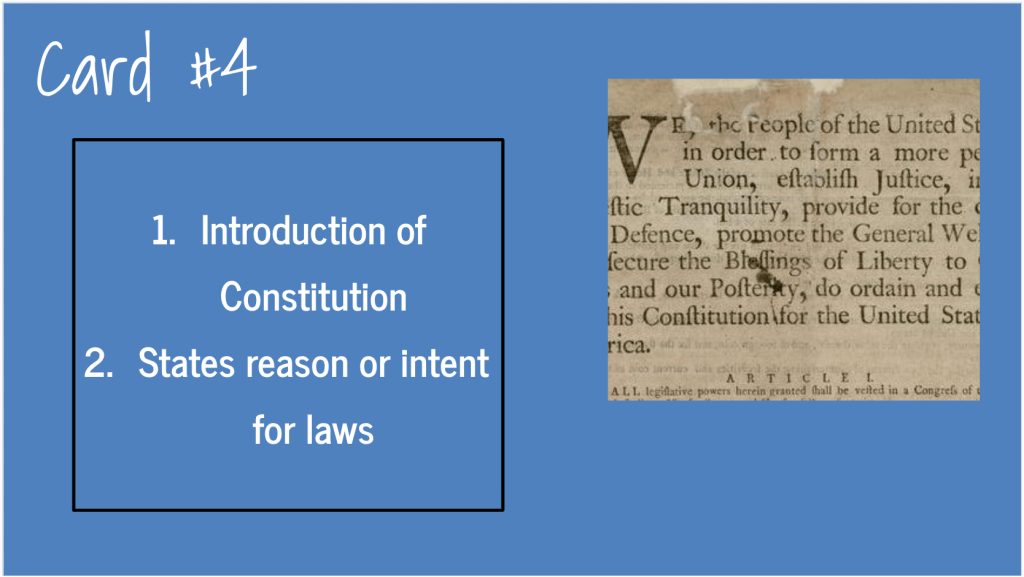
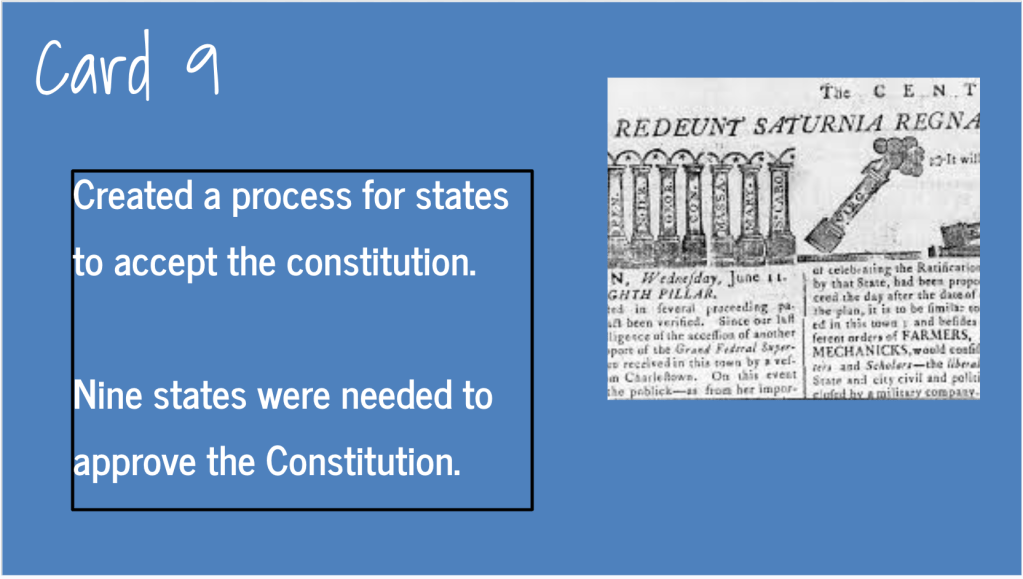
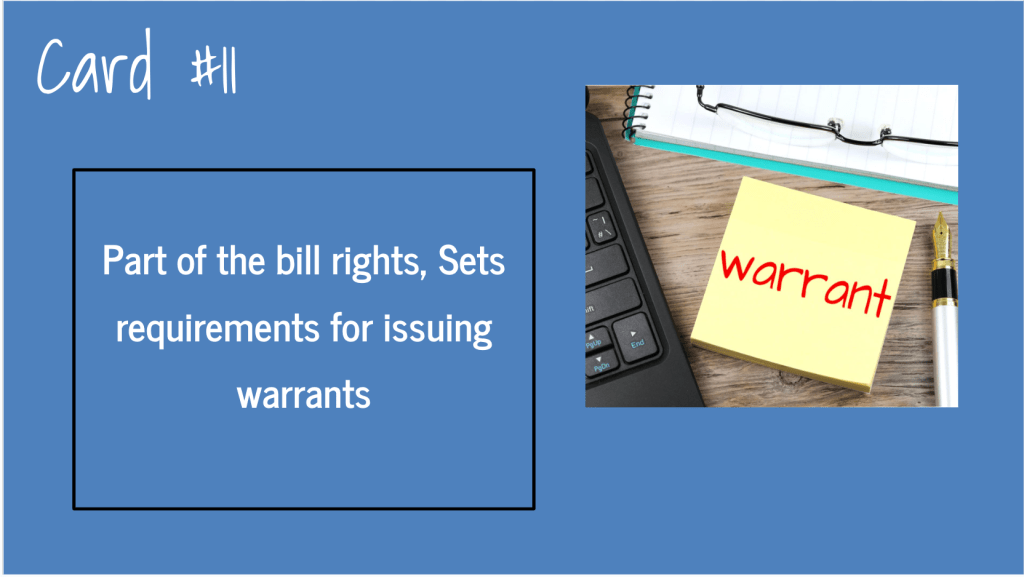
Knowing I wanted to run a “Great American Race” Constitution game on Tuesday, I had students make clue cards to enable that activity. I distributed index cards with a number on one side and a part of the Constitution (e.g. Article 1, 2nd Amendment) on the reverse. Working in small teams, students looked up their assigned Constitutional section in our government textbooks, created two text clues plus an image that related to it, and added the index card number to a slide. After school, I went through their work and selected 11 high-quality student-made slides to use for Tuesday’s Great American Race about the Constitution. This creative prep work got students engaged with the foundational document in advance, even in a condensed 30-minute window.
Tuesday
With MAP testing still limiting us to 30-minute periods on Tuesday, I facilitated a Constitution-themed “Great American Race” activity utilizing the student-made clue slides from Monday. Many students assume this type of collaborative quiz game will be easy since they can just look up the answers as they go. However, they discover it ends up being more challenging than they expect! I compiled the 11 best clue slides into a slide deck. But rather than project them for the race, I actually printed out hard copies, stapled them together, and made an accompanying answer sheet. I divided students into teams, gave each group a government textbook, and let the race competition begin!
The goal was not necessarily for them to solve every slide during the race. More importantly, racing against the clock forced them to flip through the actual Constitution to try locating the correct articles, amendments, preamble, etc. This activity ultimately aimed to familiarize students with navigating the structure and contents of the Constitution itself, as several upcoming lessons refer back to specific sections. Despite some confusion sorting through the complex document, students were fully engaged throughout the 30 minutes. And even if they didn’t find all the answers, the collaborative process of analyzing the clues and consulting the primary text helped prepare them for future class discussions and assignments. So while perhaps not the easiest review, both the preparatory and race elements served their purpose in getting students actively investigating Constitutional language firsthand.


Wednesday
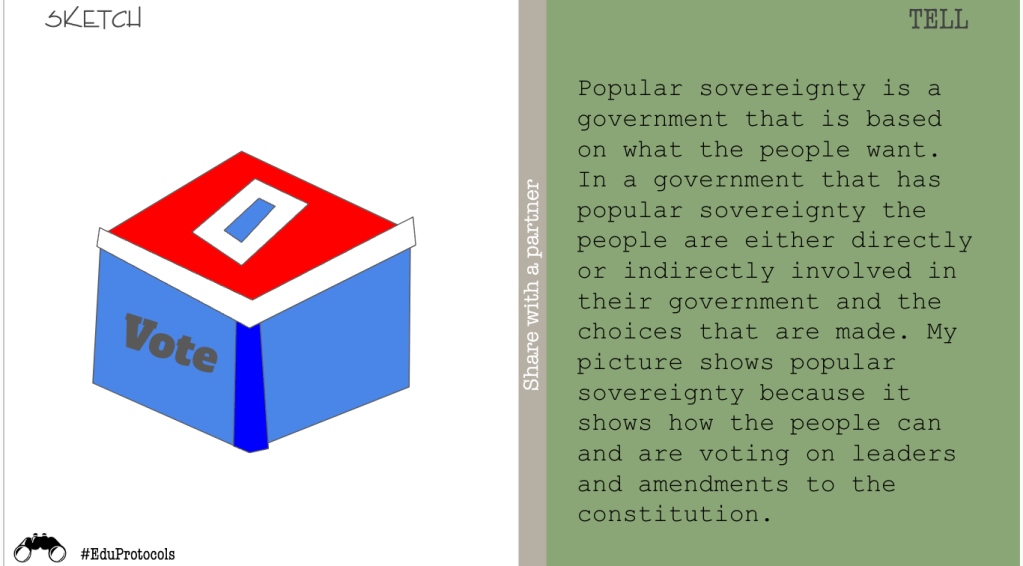
On Wednesday, with 30-minute classes still in place, I introduced the concept of popular sovereignty and tied it back to our essential unit question about how the Constitution limits governmental power. I start with popular sovereignty since it relates directly to empowering the people, as laid out in the Preamble. My goals were threefold: define the term, help students identify examples of popular sovereignty in current events and founding documents, and analyze how it allows citizens to check political authority.
Given time constraints, I used some streamlined protocols shared by teacher Justin Unruh. First we did a CyberSandwich reading activity with leveled texts on popular sovereignty (8th, 5th and 3rd grade). Students took guided notes and then discussed them. Afterwards, I provided options for a paragraph summary or visual sketch to demonstrate their understanding. Next, utilizing an Annotate and Tell, we examined key excerpts from the Constitution’s Preamble and Article I, plus the Declaration. Students highlighted and analyzed sections related to popular sovereignty and checks on governmental power. Some analysis questions I asked included: What mechanism does the Declaration say people have to control government? And how do Constitutional sections allow people to restrict political influence?
In just 30 minutes through targeted, scaffolded reading and writing activities tied to primary documents, students were able to define and identify examples of popular sovereignty. This positions them to evaluate how citizens collectively wield influence over their elected officials. By the end of class, a poll showed most students were eager to next examine constitutional separation of powers as another method of checking authority.


Thursday
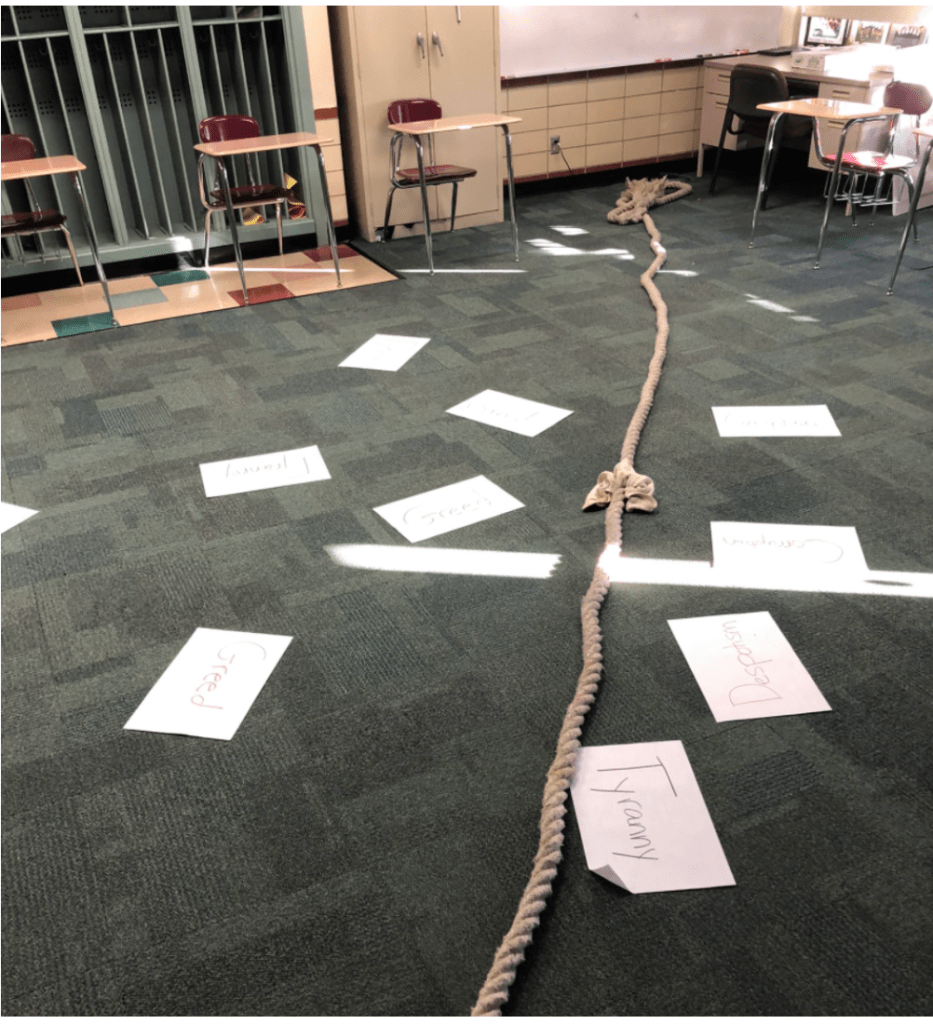
On Thursday, with our normal 47-minute classes back in session, we focused on the concept of separation of powers across the three governmental branches. To creatively introduce why dividing functions is necessary, I utilized a Dave Burgess hook activity with a tug-of-war rope stretched across my classroom. Scattered on the floor were papers labeled “corruption,” “greed,” “despotism” and “tyranny” – negative concepts I explained represent pitfalls into which governments can fall. I asked students how we can lift the rope to raise government above these dangers. Volunteers tried unsuccessfully to complete the challenge single-handedly. Eventually a trio was needed to fully raise the “government” rope. This illustrated why concentrating all governmental powers and responsibilities into one ruling entity invites misconduct.
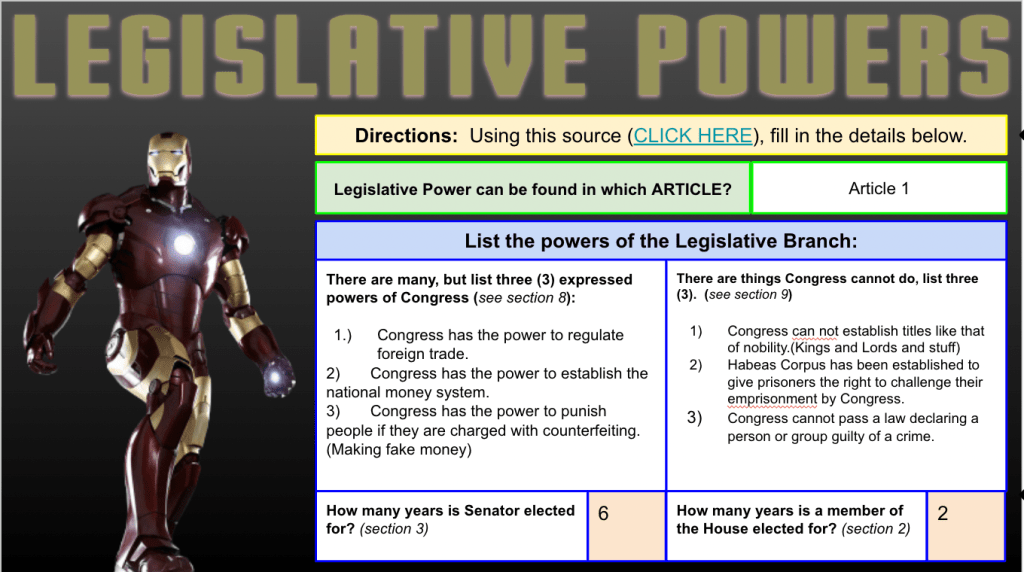
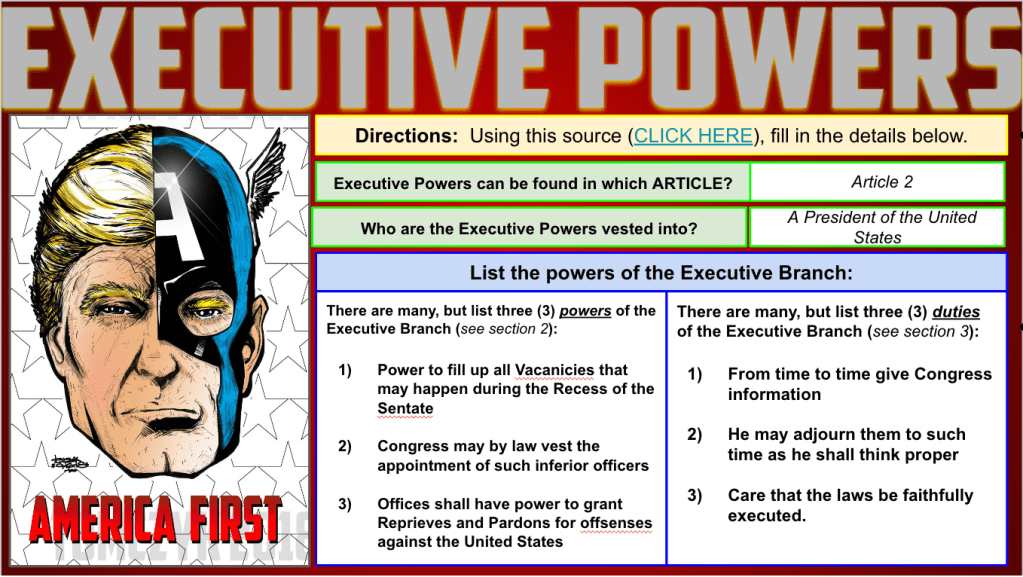
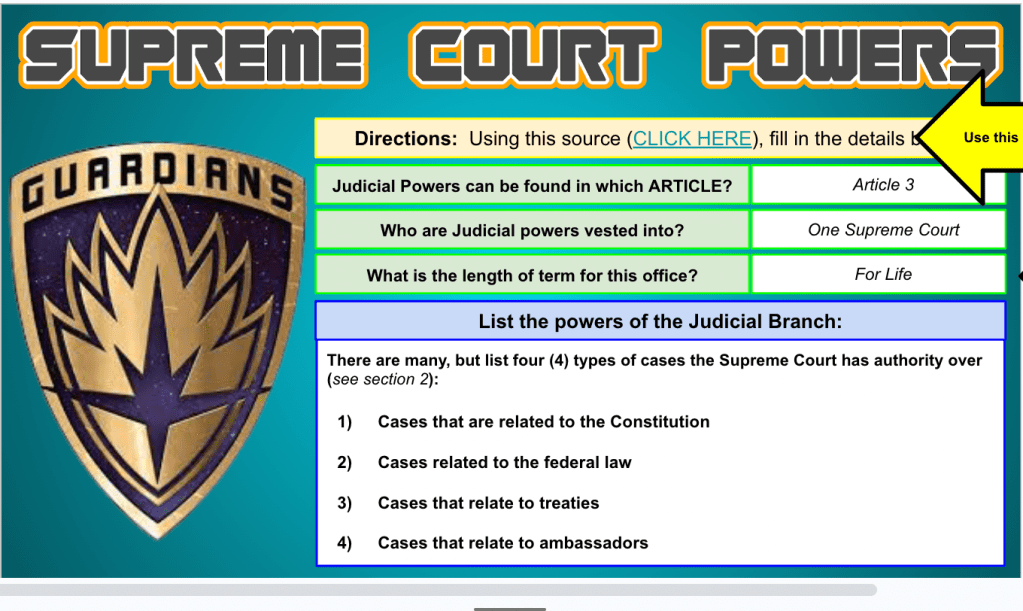
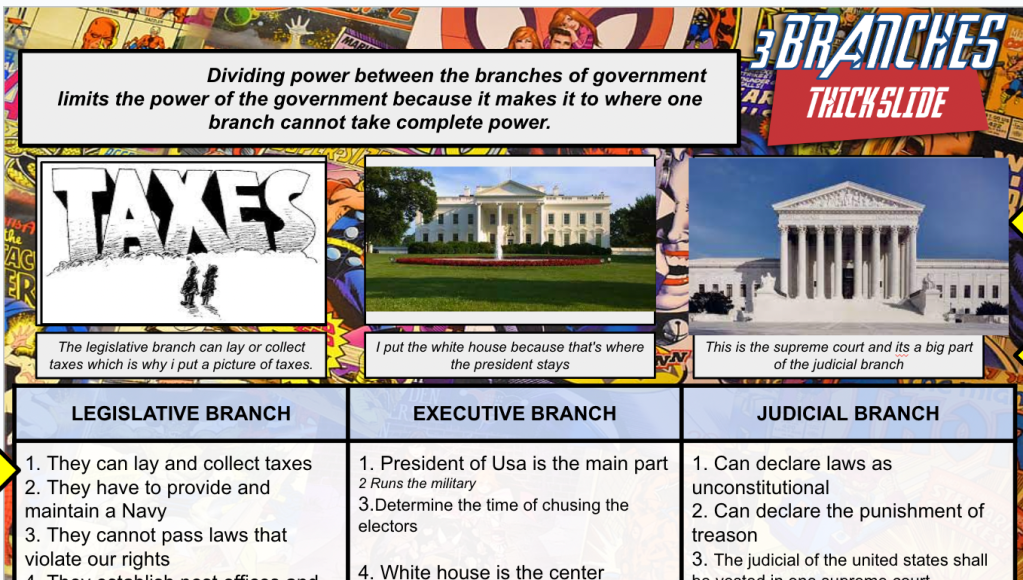
I then shared an Iron Chef EduProtocol created by teacher Dominic Helmstetter. Students consulted the Constitution to research details on the legislative, executive and judicial branches for a slide, with some also using provided readings I condensed via AI. Their tasks included defining specific branch powers, identifying which articles established them, how members are selected, etc. I gave them 10 minutes to find facts and design slides. Finally, everyone combined their branch expertise into one Thick Slide summary, including images and the four most vital points on each one’s roles. I also had them analyze how division of power itself limits authority and potential despotism, referring back to the introductory rope demonstration.
As an assessment, we did a Gimkit quiz. However, many scores were concerningly low, averaging 50-60% correctness instead of the 70% I expected. Informal student feedback indicated some quiz questions were oddly worded or disconnected from the content covered. I will revisit and revise those prompts for an improved test tomorrow so students feel it aligns with and evaluates their learning more accurately.


Friday
To start Friday’s class, students first took a 5-minute Gimkit quiz with the revised separation of powers quiz questions. The scores this time showed improvement, ranging from the mid-60% up to upper-70% accuracy. It seems the tweaks I made to address their confusion paid off. Next, utilizing another engaging Dominic Helmstetter creation, students developed “Three Truths and One Lie” slides about one governmental branch or all three. On their slides they included one false statement along with three accurate points, before identifying which item was the lie and explaining their reasoning. When we return on Tuesday, this content will be the basis for an interactive guessing game.
With 15 minutes left in class, I distributed a creative superhero drawing template from teacher Quinn Rollins. Their final task was to transform a governmental branch into an original superhero character – envisioning powers, costume details, backstory, etc. related to that branch’s constitutional roles and responsibilities. The students always enjoy this imaginative project. As an extension, I had introduced some classes earlier in the week to using the AI tool Pi as a brainstorming aid. After discussing responsible and constructive AI prompting, many students enthusiastically used Pi to help invent superhero names and powers tied to the civics concepts they had researched.
To wrap up, I encouraged students to revisit the informational slides they made yesterday documenting details on branch functions. I prompted them to mine that content to integrate an appropriately themed superpower or two. We will need just a bit more time next Tuesday to let them finish fleshing out their governmental superheroes. I’m looking forward to seeing their creative takes translating the legislative, judicial and executive duties we studied into heroic embodiments!


Introduction
Thursday was our first day back from Winter Break. I wanted to ease my 8th graders back into learning while laying the groundwork for my favorite social studies unit on the Constitution and government. In this blog, I’ll reflect on the activities, assessments, and data from this first critical week back as we dive into the content that makes up the foundation of our democracy.
Thursday – Gimkit
Friday – Repuzzler, Frayer, Gimkit, Thin Slide Study Guide
Thursday
To welcome students back gently after break, I started with 10 questions from the citizenship and naturalization test related to the topics we’ll soon cover more deeply. I choose questions connected to what we learn about the Constitution, including:
- The idea of self-government is in the first three words of the Constitution. What are these words?
- What is an amendment?
- What do we call the first ten amendments to the Constitution?
I asked these 10 questions aloud at the beginning of class, and students wrote down their answers on paper. I let them know the goal was to try to get 6 or more questions correct. Out of my 129 students, only 7 managed to meet that 6 correct answer threshold. The average score was a 3.2 out of 10. This pre-assessment showed me we have a mountain of learning ahead in this unit! But I was not discouraged because I know from experience that scores tend to start low, leaving lots of room for growth.
In addition to the verbal quiz, I also asked students to rate 8 key vocabulary words as “Know It”, “Not Sure”, or “Don’t Know” on a Google Form. The words I included were: separation of powers, checks and balances, republic, federalism, veto, amendment, popular sovereignty, and limited government. These concepts represent the building blocks students must master to develop civic literacy and understand the structure of American democracy. The results from having students self-assess their grasp of vocabulary highlighted several areas of focus for my instruction going forward.
Friday
Armed with clear data on student pre-knowledge, I was able to design targeted instruction for the rest of the week. My goal was to directly address gaps while continuing to ease students back into learning through engaging, collaborative activities.
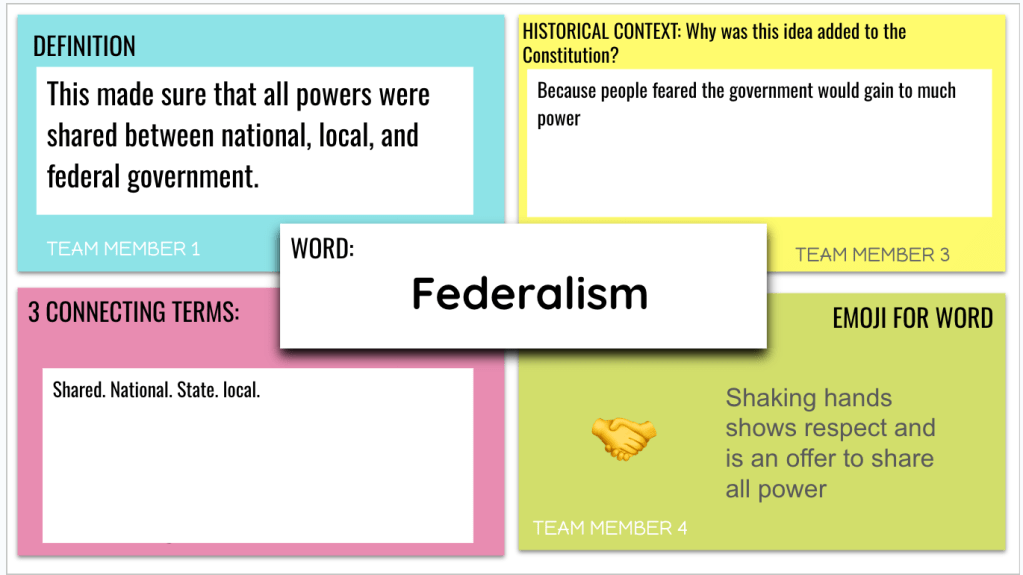
On Friday, I decided we would review some of the vocab words students rated as least familiar on the Google Form. To make it interactive and get students collaborating, I used a creative Repuzzler activity in small groups. Repuzzlers require piecing vocabulary words and definitions back together correctly, almost like a puzzle. The tactile, game-like nature of this strategy hooked students as they worked to match terms like federalism, separation of powers, popular sovereignty, checks and balances, and limited government accurately. The pieces students were matching together involved the word, definition, three connecting words, and a symbol. I rack and stacked Repuzzler with a Frayer and Fast and Curious.
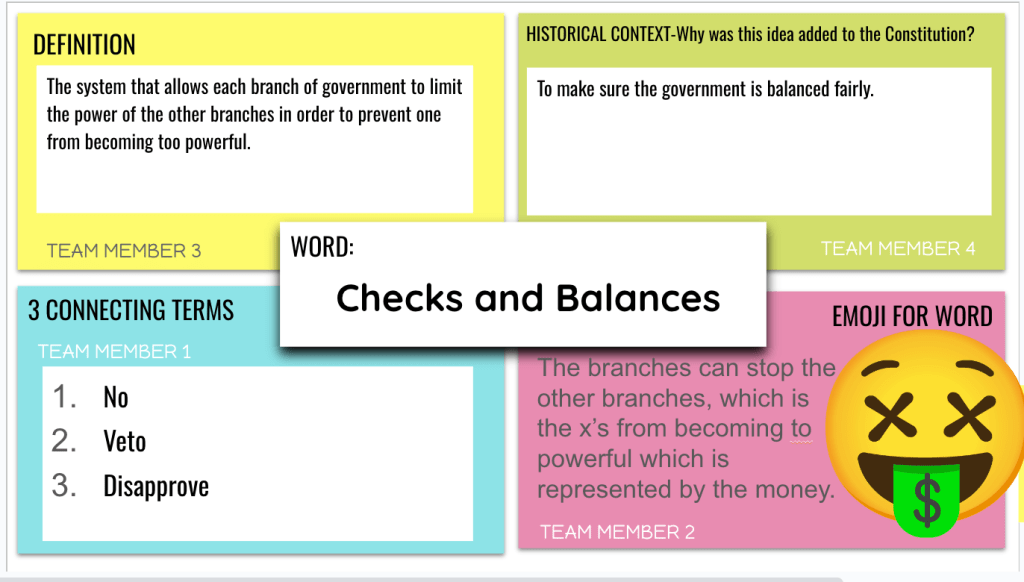
After about 10 minutes of circulating to check understanding and give feedback, I transitioned the class into a digital Frayer Model template. This followed nicely from the Repuzzlers they had just completed sorting and defining. I utilized a Frayer Model template designed by Amanda Sandoval and the lesson within the Frayer was designed by Katie Cherney. (Find this information in the EduProtocols Facebook Group) In addition to the standard Frayer elements defining terms, 3 connecting terms, and historical context, I tweaked the template to also include an emoji representation of each concept along with a justification connecting the emoji back to the vocabulary word. Having students represent abstract government concepts with emojis encouraged creativity and forced deeper connections with the content. Each student was responsible for completing one section of the four-square Frayer template for each term. They chose which component they wanted to own at the beginning by selecting an assigned color. This made accountability built right in, as their part couldn’t be complete until they personally filled in their component across all five vocabulary word slides. My hope was students would paraphrase the definition and use the 3 connecting words from the Repuzzler cards at their desks.
To wrap up class, we closed with another fast-paced quiz review game using Gimkit. When comparing to their scores playing Gimkit on Thursday the scores dropped somewhat ranging from 68% to 79% correctness. Of course, these scores are likely skewed somewhat lower than they would have been if all my students had been there both days rather than having absences. But the activity served its motivating purpose to review key concepts at the end of a vocabulary-focused week.


(In two of my classes, I am trying a Thin Slide Study Guide instead of the Frayer. With the Thin Slide Study Guide, students work in groups of three to four. The claim a slide, paraphrase a definition, and add a picture. After 3 minutes, they claim someone else’s slide and add a new definition, and new picture.)


Reflections on Week One
Stepping back to reflect on this first critical week of my favorite unit, I am pleased with how students eased back into learning while we established essential baseline knowledge to build on in the weeks ahead. Starting with informal verbal pre-assessments before diving into vocabulary self-evaluation and collaborative review activities aligned perfectly to target instruction to what my students needed most.
The concrete data I can extract from assessments like the 10 question Constitution quiz, vocabulary knowledge self-ratings, Repuzzler comprehension checks, and Gimkit review quizzes will empower my planning for next week’s lessons. I feel equipped to address gaps in prior knowledge while harnessing student energy to dig deeper into Constitutional concepts. My next step is developing activities crafted around the essential question my AI assistant Claude and I formulated over break: “How does the structure and content of the Constitution aim to prevent abuse of government power?” I can’t wait to further unpack the intricacies of checks and balances, separation of powers, federalism and more with my 8th graders in this vital unit on the underpinnings of American democracy!
Reflecting on the adventures, challenges, and revelations of the first semester teaching 8th grade social studies has been a journey filled with engaging moments, critical thinking exercises, and the exploration of local connections. In this combined blog post, I’ll delve into the overarching themes that have shaped my teaching philosophy and share insights into my go-to EduProtocols that have fostered engagement in my classroom.
The Semester That Was in 505: Fostering Engagement and Critical Thinking in 8th Grade Social Studies
As the first semester concludes, my reflection on the experiences in 8th grade social studies reveals a commitment to nurturing curiosity, developing critical thinking abilities, and making history come alive through local connections. The use of diverse EduProtocols has been a guiding light, injecting dynamism into lessons and ensuring memorable learning experiences for my students.
Fostering Engagement through EduProtocols
The integration of activites such as Sketch & Tells, Hexagonal Learning, CyberSandwiches, and Resource Rumbles has brought a new dimension to the classroom. These innovative frameworks infused movement, friendly competition, and peer collaboration, keeping students energized and invested. The versatility of EduProtocols has allowed for differentiation and accessibility, ensuring that every student can actively participate in the learning process.
Developing Critical Thinking & Analysis
A cornerstone of my teaching approach has been the emphasis on historical analysis. Students have been equipped to carefully evaluate primary sources, substantiate claims with evidence, detect author bias, and discern cause-effect relationships. Paraphrasing and summary skills were honed, and interpreting political cartoons became a tool for understanding satire and symbolism. Thoughtful questioning and reasoning were emphasized in approaching topics like the Revolutionary War and the Constitutional Convention.
Connecting Content to Local Context
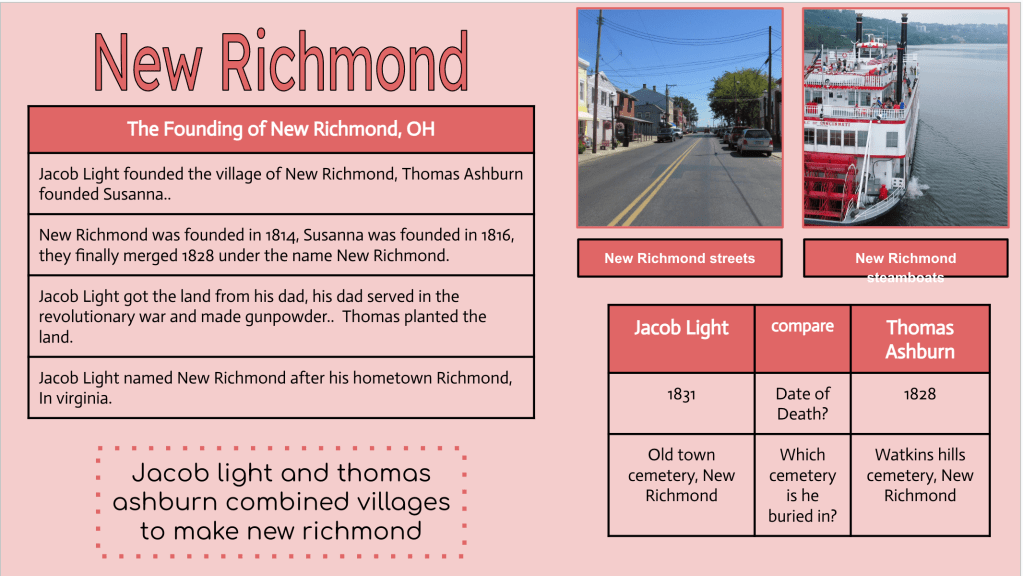
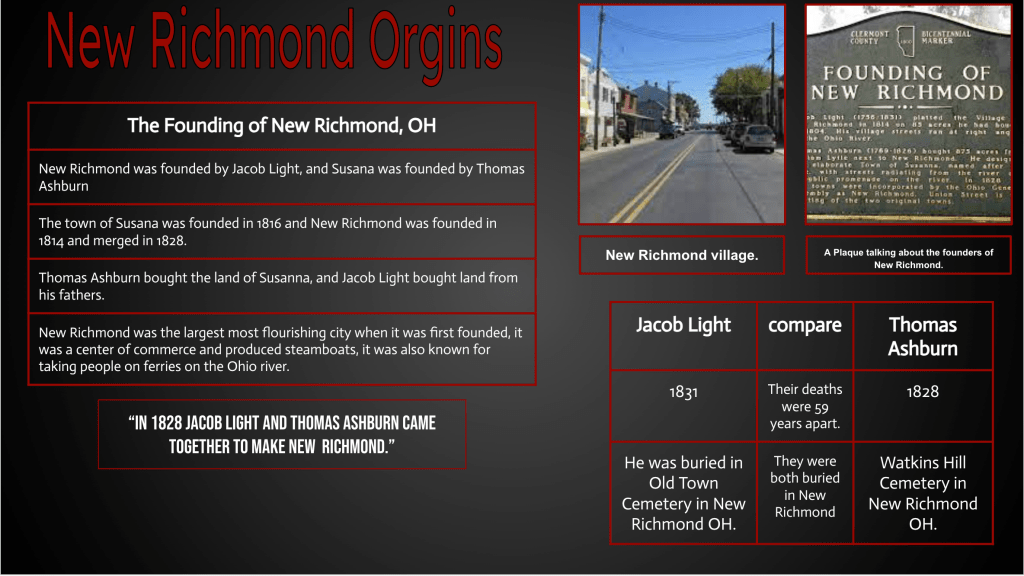
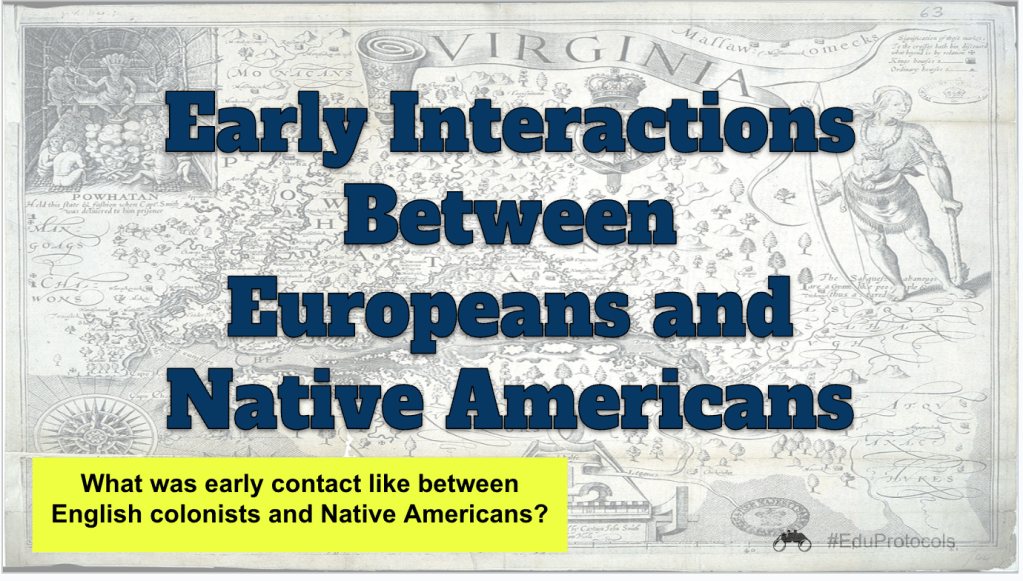
An enriching aspect of the curriculum involved connecting historical content to our local context. From exploring the lasting influence of pre-colonial Native American tribes to researching the impact of European colonization, slavery, and the Underground Railroad on Southwestern Ohio, students gained a deeper understanding of how history has shaped our region. Studying local visionaries who contributed to aviation innovations added a personal and relevant touch to the learning experience.


Onward to the Second Semester
As the semester concludes, I am grateful for the passion and dedication my students bring each day. Teaching is an imperfect yet rewarding art, and therein lies its beauty. My aim is not perfection but progress – that through EduProtocols, critical thinking, and local connections, my students develop a lifelong passion for learning how our shared history shapes who we are. Onward we march, with open minds and full hearts, to encounter the canvas of the second semester.
My Go-To EduProtocols: Fostering Engagement in 8th Grade Social Studies
As an educator committed to making learning interactive for 8th graders, certain EduProtocols have emerged as reliable go-to options in my teaching toolkit. These activities have been carefully chosen based on their effectiveness in fostering engagement, building content knowledge, and providing immediate feedback.
CyberSandwich
True to its delicious name, CyberSandwich merges collaborative learning with reading and writing skills. Students have 10 minutes to read content related to our topic, discuss with peers, and then write a summary paragraph to solidify their understanding. Its structured format builds content knowledge, improves comprehension and writing abilities, fosters collaboration, and is easily differentiated. The versatility of CyberSandwich allows for seamless adjustments in format without compromising engagement, whether through physical handouts or Peardeck slides.


Sketch & Tell
Unleashing creativity to demonstrate understanding, Sketch & Tell invites students to visualize concepts through drawing and explanatory writing. Its flexibility spans quick formative checks for learning to synthesizing complex ideas into graphics with text. Integrated alongside other protocols like Parafly for paragraph practice and following readings to surface existing knowledge, Sketch & Tell promotes engagement through creativity and choice. Allowing options for physical mediums or tech drawing tools makes it adaptable, while the combination of images and annotations checks inferences and connections.


Fast & Curious
When instant engagement and feedback are needed, Fast & Curious delivers. Educational games such as Quizizz, WordWall, Gimkit, and Blooket can be utilized for a “Fast and Curious” activity. Present content or vocabulary to students and have them engage with the game for 4 minutes. After the time concludes, provide feedback and immediately repeat the quiz/game but reduce the duration. Continue this process throughout the week, repeating the content in shorter time frames, until the class average reaches 90% or higher. This strategy allows for consistent and sustained practice of the material over time.


The “Secret Sauce” Behind EduProtocols
In the ever-evolving landscape of education, curriculum may change, but the ultimate purpose remains unchanged – preparing students for future success by nurturing their development. The “secret sauce” behind my favorite EduProtocols lies in enabling students to unlock their potential by making learning experiential, meaningful, creative, and fun. This guiding principle will continue seeping into my classroom through fresh and familiar activities alike as the adventure of education continues.
As I reflect on the semester that was, I am excited about the journey ahead in the second semester, where open minds and full hearts will continue to shape the canvas of learning in 505.
For more: visit EduProtocols Plus site or check out many examples in the EduProtocols Facebook Group.
To All The Readers,
As we enter a new year, I want to take a moment to thank all of you who regularly visit my blog and read my weekly reflections on teaching 8th grade social studies. We reached the amazing milestone of 99,825 views over the past year! I am continuously humbled and inspired by everyone who has found there way here.
While balancing the demands of lesson planning, grading, and everything else that comes with being a teacher, finding time to write these weekly reflections is not always easy. However, connecting with fellow educators through my writing and hearing how it has helped, motivated, or comforted you in your own practice makes every minute I spend crafting these posts worthwhile.
I started this blog a few years ago as a space to process my own experiences and as a call for more transparency about the realities of teaching. But it has grown into so much more thanks to all of you.
As we support students during another unpredictable year, I hope you will continue to turn to this blog as a place to share ideas, find inspiration, or even just know you’re not alone. Please keep the sharing, feedback and conversations coming – you are what makes this blog more than just a personal journal.
With Gratitude,
Moler
Sketch and Tell is one of my favorite education protocols because of its versatility, creativity, and broad applicability across subjects. I regularly use Sketch and Tell activities to have students respond to prompts, comprehend questions, understand vocabulary, or take notes on abstract concepts.
The protocol follows a simple three-part structure:
- Students receive a prompt related to course material like a reading or video.
- Students create a sketch relating to the prompt using drawing tools, shapes, or images. This allows them to visualize their ideas.
- Students discuss their sketch with peers and write reflectively to explain their visual representation as it connects back to key learning objectives.
Sketch and Tell sessions can range from 5-30 minutes depending on needs. I always use a timer to keep students focused!
Customizing Sketch and Tell Activities
Recently, teachers have asked how to customize Sketch and Tell. Here are creative ways I adapt the protocol to engage different learning styles:
- Playdough or clay for molding three-dimensional visuals
- Legos and blocks for building physical representations
- AI image generators to spark visual connections (Scribble Diffusion)
- Food items like Oreos or gummy bears as quirky visual aids
- Drawing apps like AutoDraw to scaffold artistic skills
The possibilities are endless when we provide creative outlets for expression. Adjusting Sketch and Tell to student strengths makes abstract concepts more concrete while boosting engagement, collaboration, and reflection.


Taking Sketch and Tell Further with Depth of Knowledge
Integrating Webb’s Depth of Knowledge (DOK) levels can take Sketch and Tell activities to the next level. DOK classifies critical thinking into four tiers: recall, skill/concept, strategic thinking, and extended thinking. I use these as guidance when developing Sketch and Tell prompts and tasks:
Part 1 – Create a sketch
DOK 1: Sketch basic shapes that literally represent the vocabulary word or prompt. Write the word the sketch represents. (Example: Sketch a basic map of the 13 original colonies.)
DOK 2: Sketch images that symbolize key ideas in the notes/prompt using color, size, or combination of shapes to represent relationships. (Example: Use symbols and words to show trade relationships between New England, Middle, and Southern colonies.)
DOK 3: Sketch an analogy that metaphorically represents the prompt or notes, requiring interpretation into a visual representation. (Example: Represent tensions between colonies and England using analogies.)
Part 2 – Discuss with a partner
DOK 1: Name the shapes used and vocabulary word/main topic represented. (Example: Name colonies and geographic features depicted.)
DOK 2: Explain the thinking behind the representations and connections to the notes/prompt. (Example: Explain why certain symbols were used to denote inter-colony trade.)
DOK 3: Extend the analogy or metaphors in the sketch to other contexts; evaluate effectiveness. (Example: Relate visual metaphors to growing divides between colonies and British control.)
Part 3 – Write about the sketch
DOK 1: Describe literal objects, shapes, colors used in the sketch. (Example: Describe basic map components and labels.)
DOK 2: Explain the relationships between the different symbols, shapes, and ideas represented in the sketch. (Example: Analyze choice of symbols, words, and images to show colonial trade.)
DOK 3: Elaborate on the deeper meaning of the visual metaphors and analogies to prompt; analyze sketch effectiveness. (Example: Interpret broader meaning of visual metaphors representing colonial tensions with England.)
Aligning Sketch and Tell to DOK levels provides built-in scaffolding to increase rigor and critical analysis while giving creative room for students to learn deeply across diverse subjects. The visual and verbal processing engages students as they apply understanding to real-world contexts and questions.
For more: visit EduProtocols Plus site or check out many examples in the EduProtocols Facebook Group. For a Sketch and Tell Template, click here.