Things That Shaped Me: Simple, Not Simpler

Sometimes I feel like I’ve lived a few different lives.
My parents are divorced, so I grew up splitting time between two worlds, a suburban neighborhood and stretches of country backroads. I’ve been on tractors, in tobacco fields, in college classrooms, and on tennis courts. There’s some country in me. I love country music, I work hard, and I’m not afraid to roll up my sleeves and get after it. I like things simple, not simpler.

That balance still shapes how I teach.

Social studies doesn’t have to be hard to be meaningful. Rigorous doesn’t have to mean complicated. It’s not about big words or long lectures, it’s about what we ask kids to do with what they learn. I’m always looking for ways to make learning accessible, purposeful, and doable in a single class period.

Take my recent lesson on Bacon’s Rebellion. I could have given a short reading and a few questions, that’s simpler. I could have built a two-day showpiece of slides and handouts, that’s complicated. Instead, I aimed for effective. We started with a short PBS video introducing Anthony Johnson, one of the first Africans in Virginia to gain freedom and own land. Students discussed how he was later labeled an “alien” and how his family’s farm was taken away. Then we shifted to a SWBST summary for Bacon’s Rebellion to unpack the events and motives, and used a Cyber Sandwich to take the meaning further.

We looked past the textbook’s surface story about a government not meeting people’s needs and dug into the deeper issue. Wealthy planters and officials didn’t want poor whites and enslaved Blacks uniting again, so they codified race-based slavery to divide them. Students used Snorkl to get instant feedback on their writing. They treated it like a game, starting with a 2 out of 4 and revising to reach a 3 or higher. Instead of waiting for my feedback, they improved right in the moment. That’s simple, not simpler, just like the lesson itself.

I carry that balance with me every day, the grit from the fields and the purpose from the classroom. Teaching doesn’t have to be flashy. It just has to be thoughtful, intentional, and a little bit country.

I guess that’s the gift of living a few different lives. Each one taught me something different, and together they shaped how I show up for my students, simple, not simpler.

That’s what shaped me.

The Week That Was in 103

Monday – Mercantilism Rack and Stack

Tuesday and Wednesday – Stations, Questions

Friday – Colonial Government Vocab, Finish the Drawing

Monday

The Question That Drove the Lesson

This week’s focus was one word with a big question behind it: How did mercantilism shape opportunity and inequality in the 13 colonies?

Starting with Context

We began with an Annotate and Tell that served two purposes. It was both a review of the colonial regions from Friday and a bridge into mercantilism. Students highlighted how geography shaped each region’s economy and how trade connected everything back to England. It set the stage well. New England’s harbors, the Middle Colonies’ fertile valleys, and the South’s long growing seasons all played a part in fueling England’s wealth.
Building the Definition

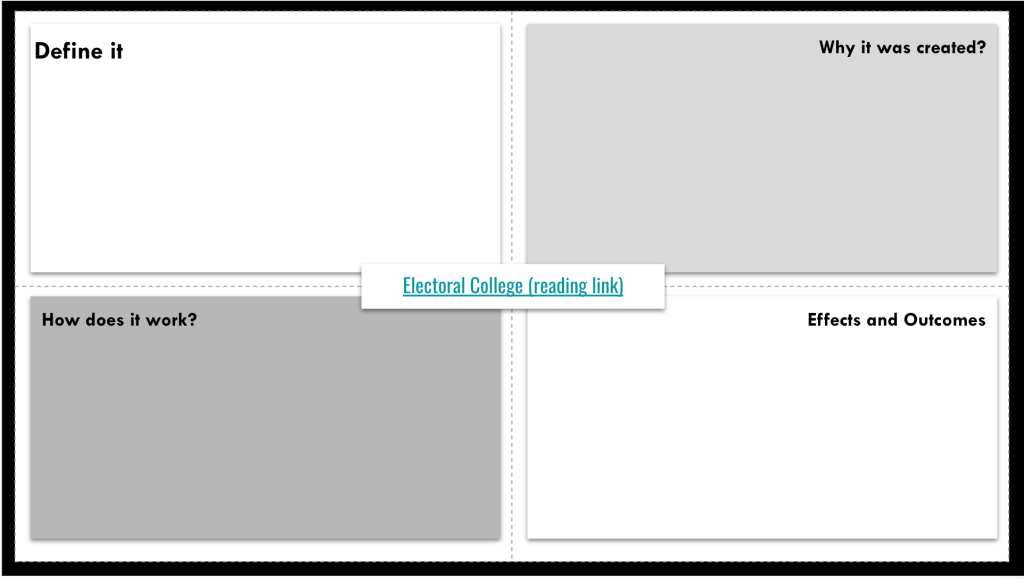
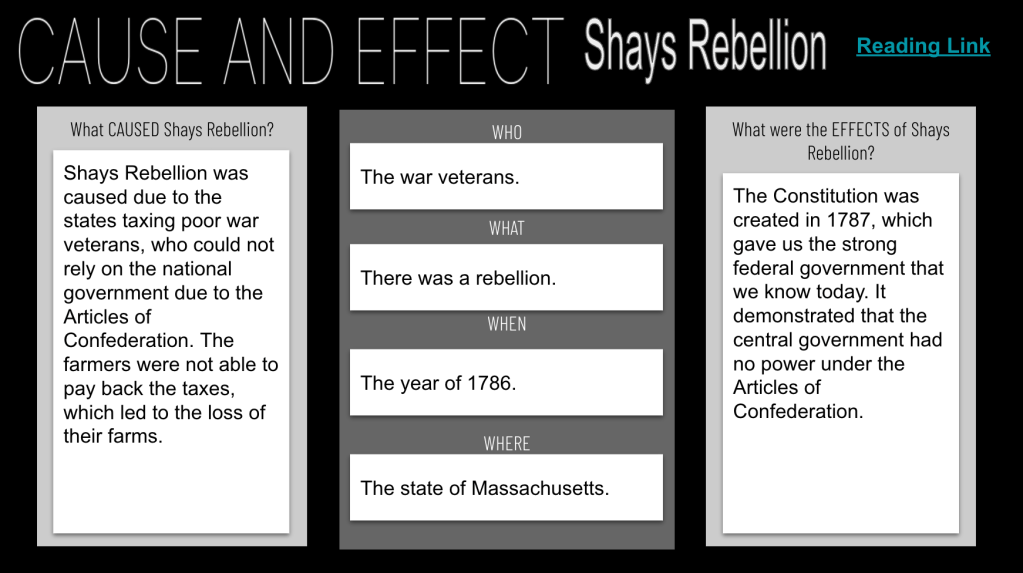
Next came the Frayer. I wanted students to define mercantilism on their own terms. The first box asked for their current definition. Half wrote “I don’t know,” and that was fine. The other half offered short guesses that showed small pieces of understanding from previous Gimkits.

Then I showed a clip from Pocahontas called “Mine, Mine, Mine.” It is dramatic and exaggerated, but it captures greed and the idea of the mother country taking resources. After watching, students revisited their definitions and began to write with more confidence.

Seeing the System

After that, we moved into an Annotate and Tell Battleship using an image of a queen at a table labeled “Mother Country,” being served gold, foodstuffs, and raw materials by smaller colonies. Students selected coordinates, described what they saw, and discussed what it revealed about power, wealth, and control. That visual made the system of mercantilism visible and concrete.

Students returned to their Frayer once more, combining what they had seen, heard, and analyzed. Their final definitions showed clear growth.

Sharing and Reflection

To close, students shared their finished definitions on Padlet. No two were the same, which was exactly the point. I have decided that I will never have students copy definitions straight from a text. That is not learning. Real learning happens when students build meaning themselves.

Why It Mattered

This lesson was not about memorizing a vocabulary word. It was about constructing understanding through experience. Students moved from “I don’t know” to defining an economic system that shaped colonial life. They saw that mercantilism was not just about trade. It was a system that created opportunity for some and inequality for others.

By the end of class, one Padlet post summed it up perfectly:
“Mercantilism is when the colonies work so the mother country gets rich.”

Simple. Clear. And completely their own.

Tuesday and Wednesday

Because of another shortened schedule, this lesson stretched across Tuesday and Wednesday. What’s interesting this year is that my students can move through lessons faster than in the past, yet the constant interruptions and odd schedules keep everything slightly off balance. I’m about a week and a half behind where I was last year, but honestly, the depth of discussion this week made it worth it.

The goal was to uncover the inequality side of mercantilism, to show how England’s wealth depended on a system that included slavery. We started not with a video or text, but with a rectangle of painter’s tape on the floor, six feet long and sixteen inches wide. On the screen, a diagram of the slave ship Brookes. Students began asking questions right away: Why that size? Why that shape? Then I told them that this was the amount of space an enslaved man was confined to on the Middle Passage for two to three months. The room got quiet. That visual, standing over that space, did what no paragraph could.

From there, students rotated through five stations designed with intention. Station 1 was a TED-Ed video on the Middle Passage. Station 2 was a triangular trade map that connected back to the mercantilism we had studied earlier. Station 3 was an excerpt from Olaudah Equiano’s narrative that gave a human voice to the experience. Station 4 tied the Middle Passage directly to mercantilism, showing how enslaved labor kept the system running. Station 5 used the interactive Slave Voyages map, where dots appeared year by year, each dot a ship carrying people across the Atlantic. Watching the screen fill up was its own kind of silence.

At the end, students answered our supporting question again: How did mercantilism shape opportunity and inequality in the 13 colonies? Their responses showed real connection. Many wrote that England’s “opportunity” was built on the labor and suffering of others.

Thursday

Thursday was one of those days where I just did not have it. I overthink everything because I want every lesson to be intentional and meaningful. Ninety-five percent of the time I can deliver. This was my five percent.

I knew the next phase of the unit was government, but I could not land on the right way to start it. I kept thinking and planning, but nothing felt right. I gave a 13 Colonies map quiz to start class, and it took longer than I expected. I tried to begin my new lesson on colonial government but stopped midway through because I did not like how it felt.

So, I called an audible. We played Jeopardy Gimkit for retrieval practice and review instead. It was not my most polished day, but sometimes the most honest thing a teacher can do is pivot, regroup, and protect the energy of the room.

Why It Mattered

Not every day has to be perfect to matter. Thursday was a reminder that teaching is a rhythm, not a script. Some days are for deep reflection and connection. Others are for keeping things moving and letting students win a few rounds of Gimkit. Either way, the learning continues, even when the plan changes.

Friday

By Friday, I finally got my act together and realized I needed to introduce some vocabulary about colonial government. We began with a Gimkit that focused on words like limited government, Magna Carta, self-government, and representative democracy. We played for four minutes, then paused so I could give quick feedback.

Next, I handed out a two-sided vocabulary page. On one side, students wrote down six vocabulary words in the first column. Then we brought out the triangular dice. Each side of the die has three numbers, and the number that landed face down decided how many words their definition could include. The rule was simple: no copying straight from the book. The dice forced them to paraphrase and negotiate meaning. I heard great partner discussions about which words to keep, which ones to cut, and how to reword definitions using synonyms. It was twelve minutes of authentic thinking.

After that, I wanted them to process the vocabulary in a creative way. We used a Howson History lesson called Finish the Drawing. Students randomly numbered their unfinished sketches one through six. Then I gave prompts: “Show a characteristic of a representative democracy” for box one, and “What is the job of Parliament?” for box two. Each prompt pushed them to visualize meaning, not just recite it. I love this activity because it lets students demonstrate understanding in ways words alone cannot capture.

Why It Mattered

This was the first day all week that felt balanced again. Students were learning, talking, and creating. They were not memorizing terms; they were making sense of them. The combination of movement, creativity, and conversation made abstract government ideas more concrete.

Quick Thought: When Do Kids Start Hating School?

I’ve had students complain.
I’ve had students defy.
I’ve had students look me straight in the eye and say, “I’m not doing this.”
I’ve even had kids tell me, “I hate school.”

That last one always sticks with me. Because hating school hasn’t always been a thing. Somewhere along the line, it starts.

For years, I’ve asked my 7th and 8th graders a simple question: “When did you start hating school?”
And you know what? About 95% of them say 4th or 5th grade. That’s not a coincidence.

Now that my daughter is in 4th grade, I’m starting to see why.

Take her latest assignment, a two-page book report.
She loves reading. She reads in the car, before bed, pretty much anywhere. She got to pick her book, which should have been awesome. But instead, it came with a mountain of a writing project. She’s never done anything like this before, and the directions weren’t chunked or scaffolded. It was just: “Choose a book and write this big report.”

So now, the kid who loves reading doesn’t.
She’s not thinking about the story anymore.

And to top it off, the two-page report template (from TPT) was emailed to me, and I had to print it because she lost her copy. So now, it’s not just her stress. It’s ours.

Here’s what I keep thinking:

  1. Just have a few extra copies ready. Battling over a lost paper doesn’t teach responsibility. It just builds resentment.
  2. Don’t hand a 4th grader a giant project with no warm-up. Start small. Build confidence.

What if instead of the classic book report, we tried something like BookaKucha?

Students create three slides about their book and talk for 20 seconds per slide. That’s it. One minute of presenting. It’s quick, creative, and authentic. They get to share what they love about a book, not just prove they read it.

When students recommend books to each other, it creates a reading culture. And culture beats compliance every time.

Because maybe the goal isn’t to make kids “do” reading.
Maybe it’s to make sure they don’t stop loving it.

The Week That Was In 103

This week we wrapped up our last unit and began a new one. The transition brought a nice mix of reflection and fresh energy as students finished their Netflix series projects and shifted into our study of the 13 Colonies. We moved from storytelling and creative thinking to deeper analysis and discussion, setting the stage for our new compelling question: Was colonial America a land of opportunity or inequality? It felt like the perfect balance of closure and new beginnings, with students ready to take on the next challenge.

Tuesday – Netflix template

Wednesday – TIP Chart, Vocab Reading, Pictures, Picture Questions

Thursday and Friday – Colonial Regions

Tuesday – Finishing Our Netflix Series

Tuesday’s class was meant to be quick, just fifteen minutes for students to finish their Netflix-style series project from last week. Each group had imagined a fictional person in England and decided which colony: Roanoke, Jamestown, or Plymouth, they would journey to and why. I figured a short work period would be enough. It wasn’t.

As I walked around the room, it became clear that fifteen minutes wasn’t going to cut it. Some groups were deep in debate over their main character’s motives; others were still refining which colony best matched their storyline. I caught myself starting to waffle: should I push forward or give them more time?

Sometimes I worry that my hesitation slows things down, but then I remind myself: pacing is a balance between momentum and grace. My timeline isn’t always their timeline. Finishing strong matters more than finishing fast.

So, I extended the time. And honestly, it was the right call. The extra minutes gave space for better conversations, stronger details, and more confident final products. In a classroom built on routines and protocols, flexibility still has its place. Sometimes, meeting students where they are is the best rhythm you can find.

Wednesday – Launching a New Unit

Wednesday kicked off a brand new unit on the 13 Colonies. I actually built this one alongside ChatGPT. I fed it textbook photos, my notes, and Ohio’s standards, and together we landed on the compelling question:
Was colonial America a land of opportunity or inequality?

I wanted to start by giving students enough background knowledge to wrestle with that question, so we staged it with vocabulary and picture analysis.

Building the Vocabulary Foundation

On Tuesday, we ended class with a quick 11-question Quizizz on key terms such as subsistence farming, cash crop, triangular trade, mercantilism, and Middle Passage. I ran the data through AI and, not surprisingly, every single word showed up as one of the most commonly missed. That told me the issue wasn’t the kids; it was the questions.

So I reworked everything. I created a TIP Chart (Term, Information, Picture) for all 11 words and paired it with a short introductory reading that included each word in bold. Students used context clues to write definitions in their own words instead of copying from a glossary, which I’ve learned makes the learning stick far better. Most finished the chart in about fifteen minutes.

We followed it up with a couple rounds of Gimkit Fast and Curious, which gave us quick retrieval practice and some much-needed energy.

Walking Through the Colonies

For the last fifteen minutes, the room turned into a gallery walk. I had gone through the textbook, taken photos of eight major images, and uploaded them to ChatGPT. It generated context and sourcing information for each one. I dropped everything into a Google Slides presentation, printed it, and taped the slides around the room.

Students chose three pictures to analyze using four guiding questions about what they noticed, what the image revealed about colonial life, and whether it showed more opportunity or inequality. They finished by answering:
After looking at three pictures, what overall conclusion can you make — did colonial America offer more opportunity or more inequality?

Connecting Images to the Question

A few moments stood out:

  • At the Portrait of Pocahontas, students noticed how she symbolized both peace and captivity, an image that mixed opportunity and inequality.
  • In William Penn’s Treaty with the Indians, several saw early cooperation but also pointed out how quickly that peace disappeared.
  • The House of Burgesses engraving sparked discussion about who actually had a voice, and students summed it up as “opportunity for some, not for all.”
  • The Slave Ship Brookes diagram and Slaves Working in the Field left no doubt about inequality’s role in building colonial wealth.
  • Elizabeth Freake’s portrait and The Residence of David Twining helped students see what privilege looked like.
  • And Anne Hutchinson on Trial reminded them how quickly freedom of thought could be taken away, especially for women.

What stood out most in their reflections was the realization that opportunity often came from inequality. Many students pointed out that the comfort, wealth, and freedom enjoyed by some colonists were made possible by the forced labor, displacement, or silencing of others. It was one of those moments where the room got quiet because the connections had real weight.

Why It Mattered

This day wasn’t about memorizing facts or checking vocabulary boxes. It was about building context and seeing contradictions. Students were already thinking critically, spotting who had power, who didn’t, and why that mattered.

By the end of class, their answers varied, but the reflections were sharp. Some saw opportunity, others saw inequality, and plenty saw both. And honestly, that’s the best sign that the unit’s question is working. It’s making them think, not just recall.

Thursday and Friday – Finding Rhythm Again

I’ll be honest: I’m probably not using as many EduProtocols right now as I’d like. The beginning of the year always moves a little slower, especially during the Exploration and Colonization unit. Things tend to pick up once we move into later content, but this stretch always feels like shaking off the rust.

It reminds me a lot of playing tennis again after the offseason. I know how to play, but being match-ready is different. It takes a few rallies to get timing, rhythm, and confidence back. Teaching at this point in the year feels the same way.

Supporting Question 1 – Which Colonial Region Offered the Best Chance to Succeed?

We started with another round of Gimkit Fast and Curious to review key terms. It gave students a quick boost of confidence and got them back into thinking about the colonies. From there, we moved into a short reading and a simple chart comparing the New England, Middle, and Southern regions.

I’ve always believed that going deep into every colony and every small detail is overkill at this stage. Instead, I wanted students to see the broader patterns. So we began at a DOK 1 level—read, transfer notes, and organize into a chart. Then we leveled it up to DOK 2 as students worked together to compare regions using a triple Venn diagram. The conversations that came out of this were some of the best of the week.

Right, Write, Fight

To close out the lesson, I tried out a game from EMC² Learning called Right, Write, Fight. The concept is solid. I gave each student an index card with the claim: “The New England region provided the best chance for people to succeed.” On one side of the card, students wrote “agree” or “disagree” and added one piece of evidence. Then all the cards went into a pile.

Next, everyone grabbed a random card that wasn’t theirs and added more evidence to support the claim. We repeated this process one more time, but the third round flipped it, students had to counter the evidence they read.

I love the structure of this activity. It’s hands-on, it forces evidence-based thinking, and it encourages students to see multiple sides of an argument. But when it came time to open Short Answer and answer the original supporting question: Which colonial region offered the best chance to succeed? The transition didn’t work as smoothly as I hoped. The game added too much cognitive load to a lesson that was already full.

Adjusting for the Second Class

By the time my second group came in, I made the call to simplify. We skipped Right, Write, Fight and went straight to Short Answer. Students still wrote their claim and supported it with evidence from their charts and Venn diagrams, but this time the flow felt tighter and more purposeful.

It’s a good reminder that not every fun idea fits every moment. Sometimes less is more, and giving students a clear path to success beats trying to do it all in one day. The good news is that each adjustment brings me a little closer to mid-season form: one match, one class, one rally at a time.

How I Actually Use ChatGPT To Build a Unit

The 13 Colonies Inquiry Unit Link

The Common Mistake

A lot of people open ChatGPT, type “make me a lesson plan,” and press go. It spits out something that looks ready to teach, but it doesn’t know your room. It doesn’t know your pacing, your standards, your textbook, or your teaching style.

If you really want ChatGPT to plan with you, you have to treat it like a coplanner, not a shortcut. The key is context, accuracy, and alignment.

What Most Folks Miss
  1. They skip context. Tell ChatGPT your class length, grade level, and what your students are like. If I had students with IEPs or specific needs, I’d include that too.
  2. They ask for a full plan in one shot. The best plans come from back-and-forth conversations.
  3. They don’t share resources. ChatGPT needs to see your textbook, vocab, and standards so it can build something that actually fits.
  4. They don’t check for mistakes. Never assume AI is right. I fact-check everything against my textbook and the Ohio Model Curriculum.
  5. They forget variety. A good plan mixes visuals, discussion, data, and writing, not just one type of task.

How I Built My 13 Colonies Unit

Round 1: Frame the Unit

I started by telling ChatGPT my reality: 8th grade, 45 minute classes, focused on the 13 Colonies: geography, economy, government, slavery, Bacon’s Rebellion, and rivalries. I asked for compelling questions that would connect all of that and stay true to Ohio’s standards. Basically, what question do we needs to kids answering by the end of the unit?

Round 2: Make It Student Friendly

Once I had solid questions, I asked for versions that sounded more like something an 8th grader would actually think about. The tone shifted from textbook to relatable things like “Was colonial America a land of opportunity or inequality?”

Round 3: Fit My Template

I uploaded my Inquiry Design Model template and had ChatGPT fill it in step by step. It organized my ideas into a real unit: compelling question, supporting questions, tasks, and sources all laid out in my format so it looked like my lessons, not a copy/paste from a website.

Round 4: Align It to Standards

I uploaded photos of the Ohio Grade 8 Model Curriculum. ChatGPT mapped each supporting question to the exact content statements: why colonies were founded, how geography shaped economies, how slavery developed, how English policies affected life, and how rivalries led to conflict. Every supporting question lined up with a specific content statement.

That step matters. I don’t want lessons that just “sound good.” I want lessons that hit the standards exactly as they’re written.

Round 5: Match It to the Textbook

Next, I sent photos of the McGraw Hill textbook pages I use. ChatGPT matched every supporting question to the correct pages, but I add added into my prompt, “no guessing.” For example:

  • Founding colonies → pages 66–74
  • Geography and economy → 84–85
  • Slavery → 86–89
  • Government and English policies → 90–97
  • Rivalries and Bacon’s Rebellion → 73, 104–105

Anything that didn’t fit or repeated content got cut. The plan now matched both the standards and the book, which keeps my pacing consistent.

Round 6: Add Routines and Resources

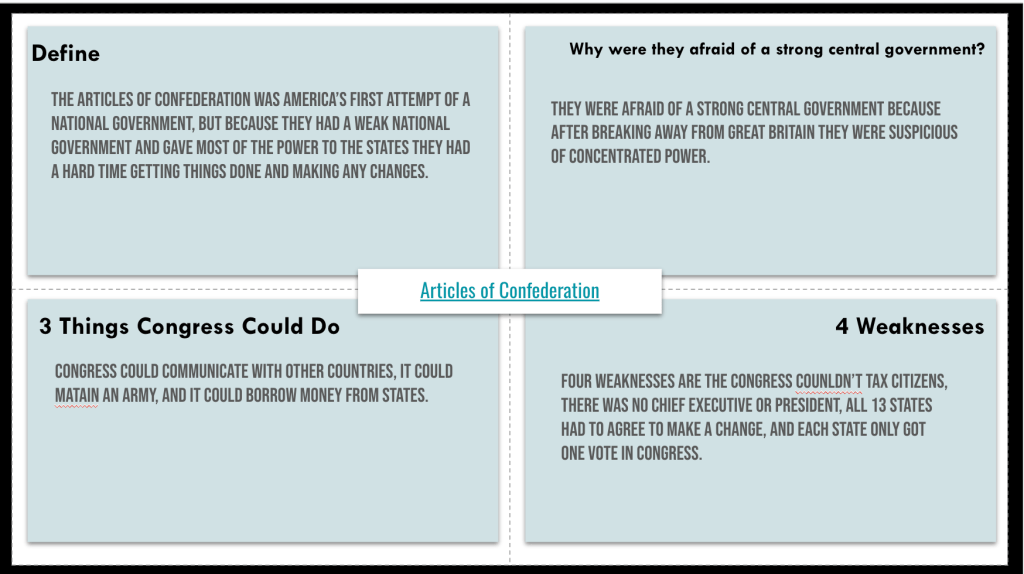
Once the content was solid, I layered in the routines my students already know. Thin Slide, Map and Tell, Cyber Sandwich, Annotate and Tell, and Number Mania. I also added alternate resources: maps, short videos, primary and secondary sources so I’m not locked into the textbook.
Round 7: Check Accuracy and Keep It Human

Here’s where the human side matters most. ChatGPT gives me an inquiry based plan that’s fully aligned to standards with ready to use activities. But I’m still the one making changes as the lesson unfolds. I analyze every part of these lessons and intentionally adjust as needed.

Everything in my classroom serves a purpose, and AI doesn’t know that. I do. I know when to slow down, when to add context, and when to toss something that doesn’t fit the group in front of me. ChatGPT can build the framework, but the human makes it meaningful.

The Prompt Ladder I Use

You can copy this process and fill in your own details. It saves time and keeps the work focused.

  1. Context
    “Help me plan a unit for [grade]. Each class is 45 minutes. I use [routines].”
  2. Standards and Pages
    “Here are my state standards and textbook pages. Align each supporting question to both. If something doesn’t fit, leave it out.”
  3. Template Fit
    “Here’s my unit template. Fill it in using my time frame and routines. Keep student directions short and clear.”
  4. Vocabulary
    “Here are the vocab words. Show where each fits and how it connects to the big question.”
  5. Tighten
    “Remove or merge anything that doesn’t move students toward the main question.”
  6. Summative Task
    “Create a short argument or presentation that ties everything together. Include a simple rubric.”

My Quick Checklist Before Teaching

  • Do the supporting questions all lead back to the compelling question
  • Can each day actually fit inside 45 minutes
  • Are the activities balanced with reading, discussion, visuals, and writing
  • Are the textbook pages and resources accurate
  • Have I double-checked facts and vocabulary

Why This Works

Alignment first. The unit directly matches Ohio standards and the McGraw Hill textbook, keeping instruction focused.

Accuracy matters. AI can structure a lesson but can’t guarantee precision. Double-checking everything ensures reliability.

Variety keeps engagement high. Different routines: like Thin Slide, Annotate and Tell, and Number Mania, help students interact with content in multiple ways.

Human judgment drives purpose. AI can organize, align, and suggest. But only the teacher knows when to pause, pivot, or go deeper.

Final Thought

ChatGPT doesn’t replace lesson design, it speeds up the hard parts. It helps align ideas, map standards, and create a base to work from. But the human element is what gives lessons meaning.

AI can build the plan. I bring the purpose.

Using ChatGPT to Make Quizzes (Without Losing Your Mind)

AI can be a real time saver when it comes to making quizzes. I’ve used ChatGPT plenty of times to build question banks I can plug right into Gimkit or Quizizz. It’s fast, it’s flexible, and it gets you about 80% of the way there. But if you don’t know a few key things, that other 20% can turn into a mess real quick.

Here’s what I’ve learned along the way…..

1. Feed It the Right Stuff

If you want solid questions, give ChatGPT solid input. Don’t just say “make me 10 questions about Jamestown.” Copy and paste the exact reading, video transcript, or notes your students will be using. That way, every question connects directly to what they’ve seen in class. When you skip this step, you end up with questions from the internet version of your topic, which might not match what you’re teaching at all.

2. Ask for Variety

Be specific: tell ChatGPT you want a mix of DOK 1 (recall) and DOK 2 (basic understanding or application) questions. Otherwise, you’ll get ten versions of “What year was Jamestown founded?” Variety keeps students thinking.

3. Watch Out for Answer Length

AI has a habit of making the correct answer the longest one. Every time. It’s a dead giveaway. Tell it to make all the answer choices about the same length. You’ll still need to double check, but it cuts down on the editing.

4. Distractors Need Love Too

AI struggles with wrong answers, it tends to make them so random or ridiculous that the right answer is obvious. Plan to spend a few minutes tightening up those distractors. Make them believable. You want students thinking, not guessing.

5. Review Everything

Before you upload that quiz into Gimkit or Quizizz, read through every single question. Fix weird wording, inconsistent capitalization, or any question that doesn’t make sense. It’s worth the few minutes, it saves you from the “Wait, that’s not even one of the answers!” moment mid game.

6. Let AI Be the Starter, Not the Finisher

Think of ChatGPT as your quiz assistant. It can do 80% of the grunt work drafting questions, formatting CSVs, building structure. You do the final 20% tweaking for clarity, checking accuracy, and matching your class tone. That combo works way better than either human or AI alone.

AI isn’t replacing teachers, it’s giving us a head start. The trick is knowing how to steer it. Give it the right info, set clear expectations, and finish strong yourself. That’s how you turn a good AI draft into a great classroom quiz.

The Week That Was In 103 (Unit Plan Edition)

This unit started with a question that actually mattered:
If you lived in England in the 1600s, would you have left and risked it all?

That single question framed the entire unit. Every activity, reading, and discussion tied back to it. When students know the “why,” it changes how they engage, instead of memorizing colony facts, they were weighing survival, opportunity, and risk.

Staging the Question: Setting the Hook

We started with Number Mania, a tip chart, and a Fast and Curious Gimkit — three low-barrier, high-engagement routines that get every student involved right away.

  • The Gimkit Fast and Curious built repetition and retrieval practice. Students could fail safely, learn quickly, and get competitive energy going. After a three-minute round, we wrote the most-missed words on a tip chart.
  • I rolled dice to determine how long their definitions should be, which gamified paraphrasing and reduced the “copy the glossary” habit.
  • They added quick sketches for dual coding (pairing visuals with words), which built stronger recall.

The Number Mania gave the unit real world context. The reading included key facts and data, how long the trip took, how many died, what they brought, etc. Students created visuals using four numbers that proved leaving England was a dangerous gamble.

This sequence made sense because it layered curiosity and background knowledge without bogging students down in heavy reading yet. Everyone started with success, visuals, and movement, not lectures.

Roanoke: Launching the Inquiry

Our first supporting question:
What do you believe happened to Roanoke?

Students explored five theories and worked in teams to weigh evidence for each. It was a perfect launch because Roanoke’s mystery has built-in curiosity — students naturally argue about which theory makes sense.

They wrapped up by creating a Thick Slide summarizing their claim with a title, subtitle, image, and short reasoning. I also had them list “reasons to go vs. stay in England.” It wasn’t essential in hindsight, but it kept the throughline alive: every lesson connected back to that main question about risk.

The design choice here was intentional — open-ended inquiry first, clear structure second. The mystery of Roanoke pulled them in emotionally; the Thick Slide gave structure for reflection and writing.

The Side Quest: Passenger Lists

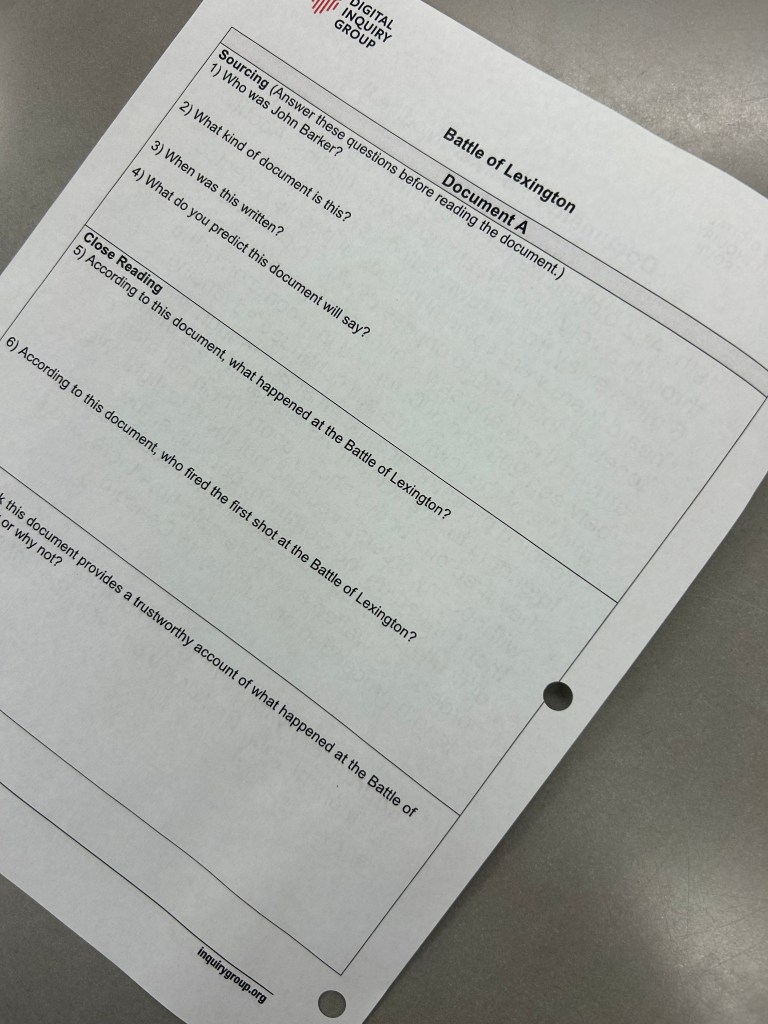
Before jumping to Jamestown, we used the DIG (Digital Inquiry Group) passenger list lesson. The questions:

  • What can passenger lists tell us about who immigrated?
  • What can that tell us about life in the colonies?

At first, I wasn’t sure if this fit, but it turned out to be the perfect bridge. Students analyzed real names, occupations, and destinations, seeing patterns between who left and where they went. It subtly prepared them for the summative project, where they’d create fictional lives set in this same context.

The side quest worked because it slowed the pacing just enough — students practiced evidence-based reasoning without jumping straight to another big event.

Jamestown: When the Dream Meets Reality

Supporting Question #2:
Was Jamestown really the “opportunity” the Virginia Company advertised?

We began with Justin Unruh’s Annotate and Tell Battleship using a real Jamestown advertisement. Students analyzed coordinates on the ad to find small details: promises of gold, comfort, and easy living — and shared their discoveries. The format made close reading competitive and concrete.

Then I asked, “Imagine that ad convinced you to go. You survive the voyage and land in swampy, mosquito-filled Jamestown. What’s your first move?”

Around the room were four choices: “Find Gold,” “Find Food,” “Build Shelter,” “Trade with Natives.” Each station had short readings labeled with emojis…skull (you died) or gold star (you survived).

It took about 10 minutes for students to realize that almost everyone “died.” That visual punch, seeing classmates hold up skull papers, made the hardships real. It’s an experience they’ll remember far longer than a paragraph in a textbook.

Students then made another Thick Slide using the “Somebody, Wanted, But, So, Then” structure. We closed the loop with How It Started vs. How It’s Going, having students rewrite the Jamestown ad truthfully…no more propaganda.

The reason this sequence worked: it moved from persuasion…reality…reflection. Students analyzed sources, made a personal decision, saw the consequences, and reevaluated the message.

Plymouth: Community and Cooperation

Supporting Question #3:
How did the Pilgrims build community and succeed in Plymouth?

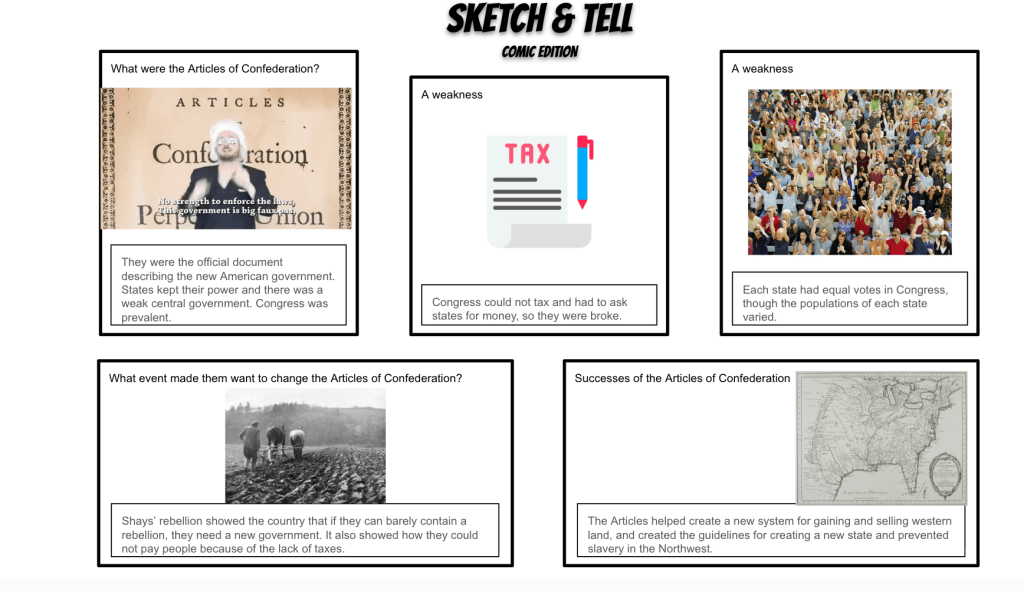
We used Deja Voodoo from EMC2Learning, a structured rereading strategy that forces multiple passes through the text. Each round had a clear purpose:

  1. Identify every hardship the Pilgrims faced.
  2. Write a claim about their greatest hardship using evidence.
  3. List ways religion influenced their choices.
  4. Explain how they worked together to survive.

Each round shortened, increasing urgency and focus. Groups discussed between rounds and shared key takeaways. The setup pushed them to reread for different purposes. It’s great for students who struggle with comprehension.

We closed with a final Thick Slide that summarized their findings visually and verbally. These became anchor slides for the summative assessment.

The sequence worked because students were constantly doing something: reading, writing, talking, deciding. Engagement stayed high because each round built momentum and required evidence based thinking, not passive recall.

The Summative: The Netflix Series

Finally, we circled back to the main question:
If you lived in England in the 1600s, would you have left and risked it all?

To avoid everyone saying “no,” I added a twist…I asked ChatGPT to create 13 realistic life scenarios. Students randomly drew cards: an indentured servant, an apprentice, a religious dissenter, a missionary, and so on. Each card forced them into the mindset of someone who had to leave and choose between Roanoke, Jamestown, or Plymouth. Some of the cards made it obvious which colony they were going to, and some left it open ended to they could pick any colony they wanted.

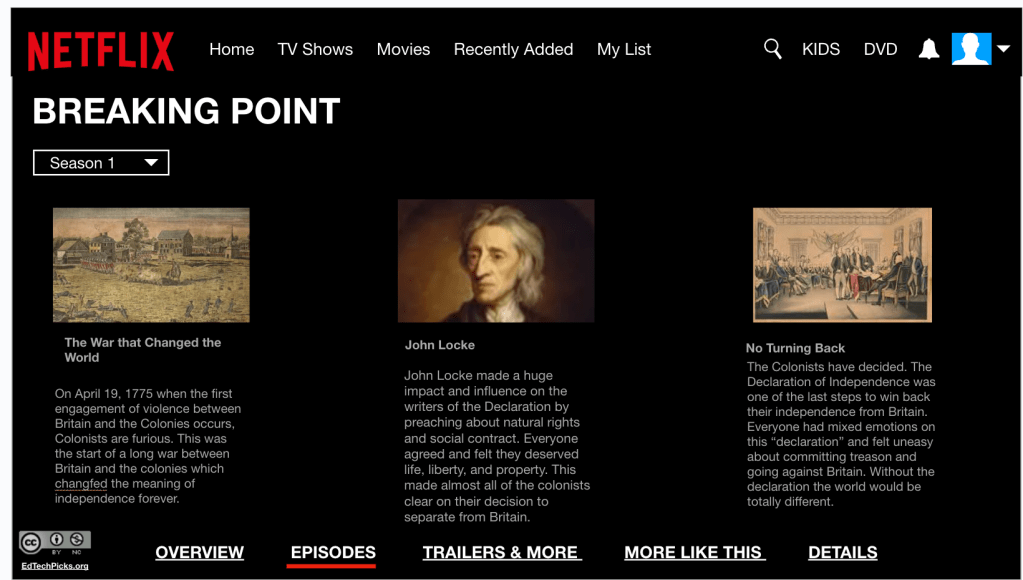
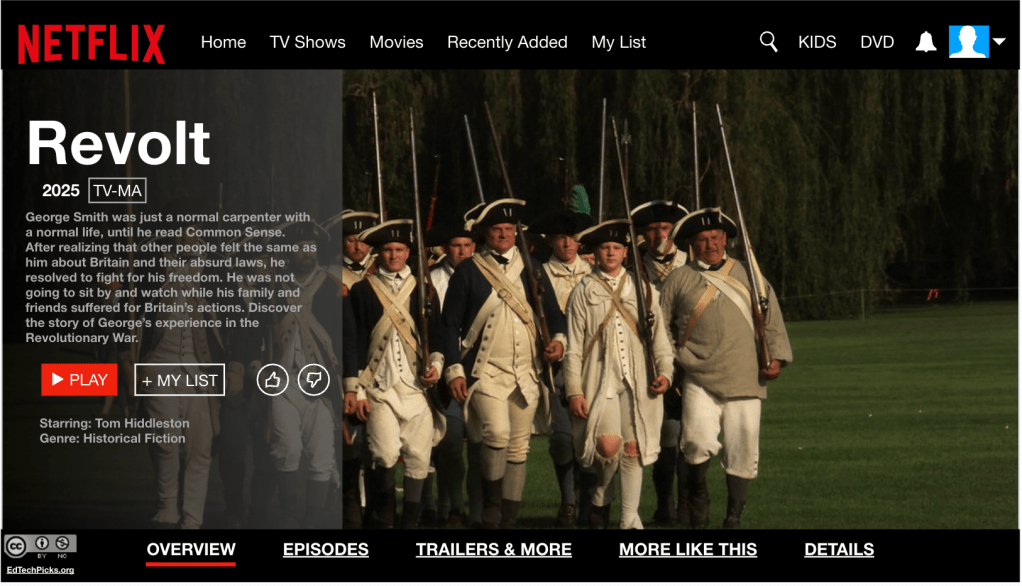
Their final task was to turn that journey into a Netflix style show:

  • Episode 1: The voyage (connected to Number Mania).
  • Episode 2: The struggles and survival (connected to Jamestown/Plymouth).
  • Episode 3: Success or failure (connected to community and adaptation).

Some students even used real names from the passenger lists. That unplanned crossover was proof that the structure worked — students saw the throughline from start to finish.

Why This Sequence Works

This wasn’t three disconnected colony lessons…it was a layered experience that kept looping back to one big idea: Was it worth the risk?

Here’s the logic behind the sequence:

  1. Staging the question gave students curiosity and vocabulary.
  2. Roanoke hooked them with mystery and decision-making.
  3. Passenger Lists built background on who came and why.
  4. Jamestown showed the harsh reality behind the “opportunity.”
  5. Plymouth offered a counterexample — a colony that learned cooperation.
  6. Summative Netflix project tied all those threads together with creativity and choice.

Every step required students to think, not just recall. They compared, analyzed, visualized, and argued. Engagement stayed high because the protocols rotated, Gimkit, Number Mania, Annotate and Tell, Deja Voodoo, Thick Slides; all with short bursts of energy and clear outcomes.

Links for the Unit

Staging the Question – Number ManiaTIP Chart for Vocab

Roanoke – Roanoke Lesson (reformat yourself if needed)Thick Slide

Jamestown – Annotate and Tell, Thick Slide, How It Started
Plymouth – Thick Slide and Reading

Summative – Netflix, Directions

The Things We Think We’re Doing

This has been on my mind lately. Teachers (myself included) often say we’re doing certain practices like retrieval, inquiry, student choice, feedback cycles, or collaboration. We believe we are. We even tell others we are.

But when you really stop and look at the day-to-day flow of your classroom, sometimes the truth is we’re not. Not in the way we imagine. Maybe we’ve done it once or twice, or a version of it, but not with purpose or consistency.

I’ve made a point to pause and ask myself: Why am I doing this? Am I doing it regularly? Does it actually make sense for my students? Those questions have helped me see what’s real versus what’s routine.

It’s easy to fall into the comfort of saying we “do” something because it feels right or sounds good. The harder part is being honest enough to admit when we’re not and then making the small adjustments that bring our intentions and actions back in line.

The Week That Was In 103

I’m going to frame this week’s post around the beginning, middle, and end of the week. Once again, our rhythm was shaped by shortened schedules and shadow days, which meant adjusting plans and finding ways to keep learning moving forward. To work around the interruptions, I started the week with a take-home test, then rolled out a new unit built around a compelling question: “Would you have risked everything and left England during the 1600s for a chance at a better life?” We staged the question with a round of Number Mania and some key vocabulary, giving students both the facts and the language to start thinking about the risks and rewards of leaving home. By the end of the week, we shifted gears into the mystery of Roanoke, weighing different theories and examining evidence to see how stories about the past are pieced together.

Early in the Week

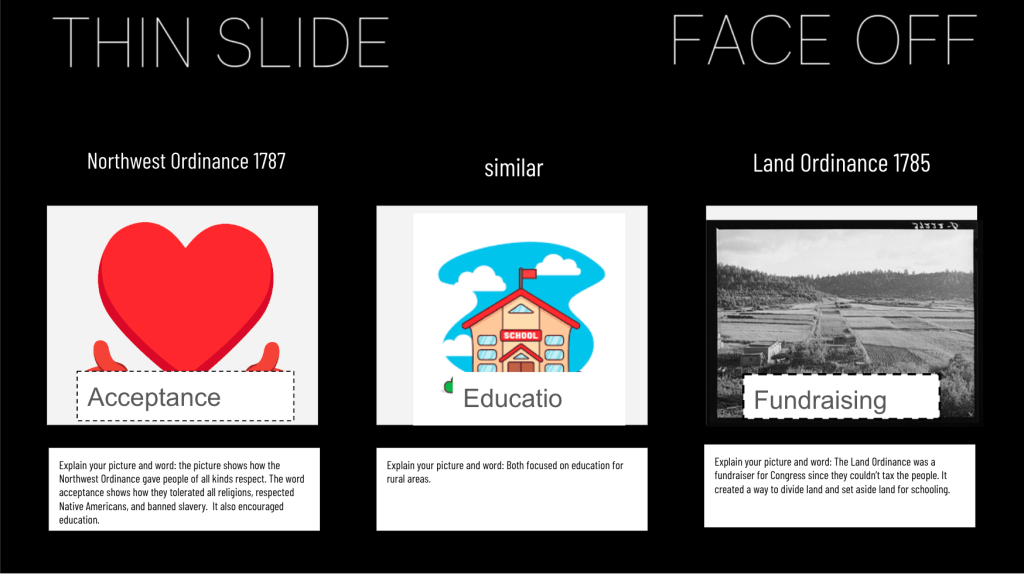
Early in the week, I gave students a take-home test and let them use the entire class period to work on it. When I first mentioned “take-home test,” they got excited and thought it would be an easy multiple-choice packet. I laughed and told them, “Do you really think I’m going to give you a multiple-choice test to take home? No way.” Instead, the assignment was an annotated map. Students outlined North and Central America, colored and labeled the territories of Spain, France, England, and the Netherlands, and created a title and key. Around the map, they wrote Somebody–Wanted–But–So–Then stories for each country, explaining motives, challenges, actions, and effects. Finally, they answered a big-picture question about which country left the biggest long-term impact on North America and why.
Working Through the Assignment

I set it up this way because our schedule has been unpredictable. Some days we have 40–45 minutes, others just 30, and sometimes classes disappear altogether because of shadow days or shortened schedules. The constant stopping and starting makes it hard to keep a steady flow. This format let me keep the class moving forward while also giving students a creative way to show what they had learned.

Why It Mattered

The take-home test worked because it balanced structure with freedom. Students weren’t just filling in blanks or circling answers. They had to demonstrate knowledge by connecting maps, stories, and big-picture ideas. For me, the best part was seeing how they tied geography and narrative together to make sense of the bigger patterns of exploration.

Midweek

By Tuesday and Wednesday, we shifted into a new unit framed around the compelling question: “Would you have risked everything and left England during the 1600s for a chance at a better life?” So far, the overwhelming answer from students has been “no,” and not just in one class—it was a pretty consistent “no” across the board. I am already thinking ahead to the summative assessment and considering a twist. Students might roll dice to generate a scenario for their “made-up life” in England, which could force them to think differently about the risks and rewards of leaving.
Staging the Question

To stage the question, we started with vocabulary through Gimkit and a TIP chart. TIP stands for term, information, and picture. We opened with a Fast and Curious Gimkit round that ran for three minutes. Class averages fell between 60 and 75 percent. After reviewing results, any word where the class scored below 90 percent had to be added to their TIP chart. To make sure students were not just copying definitions, I added another layer. I pulled out a triangular dice, and the number rolled determined how many words their definition could be. This forced students to underline and extract the most important words, then rewrite the definition in their own terms. After filling in their TIP charts, we played another round of Gimkit. This time, class averages jumped to 85 to 91 percent.

Building Context

Once students had the language down, we moved into activities that helped them ground the question in time and place. With the Map and Tell, students had to figure out which modern-day states Jamestown, Roanoke, and Plymouth are located in. Then they discussed with a partner which settlement they would rather land at if they were an English settler in the 1600s, and why. For Number Mania, the goal was to prove the statement that leaving England and settling in the New World was risky and dangerous. Students picked four numbers from the reading, connected each to a fact, and organized their findings with a title and at least three pictures.

Why It Mattered

This sequence staged the big question with layers of vocabulary, geography, and data. Instead of simply asking students for an opinion, it gave them tools and context to support their reasoning. The dice added just enough unpredictability to make definitions more thoughtful, while the Gimkit runs gave immediate feedback on progress. By the time we finished, students had already begun to weigh whether leaving England in the 1600s was worth the risk, and most were firmly convinced it was not.

End of the Week

On Thursday, the 8th graders were out of the building visiting high schools for shadow days, so I gave the 7th graders time to continue working on their annotated maps. We also ran one more round of Gimkit with our vocabulary words, and this time the class averages all climbed above 90 percent. It was a good sign that the combination of TIP charts and repeated Gimkit play was paying off.

Roanoke Theories

On Friday, we dove into one of history’s mysteries with the supporting question: “What happened to the settlers at Roanoke?” I used a premade history lesson on Roanoke theories but trimmed it down to four main possibilities: the settlers went to Croatoan Island, they were killed, the Spanish attacked them, or they starved to death and were lost at sea. Then I added one more theory of my own—that John White knew the colonists were dead, discovered skeletal remains, but returned to England and lied about it to avoid scaring people away from the New World. Since these colonies were money-making ventures, it made sense that leaders would want to cover up failure and keep the dream alive.

Working Through the Evidence

I created a set of guiding questions for each theory to push students to consider evidence, reliability, and plausibility. After working through the theories, students summed it all up with a Thick Slide. They had to choose which theory they believed was true, explain their reasoning with evidence, compare reasons to go to the New World versus reasons to stay in England, draw a picture with a caption, and give their slide a title and subtitle

Why It Mattered

Friday was also the due date for their annotated maps, and 95 percent of students turned them in. What struck me most was the quality. These weren’t quick, surface-level assignments. Students had put care and detail into their work, showing that even in a week full of interruptions, they take the learning seriously and rise to the challenge.

Lessons Links For The Week

Beginning of the Week – Annotated Maps

Mid Week – Number Mania, TIP Chart for Vocab

End Week – Roanoke Lesson (reformat yourself if needed), Thick Slide

The Week That Was In 103

I’m learning quickly that my school has a rhythm all its own—one filled with odd schedules, unexpected interruptions, and lots of moving parts. Some days it feels like just when I find my teaching groove, the bell schedule changes or half the class disappears for a shadow day. Other days, Mass, assemblies, or leadership experiences shift the tempo in ways that make planning a clean, flowing lesson nearly impossible. It’s a challenge, but I’m adjusting.

At the same time, I keep reminding myself that these “interruptions” are actually experiences that matter. Students are getting chances to lead, to serve, to worship, to see other schools, and to grow in ways that reach far beyond my classroom walls. So while it can make teaching messy and sometimes frustrating, the bigger picture is that it’s giving kids experiences they’ll carry with them. This week was one of those jumbled weeks, and instead of a day-by-day recap, I’m sharing the themes and highlights of what we managed to pull off in between it all.

Early Week – Columbus Lesson

Mid Week – England, France, Netherlands

Late Week – Resistance Reading

Early In The Week

Columbus: Did He Know?

Early in the week, we took on a classic history question: Did Columbus die believing he had reached Asia? I used a packet from Mr. Roughton’s site as the backbone, but I also added in a secondary source I thought was interesting. It suggested Columbus probably knew he wasn’t in Asia at all but kept fudging numbers and stretching the truth so the ships, money, and prestige would keep coming his way.

Working Through the Sources

Students analyzed a mix of evidence: a textbook passage that claimed Columbus never realized he had found a new land, letters where he signed himself as “Governor of Asia,” writings from his later voyages describing a “new heavens and new earth,” and even a map drawn under his direction that labeled South America as the “New World.” Adding in the secondary source about him lying for funding gave students a new angle to wrestle with.

Why It Mattered

By the end, the room was buzzing with debate. Was Columbus simply mistaken all the way to his death in 1506, or did he know he had discovered something new but lied to protect his reputation and keep the support rolling? For me, the highlight was seeing students not just memorize a textbook claim but weigh conflicting pieces of evidence, argue their case, and realize that even “famous facts” from history are not always so simple.

Mid Week

By the middle of the week, we shifted focus to how other European powers followed Spain into the Americas. I kicked things off with a map showing land claims from Spain, England, the Netherlands, and France. But I had some fun with it first. I scrubbed off five key details using the cleanup.pictures site, including “1682” from the title, the word “New,” and even Jamestown. What was funny is that in every class, students noticed “1682” last, even though the year was sitting right there in the title. It was a good reminder that sometimes students need to be pushed to read titles and pay attention to the little things.

Big Picture Pinpoint with a Twist

Next, we dove into an EMC2Learning lesson called Big Picture Pinpoint. I broke the reading into four sections, placed our lesson question in the center of a bullseye, and set up four surrounding boxes. Each round, two students rolled dice. The first roll determined how many bullet points they could write, the second determined how many words per bullet point. The dice added an element of pressure and fun, but the real goal was to force students to boil down the text to its most important details. After four rounds, they had a tight set of notes ready to go.

Processing and Comparing

To make sense of the information, students then created a Sketch and Tell-o. Each circle represented one of the four reading sections, and they had to sketch an image tied to the content. After sketching, they circled back to answer the lesson question. The next day, we built on that foundation with a triple Venn diagram. Students compared and analyzed why Spain, France, and the Netherlands colonized North America, identifying both similarities and differences in motives and impacts.

Why It Mattered

This sequence worked because it layered skills: map analysis, summarizing under constraints, visual processing, and finally comparison. The dice game kept things light, but the students still had to think carefully about what mattered most in the text. By the time they hit the Venn diagram, they weren’t just recalling facts. They were analyzing patterns across different nations and weighing how those choices affected Native Americans and the landscape of North America.

Late Week

I think it is important for students to understand and learn how marginalized groups fight back. Too often textbooks gloss over this or only mention resistance in passing. I wanted students to see that Native peoples were not passive victims of colonization, but active defenders of their communities and ways of life.

Doubling Details

We began class with a Doubling Details warm up using the lesson question from 2.6: Why did England, France, and the Netherlands follow Spain into the Americas, and what effects did they have on Native Americans and North America? Students had one minute to respond in exactly eight words. Then they had two minutes to find a partner and build their response into sixteen words. Finally, I gave them four minutes to find two other partners and expand it into thirty-two words. Each group shared, and I picked the best one. This quick routine gave students practice in stretching their thinking and refining their ideas before we dug into new content.

Reading and Questions

We worked through a reading that traced Native resistance from the Taíno in the Caribbean to the Pueblo Revolt in New Mexico, the Powhatan at Jamestown, and Metacom’s coalition in New England. Students saw how different groups used different strategies: revolts, cutting off food supplies, burning towns, building alliances, and even blocking trade routes. The questions in the packet pushed them to think not only about what happened, but why these strategies mattered and how different groups chose different paths of resistance.

Empathy Map

To process what they read, students used an empathy map. At the center of the map was the same North America map we began the unit with, showing the many Native groups that had built their own cultures across the continent. Now students were adding the layer of how those groups fought and resisted when Europeans arrived. Around the edges of the empathy map, students considered what Native peoples might have seen, felt, thought, and done. This activity helped them shift from memorizing events to stepping into the perspective of the people living through them.

Why It Mattered

By the end, students recognized that resistance was a natural human response to being threatened, exploited, or pushed off land. They also started to connect that resistance to larger patterns in history, realizing that marginalized groups have always found creative ways to fight back. For me, the highlight was seeing students connect the map they started the unit with to this empathy exercise, tying together culture, conflict, and agency in a way that made the history feel more alive.