
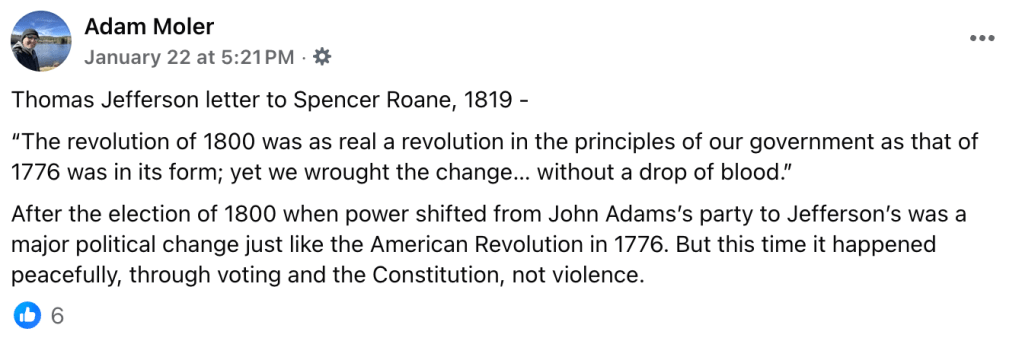
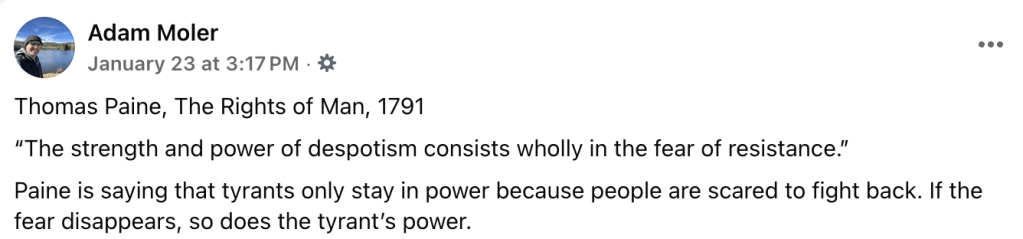
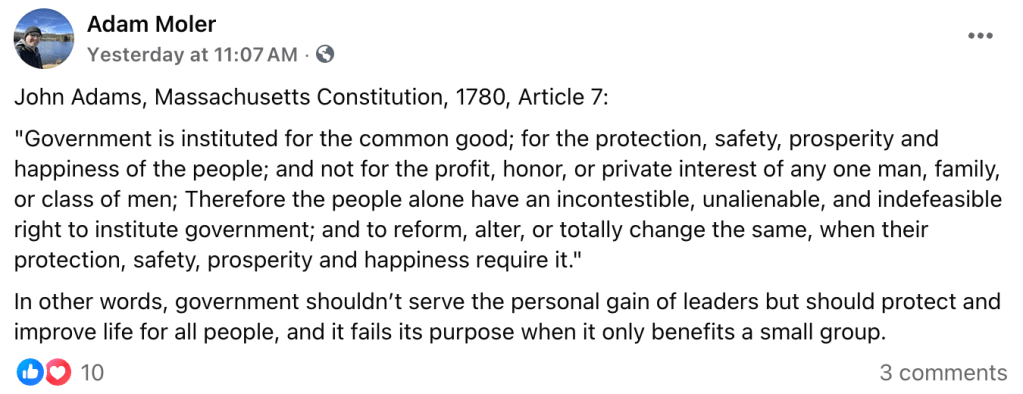
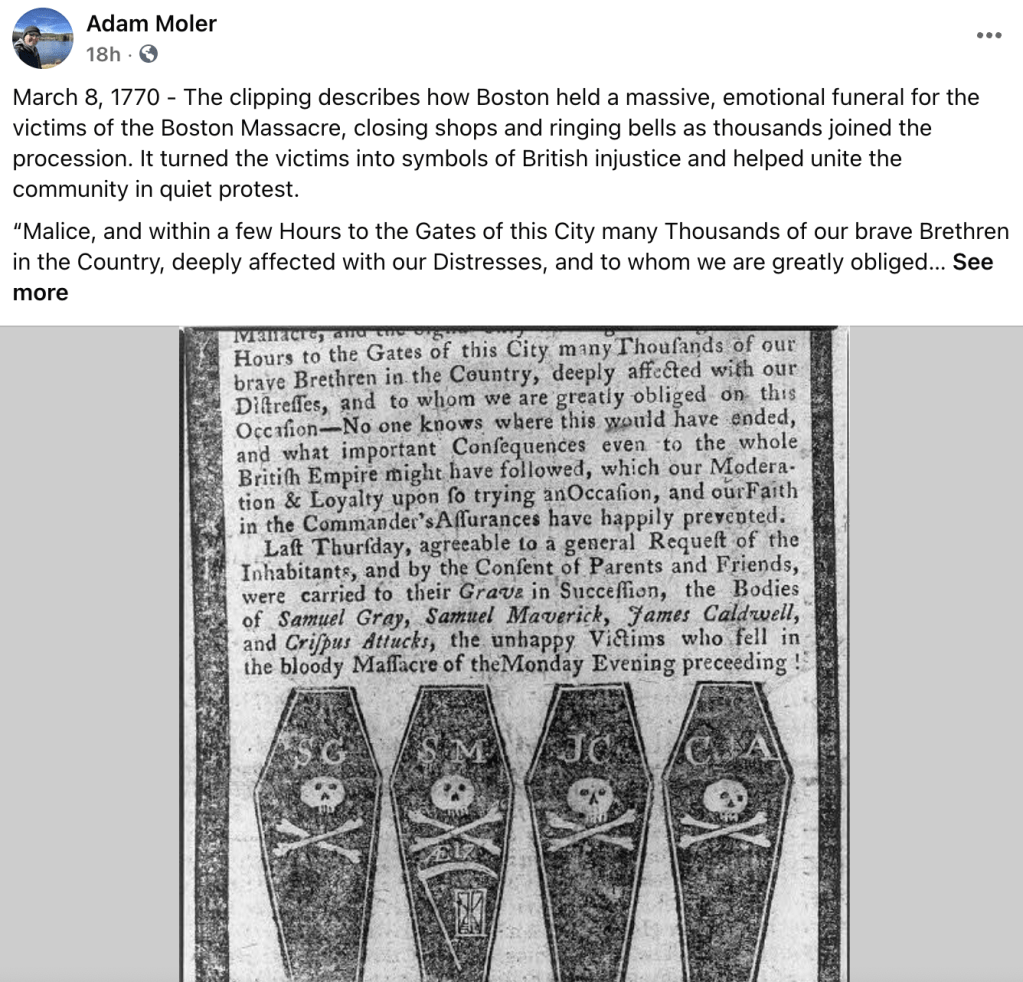
Lately I have been posting quotes from the Founders and early American history. Not to sound smart and not to start a fight. I do it because there is a clear line between what they wrote then and what we are living through now. The irony is obvious once you actually read the words. The warnings are sitting right there in plain English. The problem is most of us have drifted so far from those original ideas that we barely recognize where they came from.
As a social studies teacher, that bothers me.
The Founders and reformers already talked about power, justice, education, rights, and corruption. Most Americans have never seen those original words. We often skip the originals and jump straight to watered down summaries. That is how a country forgets where it came from.
This year I made it a point to give students more real documents. We read the Massachusetts Circular Letter. We looked at John Adams describing the Boston Tea Party. We went through the Stamp Act from the British Parliament. We read the Articles of Confederation. We tackled Federalist 68 to understand the Electoral College. We read the Declaration of Independence and analyzed the common sensical words of Thomas Paine. When kids get the real text, they react differently. They ask better questions. They make stronger connections. They see that history was not neat or predictable. It was debated and argued and built by humans.
My co-author and friend Dr. Scott Petri used to joke with me and say, “Do not turn your class into death by a thousand primary sources, Moler.” He was right. You cannot bury kids in documents just because you think it looks academic. But there are documents that spark curiosity and are worth the effort.
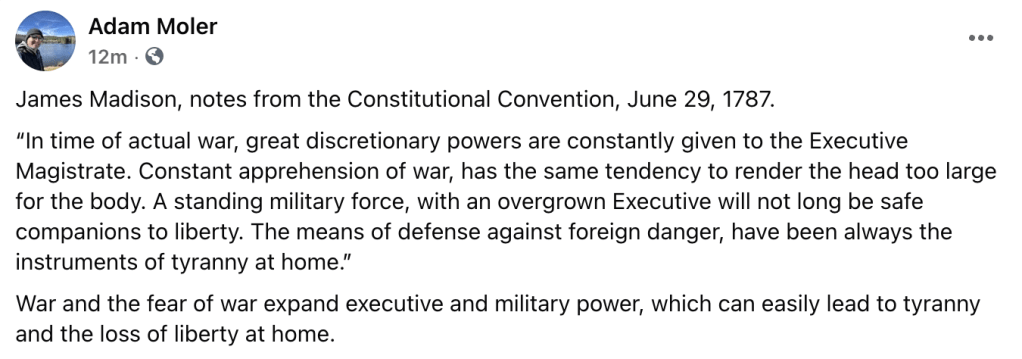
The quotes I have been posting on my own page are the same idea. Thomas Paine warned that leaders raised to rule often become arrogant because they do not understand ordinary people. John Adams said government exists for the common good, not for the private interest of a few. Paine wrote that tyranny survives on fear and collapses when people stop being afraid. Jefferson argued that a nation cannot stay ignorant and free at the same time. Frederick Douglass warned that when justice is denied and poverty is enforced, nobody is safe and society starts to tear itself apart.
These writers did not agree on everything. They had flaws. They had blind spots. They also understood how fragile liberty is. They understood how quickly the public forgets, how easily leaders overreach, and how important an informed citizenry really is.
I worry that we are losing that understanding. The decline of civic knowledge is not an accident. The shrinking time for social studies education is not an accident. If you reduce the time spent on history and government long enough, you get citizens who do not know what their country is supposed to be doing. If nobody knows the original arguments, then there is no standard to measure the present against.
This is why I refuse to sugarcoat or sprint through the curriculum just so I can say I reached the Civil War before May. That approach is meaningless. I would rather have students understand why Paine attacked monarchy, why Adams defended the concept of the common good, and why Douglass demanded justice. I would rather have them see how these ideas connect to today. That has value.
The truth is simple. Countries forget. Foundations rot when nobody checks them. Someone always benefits when the public stops knowing how things are supposed to work.
So I will keep teaching primary sources. I will keep posting the quotes. Not because I want to live in the eighteenth century, but because those old words still matter. They are not coming from pundits or influencers. They are coming from people who built the country we are still trying to maintain.
If we stop reading them, we stop remembering. And once we stop remembering, someone else gets to rewrite the story.

 Moler's Musings