
Today, I ran a new Rack and Stack using some familiar EduProtocols but with a fresh flow. The whole lesson was built around this opening statement: “The Lowell Mill Girls had an extraordinary opportunity.” That one sentence carried us through the entire class. I wanted students to come back to it over and over again, thinking critically about whether or not it was actually true.
Here is the flow:
- Fast and Curious
- EdPuzzle with Thin Slide
- Number Mania
- Nacho Paragraph with Short Answer
Starting with Vocabulary: Fast and Curious
We began with a Gimkit Fast and Curious. I pulled vocab straight from the lesson—boardinghouse, wage, petition, strike, shift. It’s honestly surprising how many words kids just don’t know anymore. I can’t assume anything. The most missed were boardinghouse, petition, and shift. After two rounds with some feedback in between, their accuracy shot up. We had a solid foundation for the rest of class.
EdPuzzle with a Thin Slide Twist
Next up was a 4-minute EdPuzzle about the Lowell Mill Girls. I embedded a Thin Slide with the same opening statement—did this video support it or not? Some kids thought it did, to a point. The video showed that the girls got paid and had housing, but others quickly pointed out the poor conditions and low wages. The Thin Slide was great for capturing those first reactions and making them back it up.
Number Mania with a Purpose
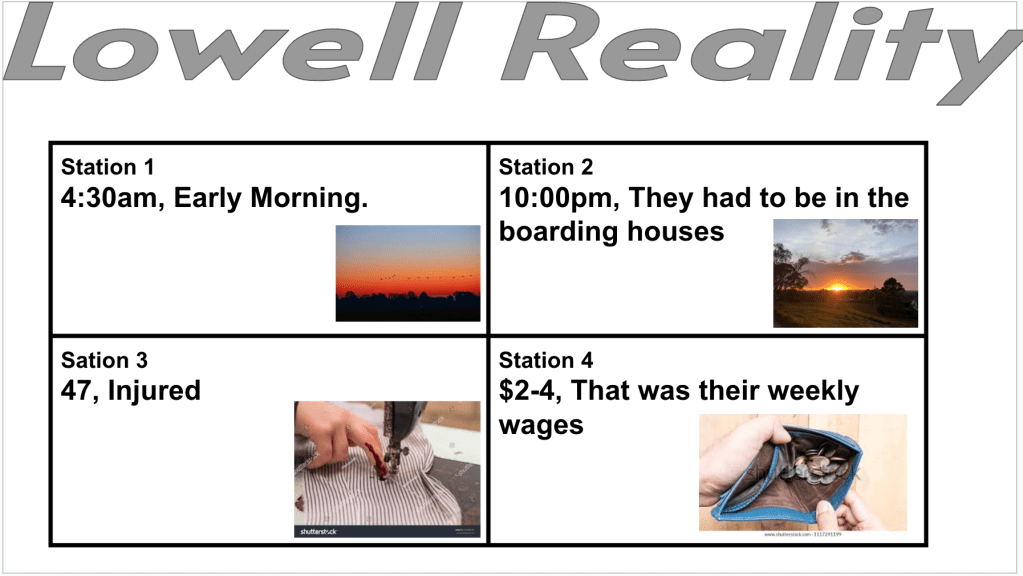
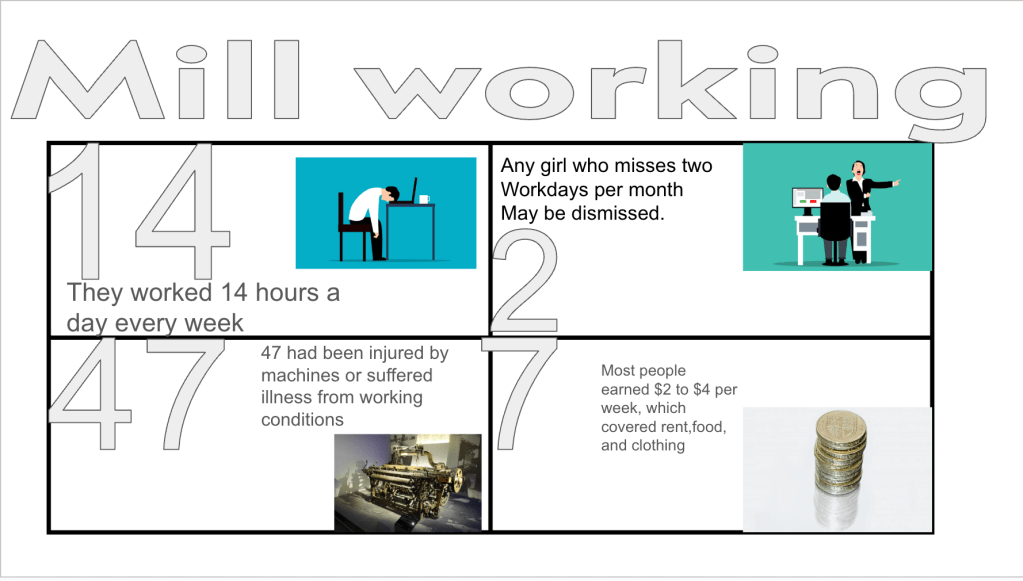
Then we hit the main chunk of the lesson—Number Mania. I had originally planned 6 stations, each with primary and secondary sources about different aspects of mill life. But after a dry run and thinking about cognitive load (shoutout to Blake Harvard’s book), I trimmed it to 4 stations. That made a huge difference.
The task was to find numerical evidence to refute the original statement. Of course, we had to go over the word “refute” first. That word shows up on the Ohio state test, and about 90% of my students didn’t know what it meant. Each station had a brief source. After reading, students picked a number that could be used to argue against the idea that the Lowell Mill Girls had some amazing opportunity. I rolled dice to determine how many words their explanation had to be. That added a fun twist and helped prevent kids from copying straight from the text. They had to think.
Short Answer + Nacho Paragraph
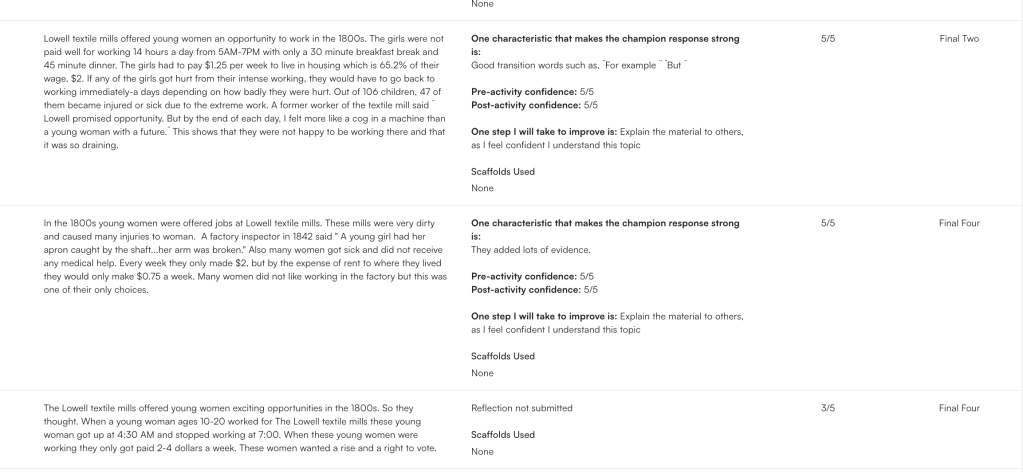
The finale was awesome. I pulled up Short Answer and ran it Battle Royale style using the Nacho Paragraph protocol. Each student copied and pasted the original statement and rewrote it, fixing it using the numerical evidence from the Number Mania. Their job was to refute the original sentence with facts. It brought everything together perfectly.
Short Answer gave them a sense of audience, let them see others’ responses, and motivated them to write better. They knew their classmates would see it, and that made all the difference.
Why This Worked
This lesson flowed. It began and ended with the same prompt, but by the time we got to the end, students had real evidence and a better understanding of both the content and how to structure their thinking. It wasn’t just about mill life—it was about challenging assumptions, reading multiple types of sources, interpreting data, using key vocab, and writing for a real purpose.
I also liked that I was able to scale the cognitive load. The vocab and EdPuzzle built some schema. The stations weren’t too long, and the dice kept the kids engaged. The writing had structure. Every part had purpose.
It’s not always about doing something big and flashy. Sometimes it’s about connecting pieces in a way that feels meaningful and builds momentum. Today, it worked.





 Moler's Musings