I’ve been slammed lately with so much going on—coaching tennis, adjusting to a new school, juggling presentations, and life in general. Honestly, I’ve been feeling like a first-year teacher again! Between managing the chaos of lesson planning, keeping up with my students, and coaching, it’s been a whirlwind. With everything happening, I decided to take my weekly activities, add a quick description, and let AI handle the blog writing. It’s been a huge time saver, especially since it allowed me to focus more on the classroom and less on the stress of documenting every detail.
Throughout the week, we’ve been using a mix of Thin Slides, Thick Slides, and even Sketch and Tell-o activities to keep things engaging and varied. These methods helped students break down complex historical concepts into simple, creative outputs. Whether they were creating Thin Slides with a single word and image or developing more in-depth Thick Slides, I saw them make great progress in expressing their understanding. The Sketch and Tell-o added a fun, visual element, allowing them to sketch key ideas and present them to the class.
Also, if you’re interested in how AI can be used effectively in education, check out an article I contributed to in EdWeek: Can AI Be Used Effectively in Class?. It’s been exciting to see how tools like this can support both students and teachers in new ways!
Tuesday – Factors of Exploration
Wednesday – Motivations for Exploration
Thursday – Columbus
Friday – Effects of Exploration
Tuesday: Factors Leading to European Exploration
In Tuesday’s class, we dedicated time to various engaging activities that built up to a comprehensive understanding of the factors leading to European exploration. Here’s a detailed breakdown:
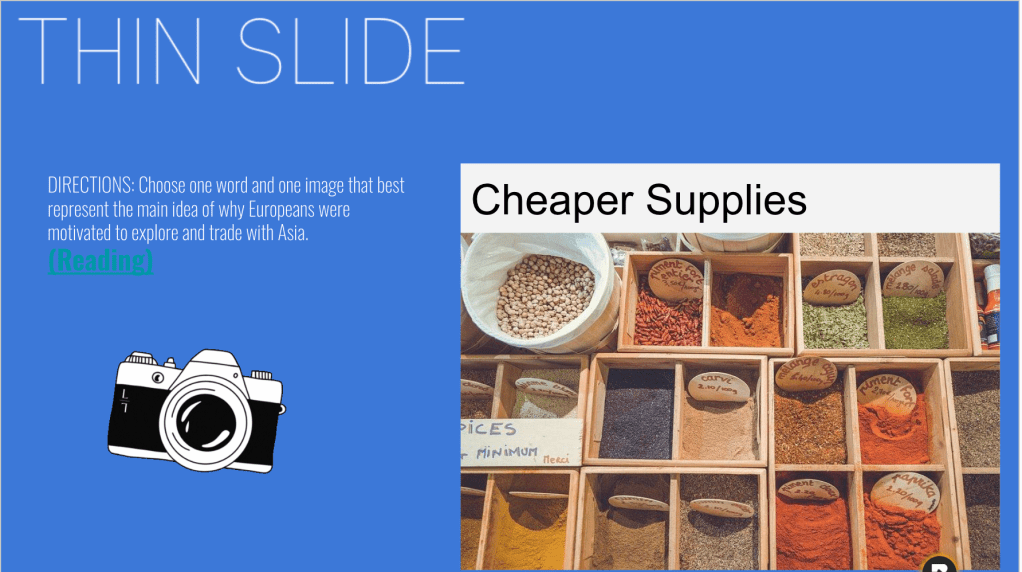
Thin Slide (3 minutes): We started with a quick Thin Slide activity where students selected a word and an image to represent a factor that motivated European exploration. The speed of this activity pushed students to think quickly and make instinctive connections between visual elements and key ideas, such as “spices” or “trade routes.” This set the tone for deeper exploration of the topic.
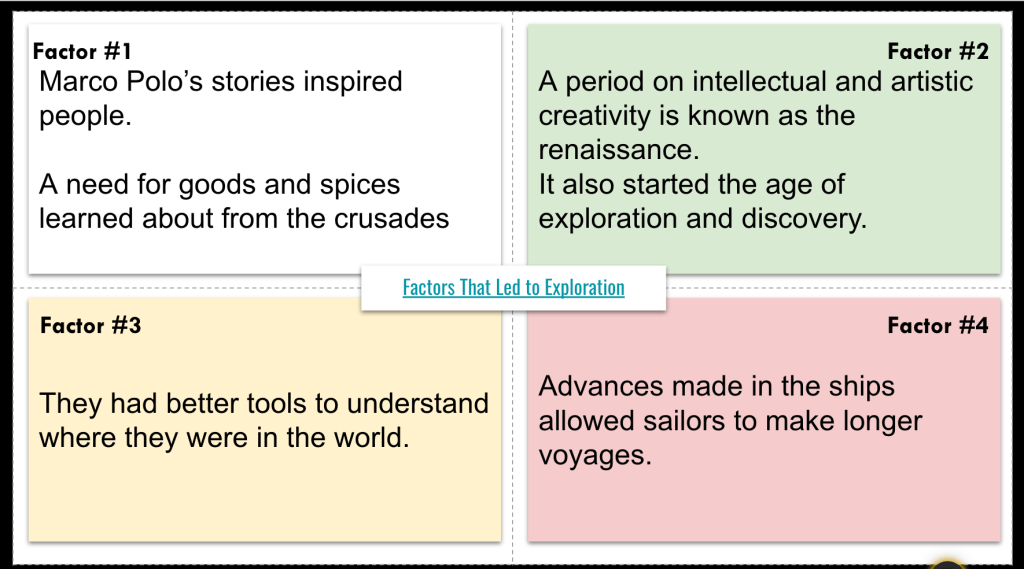
Frayer Model and Reading (20 minutes): After the Thin Slide, we shifted into a Frayer Model combined with a reading session. Students read about the key historical factors behind the exploration era—like Marco Polo’s influence, advancements in navigation, and the rise of trade. As they read, they filled out their Frayer Models, identifying four main factors (such as the Renaissance, the desire for wealth, better ships, and the spice trade). This process helped them structure their knowledge and highlight the key points in a logical manner. The Frayer Model worked especially well for students to internalize the information and make it more manageable.
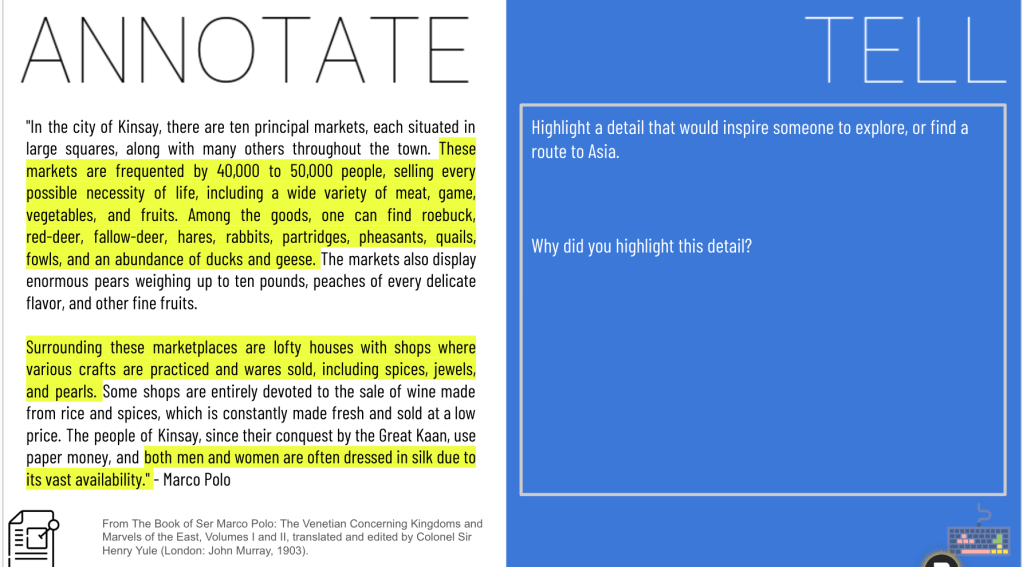
Annotate and Tell (8 minutes): The next phase involved an Annotate and Tell activity, focusing on a passage from Marco Polo’s writings. Students spent time annotating the text, underlining or highlighting key sections that illustrated how Polo’s stories inspired European curiosity and exploration. They then shared these annotations with the class, fostering discussion about how historical narratives shaped exploration. This part helped students connect primary source analysis to the broader motivations for European exploration, further deepening their historical thinking skills.
8Parts (12 minutes): We then moved on to an 8Parts activity where students analyzed a historical map. This exercise required them to break down the map by identifying key nouns, adjectives, and verbs. They discovered how geography—land and sea routes—was integral to understanding exploration. This helped students think critically about the relationship between European nations and the wider world. By dissecting the map in a structured way, they learned how to interpret visual resources as historical evidence.
Thick Slide (Remaining class time): The final part of the class was dedicated to the Thick Slide activity. Here, students were asked to create a detailed slide that combined the insights they had gathered throughout the lesson. They selected a key factor from their earlier work—whether it was technology, trade, or influence of explorers—and developed a visual and textual presentation around it. Additionally, they wrote a strong topic sentence that summarized the main idea of the lesson, drawing together everything they had learned. This required students to synthesize the various elements they had explored, from their initial Thin Slide idea to the more detailed knowledge gained through reading, annotating, and map analysis.
The Thick Slide provided a perfect opportunity for students to creatively showcase their understanding and articulate the big picture of why exploration was such a significant period in European history. This extended time allowed for in-depth thinking, while also reinforcing writing skills through the construction of clear, concise topic sentences that encapsulated the lesson’s core ideas.

Wednesday: Refining Work and Exploring Motivations
In Wednesday’s class, we started with an innovative approach to refine the students’ work from the previous day. I gave students 15 minutes to finish their Thick Slide, focusing on crafting strong topic sentences that summarized the main idea of European exploration. To enhance their writing, we utilized AI feedback through Claude Artifact, allowing students to receive targeted suggestions on how to improve their topic sentences. This provided an interactive and reflective start to the lesson, encouraging students to refine their thinking and writing.
After this, we transitioned into a Sketch and Tell-o activity, where students read about the motivations for Spanish and Portuguese exploration. Using the information from the reading, students sketched six key details, each accompanied by a caption explaining the motivation behind it. For example, students captured aspects like Portugal’s quest for new trade routes and Spain’s competition with Portugal, visually representing each with simple but meaningful drawings. This activity helped reinforce the motivations behind exploration in a creative and engaging way, encouraging students to visualize what they had learned about the explorers’ economic, religious, and competitive motivations.
We wrapped up the class with a Random Emoji Paragraph activity, where I introduced random emojis as part of a “mystery bag” concept to encourage creative thinking. For instance, when a bouquet of flowers appeared, I suggested students think about how the flowers could represent something “bunched together.” One student cleverly made a connection, saying, “The Spanish and Portuguese explorers wanted to claim a bunch of land,” showing how the emojis could inspire creative associations with historical content. This activity added a fun and imaginative twist to the lesson, pushing students to think outside the box while still connecting back to the day’s theme.
Overall, the class blended technology, creativity, and critical thinking to help students deepen their understanding of exploration. The use of AI feedback, visual storytelling through sketches, and creative connections with emojis made for a dynamic and engaging lesson.
Thursday: Christopher Columbus
In Thursday’s class, we explored the question: “Should Christopher Columbus be considered a hero or a villain?” This sparked an in-depth analysis of various perspectives on Columbus’s legacy.
We started by watching an 8-minute EdPuzzle video that provided background on Columbus and the Taino people. The video helped set the stage for understanding the complexities of Columbus’s actions and provided a foundation for the primary source activity.
After the video, I introduced six primary sources that had been simplified using AI, maintaining a primary source tone with added sourcing and context information. These sources included journal entries from Columbus, accounts by Bartolome de las Casas, and perspectives from modern historians. Each source offered a unique take on Columbus, allowing students to engage with both positive and negative portrayals.
Students then used a graphic organizer to analyze the sources, answering premade questions to determine if each source presented Columbus in a positive or negative light. This helped students gather evidence for the claim they would later make about Columbus’s legacy.
To wrap up, students completed a 1xCER activity, where they wrote a claim about whether Columbus should be considered a hero or villain, supporting their claim with evidence from two different sources and providing reasoning. Many students struggled with the reasoning portion, so I had AI generate a reasoning example, which I shared with the class. This example helped clarify how to link evidence to the claim more effectively.
Looking ahead to next year, I plan to revise the question to “Should Columbus be celebrated?” This approach feels more appropriate and encourages a more nuanced discussion about Columbus’s legacy, moving beyond the simplistic hero-villain framework.
Friday: Effects of Exploration
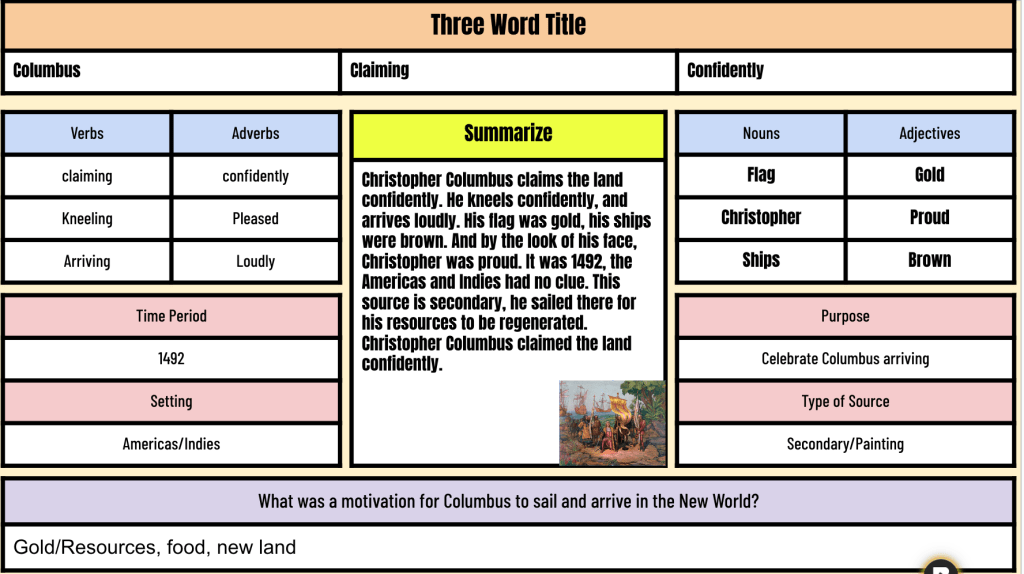
In Friday’s class, we started with an 8Parts activity using a painting depicting Columbus’s arrival in the Americas. Students are improving in their ability to break down images, and this activity took about 10 minutes. The goal was to tie the visual representation of Columbus’s arrival to Thursday’s lesson, where we analyzed whether Columbus should be considered a hero or villain. The 8Parts activity helped students focus on key aspects of the image, such as nouns, verbs, and adjectives that related to exploration, discovery, and interaction with indigenous peoples.
Next, we moved on to a Thin Story activity where students read about the effects of exploration from the text. They were asked to select one picture and one word to represent a key effect of exploration and explain their choices. I pushed them to use more specific details from the reading rather than general statements, encouraging them to dig into the information they learned. This exercise emphasized the consequences of exploration for both Native Americans and Europeans, helping students engage with the more detailed aspects of how exploration shaped history.
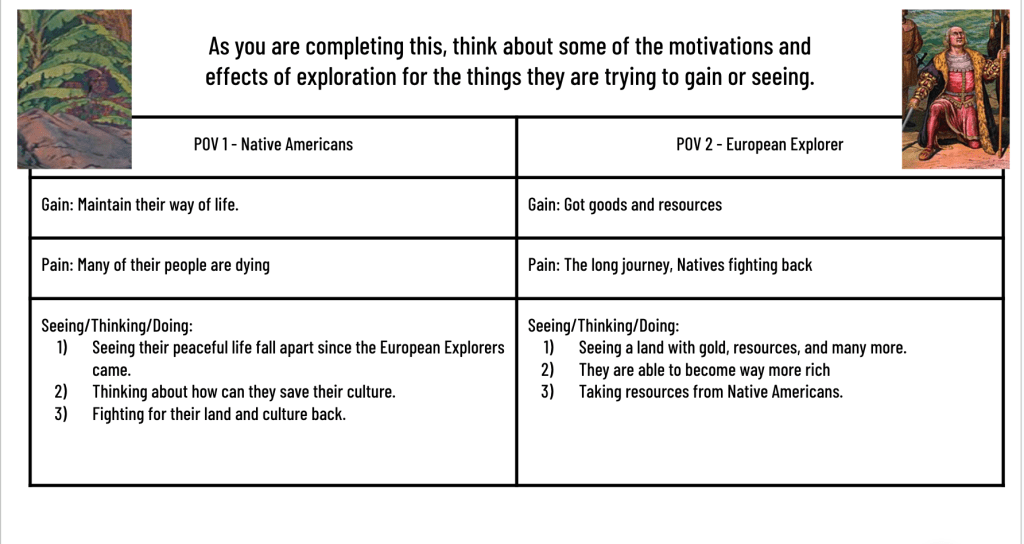
Afterward, students completed a 2xPOV activity, where they considered the perspectives of both Native Americans and European explorers. I incorporated elements from an empathy map, asking students to think about what these groups might be feeling, seeing, doing, and gaining or losing. This helped students develop a more empathetic understanding of how exploration impacted both groups, while also drawing connections to the motivations and consequences discussed in the previous activities.
We finished class with a Fast and Curious Gimkit activity, which provided a fun and interactive way for students to review key concepts from the week. The rapid-fire questions helped reinforce their understanding of the effects of exploration while keeping the energy up as we wrapped up the lesson.
By the end of class, students had a stronger grasp of how the arrival of Columbus and subsequent exploration impacted different groups, and the activities throughout the week helped them think critically about these historical events.


 Moler's Musings