As social studies teachers, we’re always looking for ways to make history more engaging and relevant for our students. One powerful approach is incorporating local history into our lessons. However, finding and using primary sources from our communities can be challenging, especially when dealing with old documents that are difficult to read. This is where AI can be a game-changer.
Recently, I experimented with using AI to help extract and modernize text from a local historical newspaper, making it more accessible for my students. Here’s how I did it:
Step 1: Find a Relevant Primary Source
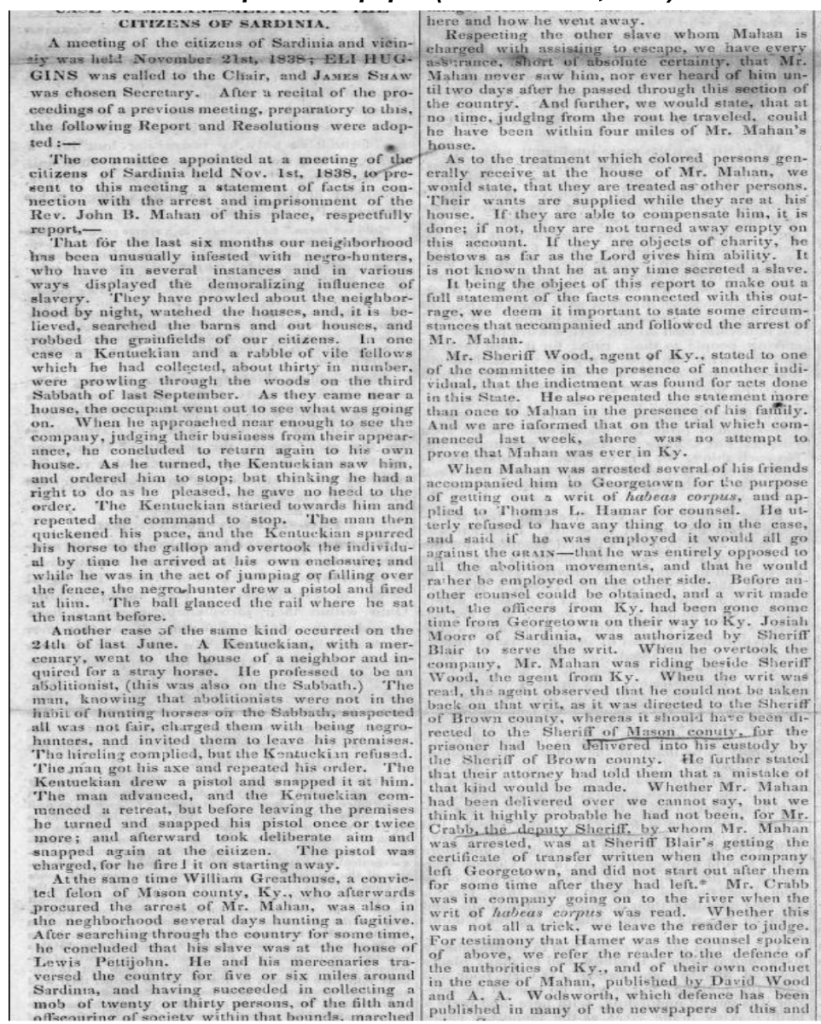
I discovered an 1838 issue of “The Philanthropist,” an anti-slavery newspaper published in our town by local abolitionist James G. Birney. The front page contained an article about citizens in nearby Sardinia, Ohio protesting the arrest of a reverend who had helped enslaved people escape.
Step 2: Capture an Image of the Text
I took a screenshot of the newspaper article. The text was faded and in an old-fashioned typeface, making it difficult for students to read.

Step 3: Use AI to Extract and Modernize the Text
I uploaded the image to Claude, an AI assistant capable of analyzing images. I asked Claude to transcribe the text into modern English while preserving the original meaning and tone. Within seconds, I had a clear, readable version of the article. ChatGPT or Gemini can also be used as well.
Step 4: Verify and Edit the AI Output
I quickly scanned the AI-generated text to check for any obvious errors or misinterpretations. In this case, the output looked accurate, but it’s always important to review AI-generated content.
Step 5: Create an Engaging Lesson
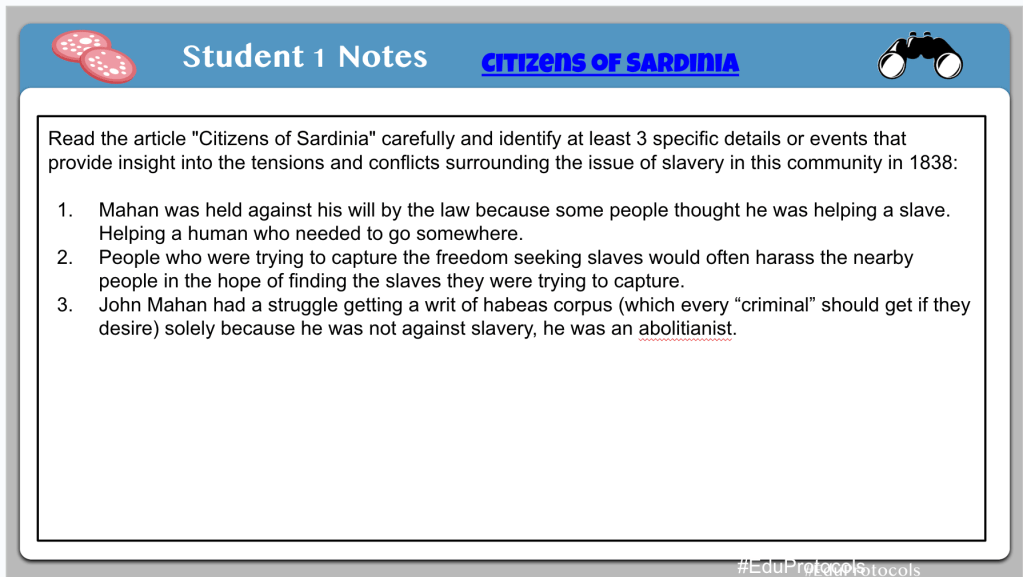
With the modernized text, I developed a Cybersandwich lesson asking students to identify specific details about the tensions surrounding slavery in our community in 1838. This brought a powerful piece of local history to life in a way that was accessible and engaging for my students.
Benefits of This Approach:
- Makes difficult-to-read primary sources accessible to students
- Saves time compared to manual transcription
- Allows incorporation of more local history into lessons
- Engages students with relatable, place-based historical content



By leveraging AI in this way, we can open up a wealth of local historical resources that might otherwise remain unused in our classrooms. This approach not only makes history more relevant to our students but also helps them develop a deeper connection to their community’s past.
Have you tried using AI to bring local history into your classroom? I’d love to hear about your experiences and ideas in the comments below!

 Moler's Musings