
This week in Room 103 was about helping students see how government systems actually work. Instead of rushing from topic to topic, we focused on sequencing ideas, revisiting concepts, and using familiar routines to build understanding over time. From checks and balances to federalism, each lesson was designed to move ideas from abstract definitions to real situations students experience every day.
Monday & Tuesday
Fast and Curious: Repetition With a Purpose
We started the week with a Fast and Curious on checks and balances. This was not about introducing something new. It was about giving students another chance to work with the same ideas and language.
I set a clear expectation for the day. Each class needed to reach an 80 percent average. That goal mattered because it gave us a shared target and a way to see whether the ideas from Friday were actually sticking.
Every class met the goal. The averages came in at 82, 84, 80, 86, and 92 percent. That did not mean mastery. It meant students were ready to build.
Giving students a quick chance to recall information at the start of class helps surface what they remember and what they are still unsure about. That makes the rest of the lesson more focused.
Nacho Thin Slide: Fixing What Sounds Right but Is Wrong
Next, students worked through a Nacho Thin Slide on paper. Four triangles. One was correct. The other three included errors students had to find and fix.
Those errors were intentional. I built them directly from misconceptions I noticed during last week’s checks and balances Sketch and Tell. One example used student language almost exactly: “The president passes a law and sends it to Congress.” It sounds reasonable. It is also wrong in an important way.
This part of the lesson mattered because students were not just choosing answers. They had to explain what was wrong and how to fix it. That kind of correction helps ideas become clearer and more durable than simply being told the right answer.
Slowing students down to wrestle with mistakes turned confusion into learning.
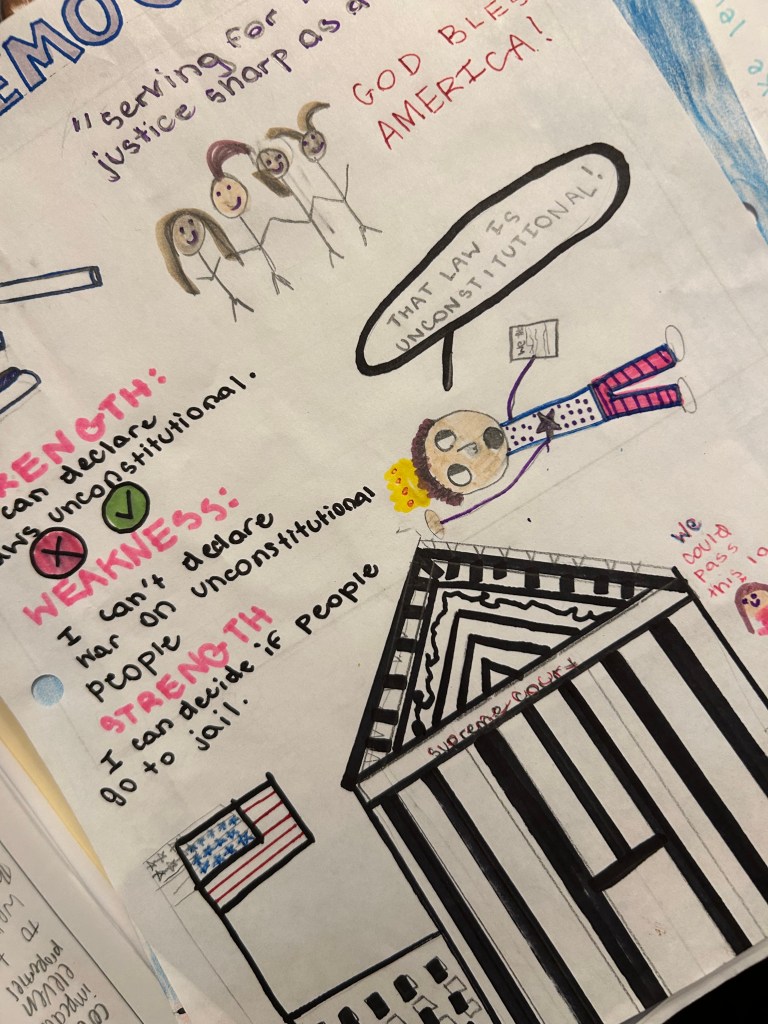
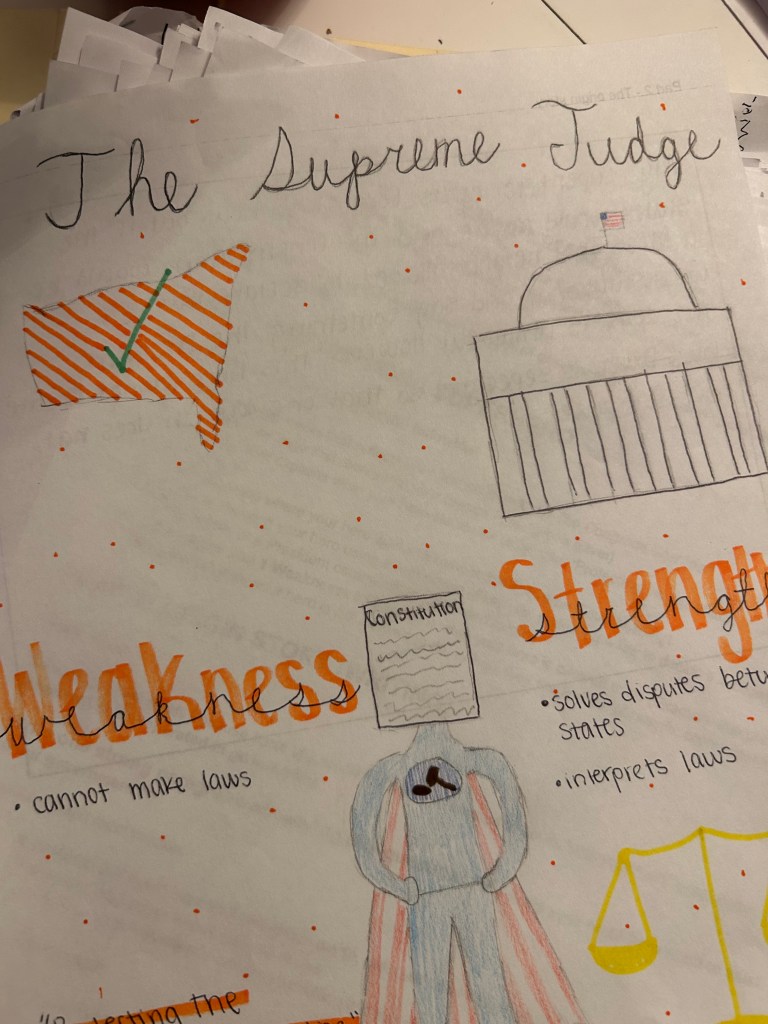
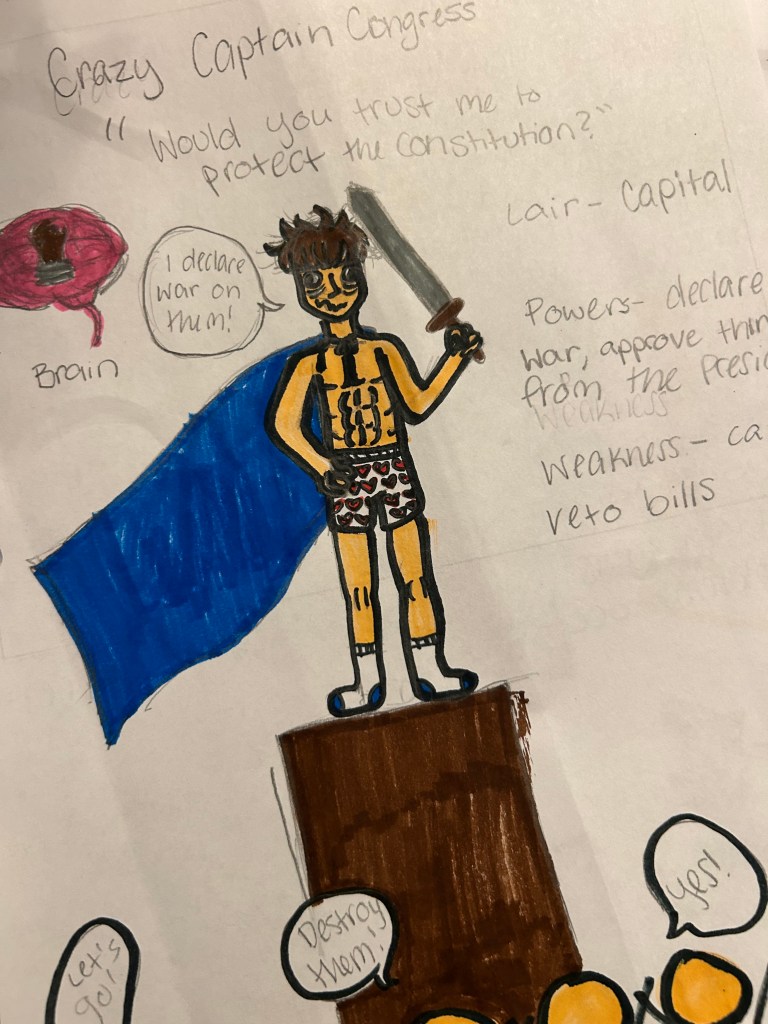
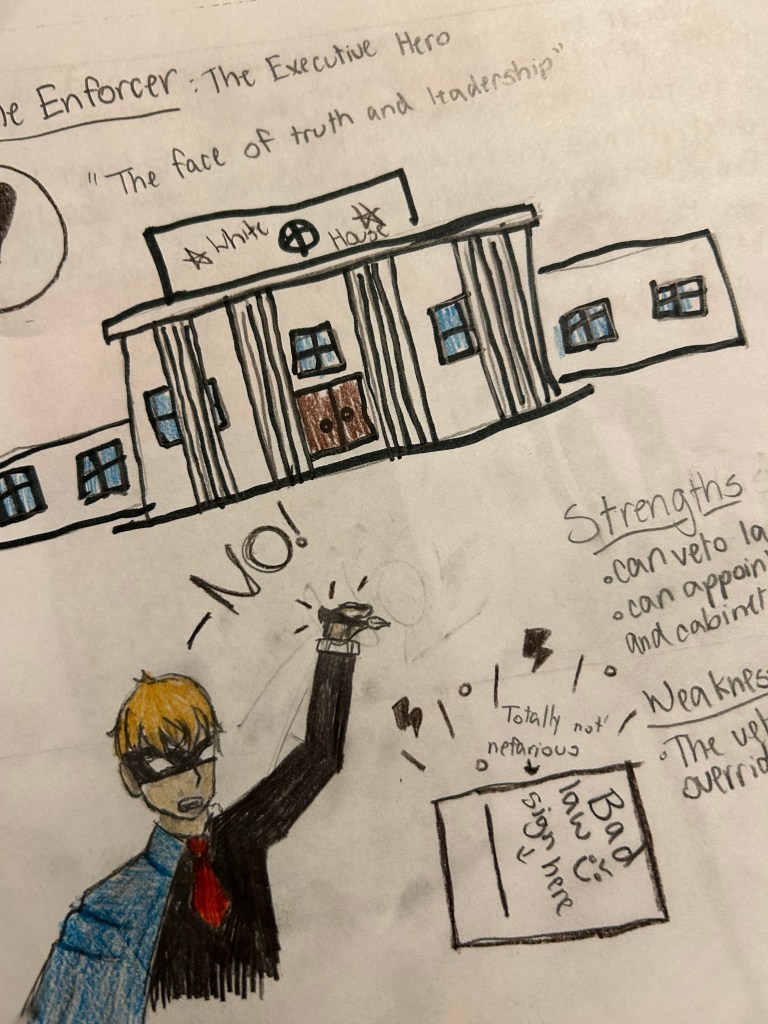
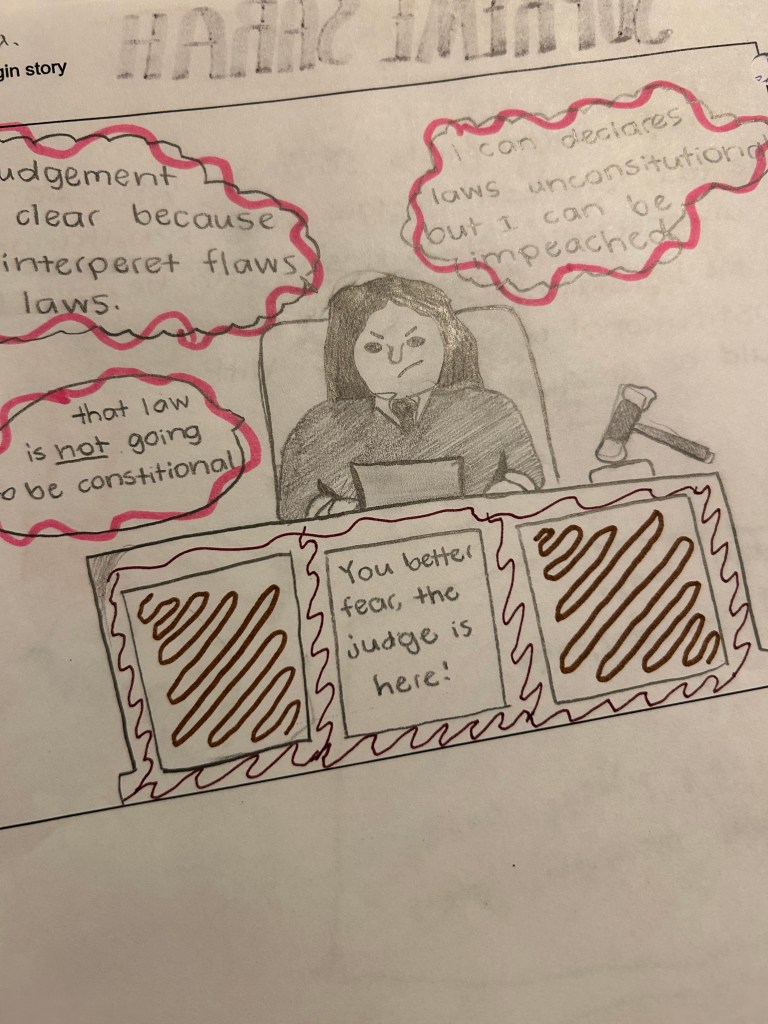
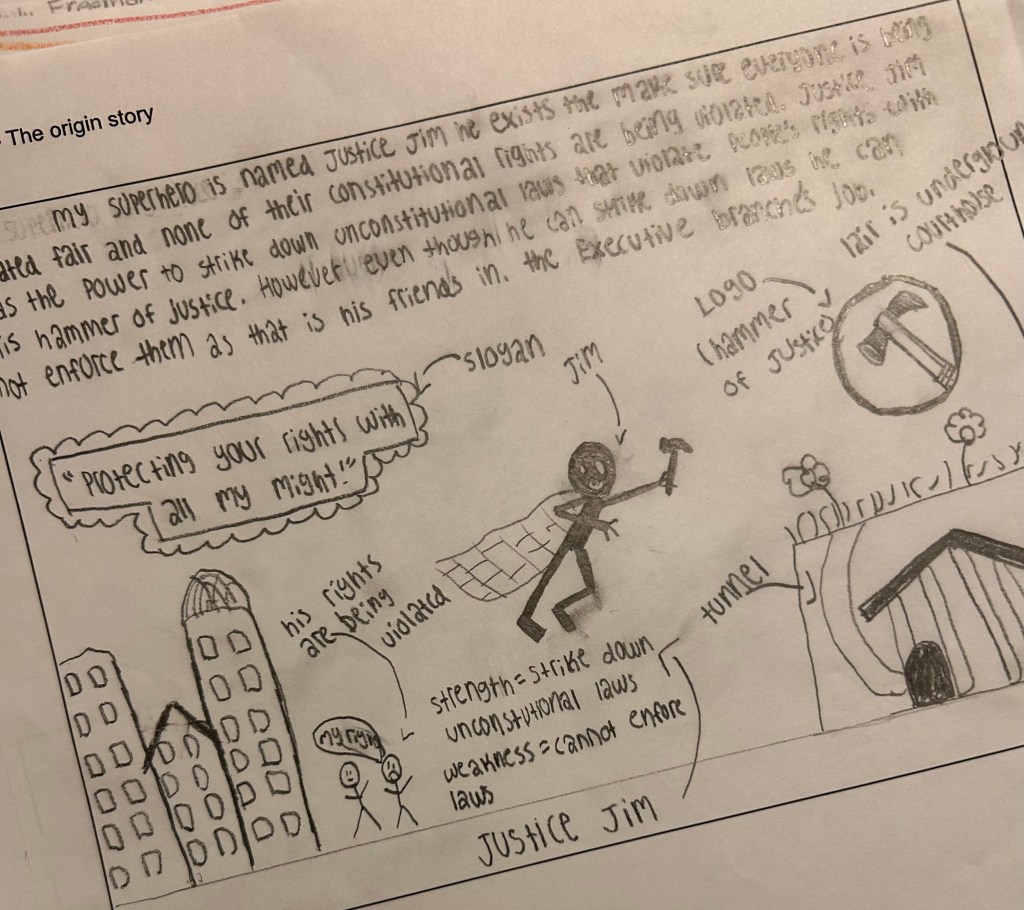
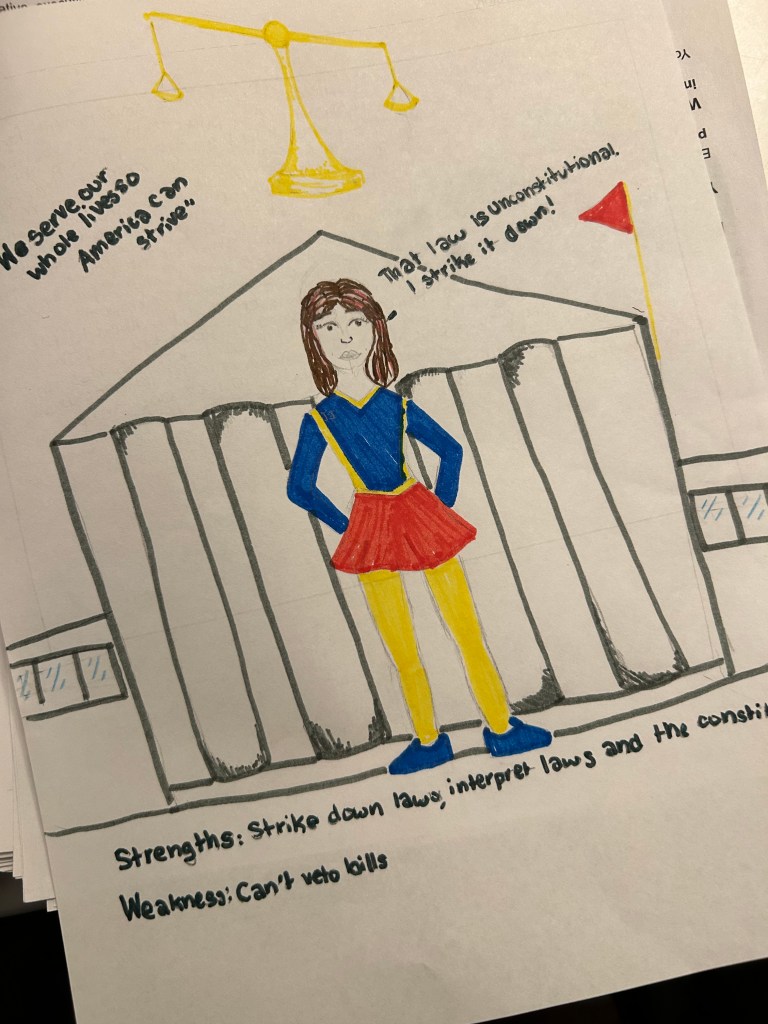
Branches of Government Superheroes: Making Powers Visible
The remainder of Monday and all of Tuesday were dedicated to the Branches of Government Superhero project. I did not run this last year, but I am glad it is back.
When students turn a branch of government into a superhero, they have to make abstract powers concrete. A power has to show up in a scene. A limit has to show up as a weakness. Students cannot hide behind vague language.
Each superhero had to include a name, symbol, slogan, lair, a real power in action, two strengths, and one weakness. The weakness piece was critical. It forced students to think about limits, not just abilities.
As students worked, the questions they asked told me the thinking was happening. Can this symbol really represent that power? Does this slogan actually fit what my branch is allowed to do? Those questions only come when students are trying to be accurate.
Talking, explaining, and revising ideas out loud helped students test their thinking before committing it to paper.
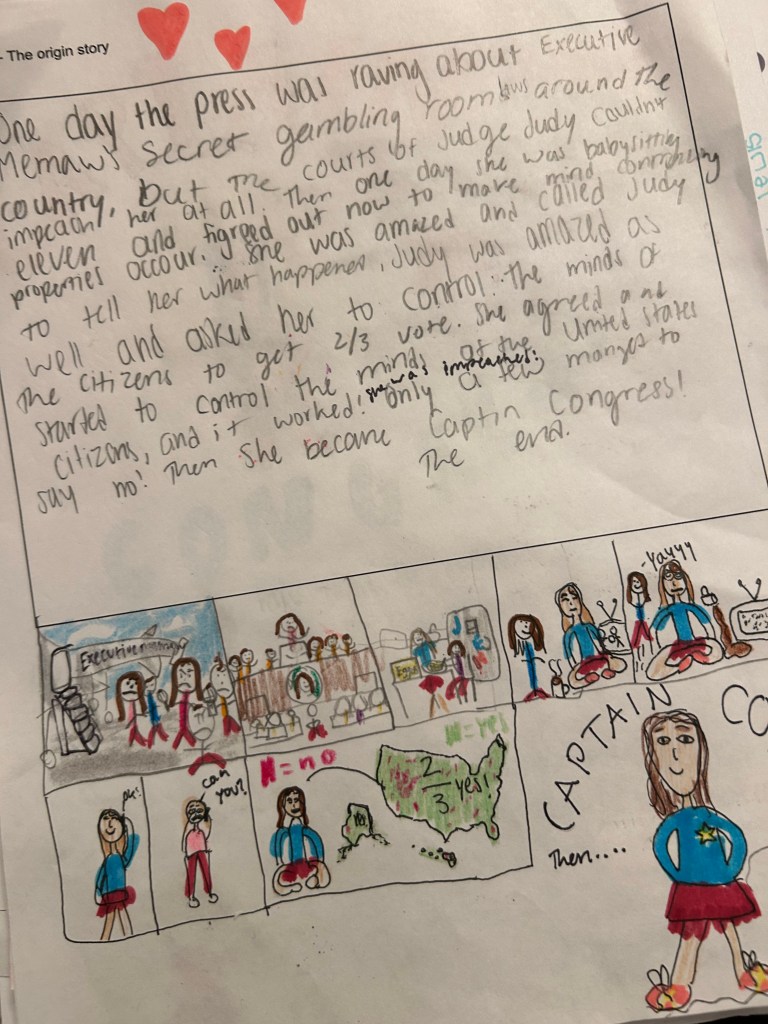
The final piece was the origin story. Students wrote one paragraph explaining why their superhero needs to exist in our government.
They had to describe a problem that could happen if one group made, enforced, and judged laws, identify a power their branch is allowed to use, and explain a limit on that power. This writing pulled everything together.
Putting ideas into their own words helped students move beyond listing facts and into explaining purpose. It answered the question beneath the content: why the system was designed this way in the first place.
Across both days, the structure stayed consistent. Start with recall. Confront misconceptions. Apply ideas creatively. Explain purpose.
Students did not need more content. They needed time and structure to work with the same ideas in different ways. Repetition, correction, and explanation did the heavy lifting.
The creativity did not replace understanding. It revealed it.
Wednesday
Federalism as an Extension, Not a New Idea
Wednesday’s focus was federalism. Before jumping into vocabulary, I wanted students to see this as an extension of ideas they already knew, not a brand-new system to memorize.
Students understand separation of powers. They know government jobs are divided by role. Federalism asks a related question: how is power divided by level?
That framing mattered. When students can connect new ideas to something familiar, they are less likely to treat the lesson as isolated information.
Building the Foundation First
We began with a clear, linear reading that traced the problem the founders faced. The Articles of Confederation protected state independence but created a national government that was too weak. Federalism emerged as a solution under the Constitution, allowing power to be shared between state and national governments.
The vocabulary followed naturally from that explanation. Enumerated powers, reserved powers, and concurrent powers were introduced directly within the reading instead of as separate definitions. Students encountered the terms as part of the story, not as disconnected labels.
Keeping the sequence tight helped students focus on meaning instead of jumping between definitions, diagrams, and examples all at once.
Thin Slide and Sketch & Tell-O: Holding One Idea at a Time
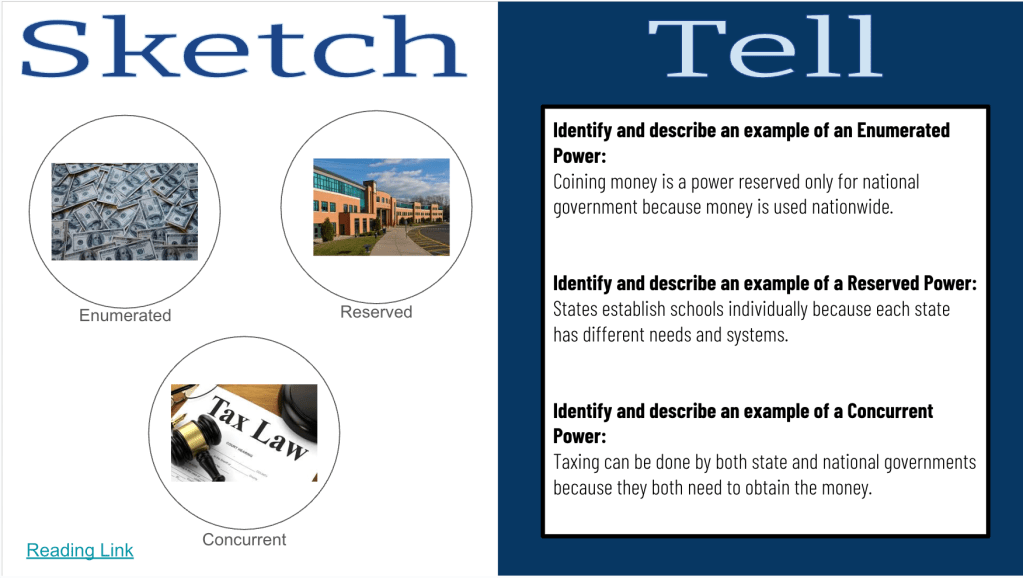
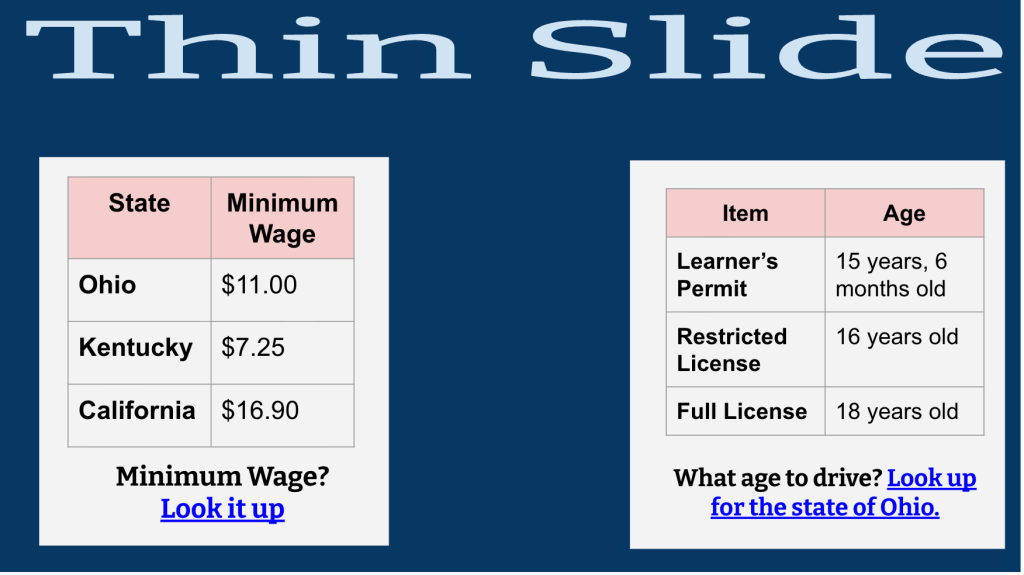
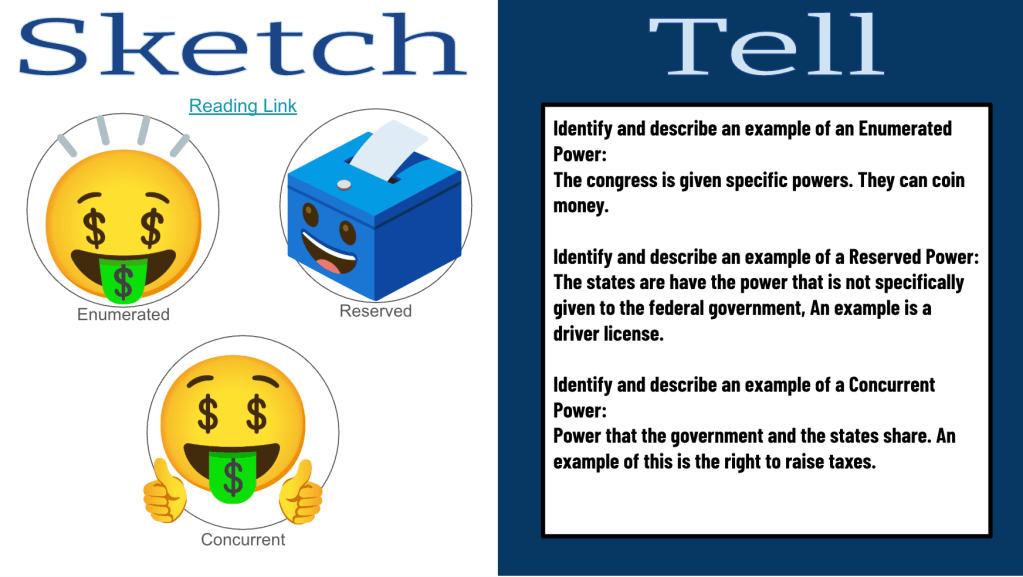
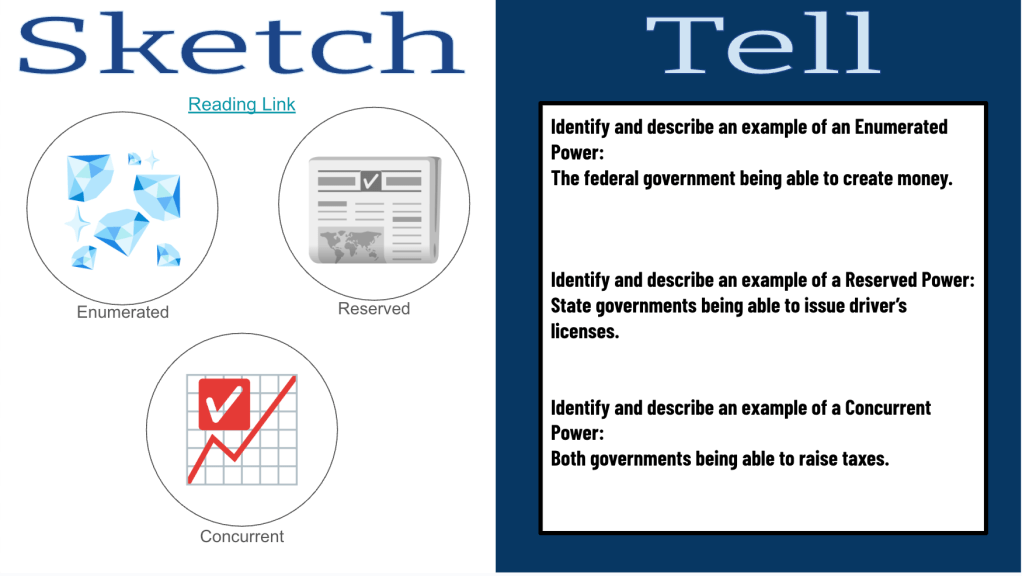
After reading, students moved into a Thin Slide and then a Sketch & Tell-O. These structures gave students a predictable way to process information. They were not figuring out what to do. They were thinking about what federalism actually means.
Sketching slowed students down. Labeling forced them to be precise. Explaining their sketches pushed them to put ideas into their own words. Each step kept the focus on understanding the three types of power before applying them elsewhere.
This mattered because students cannot sort examples correctly if the definitions are still fuzzy.
Real-World Examples After the Definitions
Later in the lesson, students worked with real-world examples, such as driver’s license ages and minimum wage differences across states. These examples helped federalism feel real, but only because they came after the definitions were established.
Jumping to real-world cases too early can overwhelm students. Waiting until they had a stable understanding allowed the examples to reinforce learning instead of distract from it.
Students were able to explain not just what the rule was, but why different levels of government were involved.
Thick Slide: Pulling It Together
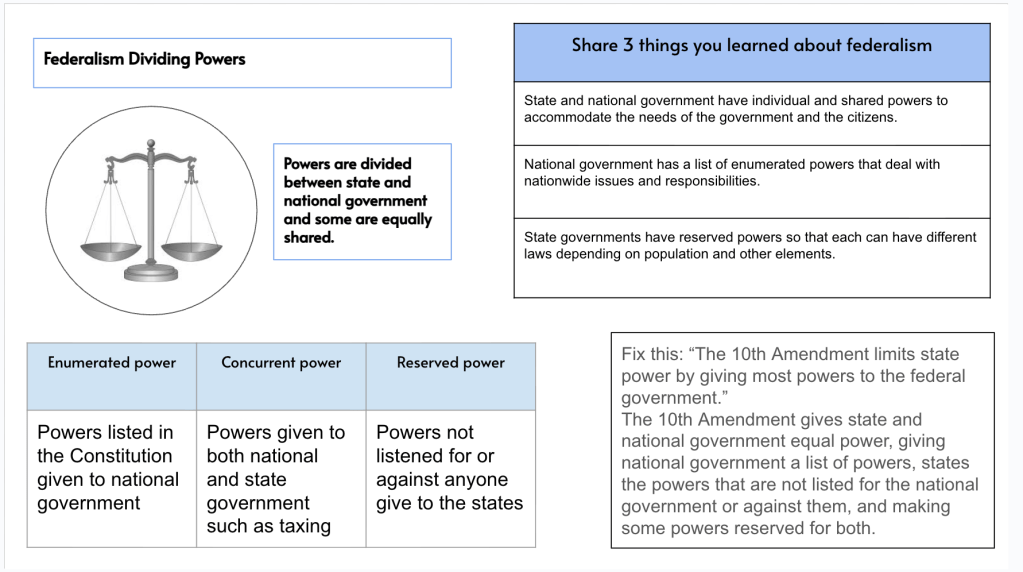
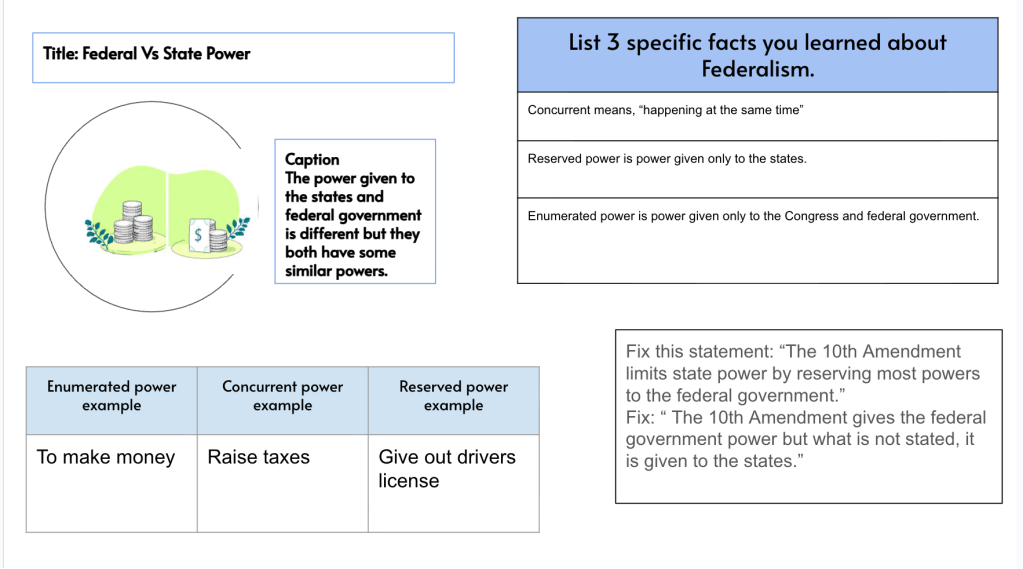
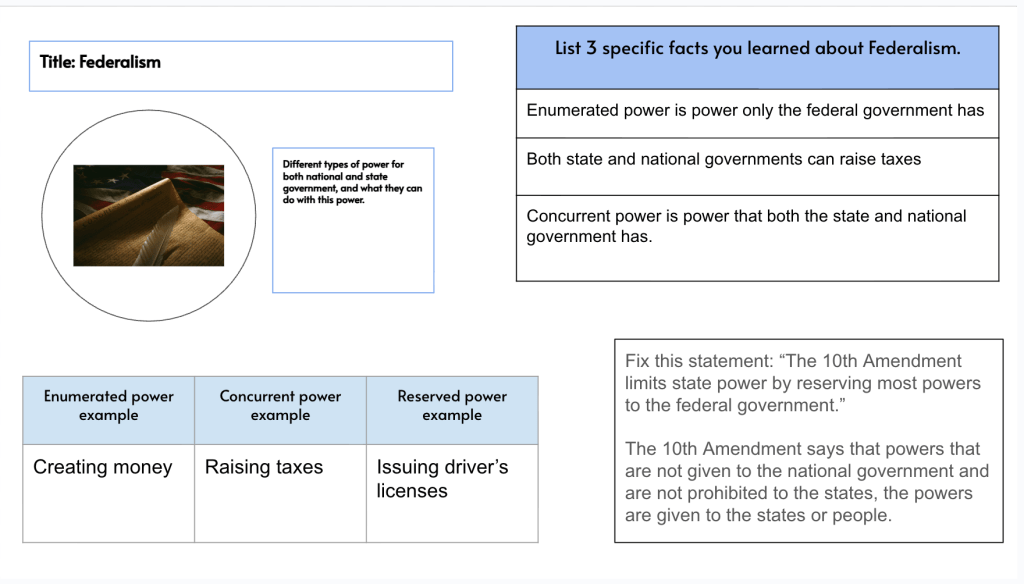
We ended with a Thick Slide where students listed key facts about federalism and identified examples of enumerated, reserved, and concurrent powers. The final task asked them to fix an incorrect statement about the Tenth Amendment.
That correction piece was especially useful. It revealed which ideas were clear and which still needed attention. Fixing a mistake requires deeper thinking than simply repeating a definition.
Why the Structure Worked
The lesson stayed focused on one goal: helping students understand how power is divided between state and national governments.
Definitions came before visuals. Examples came after understanding. Practice stayed within the same concept long enough for students to get their footing.
Federalism can feel abstract. On Wednesday, it felt manageable because students were given time, structure, and repeated chances to work with the same ideas in different ways.
Thursday
Federalism Is All Around Us
By Thursday, I wanted students to see that federalism is not something that only exists in textbooks or historical debates. It shapes their lives every day, often in ways they do not notice.
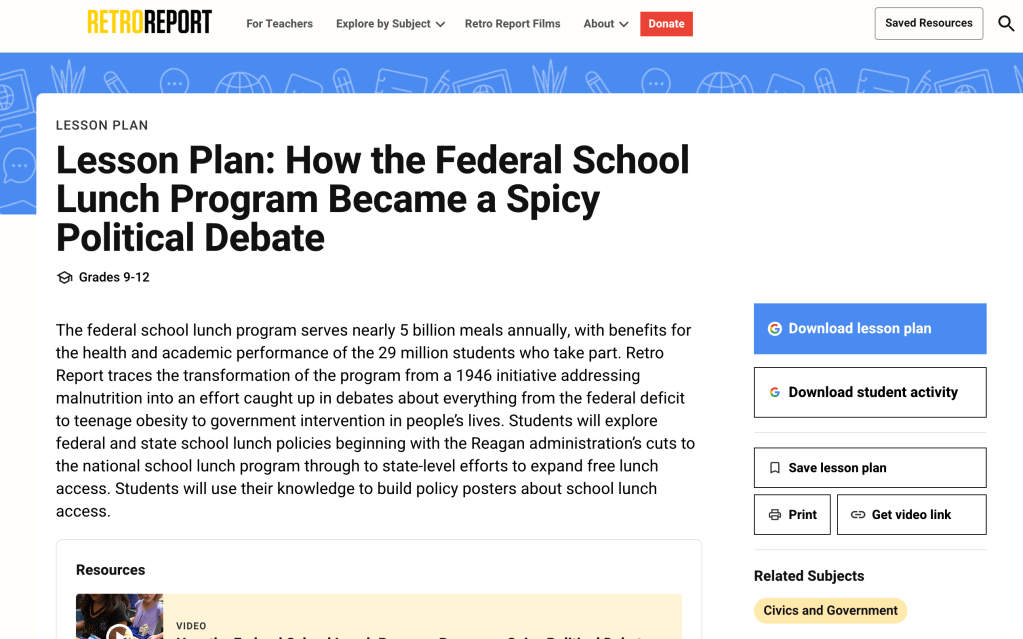
I recently joined Retro Report as a Teacher Ambassador and came across a lesson on school lunches and federalism. The lesson was labeled for grades 9–12, but the topic was too relevant to pass up. School lunches are familiar to every student. That familiarity makes them a strong way to show how federalism actually works.
I decided to take the risk and try it.
After first period, it was clear that the ideas were strong, but the lesson needed to be scaled back. Not watered down. Just clarified. I wanted to keep the main ideas intact while making the language and background more accessible for middle school students. I used ChatGPT to help rewrite portions of the lesson while preserving its core purpose.
Connecting Back to Federalism
The lesson began by revisiting federalism and asking where school lunches fit within the system of enumerated, reserved, and concurrent powers.
This mattered because it anchored the lesson to what students had learned the day before. Instead of treating lunches as a brand new topic, students used the same categories and vocabulary they already knew.
Starting here reduced confusion. Students were sorting ideas using familiar tools.
Building Shared Background
Next, students watched a Retro Report video that explained how the federal school lunch program developed and why it became controversial.
The video provided shared background knowledge. It explained when the program began, how it changed over time, and how decisions made at the national level affected states and schools.
Using a video at this point helped students build context without overwhelming them with reading.
How Federalism Shows Up in Lunches
The next section combined several readings and examples that showed how both state and federal governments shape school lunch policy.
Students examined how states responded when expanded federal lunch programs ended in 2022. They saw examples of states expanding breakfast programs, addressing food waste, reducing meal debt, and improving food quality. At the same time, they looked at how the federal government created and expanded lunch programs, especially during the pandemic, and why that role continues to be debated.
This section helped students see the system in action. The federal government sets guidelines and provides funding. States decide how those programs operate day to day. Different states made different choices based on local needs, which led to different outcomes.
Instead of memorizing laws or dates, students focused on patterns. When federal policy changes, states respond. When states act, debates follow. That back and forth is federalism at work.
Putting It All Together
The lesson ended with students making a claim about who should control school lunches. They had to choose federal policy, state policy, or a combination of both.
Students supported their claims with evidence and explained their reasoning. This required them to apply what they had learned rather than repeat information.
Lesson for the Week
Monday and Tuesday – SuperHeroes of Government
Wednesday – Federalism Rack and Stack
Thursday – Retro Report Lunch

 Moler's Musings