The Week That Was In 103

I’m discovering as the year moves along that life at the Villa comes with a steady stream of interruptions to the normal school rhythm. Practice high school placement tests, walk-a-thons, shadow visits, pep rallies, and more. Honestly, it feels like way more than I ever experienced in public schools. But here’s the thing, it’s all good. These moments create a climate and culture that is unlike any place I’ve been, and I’m learning to embrace them as part of what makes this community special.

At the same time, I’m not getting as much done in class as I would like. This is a process and these kids are not used to my style or the tech usage I bring. Eventually, I want to get back to where I was getting three to five protocols accomplished in a class period.

Even with the curveballs, we kicked off Unit 2 on exploration and colonization this week. We started with a Number Mania preview to frame the big picture, then dug into how Native Americans arrived, adapted, survived, and thrived. We took a pause to step into a one-day lesson on 9/11, and then the week closed with two days of unusual schedules that didn’t leave much time for momentum.

Monday – Unit Preview Number Mania

Tuesday/Wednesday – Regions Organizer, 6 Word Story

Thursday/Friday – 9/11 Retro Report

Monday

We started the week by previewing Unit 2 and setting the tone with a Fast and Curious. I introduced our guiding question for the unit: How did European colonization and exploration impact Native peoples and North America? Scores on the quiz ranged from 60 to 74 percent, which gave us a good baseline for where we’re starting.

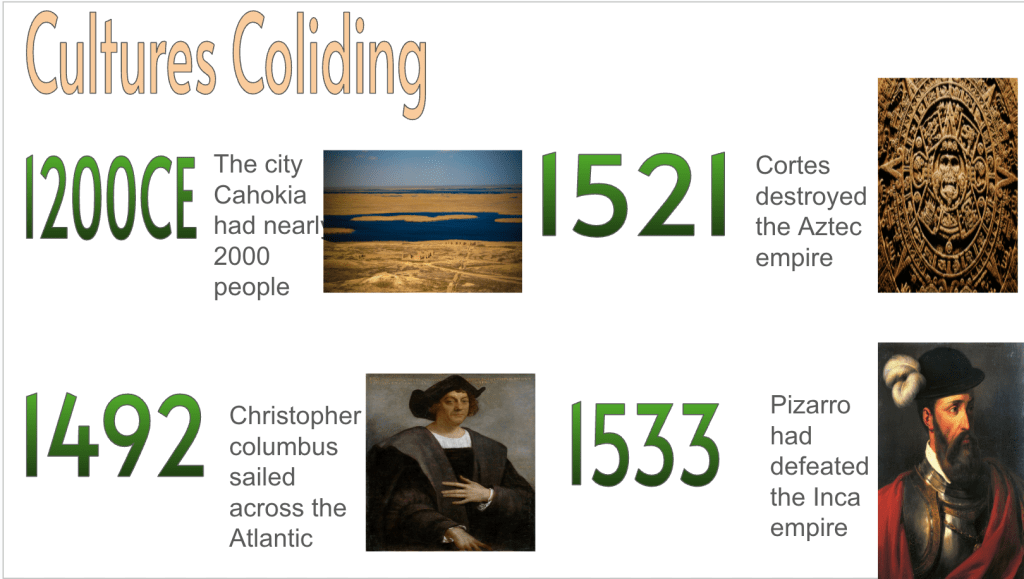
From there, I passed out a one-page reading that matches the flow and structure of the unit. It began with Beringia, moved through Native peoples growing, adapting, and thriving, and then shifted to the arrival of Europeans and the impact that followed. We paired this reading with a Number Mania. I have found that opening units with a Number Mania gives students a ton of data points to help frame the big picture in space and time. For this one, students had to find four numbers that proved Europeans impacted and disrupted Native life.

Something that stood out was how students reacted to this activity compared to Friday. When we first did a low-cognitive, smart start Number Mania, many of them rolled their eyes and wondered why we were doing it. Some even thought it was cheesy. I get it. These kids have been together since preschool, and with grade levels of only 30 to 40 students, they know each other well. Icebreakers feel strange. But today was different. Several admitted that the smart start practice actually made today’s Number Mania super easy. It was a small win.

Tuesday and Wednesday

We spent two days on a lesson that simplified what the textbook made overwhelming. The text mentioned around 14 Native tribes, which is too much to meaningfully process, so I narrowed it down to five regions: Eastern Woodlands, Mesoamerica, Southwest, Northwest, and Plains. The goal was for students to understand how Native peoples adapted, survived, and thrived within their regions based on geography

I structured the lesson to move from DOK 1 to DOK 2 to DOK 3. Many of these students are used to recall and rote memorization, but I want to push their critical and creative thinking. We started with stations where students read about the different regions and tribes, then categorized information into location, religion, environment, food, and housing. As they worked, I explained the learning process. I told them that transferring information from a reading to an organizer is DOK 1.

The next step was choosing three of the five regions and comparing them with a triple Venn diagram. At first, many students filled the middle space with answers like “they were in North America.” I kept coming back with the question, “If I asked you how they adapted and survived, would saying they were all in North America answer that question?” That pushed them to think deeper, and many went back and improved their comparisons.

For the last part, I used a strategy from EMC2Learning and had students write three six word memoirs about the three regions from their Venn diagram. The focus was on adaptation and survival. I explained that comparing information with a Venn diagram is DOK 2, while writing six word memoirs that capture the essence and most important information is DOK 3. I chose this activity because it is creative, simple, and gave them practice on Google Slides again. Students added text boxes, pictures, and changed word art, while also working part of the lesson on paper for balance and familiarity.

We wrapped up both days with a Fast and Curious, which raised class averages into the 80 to 94 percent range. That growth showed them that practice and persistence are paying off.

Thursday and Friday

Thursday
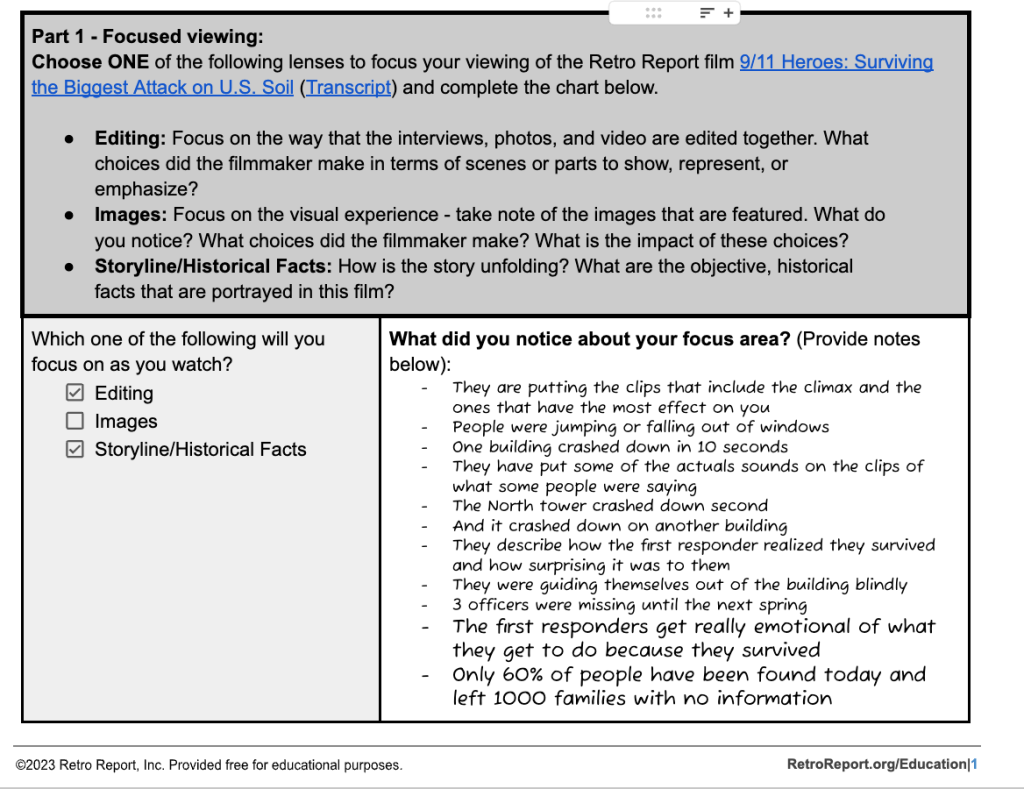
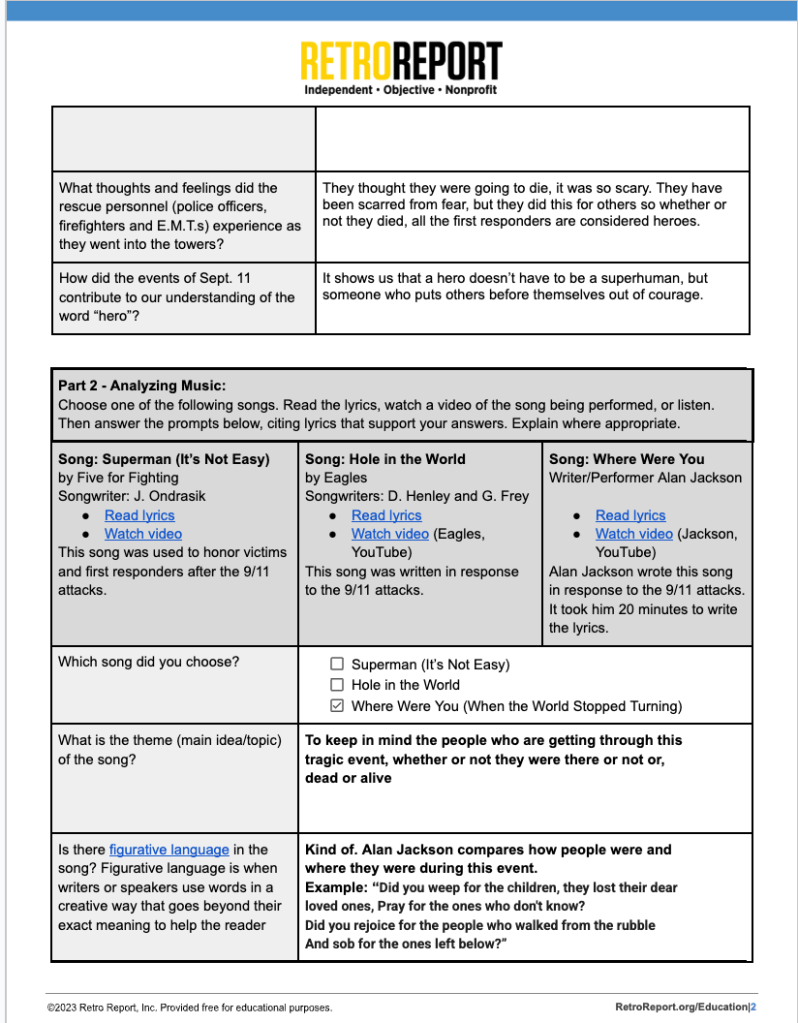
I set aside Thursday to focus on 9/11. I found a powerful Retro Report lesson with the objective: Analyze the impact of the terrorist attacks of Sept. 11, 2001 through different media sources. What I appreciated about this lesson is that it focused less on the events themselves and more on the heroes of 9/11 and the impact felt by the country afterwards. The main thread was exploring how Americans coped and grieved in the aftermath.

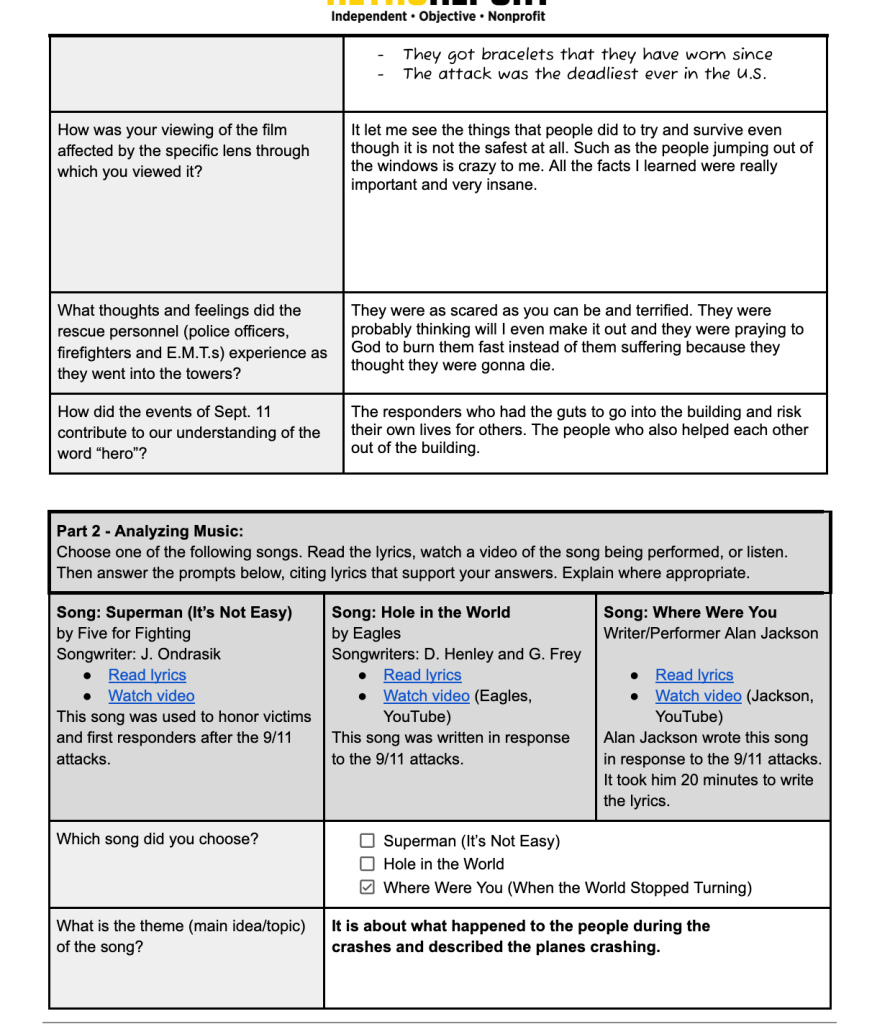
This one hit home for me. At 42 years old, I lived through that day, and I could share my perspective with students. For example, there was a song analysis portion where students chose one of three songs: Superman by Five for Fighting, Hole in the World by the Eagles, or Where Were You (When the World Stopped Turning) by Alan Jackson. I told them how Jackson’s song was one I leaned on at the time to help process what happened. I was able to connect with them in a way that felt authentic and personal.

Another part of the lesson had students analyze Mike Piazza’s iconic home run or President Bush’s first pitch at the Yankees game. There was also an introductory video created by Retro Report that students could view from one of three lenses: editing, imagery, or stories. I did cut a few activities to fit our schedule, which in hindsight I probably should have left in, but even with that the lesson was meaningful. I had thought about layering EduProtocols into it but decided to keep the original structure, and it worked.

What struck me most was how engaged the students were. Many admitted they had never studied 9/11 in depth before. They were curious, asking thoughtful questions, and processing the material in ways that impressed me. Instead of the blackout poetry originally suggested, I had them create a six word story about how Americans coped and grieved. Their responses showed just how much they were thinking and feeling. It was one of those lessons where the kids carried the learning, and I was just guiding them along.

The Week That Was in 103

Being at a new school means I’m living inside a learning curve. One is the learning curve of new procedures, figuring out how things run in a building that isn’t second nature to me yet. The other is learning about my students, how they learn, what they know, and what still feels brand new.

Technology has been the most eye-opening part. I’ve had to scale back some of my tech usage because I’ve noticed things I didn’t expect: students struggle when switching from tab to tab, they freeze when asked to transfer information from paper to a Chromebook slide, and some are still working hard at typing itself. Even something as simple as highlighting text in a slide became a full-class tutorial. But here’s the thing, they give everything they have. They want to be right, to be thorough, to do it well. So when a “simple” Map & Tell or Annotate & Tell takes longer than I planned, it isn’t because of disengagement, it’s because they are pouring themselves into it. That’s a learning curve I’ll gladly navigate.

Tuesday: Audience, Purpose, and Bias

This week we continued our historical thinking skills with a focus on audience and purpose and how those shape bias. I kicked things off with Paul Revere’s famous engraving of the Boston Massacre. I just put it up on the screen and asked, “What do you notice?” Students jumped in with their observations, and then I followed with a question that caught them off guard: “Since this was known as the Boston Massacre, how many people do you think died?”

The guesses rolled in, 15, 213, 500, 30. When I told them the real number was 5, their jaws dropped. Suddenly, the engraving looked different. That one moment opened the door for a deeper conversation about perspective and purpose.

Annotate & Tell

From there, we moved into an Annotate & Tell activity using two primary source newspaper accounts (thanks to the Gazette and the Chronicle). Students highlighted key words and answered guiding questions:

  • Who is the intended audience for this source?
  • What is the author’s purpose?
  • How does the description work to support that purpose?

It was a challenge at first, some students even asked, “Where do I type my answer?” But once we got rolling, they dug into the language, spotting words and phrases that revealed bias and purpose. The more they looked, the more the accounts felt less like “the truth” and more like arguments meant to persuade.

Final Reflection

We wrapped with a reflection that asked students to think about which version was more convincing to its audience and to use evidence from the text to support their reasoning. Some sided with the Gazette, some with the Chronicle, but what mattered most was that they were weighing sources against each other, not just accepting them at face value…….

This week reminded me that learning curves aren’t setbacks, they’re signposts. They show me where my students are, what tools they need, and how much they care about getting it right. If that means slowing down a bit on tech or taking extra time to show how to highlight, then so be it. The payoff is worth it, students not only practicing historical thinking, but also realizing that history isn’t about memorizing, it’s about perspective, audience, and purpose. Room 103 is learning. And so am I.

Wednesday: Resource Rumble Review

Midweek was all about review. To get ready for the test, I set up a Resource Rumble. Around the room I had seven envelopes, each tied to a different historical thinking skill. One had primary sources, another secondary, another sourcing, another contextualizing, and so on. Students worked in groups, pulling tasks from each envelope and building their study guide as they went.

Once they thought they had an answer, they brought it to me for approval and feedback. If it was solid, they got to roll dice and collect that many Jenga blocks. The twist was that their blocks weren’t just points, they had to build the tallest freestanding tower by the end. The room buzzed with movement, laughter, and some serious strategy as groups tried to balance accuracy with architecture. They loved it. I think part of the appeal was that it felt new, they got out of their seats, and for once it didn’t involve technology. By the end, they were smiling, competing, and most importantly, ready for Thursday’s test.

Thursday: Putting Skills to the Test

The test itself was designed to be straightforward but intentional. I built it in three parts: multiple choice, think alouds, and performance tasks that practiced the skills we had been building. The multiple choice section mixed DOK 1 and DOK 2 questions focused on primary and secondary sources, sourcing, contextualizing, corroborating, close reading, audience, purpose, and bias.

The think alouds were something different. Students read quotes like, “John Smith wrote about himself saving Jamestown. But I’m stopping to wonder… was he bragging to make himself look good? Which skill am I using when I question his reason for writing?” These items pushed students to recognize the historical thinking skills in action, not just definitions on a page.

For the performance tasks, I wanted them to work with sources, write, and apply what they knew. They sourced and questioned the reliability of the Boston Massacre engraving, contextualized a painting of Plymouth Rock, and compared sources on John Brown to analyze audience, purpose, and bias. I leaned on ChatGPT to help me design the framework, then revised and added the touches I knew my students needed. It ended up being a clean, balanced test that gave me a true look at how they’re progressing.

Friday: A Stumble into Number Mania

Friday I tried to roll out our new unit on Native Americans and European exploration and colonization with two Map & Tells and a Number Mania. The problem was we had never done a Number Mania before, and I ignored my own advice about starting small. What I got instead was a front row seat to how much my students still struggle with basic Chromebook and Google Slides skills. Adding pictures, changing word art, duplicating shapes—things I thought were second nature—turned into major roadblocks. At one point I was even being asked what the title should be. Good grief.

It was frustrating for them, so I pivoted. For my next three classes, I had them create a Number Mania about themselves, picking four numbers that told a story about who they are. I walked them through step by step: how to insert and format pictures, what word art is, how to change it, and even the magic of Control+D to duplicate. It wasn’t what I originally planned, but it gave me a better picture of their tech readiness and let them practice in a low-stakes, personal way.

The Week That Was in 103

Week two felt like a reset button. Last week I tried to do too much too fast with Chromebooks, logins, and codes. It was overwhelming. This week, I went back to the basics. Paper, pencils, and simpler routines gave students (and me) the space to breathe. We still pulled out the tech: Quizizz for Fast and Curious, Google Slides for Thin and Thick slide, but we balanced it with Frayers, CyberSandwich, and Sketch & Tell-o on paper. That rhythm worked.

I also had a big curriculum shift confirmed. Originally, 6th grade was set for 7th grade content (ancient Rome and Greece), 7th grade for 8th grade content (early American history), and 8th grade for 10th grade content (modern American history). But over the weekend, it hit me my 8th graders had never learned early American history. How could they possibly jump straight into the modern era? I brought it up to my principal, and he agreed. So this year, both 7th and 8th grade are studying early America. Next year, 7th grade will move forward into modern America, and everything will be aligned again. It’s the right move, and it gives me time to prep for a brand-new course I’ll be teaching down the road.

Monday – Sources Rack and Stack

Wednesday – Lunchroom Fight 2

Thursday – Historical Thinking with Molly Pitcher Painting

Friday – John Brown Bias

Monday – Sources and Sourcing

We kicked off our new theme this week: Sources and Sourcing. The goal is simple but essential: help students recognize the difference between primary and secondary sources and begin applying that understanding.

We started with a Quizizz check in, and the results told me all I needed to know: most students had no clue. That changed my plan immediately. I scrapped my original idea and built a Rack and Stack that gave them multiple reps with the concept.

Here’s how it broke down:

  • Thin Slide – Students picked a source, labeled it primary or secondary, and shared with a partner. A quick, low-stakes way to get them thinking.
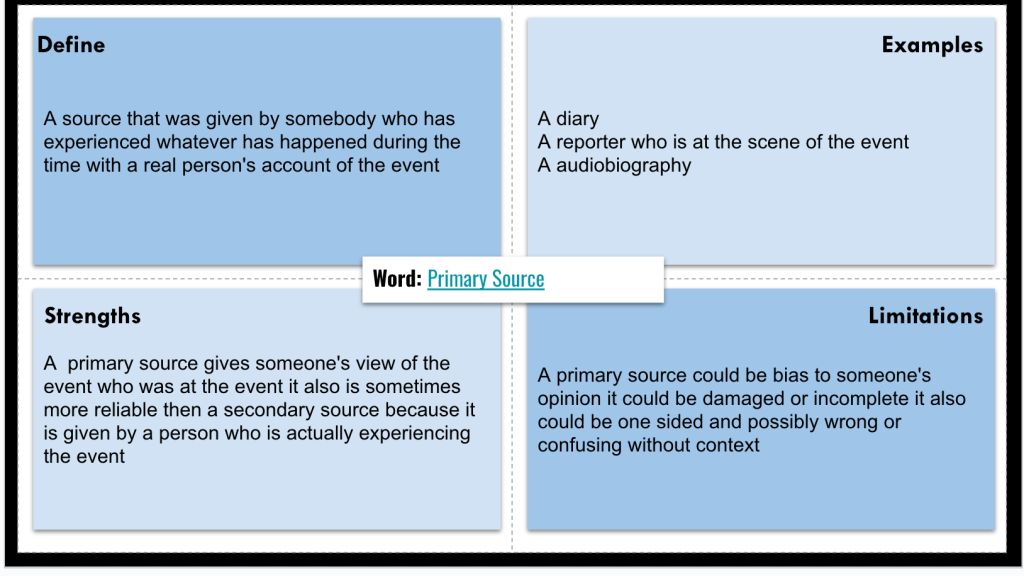
  • Frayers – Two total: one for primary, one for secondary. Students added definitions, examples, and nonexamples to deepen their understanding.
  • Word Wall – They sorted sources on their own. No scaffolds, no hints. Just a test of what they knew after the Frayers.
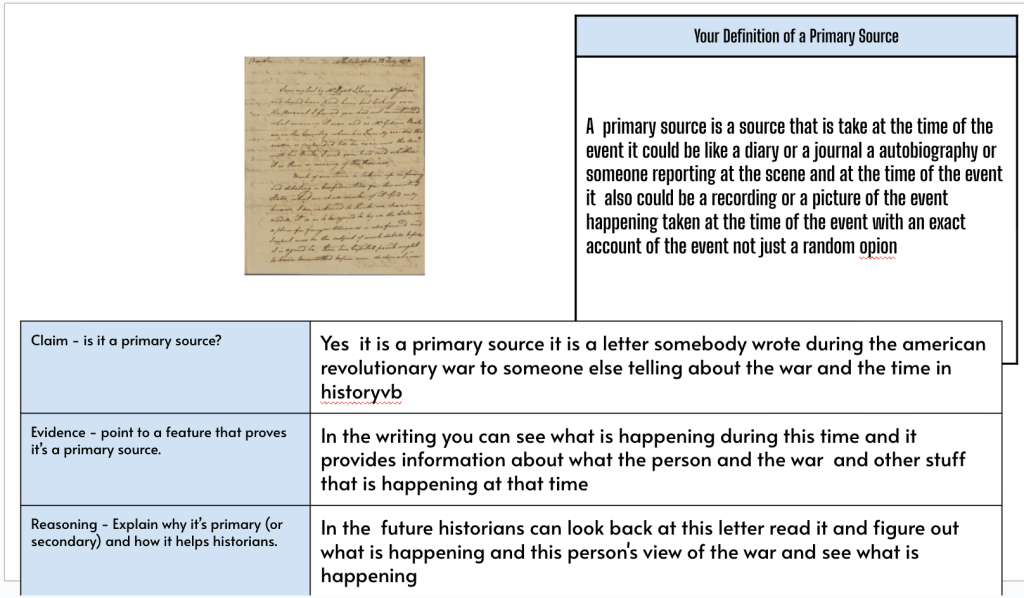
  • Thick Slide – The application task: If you were researching the American Revolution, what primary source could you use? Students added a picture, used their Frayer definition, and proved they found a true primary source with claim, evidence, and reasoning.

By the end, students weren’t just identifying sources; they were already starting to source them in their writing. That’s the kind of win that makes me feel good about slowing down, scaling back, and laying a strong foundation for what’s coming next.

Tuesday – Digging into Historical Thinking Skills

Tuesday’s focus was on the four historical thinking skills we’ll be leaning on all year: sourcing, contextualizing, corroborating, and close reading. I built a Quizizz Fast and Curious that mixed straight definitions with application-style questions. The first run was rough, class averages came in at 39%, 32%, 38%, 40%, and 52%. What fascinates me is how consistent those numbers always are across classes when students haven’t actually been taught the content yet. It shows me we’re all starting from the same baseline.

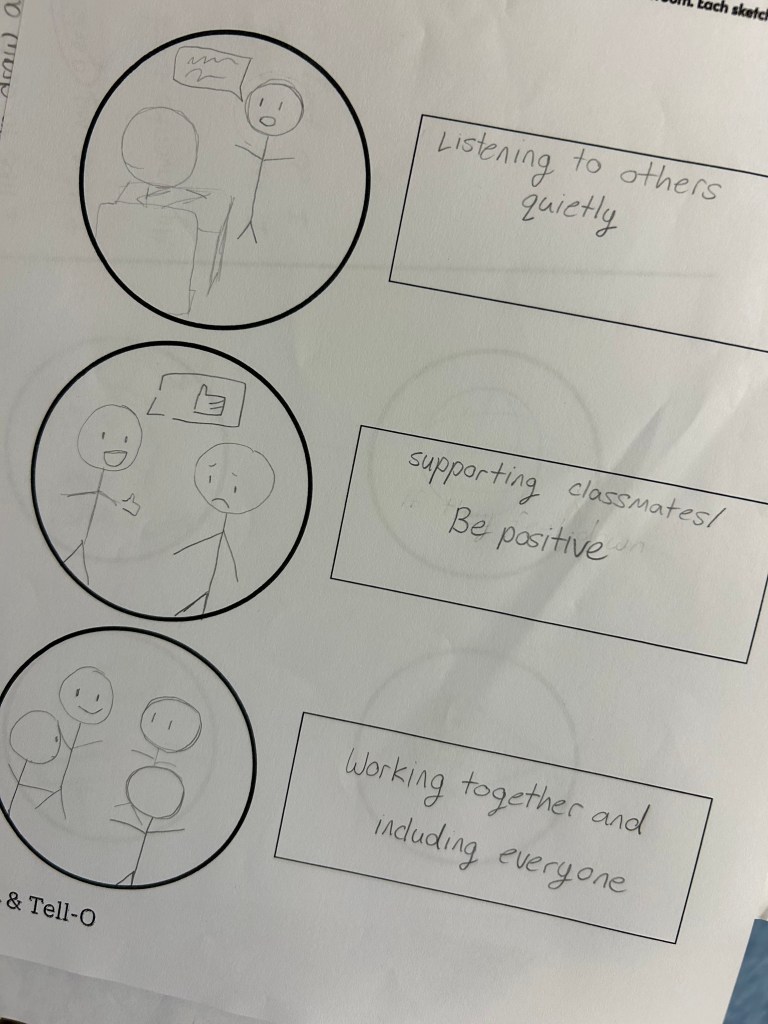
From there, I introduced notes on the four terms. To make it stick, I had students complete a Sketch & Tell-o for each drawing a quick sketch to capture the meaning and writing a one-sentence explanation. But I didn’t want it to just stay on paper. As we worked through the notes, I kept tying it back to Monday’s lesson.

I asked a student to look around the room and pick a primary source if they wanted to learn more about me. Some chose the student letters on my wall, others pointed to my Teacher of the Year plaque, and a few grabbed onto classroom photos. With each object, we practiced:

  • Sourcing – Who created it? When? Why?
  • Contextualizing – What was happening at the time it was made?
  • Corroborating – What other source in the room could support or challenge it?

For example, if a student chose my Teacher of the Year plaque, they often paired it with one of the letters from students that helped me earn it. That connection helped them see how sources work together to tell a fuller story.

We wrapped by running the Quizizz again. This time the class averages jumped to 47%, 58%, 59%, 48%, and 74%. It wasn’t perfect, but the growth was clear. Students saw the payoff of practice, and it gave us a strong foundation to keep building on the rest of the week.

Wednesday – Practicing Skills with the Lunchroom Fight

By midweek, I wanted a low-cognitive way for students to actually practice the historical thinking skills we had been building. The Lunchroom Fight 2 activity from the Digital Inquiry Group was the perfect fit.

In years past, I’ve never found this activity to be all that engaging. But this group is different. Being in a small private school, my students know each other well and have strong rapport. They listen to one another. They actually discuss instead of talking over one another.

We started class with another Quizizz for retrieval. Then we jumped into the Lunchroom Fight. A couple of students even asked, “When are we going to learn history?” They were eager to dive into content, but I wanted them to see how skills work in practice.

Students paired up, read through the eyewitness statements, and organized the information. The conversations were good: who seemed reliable, who didn’t, and what evidence actually held up. The end goal was a simple Claim-Evidence-Reasoning:

  • Claim – Who was at fault for the fight?
  • Evidence – Which statements supported that claim?
  • Reasoning – Why does that evidence matter for deciding suspension?

What impressed me most was the independence. Some students even took their papers down the hall into the common area to work, and I could trust them to get it done. That’s a gift as a teacher—watching students take ownership of the task, collaborate authentically, and actually enjoy practicing skills.

Thursday – Jumping Into History

Thursday was the first day we really shifted from skill-building to applying those skills with actual history. We started class the same way, with a Quizizz Fast and Curious. The averages told the story: 86%, 81%, 44%, 80%, and 88%. The growth was there, and the quick retrieval gave students confidence heading into the lesson.

From there, we moved into a sourcing activity from the Digital Inquiry Group. The prompt was tied to a famous image: Is this painting of the First Thanksgiving a reliable source to understand the relationship between the Wampanoags and the Pilgrims? Most students confidently said yes. But the reveal that the painting was created 311 years after the actual event surprised them. Once they thought about it, they understood why it was not reliable. That “aha” moment was powerful.

We used that as a bridge into another historical painting, Percy Moran’s Molly Pitcher Firing Cannon at the Battle of Monmouth (1911). Students leaned on the four skills of sourcing, contextualizing, corroborating, and lateral reading to break down the image. The conversations were sharp. They questioned the reliability, discussed how memory and myth can reshape events, and pulled connections to what we had been practicing all week.

We closed with a writing task:

Prompt: After analyzing Percy Moran’s painting Molly Pitcher Firing Cannon at the Battle of Monmouth (1911) using sourcing, contextualization, corroboration, and lateral reading, write a short response using the Claim–Evidence–Reasoning framework.

Instead of collecting responses on paper, I had students type their CERs into ShortAnswer. Then we ran a Battle Royale. Students voted responses up and down, debated which claims were strongest, and saw firsthand what made evidence and reasoning effective. It was a blast. The energy in the room was exactly what I want, with students engaged, competitive, and thinking critically about history.

Friday – Exploring Bias

Friday’s focus was on bias, which is always a tricky concept to teach middle schoolers. I adapted a lesson from Mr. Roughton and shaped it for my classes. We began with one final Quizizz Fast and Curious, and the results were strong: 86%, 80%, 83%, 83%, and 91%. That showed me they were ready for a challenge.

To introduce bias, I showed a recut trailer of Finding Nemo. Someone had spliced together lines and clips from the movie but paired it with horror film music. Every student had seen Finding Nemo, so they were shocked and confused by what they saw. That was the hook. I explained that nothing in the trailer was a lie, but the way the clips were cut and the music that was added changed the perspective completely. Bias works the same way. It is not always about telling falsehoods. Sometimes it is about presenting information in a way that leaves out parts of the story or makes it feel different than it really is. That clicked for them.

Next, we moved into a CyberSandwich on John Brown. I gave each student an article that ChatGPT had created for me. One came from the perspective of a northerner, the other from the perspective of a southerner. The students did not know that they were reading different accounts. Each article contained the same facts but used loaded language to create very different impressions. To scaffold, I gave them guiding questions:

  • List as many words or phrases as you can find that make John Brown look positive.
  • List as many words or phrases as you can find that make John Brown look negative.
  • Sourcing – Who might have written this account? How could that influence the way John Brown is described?
  • Contextualization – What was happening in the United States in the 1850s that might explain why people described John Brown this way?
  • Corroboration – Do you think this reading gives you enough information to make a good decision about who John Brown really was? Why or why not?
  • Based on what you read, who was John Brown?

As students worked, most had no idea they were reading different articles. In one class, someone raised their hand and said, “I can’t find anything positive.” Another student responded, “What? How can you not?” That sparked immediate comparisons and conversations. The realization that they had been given different accounts blew their minds. They begged to read the other version. That was the moment bias became real.

We closed with a CER: Was John Brown a hero or a villain? Students pulled from their notes, their comparisons, and their discussions to make a claim, back it with evidence, and explain their reasoning. The engagement was high, the conversations were thoughtful, and the lesson tied right back to the Finding Nemo trailer. It was the perfect way to end the week.

The Week That Was in 103

This week was my first full stretch as the new 6th, 7th, and 8th grade social studies teacher at St. Ursula Villa. With only three days on the books, I do not have the time or space to reflect on every class and every moment. Instead, I am going to highlight some lessons that stood out. Not because it was the best, but because it captured what I want this year to feel like.

Building More Than Community

On the very first day, I leaned on a few familiar tools: Sketch and Tell-o, Thin Slides, and Frayers to build community and get to know my students. The funny thing is, Villa already has an incredibly strong community. Many of these kids have been together for years, and each grade only has 30 to 40 students. So yes, the “Frayer a Friend” activity was a little redundant, but I wanted to give them practice with these frames we will use all year.

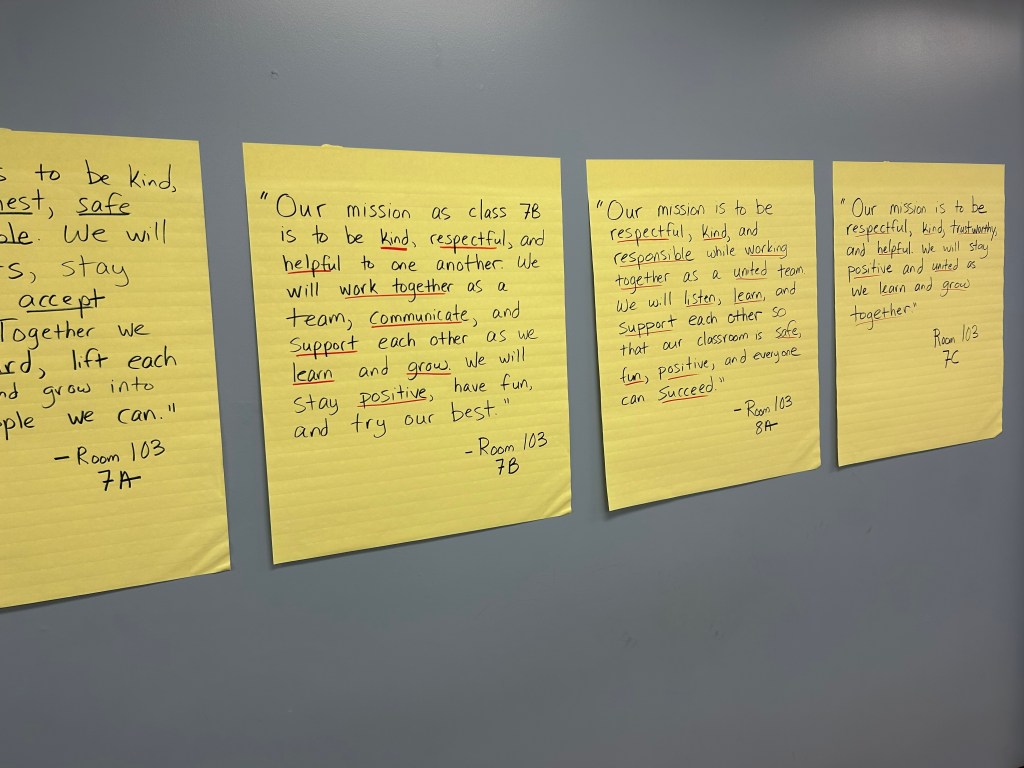
The next day, I put those same tools to work for something bigger: creating a class mission statement.

From Sketches to Statements

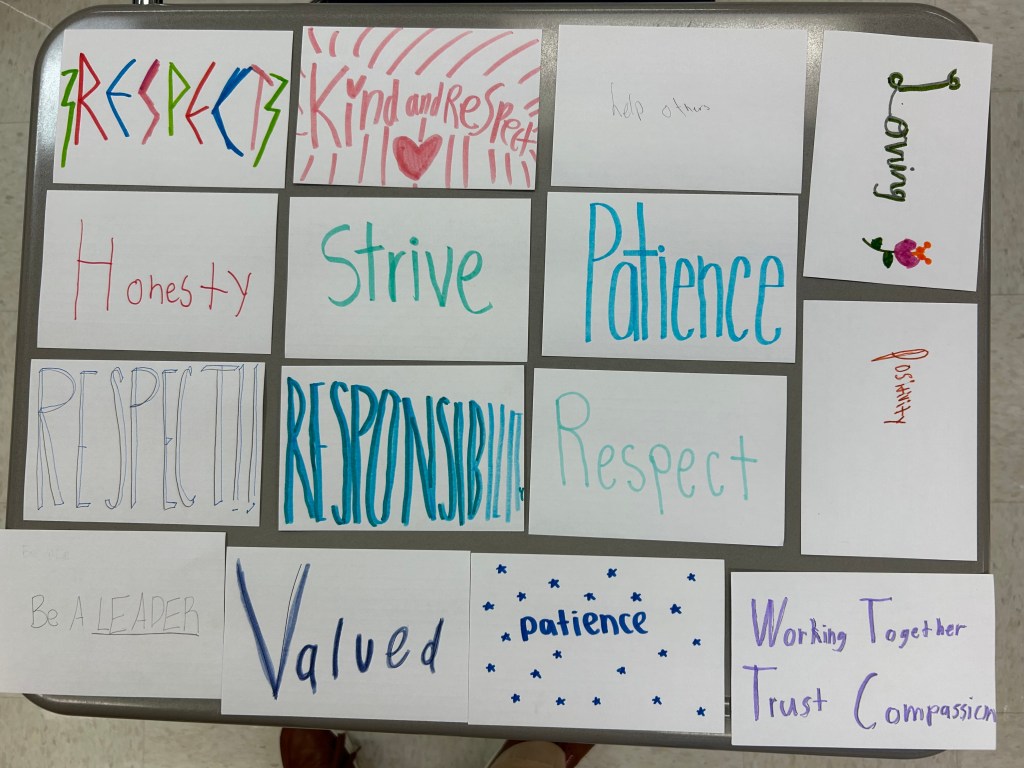
We started with a Sketch and Tell-o. I asked students to visualize what they feel is most important in a classroom environment. Four minutes to sketch, a quick explanation, then each student narrowed their ideas to a single word. They shared those words with a partner, and together we pulled out the common threads.

Next came the index card Thin Slide. On one side, students wrote three to four words that felt essential. On the back, they drafted a personal mission statement using those words. I modeled what that might look like first. Many students had already written personal mission statements before, so the leap to classroom mission came naturally.

Then came my favorite part. We took those mission statements into ShortAnswer. Students typed them in, and we ran a battle royale. They read, debated, and narrowed them down round by round until one statement stood at the top. That collective ownership mattered.

We closed with a Frayer Model of the chosen mission statement, thinking through what it looks like student to student, teacher to student, student to teacher, and student to classroom. By the end, the words were theirs, the mission was theirs, and the expectations were theirs.

Why It Mattered

Was the lesson perfect? No. But it checked the box I care about most right now: students shaping the environment they want to learn in. The protocols gave them structure, and the process gave them voice.

That is a pretty good way to start a year.

A Change of Scenery

This year brings something new. After a long run in public education, I have made the switch to a small private school, St. Ursula Villa. I will be teaching 6th, 7th, and 8th grade social studies. The change already feels right. The school is close to everything I do, where I live, where I coach tennis, where life actually happens. If I need to run up to school, it will not feel like an all-day event. That alone is a big deal.

More than that, I will be able to be involved with school activities in a way that makes sense for me. Smaller class sizes, a supportive staff, and students who are eager to learn. It is a refreshing combination.

Why the Switch?

Honestly, it was time. I found myself saying things I never thought I would say. I was stressed out, going through the motions, just trying to survive the day. My great friend and co-author, Dr. Scott Petri, once told me, “Moler, your worst day of teaching is someone’s best day.” The problem? I was having way too many of those worst days.

When I interviewed for this position, the principal asked me why I applied. My answer came out without hesitation: “Because I miss teaching.” I was tired of babysitting. That pretty much sums up where I was at and why I needed a reset.

Leaving public education is not something I ever imagined doing, but the reality was clear. I needed a break. I needed to find joy in teaching again.

Looking Ahead

I am excited to start fresh. A new environment. Smaller classes. Great colleagues. Great kids. I can feel myself wanting to be more creative again, not just checking boxes.

That brings me to this blog. For years, I have written The Week That Was to reflect on my teaching. But writing about three different grade levels every week? That might be too much, both for me and for anyone reading. So I am rethinking the format.

Right now, I am leaning toward something like this:

  • My top 3 lessons of the week
  • Or maybe 3 wins and 1 that needs work

It keeps things tight, focused, and honest. Because the truth is, no week is perfect, and that is the point.

A new school. A new rhythm. A chance to get back to the kind of teacher I want to be. That is what this year is about.

Is My Lesson a Grecian Urn? (And Why I Keep Asking Myself That)

Every so often, I go back and reread a blog post called Is Your Lesson a Grecian Urn? (It’s a great post from th Cult of Pedagogy). I’ve shared it in PD sessions, sent it to colleagues, and maybe most importantly, used it to check myself when I start planning something that’s more “fun” than it is valuable.

The first time I read it, it hit me like a well-placed serve in the ribs. Not all hands on learning is actually learning. We can wrap balloons in papier-mâché, make the prettiest PowerPoints, and check all the “engagement” boxes, but if it doesn’t move students forward in skills and understanding, it’s not much more than a time filler.

Why This Sticks With Me

I’ve been guilty of the Grecian Urn approach before. We all have. It’s so easy to fall into the trap of thinking, If they’re busy and smiling, they’re learning. But the truth is, smiles and productivity don’t always equal mastery. A “creative” project can still live in the lowest levels of Bloom’s Taxonomy if the thinking stops at remembering and regurgitating.

That’s why I like the Grecian Urn metaphor. It’s not anti-fun or anti-creative. It’s a gut check: Is the time spent on this task proportional to the learning it produces?

How I Use the Lesson

When I read the original post, I started doing a little mental math while lesson planning:

  • If students spend 3 days making something, what exactly will they be able to do with that knowledge after?
  • Could we hit the same learning target in a day with a tighter, more purposeful activity?
  • Am I grading for content, or for how “cute” or “neat” the final product looks?

This isn’t about stripping away every bit of creativity. It’s about making sure the creativity supports the learning, not overshadows it.

My Takeaway for Teachers

Here’s where I’ve landed:

  • If it’s for learning, make sure the heavy lift is in the thinking, not the decorating.
  • If it’s for fun or sanity, own that and don’t pretend it’s something it’s not.
  • If it’s a Grecian Urn, you can either cut it or tweak it until it’s doing real academic work.

The reason I keep going back to this blog post is because it reminds me that time is my most valuable classroom currency. Every minute students spend should have a clear connection to what I want them to know or be able to do. And if we can make it meaningful and enjoyable, that’s the sweet spot.

What Stuck With Me: Lessons That Still Shape My Teaching

There are some people you can learn something from every time you talk to them. That was Scott Petri for me. Whether it was during a presentation, a text thread, or a chat about lesson design, he had a way of dropping a sentence or two that would make me rethink what I was doing in my classroom.

He helped me see Social Studies through a different lens. Less about just covering content, more about treating it like literacy instruction. That idea that we’re not just teaching history but also building background knowledge, academic vocabulary, and real writing skills, still shapes how I teach today.

Here are some of the biggest things that stuck with me….

Social Studies is English

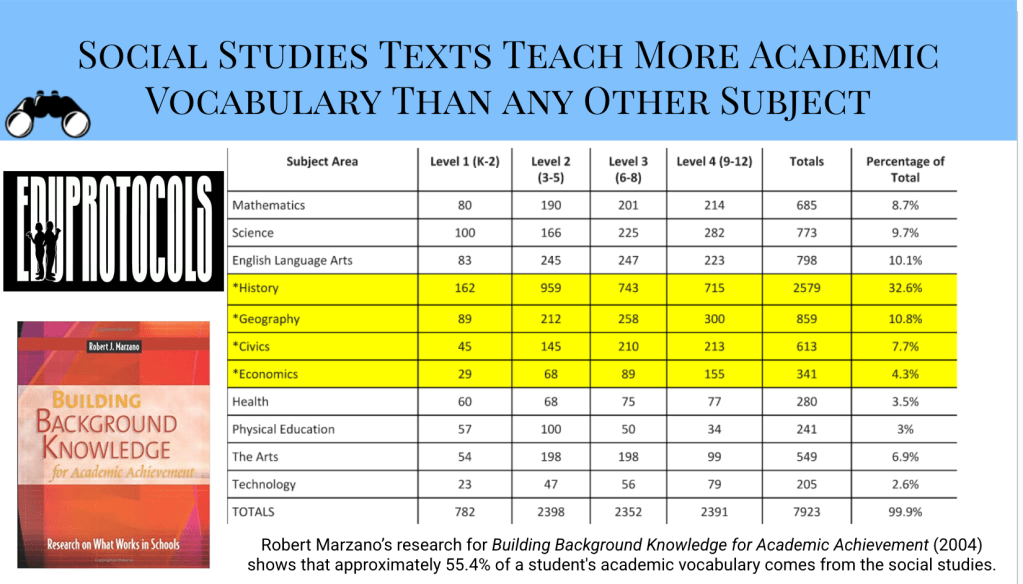
Scott used to say he was a “closeted English teacher.” He wasn’t just throwing that line out, he meant that if we’re teaching history well, we’re also teaching kids to read better, write better, and talk about complex ideas. One stat he shared really changed how I viewed my role: 55% of a student’s academic vocabulary comes from Social Studies. That’s massive. It made me way more intentional about teaching words and concepts instead of assuming kids would just “pick them up.” When I treat Social Studies like an English class, my students grow more in both.

Listening Is Learning

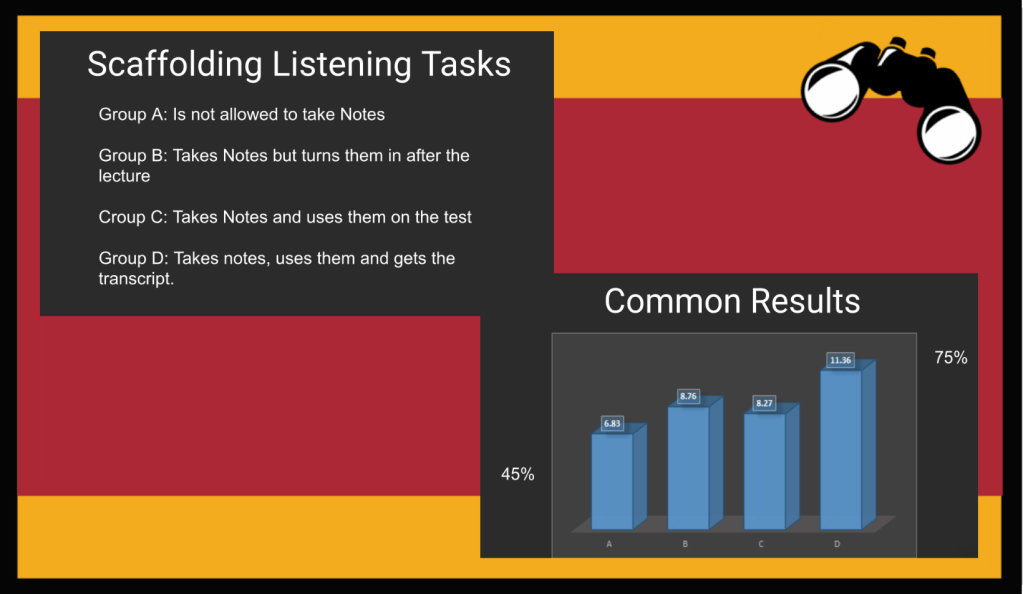
Scott taught me that students can listen and understand two to three grade levels above where they can read. That fact gave me a huge mindset shift. I used to feel a little guilty when I read texts aloud or used podcasts or narrated videos. It felt like I was doing too much of the work. But this past year, when I was doing a lot of reading aloud to my class, I remembered what he said. I wasn’t just talking at them, I was helping them access content they wouldn’t be able to get on their own.

Letting students listen, follow along with a transcript, and take notes isn’t cutting corners, it’s smart scaffolding. It helps them build confidence and fluency without feeling lost. Multimodal input: reading, listening, writing works better than just throwing a hard article at a struggling reader. That’s something I leaned into more this year, and it paid off.

Connections Are Where the Learning Happens

Scott shared a stat in most of his presentations that came from the 2021 AP U.S. History exam: only 15% of students could successfully make historical connections. We’re pretty good at helping students recall facts. But making connections? That takes practice—and modeling.

Scott was always pushing us to slow down and help students ask questions like, “How does this relate to what we’ve already learned?” or “What’s the bigger theme here?” And this is exactly why he created the Archetype Four Square: a powerful tool that helps kids organize historical events into meaningful patterns and themes. It’s a simple structure that forces them to think about how ideas evolve, connect, and repeat across time. It’s one of the most practical ways I’ve seen to build true historical thinking skills.

Reflection Isn’t a Side Dish—It’s the Main Course

Another big takeaway from Scott was the way he used student reflection and exemplars. Not as an extra. As a core part of the learning. Whether it was a Cybersandwich or a Number Mania or a Retell in Rhyme, he modeled how to show students what good looks like, and then helped them figure out how to get there.

After a Cybersandwich, I’d show students the notes I wish they had written. After a Number Mania, we’d reflect: “Did these numbers tell a story or just fill a slide?” That kind of thinking has changed how I run my classroom. It’s not just about doing the activity. It’s about growing through the feedback loop……..

Final

I still catch myself quoting things I heard Scott say in a Zoom call or presentation. Little ideas that stuck with me and ended up changing how I teach. He helped me raise the bar, not by making things harder, but by helping me teach smarter.

If you’ve ever wondered if those small moments of professional learning matter trust me, they do. They ripple. They stay with you. And sometimes they become the foundation of how you teach moving forward.

An Email at 1:40AM

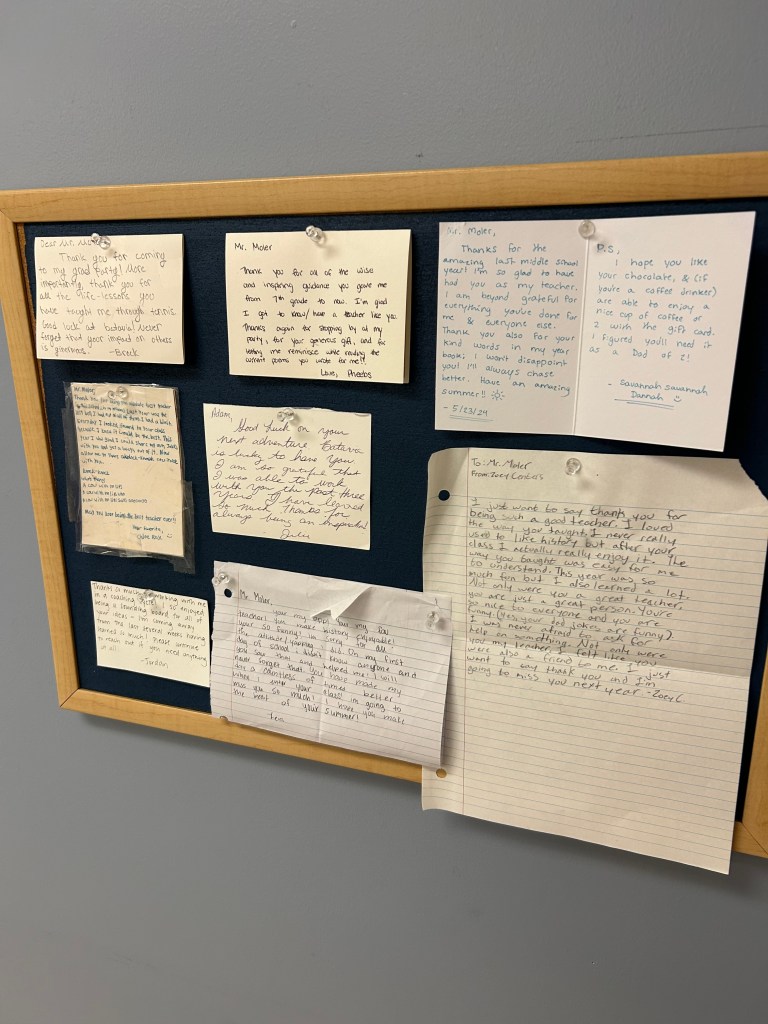
“Not sure if I should say good morning or good night as it is 1:40am. We were talking about school and you came up in the conversation. I wanted to thank you for making learning easier and enjoyable.”

That was the email. No subject line. No assignment attached. Just a student, up late, thinking, and choosing to send a thank you. I didn’t need anything more.

These kinds of messages hit different. They’re not about test scores. They’re not about grades. They’re about how the learning felt.

And let’s be honest: that phrase: ‘easier and enjoyable’ didn’t come from thin air. It came from structure. From intentional repetition. From low cognitive load with high cognitive payoff. It came from EduProtocols.

I get messages like this often. Not every now and then. Often. Kids will tell me in class or write a note after the year ends. They’ll say things like:

  • “I actually liked coming to your class.”
  • “We learned but it wasn’t stressful.”
  • “It felt like we were doing something different every day, but I could always keep up.”
  • “We actually create things in your class.”

That’s not magic. That’s the outcome of running Fast & Curious consistently. That’s what happens when we build Thin Slides into weekly routines. That’s what Thick Slides and Sketch & Tell allow for talking, processing, seeing, and remembering.

Students feel the difference when we stop overloading them and start giving them rhythm. EduProtocols create a culture where thinking becomes normal. Where success doesn’t depend on who finished the worksheet, but who was brave enough to share a thought.

And because of that rhythm, because they know what to expect, students actually engage. They don’t need every direction reexplained. They don’t need to ask, “What are we doing today?” Every protocol becomes a stepping stone toward learning how to learn.

It’s easy to think EduProtocols are just about efficiency. About lesson planning made easier. But they’re also about connection. They shift the cognitive load to students without turning school into a grind. They open the door for late night thank you emails that aren’t about content, but about feeling seen and capable.

That email wasn’t just a thank you. It was proof. Proof that EduProtocols aren’t just changing the workflow – they’re changing how students experience school.

How I Rack and Stack: Inside My Lesson Planning Brain

In the past I have been asked, “How do you decide which EduProtocols to use, and how do you stack them together?”

On the surface, a rack and stacked lesson looks like it just works. Kids are engaged and the transitions are smooth. But there’s a lot of planning behind that flow. Decisions that start long before the first Gimkit or Frayer Model ever hits the board.

So I thought I’d pull back the curtain a bit and walk through how I build these lessons. I’ll use two real examples: one on Manifest Destiny (Mini Report too), and the other on Andrew Jackson and the Nullification Crisis. Different months, different topics, but the same planning approach.

It’s not just about which EduProtocols I like. It’s about what kind of thinking the content demands, and what kind of thinking I want students to practice.

Start with the End in Mind

Every lesson starts with one question: What should students know or be able to do by the end of this?

  1. For Manifest Destiny, I wanted students to understand the concept and controversy of the idea—why people believed in it, what it looked like, and how it’s viewed today. They needed to analyze both visual and written sources and make comparisons between historical and modern perspectives.
  2. For the Nullification Crisis, the goal was to understand how tariffs sparked tension between state and federal power, and to analyze Jackson’s leadership through that conflict. This wasn’t about memorizing dates—it was about understanding motivations, perspectives, and consequences.

The learning targets were content-specific, but they were rooted in bigger historical thinking skills: sourcing, analyzing POV, sequencing causes and effects, and making comparisons.

Build the Stack Around Thinking, Not Just Activities

Here’s where the rack and stack comes in. I don’t start with a random list of EduProtocols. I think about how the brain learns (I’ll fully admit, no clue if these terms are correct, but it’s how I think about them):

Retrieval, Fluency, Context, Synthesis, Expression

That learning arc helps me organize the protocols in a way that makes sense.

My coauthor Scott Petri would always stack (sequence) EduProtocols in a way to help students create something/express themselves at the end of a lesson. An example of this is his use of Fast and Curious and Thin Slides throughout a lesson that would build to the Thin Slides being used for an Ignite Talk.

Manifest Destiny Stack

  • Fast & Curious: Vocabulary primer to retrieve key terms
  • Wicked Hydra: Generate questions from a controversial headline to spark curiosity
  • Sourcing Parts: Analyze the “American Progress” painting to tackle symbolism and sourcing
  • MiniReport: Synthesize a textbook excerpt and a modern article into a structured comparison

Nullification Crisis Stack

  • Fast & Curious: Start again with vocabulary retrieval
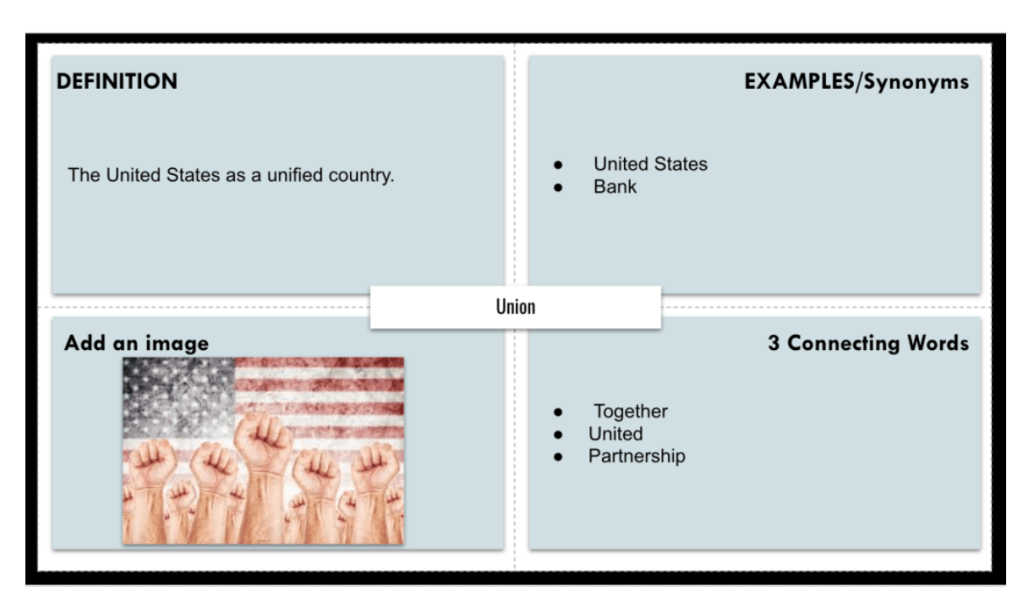
  • Frayer Model: Use student data to target the most-missed terms for clarity and fluency
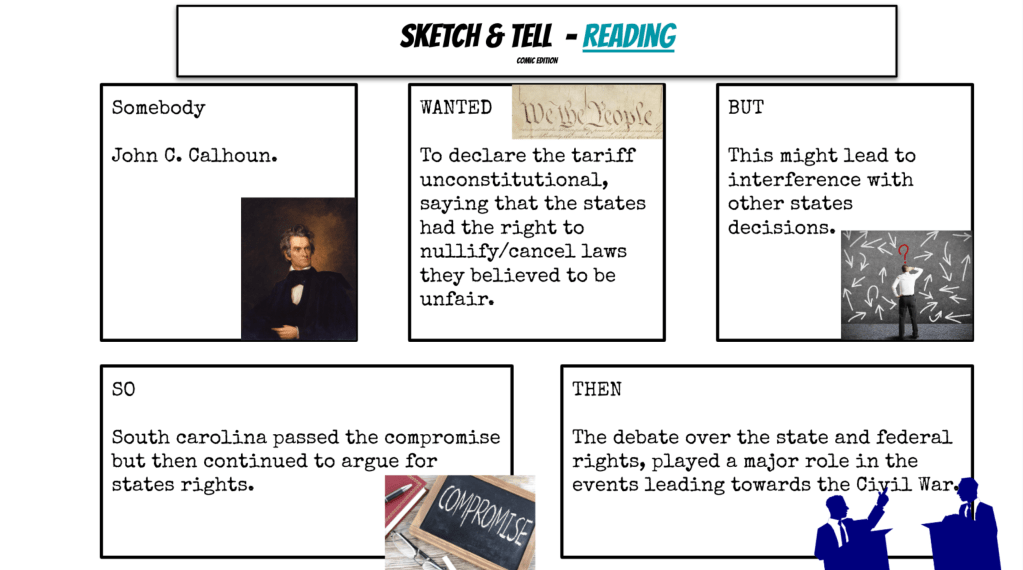
  • Somebody-Wanted-But-So-Then: Sequence the conflict with a narrative lens
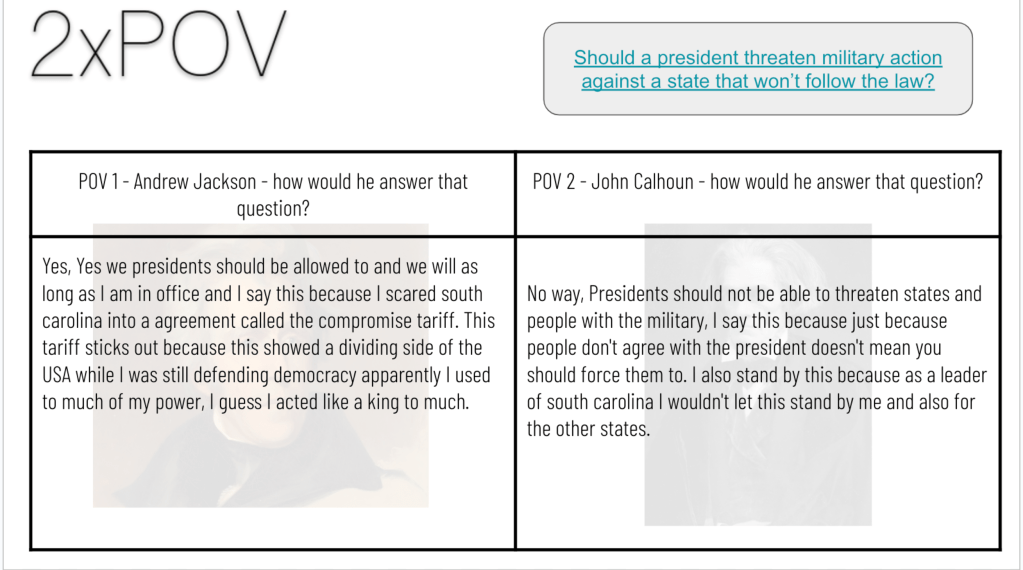
  • 2xPOV: Explore Jackson vs. Calhoun’s stances through primary source excerpts

The protocols change, but the pattern doesn’t. Start with retrieval, build into context and complexity, and finish with a chance for students to show their creativity/knowledge.

Let the Content Shape the Thinking

The thinking flow stays the same, but I adapt it based on what the content demands.

Manifest Destiny is full of imagery, myth, and legacy. It asks students to wrestle with beliefs, intentions, and consequences. I use EduProtocols that bring those pieced to life through visuals, structured writing, and modern-day connections.

The Nullification Crisis, on the other hand, is rooted in power dynamics and constitutional interpretation. It’s about understanding who wanted what, why they clashed, and how it played out. So I lean into story structure and POV work to help students break it down.

I’m not asking, “Which protocols do I like?” I’m asking, “What kind of thinking does this content require?”

Some Skills Go Beyond the Content

There’s another layer here, too. Sometimes it’s not just about history skills, it’s about cognitive skills that matter long after students leave the classroom. I’m trying to take care of the present while preparing kids for the future.

Here are three skills I intentionally built into these stacks:

  1. Adopting a Different Perspective: The POV Analysis protocol pushed students to consider two very different interpretations of the same conflict: Jackson and Calhoun’s views on states’ rights and federal authority. That’s more than a history lesson. That’s about being able to hold multiple perspectives in tension, something we all need more practice with in and out of school.
  2. Synthesizing Messages: In the Manifest Destiny lesson, the MiniReport asked students to combine ideas from a traditional textbook and a more critical, modern article. They had to make sense of competing viewpoints and turn it into a coherent written product. That’s the kind of synthesis skill that transfers to writing, speaking, and decision making.
  3. Asking the Right Questions: Wicked Hydra helped students generate their own questions from a provocative headline. We didn’t start with answers – we started with curiosity. That habit of inquiry matters. It helps students know what to ask when things get unclear or when they need to dig deeper, whether it’s in history or real life.
Final Thoughts

When I rack and stack, I’m not just filling time or tossing in a protocol because it’s fun. I’m designing a flow. A lesson that moves students from buiulding background knowledge/retrieval to confident creation – without burning them out along the way.

Even though the topics change, the thinking stays consistent:

  • Start with the goal
  • Build the sequence that supports the right kind of thinking
  • Keep the cognitive load manageable
  • Let students do the heavy lifting, at the right time, with the right support

If you’re just getting into racking and stacking, here’s my best advice:

Start small. Pay attention to the thinking each step requires. And when in doubt, ask: What do I want students to do with their brain next? That’s the question that drives everything I build.

The Top Three Most Used EduProtocols This Year

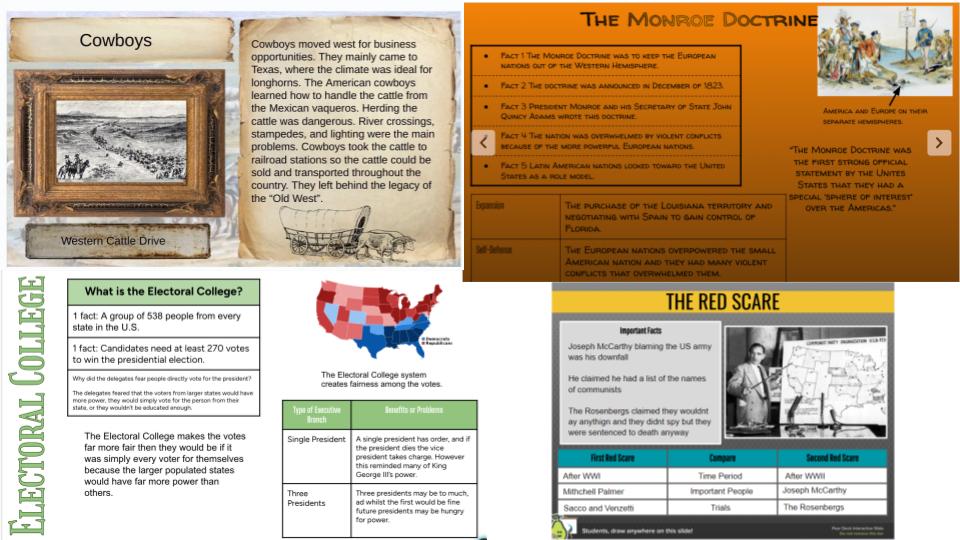
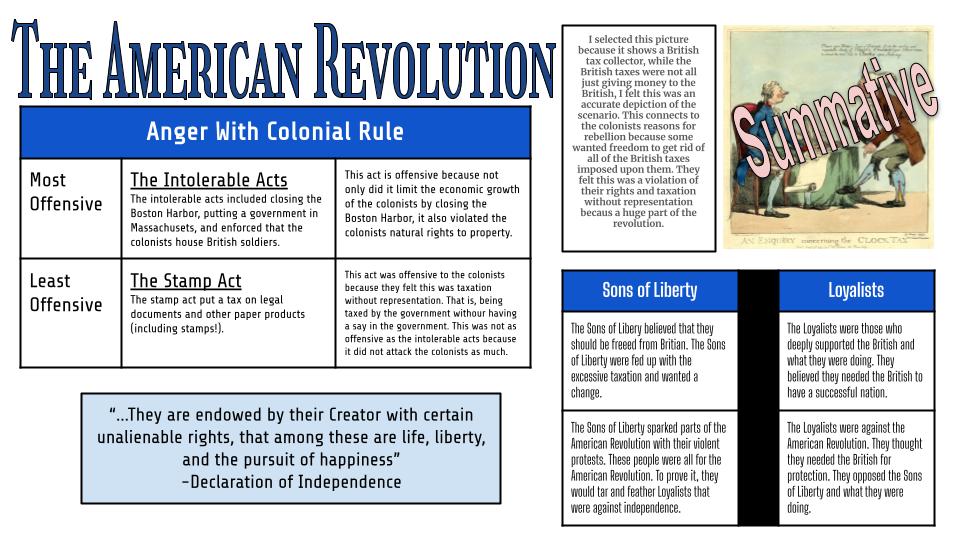
After years of using EduProtocols, I’ve learned that a few always rise to the top, especially in a year with content to cover, AI to manage, and routines to maintain. These three protocols: Fast and Curious, Number Mania, and Thick Slides became the top 3 EduProtocols I used this year.

  1. Thick Slide Template
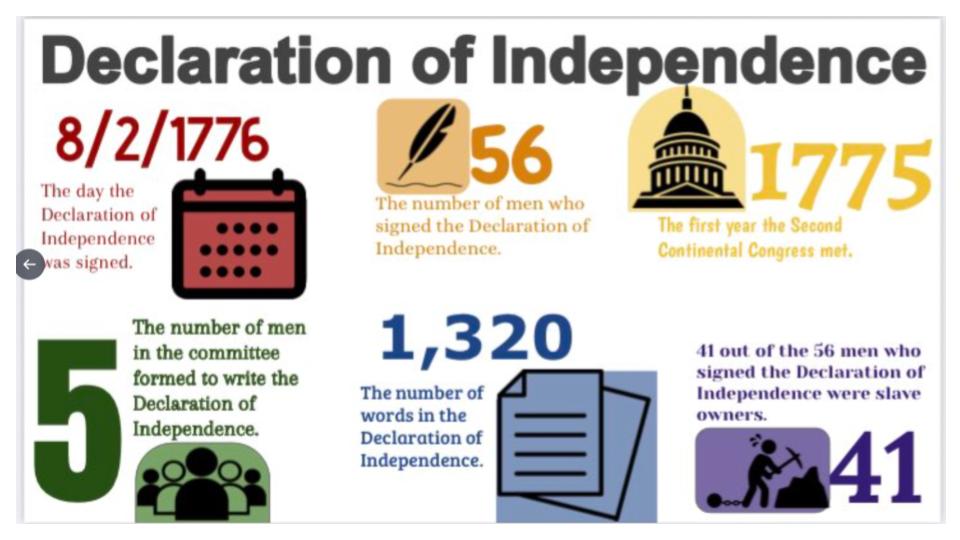
  2. Number Mania Preso/Templates

Fast and Curious

This one’s been a staple for me year after year.

It set the tone for class, gave us quick retrieval, and got vocab into students’ brains before they needed to use it in a deeper task. I stuck with Quizizz most days and kept the sets short, tight, and tied directly to our content theme. Played it twice: once cold, once after a fast reteach or class discussion. Bonus if the class average hit our target, they earned 100% in the grade book.

How I used it:

  • Previewed key terms for units on Colonization, Constitution, Expansion, Industrialization, and Civil War
  • Included terms like mercantilism, urbanization, checks and balances, sectionalism
  • Built student buy-in by letting them submit terms to include
  • Used it mid-lesson when attention dipped or as a quick Friday review
  • Turned Quizizz class averages into a challenge: beat your Monday score by Friday

Fast and Curious Tip:

You can easily find premade quizzes on Gimkit or Quizizz – simple, easy, ready to go. However, I don’t often do that because they are not worded in a way that I teach or word things. So, I will often take the textbook section of readiongs for the week and upload those to ChatGPT. I have ChatGPT extract vocabulary words and create questions that fit with the content.

Number Mania

This protocol moved from a go to graphic organizer to one of the most powerful thinking routines I used all year.

At first, it was just about identifying meaningful numbers. But it quickly became the tool that helped students back up their claims with evidence, especially when layered into short writing tasks or argument structures.

How I used it:

  • After short readings on Jamestown survival rates, Revolutionary War casualties, Constitutional compromises, factory wages, and Civil War production
  • Students pulled 3 – 4 key numbers, paraphrased them, and explained their significance
  • Paired with icons, AI generated visuals, or short captions
  • Rolled right into Short Answer responses or “Divide the Pie” arguments
  • Posted top examples to Padlet and used them as models

The extension that worked best:
I started requiring students to use two of their numbers in a Short Answer claim. For example: “Why was the North better positioned to win the Civil War?” They had to cite the railroad mileage, factory output, or population numbers they had just worked with. The writing was better because the thinking was already done.

Bonus variation:
AI generated “Truth with Sprinkles” – I gave them a fake paragraph with incorrect numbers, and they had to fix it using their Number Mania notes. Quick, smart, and fun.

Thick Slides

This became my go to for synthesis and creative output.

Students got one slide to make their thinking visual. We used a set structure title, visuals, stat or quote, short summary and it let me see quickly who got the content and who needed help.

How I used it:

  • Wrapped up content from Colonial Regions, American Revolution, Industrialization, Reform Movements, and Civil War
  • Assigned AI image generation to visualize abstract concepts or quotes
  • Had students screenshot their slide and upload it to MagicSchool for feedback
  • Turned slides into gallery walks or Padlet posts to compare perspectives

The best variation this year:
After students created their slide, I had them use it in a Divide the Pie activity. Each student argued which reformer, event, or region had the biggest impact—using only the details from their slide. It forced them to know what they made and defend it.

Final Thought

These three: Fast and Curious, Number Mania, and Thick Slides did more than fill time. They became a rhythm. Retrieval led to analysis. Analysis led to argument. Argument led to creative synthesis. They worked with any unit, played well with AI, and kept students focused.

Let me know if you want copies of my Number Mania prompts, Thick Slide templates, or how I stack these across a full week. Always happy to share.