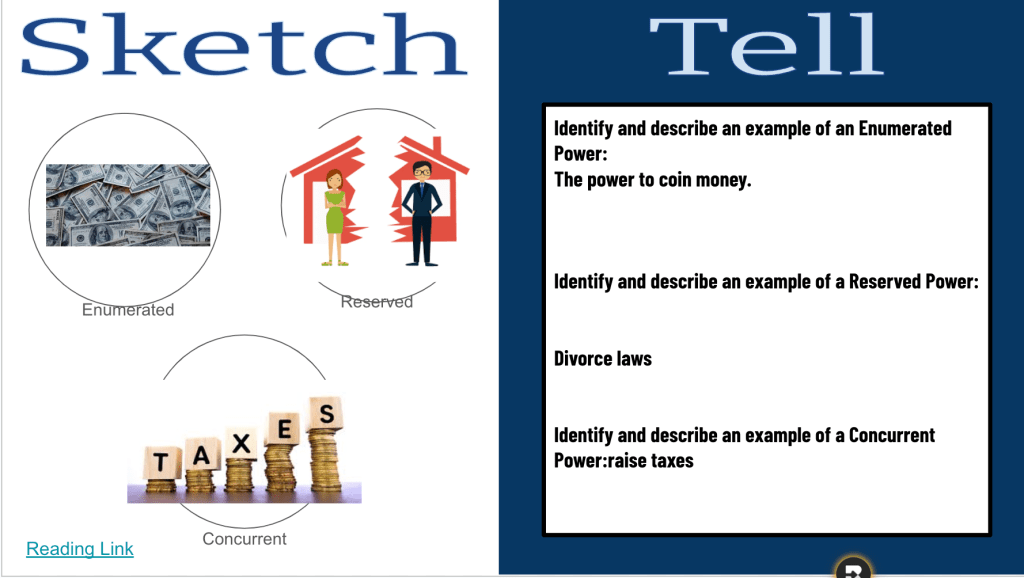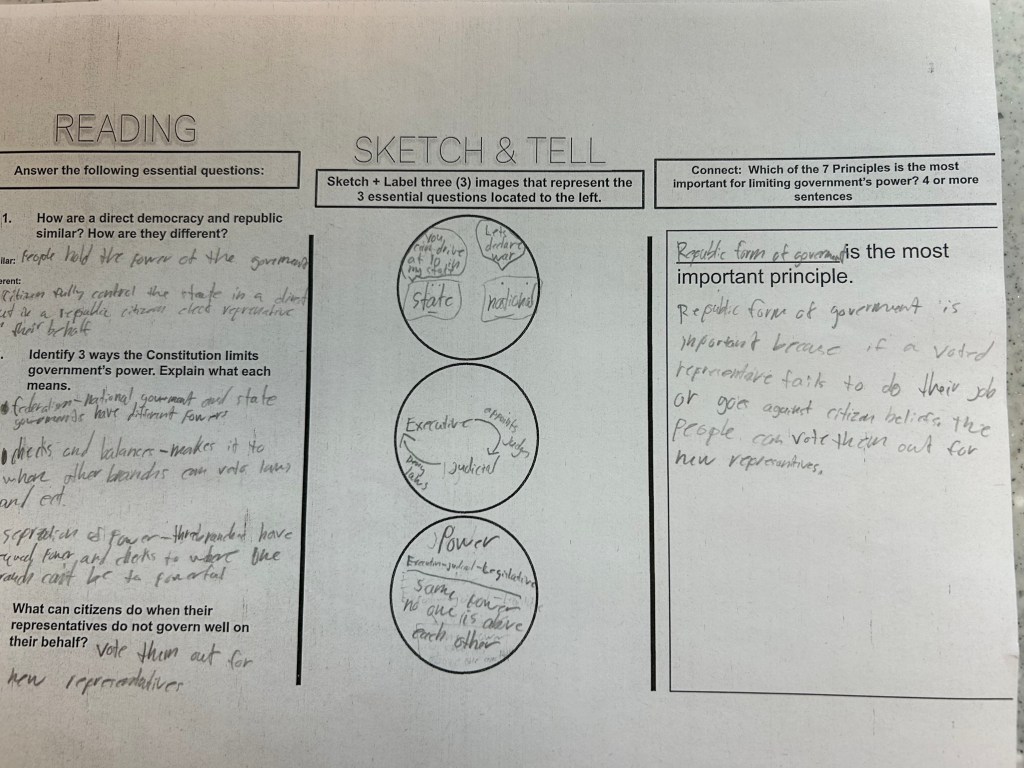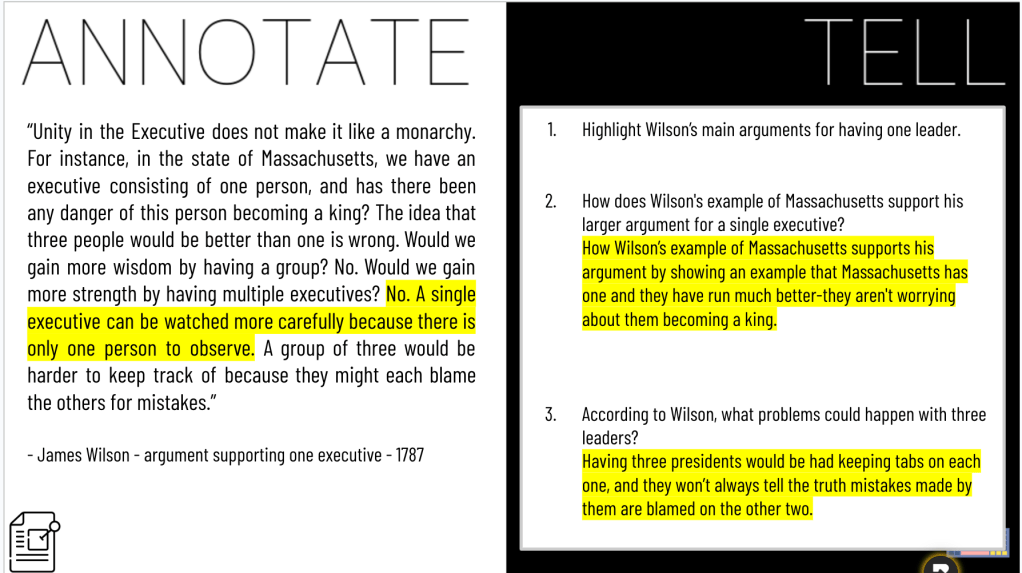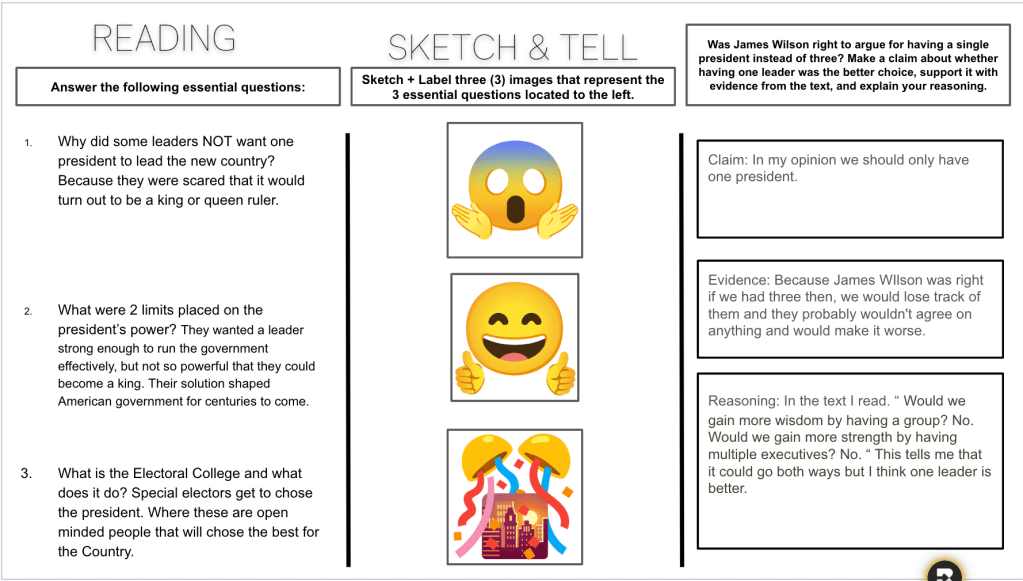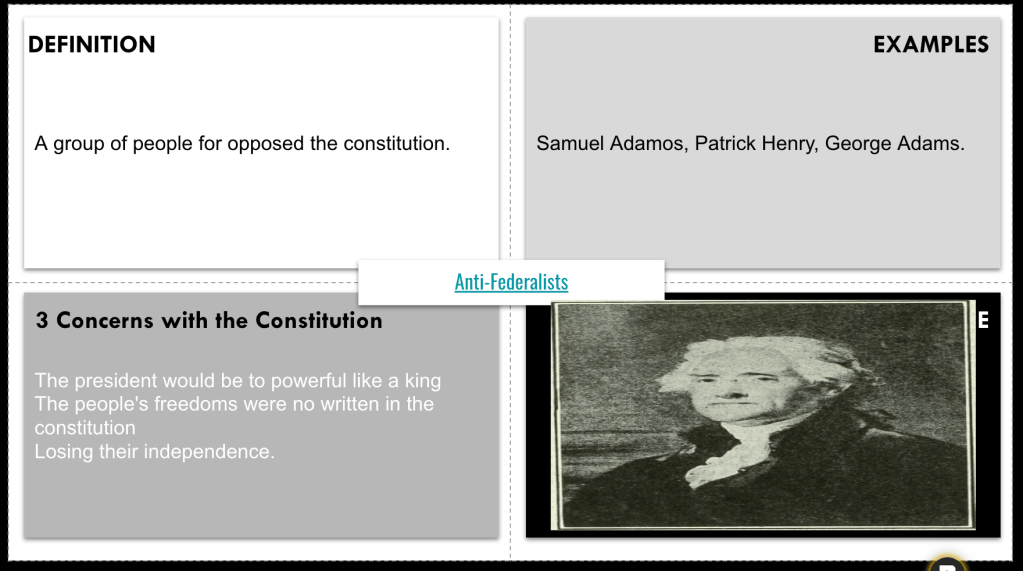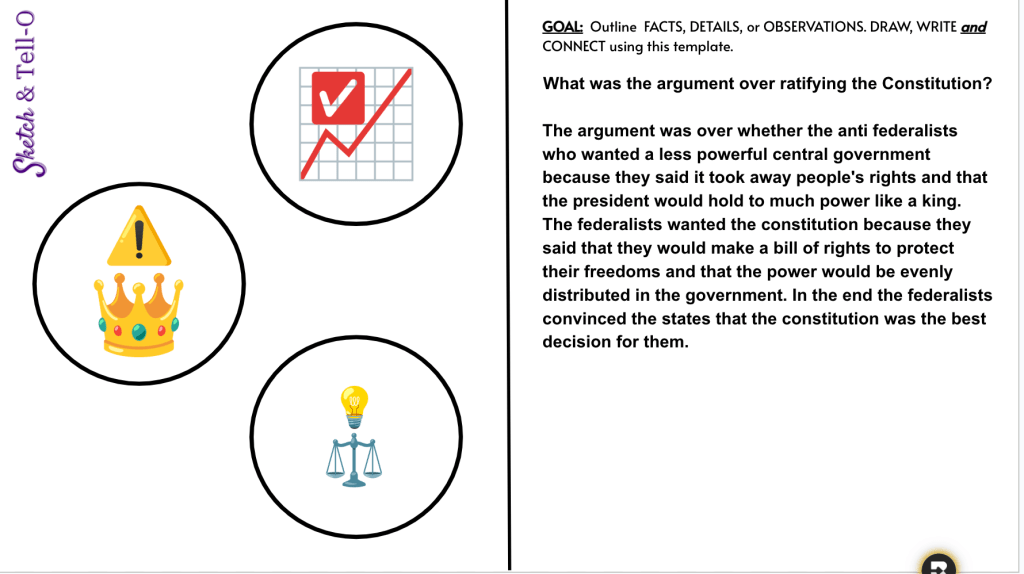
The Week That Was in 234

This week was all about using EduProtocols to drive deeper thinking, engagement, and writing practice as we explored westward expansion and Manifest Destiny. Instead of just reading from the textbook and answering questions, students worked through activities that encouraged them to generate their own questions, analyze sources, and compare perspectives. We used Fast & Curious to build vocabulary, Wicked Hydra to spark curiosity, Sourcing Parts to break down historical imagery, and MiniReport to develop writing skills with multiple sources. Class Companion provided immediate feedback on their writing, helping them refine their responses. The combination of these strategies helped students interact with history in meaningful ways while reinforcing critical thinking and writing—exactly the kind of skills they need as we approach testing season.

Wednesday – Introduction to Westward Expansion

Thursday – Rack and Stack Manifest Destiny, MiniReport

Friday – WeWillWrite, ShortAnswer

Monday and Tuesday

Monday and Tuesday were all about finishing the Age of Jackson unit and transitioning into what’s next. It wasn’t the most eventful start to the week, but there were some clear takeaways from how students engaged with the material and performed on the final assessment.

Trail of Tears Number Mania

We closed out the unit with a Number Mania activity focused on the Trail of Tears. Students worked to prove this statement correct using four numbers and supporting facts from the reading:

“The Trail Where They Cried was not only a physical journey but also a moment that reshaped Cherokee history, causing loss, suffering, and ultimately rebuilding.”

This strategy forced them to dig into the reading, prioritize key details, and make connections between the numbers and the broader historical context.

Review Day: Where Did Students Struggle?

After Number Mania, we jumped into a self-assessment review where I encouraged students to answer as many questions as possible without looking at their notes first. I wanted to see what truly stuck.

The results were telling:
✅ Strong understanding of Jacksonian Democracy and the Bank War
❌ Struggled with Nullification and Tariffs

Looking at what worked, the MiniReport EduProtocol (which we used for Jacksonian Democracy and the Bank War) stood out as a clear success. This structured approach to reading, analyzing, and writing about sources helped cement those concepts more effectively than other methods.

Final Test & Class Companion for Writing

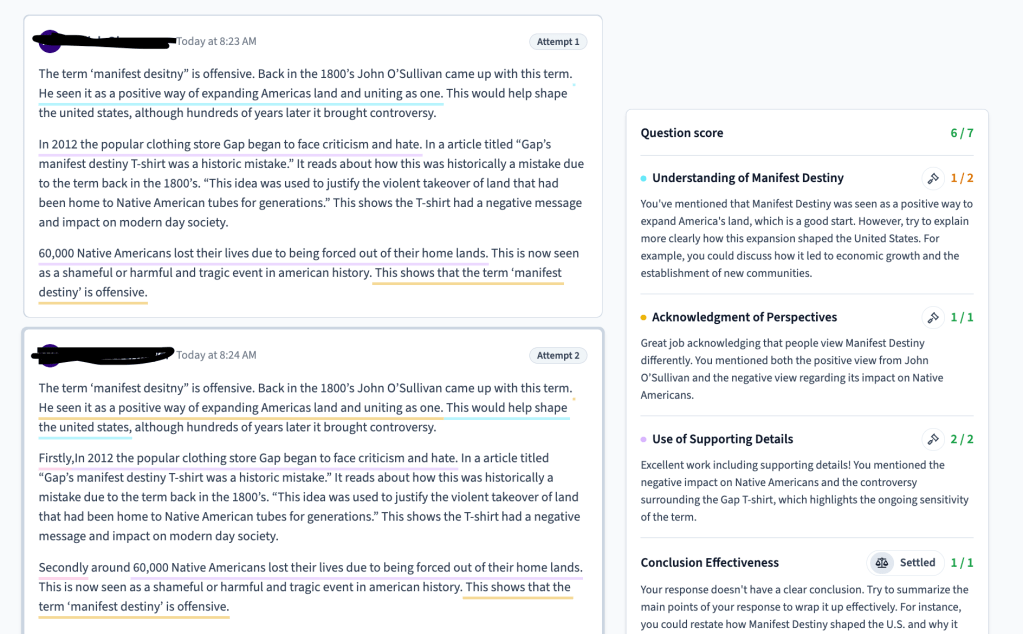
Tuesday was test day. To keep the writing portion meaningful, I had students complete their short-answer responses on Class Companion, giving them two attempts this time. The difference was noticeable—students were reading the feedback, revising their responses, and improving their writing in real-time.

At the end of the test, I tallied up the class averages:
📉 Pre-Assessment Scores: 22%, 19%, 22%, 25%
📈 Final Assessment Scores: 82%, 68%, 76%, 80%

In just five class periods, the gains were solid. I wish I had more time to dive deeper into certain topics, but when you’re locked into a common assessment deadline, you make the most of the time you have. The biggest takeaway? The MiniReport works, Class Companion feedback works, and students rise to the challenge when given the right tools.

Wednesday

This week, I kicked off a mini-unit on Westward Expansion, focusing on the big question: How did Manifest Destiny change America’s map and the lives of different groups of people?

I like to break this unit down into three key areas:
✅ The idea of Manifest Destiny
✅ How the U.S. acquired different territories
✅ The people and groups who moved west

To start, I introduced some key vocabulary with a Gimkit Fast & Curious covering terms like Manifest Destiny, expansion, territory, annexation, and more. We ran the Gimkit for 3 minutes, I gave quick feedback, and then we ran it again for another 3 minutes. With students now having some familiarity with the key terms, it was time to move into The Great American Race—a fast-paced, high-engagement EduProtocol that reinforces key concepts through collaboration and research.

How I Run The Great American Race

A few teachers have asked me how I set this up, so here’s my process:

1️⃣ Identify the Key Topics

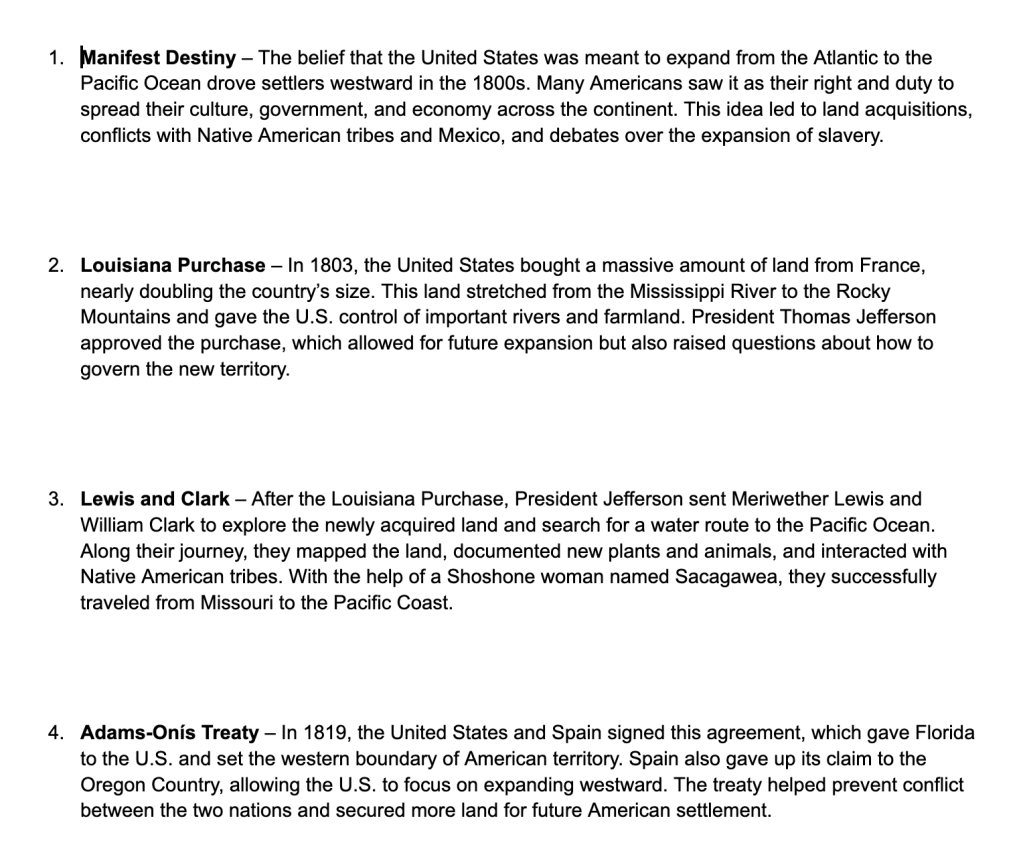
  • I chose 13 major terms from the unit, including the Louisiana Purchase, Lewis and Clark, James K. Polk, and Manifest Destiny.
  • Since I had 26 students, they paired up, with each pair responsible for one term.

2️⃣ Use AI to Generate Content

  • I’ve been using AI to create 4-5 sentence explanations for each term, which students can pull clues from.
  • Each explanation is labeled with a number corresponding to its term.

3️⃣ Set Up the Activity

  • I copy and paste the AI-generated explanations into a Google Doc, print them out, and cut them into individual slips for students.
  • Each pair receives a slip and has 3-4 minutes to create a response on Padlet using the timeline format.

4️⃣ Creating the Clues

  • On their Padlet post, students enter their term’s number in the subject line.
  • They write 3 clues and add a related image.
  • This should take 3-4 minutes, but my students usually take about 6-8 minutes.

5️⃣ Approving and Freezing Posts

  • I set Padlet so that I approve all posts before they go live.
  • Once time is up, I approve the posts, and students are ready to start the race.
  • Why I freeze the Padlet: This prevents students from copying and pasting answers directly into Google. They have to use key terms and context clues to research.

6️⃣ The Race Begins!

  • Students work with their partner, number their paper 1-13, and get 15 minutes to identify as many terms as possible using the clues from their classmates’ posts.
  • They can use their notes, their knowledge, and Google—just not copy-paste answers directly.
  • When time is up, we go over the answers and discuss any misconceptions.

Padlet makes this whole process smooth, especially with the timeline format, which keeps everything organized. The students love the competitive element, and I love that they’re engaged and thinking critically.

Wrapping Up with Big-Picture Questions

To close the lesson, I handed out an introductory reading on Westward Expansion. On the back, I included three deeper-thinking questions to get them thinking beyond just dates and facts:

📌 Evaluating Perspectives: How might an American settler and an Indigenous person have viewed westward expansion differently?

📌 Connecting to Today: Do you think Manifest Destiny still influences how Americans view expansion and progress today? Why or why not?

📌 Comparing Motivations: What were the different reasons people moved westward, and how did those reasons create tensions among settlers, Native Americans, and the U.S. government?

Students had 10 minutes to read and answer the questions. This served as a preview for deeper discussions and activities later in the unit.

Thursday

Fast & Curious: Building Vocabulary

We started class with a Fast & Curious using Gimkit to review key vocabulary related to westward expansion. Students played for three minutes, received feedback, and then played again to reinforce terms like Manifest Destiny, annexation, expansion, and acquisition. This quick repetition helped them solidify essential vocabulary before moving into deeper analysis.

Wicked Hydra: Generating Questions

Next, we transitioned into a Wicked Hydra using the headline, “Gap’s T-Shirt Was a Historic Mistake.” The goal was to get students asking as many questions as possible about what the headline might mean. Originally, we used Padlet for this, but after accidentally deleting the responses, we switched to paper, and students continued writing down their questions. Some of the best questions that came from this activity included:

  • Why would a T-shirt about Manifest Destiny be controversial?
  • Who was upset by this, and why?
  • What does this headline tell us about how history is remembered?

These questions set the stage for students to engage critically with Manifest Destiny as both a historical event and a modern controversy.

Sourcing Parts: Analyzing “American Progress”

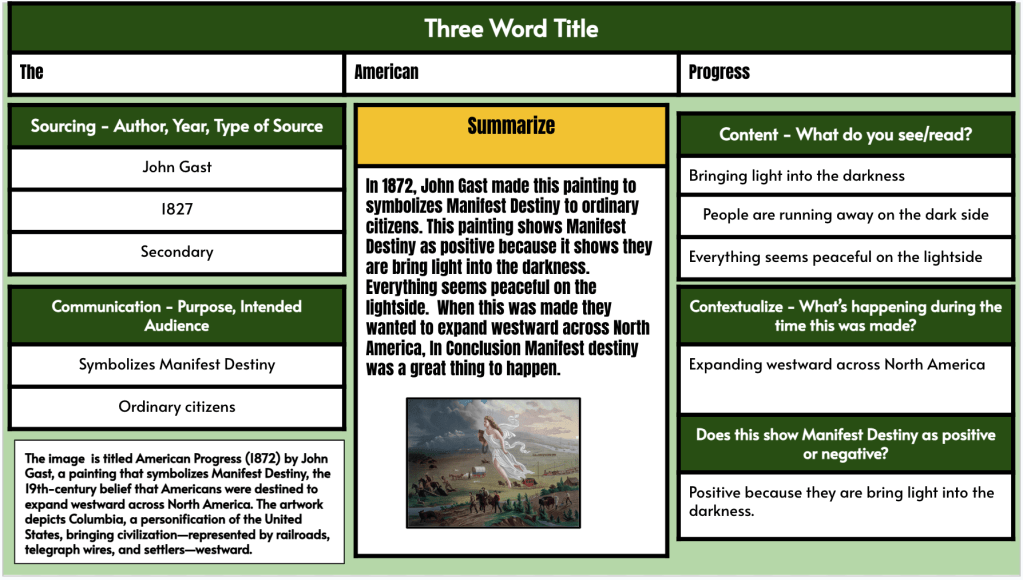
To further analyze the idea of Manifest Destiny, students used the Sourcing Parts protocol to break down the painting American Progress by John Gast. The goal was to help them understand how imagery can be used to justify expansion. They examined the source by identifying who created it, what message was being conveyed, and who was included or left out of the image. The discussion that followed centered on how paintings like this one helped promote the idea of Manifest Destiny as a positive force while ignoring the consequences for Indigenous people and others affected by westward expansion.

MiniReport: Comparing Perspectives

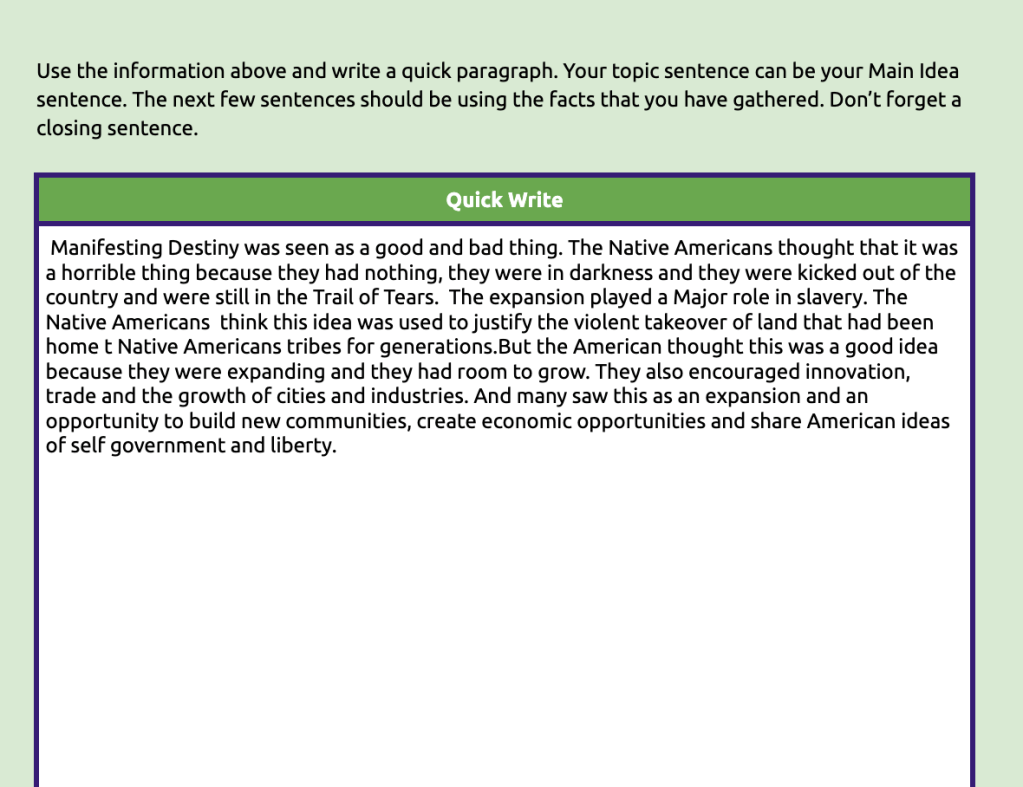
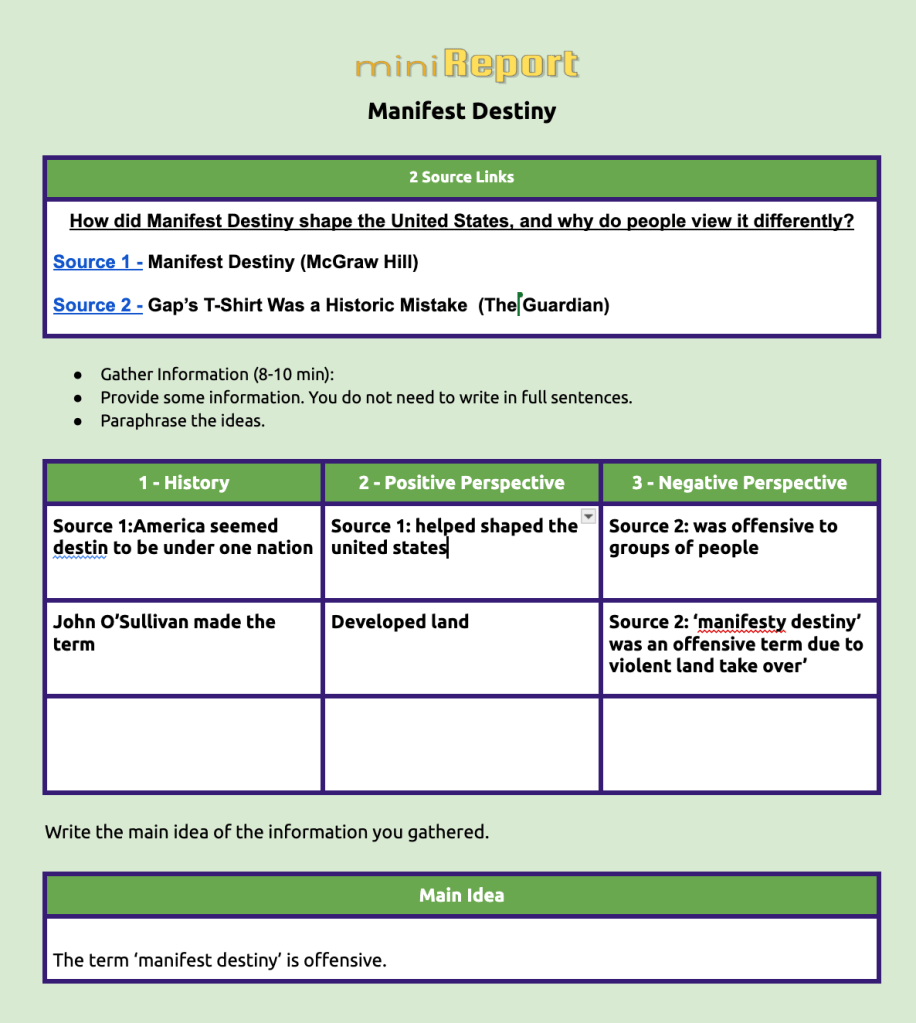
After this, we moved into a MiniReport comparing two different perspectives on Manifest Destiny. The first source was adapted from the McGraw Hill textbook and explained Manifest Destiny as a natural and necessary part of American expansion. The second source was an article about the backlash to the Gap T-shirt, highlighting the modern-day criticism of the idea.

Students took notes on the key ideas from both sources, categorized them into three sections—historical context, positive perspectives, and negative perspectives—then wrote a main idea sentence. They combined all of this information into a paragraph response and submitted their writing in Class Companion. Since the Ohio state test includes a two-source reading and writing essay, this activity was designed to mirror that format and give students practice organizing their thoughts and using evidence.

Why This Worked

This lesson reinforced a lot of important skills beyond just memorizing historical facts. Students generated their own questions, analyzed visual sources, compared perspectives, and practiced structured writing. The writing in Class Companion showed improvement—students were getting better at organizing information, crafting arguments, and responding to feedback. The next step in the unit will focus on westward expansion’s impact on different groups, continuing to build historical analysis, writing, and connections to the present.

Friday

Gamifying POV Writing: WeWillWrite & ShortAnswer

We started Friday by wrapping up unfinished work from Thursday. Some students needed to complete their Class Companion writing on Manifest Destiny, while others who had finished moved on to labeling and coloring a map of westward expansion territories. Once that was taken care of, we shifted into a creative writing activity, using WeWillWrite and ShortAnswer to explore point of view (POV) writing in a gamified way.

WeWillWrite: POV Writing with Columbia, Natives, Farmers, & Buffalo

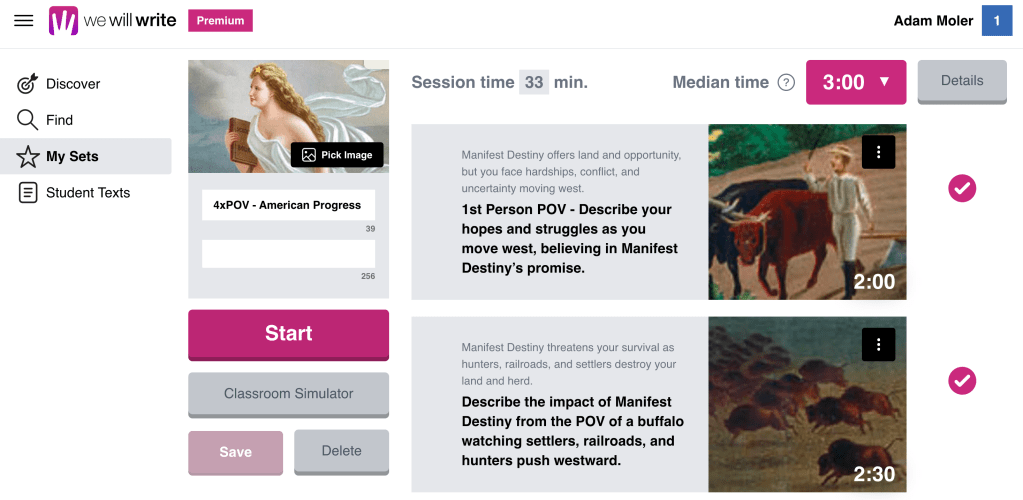
For most classes, I used WeWillWrite, a platform that gamifies writing in a way that engages all students. Back in December, I used it for general writing practice, but now you can create custom sets—a feature I didn’t know about until Lucas George mentioned it. I jumped on the chance to create a POV set based on the painting American Progress by John Gast. Students wrote from the perspective of Columbia, Native Americans, Farmers, or the Buffalo, responding to a timed prompt.

Here’s how it worked:
✅ Students logged in with a random pseudonym (just like Gimkit).
✅ They were placed into teams and given three minutes to respond to the prompt.
✅ They could see hints and teammate responses to refine their writing.
✅ Each team voted on their strongest response.
✅ The top four responses battled it out for class-wide voting and points!
✅ We repeated the process for two more rounds, deepening their engagement with perspective writing.

The energy in the room was fantastic—students were thinking critically about how Manifest Destiny impacted different groups, but in a way that felt like a game.
ShortAnswer: Live POV Battle Royale

For 6th period, I decided to switch things up and use ShortAnswer instead. This tool is similar to WeWillWrite but allowed me to create POV questions on the spot. One thing I loved was the built-in voice typing feature, which helped several of my students, especially those with IEPs.

Here’s how the ShortAnswer Battle Royale worked:
✅ I set up a POV question (e.g., “How would a Native American describe Manifest Destiny?”).
✅ Students had five minutes to respond.
✅ After the timer ended, I hid student names (lesson learned—forgot at first, and it became a popularity contest).
✅ Responses were randomly grouped into quadrants, and students voted on the best one.
✅ The top four moved on to a semifinal vote.
✅ The final two battled it out for the top spot.

The hidden names made a huge difference. Suddenly, students who rarely get recognized for their writing were winning! One student on an IEP finished in the top three twice, and after his second win, he threw his arms up and said, “I never win anything!” Absolute highlight of the day.

I also liked how AI-generated sentence stems and outlines helped guide students in their POV writing. Students who typically struggle to write were producing full paragraphs and competing to win. The ability to attach readings and pictures to questions made it even stronger.

The Week That Was In 234

This past week, EduProtocols made Andrew Jackson’s presidency more interactive and engaging, helping students analyze his impact through Fast & Curious, Annotate & Tell, MiniReports, Somebody-Wanted-But-So-Then, Thin Slides, and Number Mania. We started each day with Gimkit vocabulary practice, reinforcing key terms before diving into content. The Nullification Crisis worked well with Somebody-Wanted-But-So-Then, helping students break down key perspectives, while the Bank War MiniReport with Class Companion pushed them to strengthen historical writing using AI feedback.

For Indian Removal, we layered Edpuzzle, Annotate & Tell, Thin Slides, and Number Mania, making connections between the Seminole Wars, Indian Removal Act, Worcester v. Georgia, and the Trail of Tears. In Number Mania, students had to justify a quote using numerical evidence, reinforcing cause-and-effect thinking. Some students were testing Class Companion to outsmart AI, while others were pushing themselves to write more, but either way, they were improving. Using EduProtocols helped students engage deeply with Jackson’s presidency, making complex historical topics more meaningful and accessible.

Tuesday – Jacksonian Democracy Rack and Stack, Jackson MiniReport

Wednesday – Nullification Rack and Stack

Thursday – Bank War Rack and Stack, Bank War MiniReport

Friday – Native Removal Rack and Stack

Tuesday: Kicking Off the Andrew Jackson Unit

We started our new unit on Andrew Jackson with the central guiding question:
Should Andrew Jackson be considered a good president or a bad president?

To establish a baseline understanding, students took a pre-assessment, and as expected, the class averages were low—ranging from 19% to 25%. These results weren’t surprising since many students had little prior knowledge of Jackson beyond his presence on the $20 bill.

From there, we jumped into Jacksonian Democracy, starting with a Gimkit Fast & Curious to introduce key vocabulary terms like Jacksonian Democracy, democracy, spoils system, suffrage, and nominating conventions. We ran one round for two minutes, reviewed the words, and ran it again for another two minutes. This strategy paid off—every class improved their average score by at least 35% after just two rounds.

Building Understanding Through Multiple Lenses
Frayer Model: Breaking Down Jacksonian Democracy

After locking in vocabulary, students created Frayer Models for Jacksonian Democracy, helping them explore:
✔ Definition
✔ Characteristics
✔ Examples
✔ Non-examples

This was crucial because Jacksonian Democracy is not just about Andrew Jackson—it’s about a shift in political power and voting rights for the “common man.”

Map & Tell: Geography & Political Shifts

Next, we tied Jackson’s election to geographic and political changes through a Map & Tell activity. Students analyzed maps of voter participation in 1824 vs. 1828 to answer:
🔹 Where did voter turnout increase the most?
🔹 Which regions supported Jackson?
🔹 What does this suggest about democracy in the early 1800s?

Seeing how voting patterns shifted helped students visualize how Jackson’s presidency was fueled by an increase in voter participation among everyday Americans—one of the defining elements of Jacksonian Democracy.

MiniReport: Expanding Democracy vs. Controversy

Students then worked through a MiniReport to gather information from two sources:
1️⃣ The Election of 1828 – A Victory for the Common Man
2️⃣ The Spoils System

They had 8-10 minutes to collect key information on how Jacksonian Democracy expanded political participation while also bringing controversy through shifts in power. This helped them paraphrase key ideas and prepare for a structured quick write summarizing their findings.

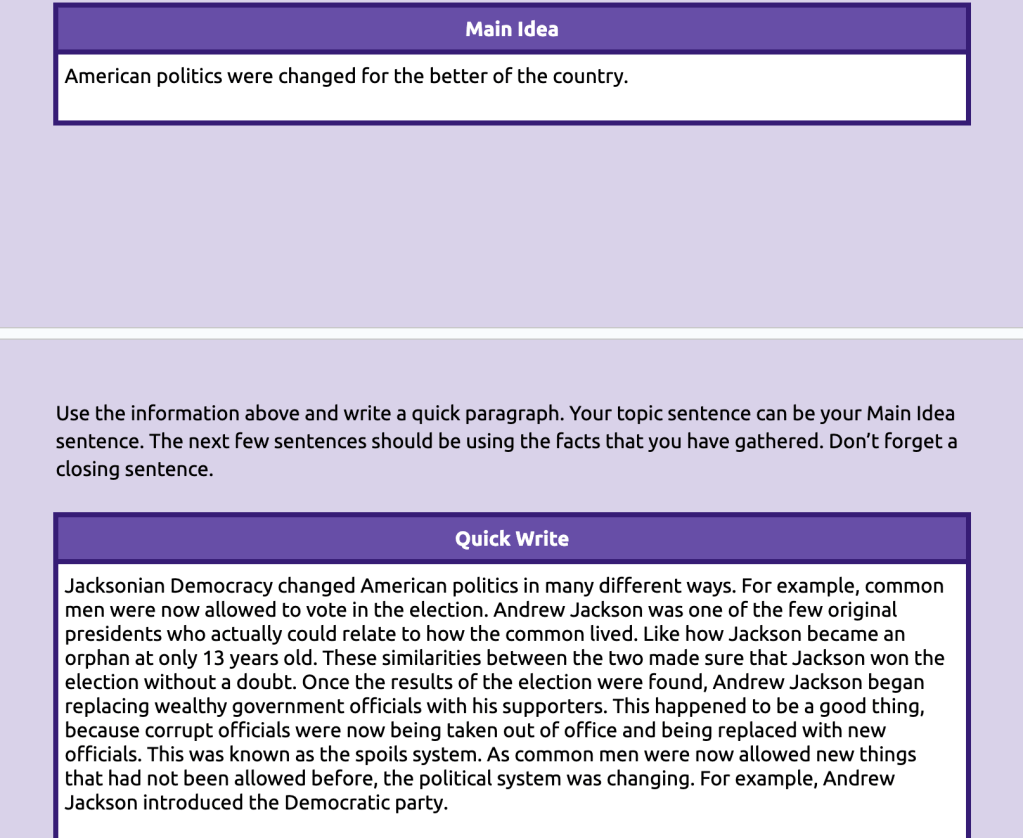
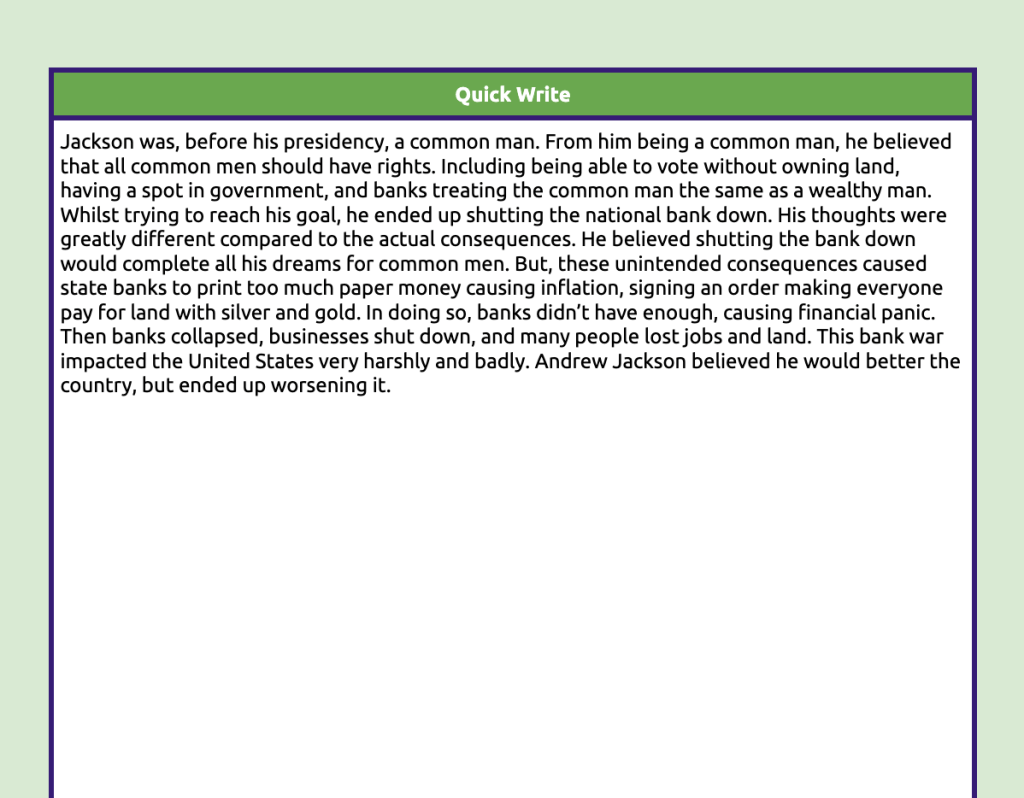
After drafting their paragraphs, we used Class Companion to provide AI-generated feedback on their responses. I’m starting small with the MiniReport to help students build skills in comparing sources and developing structured paragraphs. The goal is to strengthen their ability to synthesize information, support their claims with evidence, and refine their writing with targeted feedback.

2xPOV: Seeing Jackson From Different Angles

To wrap up, students engaged in a 2xPOV activity where they analyzed Jackson’s impact from two perspectives:
1️⃣ A common man who benefited from his policies
2️⃣ A government official who saw issues with his leadership

This exercise helped students recognize how historical figures and policies aren’t just good or bad—they affect people differently based on their circumstances.

This structured approach ensures students aren’t just memorizing facts—they’re analyzing how Jacksonian Democracy shaped American politics, making it easier to answer our big guiding question in the weeks ahead:
➡️ Should Andrew Jackson be considered a good or bad president?

Wednesday – Continuing Our Exploration of Andrew Jackson

We continued exploring Andrew Jackson by focusing on the Tariff of Abominations and the Nullification Crisis. I started with some quick notes to provide background on tariffs and their impact, then we jumped into another Gimkit with new vocabulary words—tariff, abomination, nullification, and states’ rights.

Fast & Curious – Vocabulary Review

We ran a Gimkit for two minutes, paused for quick feedback, and then ran it again for another two minutes. Every class raised their average by 38% or higher, showing solid growth in understanding key terms. This quick retrieval practice helped students solidify their understanding before diving into deeper analysis.

Frayer Model – Clarifying Key Terms

I told students that if any question scored below 80% accuracy, we would Frayer it. The most commonly missed words were Union and secede, so we used the Frayer Model to break them down. Students worked together to define each term, provide examples, and illustrate their meaning, ensuring a stronger grasp of these key ideas before moving forward.

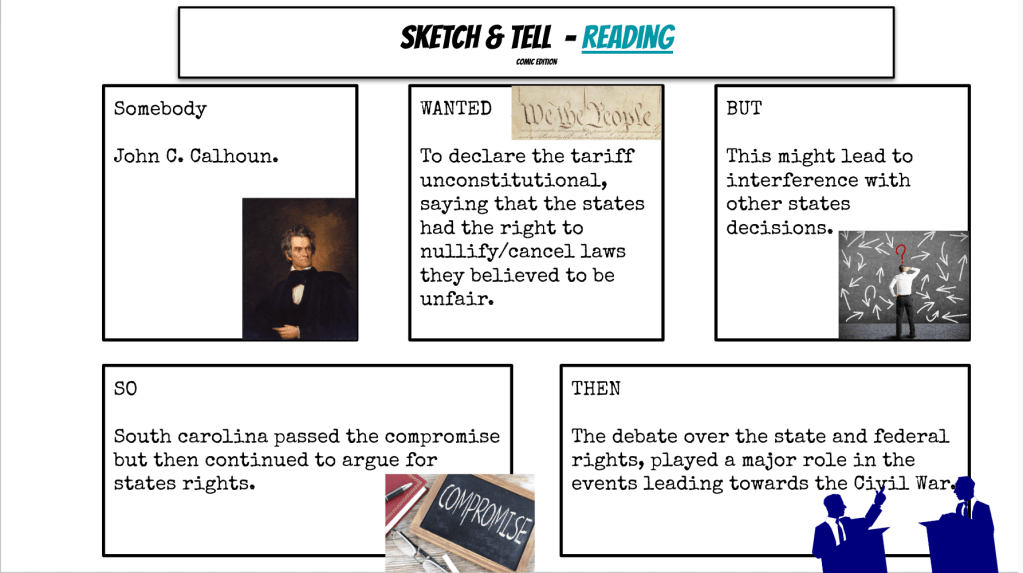
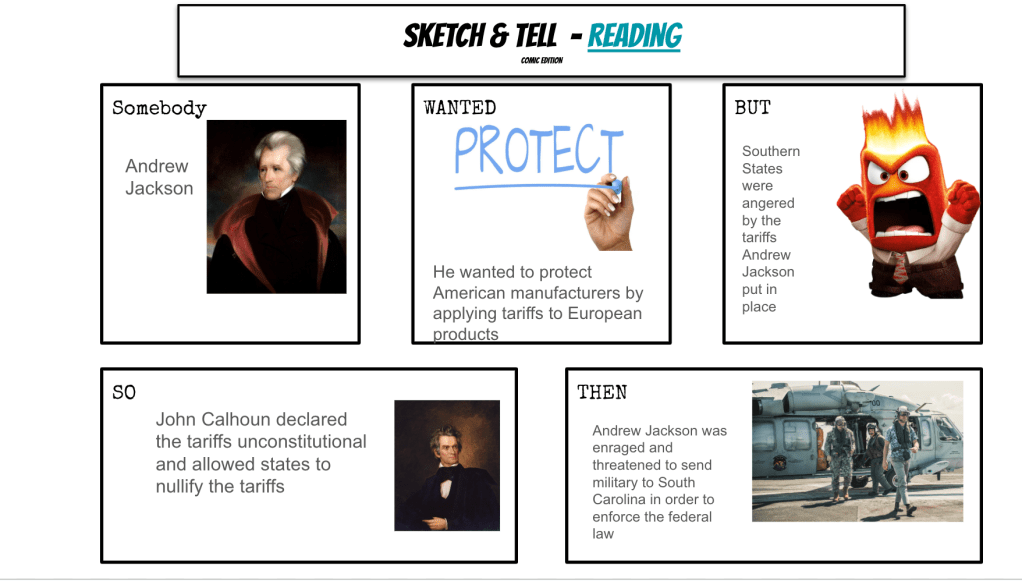
Somebody-Wanted-But-So-Then – Breaking Down the Crisis

We kept coming back to our main unit question, using it to frame our discussion on how tariffs and nullification created tension between the federal government and the states. To break things down, we used a Somebody-Wanted-But-So-Then chart to map out key players and their perspectives. This led us into a discussion about Andrew Jackson’s response to South Carolina’s threat to nullify the tariff and John C. Calhoun’s argument for states’ rights.

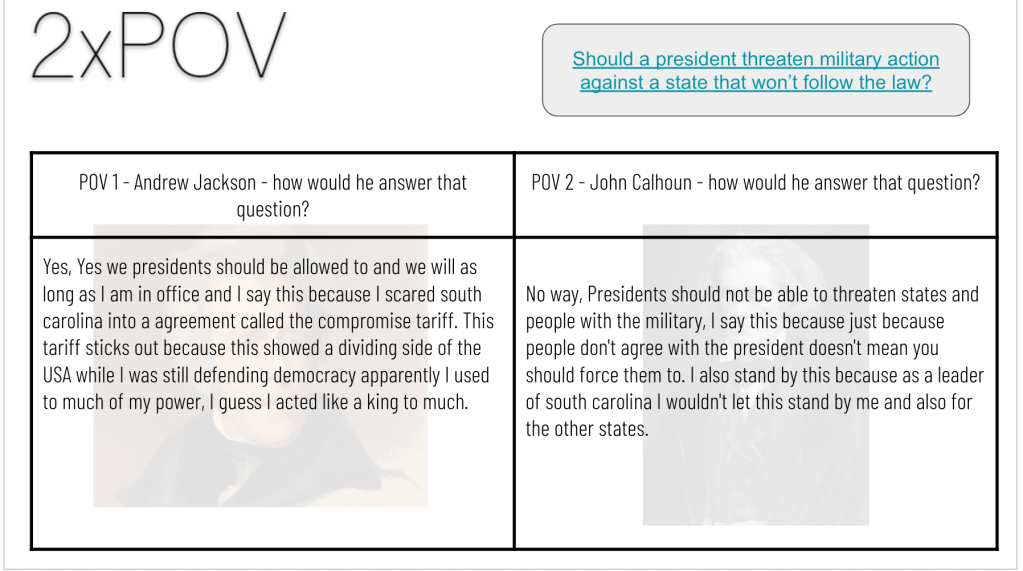
POV Analysis – Jackson vs. Calhoun

To take it a step further, students examined the point of view (POV) of both Jackson and Calhoun by answering:
“Should a president threaten military action against a state that refuses to follow federal law?”

This activity pushed students to think critically about federal vs. state power, a growing issue leading up to the Civil War.

🚀 By layering Fast & Curious, the Frayer Model, Somebody-Wanted-But-So-Then, POV Analysis, and Sketch & Tell, students engaged with history in multiple ways, making the complexities of the Nullification Crisis more accessible and meaningful!

Thursday – Jackson’s Bank War

We continued our exploration of Andrew Jackson by focusing on the Bank War and its effects on the U.S. economy. To kick things off, we ran a Gimkit with key vocabulary terms—inflation, depression, banknotes, economy, and others. The first round lasted two minutes, followed by quick feedback, and then another two-minute round. As with previous days, every class raised their average by 38% or higher, reinforcing key concepts before diving into the content.

Originally, I planned to incorporate a Frayer MiniReport and 2xPOV, but due to a two-hour delay, I adjusted the plan to focus on the MiniReport with Class Companion to make the best use of our time. With a test coming up on Tuesday, I wanted to keep things streamlined while still reinforcing key ideas.

MiniReport – Understanding the Bank War

Students worked through the Bank War MiniReport, using two sources—one primary and one secondary—to answer three key questions:

  • Why did Jackson hate the bank?
  • What were the intended consequences of his decision?
  • What were the unintended consequences?

After gathering their information, students wrote a quick paragraph summary, ensuring they could explain Jackson’s motivations, the impact of his veto, and how closing the National Bank affected the economy.

Class Companion – Writing Growth in Action

This is where things got interesting. Some students are writing more than they ever have, growing in confidence as they refine their responses with AI feedback. Others? They’re determined to outwit and outsmart the AI, testing how much they can push its limits. Either way, the result is the same—they’re writing more and getting better.

🚀 Even with the schedule adjustment, students engaged with the Bank War in a meaningful way, using historical sources and AI feedback to analyze Jackson’s choices and their lasting impact.

Friday – Native Removal

Friday was all about bringing together multiple aspects of Indian Removal—the Seminole Wars, Indian Removal Act, Worcester v. Georgia, and the Trail of Tears—and making them fit into one class period. With so many connected historical events, I had to be intentional about how each piece flowed together while keeping students engaged.

Fast & Curious – Vocabulary Review

We started with a Gimkit focused on key vocabulary—removal, treaty, sovereignty, resistance, forced migration—running the game in two two-minute rounds with quick feedback in between. This ensured students had a foundation before diving into content.

Edpuzzle – The Seminole Wars

To kick off our discussion on Native resistance, we watched an Edpuzzle covering Osceola and the Seminole Wars. As they watched, students answered embedded questions about why the Seminole resisted removal, how they fought back, and how their response was different from other tribes. This set up an early comparison between military resistance (Seminole) and legal resistance (Cherokee in Worcester v. Georgia).

Annotate & Tell – Indian Removal Act & Worcester v. Georgia

Next, we used Annotate & Tell to break down two key readings:

  1. The Indian Removal Act – Students highlighted government actions in yellow and Native American responses in green, analyzing how Jackson justified removal and how different tribes reacted.
  2. Worcester v. Georgia – Students did the same with this case, focusing on how the Cherokee used legal resistance and how Jackson refused to enforce the Supreme Court ruling.

After annotating, students paired up to explain one key takeaway before we discussed as a class.

Number Mania – Justifying a Quote with Data

For the activity, I gave students a quote:

“The Trail Where They Cried was not only a physical journey but also a moment that reshaped Cherokee history, causing loss, suffering, and ultimately resilience.”

Their task was to justify this quote using numerical evidence from the reading. They worked in pairs to pull at least four key numbers that supported the quote. Some of the most commonly cited numbers included:

  • 1,200 miles – Representing the physical journey of forced removal.
  • ¼ (25%) – The portion of the Cherokee population that died, proving suffering and loss.
  • 2,000 died in camps – Highlighting the harsh conditions even before the journey began.
  • 1839 – The Cherokee wrote a new constitution – Demonstrating their resilience and ability to rebuild.

Once they collected their numbers, students added them to a Number Mania poster, writing a brief explanation of how each number connected to the quote. A few students even challenged themselves by finding additional numbers beyond the reading to reinforce their argument.

Thin Slide

To bring everything together, students created a Thin Slide on the Trail of Tears, following the one word, one image format. They had three minutes to choose an image that captured the impact of the Trail of Tears and one word that summed up its historical significance (e.g., suffering, survival, injustice, displacement, resilience).

After creating their slides, students did a rapid-fire share, explaining why they chose their word and image in one sentence.

Quizizz Assessment

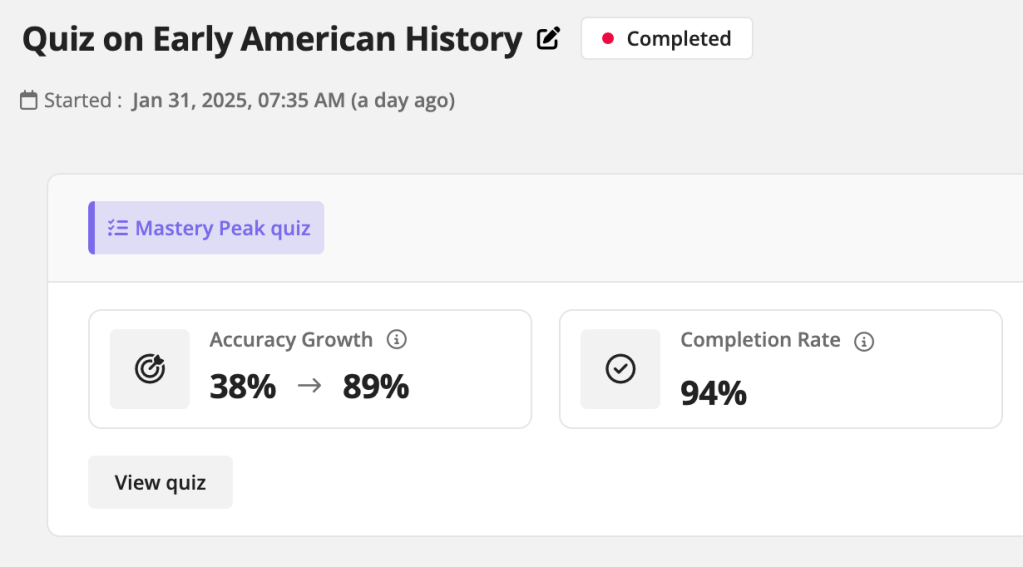
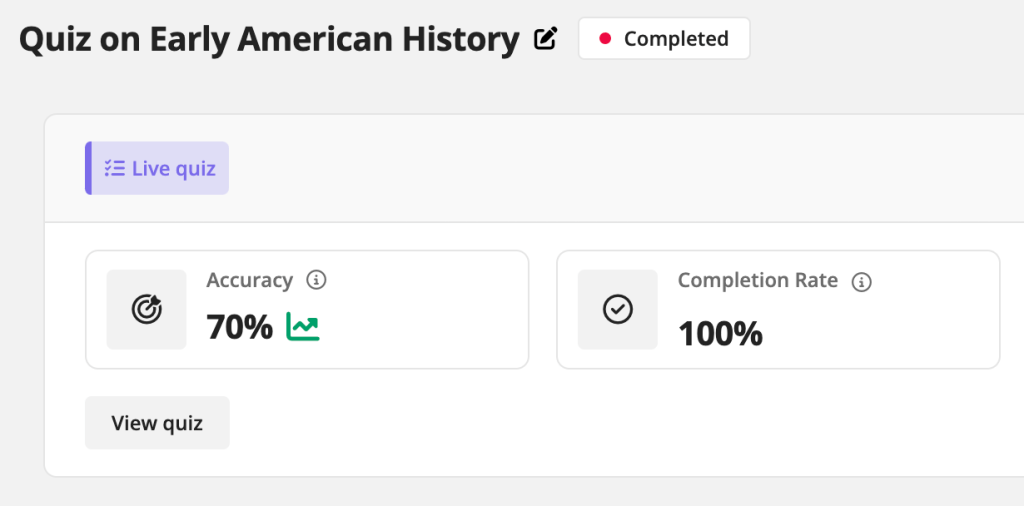
I ended class with a Quizizz assessment over everything we learned this week about Andrew Jackson. The class averages were as follows: 70%, 55%, 76%, and 55%.(87%). The last class of the day, I stopped part way through after looking at some of the scores and we had a heart to heart, life lesson talk and we tried again. I knew they could do better because they were rocking it this week – so they finished at an 87% class average. These scores were good considering we began with 19% to 25% pre-assessment averages.

The Week That Was In 234

When I think of teaching the Early Republic, I think about political parties, presidential decisions, and how those decisions shaped the federal government. I think about how the first five presidents kept us out of wars, expanded federal power, and navigated political tensions. I think about how political parties influenced those choices and how the nation evolved under their leadership. But this damn textbook has other plans.

Instead of keeping the focus on political parties, foreign policy, and domestic growth, it randomly throws in sectionalism, the Missouri Compromise, the Industrial Revolution, and some random westward expansion facts—all jammed into two weeks. It’s way too much, and it makes no sense. This is the Early Republic, not a scattershot of everything that happened between 1800 and 1825.

Then Friday rolled around, and we hit the common assessment from the textbook—a test that somehow completely ignores the Monroe Doctrine but includes a question asking students to identify three battles from the War of 1812. Who cares?! It’s not even an important part of the unit.

But I digress.

So, with all that, we kicked off Monday learning about growing sectionalism after the War of 1812. SMH.

Monday – War of 1812 Rack and Stack

Tuesday – Industrial Revolution

Monday

We kicked off Monday with a Content Compactor that acted as a quick review of the causes of the War of 1812. This got students thinking about the political, economic, and regional tensions that led to the war while allowing them to summarize key ideas concisely—an essential skill as we transitioned into the concept of sectionalism.

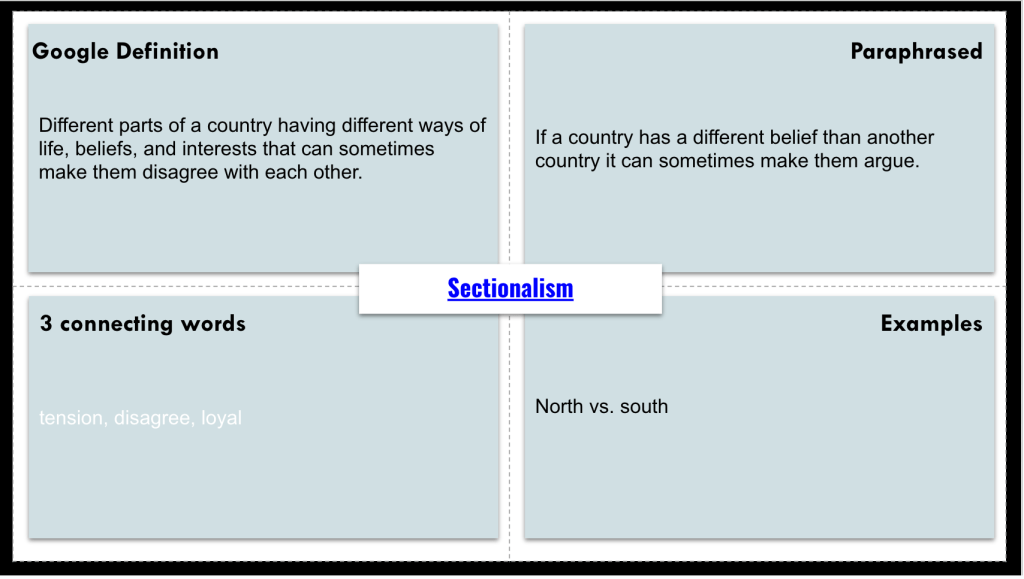
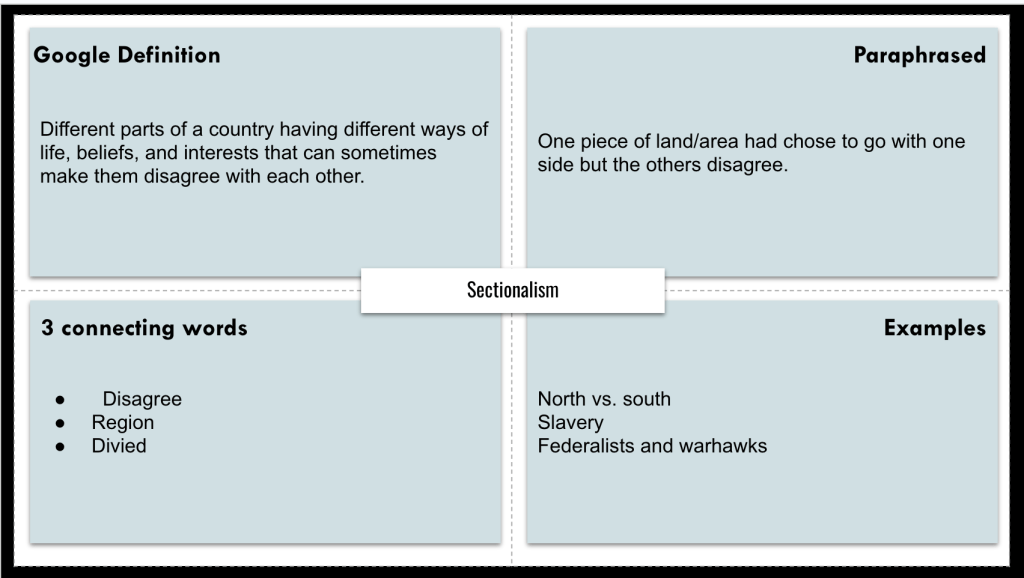
Frayer Model: Defining Sectionalism

Next, we tackled sectionalism with a Frayer Model. Students defined the term, provided examples and non-examples, and listed key characteristics. The goal was to help students see sectionalism not just as a word, but as a major force that would shape U.S. history for decades. This activity ensured that students grasped the economic, political, and social divisions developing between regions of the country.

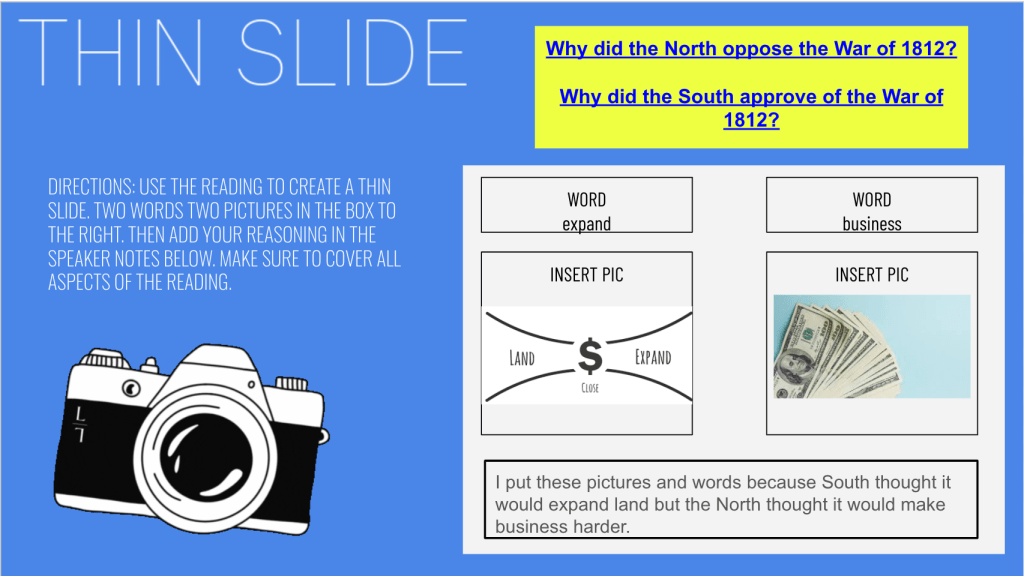
Thin Slides: Visualizing Sectionalism

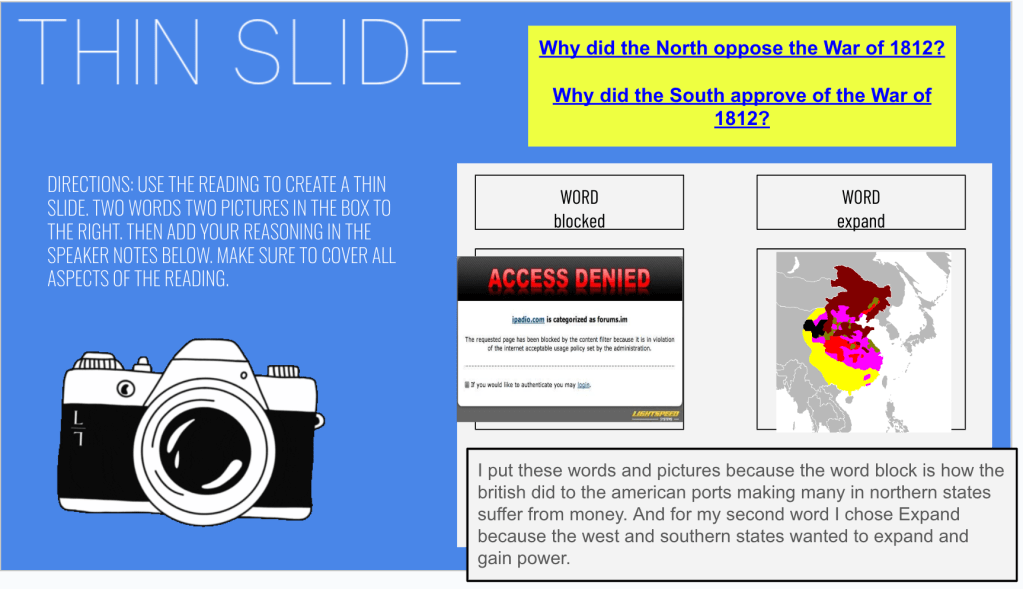
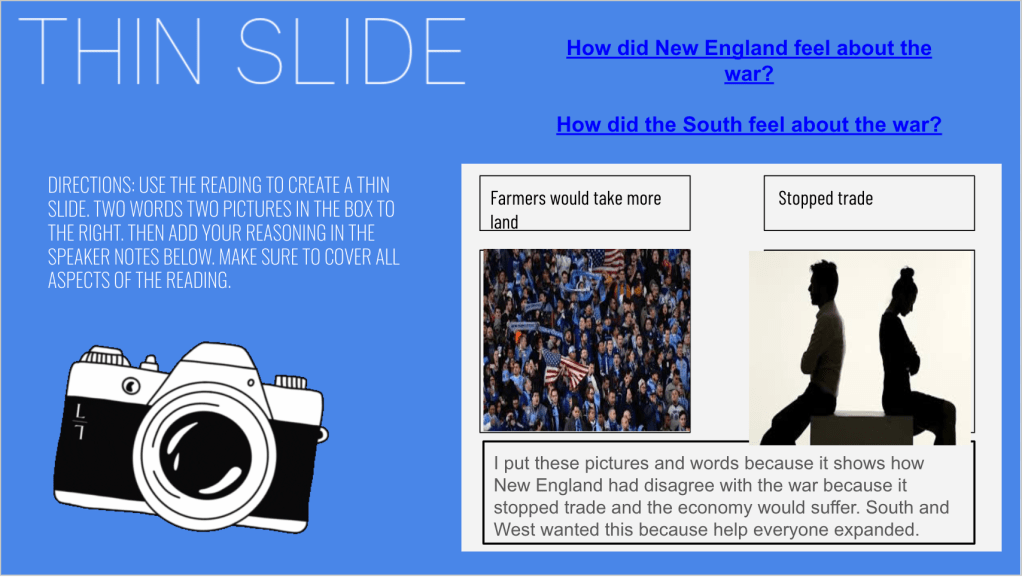
Once students had a working definition, they moved into a Thin Slides activity. Using a short reading on sectionalism, they selected two words and two images that best represented how sectionalism grew after the War of 1812. In the speaker notes, they explained their choices, addressing:

  • Why did the North oppose the war?
  • Why did the South support it?
  • How did economic and political differences lead to sectionalism?

This was a quick, low-stakes way for students to process how sectional tensions formed and why they mattered.

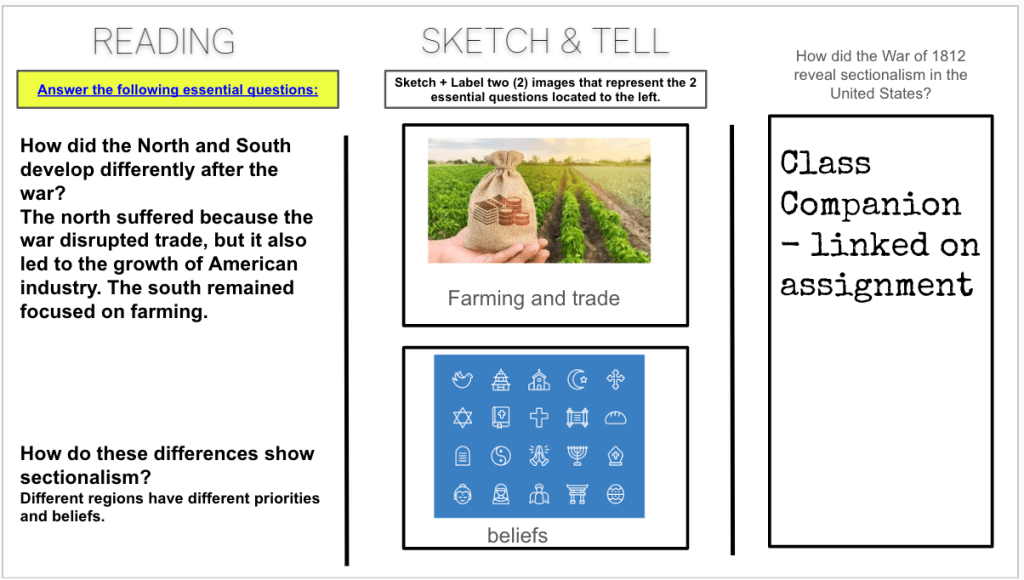
Sketch & Tell: Answering Essential Questions

Students then tackled three essential questions through a Sketch & Tell activity:
1️⃣ How did the North and South develop differently after the war?
2️⃣ How did these differences contribute to sectionalism?
3️⃣ How did the War of 1812 reveal sectionalism in the U.S.?

They created two labeled sketches that visually represented their answers, reinforcing how regional differences in economy, industry, and policy contributed to rising sectional tensions.

Class Companion: Writing About Sectionalism

To wrap it up, students used Class Companion to answer the question:
💡 How did the War of 1812 reveal sectionalism after the war?

This allowed students to take their thoughts from their sketches and turn them into a structured response with real-time AI feedback. Since some students needed more time to refine their writing, we carried this over into Tuesday, giving them an opportunity to perfect their responses and ensure they fully understood sectionalism’s impact.

Why This Works
  • Content Compactor helped students refresh prior knowledge in a concise, engaging way.
  • Frayer Model ensured students developed a strong conceptual foundation before moving forward.
  • Thin Slides encouraged visual learning and synthesis of ideas.
  • Sketch & Tell helped students explain complex historical trends in a creative, student-centered way.
  • Class Companion allowed students to organize their thoughts in writing with immediate, personalized feedback.

Instead of just reading about sectionalism, students were building their understanding step by step, using visual, discussion-based, and writing activities to make the concept stick.

Tuesday & Wednesday

We started Tuesday by finishing up Class Companion responses from Monday on how the War of 1812 revealed sectionalism. Once students submitted their final responses, we pivoted to the Industrial Revolution—a topic that the unit test oddly prioritizes with fill-in-the-blank questions on patents, corporations, and capitalism, but barely acknowledges the Monroe Doctrine or foreign policy under the early presidents. Because that makes total sense.

Gimkit Fast & Curious: Industrial Revolution Vocab

Since the test focuses so much on random economic terms, we ran a Gimkit Fast & Curious with key Industrial Revolution vocabulary—words like patent, corporation, free enterprise, and capitalism. First round: class averages were pretty bad. After giving a quick mini-lesson on the most-missed words, we ran the Gimkit again, and scores jumped up significantly.

To lock in the most commonly missed terms, we followed up with Frayer Models for:
🔹 Patent
🔹 Corporation
🔹 Free Enterprise

Reading, Videos & Thick Slides

After breaking down the vocabulary, students read about key innovations of the Industrial Revolution—factories, mechanization, interchangeable parts, and yes, the cotton gin (because clearly, that fits into an Early Republic unit 🤦‍♂️).

To help process the reading, students worked on Thick Slides focused on four ways the Industrial Revolution transformed America. They had to:
✅ List four key impacts
✅ Find an image to represent industrialization
✅ Compare the North and South’s role in industrialization

Why This Works
  • Gimkit Fast & Curious ensured students got multiple reps with essential vocabulary.
  • Thick Slides helped synthesize and apply learning, rather than just memorizing random terms.
  • Multiple formats (reading, videos, notes, discussion, and visuals) ensured everyone had a way to engage with the content.

Even though this topic was awkwardly shoved into the unit, we made it work in a way that actually helped students understand and retain the material—instead of just cramming information for a test.

Thursday

With the unit test coming up, I wanted to make sure students had multiple opportunities to review key concepts in an engaging and structured way. Enter Brain, Book, Buddy, Boss—one of my favorite review strategies because it reinforces retrieval practice, collaboration, and teacher-guided clarification all in one lesson.

Step 1: Brain (Independent Recall)

Students received the review sheet (matching terms, short answer questions, and key concepts from The Early Republic). Before looking at any resources, they went through the entire review sheet independently, answering as many questions as they could from memory.

The goal? Get a sense of what they already know.

Some students flew through it, while others stared blankly at the paper. That’s the beauty of this step—it exposes strengths and gaps immediately.

Step 2: Book (Reference-Based Learning)

Next, students used their notes, textbooks, and classwork to fill in missing answers and correct any mistakes. This phase is where light bulbs start going off as students piece together information they’ve seen throughout the unit.

Of course, this is also where they discover just how terribly worded some of these test questions are.

For example, here’s an actual test question:
“What were some effects of the Alien and Sedition Acts?”

A. The policy of nullification became largely discredited.
B. The French stopped attacking U.S. ships.
C. Fewer people immigrated to the United States from Europe.
D. The principle of states’ rights gained public support.

This question assumes a level of vocabulary knowledge that most 8th graders simply don’t have. The wording is vague enough to confuse even students who understand the Alien and Sedition Acts. What 8th grader uses discredited in conversation?

Step 3: Buddy (Peer Discussion & Comparison)

After self-correcting with their books, students paired up to compare answers and discuss any remaining gaps. If they disagreed on an answer, they had to explain their reasoning to each other.

These conversations were gold—students challenging each other, correcting mistakes, and realizing where they were off-track. They got into heated debates over Federalist vs. Republican beliefs and the importance of Marbury v. Madison. This step solidified a lot of key concepts.

Step 4: Boss (Teacher Q&A)

For the final step, I opened the floor for questions. Students could ask me about anything still unclear—but with a catch:

They only had 8 minutes.

Once the timer hit zero, I was done answering. This forces students to prioritize their questions and keeps the review focused and efficient.

Why This Works
  • Brain (independent recall) activates retrieval practice.
  • Book helps reinforce accuracy and self-correction.
  • Buddy provides peer discussion and clarification.
  • Boss allows for focused teacher intervention in a structured way.

By the end of class, students had worked through misconceptions, clarified their understanding, and felt more confident about the material. It was one of the best review strategies for this test, and it reinforced just how flawed some of the test’s wording really was.

Friday: Test Day

Friday was test day, and I had everything set up on Class Companion for the short answer questions, while using McGraw Hill’s testing program for the multiple-choice and fill-in-the-blank sections.

One of the fill-in-the-blank questions asked about the beliefs of Democratic-Republicans. Most students simply typed “Republicans”, which is a reasonable answer considering the textbook even calls them that at times.

But McGraw Hill marked it wrong because they didn’t type the answer exactly as programmed: “Democratic-Republicans, Republicans”. I wish I were making this up.

So now, instead of assessing whether students actually understood the beliefs of the party, we were stuck in a battle of formatting.

Class Companion: At Least It Scored Correctly

For the short answer responses, Class Companion scored and provided feedback, but students only had one attempt—no revisions, just one shot. At least it evaluated their responses based on content rather than formatting nonsense.

I need a damn drink.

The Week That Was In 234

Last week was all about layering EduProtocols to tackle complex historical topics in engaging, meaningful ways. From political parties to the War of 1812, we used Thin Slides, Archetype Four Square, Frayer Models, Progressive Sketch and Tell, Map and Tell, and Class Companion to help students synthesize, visualize, and apply their knowledge. Instead of passively reading from the textbook, students were analyzing, predicting, debating, sketching, and writing, making these historical moments stick. Here’s a breakdown of how EduProtocols transformed our week and why they worked.

Monday – Political Parties Rack and Stack

Tuesday – John Adams

Wednesday – Marbury vs. Madison

Thursday – Louisiana Purchase

Friday – War of 1812

Monday: The Birth of Political Parties and the Election of 1796

If I had my way, I’d start the Early Republic unit with political parties and go deep. I’d have students analyze the decisions of early presidents through the lens of Federalists and Democratic-Republicans, helping them connect ideology to action. But instead, I’m following the textbook—a textbook that does a poor job of explaining how early party beliefs shaped America’s foreign and domestic policies and ultimately led to the War of 1812.

Rather than let the textbook dictate a shallow, disconnected lesson, I did what I always do—I adapted, structured, and layered EduProtocols to make political parties click for my students.

Quick Notes: Laying the Foundation

We started with quick notes to introduce how political parties formed in the 1790s, the key differences between Federalists and Democratic-Republicans, and the founding figures behind each party—Alexander Hamilton vs. Thomas Jefferson. These notes were designed to be brief and targeted—just enough to set up the next activity while keeping students engaged.

Map and Tell: Visualizing Political Divides

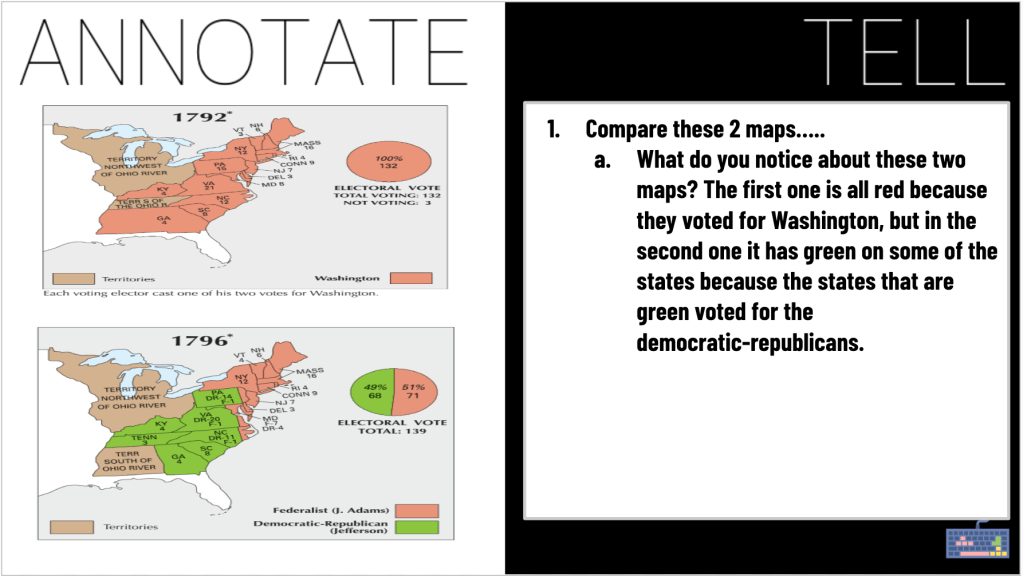
Next, we used a Map and Tell to analyze the elections of 1792 and 1796. Students examined who won the elections (Washington in 1792, Adams in 1796), where each party gained support (Federalists dominated New England, Democratic-Republicans gained strength in the South and West), and how political divisions emerged geographically. This was eye-opening for many students, who could see how early America was already divided in ways that still echo in modern politics.

Annotate and Tell: Organizing Party Beliefs

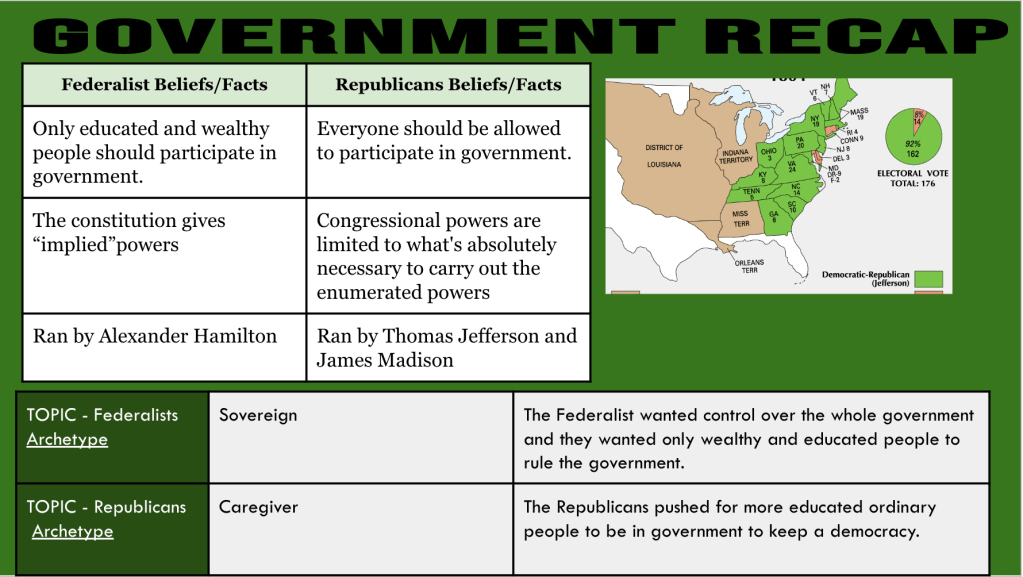
To make sense of the ideological divide, students used Annotate and Tell to highlight and code their readings. They highlighted Federalist beliefs in blue and Democratic-Republican beliefs in green. By the end, students had color-coded party perspectives on government power, the economy, foreign relations, and constitutional interpretation. This strategy helped students organize and visualize each party’s stance, making it easier to compare and contrast.

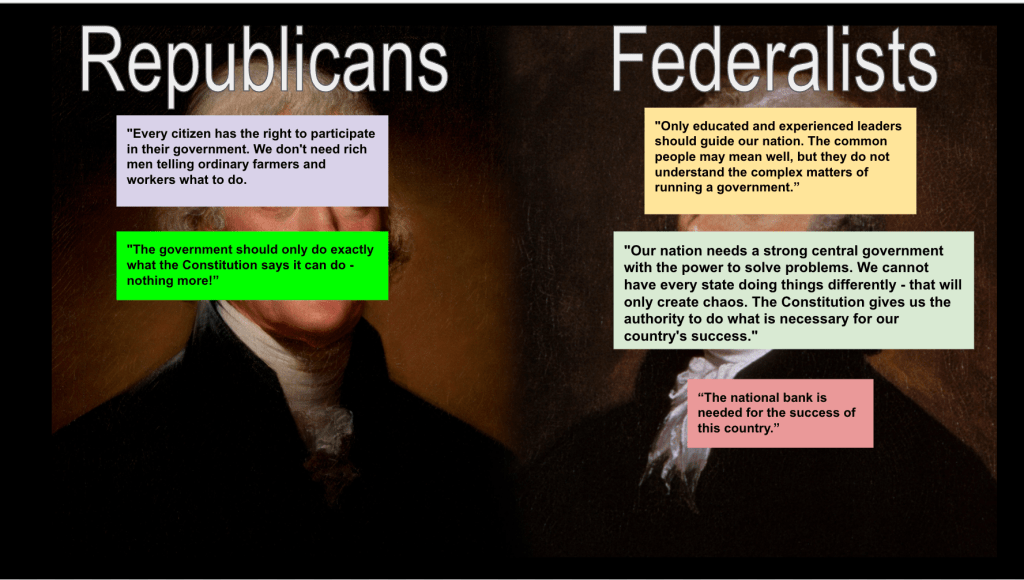
Quote Sort: Who Said It?

Now that students had a solid grasp of each party, we moved into a Quote Sort. I gave them statements from historical figures, and they had to drag and drop them under either Federalists or Democratic-Republicans. Examples included:

  • “The country should be led by the wealthy and educated.”Federalists
  • “States should have more power than the national government.”Democratic-Republicans

This activity forced students to think critically and apply their knowledge, reinforcing party beliefs in a hands-on way.

Thick Slide: Bringing It All Together

To synthesize everything, students completed a Thick Slide where they assigned archetypes to Hamilton and Jefferson, compared Federalist vs. Democratic-Republican beliefs, and found images that represented each party’s values. This final layer helped students see patterns, make connections, and process the big picture in a creative, visual way.

Class Companion: Writing on the Election of 1796

To wrap it all up, students used Class Companion to answer: How did disagreements between Hamilton and Jefferson lead to both the creation of political parties AND an unusual outcome in the election of 1796?

Class Companion provided real-time feedback, pushing students to refine their writing. The AI-driven scoring gave them a clear sense of what worked—and what needed improvement. Since they had multiple attempts, students were motivated to revise and improve their responses in real time. Some students got competitive, trying to perfect their answers on their third attempt. Seeing them actually excited about revising their writing was a huge win.

Why This Works
  • Map and Tell gives students a visual connection to political divisions.
  • Annotate and Tell helps students organize party beliefs clearly.
  • Quote Sort turns ideological differences into an interactive challenge.
  • Thick Slides encourage students to synthesize information creatively.
  • Class Companion makes writing engaging, immediate, and iterative.

Students analyzed, compared, discussed, and created. This layered approach made early political parties meaningful, memorable, and real.

Tuesday: John Adams

I’ve been using the textbook, but I’m running out of time. The reality of trying to fit everything into the unit assessment timeline has me teaching to a test instead of focusing on deep learning and real understanding. This is not education. I feel like a robot, checking boxes rather than tailoring lessons to what my students actually need. But, despite the constraints, I found ways to layer in engagement and critical thinking while still covering the required content.

Quick Notes: Laying the Foundation

I started class with quick notes to introduce:

  • Background on John Adams—his role in the revolution, his Federalist views, and his leadership style.
  • Foreign policy challenges—especially rising tensions with France.
  • The XYZ Affair—what happened and how it impacted U.S.-French relations.
  • The Alien and Sedition Acts—why Adams passed them and how they divided the nation.

These notes set the stage, ensuring students had context before diving into deeper analysis.

Fast and Curious Gimkit: Reinforcing Key Ideas

Next, we ran a Gimkit Fast and Curious with questions on John Adams and political parties. Students played for three minutes, I provided instant feedback, and we played again. This quick retrieval practice helped reinforce key concepts, ensuring they recognized important terms and events before moving forward.

Archetype Four Square: Understanding John Adams

To push students toward higher-order thinking, we used an Archetype Four Square activity.

Students watched an EdPuzzle on John Adams while thinking about which archetype best fit him. Was he:

  • A Protector, trying to defend the country from French interference?
  • A Ruler, who prioritized law and order with the Alien and Sedition Acts?
  • A Visionary, thinking ahead for what was best for the country long-term?

They had to choose an archetype, justify their reasoning, and discuss with a partner. This helped them see Adams as more than just another name in the textbook—they began analyzing his motivations and leadership style.

Sketch and Tell Connect: Breaking Down the Issues

We then moved into a Sketch and Tell Connect, where students answered four guided questions pulled from the textbook’s guided reading section. The goal was for them to process and organize what they had learned.

To push them further, I used a Somebody Wanted But So Then (SWBST) structure for the sketches:

  • Somebody (John Adams or France)
  • Wanted (to protect the U.S., avoid war, maintain Federalist power, etc.)
  • But (tensions with France, backlash to Alien and Sedition Acts, etc.)
  • So (the government took action)
  • Then (the impact on the country and his presidency)

This was challenging for them. Synthesizing content like this is a higher-order skill, and many struggled to condense complex events into simple cause-and-effect relationships. But that’s the whole point—we’ll keep practicing.

Class Companion: Writing on Adams’ Presidency

To wrap up, students used Class Companion to summarize the major problems Adams faced as president. They had to explain the XYZ Affair, the Alien and Sedition Acts, his dealings with France, and the Federalist Party split.

The AI-powered feedback helped students clarify their writing, refine their ideas, and strengthen their arguments. Some improved their responses after multiple attempts, realizing where they needed stronger evidence and explanations. Seeing students revise and rethink their work in real time was a win.

Why This Works
  • Fast and Curious Gimkit reinforced content through repetition and quick retrieval.
  • Archetype Four Square encouraged critical thinking about Adams’ leadership style.
  • Sketch and Tell Connect with SWBST pushed students to synthesize information visually and see the cause-and-effect relationships in history.
  • Class Companion writing gave students instant feedback, helping them improve their ability to explain and analyze historical events.

Even though I felt trapped by the textbook and assessment timeline, I made sure students weren’t just memorizing—they were thinking, discussing, and applying. That’s what makes learning stick.

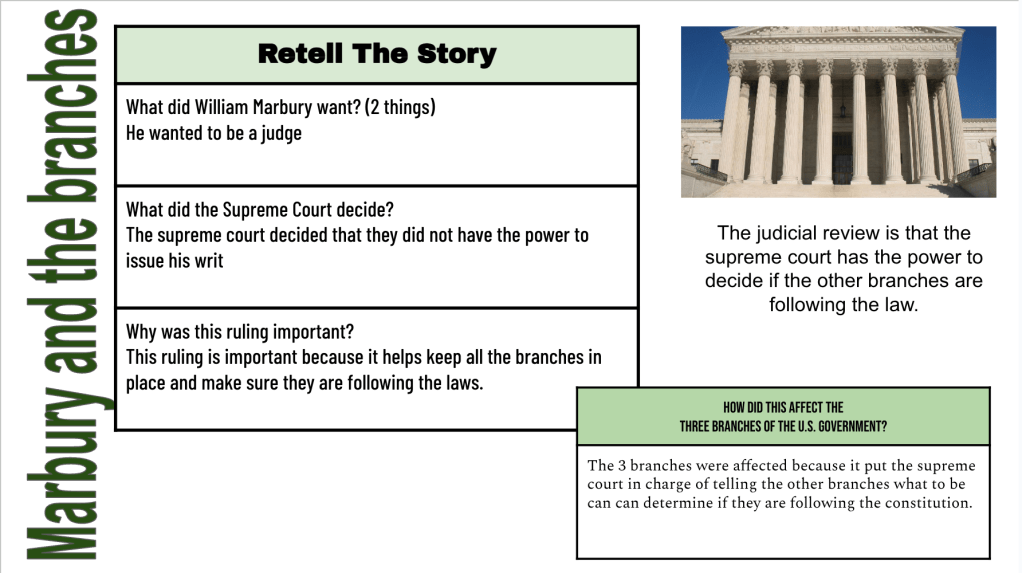
Wednesday: Marbury v. Madison

One of the essay questions on the textbook unit assessment asks students to write about Marbury v. Madison. So, as I continue teaching to a test (insert sarcasm), I put together a lesson solely focused on the case. What’s funny is that the pre-assessment for the unit didn’t include a single question on Marbury v. Madison, yet somehow, students are expected to write an essay about it at the end of the unit. The textbook dedicates two paragraphs to explaining the case—two paragraphs—and assumes that’s enough for middle schoolers to write an in-depth response.

Luckily, I already had a lesson from last year that actually helps students understand this case in a meaningful way. It’s structured, layered, and built for comprehension rather than memorization.

Quick Notes: The Supreme Court Before Marbury v. Madison

We started with quick notes on the weaknesses of the Supreme Court before this landmark case. The Court was not seen as a powerful branch, and many people questioned its authority. Marbury v. Madison changed that by firmly establishing the Court’s power of judicial review—the ability to declare laws unconstitutional.

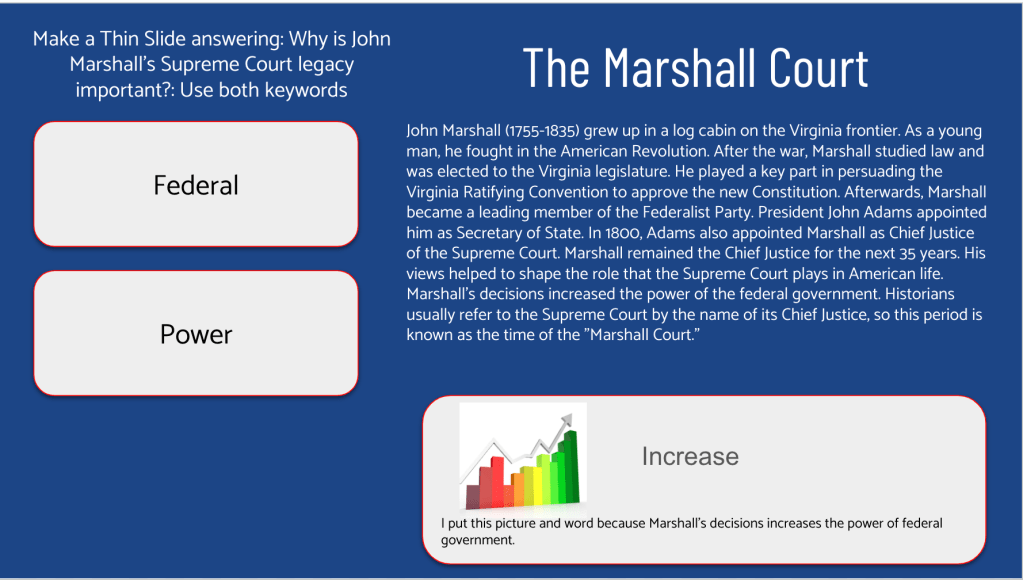
Thin Slide: John Marshall’s Supreme Court Legacy

To introduce John Marshall, students completed a Thin Slide answering:
Why is John Marshall’s Supreme Court legacy important?

Students added one word and one picture to represent his impact and responded to the question. This quick, low-stakes activity gave them an opportunity to process key ideas visually before we dove deeper.

Frayer Models: Breaking Down Key Concepts

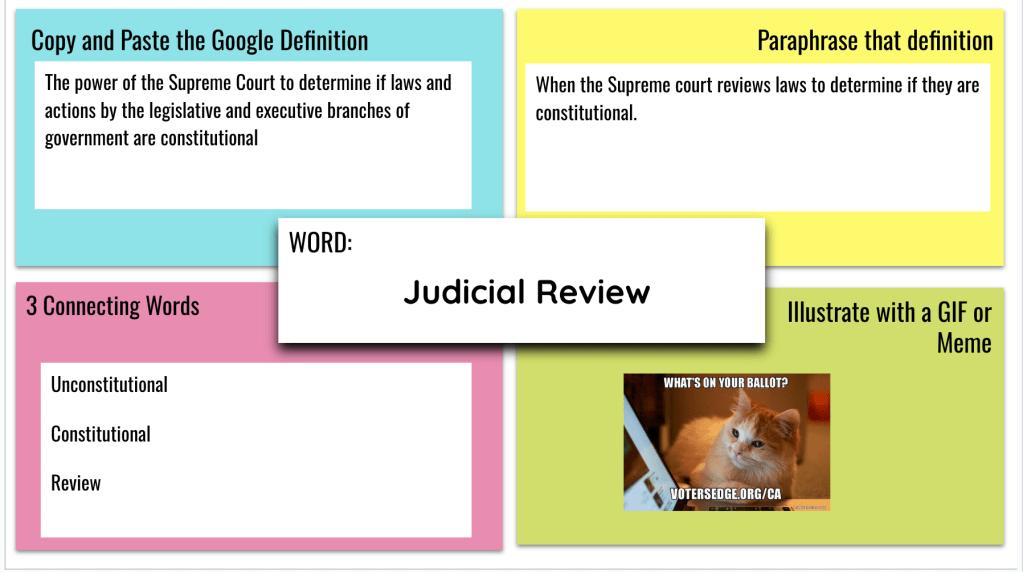
Next, students built background knowledge using two Frayer models—one for judicial review and one for writ of mandamus.

For each concept, they:

  • Defined it in their own words.
  • Paraphrased a Google definition (to compare with their explanation).
  • Came up with three connecting words to reinforce meaning.
  • Illustrated the concept using a GIF or meme.

This structured approach helped students grasp difficult legal terms and connect them to real-world applications.

Reading the Case: Making It 8th-Grade Friendly

The textbook’s two-paragraph explanation wasn’t enough, so I adapted an iCivics reading to simplify the language while maintaining accuracy.

Students read about:

  • What William Marbury wanted (his commission as a judge).
  • What the Supreme Court decided (they couldn’t force Madison to deliver the commission).
  • Why the ruling was important (it established judicial review).

Students completed a Thick Slide to organize their learning, breaking the case into cause, decision, and impacta direct alignment with the essay question they’ll face on the unit test.

Annotate and Tell: Marshall’s Ruling

We then moved to primary source analysis. Students read excerpts from John Marshall’s ruling and used Annotate and Tell to highlight key ideas.

As they read, they:

  • Highlighted Marshall’s views on who should have the final say in interpreting the Constitution.
  • Answered: What does Marshall say is the Supreme Court’s job and responsibility? Why is this important to his argument?

This activity reinforced the central argument of judicial review—that the Supreme Court’s job is to interpret the Constitution and override laws that contradict it.

Gimkit Fast and Curious: Wrapping It Up

To cement understanding, we ended class with a Gimkit Fast and Curious on Marbury v. Madison. After one round, I gave feedback, and we played again. By the second round, students were improving their recall and accuracy, showing that the layered approach to this lesson worked.

Why This Works
  • Thin Slides helped students preview the key figure (John Marshall) in a quick, engaging way.
  • Frayer Models broke down complex legal concepts into manageable, student-friendly chunks.
  • A carefully adapted reading ensured that all students could access the information—not just the ones who can decipher legal jargon.
  • Thick Slides allowed students to process the case visually and organize their learning for the upcoming essay.
  • Annotate and Tell built close reading skills and helped students engage with Marshall’s ruling in a meaningful way.
  • Gimkit Fast and Curious reinforced content through repetition and retrieval practice, strengthening student recall.

I made sure students actually understood Marbury v. Madison instead of just skimming two textbook paragraphs and hoping for the best. That’s why this approach works.

Thursday: The Louisiana Purchase

The textbook’s approach to the Louisiana Purchase makes zero sense. It spends an entire chapter on Napoleon, French colonies, and the lead-up to the purchase, yet barely covers what the purchase meant for the U.S. Then, it dedicates multiple pages to Lewis and Clark, even though there isn’t a single question about them on the unit assessment. Meanwhile, Marbury v. Madison gets two textbook paragraphs, but the test expects students to write a full essay on it. Make it make sense.

Instead of wasting time on unnecessary details, I cut straight to the heart of the matter—why the Louisiana Purchase mattered, why Jefferson took the risk, and why Federalists hated it.

Map and Tell: Predicting Motives

We started class with a Map and Tell prediction slide with the following setup:

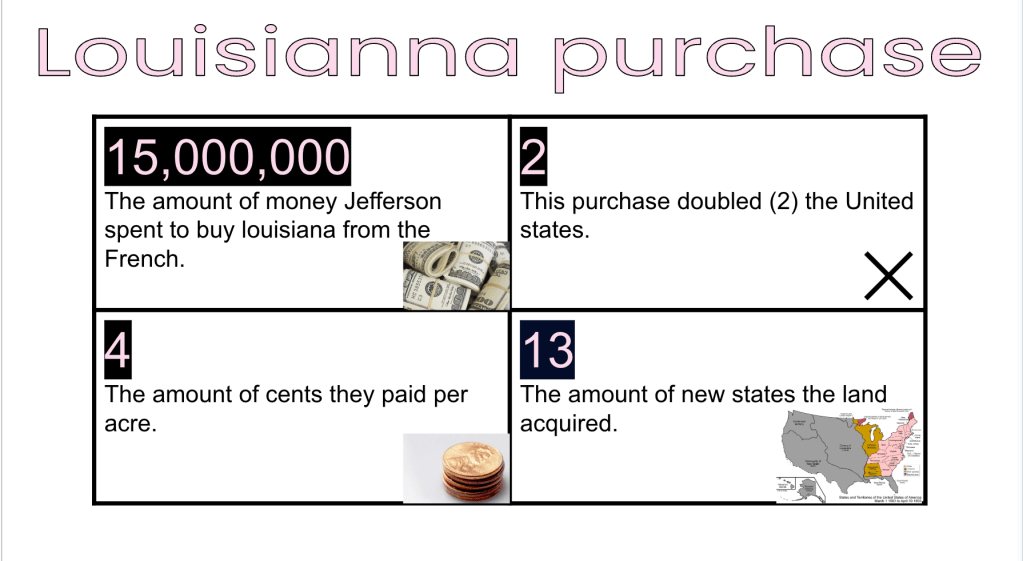
“The Democratic-Republican President, Thomas Jefferson, had a bold vision for American expansion that led him to create the Louisiana Purchase of 1803, which doubled the size of the United States for just 3 to 4 cents per acre—arguably the greatest real estate deal in history.”

Students then made predictions:

  • Why do you think France was willing to sell such a huge territory to the United States?
  • Why do you think the Federalists hated this purchase of Louisiana?

This activity got them thinking before diving into the details. It also highlighted misconceptions early so we could clear them up as we went.

EdPuzzle: Understanding Jefferson’s Vision

Next, students watched an EdPuzzle on Thomas Jefferson to ground them in his mindset—his strict interpretation of the Constitution, his agrarian ideals, and his vision for westward expansion.

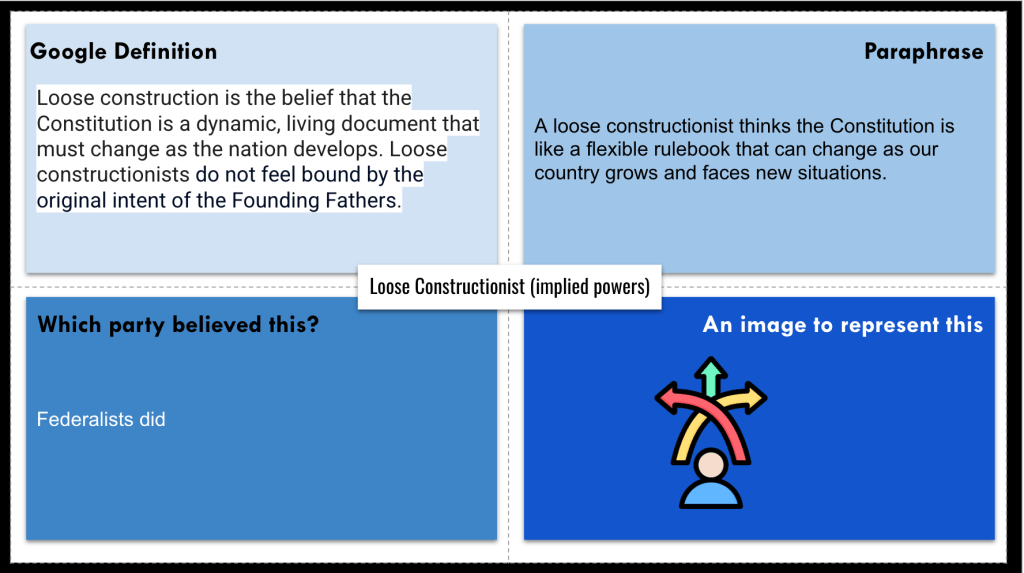
Frayer Models: Strict vs. Loose Constructionists

Since one of the biggest issues with the purchase was that Jefferson had to go against his own beliefs, students completed two Frayer models:

  • Strict Constructionist (following the Constitution exactly as written)
  • Loose Constructionist (interpreting the Constitution more broadly)

This set up the big debate—how Jefferson, a strict constructionist, justified loosening his interpretation to make the purchase happen.

Number Mania: Proving a Statement with Data

Next, we read about the Louisiana Purchase and completed a Number Mania.

For this activity, I gave students a statement they had to prove true using numerical evidence from the text:

“Expanding the country west was a key goal for Jefferson. So even though it went against some of his usual policies, Jefferson made the daring choice to buy all of Louisiana from France.”

Students had to find and highlight numbers that supported this idea, such as:

  • The price of the purchase ($15 million, about 3-4 cents per acre)
  • The Senate approval vote (26-6 in favor)
  • How the purchase doubled the size of the U.S.

Instead of just listing facts, they had to find numbers that connected directly to the bigger argument, reinforcing why the purchase was such a big deal.

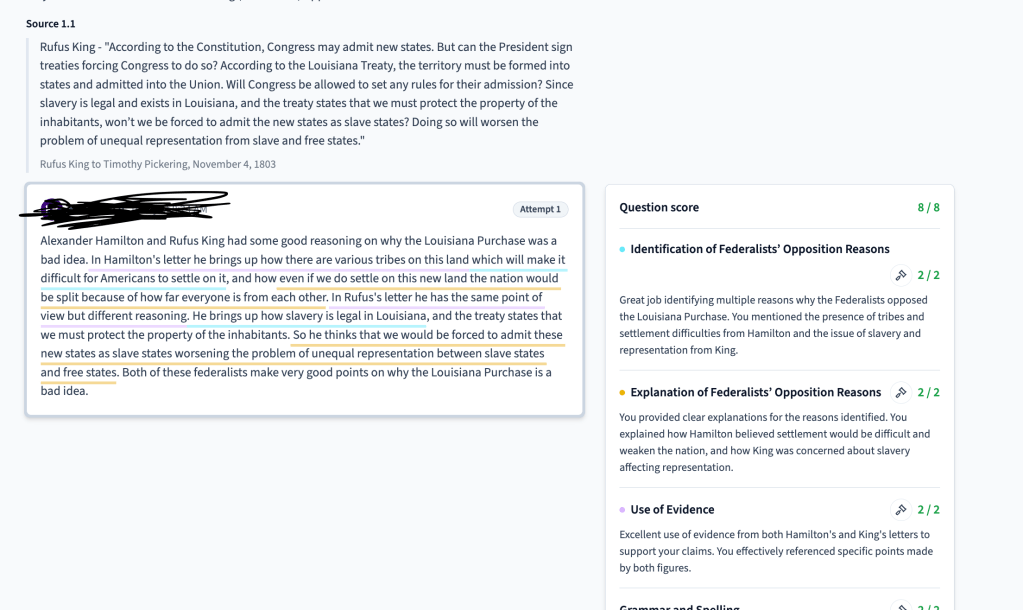
Class Companion: Federalist Opposition to the Purchase

To wrap it up, students went to Class Companion, where they read letters from Alexander Hamilton and Rufus King criticizing the Louisiana Purchase.

Using what they learned from the lesson, they had to write a response explaining why Federalists opposed the purchase. This final step connected everything—Jefferson’s decision, the constitutional debate, the numbers proving its significance, and the political pushback from Federalists.

Why This Works
  • Map and Tell made students predict historical motives, encouraging critical thinking before reading.
  • EdPuzzle gave students context on Jefferson’s philosophy, making the purchase easier to understand.
  • Frayer Models clarified the strict vs. loose interpretation debate, the core constitutional issue of the purchase.
  • Number Mania forced students to use evidence-based reasoning, proving why the purchase was so monumental.
  • Class Companion writing allowed students to engage with primary sources and articulate historical perspectives.

Even though the textbook wasted pages on unnecessary details, this lesson cut straight to the point, ensuring students understood the key issue—the Louisiana Purchase doubled the U.S., forced Jefferson to change his beliefs, and created major political controversy. That’s what actually matters.

Friday: The War of 1812

Friday began with an experiment—a frustrating but eye-opening one. I took questions directly from the unit test and gave them to 1st and 2nd bell as written. The class averages? 32% and 38%.

Then, I took those same questions, rewrote them in more appropriate vocabulary, and gave them to 5th and 6th bell. The class averages? 70% and 77%.

The results speak for themselves. The kids know the content, but when questions are loaded with unnecessary wording, they struggle—not because they don’t understand history, but because they’re being asked to decode convoluted language.

They are 8th graders, not college students. Why do we keep equating big words with rigor? When I saw 32% and 38%, I felt like a lousy teacher, but I know these kids understand the material. It’s not a comprehension issue—it’s a wording issue.

After that eye-opener, we moved into the War of 1812 with a series of layered activities to connect causes, events, and outcomes.

Quick Notes: The Web of War

We started with quick notes outlining the complex web of decisions that led to the War of 1812.

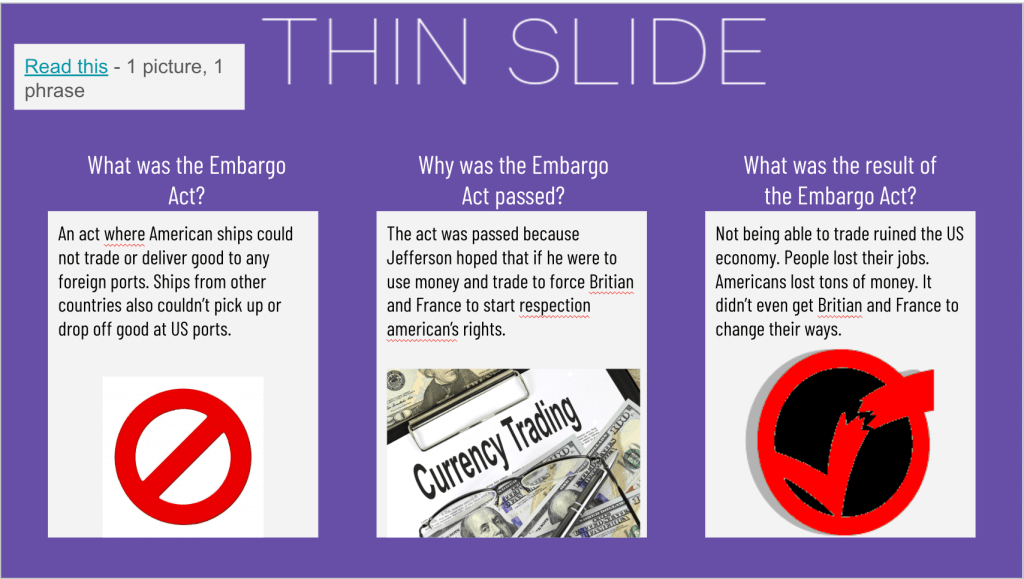
  • The Embargo Act weakened the economy but failed to stop British and French interference.
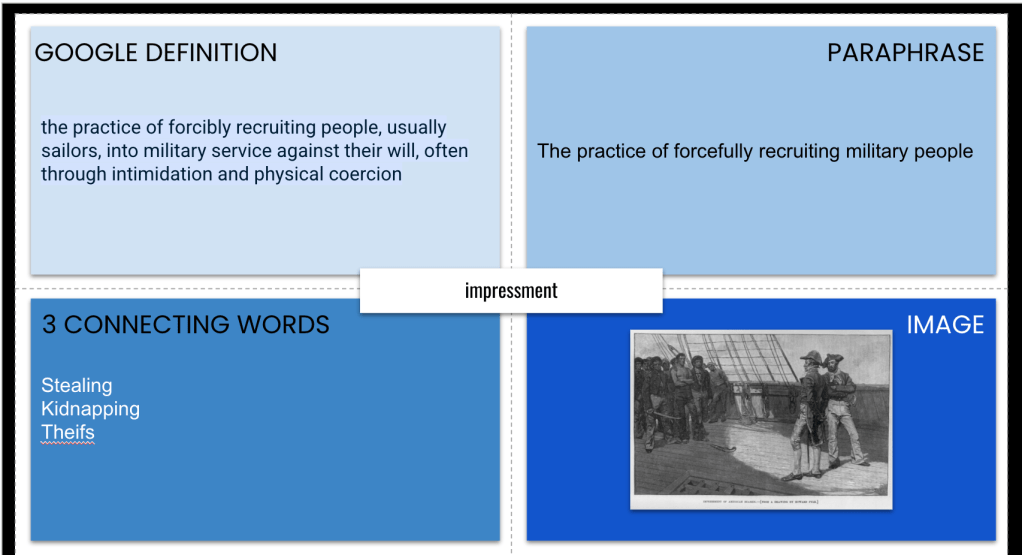
  • Impressment angered Americans as British ships kidnapped U.S. sailors and forced them into service.
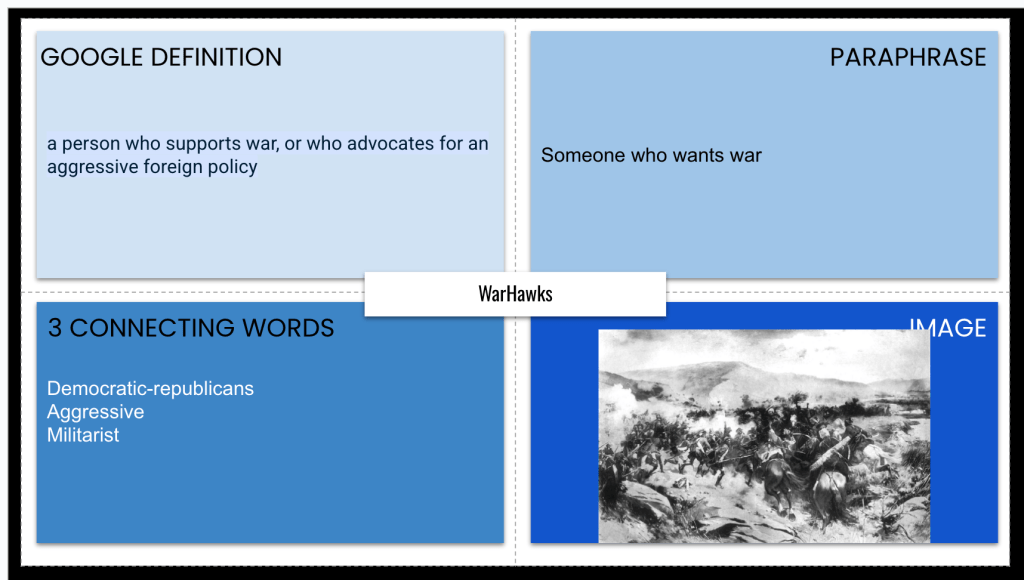
  • War Hawks in Congress pushed for military action, believing Britain was disrespecting American sovereignty.
  • Madison’s Presidency—he inherited the diplomatic failures of Jefferson and ultimately led the country into war.

This framing helped students see the cause-and-effect relationships instead of treating each event as an isolated fact.

Thin Slide: The Embargo Act

Next, students completed a Thin Slide focusing on the Embargo Act. They read a short description and chose:

  • One word that represents the act’s impact.
  • One image that visually represents the act.
  • A quick response to explain their choices.

This forced students to synthesize their thinking quickly and connect the Embargo Act’s impact to the bigger picture.

Archetype Four Square: James Madison’s Leadership

With the Archetype Four Square, students examined James Madison’s leadership and determined which archetype best fit him in the context of the war.

  • Was he a Peacemaker, trying to avoid war as long as possible?
  • Was he a Reluctant Warrior, forced into action despite hesitations?
  • Was he a Commander, embracing war as necessary?

Students had to justify their choices and discuss them with a partner, leading to great conversations about how presidents make wartime decisions.

Frayer Models: Impressment and War Hawks

To reinforce key terms, we completed two Frayer Models—one for impressment and one for War Hawks.

For each, students:

  • Defined the term in their own words.
  • Identified a real-world connection or comparison.
  • Illustrated the term with an image, symbol, or icon.
  • Listed key facts from the reading to support their understanding.

This helped break down two critical causes of the war into student-friendly explanations.

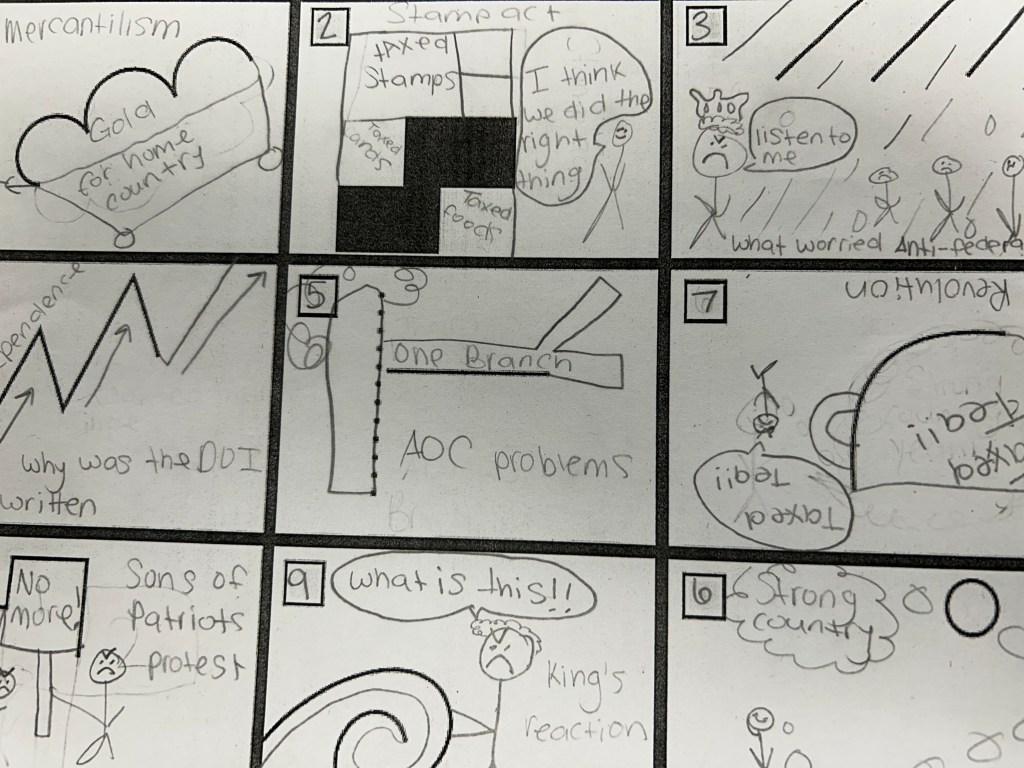
Progressive Sketch and Tell: The Story of the War

For the main event, we did a Progressive Sketch and Tell to break down the War of 1812 into digestible chunks.

I took the textbook section and had AI split it into five parts.

  • Each student received one part at a time.
  • They created a sketch and tell comic strip for their section.
  • After three minutes, they shared with a partner to explain their visual representation.
  • Then, they received the next section and repeated the process.

This step-by-step visual storytelling made a complex war easy to understand. It also helped students see connections between different events rather than treating them as random battles.

Why This Works
  • Quick notes created a clear cause-and-effect web instead of just listing events.
  • Thin Slides encouraged quick synthesis of key concepts.
  • Archetype Four Square made students think critically about Madison’s leadership.
  • Frayer Models reinforced essential vocabulary through multiple connections.
  • Progressive Sketch and Tell broke the war into digestible chunks, making it memorable and interactive.

Instead of just reading about the War of 1812, students analyzed, created, discussed, and applied what they learned. And that’s what makes the learning stick.

The Week That Was In 234

This week in 8th-grade social studies, we brought history to life with engaging EduProtocols that helped students dive deep into the Early Republic and key moments like the Whiskey Rebellion. From Sketch and Tell-O activities that broke down complex ideas to Progressive Sketch and Tell timelines that visualized historical events, we kept creativity at the forefront. Class Companion added an exciting layer of AI-driven writing feedback, while Fast and Curious Gimkits and CyberSandwiches reinforced foundational knowledge and sparked meaningful discussions. These protocols not only engaged students but also helped them build connections, improve comprehension, and master essential skills.

Tuesday – Lesson Intro CyberSandwich

Wednesday – Cabinet and Neutrality

Thursday and Friday – Hamilton and Whiskey Rebellion, Whiskey Story

Class Companion – AI Writing Feedback

Tuesday: Kicking Off the Early Republic

This week, we dove into a new unit on the Early Republic, which will culminate in a common assessment. Starting with a pre-assessment right out of the textbook, I had students tackle 20 of the most challenging, oddly worded questions filled with difficult vocabulary. The pre-assessment was designed to gauge their baseline knowledge and took about 10–15 minutes. Predictably, it was tough, but it gave me a sense of where they stood as we started the unit.

Introducing the Unit with a CyberSandwich

One thing I like about the textbook’s first lesson in this unit is how it revisits key foundational topics that lead into the Early Republic. It highlights the weaknesses and problems in America before the Constitution—like taxation without representation, the Articles of Confederation, Shays’ Rebellion, and foreign and domestic disputes—and positions the Constitution as the solution.

The irony? The textbook doesn’t explicitly connect these issues to the Early Republic or explain how the first five presidents put the Constitution to work and expanded federal power. So, I decided to bridge the gap myself using a CyberSandwich EduProtocol.

Here’s how it went:

  1. Simplified Reading: Instead of fumbling with the textbook or logging into the website, I printed out the reading directly from the online textbook. Paper copies are quick, easy, and let students highlight and annotate as they read.
  2. Guiding Questions: Students spent 12 minutes reading and answering five guiding questions that I generated with AI to focus their attention on key details.
  3. Partner Discussion: After reading, students listed two problems and one solution from the text and discussed their findings with a partner, comparing ideas.
  4. Fixing a Paragraph: To practice critical thinking and writing, I gave them a poorly written paragraph (also AI-generated) about the topic and gave them 10 minutes to improve it.

Wrapping Up with Gimkit

We ended the class with a Gimkit featuring nine questions I pulled from the summative assessment for this unit. The scores showed where we have room to grow:

  • 57%, 47%, 39%, and 42%.

While the scores were low, it was a good baseline and a chance to familiarize students with the material they’ll need to master.

Wednesday: George Washington Takes Office

We jumped into Lesson 2: George Washington Takes Office, diving into how Washington and Congress worked to strengthen the federal government. While the textbook suggests this lesson could take two days, I find that assumption wildly unrealistic. It’s packed with readings, activities, writing tasks, and reviews that assume students have extensive social studies background knowledge—something many students simply don’t have due to the limited time spent on the subject in earlier grades. The disconnect between textbook expectations and real classroom realities is frustrating.

Quick Notes: Setting the Stage

To start the lesson, I introduced key topics through a short lecture. These quick notes laid out the big ideas students would encounter in the lesson:

  • Washington’s leadership style.
  • The establishment of key government structures.
  • The significance of neutrality and Jay’s Treaty.

The goal was to give students a foundation before diving into deeper activities.

Archetype Foursquare: Connecting History to Stories

Next, I introduced archetypes—a fun and engaging way to connect historical figures to familiar characters. Students brainstormed archetypes in their favorite movies, TV shows, or books and discussed how every character fits an archetype (e.g., hero, mentor, trickster).

We followed this with an EdPuzzle on George Washington, a 4-minute video highlighting his leadership and challenges. While watching, students thought about which archetype best described Washington.

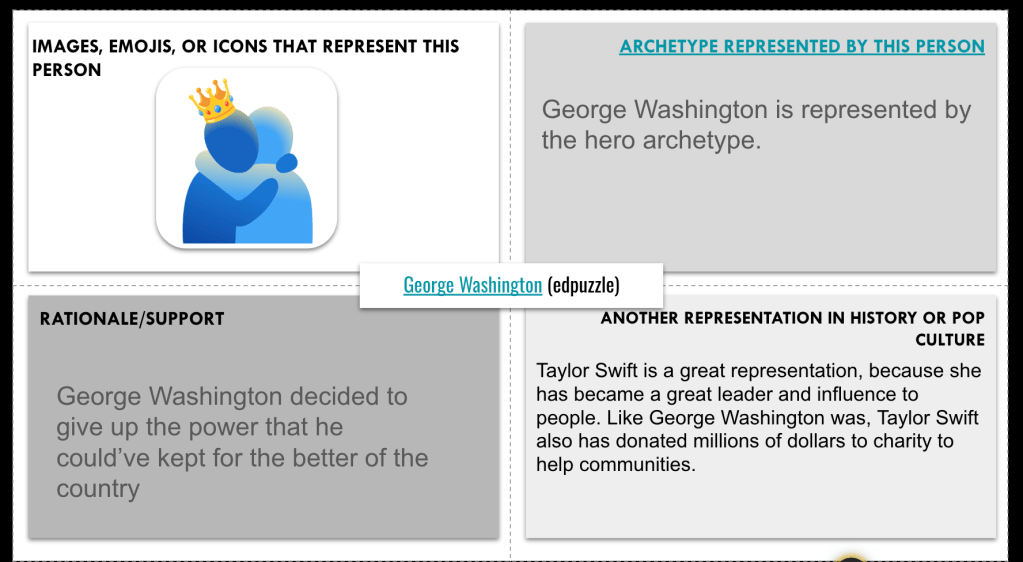
Afterward, students spent 8 minutes completing an Archetype Foursquare for Washington. They:

  • Identified an archetype for him (e.g., “hero” or “sage”).
  • Provided evidence from the video to support their choice.
  • Connected George Washington to someone else.
  • Compared their archetype ideas with a partner in a quick discussion.

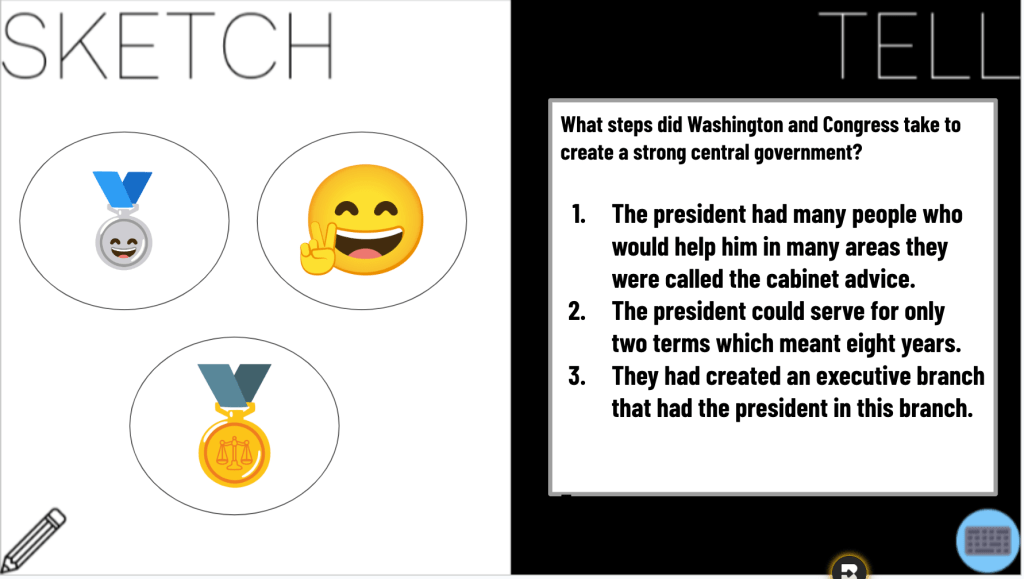
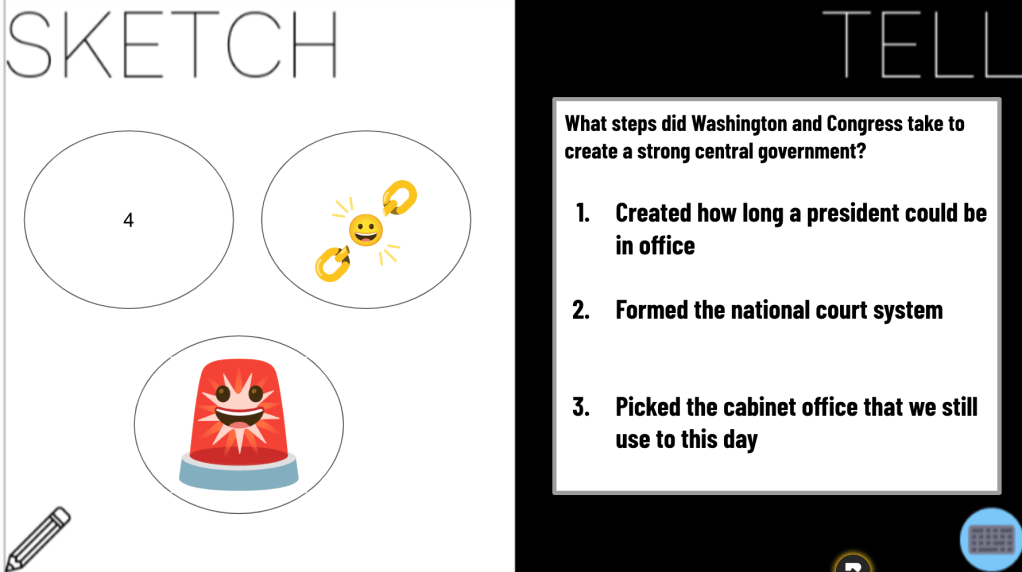
Sketch and Tell-O: Strengthening the Federal Government

We then transitioned into the textbook’s reading on how Washington and Congress strengthened the federal government. Using a Sketch and Tell-O template, students sketched visuals to represent key ideas, such as:

  • The creation of executive departments.
  • The establishment of the federal court system.

This visual and creative approach helped break down the dense content into manageable chunks.

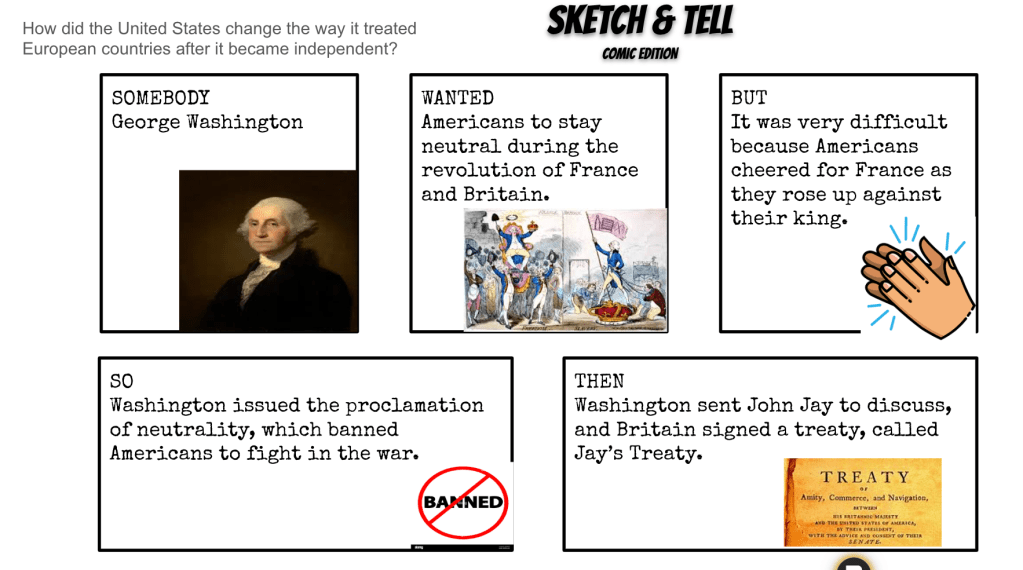
SWBST Sketch and Tell: Neutrality and Jay’s Treaty

Next, we tackled Washington’s foreign policy and Jay’s Treaty using a Somebody, Wanted, But, So, Then (SWBST) Sketch and Tell template. Students read about the challenges of maintaining neutrality during international conflicts and how Jay’s Treaty attempted to resolve tensions with Britain.

The SWBST activity allowed students to:

  • Summarize the main ideas.
  • Use both words and pictures to represent what they learned.
    This strategy is always a hit because it combines comprehension with creativity, making abstract concepts more concrete.

Wrapping Up with Fast and Curious

To close out the lesson, we ran a Fast and Curious Gimkit round focused on key vocabulary and ideas from the day.

  • Students played for 3 minutes.
  • I provided immediate feedback on commonly missed questions, reinforcing learning.

Thursday: Hamilton’s Plan

Thursday was all about diving into Hamilton’s financial plan, though I initially hoped to also cover Washington’s domestic issues like the Whiskey Rebellion. My ambition outpaced reality, and we only made it through Hamilton’s plan. That said, the day was packed with meaningful activities that helped students grasp these foundational concepts.

Quick Notes: The Foundation of Hamilton’s Plan

We began class with quick notes to outline Hamilton’s financial plan, focusing on:

  • Assuming state debts to strengthen the national government.
  • Establishing a national bank to regulate finances.
  • Implementing tariffs to protect American industry.

These notes took about 10 minutes and provided the background knowledge students needed for the activities that followed.

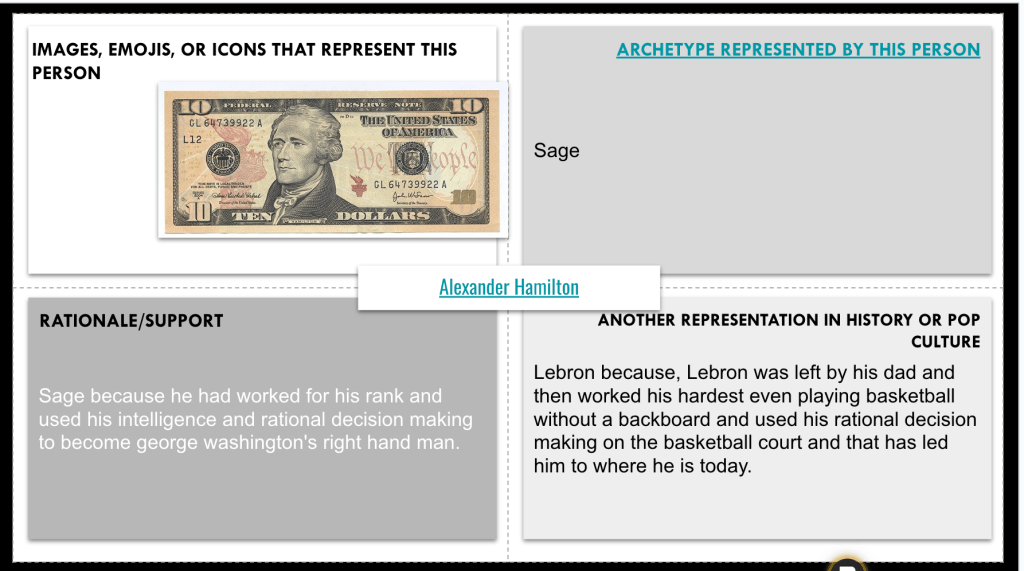
Archetype Activity: Understanding Hamilton

To make Hamilton more relatable, I used the brief biography from the textbook to introduce him as a historical figure. Then, we revisited the archetype activity from Wednesday, applying it to Hamilton. Students identified archetypes like “visionary,” “strategist,” or even “rebel,” depending on their interpretations.

This activity was quicker than Wednesday’s, but still sparked great discussion as students shared their archetype choices with partners and justified their reasoning.

Reading, Questions, and Sketch and Tell-O

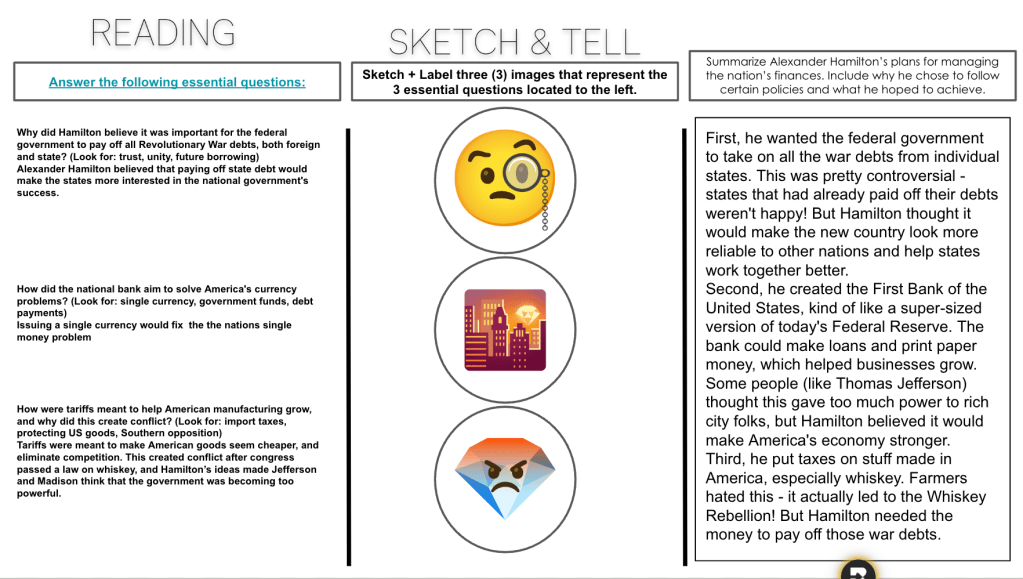
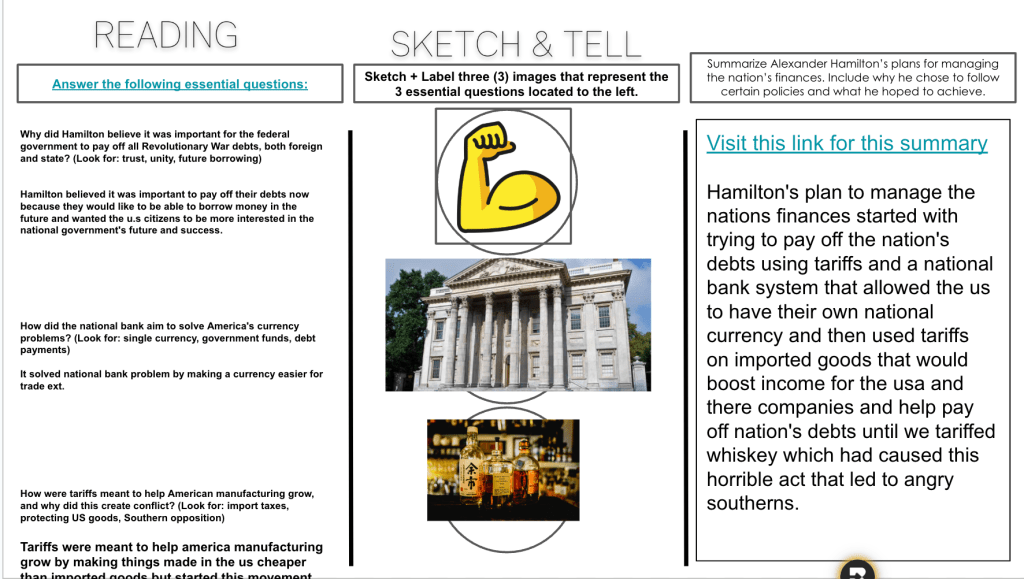
We transitioned to a reading about Hamilton’s financial plan, using a combination of structured questions, creative visualizations, and a connections summary. Here’s how it worked:

  1. Read and Respond: Students answered comprehension questions about Hamilton’s plan, focusing on why he wanted to assume state debts, how the national bank would work, and the purpose of tariffs.
  2. Sketch and Tell-O: Students used a Sketch and Tell-O template to represent key ideas from Hamilton’s plan. For example:
    • A chain symbolizing the unification of state debts under the federal government.
    • A vault or dollar sign representing the national bank.
  3. Connections Summary: To wrap up, students found an emoji or picture that connected with their answers and explained why they chose it.

I originally planned to use Class Companion, an AI feedback tool, to give students immediate feedback on their summaries. Unfortunately, it was blocked! I emailed the IT department to get it unblocked, but for now, we relied on peer discussions and my feedback instead.

Wrapping Up with Gimkit

We ended class with another Gimkit to reinforce the material. This time, the averages showed improvement:

  • 80%, 74%, 68%, and 70%.

Friday: The Whiskey Rebellion and Government Strength

On Friday, I wrestled with whether to skip the Whiskey Rebellion and dive straight into political parties, but I decided against it. The Whiskey Rebellion perfectly ties back to our first lesson: the Constitution made the government stronger, and putting down the rebellion proved that strength. This connection was too important to pass up, so we dedicated the day to exploring the Whiskey Rebellion in-depth.

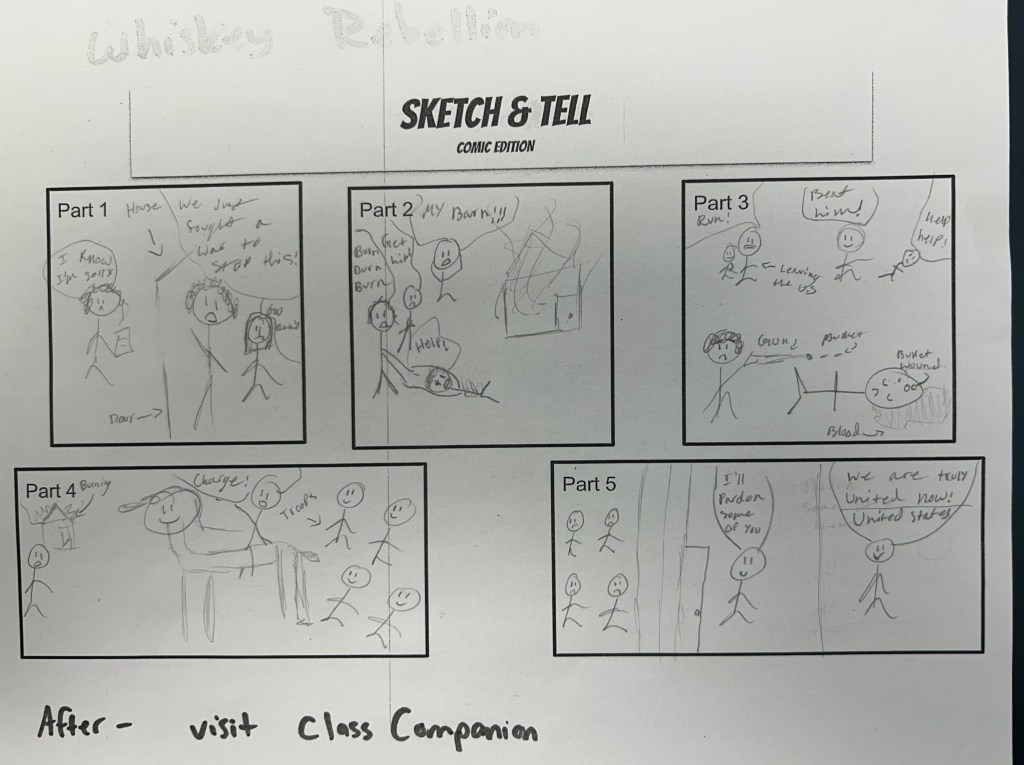
Progressive Sketch and Tell: Unpacking the Story

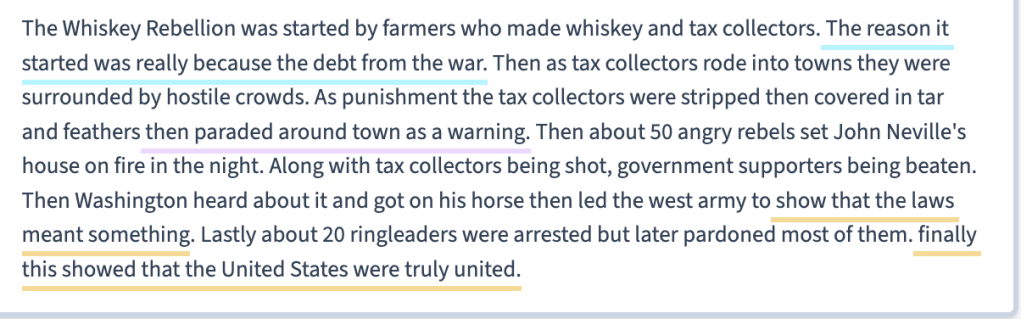
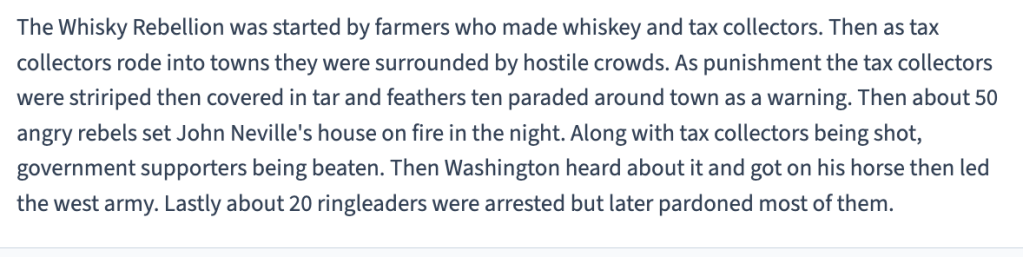
Inspired by Jake Carr and Justin Unruh, we used a Progressive Sketch and Tell to break the rebellion into digestible chunks. I used AI to divide the Whiskey Rebellion story into five parts, making it manageable and engaging for students.

  1. Setup: Each student received a paper with five Sketch and Tell boxes.
  2. Round 1: I handed out the first part of the story, giving students 3 minutes to read and sketch a visual representation of what they’d read. They then discussed their sketches with a partner.
  3. Rounds 2–5: For each subsequent part, students repeated the process—read, sketch, discuss. This structure kept the class moving while building a deeper understanding of the rebellion.

By the end, students had created a complete visual timeline of the Whiskey Rebellion.

Introducing Class Companion for Writing Feedback

After completing their comics, students used Class Companion, an AI feedback tool, to summarize their Whiskey Rebellion comics in writing. This was my first time successfully using Class Companion after IT unblocked it, and it was a game-changer.

Here’s how it worked:

  • I set up the assignment by feeding information about the Whiskey Rebellion from our reading into Class Companion.
  • Students typed their summaries into the platform, receiving real-time feedback and scores on their writing.
  • They had three attempts to improve their summaries, with each attempt allowing them to act on AI-generated suggestions.

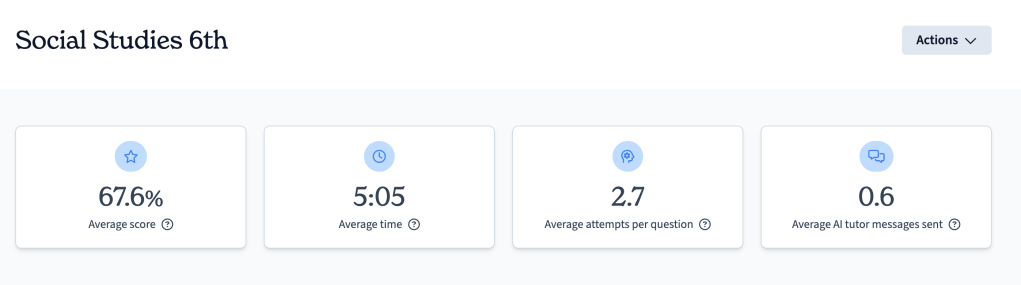
The feedback was eye-opening for many students. It pointed out areas for improvement in clarity, structure, and grammar, and the rubric generated by the AI made expectations crystal clear. Some students became competitive, determined to get the highest score possible by their third attempt.

The results were amazing. Students were engaged in improving their writing and motivated by the detailed feedback. The data Class Companion provided was also incredibly helpful for me to track progress.

Wrapping Up with Gimkit

We ended the day with a Gimkit review on Lesson 2. The class averages were impressive:

  • 91%, 80%, 88%, and 85%.

And just like that – a suggested 2 day lesson took 3 days and probably could have taken another day to do the lesson justice.

The Week That Was In 234

Last week, I kicked off my social studies unit with a pre-assessment using a citizenship test. The goal for my students was to answer six or more questions correctly. Out of the 89 students I teach across four periods, only six met that benchmark.

Faced with a tight timeline, I knew I had to make every lesson count. By the end of the week, after incorporating engaging EduProtocols, 70 out of 89 students achieved a score of six or higher on the same test. The growth was incredible and a testament to how these strategies support both understanding and retention.

Monday – Sketch and Tell-O Branches

Tuesday – Checks and Balances

Wednesday – Federalism

Thursday/Friday – Supreme Court Cases

Monday: Separation of Powers

Focusing on all seven principles of the Constitution is overwhelming for 8th graders, so I start by introducing separation of powers as the foundation of understanding how the government works. My goal is to connect the concept to the branches of government and their basic functions, creating a clear starting point for students.

Tug of War: Introducing Separation of Powers

When students entered the classroom, they were met with a tug of war rope stretched across the room. The curiosity was instant—”Are we playing tug of war?” they asked. Instead of answering directly, I invited them to imagine the floor surrounding the rope represented tyranny, greed, corruption, and despotism.

I asked, “Should a government be surrounded by these negative forces?” Of course, the answer was “no.”

  • Round 1: One volunteer attempted to lift the rope out of the “corruption.” The catch? They couldn’t bunch it up or stretch it too far—it had to stay taut. Predictably, it didn’t work.
  • Round 2: A second volunteer joined, but the rope still couldn’t be lifted properly.
  • Round 3: With three volunteers, the rope was successfully lifted out of the corruption.

I explained that this is why we have separation of powers—no single branch can do it alone. By dividing power, we prevent tyranny and ensure the government operates effectively.

Quick Notes and Fast and Curious

Next, I introduced the three branches of government—executive, legislative, and judicial—through a brief set of notes. These quick notes provided an overview of the branches and their basic responsibilities.

We followed this up with a Fast and Curious Gimkit round, focusing on vocabulary and key concepts like the branches and their roles. Students played for 3 minutes, and I reviewed the most-missed questions afterward to clarify misunderstandings.

Sketch and Tell-O: Exploring the Branches

Using an article from iCivics, students explored each branch in more depth through a Sketch and Tell-O activity. For each branch, they:

  • Sketched a visual representation of the branch’s role (e.g., a gavel for judicial).
  • Wrote a brief description summarizing its main function.

This activity helped students connect abstract ideas to tangible visuals and concise explanations.

Fast and Curious: Reinforcing Understanding

After the Sketch and Tell-O, we returned to Gimkit for two more Fast and Curious rounds, each lasting 3 minutes. The goal was to reinforce what students had just learned about the branches of government. Scores improved noticeably, and the repetition solidified their understanding of the material.

Sneaker Sketch and Tell: Creative Connections

To wrap up the day, we used a Dominic Helmstetter Sketch and Tell Sneaker activity. Students designed a sneaker to represent one branch of government and wrote a brief summary explaining their design.

Tuesday: Checks and Balances

Continuing with the principles of the Constitution, Tuesday’s focus was checks and balances. This lesson aimed to go beyond the basics and help students connect vocabulary, real-world applications, and creative thinking to demonstrate their understanding.

Quick Notes: Setting the Stage

To begin class, I gave a brief lecture introducing checks and balances, focusing on key terms like impeach, override, and veto. I also provided basic examples:

  • The president can veto a bill passed by Congress.
  • Congress can override a veto with a two-thirds majority.
  • The judiciary can rule laws unconstitutional.

These quick notes established foundational knowledge for the activities that followed.

Scenario-Based Analysis

Each student received a detailed checks and balances chart, categorizing the actions of each branch and how they could be checked by another branch. Students worked through three simple scenarios requiring them to infer how checks and balances worked in practice.

For example:

  • “A potential bill was vetoed.”
    • Students identified that the executive branch (president) has the power to veto a bill.
    • Then, they determined that the legislative branch (Congress) could check this action by overriding the veto.

These scenarios required students to apply their understanding of the chart and start thinking critically about the system.

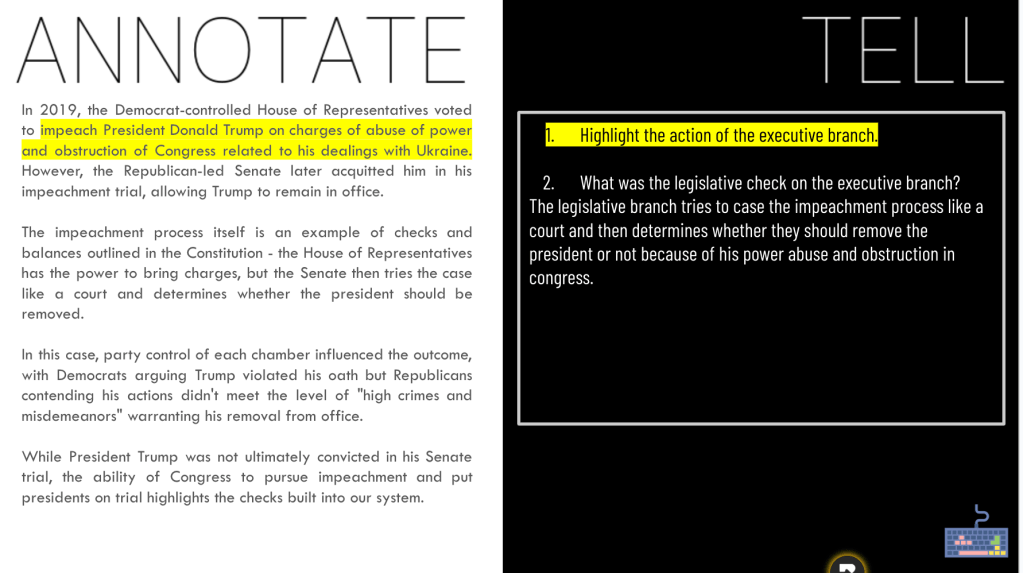
Annotate and Tell: Real-World Examples

Next, students examined three AI-generated short stories based on recent events tied to checks and balances:

  1. Trump’s impeachment.
  2. Obama’s executive orders on gun control.
  3. Biden’s exploration of student debt cancellation.

For each story, students:

  • Annotated key actions by the executive branch.
  • Answered analysis questions, such as:
    • How did the legislative branch check the president in this example?
    • What role did the judiciary play (if any)?

This activity added context and relevance, showing students how checks and balances function in modern government.

Sketch and Tell Comic: Bringing Stories to Life

To wrap up, students used the Sketch and Tell comic format paired with the SWBST (Somebody, Wanted, But, So, Then) storyboarding technique. Students had two options:

  1. Create an original scenario that demonstrated checks and balances in action.
  2. Illustrate one of the AI-generated stories from earlier in class.

Each comic needed to show how multiple branches interacted, with annotations explaining the characters’ roles and the checks and balances applied.

As students shared their creations, they articulated detailed descriptions of the interactions between branches. For example, one student illustrated Congress overriding a veto with a vivid depiction of lawmakers “lifting” a veto stamp off a bill, while another highlighted a Supreme Court decision striking down an executive order.

Wednesday: Federalism

For my federalism lesson this year, I decided to switch things up while keeping the core elements that have worked well in the past. The focus was on making the concept of federalism relatable and interactive, while emphasizing key ideas like enumerated, reserved, and concurrent powers.

Thin Slides: Federalism in Context

The lesson began with Thin Slides, which provided a quick and creative way for students to process information.

  1. For the first slide, students read a brief description of federalism and chose:
    • One word to represent federalism.
    • One picture that symbolized the idea.
    • They then explained their choices, sharing insights like “I chose ‘shared’ because both the state and national government share responsibilities.”
  2. The second Thin Slide focused on real-world examples of federalism. Students looked up the legal driving age in Ohio and compared it to other states. We discussed who sets these laws (state governments) and why they vary.

This activity transitioned into another research task: students looked up the minimum wage in Kentucky, Ohio, and California, noting how state laws differ and how federalism allows for this variation.

Sketch and Tell: Breaking Down Federalism

Students used a Sketch and Tell template to dive deeper into the structure of federalism.

  • Using an infographic or a modified textbook reading, students visualized expressed powers, state powers, and concurrent powers.
  • They created drawings or used icons to represent examples, like a scale for concurrent powers (taxation) or a dollar sign for state powers (setting minimum wage).

This activity helped students connect abstract terms to concrete examples, reinforcing the distinctions between the different types of powers.

Thick Slide: Synthesizing Learning

To wrap up the lesson, students completed a Thick Slide, which allowed them to reflect and synthesize their learning. On their slides, they included:

  • Three things they learned about federalism.
  • Examples of enumerated, reserved, and concurrent powers.
  • A picture that represented federalism.
  • A correction task, where they fixed an incorrect statement about federalism to make it true.

Thursday: Upgrading Bill of Rights Knowledge

The Bill of Rights can be tricky for 8th graders to memorize and understand, so Thursday was all about making the amendments memorable, engaging, and accessible. I kicked off class with a 10-question Quizizz to assess students’ baseline knowledge. As expected, most students remembered the 1st and 2nd Amendments but struggled with the rest. Class averages reflected this, coming in at 34%, 33%, 41%, and 34%. It was clear we needed a creative strategy to make these amendments stick.

Sketch and Tell-O: Prepping for Memory Aids

I handed out a Sketch and Tell-O template with 10 empty circles, one for each amendment. Students would use this to jot down sketches or notes based on the memory aids I shared during the lesson.

Memorable Mnemonics: Learning from Dave Burgess

For each amendment, I used a fun, engaging strategy inspired by Dave Burgess to help students connect the concept to something they could easily recall.

  • 3rd Amendment: I told the story of Goldilocks making herself at home in the Three Bears’ house, linking it to the prohibition of soldiers being “quartered” in homes without consent.
  • 6th Amendment: I showed a clip of an NFL player’s quick “pick six” interception to emphasize the idea of a speedy trial.

The students were laughing, engaged, and eagerly sketching the memory aids into their templates. They loved the zany connections and seemed to absorb the material effortlessly.

Assessing Growth with Quizizz

After finishing the activity, I had students tuck away their sketches and notes. Then we launched the same Quizizz again to check for growth. The results were encouraging:

  • Class averages jumped to 74%, 77%, 68%, and 77%.

While the scores were slightly lower than last year’s averages, the improvement from the first round showed the power of these memory tricks. I’ll tweak a few things next time to fine-tune the approach, but overall, this was a win.

Friday: Applying the Bill of Rights

With the foundational knowledge of the Bill of Rights in place, Friday was all about applying that learning to real-world Supreme Court cases. The goal was to help students see how the amendments are interpreted and used in real-life scenarios—especially those that resonate with their own experiences as 8th graders.

Starting with EdPuzzle

Class began with an EdPuzzle video explaining the Supreme Court and how cases make their way to the highest court in the land. This gave students a framework to understand the cases they’d be analyzing later in the lesson.

Landmark Supreme Court Cases: An Interactive Experience

I curated a selection of Supreme Court cases that focused on issues students could relate to, such as:

  • The Pledge of Allegiance in schools.
  • Social media speech.
  • School punishment policies.
  • Prayer in schools.

Each case summary was printed onto cards and placed in envelopes around the room. To add an extra layer of engagement, one envelope included a bonus Bill of Rights Quizizz (which the students were now averaging 75–80% on—a huge improvement!).

The Activity

Students were divided into small groups and given 25 minutes to circulate through the envelopes and analyze as many cases as possible. For each case, their tasks were to:

  1. Guess which Constitutional amendment was in question.
  2. Predict how the Supreme Court ruled on the case.

The students did a great job identifying the relevant amendments, but the real excitement came when I shared the actual rulings. Many of the decisions surprised them or conflicted with their personal opinions, sparking lively discussions about how amendments are interpreted and applied.

Citizenship Test: Wrapping Up the Week

To end class, we returned to the same citizenship test we started with earlier in the week. The results were remarkable:

  • At the beginning of the week, only six out of 89 students scored six or higher.
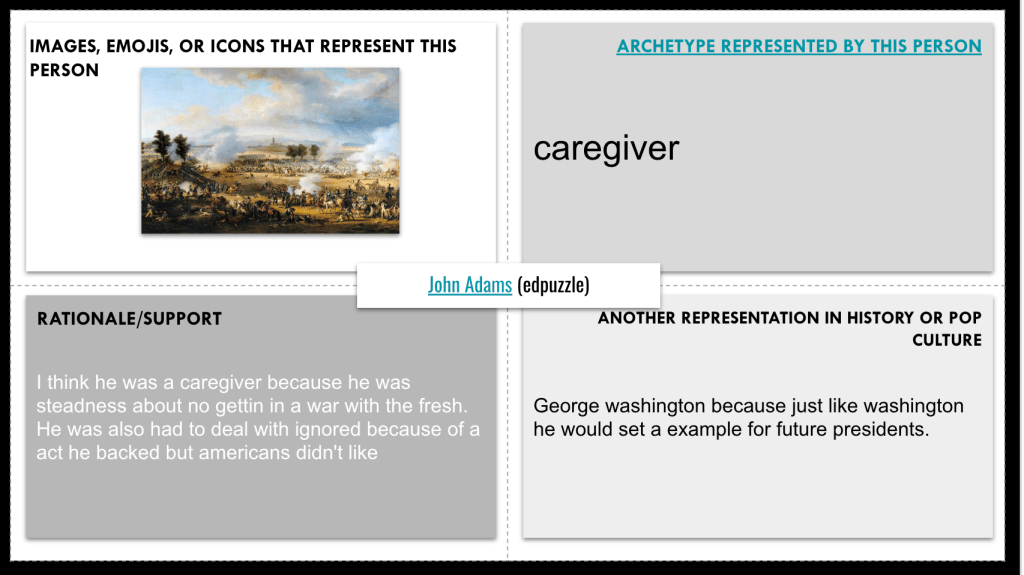
  • By Friday, after incorporating engaging lessons and EduProtocols, 70 out of 89 students achieved that benchmark.

The Week That Was In 234

Coming back from winter break, we hit the ground running with the principles of the Constitution. The transition wasn’t easy—snow delays and uneven class times on Wednesday threw off our rhythm, and the textbook’s overwhelming vocabulary and dense content didn’t help. After some reflection and collaboration with a trusted colleague, I decided to adjust my approach.

This week, I focused on balancing structured teaching with interactive activities. By combining brief lectures, discussions, and EduProtocols, I aimed to make the principles of the Constitution accessible, engaging, and meaningful for my students. Here’s how the first two days unfolded.

Wednesday

After a snow-filled delay, Wednesday marked our first day back from winter break—and what a chaotic return it was. With a 2-hour delay, my classes were unevenly shortened to 30–46 minutes, and the pressure to cram an entire week’s worth of lessons into a limited timeframe only added to the frustration.

Teaching the principles of the Constitution is one of my favorite units, but the constraints of the textbook and deadlines imposed by common assessments make it hard to teach the way I know my students need. The textbook oversimplifies and overcomplicates at the same time—cramming seven principles into one chapter, with little focus on building foundational knowledge like understanding the branches of government or their roles. Cognitive load theory is completely ignored, and it’s clear the materials weren’t designed with middle school learners in mind.

Despite the challenges, I’m determined to make this unit engaging and meaningful for my students. Teaching shouldn’t feel like a race against a textbook or an arbitrary deadline—it should be about meeting students where they are and guiding them to where they need to be.

Starting with a Pre-Assessment

Given the shortened day and the need for a strong foundation, I kicked off the unit with a pre-assessment using questions from the U.S. citizenship test. I chose 10–11 questions that were directly tied to the principles of the Constitution. To keep the focus on critical thinking, I didn’t include answer choices—students had to come up with their responses based on their prior knowledge.

Here’s how the activity worked:

  1. Read Aloud: I read each question aloud, giving students time to think and respond.
  2. Trade and Grade: Students swapped papers with a partner to grade each other’s responses.
  3. Discussion: We went over each question as a class, discussing the correct answers and why they mattered.
Why It Worked

This activity served as both a pre-assessment and an opportunity to spark curiosity. Students were engaged in the discussion, and it gave me a sense of where they stood in terms of their knowledge of the Constitution’s principles. It also set the stage for deeper dives into each principle later in the week.

Reflection

It wasn’t the most exciting day, but it was an important one. The citizenship test questions provided a low-stakes way to ease back into learning while laying the groundwork for the unit. With the time crunch and external pressures, it’s not the start I wanted, but I’m determined to make the most of the days I have.

This week will be about finding ways to engage my students, break down complex ideas, and show them why the principles of the Constitution still matter today—despite the challenges of the snow, the textbook, and the ticking clock.

Thursday

After reflecting on Wednesday and discussing with my colleague Drew Skeeler, I decided to adjust my approach to teaching the principles of the Constitution. While I typically avoid lecturing, it became clear that short, focused direct instruction was what my students needed to build foundational knowledge. The plan was simple: 5–10 minutes of direct teaching, followed by turn-and-talks, and then an activity that built on the lecture using EduProtocols.

This shift felt necessary. Even though it’s not my preferred teaching style, it aligns with what will help my students engage with and understand the content right now.


The Lesson Plan

1. Lecture and Turn-and-Talks
I started with a 10-minute lecture introducing the seven principles of the Constitution:

  • Popular Sovereignty
  • Limited Government
  • Separation of Powers
  • Checks and Balances
  • Federalism
  • Republicanism
  • Individual Rights

The goal was to provide a high-level overview with examples to make each principle relatable. For example, I explained checks and balances by describing how the president can veto a law passed by Congress, but Congress can override that veto.

After the lecture, students turned to a partner to discuss two questions:

  • Which principle seems the most straightforward to you?
  • Which principle do you think will be the hardest to understand?

These quick discussions helped students process the information and gave them a chance to voice initial thoughts or questions.

2. Fast and Curious Gimkit
Next, we jumped into a Fast and Curious Gimkit to reinforce the principles. The game included vocabulary and short explanations related to each principle.

  • Students played for 3 minutes.
  • I provided feedback on commonly missed questions.
  • We ran the Gimkit again to improve accuracy.

3. Worksheet and Activity
I pulled a worksheet from the textbook, but as usual, the vocabulary and phrasing were too complex for my 8th graders. To make it accessible:

  • I simplified the questions to focus on key ideas like Why is separation of powers important?
  • On the back, I added a Sketch and Tell-O activity where students drew a symbol for one of the principles and explained their choice.
  • I also included a reflection question: Which principle do you think is the most important? Why?

4. Closing with Fast and Curious
We ended the lesson with one more round of the Gimkit to lock in what they’d learned. By the third round, scores were improving, and I could see the growth in their confidence.


Reflection

This lesson was a blend of compromise and creativity. The short lecture laid a clear foundation, the turn-and-talks helped students process the information, and the combination of EduProtocols and a modified worksheet gave them multiple ways to engage with the content.

While lecturing isn’t my favorite approach, it felt like the right choice today. Pairing it with interactive and creative activities made the lesson balanced and effective. Watching my students improve through the Fast and Curious Gimkit rounds and seeing their creativity in the Sketch and Tell-O reminded me that sometimes, adapting is the best way to meet students where they are.

The Week That Was In 234

Introduction

The past few weeks have been challenging—probably some of the toughest I’ve faced as a teacher. Being sick on and off for nearly a month has left me drained, both physically and mentally. Adjusting to a new school setting, new students, and trying to figure out what works has added to the weight. This year has forced me to stray from some of my core teaching philosophies. I’ve had to rely on strategies like extra credit, guided notes, and even the textbook more than I’d like.

I’m not relying on the textbook entirely, but it’s jam-packed with far too much information for 8th graders to process effectively. Pair that with vocabulary that feels overwhelming—words like negotiate, stimulate trade, inland, and emerged—and it’s clear the textbook isn’t a practical tool for building understanding. The challenge of teaching Tier 1 and Tier 2 vocabulary alongside complex historical concepts often feels insurmountable. When a student recently asked me, “What’s a stencil?” (I’m serious), I realized just how wide the gap can be.

The workload is also a challenge. There’s so much material to cover, and balancing meaningful activities with manageable workloads has been a constant juggling act. It’s hard not to feel like everything is just too much—for my students and for me.

I love writing in this blog; it’s a space to reflect and process. But lately, it’s felt like one more thing I can’t always keep up with. From here on, I’ll write when I can and focus on sharing what feels meaningful.

This week, though, I had three big wins. These are moments where my students were engaged, excited, and learning—and that’s what keeps me going.

Finish the Drawing Template


1. Gimanji: Gamified Review

What It Is:
Gimanji is a competitive review activity created by Alexis Turnbull that combines Gimkit, Blooket, Quizizz, Kahoot, or any mix of platforms. It’s a hit with students because it’s fast-paced, fun, and team-based.

How to Run It:

  1. Start with a Gimkit
    • Create a short, themed quiz. For example, I made a holiday-themed Gimkit with 12 questions about winter holidays.
    • Run the game for about 5 minutes and let the top 4 or 5 finishers choose their teams.
  2. Switch to a Blooket
    • Pick a mode that keeps the energy high. For our holiday version, I chose Santa’s Workshop, which is based on speed and luck.
    • Award points to the top 5 finishers—5 points each worked well for us.
  3. Add a Kahoot
    • Create a Kahoot quiz based on a fun theme. Ours was holiday songs represented by emojis. Students earn points based on accuracy and speed.
    • Keep it short—5 to 8 minutes is perfect.
  4. End with Quizizz
    • Finish with another short quiz. We did a round on holiday cookies.
    • Again, the top 5 finishers earned points for their team.

Why It Worked:
The variety of platforms kept students engaged, and the team-based competition added an extra layer of excitement. By rotating through different tools, you can cater to a range of learning styles and keep the activity fresh. Gimanji is flexible—you can adapt it to any subject or theme.


2. WeWillWrite: Gamified Writing

What It Is:
WeWillWrite is a platform that turns writing into a gamified activity. Students respond to creative prompts in secret teams, assess their peers’ writing, and compete for points.

How to Run It:

  1. Sign Up and Create a Session
    • Log in to WeWillWrite and create a session. The platform has premade prompts for all grade levels.
  2. Introduce the Activity
    • Students join with a code, similar to Gimkit or Blooket.
    • The platform automatically places them into secret teams.
  3. Write and Assess
    • Display the first prompt (e.g., “Convince your grandma her cringe gift is perfect”).
    • Students write for 3 minutes—there’s no submit button, so they’re encouraged to write the entire time.
    • After writing, students self-assess and read the work of their teammates.
  4. Vote and Award Points
    • Teams vote on the best, funniest, or most thoughtful piece.
    • Winning entries are displayed, and AI highlights literary elements like metaphors, adjectives, and personification.
  5. Repeat for Additional Rounds
    • Continue with new prompts, tracking team scores along the way.

Why It Worked:
The prompts were fun and accessible, encouraging even reluctant writers to participate. The anonymity of secret teams removed the fear of judgment, and the AI feedback added a layer of validation and learning. It was exciting to see students so invested in writing, and the self-assessment piece encouraged reflection on their work.


3. Finish the Drawing

What It Is:
This activity, inspired by Howson History, combines creativity with content. Students complete partially drawn images based on prompts tied to your curriculum.

How to Run It:

  1. Prepare the Drawings
    • Create a sheet with 9 unfinished drawings—simple shapes or partial designs that students can build upon.
    • Provide space under each box for labels.
  2. Randomize and Assign Prompts
    • Have students randomly number the boxes on their sheet.
    • Call out prompts one at a time. For example:
      • “How would King George react to the Declaration of Independence?”
      • “Illustrate mercantilism in action.”
      • “What worried Anti-Federalists about the Constitution?”
  3. Drawing and Labeling
    • Give students 3 minutes to complete their drawing and label it with key terms or ideas.
  4. Repeat and Discuss
    • Continue with new prompts, encouraging students to share and explain their drawings as time allows.

Why It Worked:
This activity made abstract concepts more tangible. Students who might struggle with writing or vocabulary could still demonstrate understanding through visuals. It sparked great discussions and could easily transition into a Sketch and Tell or Sketch and Tell-O.


Final Thoughts

This week reminded me why I love teaching, even during tough seasons. These activities—Gimanji, WeWillWrite, and Finish the Drawing—brought energy and engagement back into my classroom. They provided ways to work around vocabulary gaps while keeping students focused and excited.

If you’re looking for ways to shake up your lessons and get your students excited, I highly recommend trying these strategies. They’re flexible, fun, and effective—proving that a little creativity can make a big difference!

The Week That Was In 234

This week in 8th-grade social studies, we dove deep into the Constitutional Convention and the ratification debates, using a variety of EduProtocols to engage students and build understanding. From Frayer Models to define key terms and concepts, to Sketch and Tell-O and 8Parts Sourcing for visual analysis and critical thinking, each day offered a structured and interactive way for students to connect with history.

Activities like Gimkit, Quizizz Mastery Peak, and Emoji Kitchen kept the energy high and provided opportunities for review, creativity, and synthesis. Through consistent protocols and thoughtful lessons, students explored the compromises, debates, and decisions that shaped the U.S. Constitution.

Monday – Frayer-Sketch and Tell-O Rack and Stack

Tuesday – Map and Tell – Notes – Sketch and Tell-O Rack and Stack

Wednesday – Frayer – Annotate/Tell – Sketch and Tell-O Rack and Stack

Thursday – Visit Curipod – it’s awesome!!!

Friday – 8pArts – Frayer – Sketch and Tell-O Rack and Stack

Monday

Even though I was out sick, I wanted to ensure my students had meaningful, engaging lessons to kick off our exploration of the Constitutional Convention. With EduProtocols and structured activities, I aimed to keep students on track while fostering curiosity and understanding.

Starting with the Purpose

Every lesson on the Constitutional Convention begins with the question: “What was the purpose of the Constitutional Convention?” To set the stage, I assigned an EdPuzzle that introduced the basics of the event. EdPuzzle is always a reliable tool when I’m out—it keeps students engaged with videos while offering questions to ensure they’re following along.

Building Vocabulary with Gimkit

Next, I created a Gimkit with key terms students would encounter throughout the week, including federalist, anti-federalist, compromise, republic, and constitution. Vocabulary is critical for understanding the bigger picture, and Gimkit’s game-like format keeps students motivated while helping them retain these foundational terms.

Deep Dive with a Frayer Model

To dive deeper into the Constitutional Convention, students completed a Frayer model. They defined the convention, identified three key figures who attended, listed three important facts, and added an image to tie it all together. This activity helped them organize their initial understanding while highlighting the significant people and ideas of the event.
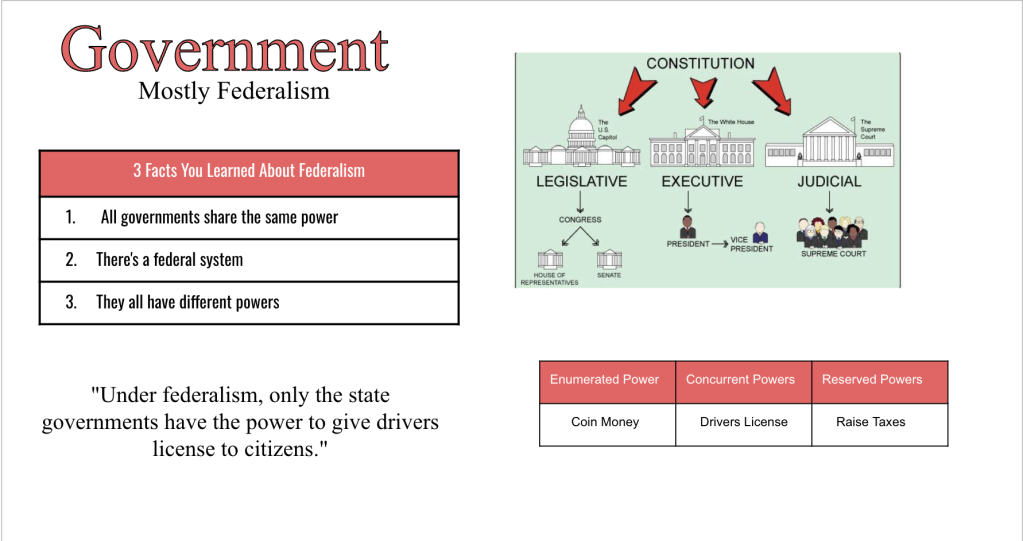
Sketch and Tell-O: Synthesizing Purpose

Students then read about the purpose of the Constitutional Convention and created a Sketch and Tell-O. They sketched out three important facts from the reading and wrote a summary answering the essential question: Why was the Constitutional Convention necessary? This activity combined visual and written processing, encouraging them to connect details to the broader purpose of the event.

Tuesday

Still out on Tuesday, I kept the focus consistent and structured, guiding students through the key compromises made at the Constitutional Convention. With a mix of graphic organizers, interactive mapping, and creative synthesis, students had the opportunity to deepen their understanding of the Great Compromise and the Three-Fifths Compromise.

Starting with Vocabulary

We began with a Gimkit review of the vocabulary introduced on Monday. Terms like federalist, anti-federalist, compromise, republic, and constitution are foundational, and revisiting them daily helps reinforce understanding while building fluency.

Graphic Organizers: Breaking Down the Compromises

To tackle the Great Compromise and the Three-Fifths Compromise, I created two graphic organizers.

  1. The Great Compromise Organizer
    • Students read a brief article about the Great Compromise, identifying:
      • The issue at stake
      • The two opposing sides
      • The compromise itself
    This activity helped them see how differing viewpoints shaped the structure of Congress and highlighted the balance of interests between large and small states.
  2. The Three-Fifths Compromise Organizer
    • After reading a second article, students completed the same organizer for the Three-Fifths Compromise, focusing on:
      • The issue of representation and slavery
      • The opposing perspectives of Northern and Southern states
      • The resulting compromise

By structuring the readings and graphic organizers this way, students were able to make direct comparisons between the compromises while seeing how both contributed to strengthening the national government.

Map and Tell: Connecting Compromises to Modern Context

To reinforce their understanding of the Great Compromise, students engaged in a Map and Tell activity. Using a map showing the current number of representatives for each state, students answered the following questions:

  • Which state currently has the most people?
  • Identify a state with the fewest people.
  • In 2019, Ohio had 16 representatives in the House. Why do you think they only have 15 now? (Hint: It’s not because they died!)
  • Every state has 2 senators. How many senators are in the U.S. Senate?

These questions required students to apply what they learned about representation and the legislative structure created by the Great Compromise. The activity added relevance and encouraged them to connect historical decisions to the modern-day functioning of government.

Sketch and Tell-O: Synthesis

Students ended the day with a Sketch and Tell-O activity addressing this essential question:

“How did the leaders at the Constitutional Convention compromise to strengthen the central (national) government?”

Their responses needed to include the terms great compromise, representation, and three-fifths compromise. By combining visual representation with written explanation, students synthesized their learning while reinforcing the central role of compromise in the Convention.

Wednesday

For the third day in a row, I was out, but the focus on the Constitutional Convention’s compromises remained strong. Wednesday’s lesson tackled the debate over the executive branch—whether the nation should have one president or three, and how that leader should be chosen. The structure and consistency of the lessons helped students stay engaged and build on their understanding of the compromises that shaped the U.S. government.

Starting with Vocabulary

As always, the day began with a Gimkit review of the key vocabulary terms from earlier in the week. Repetition is key to reinforcing these foundational terms, and Gimkit’s interactive format ensures students stay motivated and focused.

Frayer Model: Defining the Executive Branch

Next, students created a Frayer model for the term executive branch. They:

  • Defined the term.
  • Provided examples (e.g., the president, the cabinet).
  • Listed non-examples (e.g., legislative branch, judicial branch).
  • Drew a picture representing the concept.

This activity helped students clarify the role and function of the executive branch, setting the stage for the deeper analysis to follow.

Graphic Organizer: Breaking Down the Debate

Students then read about the debate over the executive branch, focusing on the key issues:

  • Should the country have one president or three?
  • How should the president be chosen?

Using the same organizer from the previous days, they identified:

  1. The issue at hand.
  2. The two opposing sides of the debate.
  3. The compromise that resolved the conflict.

This consistent structure helped students compare this debate with the previous ones, reinforcing the importance of compromise in shaping the Constitution.

Annotate and Tell: Analyzing James Wilson’s Argument

To deepen their understanding, students analyzed a primary source excerpt from James Wilson, who argued for having one president. Through an Annotate and Tell activity, they highlighted key points and answered these questions:

  • What are Wilson’s main arguments for having one leader?
  • How does Wilson’s example of Massachusetts support his argument for a single executive?
  • According to Wilson, what problems could arise with three leaders?

This activity encouraged critical thinking and connected historical perspectives to the broader debate over the executive branch.

Wrapping Up with Synthesis

To conclude, students worked on three tasks:

  1. Answering Essential Questions: Students reflected on the executive branch’s role and how the Constitutional Convention resolved its structure.
  2. Sketch and Tell-O: They illustrated their understanding of the debate, including key issues, arguments, and the compromise reached.
  3. CER Writing: Students crafted a Claim-Evidence-Reasoning paragraph responding to the question: Should we have one president or three?

Thursday

It’s rare for me to miss three days in a row, so when I returned to class today, I faced the challenge of pulling together three days’ worth of content—some completed on Chromebooks, some on paper. The goal for the day was simple: consolidate the material, assess understanding, and help students connect the dots.

Starting with Quizizz

I kicked off the lesson with a 10-question Quizizz that covered key points from the past three days. Quizizz’s format, where each question is asked once, allowed me to see how students performed on a broad range of topics. Unfortunately, the results revealed significant gaps, with class averages at 45%, 47%, 54%, and 59%. The data didn’t point to one specific area of struggle; it was clear the students needed a comprehensive review to piece everything together.

Curipod to the Rescue

To address the gaps, I turned to Curipod—a tool that continues to impress me with its versatility and ability to engage students. I uploaded a premade presentation summarizing the key points of the Constitutional Convention, and Curipod enhanced it with interactive features that brought the content to life.

  • Guided Notes: Students worked on guided notes as we moved through the presentation, grounding them in the essentials of the Great Compromise, the Three-Fifths Compromise, and the executive branch debate.
  • Interactive Features:
    • Students submitted open-response questions, such as one where they could “ask James Madison a question.”
    • Curipod provided AI feedback for their responses, making the review process more engaging and personalized.
    • The AI whiteboard feature asked students to draw how the Founding Fathers balanced representation between big and small states with the Great Compromise. AI analyzed their drawings and offered feedback.
  • Voting on Responses: Students anonymously voted on open-response answers, with the top three being displayed at the end. I love this feature because it minimizes bias and encourages thoughtful participation.

Curipod’s interactive elements made the material engaging and accessible, and the guided notes ensured students had something tangible to refer back to as we reviewed.

Wrapping Up with Quizizz

We ended class by retaking the same Quizizz from the beginning of class. The results spoke volumes:

  • 47% jumped to 76%.
  • 45% increased to 80%.
  • 54% rose to 77%.
  • 59% climbed to 80%.

The improvement showed that the combination of Curipod, guided notes, and interactive features helped students consolidate their understanding and apply it effectively.

Friday

By Friday, we were back on track and moving forward with the next big question in our unit: “What were the arguments over ratifying the Constitution?” This lesson delved into the emergence of Federalists and Anti-Federalists, emphasizing how the newly proposed Constitution required states to not only understand but also buy into the vision for a federal government.

Starting with Mastery Peak

We began with the Mastery Peak feature in Quizizz, using the same questions from Thursday to refine understanding. The growth in scores was impressive:

  • 77% → 100%
  • 70% → 93%
  • 77% → 96%
  • 67% → 96%

This demonstrated that students were solidifying their grasp of the material as we continued to revisit and apply it.

Introducing Ratification with Gimkit

Next, I ran a quick 2-minute Gimkit with six questions about the ratification of the Constitution. This short review prepared students for the day’s focus and introduced key terms like Federalists, Anti-Federalists, and ratification.

I framed the lesson with the question: “What were the arguments over ratifying the Constitution?” This served as a springboard to discuss how Federalists and Anti-Federalists debated the need for state approval and public buy-in to legitimize the new government.

Sourcing with 8Parts: The Federal Pillars

We began our exploration with the Federal Pillars image, using the 8Parts Sourcing Protocol to analyze it. Students:

  1. Identified nouns, verbs, adjectives, and prepositions in the image.
  2. Summarized the artist’s message about the ratification process.

This visual analysis helped students interpret how the artwork symbolized the growing support for ratification while emphasizing the states’ critical role in the process.

Frayer Models: Federalists vs. Anti-Federalists

Next, students completed two Frayer models, one for Federalists and one for Anti-Federalists. They defined each group, listed key characteristics, included examples of prominent figures, and noted non-examples. This activity helped clarify the contrasting perspectives on the Constitution:

  • Federalists advocating for a strong central government.
  • Anti-Federalists emphasizing states’ rights and the need for a Bill of Rights.
Emoji Kitchen: Representing Ratification Arguments

To wrap up, students used Emoji Kitchen to visually represent three arguments over ratification. They selected emojis to symbolize each argument and wrote a summary answering our essential question: “What were the arguments over ratifying the Constitution?” This activity added a creative and personal element to the lesson, encouraging students to connect with the material in a unique way.

Ending with Gimkit

We finished class with the same Gimkit as earlier, reinforcing the key concepts about ratification. This repetition helped solidify understanding while ending the day on an engaging note.

Ohio EduProtocols Roadshow: A Game-Changer for Teachers

The Ohio EduProtocols Roadshow on October 25, 2024, at the Northern Buckeye Education Council’s headquarters brought together educators from Ohio, Indiana, Michigan, and West Virginia for an unforgettable day of learning, collaboration, and inspiration. This transformative professional development event showcased the power of EduProtocols to revolutionize teaching, engage students, and create lasting impacts in classrooms, schools, and districts.

EduProtocols in Action

The day featured a lineup of authors and hotshots who modeled EduProtocols in real time, helping attendees see how these strategies could transform their classrooms:

Jon Corippo, co-founder of EduProtocols, energized the room with his dynamic presentations on Fast and Curious and Random Emoji Paragraph. Teachers saw how these strategies transform formative assessments into interactive, game-like experiences and writing tasks into creative, student-centered activities.

Adam Moler, co-author of the EduProtocols Field Guide Social Studies Edition, engaged participants with his session on Sketch and Tell-O. He demonstrated how blending visual storytelling with core content gives students meaningful opportunities to express understanding in innovative ways while building their creativity and engagement.

Dominic Helmstetter, a national presenter and EduProtocols hotshot, wowed attendees with his session on Thin Slides. He showed how students could synthesize information and develop presentation skills in under five minutes, sparking both creativity and confidence while making learning dynamic and efficient.

Dr. Randall Sampson, an EduProtocols champion, brought a unique perspective to the event by offering CEUs for participants and sharing compelling student growth data tied to EduProtocols. Randall highlighted how these strategies have led to measurable improvements in academic achievement, engagement, and classroom efficiency. His session inspired educators to think critically about how EduProtocols can foster long-term growth and success for their students.

Real-Time Insights: Addressing Educator Challenges

One of the most valuable aspects of the Roadshow was its emphasis on addressing real-world classroom challenges with practical solutions. At the end of the Roadshow, a Padlet board was set up and used for participants to ask questions and have them answered in real time. Key questions raised during the sessions highlighted the adaptability and effectiveness of EduProtocols in diverse settings:

  1. Grading Simplified Yet Impactful
    A recurring question from attendees was: “How do I grade these activities?” Presenters emphasized keeping it simple. Most EduProtocols are designed for formative assessment during the week, relying on pass/fail or completion checks. Summative assessments, like final Thin Slides or Sketch and Tell-O presentations, can involve clear, rubric-based grading. For example, participation-based grading (e.g., completing 80% of Gimkit or Sketch tasks) or letter grades for final synthesis projects ensures accountability while reducing teacher workload.

“EduProtocols aren’t about piling on work for teachers or students—they’re about making learning visible and simplifying assessment in meaningful ways.”

  1. Tools That Support Engagement and Collaboration
    Participants were curious about the best tools to use with EduProtocols. Presenters highlighted versatile platforms like Google Slides for Thin Slides, Padlet for Iron Chef-style collaboration, and Curipod for interactive, AI-driven lessons. These platforms make it easy for students to share, engage, and collaborate, fostering a classroom environment where every voice matters.

“The right tools make EduProtocols seamless and accessible. It’s about finding what works best for your students and classroom needs.”

  1. Creating a Safe, Collaborative Classroom Culture
    A significant topic was how to foster a safe space where students feel confident sharing their work. Strategies included:

Using anonymous tools like Curipod for responses to avoid popularity bias.
Keeping activities fast-paced and light to reduce anxiety.
Reinforcing classroom norms and shutting down negativity quickly.
“EduProtocols build confidence because they focus on the process, not perfection. Students feel safe to try, share, and grow.”

  1. Balancing Engagement with Accountability
    Educators asked: “What about students who only work if it’s graded?” The experts reassured them that the engagement built into EduProtocols—like the competition in Fast and Curious or the creativity in Sketch and Tell-O—naturally motivates students. For those who still struggle, incorporating visible progress, like tracking Gimkit scores or showcasing Thin Slides, can provide the accountability they need.

“When students see their progress in real time and know their work matters, engagement follows.”

A Teacher’s Perspective

The collaborative, solution-driven nature of the event resonated with educators. Angie Behnfeldt, a teacher from Stryker Schools, shared:

“I attended alone since EduProtocols are not yet widely known in my district, but now I can’t wait to share what I’ve learned. The testimonies, anecdotes, and data shared throughout the day were incredible. You’ve inspired all of us to roll up our sleeves and start teaching better while working less!”

Transform Your Teaching

The Ohio EduProtocols Roadshow wasn’t just another professional development session—it was a movement. Teachers left with practical tools, actionable strategies, and a renewed sense of purpose. The modeling of EduProtocols in real time showed how these tools can be adapted to any subject or grade level, creating classrooms where students are engaged, teachers are energized, and learning is visible.

“Watching educators light up as they realized how these tools could transform their classrooms reminded me why I love this work.”Dominic Helmstetter

Don’t miss your chance to experience the EduProtocols Roadshow and join a growing community of educators transforming teaching and learning. Visit the EduProtocols Plus site and mark your calendar for the next event and prepare to unlock the full potential of your classroom!