This week was all about pulling the thread—tracing how specific events pulled the country apart and pushed us toward war. I built everything around one central theme: A Nation Divides Over Slavery. From court cases to debates, from compromises to elections, we kept the structure tight: retrieval, repetition, and real thinking. The protocols stayed familiar, the tasks stayed purposeful, and students had a chance to connect the dots, not just memorize them.
Monday – Thick Slide with Readings
Tuesday – Lincoln Douglas Debate with Clues
Wednesday – Fugitive Slave Act with Reading
Thursday – Election of 1860
Friday – Divide the Pie, Sega Game
Monday – Kicking Off “A Nation Divides Over Slavery”
We kicked off our new theme this week: A Nation Divides Over Slavery. The idea behind this theme is to help students connect key events and legal decisions that drove the wedge deeper between North and South – like the Dred Scott case, the Fugitive Slave Act, the Lincoln-Douglas Debates, and the Election of 1860.
We started with a Quizizz set that previewed these four topics – both vocabulary and content. I told the students upfront: this isn’t just about getting right answers. This is about seeing where we are before diving in and building context all week.
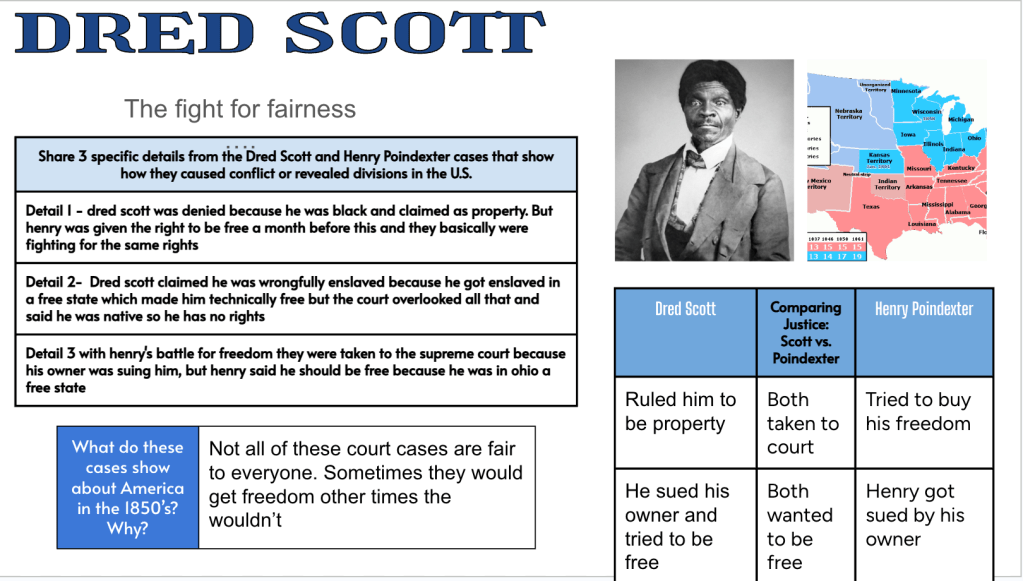
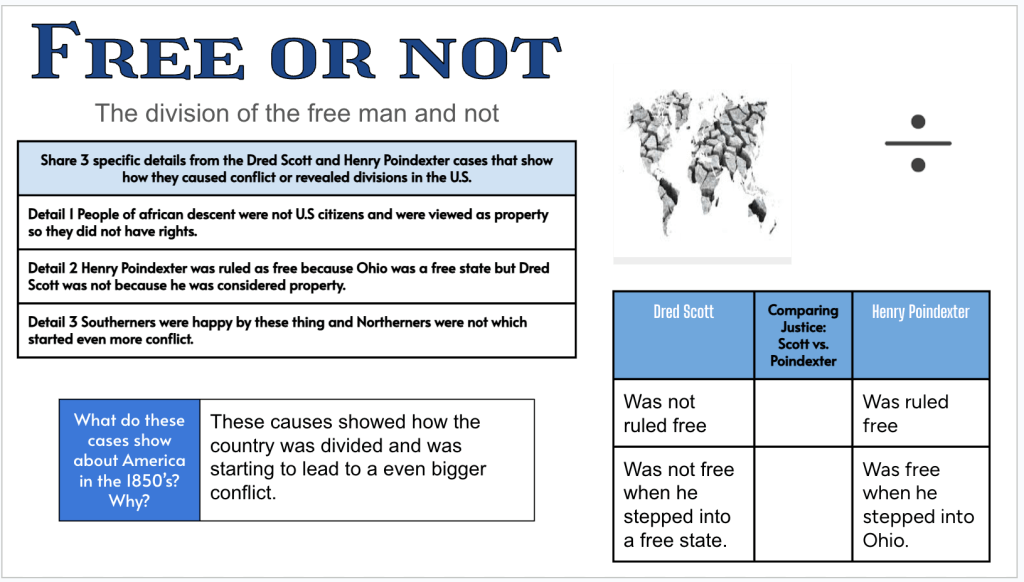
From there, we went straight into a Thick Slide on Dred Scott. I gave students four guiding questions:
- Who was Dred Scott?
- What did the court decide?
- What impact did it have on the country?
- Why does it matter today?
They added a powerful quote, one or two relevant images, and a title that helped summarize the case’s importance. I’ve used Thick Slides a lot this year, but I liked this one because it helped students pull together multiple layers of information on a tough topic and create something visual that forced them to organize their thinking.
To add a local lens, we wrapped up class with a short reading about The Case of Henry Poindexter – a lesser known but powerful Ohio case that challenged the logic of Dred Scott. Poindexter was ruled free when he entered Ohio, even though the Dred Scott ruling said enslaved people weren’t citizens. That contrast hit home for students. It was a great way to help them see that not all courts agreed—and that the debate over slavery and citizenship wasn’t as cut and dry as some textbooks make it seem.
Why this lesson worked:
- Quizizz built background and gave us data
- Thick Slide gave students a structure to produce and reflect
- The Poindexter case grounded the learning in local history and made it real

Tuesday – A Twist on the Lincoln-Douglas Debates
Tuesday was one of those days where I wanted to keep the content heavy, but the delivery light. We were building off of Monday’s work with Dred Scott, and I needed a way to connect to the Lincoln-Douglas debates without it feeling like just another block of text.
We started with an EdPuzzle, a solid recap of the Dred Scott case that also dropped in mentions of Stephen Douglas and Abraham Lincoln. It served two purposes: review Monday’s learning, and plant seeds for what was coming next. No extra slides. No extra talking. Just a well-placed video.
The the twist – instead of reading straight from the textbook, I decided to rework the passage on the Lincoln-Douglas debates. But I didn’t rework it myself—I asked AI to do it. Specifically, I asked ChatGPT to take the reading and embed five hidden clues to a mystery object. The object? An orange.
The clues: wedge, sections, bitter, peel, squeeze.
The students didn’t know this at first. They just read the modified version, answered the reading questions, and moved on. Until I dropped the twist.
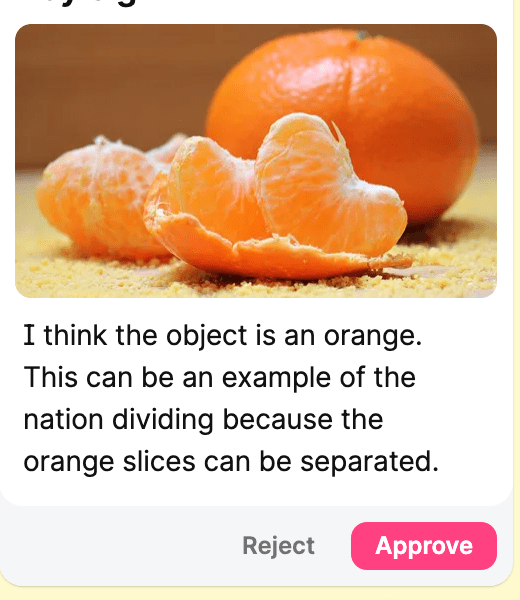
I shared a Padlet and told them: “Based on what you read, I was thinking of an object. It’s hidden in the clues. Guess what it is, and explain how it connects to a country being pulled apart by the issue of slavery.”
I changed the Padlet settings to manual approval so no one could copy answers. Kids were rereading, piecing together metaphors, trying to figure it out.
The guesses ranged from “lemon zest” to “an instrument” but when a few landed on “orange” and explained it like this…
- “The country was in wedges, pulling away from the center.”
- “There were different sections that couldn’t stay together.”
- “Everyone was getting squeezed from both sides.”
This wasn’t about right answers. This was about interpretation.
It was late in the year. Attention spans were slipping. But curiosity still works.
Why This Worked
- The EdPuzzle grounded us in prior knowledge without slowing momentum.
- The AI-rewritten reading kept all the important facts but added a playful puzzle.
- The mystery object metaphor gave kids a reason to reread and think differently.
- The Padlet added a layer of mystery and ownership—students weren’t just responding, they were interpreting.
We talk a lot about curiosity in learning, but sometimes it’s as simple as hiding a metaphor in plain sight.

Wednesday – Number Mania and Division Over Slavery
I decided to build the day around a lesson adapted from Retro Report, focused on how the Fugitive Slave Act further divided the nation and fractured the Democratic Party. We’d touched on the law last week, but this time we went deeper, analyzing its consequences more intentionally.
We opened class with a quick discussion about how a single law could force citizens to choose between their conscience and the law. Then we moved into a Number Mania. I provided students with a short, impactful reading on the Fugitive Slave Act that was rich in context and included some powerful data: $1,000 fines, $40,000 to return one man, over 300 people returned to slavery, and more. Students had to use three numbers to prove this quote true:
“The Fugitive Slave Act of 1850 deepened the divide between the North and South by punishing citizens who helped runaways, rewarding biased decisions, and sparking costly conflicts over slavery.”
They added visuals, a title, and paraphrased facts supported by numbers. It was more than just pulling data, it was about making meaning with that data. This protocol always helps students see the weight that numbers can carry in understanding a moment in history.
We ended with a Fast and Curious Quizizz, looping back to the same content vocabulary and themes from Monday. Every time we run that loop, accuracy improves. It’s low stakes, high impact, and it sets kids up for deeper thinking in the next lesson.
Why it worked:
- Number Mania turned data into narrative and helped students visualize division.
- The reading provided the foundation, and the task forced synthesis.
- Quizizz helped reinforce essential vocabulary and context.

Thursday: Election of 1860 and the Nation Splits
Thursday we wrapped up the second part of our Retro Report lesson on the road to the Civil War—this one focused on the Election of 1860. After covering the Fugitive Slave Act earlier in the week, this was a natural next step. It helped students see how deep the divisions were not just in laws, but in politics.
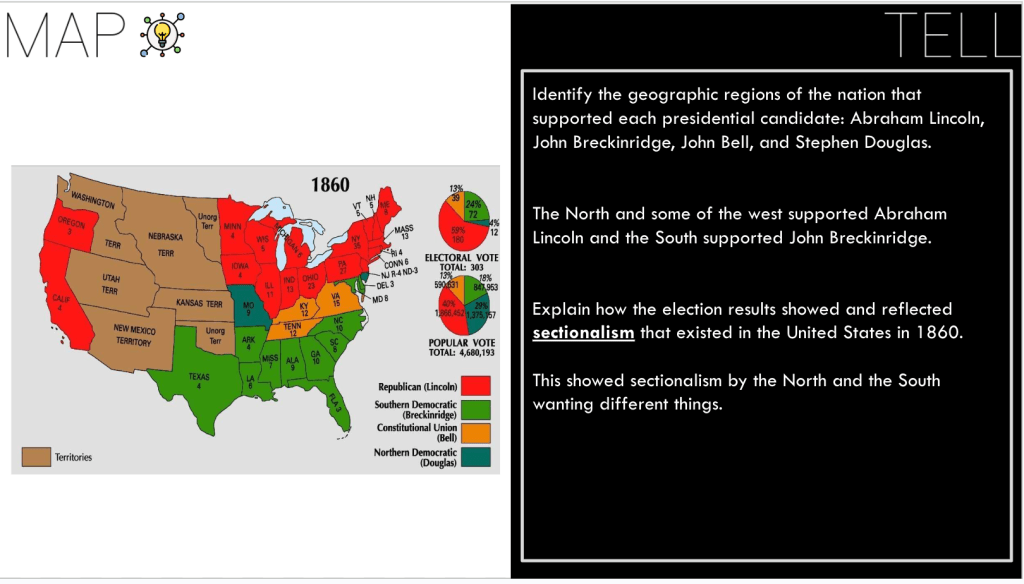
We started with an EdPuzzle on the Election of 1860. Just a four-minute video with a good breakdown of the four major candidates and how their platforms represented the different regions of the country. It was a great primer, quick, clear, and helped set up the rest of the lesson.
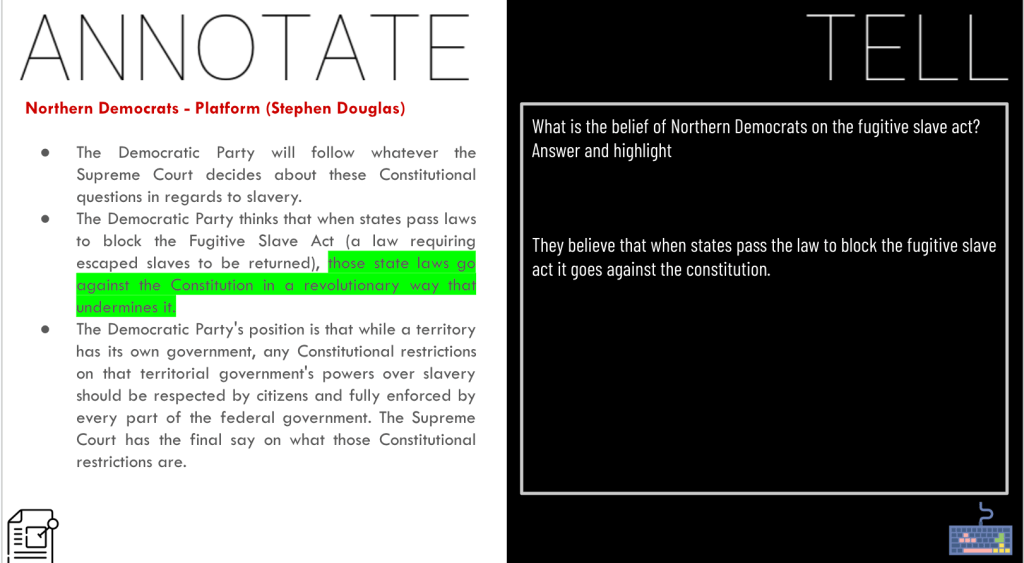
After the video, students read short excerpts from each of the party platforms. We didn’t go overboard here, I just wanted them to pull out the core ideas: What did each party believe about slavery? About federal power? About the territories?
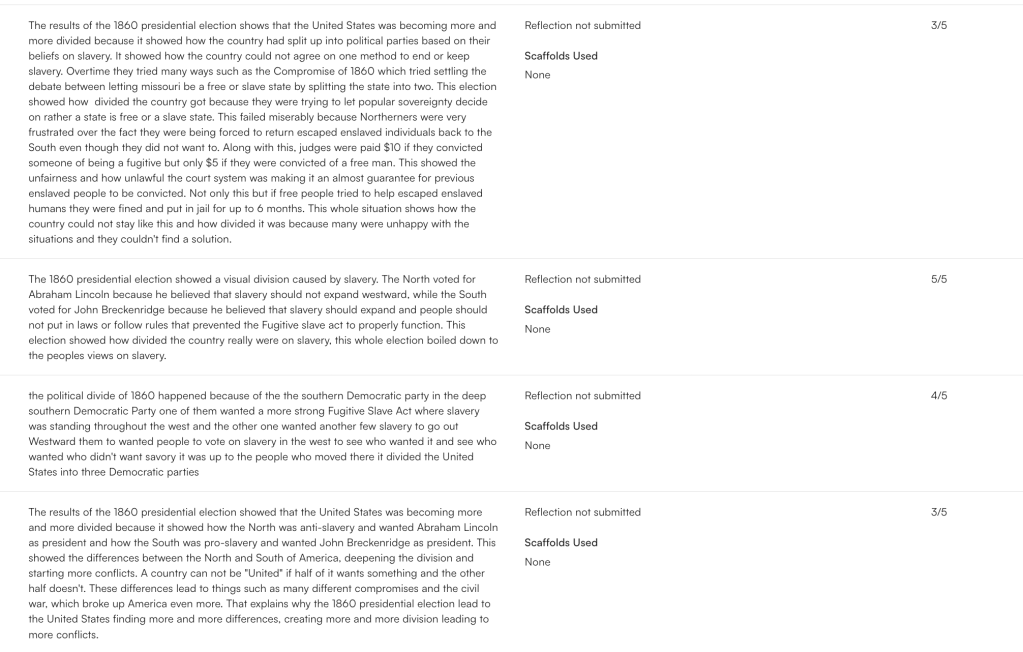
We wrapped it up with a Short Answer Battle Royale using the platform. The question was simple:
How did the results of the 1860 presidential election show that the United States was becoming more and more divided?
There was candy on the line, so they wrote like it actually mattered. Some of the answers were solid—claims, evidence, explanations. Some still needed guidance. But that’s the beauty of ShortAnswer. Students saw each other’s responses in real time. They adjusted, they improved, and they learned from one another.
It wasn’t a loud or flashy lesson, but it worked. The video gave them context. The reading gave them specifics. The writing gave them purpose. And the candy didn’t hurt, either.

Friday – Choice and Review to Close the Theme
We wrapped up the week and our “A Nation Divides Over Slavery” theme with a final round of Quizizz. This was our retrieval layer to see what stuck after hitting the Dred Scott case, the Fugitive Slave Act, Lincoln Douglas Debates, and the Election of 1860. The class averages were solid: 94%, 85%, 90%, and 86%. That tells me this themed structure is working. The repetition, the chunking, the protocols—it all adds up.
But what I liked even more was the choice students had in their assessment.
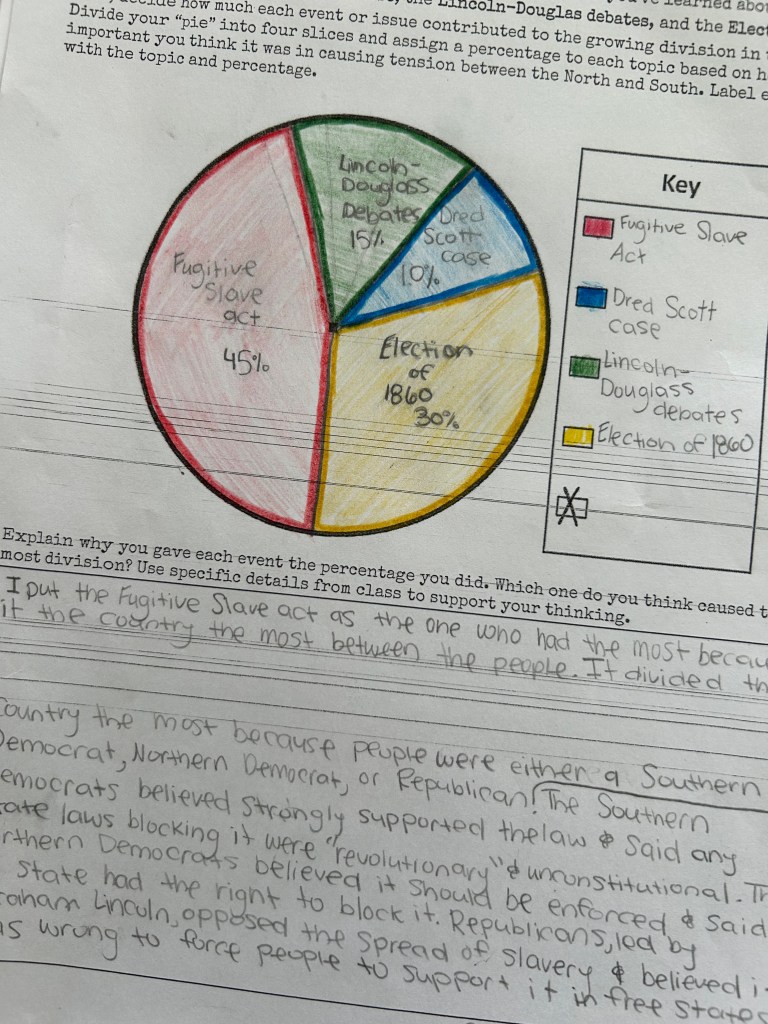
Option 1 was “Divide the Pie”—a visual breakdown of how much each event contributed to the growing division between North and South. Students had to assign a percentage to each of the four events and then justify those numbers with specific evidence. Not just pulling numbers out of thin air—but actually defending them based on class work and content we’ve layered all week. It wasn’t just about what they remembered. It was about what they understood.
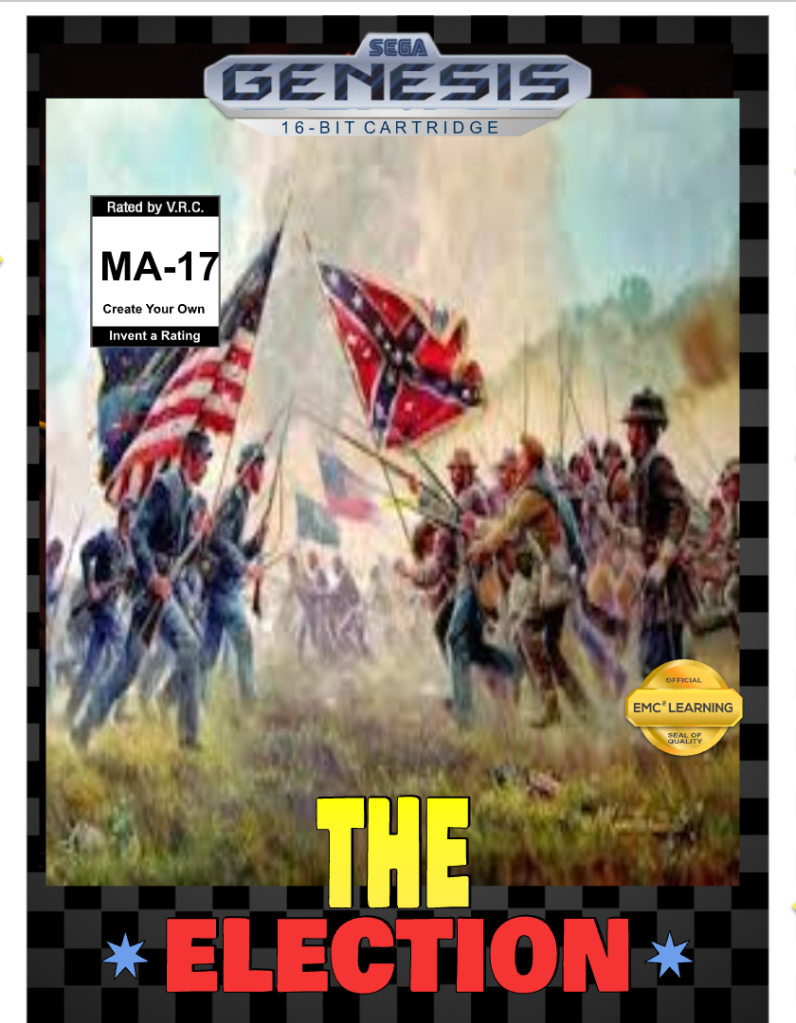
Option 2 was the Sega Genesis Game template from EMC² Learning. This one let students reimagine the week’s events as a vintage video game. Their job? Turn historical conflict into gameplay. What would the levels be? What obstacles would the player face? What’s the story arc? It’s creative, but it still demands content knowledge. I built out some success criteria so they weren’t just designing for fun—they had to make their game tie back to each event.
That’s the point. We’re giving students tools to own their thinking. Whether it’s defending a pie chart with historical evidence or turning a political crisis into pixelated gameplay, they’re showing what they know in ways that stick.
















 Moler's Musings