There’s a growing perception in classrooms that when feedback or grading comes from AI, it feels less human. Students sometimes see it as impersonal, maybe a sign that the teacher doesn’t care. And to be honest? That feeling isn’t entirely wrong.
Part of good feedback is relationship. The tone, the nuance, the “I see you” moments that students pick up on when a teacher scribbles a star or writes “Nice!” in the margin. AI doesn’t do that. It can’t. So when students say it feels different, we should listen.
But here’s the other side of the story: AI feedback doesn’t have to replace the human part. AI can free us up to be more human. Instead of spending hours hand-marking spelling errors or rewriting the same comment over and over, teachers can let AI handle the routine, and then use class time for real conversations: mini-conferences, revision chats, side-by-side re-reads.
Some ways to make AI feel more human in your feedback loop:
Let students co-pilot: Have them ask AI for feedback and critique the response. Was it accurate? Helpful? What would they change?
Add a human layer: Record a short audio note responding to AI’s comments or add a sticky note that says “This is solid, especially that last sentence!”
Use AI as the start, not the end: “Here’s what the AI noticed, now let’s talk about what I noticed.”
In the end, AI can feel less human. But when we use it alongside teacher insight, not instead of it, it can lead to more feedback, more revision, and more meaningful learning.
Maybe it’s not about choosing between care and AI, it’s about using AI to create more space for care.
This week’s theme was “A Nation Prepares for War,” and I’ll be honest—I ran out of time. I really wanted to get into Reconstruction, but I refuse to gloss over material just to say I “covered” it. If I’m going to teach something, I’m going to do a thorough, intentional job. Otherwise, what’s the point?
It’s been a tough week. So I started Monday with something easy. Low prep. Low stress. But still effective.
We kicked off with a Gimkit that I ran twice—once for warm-up and once after feedback. It was packed with vocab and content-based questions: secession, sectionalism, Lincoln’s election, states’ rights, etc. A quick way to reactivate prior knowledge and see what stuck from last week.
Next, we jumped into a Thin Slide activity on Padlet. The prompt: Why did the South secede? I gave them a short reading to skim and told them to pick one word or phrase and one image that represented the core reason. But what made this one different was how we used AI.
Instead of finding an image, students used Padlet’s AI image generator. They entered a short phrase, made it their caption, and used the body of the post to explain what their image represented. That move—credit to the students—was gold. It made the captions matter. It made the explanations more thoughtful. And it gave them a creative outlet that still demanded analysis.
We wrapped the day with a blank map—labeling Union, Confederate, and Border States. I’ll admit, I don’t usually like blank maps. But sometimes the brain just needs a break. This was the break. A little coloring. A little labeling. Still purposeful, but low cognitive load to help everyone ease back in.
Tuesday – Sides of the Civil War
Tuesday’s lesson focused on understanding the advantages of each side heading into the Civil War. I kept it simple and familiar because I’m a big believer in reusing quality material when it works.
We started by running the same Gimkit again—this time as a Fast and Curious. The repetition wasn’t just for review—it was to reinforce accuracy and let students feel some early success. Their scores went up, and they felt it.
After that, students completed a Number Mania based on a short reading about Union advantages. The prompt was direct: Why did the Union have an advantage over the Confederacy in the Civil War?
Their task:
Include 4 numbers from the reading with paraphrased explanations
Add icons or images that helped visualize the data
Give it a title
Keep it clean, clear, and creative
This was a solid way to push students beyond just copying facts. They had to decide what numbers mattered and explain why.
We wrapped the day with a short EdPuzzle covering the four major battles: Fort Sumter, Gettysburg, Vicksburg, and Appomattox Courthouse. It was a simple close to the day, but effective. The video reinforced the bigger picture—how the war escalated, where it turned, and how it ended.
Wednesday & Thursday – Why Did People Fight?
This was the heart of the week, and it spanned two days. We started both days with a Quizizz for retrieval practice—Fast and Curious format again.
Then came the layered lesson. Students read a series of primary and secondary sources about different groups in the war: Union soldiers, Confederate soldiers, Black soldiers, and women. Afterward, they submitted four reasons for fighting through a Google Form.
Here’s where AI came in: I fed their responses into ChatGPT and asked it to create six categories based on student submissions. These included things like defending homeland, fighting for freedom, or protecting rights. I shared these categories back with the class.
From there, students completed a Divide the Pie activity:
Choose 5 of the 6 motivations
Assign each a percentage based on how influential they believed it was
Justify their thinking with specific details
It was reflective. It was writing-heavy. It worked.
Students weren’t just reciting facts—they were categorizing, weighing, and defending ideas. This is exactly what we need more of.
Friday – Wrapping Up the Theme with Netflix and Retrieval
Friday’s goal was simple: wrap up our “A Nation Prepares for War” theme and give students a creative outlet to show what they’d learned. We started with one last round of our Quizizz fast and curious—same questions from earlier in the week, but now serving as a final review. The ALL-class average was 85%, which was awesome, especially considering the quiz covered three weeks’ worth of content.
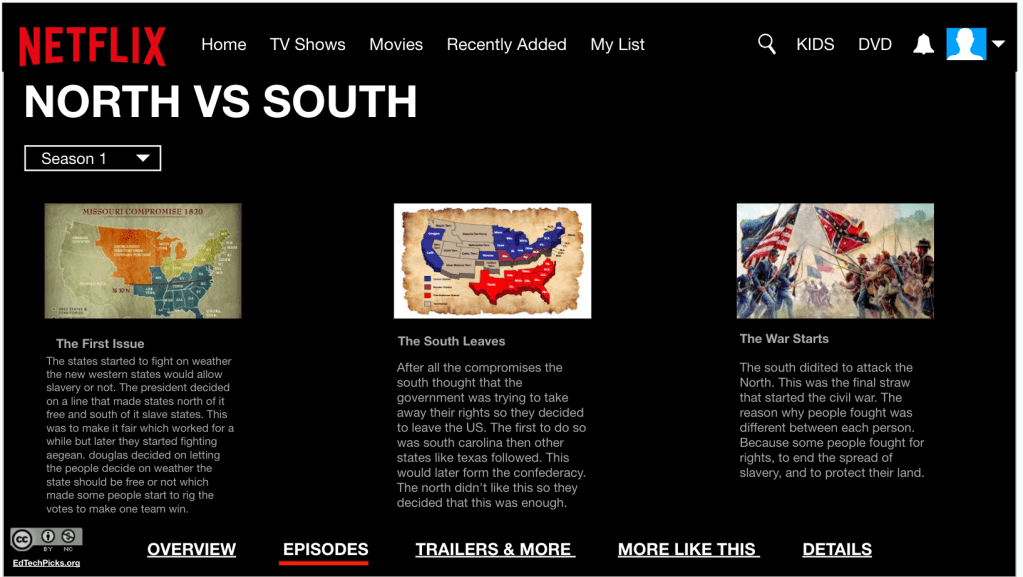
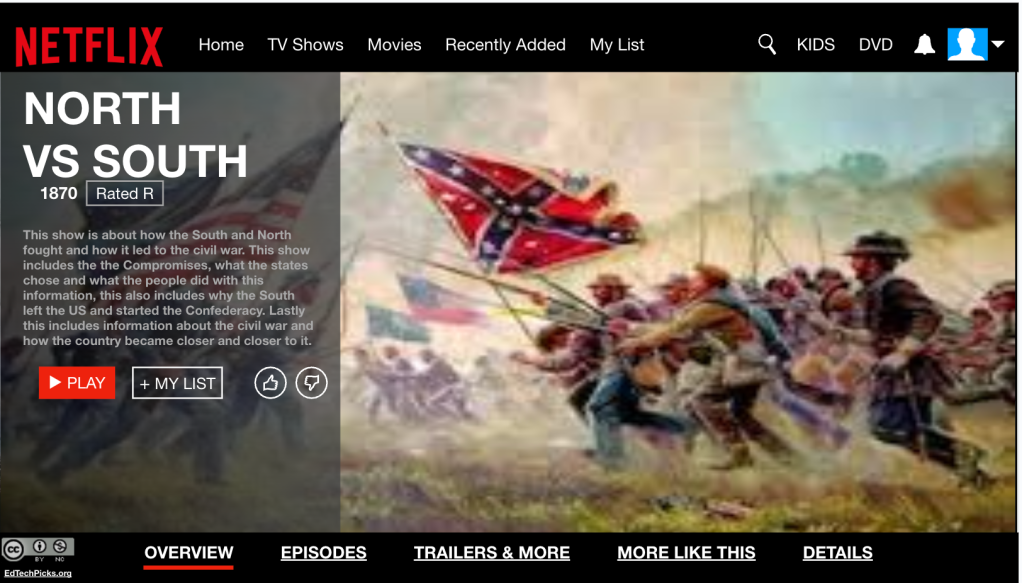
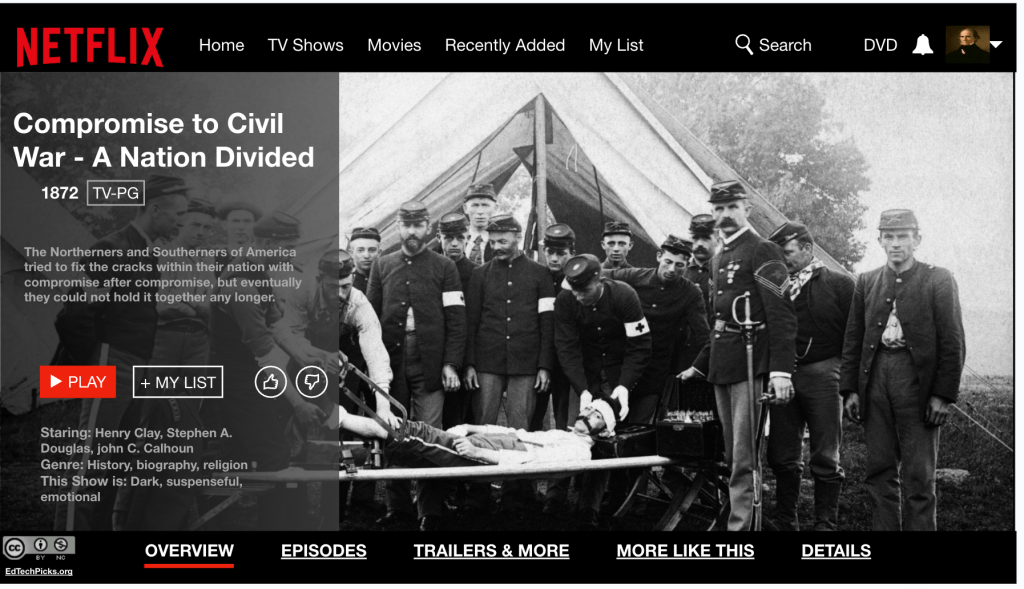
Next up: the Netflix template. I used an old template I’d saved (no idea where it originally came from), but it always works because it looks like an actual Netflix series layout. That visual hook alone helps students lock in.
The success criteria came straight from the yellow arrows in the template:
Slide 1: Series title, image, and a 3–4 sentence summary. They had to explain the division of states, why the South seceded, Fort Sumter, and reasons people were willing to fight.
Slide 2: Three creative episode titles—each tied to a big idea from our unit. Each episode needed a 2–4 sentence summary explaining the problem, the response, and the result.
To finish, I created a Magic School classroom for writing feedback. Students uploaded screenshots of their slides and received quick AI feedback. We had great conversations about the suggestions—what to take, what to ignore, and why. It’s not about AI replacing thinking; it’s about helping students reflect and revise.
This was a great way to end the theme. Students retrieved information, created something meaningful, and got instant feedback to grow their thinking. Simple. Structured. Creative. The way learning should be.
I never expected to write a book—let alone write one with someone like Dr. Scott M. Petri. (He always suggested you search his name with the ‘M’ because the other Scott Petri was a Republican representative in Pennsylvania).
He was an AP teacher with a doctorate, living in Los Angeles. I was a middle school teacher from small-town Ohio. He was short. I’m tall. On paper, we seemed like an odd match. But somehow, it just worked.
We were randomly paired to co-author The EduProtocols Field Guide: Social Studies Edition. And what started as a professional project quickly turned into one of the most meaningful friendships of my life.
Scott was organized. Me? Not so much. But where I brought simplicity, Scott brought structure. Where I was the quiet one, Scott was the talker – he couldn’t say “hi” in less than 500 words. He could take a simple idea and spin it into something complex, layered, and thought-provoking. I’d rein it in, offer a “clean it up this way,” and he always listened. He often told me criticism was hard for him to hear. Maybe it’s my small town tone, but it never bothered him. It never turned into a power struggle. We just trusted, and respected, each other.
We talked often – once, twice, sometimes three times a week. Every single conversation was a masterclass in something. He always had a new idea, a fresh take, or a connection to someone doing cool work. He loved connecting with people. And it showed in everything he did, from how he crafted our monthly Live Social Studies Show, to the care he put into promoting it. He was always thinking about the teachers who tuned in, how to give them something useful, how to make it meaningful.
The first time we met in person was at Spring CUE in 2022. We had been working together for months, but that was the first time we shook hands. Two days later, we presented together, and it felt like we’d been doing it for years. People were shocked to find out we’d just met.
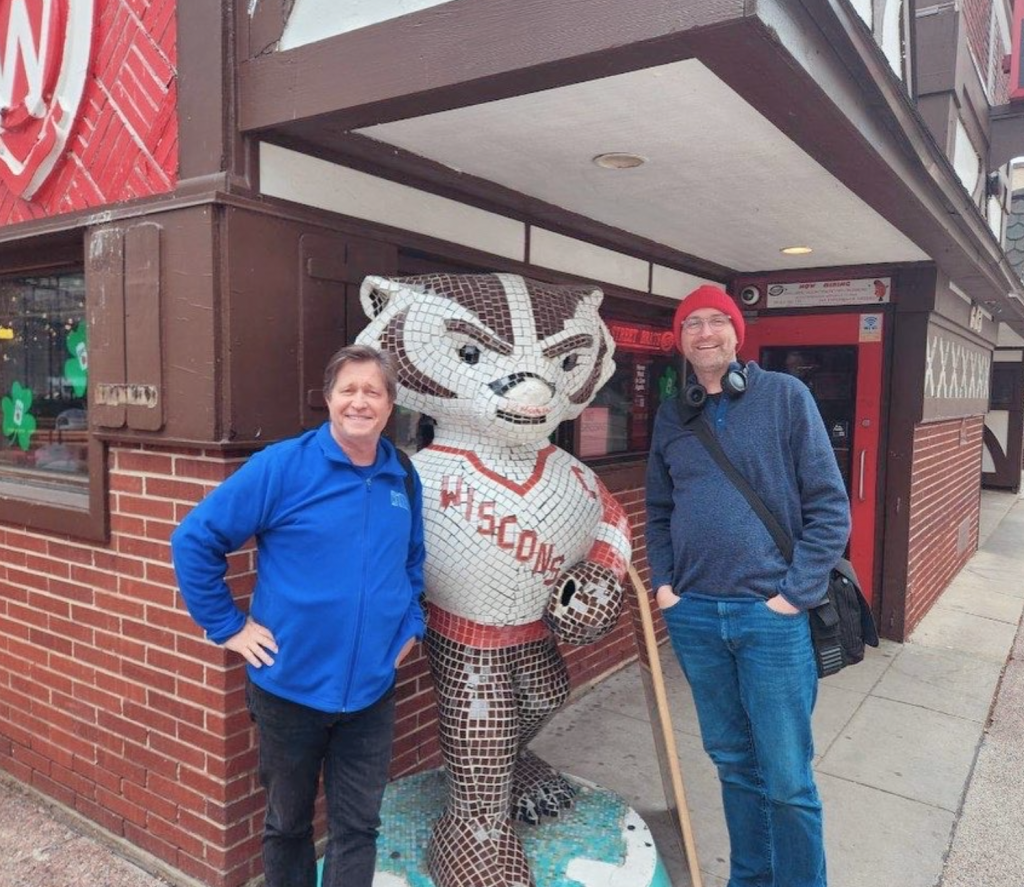
We ended up traveling the country together, presenting at MassCUE at Gillette Stadium, presenting in Madison, WI at WCSS, presenting virtually, and sharing EduProtocols everywhere we could. We were different, but we balanced each other. I grounded the conversation. He elevated it.
And through it all, he was kind. Incredibly kind. Always asking about my daughters, my wife, my life back in Cincinnati. He genuinely cared. About people. About teachers. About making education better.
Losing him so suddenly still doesn’t feel real. He wasn’t just my coauthor. He was my partner, my teammate, and my friend.
Damn, I miss him.
I’ll keep sharing what we built together. I’ll keep talking about the things he taught me. Because Dr. Scott M. Petri shaped me more than he probably ever realized.
In 2022, I was named the 2023 District 5 Ohio Teacher of the Year.
On paper, it sounds like a dream. A high honor. A moment you’d frame.
The process was deep and demanding. I had to write five essays about my teaching philosophy, collect samples of student work and lesson plans, and submit three letters of recommendation, one of which came from a student. That student letter was incredible. It meant everything to me because it was real, honest, and unscripted.
So yes, I was proud. But here’s the other side; the one that doesn’t show up in the press release – it’s a blessing and a curse.
The title “Teacher of the Year” comes with weight. Not just pride, but pressure, perception, and, sometimes, pushback.
Impossible Expectations
Suddenly, you feel like you have to be on all the time. No off days. No mediocre lessons. No room to just be a teacher doing their best. The spotlight shines, and it burns a little.
Imposter Syndrome
You start to wonder: “Am I good at what I do? Or did I just put together a solid application?” You second guess yourself more than before. Because once you’re given a label like that, every mistake feels amplified. Every shortcoming feels exposed.
The Attention
Some people treat you differently. Some quietly celebrate you. Others…keep their distance. And some say the quiet part out loud: “Every teacher should be Teacher of the Year. That kind of award isn’t fair.”
They’re not wrong to feel that way. There are incredible teachers in every hallway of every building, teachers who’ll never get nominated, much less recognized. I’ve worked next to them. I’ve learned from them. I am them.
So now I carry this strange duality: proud of the honor, but deeply aware of what it might look like to others.
And here’s the hardest truth: the award can work against you.
When I’ve interviewed for new roles or tried to grow professionally, I’ve felt the hesitation. Sometimes it feels like the title “Teacher of the Year” is a warning label: Might have ideas. Might want to lead. Might expect too much. Might leave
In public education, accolades are complicated. They don’t always open doors. Sometimes they quietly close them.
No doubt…this award shaped me. Not just the award, but everything that came after it. The pressure. The doubt. The silence. The looks. The interviews that didn’t pan out.
But also: the clarity. The reminder that no title changes why I do this. It’s not about the plaque. Or the essays. It’s about that student letter. It’s about the trust, the effort, the connection.
This week was all about pulling the thread—tracing how specific events pulled the country apart and pushed us toward war. I built everything around one central theme: A Nation Divides Over Slavery. From court cases to debates, from compromises to elections, we kept the structure tight: retrieval, repetition, and real thinking. The protocols stayed familiar, the tasks stayed purposeful, and students had a chance to connect the dots, not just memorize them.
Monday – Kicking Off “A Nation Divides Over Slavery”
We kicked off our new theme this week: A Nation Divides Over Slavery. The idea behind this theme is to help students connect key events and legal decisions that drove the wedge deeper between North and South – like the Dred Scott case, the Fugitive Slave Act, the Lincoln-Douglas Debates, and the Election of 1860.
We started with a Quizizz set that previewed these four topics – both vocabulary and content. I told the students upfront: this isn’t just about getting right answers. This is about seeing where we are before diving in and building context all week.
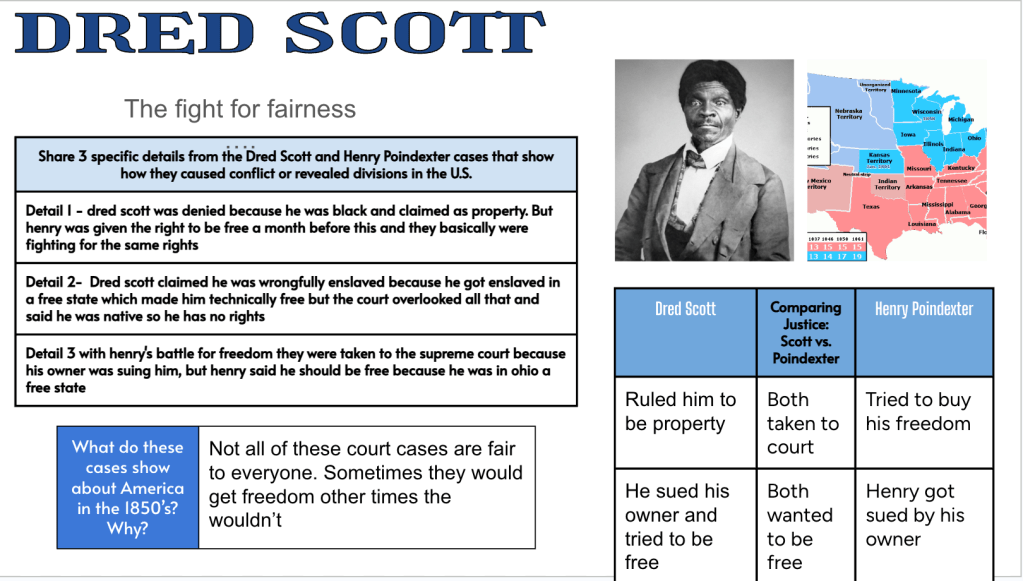
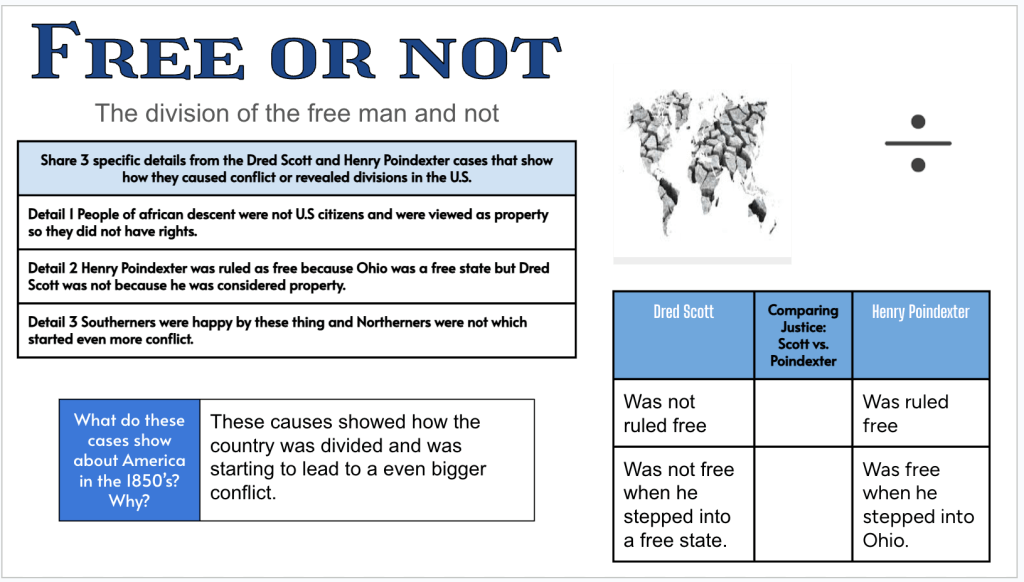
From there, we went straight into a Thick Slide on Dred Scott. I gave students four guiding questions:
Who was Dred Scott?
What did the court decide?
What impact did it have on the country?
Why does it matter today?
They added a powerful quote, one or two relevant images, and a title that helped summarize the case’s importance. I’ve used Thick Slides a lot this year, but I liked this one because it helped students pull together multiple layers of information on a tough topic and create something visual that forced them to organize their thinking.
To add a local lens, we wrapped up class with a short reading about The Case of Henry Poindexter – a lesser known but powerful Ohio case that challenged the logic of Dred Scott. Poindexter was ruled free when he entered Ohio, even though the Dred Scott ruling said enslaved people weren’t citizens. That contrast hit home for students. It was a great way to help them see that not all courts agreed—and that the debate over slavery and citizenship wasn’t as cut and dry as some textbooks make it seem.
Why this lesson worked:
Quizizz built background and gave us data
Thick Slide gave students a structure to produce and reflect
The Poindexter case grounded the learning in local history and made it real
Tuesday – A Twist on the Lincoln-Douglas Debates
Tuesday was one of those days where I wanted to keep the content heavy, but the delivery light. We were building off of Monday’s work with Dred Scott, and I needed a way to connect to the Lincoln-Douglas debates without it feeling like just another block of text.
We started with an EdPuzzle, a solid recap of the Dred Scott case that also dropped in mentions of Stephen Douglas and Abraham Lincoln. It served two purposes: review Monday’s learning, and plant seeds for what was coming next. No extra slides. No extra talking. Just a well-placed video.
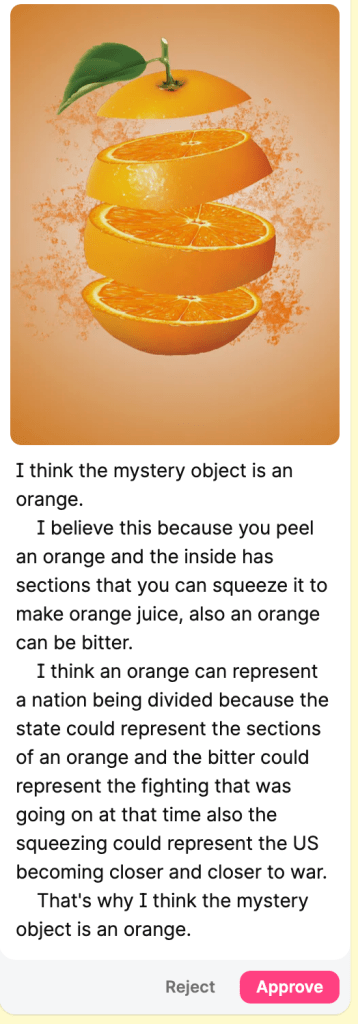
The the twist – instead of reading straight from the textbook, I decided to rework the passage on the Lincoln-Douglas debates. But I didn’t rework it myself—I asked AI to do it. Specifically, I asked ChatGPT to take the reading and embed five hidden clues to a mystery object. The object? An orange.
The clues: wedge, sections, bitter, peel, squeeze.
The students didn’t know this at first. They just read the modified version, answered the reading questions, and moved on. Until I dropped the twist.
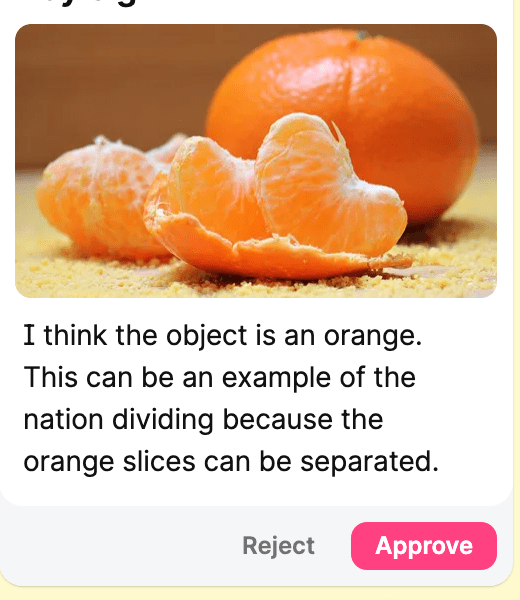
I shared a Padlet and told them: “Based on what you read, I was thinking of an object. It’s hidden in the clues. Guess what it is, and explain how it connects to a country being pulled apart by the issue of slavery.”
I changed the Padlet settings to manual approval so no one could copy answers. Kids were rereading, piecing together metaphors, trying to figure it out.
The guesses ranged from “lemon zest” to “an instrument” but when a few landed on “orange” and explained it like this…
“The country was in wedges, pulling away from the center.”
“There were different sections that couldn’t stay together.”
“Everyone was getting squeezed from both sides.”
This wasn’t about right answers. This was about interpretation.
It was late in the year. Attention spans were slipping. But curiosity still works.
Why This Worked
The EdPuzzle grounded us in prior knowledge without slowing momentum.
The AI-rewritten reading kept all the important facts but added a playful puzzle.
The mystery object metaphor gave kids a reason to reread and think differently.
The Padlet added a layer of mystery and ownership—students weren’t just responding, they were interpreting.
We talk a lot about curiosity in learning, but sometimes it’s as simple as hiding a metaphor in plain sight.
Wednesday – Number Mania and Division Over Slavery
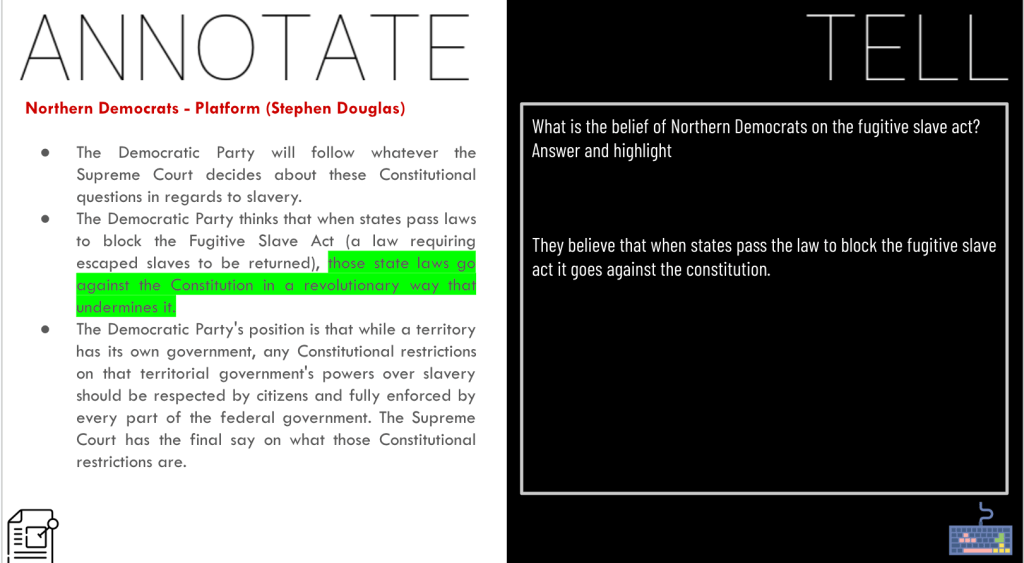
I decided to build the day around a lesson adapted from Retro Report, focused on how the Fugitive Slave Act further divided the nation and fractured the Democratic Party. We’d touched on the law last week, but this time we went deeper, analyzing its consequences more intentionally.
We opened class with a quick discussion about how a single law could force citizens to choose between their conscience and the law. Then we moved into a Number Mania. I provided students with a short, impactful reading on the Fugitive Slave Act that was rich in context and included some powerful data: $1,000 fines, $40,000 to return one man, over 300 people returned to slavery, and more. Students had to use three numbers to prove this quote true:
“The Fugitive Slave Act of 1850 deepened the divide between the North and South by punishing citizens who helped runaways, rewarding biased decisions, and sparking costly conflicts over slavery.”
They added visuals, a title, and paraphrased facts supported by numbers. It was more than just pulling data, it was about making meaning with that data. This protocol always helps students see the weight that numbers can carry in understanding a moment in history.
We ended with a Fast and Curious Quizizz, looping back to the same content vocabulary and themes from Monday. Every time we run that loop, accuracy improves. It’s low stakes, high impact, and it sets kids up for deeper thinking in the next lesson.
Why it worked:
Number Mania turned data into narrative and helped students visualize division.
The reading provided the foundation, and the task forced synthesis.
Quizizz helped reinforce essential vocabulary and context.
Thursday: Election of 1860 and the Nation Splits
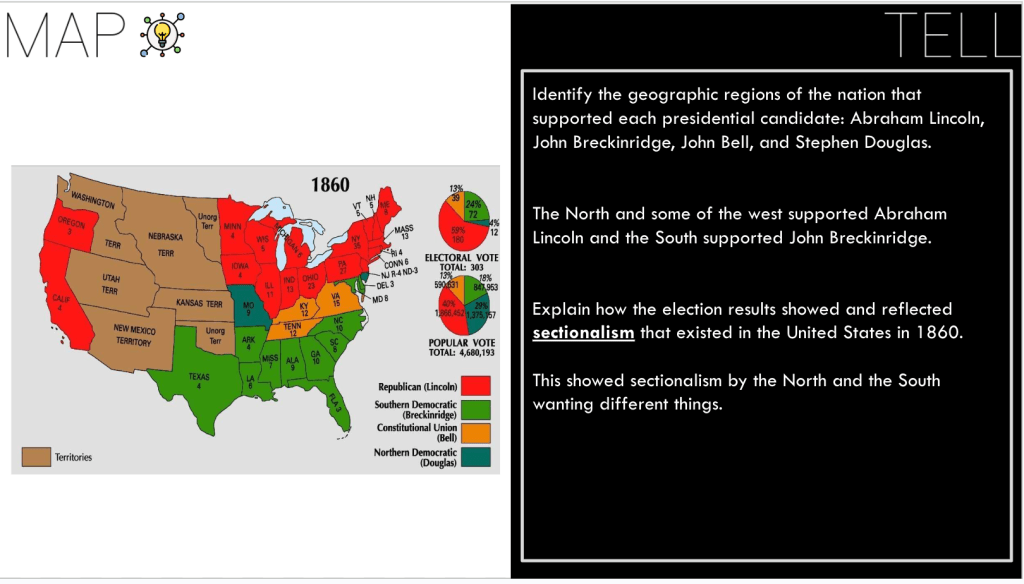
Thursday we wrapped up the second part of our Retro Report lesson on the road to the Civil War—this one focused on the Election of 1860. After covering the Fugitive Slave Act earlier in the week, this was a natural next step. It helped students see how deep the divisions were not just in laws, but in politics.
We started with an EdPuzzle on the Election of 1860. Just a four-minute video with a good breakdown of the four major candidates and how their platforms represented the different regions of the country. It was a great primer, quick, clear, and helped set up the rest of the lesson.
After the video, students read short excerpts from each of the party platforms. We didn’t go overboard here, I just wanted them to pull out the core ideas: What did each party believe about slavery? About federal power? About the territories?
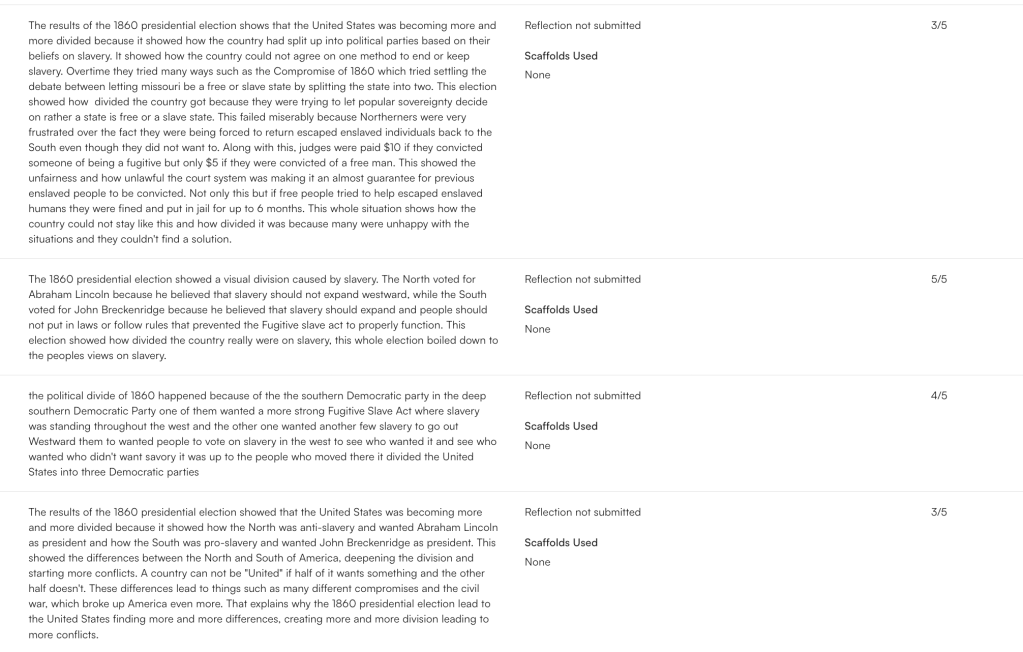
We wrapped it up with a Short Answer Battle Royale using the platform. The question was simple:
How did the results of the 1860 presidential election show that the United States was becoming more and more divided?
There was candy on the line, so they wrote like it actually mattered. Some of the answers were solid—claims, evidence, explanations. Some still needed guidance. But that’s the beauty of ShortAnswer. Students saw each other’s responses in real time. They adjusted, they improved, and they learned from one another.
It wasn’t a loud or flashy lesson, but it worked. The video gave them context. The reading gave them specifics. The writing gave them purpose. And the candy didn’t hurt, either.
Friday – Choice and Review to Close the Theme
We wrapped up the week and our “A Nation Divides Over Slavery” theme with a final round of Quizizz. This was our retrieval layer to see what stuck after hitting the Dred Scott case, the Fugitive Slave Act, Lincoln Douglas Debates, and the Election of 1860. The class averages were solid: 94%, 85%, 90%, and 86%. That tells me this themed structure is working. The repetition, the chunking, the protocols—it all adds up.
But what I liked even more was the choice students had in their assessment.
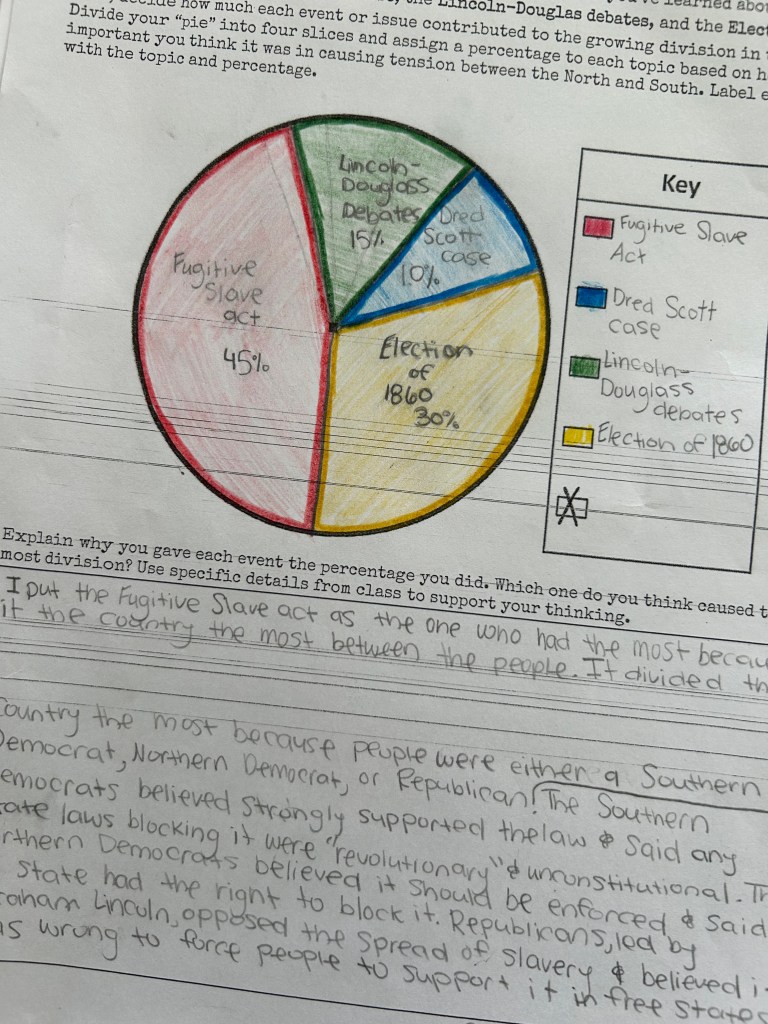
Option 1 was “Divide the Pie”—a visual breakdown of how much each event contributed to the growing division between North and South. Students had to assign a percentage to each of the four events and then justify those numbers with specific evidence. Not just pulling numbers out of thin air—but actually defending them based on class work and content we’ve layered all week. It wasn’t just about what they remembered. It was about what they understood.
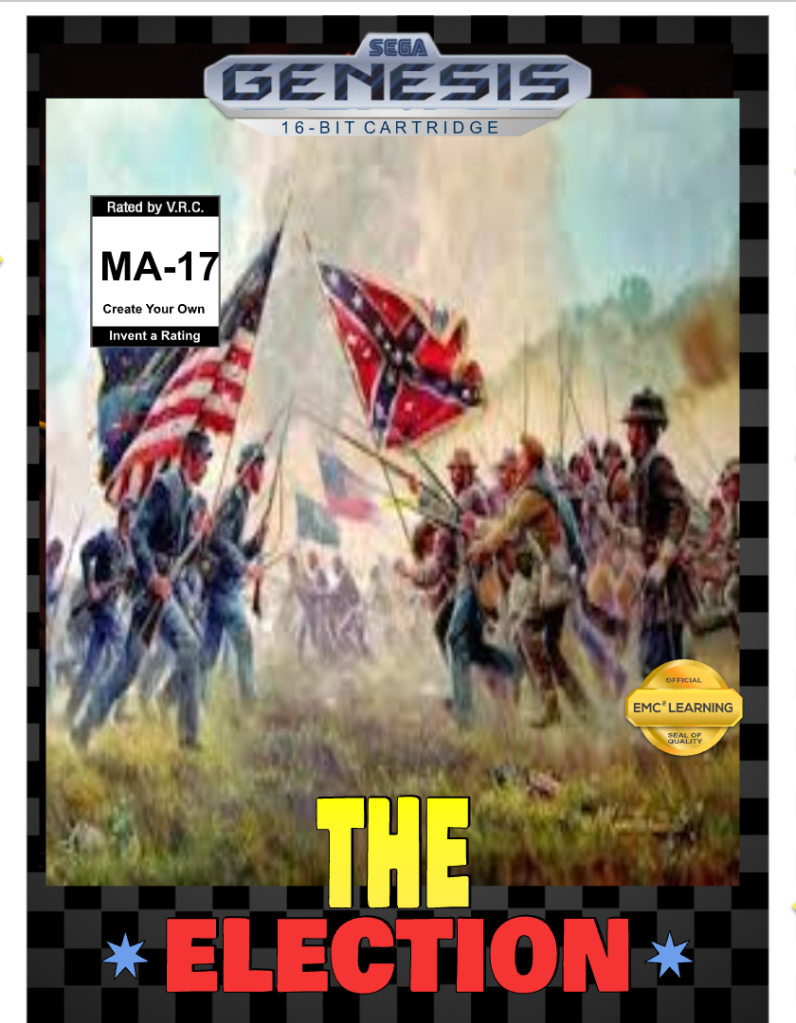
Option 2 was the Sega Genesis Game template from EMC² Learning. This one let students reimagine the week’s events as a vintage video game. Their job? Turn historical conflict into gameplay. What would the levels be? What obstacles would the player face? What’s the story arc? It’s creative, but it still demands content knowledge. I built out some success criteria so they weren’t just designing for fun—they had to make their game tie back to each event.
That’s the point. We’re giving students tools to own their thinking. Whether it’s defending a pie chart with historical evidence or turning a political crisis into pixelated gameplay, they’re showing what they know in ways that stick.
Sometimes, teaching history means peeling back the layers. Literally.
It was late in the year, and I just wanted to mix things up. We’d been hitting heavy content, and I needed something different—not easier, just… different.
So I asked AI to help.
We were covering the Lincoln-Douglas debates—a pivotal moment tied to the expansion of slavery and the rise of the Republican Party. I pasted a section of our textbook into ChatGPT and gave it a twist: “Rewrite this reading. Keep all the key facts. But embed five subtle clues to an object: an orange. Don’t name it. Just hide it.”
The clues?
wedge
sections
bitter
peel
squeeze
But here’s the thing—I didn’t tell the students that. I left the rewritten passage with the sub, followed by the usual reading questions. No mention of any mystery. No hint that something fun was coming.
Only after they answered the questions did I drop the surprise: A Padlet link with the challenge. “Based on the clues in the reading, what mystery object do you think I was thinking of? Add your guess. Then explain how it connects to a country being pulled apart by the issue of slavery.”
To make it more interesting—and to avoid copycat answers—I changed the Padlet settings to manual approval. No one could see each other’s guesses.
And just like that, reading became a puzzle. The guesses poured in: a violin? a broken flag? a lemon zest? And then came the ones that nailed it: an orange.
Their follow-up explanations were exactly what I hoped for:
“The country was in wedges, pulling away from the center.”
“There were different sections that couldn’t stay together.”
“Once you peel it, you can’t undo it.”
“Everyone was getting squeezed from both sides.”
That day, the students didn’t just complete another textbook reading. They investigated. They connected. They created a metaphor.
Why This Works: This isn’t fluff. It’s curiosity-driven, metaphor-based reading that builds real skills. Here’s the breakdown:
Choose a reading worth understanding deeply.
Pick an everyday object that metaphorically fits the moment.
Use AI to embed 4–6 subtle clues.
Let students read and respond as usual.
Then drop the mystery object twist: guess and explain the metaphor.
It turns reading into a mystery. It turns metaphor into meaning. It turns a late-year lesson into something different because we all need that during this time of year.
It was late in the year. We had a new textbook series, and I was opening our Civil War unit with what the book called a “geography challenge.”
Blank map. Labeling instructions. A few basic questions.
I passed it out like I had all year—going through the motions, hoping something would click.
Then a student stood up and asked the question I hadn’t said out loud, but had been carrying with me for months: “Why are we doing this? I don’t learn anything from these maps.”
She wasn’t being rude. She was just being real.
And honestly? She was right.
In that moment, I did something I’d never done before. I told the class to stand up. Walk to the trash can. And throw the maps away.
Some might say I let the students take over. I see it differently.
That day, I made a promise—to myself and to them: I’m going to be better than this textbook.
From that point forward, I became obsessed with making social studies an experience. Not a worksheet. Not a compliance task. An experience.
I started reading everything I could find. I tried new strategies. I messed up. I adjusted. I reflected. I failed forward. Some lessons landed. Some bombed. But I kept going.
That one comment flipped a switch. It made me stop settling. It pushed me to search for better ways—and eventually, it led me to EduProtocols. (But that’s another Things That Shaped Me post.)
For now, I’ll say this: That student didn’t just question a lesson. She lit a fire. She gave me permission to stop pretending the default was good enough.
And I’ve been building something better ever since.
This week in 234, we stacked a lot of learning into five days—Fast & Curious, Frayer Models, Mini Reports, Short Answer Battle Royales, and even a Netflix-themed summative. We used Thin Slides and AI tools like MagicSchool to keep thinking sharp and feedback immediate. Students worked through compromises, created empathy maps, asked hard questions, and wrapped it all up with creative final products. Every day had a clear task, a familiar structure, and a chance to show what they knew in a new way.
I wasn’t at school Monday, but I still wanted the lesson to move thinking forward. This was the day to bridge the gap between our work on reform—especially abolitionism—and the new unit on the causes of the Civil War. I didn’t want it to feel like two separate things. I wanted students to start seeing the threads.
I started them with an EdPuzzle on the causes of the Civil War. This was more of a primer than anything—just to introduce key ideas like sectionalism, states’ rights, and slavery as a cause, not a side detail. From there, they jumped into a vocabulary Quizizz to build some retrieval around terms like secession, abolitionist, compromise, and conflict. The goal was to give them some anchors before diving deeper later in the week.
Next, students read a short piece on the Abolitionist Movement. The reading focused on how individuals and laws pushed against slavery in different ways—through writing, escape networks, and protest. They answered four questions in complete sentences, which gave structure without overloading them. This is always a key decision I think about when I’m not there: clarity over complexity.
Finally, they went to a Padlet where they shared two things they learned and responded to the big question: “What was the cause of the Civil War?” That question, in one form or another, is going to guide us the next couple weeks. And I wanted them thinking about it early—even if their answer was rough.
None of it was flashy, but it had purpose. It helped me set up our three guiding themes for the unit:
Compromises Can’t Solve Slavery
A Nation Divides
Getting Ready for War
The best part is it gave them space to revisit old knowledge and preview new ideas—and when I returned Tuesday, they were ready to build.
Tuesday/Wednesday: The Missouri Compromise
Our theme this week was “Compromises Can’t Solve Slavery,” and this lesson focused on the Missouri Compromise.
We opened with a Quizizz for vocabulary and retrieval—terms like “compromise,” “balance,” and “slave vs. free states.” I originally planned to use a Frayer Model for the word “compromise,” but students already demonstrated understanding on Quizizz, so I cut it. Real-time data helps guide what stays and what goes.
Then we jumped into Upside Down Learning (from EMC2Learning), scaffolded with three categories: Cause, Conflict, and Compromise. Above the line, students charted accurate info from the Missouri Compromise reading. Below the line, they created an alternate reality—what if Missouri hadn’t joined as a slave state? What if no compromise had happened? It’s a quick way to push thinking to higher levels of Bloom’s—synthesis and evaluation.
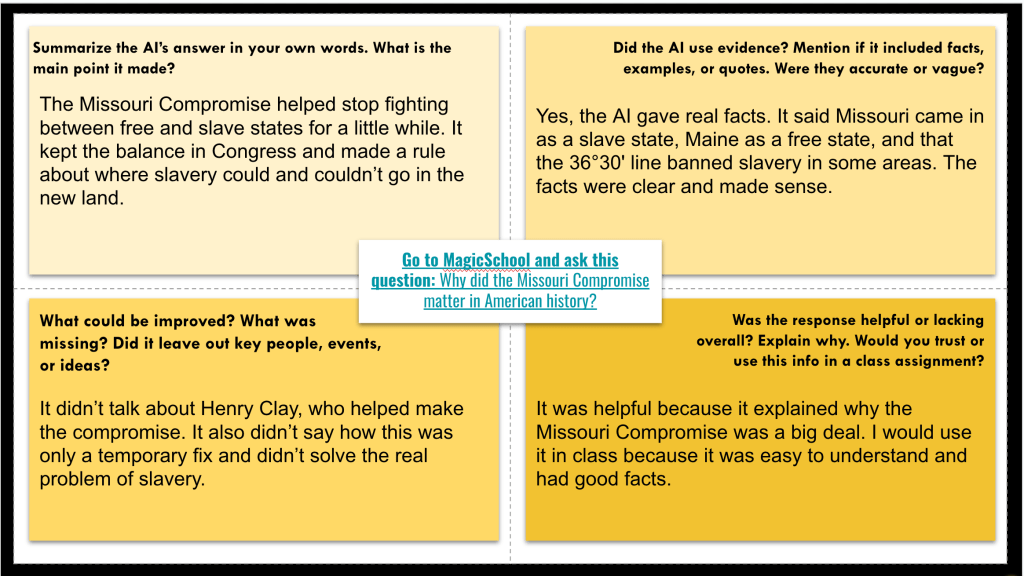
Next came a task I call Fray-I. I wanted students to ask a question that the reading didn’t answer. Then, using MagicSchool’s Raina AI, they typed in their question and completed a Frayer-style evaluation:
What was the main idea of the AI’s response?
Did it use evidence?
Was anything missing?
Would you trust this response?
We ended with an Empathy Map based on two primary sources—one from a Northerner and one from a Southerner debating slavery in the West. After reading, students chose one voice and filled out an empathy map to process their perspective.
Why this worked: It hit different levels—retrieval, evaluation, synthesis. The tasks built on each other and helped students understand compromise not just as a definition, but as a broken fix in a broken system.
And AI wasn’t just an “add-on”—it was a skill. Ask. Analyze. Evaluate.
Thursday – Caption Crunch
Thursday was all about keeping the cognitive load low—but not the learning. I’m running out of days before testing hits, and I knew I had to get both the Compromise of 1850 and the Kansas-Nebraska Act into one lesson. Normally, I’d spread those out. But I’ve learned that reducing the number of tasks while still keeping the thinking high is one way to keep the load manageable. It’s not just about what content you include—it’s also about how you deliver it.
We started with a Fast and Curious on Quizizz. Same core theme questions we’ve been hitting: compromise, slavery, and failure. It got them thinking quickly and primed for the day’s work.
Then we jumped into our Mini-Report. The layout was intentional—students had to compare both compromises side-by-side, using two half-page readings. I’ve found that the Mini-Report structure helps students stay focused, especially when they’ve seen it before. Familiarity builds confidence, and confidence keeps engagement up.
Before we read, I ran an EdPuzzle—some classes did it live, others on their own. I had them write down just one detail from the video to get them warmed up. That’s it. Just one. No overkill, no worksheet—just purposeful priming.
After that, we read and filled in the Mini-Report. No full sentences. Just paraphrased notes to get them processing.
Once they had their facts, we jumped into Short Answer for a Battle Royale. The question: “How did the Compromise of 1850 and the Kansas-Nebraska Act try to solve the issue of slavery, and why didn’t they work?” Students competed for a donut. It sounds silly, but they wrote their asses off. Because there was structure. Because it mattered.
We wrapped up with something new I called Caption Crunch. I set up a Padlet with columns and gave students captions that connected to one of the three compromises we’ve studied. Their task: take the caption, add keywords, and plug it into Padlet’s AI image generator. Then, they posted their AI-generated image and explained in 2–3 sentences which compromise it represented and how the image reflected what happened. The captions were generated by AI, but the decisions and connections were all theirs.
I think Caption Crunch has potential to be an EduProtocol. It pushed students to think symbolically, creatively, and critically about each compromise. And it added another layer of retrieval and review without feeling like “just more reading.” It can be used across all grade levels and content areas.
It was one of those days that felt packed, but purposeful. Everything flowed. Everything clicked. And the kids were into it. That’s what matters.
Friday
Friday was all about wrapping up our first theme—“Compromises Can’t Solve Slavery”—and giving students a chance to pull everything together in a creative way. We kicked off with one final round of the same Quizizz we’d been using all week. And yes, I had to play the game. I told them: If your class average is below 80%, you’re creating more work for yourselves. If it’s above 90%, everyone gets a 100%. It’s ridiculous that I have to do that, but here we are.
One class came in at 70%. Honestly? Unbelievable. We’ve been doing this same Quizizz set every day. So that class had to do a three-way Venn diagram comparing the Missouri Compromise, Compromise of 1850, and Kansas-Nebraska Act. The other classes finished at 87%, 83%, and 80%—so they moved on to the main activity: the Netflix Template.
This is one of my favorite creative assessments. I’ve had this template forever—I can’t even remember where I got it—but it’s sharp. Looks like a real Netflix series and pushes students to synthesize in a unique way. Here was the success criteria:
Slide 1:
Series Title
A 3–4 sentence summary connecting the compromises and showing how they represent failure
Slide 2:
Creative episode titles (one per compromise)
A short summary that explains:
What the compromise tried to fix
What actually happened
Any relevant key terms (Fugitive Slave Act, Bleeding Kansas, etc.)
A thumbnail image, cast list (Henry Clay as “The Great Compromiser”), and a content warning
I also created a MagicSchool classroom where students could attach their Netflix slides and get writing feedback. I like that part because it’s easy to set up and it lets students take some ownership. Some kids were tweaking titles, some were improving explanations, and some were learning how to actually use Google Slides better.
That part is underrated. I had students asking, “How do I layer these images?” or “How do I crop this picture into a shape?” and I got to teach them real tech skills while they were working through content. So yeah, it wasn’t just about summarizing compromises—it was about learning how to design, write, and revise creatively.
The first time a student told me, “This sounds smart, but I don’t think it’s right,” in response to an AI-generated answer—I knew we were onto something.
That moment sparked Fray-I—a thinking routine I’ve been developing to help students analyze AI responses, not just accept them. It’s still a work in progress, but it’s already changing how my students interact with both history and technology.
Here’s the flow:
Students engage with content – a primary source, textbook excerpt, or short video.
They ask a question based on the reading or viewing—either one they create or one I provide (especially if the source leaves something unanswered or unclear).
They run that question through an AI tool like ChatGPT or MagicSchool.
They get a response and analyze/evaluate.
Here’s what Fray-I looks like:
Claim: What is the AI saying? What’s the main idea or argument?
Evidence Used: What support, facts, or examples does it include?
What’s Missing?: What voices, perspectives, or key historical context are left out?
Push It Further: How could this answer be stronger? More accurate? More complete? Would you use this response?
This turns AI into the text—not the shortcut. Students question the bot like they would a biased newspaper article, a government document, or a historical speech.
Why Fray-I works:
It puts students in the driver’s seat. They’re not copying—they’re critiquing.
It reinforces essential social studies skills: sourcing, bias, perspective, and evidence-based reasoning.
It meets students where they are—working with the tools they’re already curious about.
And honestly? The engagement is different. When students start noticing what the AI got wrong, what it ignored, or how it could be improved, they feel ownership.
Fray-I isn’t finished. I’m still tweaking sentence starters and scaffolds to support all learners. But it’s already doing what I hoped: Helping students think like historians in a world where information is instant—but not always insightful.
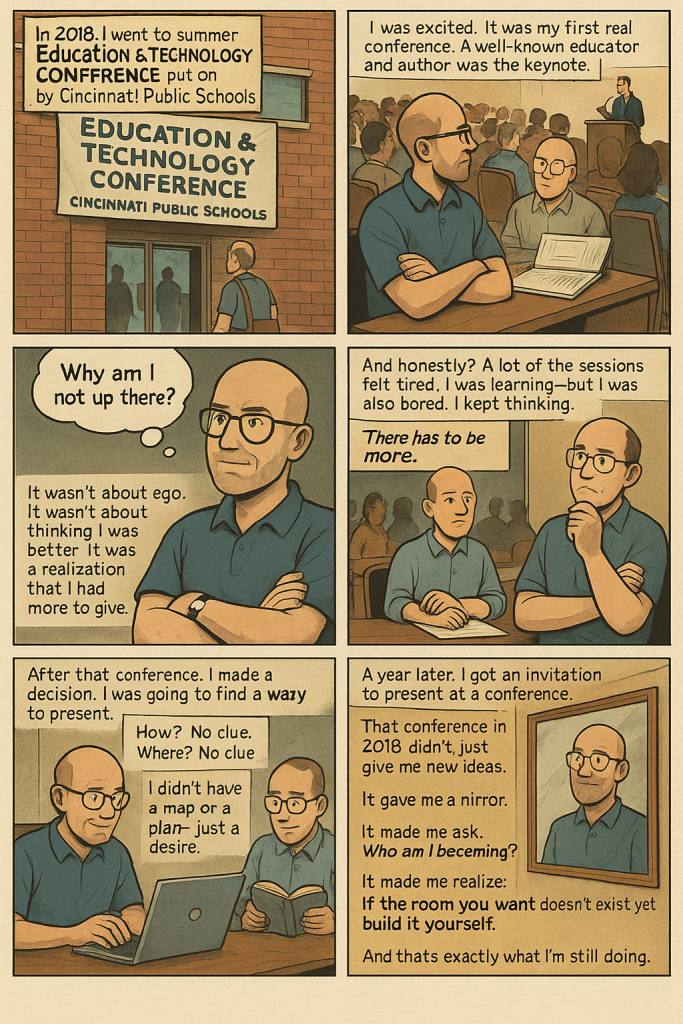
In 2018, I went to a summer Education and Technology Conference put on by Cincinnati Public Schools.
I was excited. It was my first real conference. A well-known educator and author was the keynote. I signed up for my sessions. I filled my notes with new ideas. I sat there ready to learn.
But somewhere in the middle of it all, a different thought started creeping in: “Why am I not up there?”
It wasn’t about ego. It wasn’t about thinking I was better. It was a realization that I had more to give.
And honestly? A lot of the sessions felt tired. I was learning—but I was also bored. I kept thinking, There has to be more.
After that conference, I made a decision: I was going to find a way to present.
How? No clue. Where? No clue. I didn’t have a map or a plan – just a desire.
To me, setting a goal isn’t about listing all the things you have to do. It’s about asking yourself: “Who do I need to become to get there?”
So I went to work. I started sharing more. I started creating more. I started reading more. I started sequencing EduProtocols differently – combining them, remixing them, making them my own. I started thinking bigger.
A year later, I got an invitation to present at the Summer Spark conference in Milwaukee, Wisconsin. I ran a workshop on EduProtocols. Then I presented at Spring CUE in Palm Springs, California. Then at NCSS in Nashville, Tennessee. Then all over the U.S. – sharing EduProtocols and AI from Boston to Los Angeles and everywhere in between. I built what I once just dreamed about.
That conference in 2018 didn’t just give me new ideas. It gave me a mirror. It made me ask, Who am I becoming? It made me realize: If the room you want doesn’t exist yet, build it yourself.



















 Moler's Musings