Things That Shaped Me: Simple, Not Simpler

Sometimes I feel like I’ve lived a few different lives.
My parents are divorced, so I grew up splitting time between two worlds, a suburban neighborhood and stretches of country backroads. I’ve been on tractors, in tobacco fields, in college classrooms, and on tennis courts. There’s some country in me. I love country music, I work hard, and I’m not afraid to roll up my sleeves and get after it. I like things simple, not simpler.

That balance still shapes how I teach.

Social studies doesn’t have to be hard to be meaningful. Rigorous doesn’t have to mean complicated. It’s not about big words or long lectures, it’s about what we ask kids to do with what they learn. I’m always looking for ways to make learning accessible, purposeful, and doable in a single class period.

Take my recent lesson on Bacon’s Rebellion. I could have given a short reading and a few questions, that’s simpler. I could have built a two-day showpiece of slides and handouts, that’s complicated. Instead, I aimed for effective. We started with a short PBS video introducing Anthony Johnson, one of the first Africans in Virginia to gain freedom and own land. Students discussed how he was later labeled an “alien” and how his family’s farm was taken away. Then we shifted to a SWBST summary for Bacon’s Rebellion to unpack the events and motives, and used a Cyber Sandwich to take the meaning further.

We looked past the textbook’s surface story about a government not meeting people’s needs and dug into the deeper issue. Wealthy planters and officials didn’t want poor whites and enslaved Blacks uniting again, so they codified race-based slavery to divide them. Students used Snorkl to get instant feedback on their writing. They treated it like a game, starting with a 2 out of 4 and revising to reach a 3 or higher. Instead of waiting for my feedback, they improved right in the moment. That’s simple, not simpler, just like the lesson itself.

I carry that balance with me every day, the grit from the fields and the purpose from the classroom. Teaching doesn’t have to be flashy. It just has to be thoughtful, intentional, and a little bit country.

I guess that’s the gift of living a few different lives. Each one taught me something different, and together they shaped how I show up for my students, simple, not simpler.

That’s what shaped me.

Things That Shaped Me: Coaching Tennis Taught Me to Teach

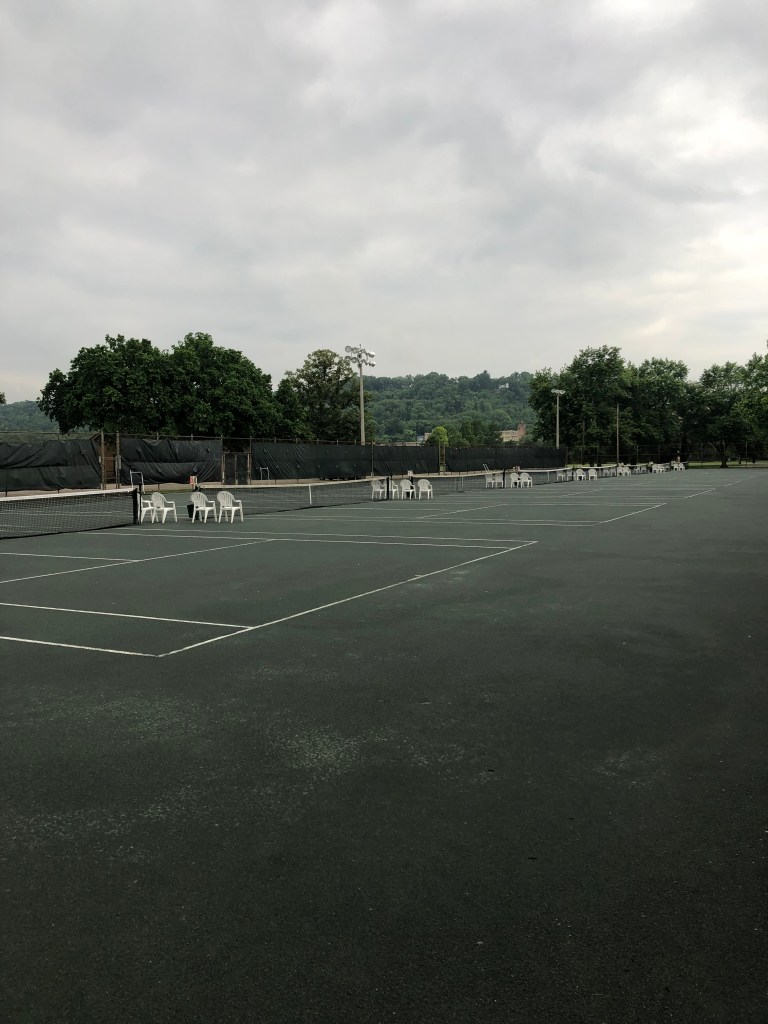
I’ve been coaching tennis for a long time, and I can still hear the echoes from courts all over: “Bend your knees.” “Finish your swing.” “Low to high.” Those lines are so common they almost fade into the background. But I never really bought into that approach. To me, coaching was never just about repeating mechanical reminders.

What shaped me as a coach is the belief that tennis is a game of awareness. Watch your opponent. Notice how they carry themselves. If they are frustrated and slamming balls into the net, that matters. If they miss every third forehand, that is a pattern you can work with. If they thrive on consistency, then you take it away, high, low, short, deep, anything to break their rhythm. Tennis is a puzzle, and the best players are the ones who learn to see it piece by piece.

That way of seeing the game shaped how I see the classroom too. Worksheets and lectures? Those are the “bend your knees” of teaching. They can check a box, but they don’t create awareness. Real learning happens when students start noticing connections, when they see patterns in history, when they recognize how an idea links to something in their own lives. My job is not to hand them instructions but to create conditions where they learn to think, to notice, to respond.

What shaped me is this simple idea: whether on the court or in the classroom, growth is about presence. If you dwell on the point you lost, you’re living in the past. If you only think about the final score, you’re living in the future. Awareness lives in the present. And that’s where learning and growth truly happen.

Tennis shaped my teaching. Teaching shaped my tennis. Both shaped me into someone who believes that success is not about doing more, it’s about seeing more.

Things That Shaped Me: Better, Not Best

It wasn’t some big dramatic moment. Just a soggy afternoon, a rained out practice, and a quiet conversation in the parking lot.

I turned to my coach and said, “I just want to be better.”

Not the best.
Not great.
Just better.

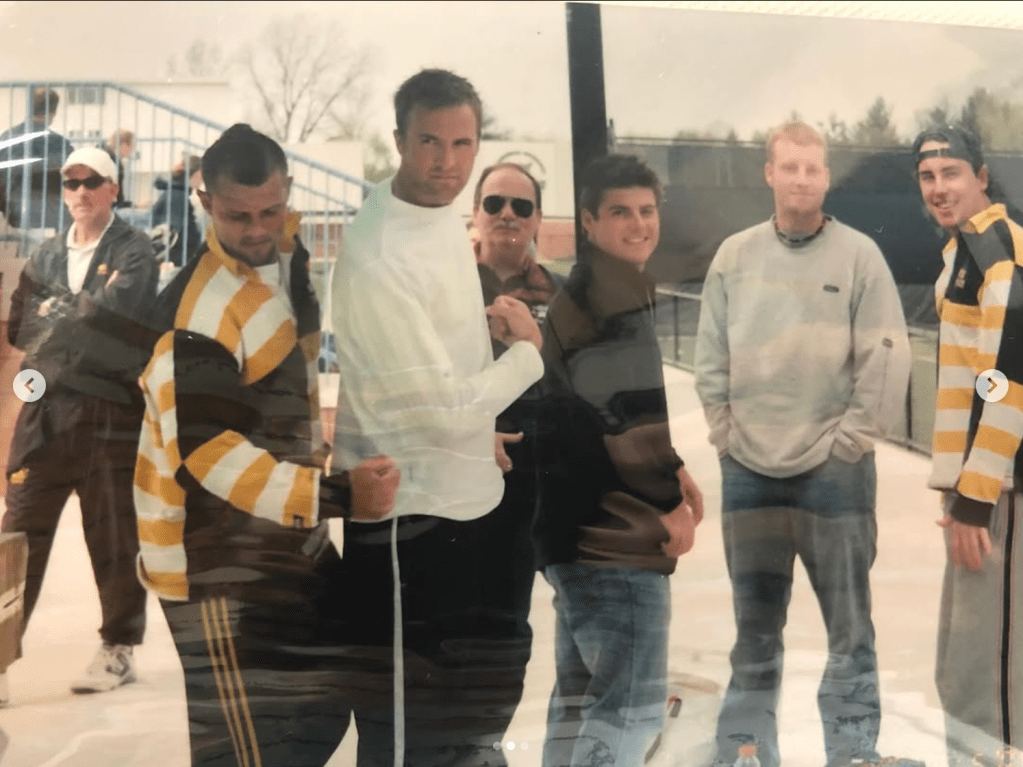
At the time, I was 7th or 8th on the team at NKU. No scholarship. No spotlight. I wasn’t bad, I was just there. And I was tired of that. Tired of feeling average. Tired of going through the motions.

So I said it. Not for attention. Not because anyone asked. I just needed it out of my head and into the world.

Coach didn’t make a big deal out of it. He didn’t hold me to it. But I held myself to it. That decision turned into early mornings twice a week: driving to the local racquet club before class. Coach would feed me backhands. Reps. Then volleys. More reps. Over and over.

I played more. I practiced with purpose. Not just hoping to improve, working to improve.

That mindset. That repetition. That intentionality…changed everything.

By junior year, I earned a scholarship. By senior year, I kept it.
And after my last season ended, Coach handed me money for books. Just a quiet sign that he saw the work, too.

That whole stretch of time taught me what I carry into the classroom today:

  • Show up early.
  • Put in the reps.
  • Don’t chase perfection. Chase progress.
  • Be intentional.

I don’t expect my students to be the best. But I do want them to be better, and to want that for themselves.

Because better is what shapes you.
Better is what sticks.
Better is what makes you a force…not just in sports, but in life.

Things That Shaped Me: Someone Saw Me Before I Saw Myself

I couldn’t feed a ball to save my life.

That’s where it started. I was a teenager working at Ivy Hills Country Club, learning how to roll clay courts, line baselines, and scrape off the dried teneco when it got too thick. I knew how to hustle. I knew how to show up. But I didn’t know I had something to give.

Enter Brett.

He didn’t just teach me how to coach, he taught me how to carry myself. How to speak with purpose. How to hold the line when nobody’s watching. There was a precision to the way he ran things, but also a presence, like every interaction mattered. He wasn’t just building tennis instructors and players. He was building people.

He saw something in me early on. Maybe it was potential. Maybe it was stubbornness. Maybe he just needed another set of hands on the court. But whatever it was, he handed me a clipboard, a basket of balls, and a level of responsibility I didn’t think I’d earned yet. I stumbled through those first lessons, missed more targets than I hit, but he never pulled the plug. He let me grow.

And more than that – he expected me to.

Brett once told me, “Find a job that pays you even when you’re not working.” I’ve thought about that a lot over the years. At first, I thought it was financial advice. Now I know it’s about legacy. About being so present, so intentional, so damn all-in that your impact keeps echoing long after the bell rings or the last ball bounces.

Teaching is that job for me.

Some days, I still feel like the kid who couldn’t feed a forehand. But I carry Brett’s voice with me, in how I mentor kids, how I show up for colleagues, and how I keep raising the bar for myself. I try to be that person who sees someone before they see themselves.

Because that’s what shaped me.

Things That Shaped Me: Irene

My parents divorced when I was young. I spent most of my time with my mom and stepdad; and his mom, Irene.

For years, I wondered what to call her. Was she my grandma? Step-grandma? Something in-between? I spent too long trying to figure out a title, but looking back now, it didn’t matter. She didn’t need a label. She was just Irene. And she was one of the most important people in my life.

She lived to be 99. That alone is remarkable. But it’s not the number that sticks with me, it’s everything she lived through along the way. She survived breast cancer. Multiple strokes. Multiple heart attacks. She lost her eyesight to macular degeneration. Her hearing slowly faded. Her mobility declined. And yet, she was the happiest, most positive person I knew.

She’d sit at the kitchen table, smile wide, and tell me stories. About the year she got oranges for Christmas. About riding her horse, Jigs, to school in the cold, sometimes in the snow, like it was no big deal. Her voice would light up when she talked about those days. Not because they were easy, but because she had found joy in them.

Irene didn’t complain. She didn’t focus on what she’d lost. She focused on what she still had: people, memories, faith, and the ability to love. She’d ask about my day, even when she could barely hear the answer. She’d laugh even when she couldn’t see who was in the room. That shaped me.

Her strength didn’t show up in loud moments or big speeches. It showed up in the quiet way she kept going. In the way she kept finding good in the world, no matter how much the world took from her.

Irene didn’t need to be called Grandma. She was love, presence, joy, and grit, all in one. Sometimes the people who shape us most don’t come with official titles. They come with oranges at Christmas, a horse named Jigs, and stories that still echo long after they’re gone.

Things That Shaped Me: Ask My Students

Not long ago, I had a job interview where someone implied I might not be great at building relationships with students.

Fair enough. I get how I come off. I’m dry. I’m short and to the point. I’m introverted. I don’t do grand entrances. I’ve always been that way.

But if you think I can’t connect with kids—ask my students.

Coaching tennis helped me figure that out. When you’re on a court, you don’t have to be the loudest person in the room, you have to be on. You have to read the situation, encourage through frustration, and know when to step in or back off. Teaching is the same. Presence matters more than performance.

Over the years, my students have taught me more than I could ever teach them. I’ve seen middle schoolers walk into class after nights of chaos at home and still manage to be kind, still find ways to work hard. I’ve had students crack jokes that stopped me mid lesson. I’ve seen creativity in unexpected forms, a side conversation that turns into a brilliant project, a single sentence that says more than a five paragraph essay.

I’ve learned to listen more and assume less. I’ve learned that just showing up day after day matters more than people realize. And I’ve learned that connection doesn’t always look like a hug or a pep talk. Sometimes it looks like a quiet nod, a sarcastic comment, or a student hanging out in your room just a little too long after the bell.

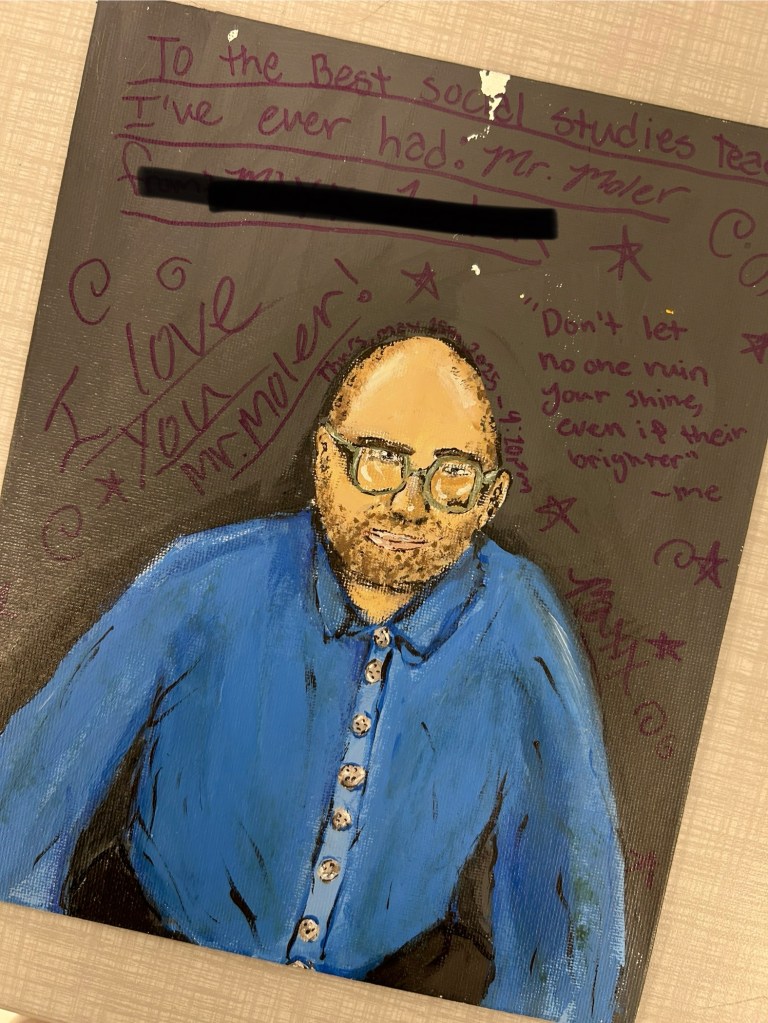
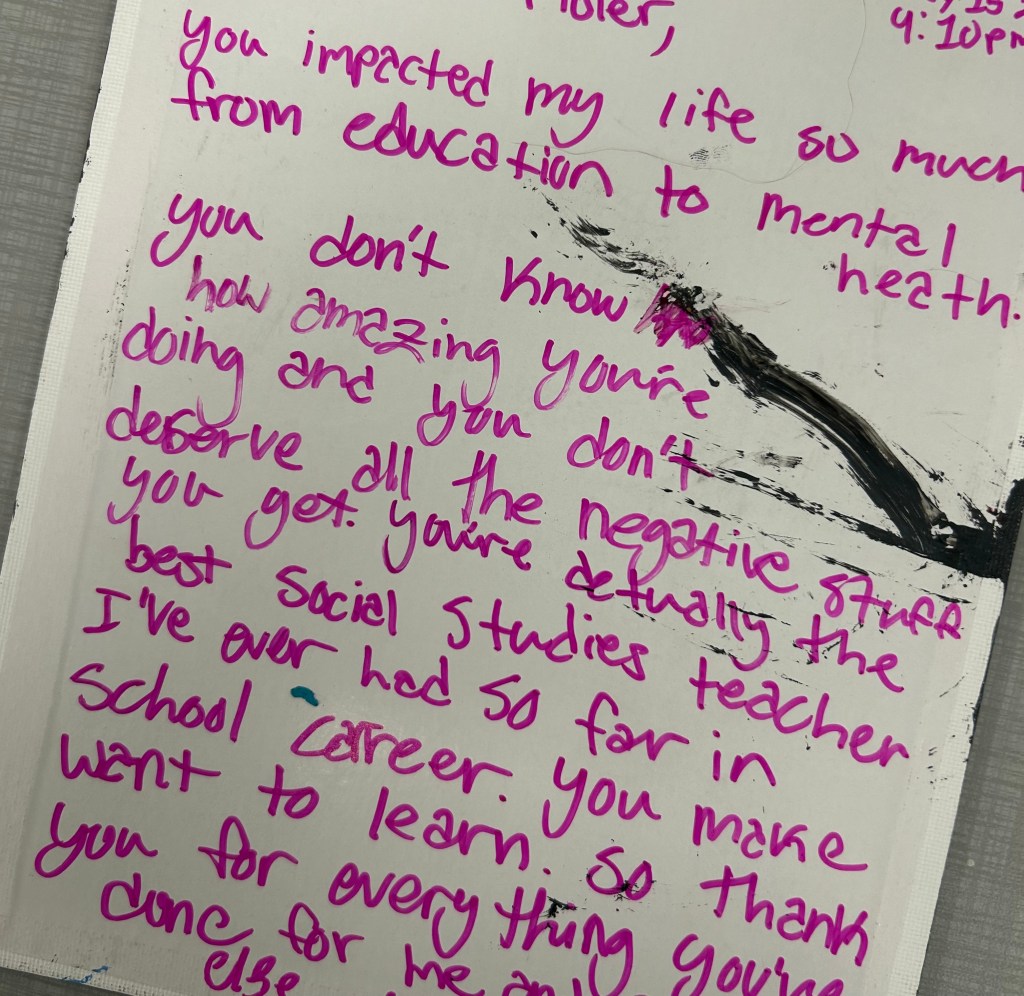
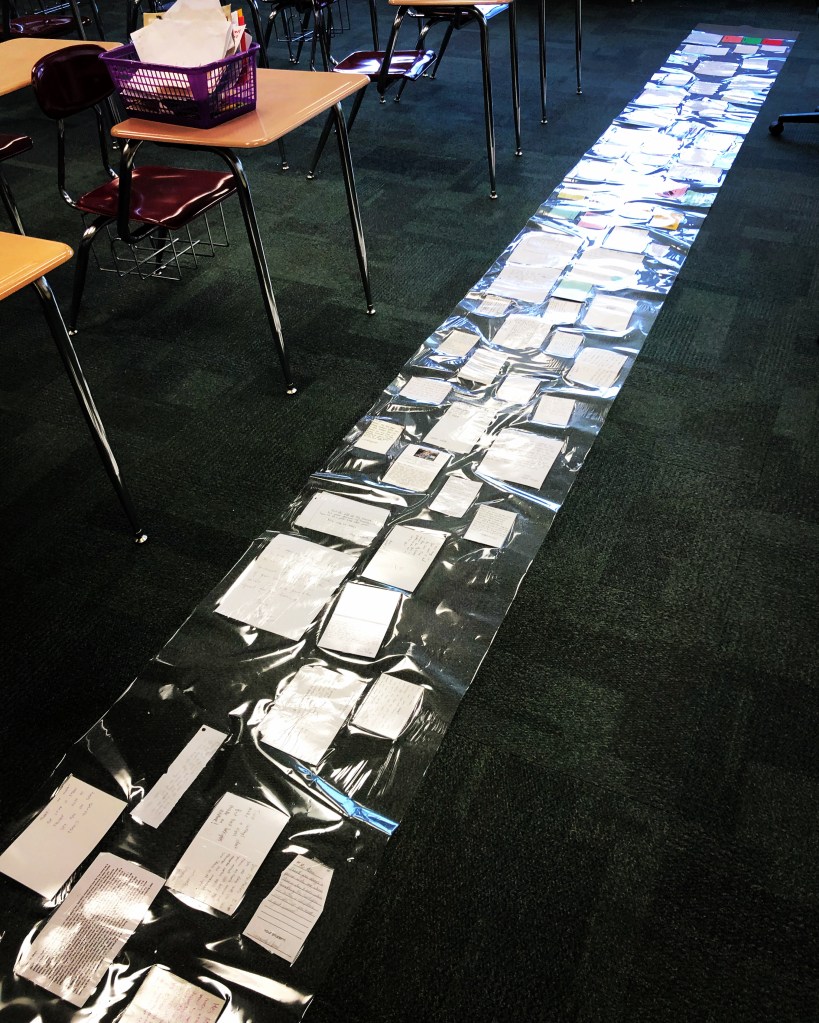
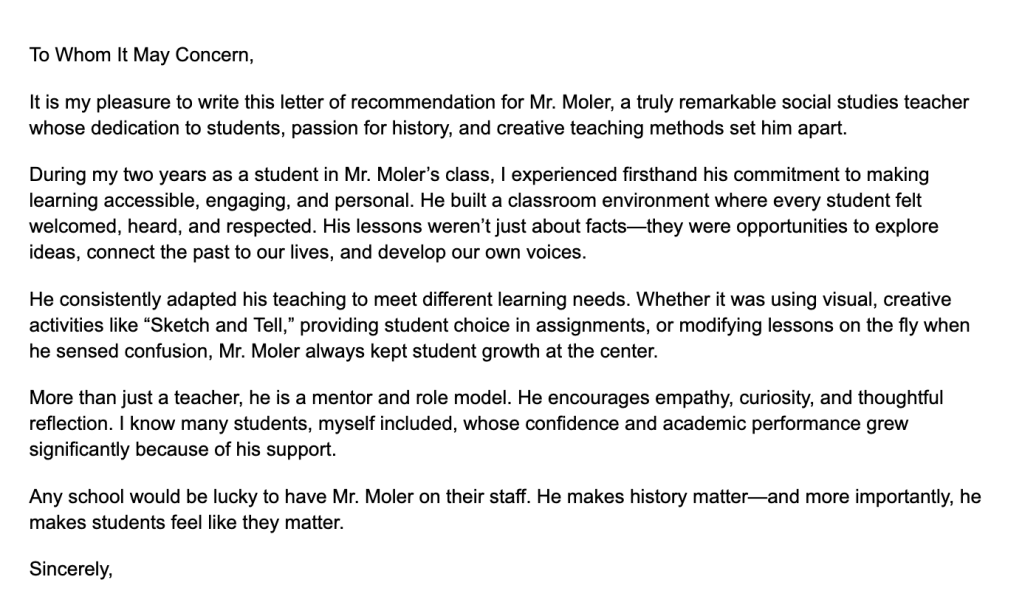
I still have the letters. The artwork. And a letter of recommendation a student typed up for my Ohio Teacher of the Year application. Not because they had to, but because they wanted to.

So yeah, am I quiet? Definitely. But don’t mistake that for disconnected.

Ask my students. I’m pretty damn good at it.

Things That Shaped Me: Dr. Scott Petri

I never expected to write a book—let alone write one with someone like Dr. Scott M. Petri. (He always suggested you search his name with the ‘M’ because the other Scott Petri was a Republican representative in Pennsylvania).

He was an AP teacher with a doctorate, living in Los Angeles. I was a middle school teacher from small-town Ohio. He was short. I’m tall. On paper, we seemed like an odd match. But somehow, it just worked.

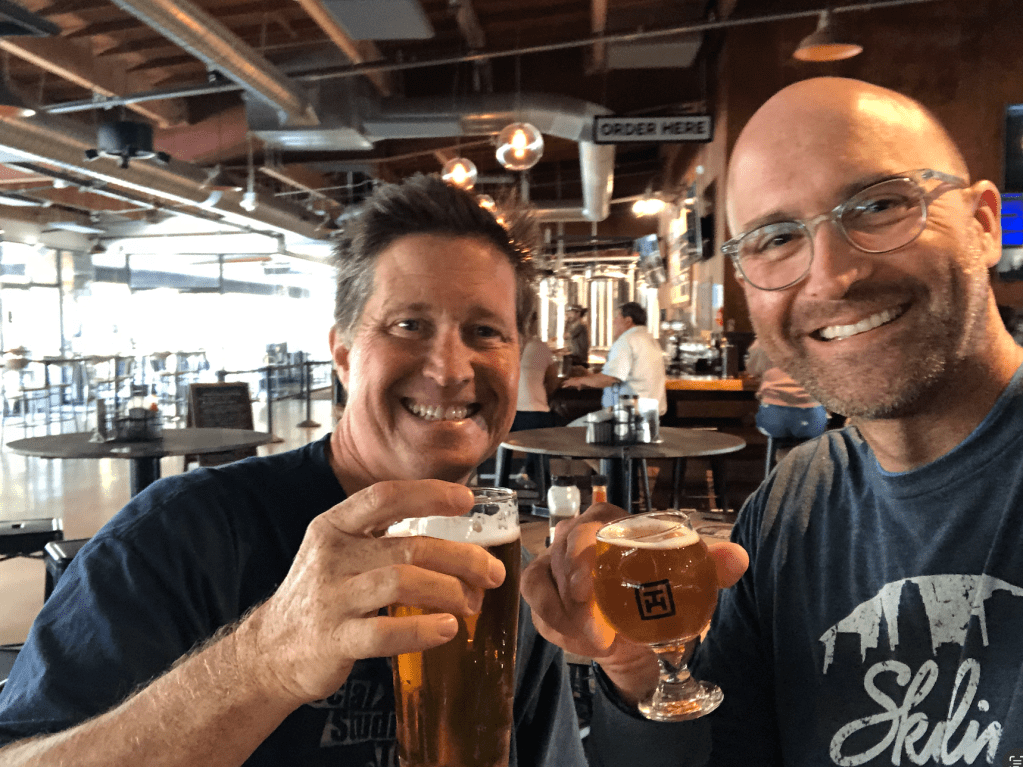
We were randomly paired to co-author The EduProtocols Field Guide: Social Studies Edition. And what started as a professional project quickly turned into one of the most meaningful friendships of my life.

Scott was organized. Me? Not so much. But where I brought simplicity, Scott brought structure. Where I was the quiet one, Scott was the talker – he couldn’t say “hi” in less than 500 words. He could take a simple idea and spin it into something complex, layered, and thought-provoking. I’d rein it in, offer a “clean it up this way,” and he always listened. He often told me criticism was hard for him to hear. Maybe it’s my small town tone, but it never bothered him. It never turned into a power struggle. We just trusted, and respected, each other.

We talked often – once, twice, sometimes three times a week. Every single conversation was a masterclass in something. He always had a new idea, a fresh take, or a connection to someone doing cool work. He loved connecting with people. And it showed in everything he did, from how he crafted our monthly Live Social Studies Show, to the care he put into promoting it. He was always thinking about the teachers who tuned in, how to give them something useful, how to make it meaningful.

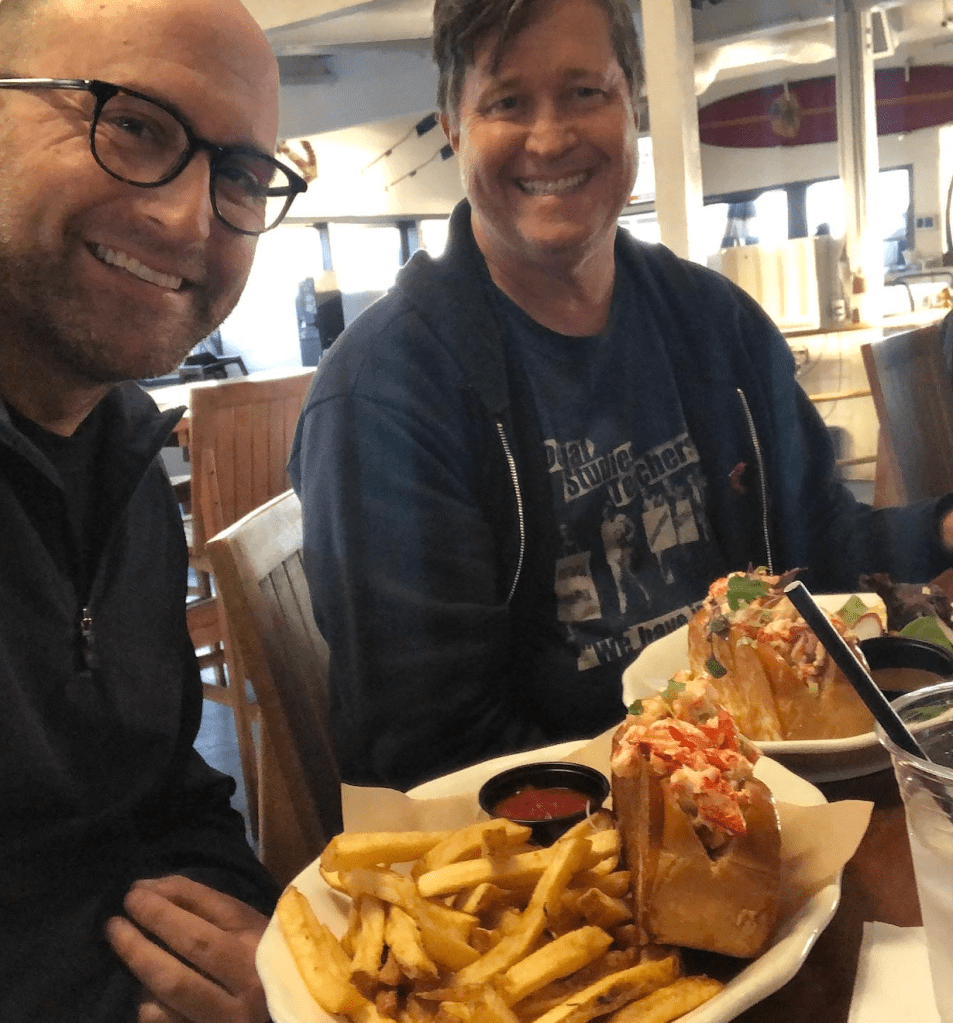
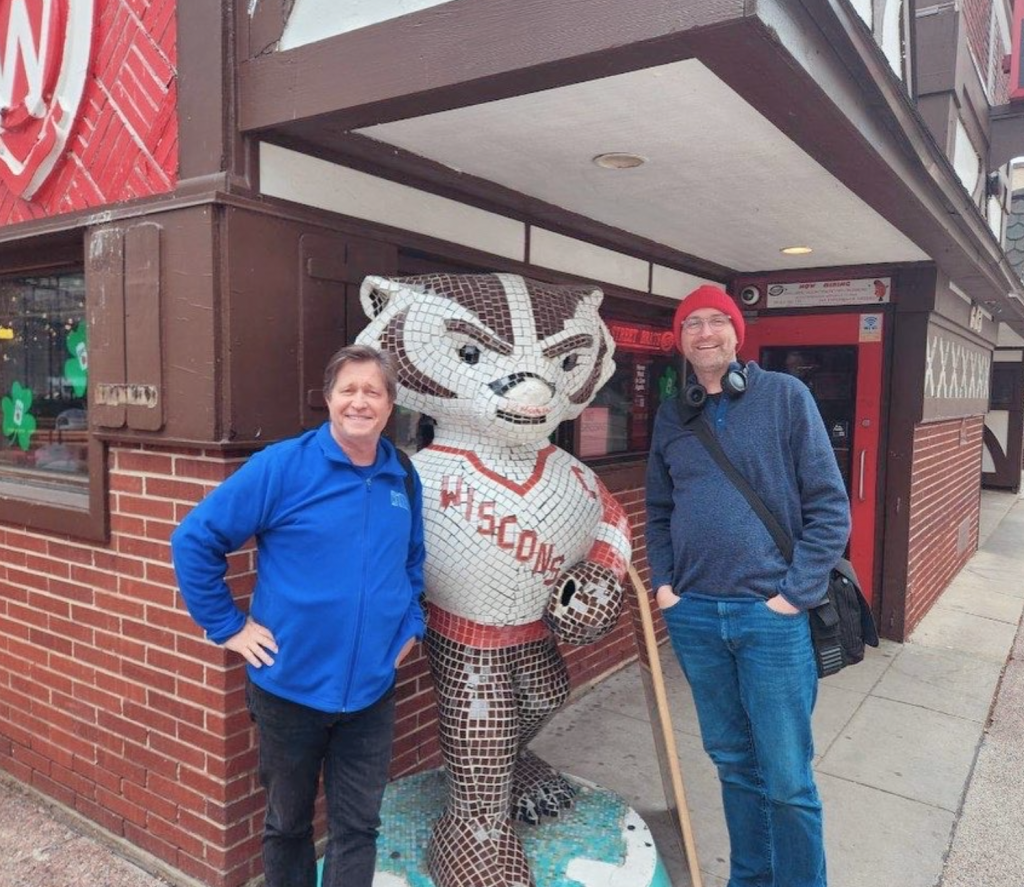
The first time we met in person was at Spring CUE in 2022. We had been working together for months, but that was the first time we shook hands. Two days later, we presented together, and it felt like we’d been doing it for years. People were shocked to find out we’d just met.

We ended up traveling the country together, presenting at MassCUE at Gillette Stadium, presenting in Madison, WI at WCSS, presenting virtually, and sharing EduProtocols everywhere we could. We were different, but we balanced each other. I grounded the conversation. He elevated it.

And through it all, he was kind. Incredibly kind. Always asking about my daughters, my wife, my life back in Cincinnati. He genuinely cared. About people. About teachers. About making education better.

Losing him so suddenly still doesn’t feel real. He wasn’t just my coauthor. He was my partner, my teammate, and my friend.

Damn, I miss him.

I’ll keep sharing what we built together. I’ll keep talking about the things he taught me. Because Dr. Scott M. Petri shaped me more than he probably ever realized.

Rest easy, my friend.

Things That Shaped Me: When the Spotlight Casts a Shadow

In 2022, I was named the 2023 District 5 Ohio Teacher of the Year.

On paper, it sounds like a dream. A high honor. A moment you’d frame.

The process was deep and demanding. I had to write five essays about my teaching philosophy, collect samples of student work and lesson plans, and submit three letters of recommendation, one of which came from a student. That student letter was incredible. It meant everything to me because it was real, honest, and unscripted.

So yes, I was proud. But here’s the other side; the one that doesn’t show up in the press release – it’s a blessing and a curse.

The title “Teacher of the Year” comes with weight. Not just pride, but pressure, perception, and, sometimes, pushback.

Impossible Expectations

Suddenly, you feel like you have to be on all the time. No off days. No mediocre lessons. No room to just be a teacher doing their best. The spotlight shines, and it burns a little.

Imposter Syndrome

You start to wonder: “Am I good at what I do? Or did I just put together a solid application?” You second guess yourself more than before. Because once you’re given a label like that, every mistake feels amplified. Every shortcoming feels exposed.

The Attention

Some people treat you differently. Some quietly celebrate you. Others…keep their distance. And some say the quiet part out loud: “Every teacher should be Teacher of the Year. That kind of award isn’t fair.”

They’re not wrong to feel that way. There are incredible teachers in every hallway of every building, teachers who’ll never get nominated, much less recognized. I’ve worked next to them. I’ve learned from them. I am them.

So now I carry this strange duality: proud of the honor, but deeply aware of what it might look like to others.

And here’s the hardest truth: the award can work against you.

When I’ve interviewed for new roles or tried to grow professionally, I’ve felt the hesitation. Sometimes it feels like the title “Teacher of the Year” is a warning label: Might have ideas. Might want to lead. Might expect too much. Might leave

In public education, accolades are complicated. They don’t always open doors. Sometimes they quietly close them.

No doubt…this award shaped me. Not just the award, but everything that came after it. The pressure. The doubt. The silence. The looks. The interviews that didn’t pan out.

But also: the clarity. The reminder that no title changes why I do this. It’s not about the plaque. Or the essays. It’s about that student letter. It’s about the trust, the effort, the connection.

Things That Shaped Me: The Student Who Called It Like It Was

It was late in the year. We had a new textbook series, and I was opening our Civil War unit with what the book called a “geography challenge.”

Blank map. Labeling instructions. A few basic questions.

I passed it out like I had all year—going through the motions, hoping something would click.

Then a student stood up and asked the question I hadn’t said out loud, but had been carrying with me for months:
“Why are we doing this? I don’t learn anything from these maps.”

She wasn’t being rude. She was just being real.

And honestly? She was right.

In that moment, I did something I’d never done before. I told the class to stand up. Walk to the trash can. And throw the maps away.

Some might say I let the students take over.
I see it differently.

That day, I made a promise—to myself and to them:
I’m going to be better than this textbook.

From that point forward, I became obsessed with making social studies an experience.
Not a worksheet. Not a compliance task.
An experience.

I started reading everything I could find. I tried new strategies. I messed up. I adjusted. I reflected. I failed forward.
Some lessons landed. Some bombed.
But I kept going.

That one comment flipped a switch. It made me stop settling. It pushed me to search for better ways—and eventually, it led me to EduProtocols.
(But that’s another Things That Shaped Me post.)

For now, I’ll say this:
That student didn’t just question a lesson.
She lit a fire.
She gave me permission to stop pretending the default was good enough.

And I’ve been building something better ever since.

Things That Shaped Me: The Conference That Woke Me Up

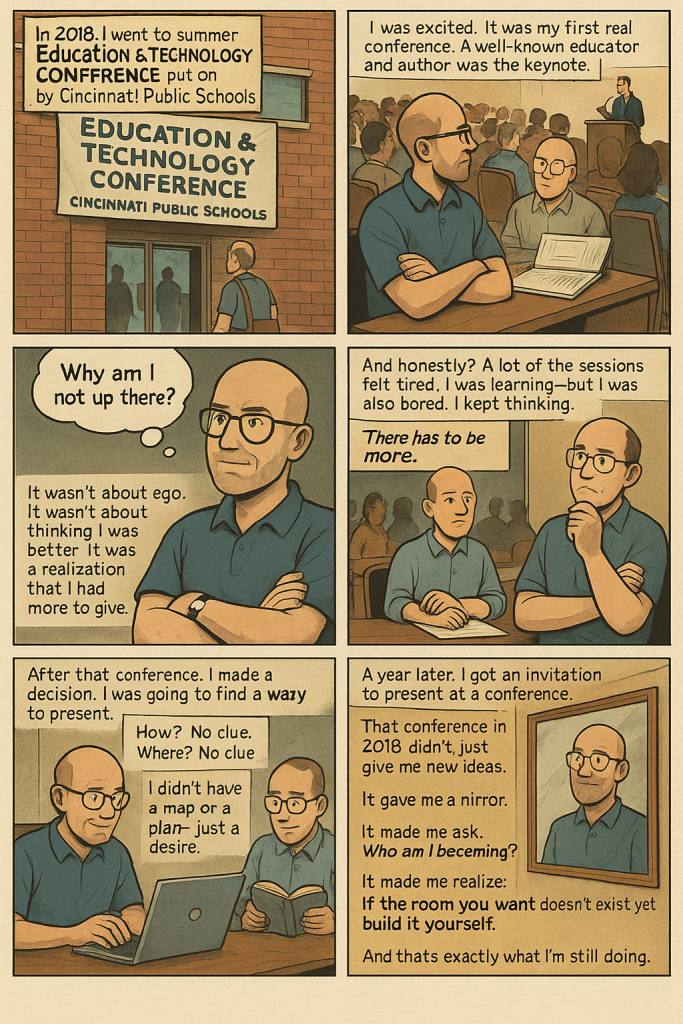
In 2018, I went to a summer Education and Technology Conference put on by Cincinnati Public Schools.

I was excited. It was my first real conference. A well-known educator and author was the keynote. I signed up for my sessions. I filled my notes with new ideas. I sat there ready to learn.

But somewhere in the middle of it all, a different thought started creeping in: “Why am I not up there?”

It wasn’t about ego. It wasn’t about thinking I was better. It was a realization that I had more to give.

And honestly? A lot of the sessions felt tired. I was learning—but I was also bored. I kept thinking, There has to be more.

After that conference, I made a decision: I was going to find a way to present.

How? No clue.
Where? No clue.
I didn’t have a map or a plan – just a desire.

To me, setting a goal isn’t about listing all the things you have to do.
It’s about asking yourself: “Who do I need to become to get there?”

So I went to work. I started sharing more. I started creating more. I started reading more. I started sequencing EduProtocols differently – combining them, remixing them, making them my own. I started thinking bigger.

A year later, I got an invitation to present at the Summer Spark conference in Milwaukee, Wisconsin. I ran a workshop on EduProtocols. Then I presented at Spring CUE in Palm Springs, California. Then at NCSS in Nashville, Tennessee. Then all over the U.S. – sharing EduProtocols and AI from Boston to Los Angeles and everywhere in between. I built what I once just dreamed about.

That conference in 2018 didn’t just give me new ideas.
It gave me a mirror.
It made me ask, Who am I becoming?
It made me realize: If the room you want doesn’t exist yet, build it yourself.

And that’s exactly what I’m still doing.