I was inspired to write this piece after seeing an Instagram post from my friend Jacob Carr (Mr. Carr On The Web)…
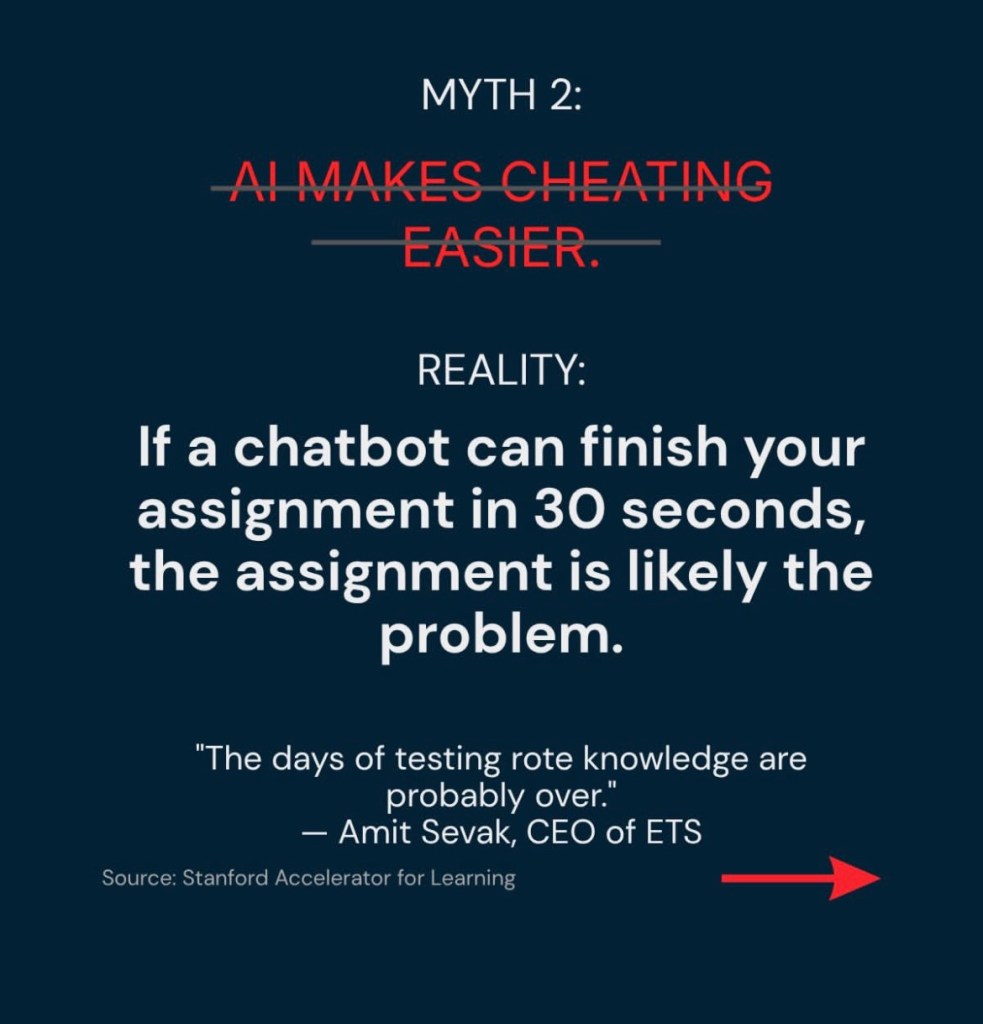
Most of the conversation around AI and cheating is focused on the wrong thing. We keep asking how to catch it, prevent it, or design around it. But there is a more honest question underneath all of that. If a student can open a chatbot, type a prompt, and have a finished product in under a minute, what does that tell us about what we were actually measuring?
That reframe changed how I thought about assessment this year. Not how do I stop AI from being used. But how do I design something where using AI doesn’t actually help.
Here is what that looked like in my classroom….
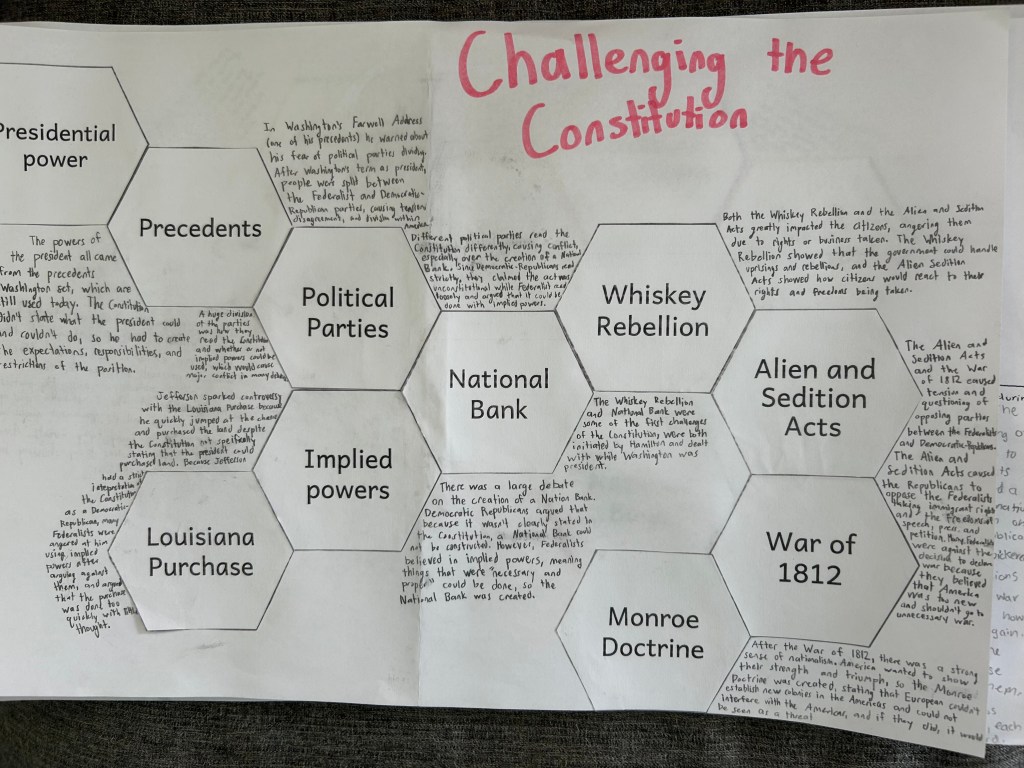
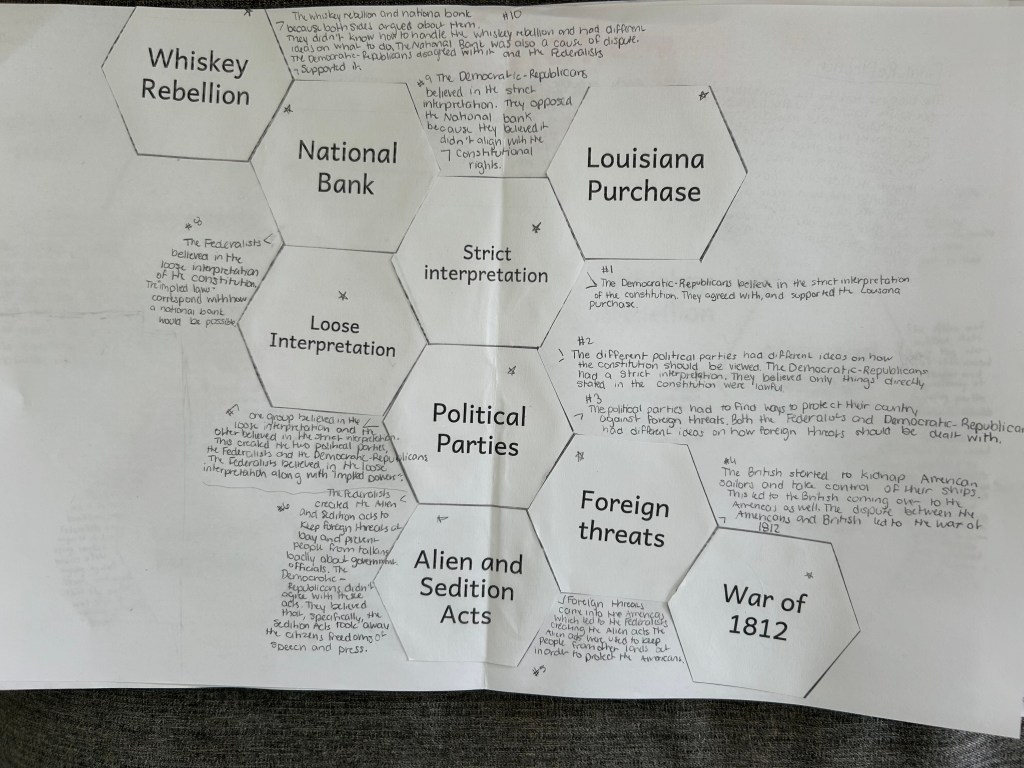
Hexagonal Thinking
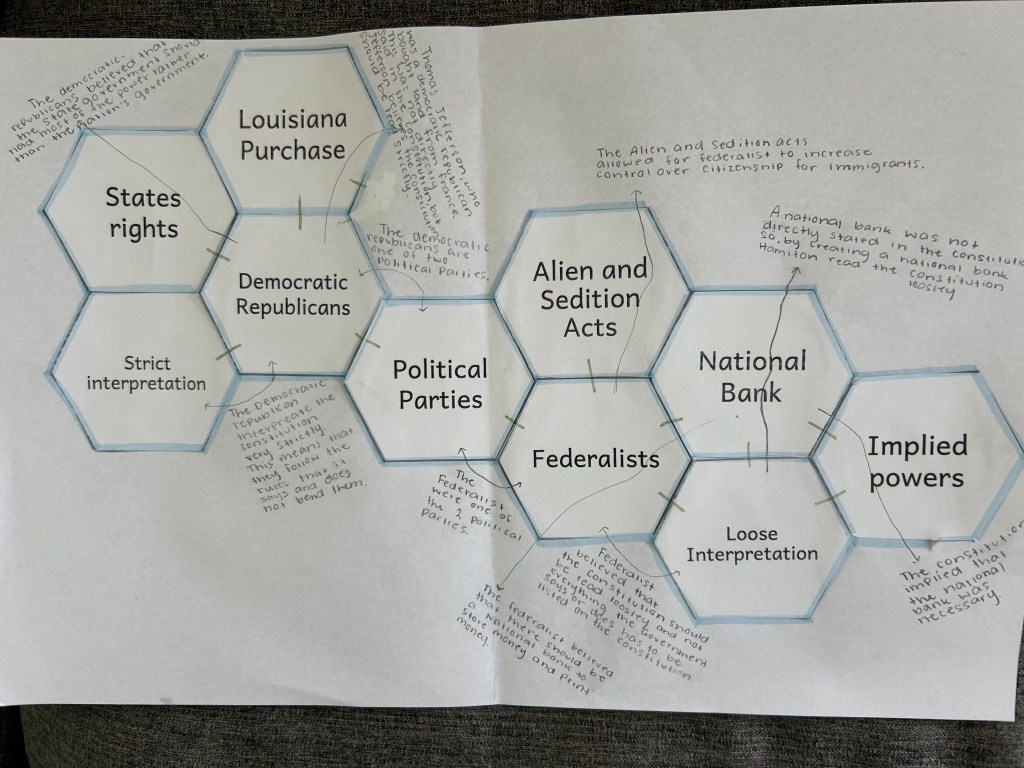
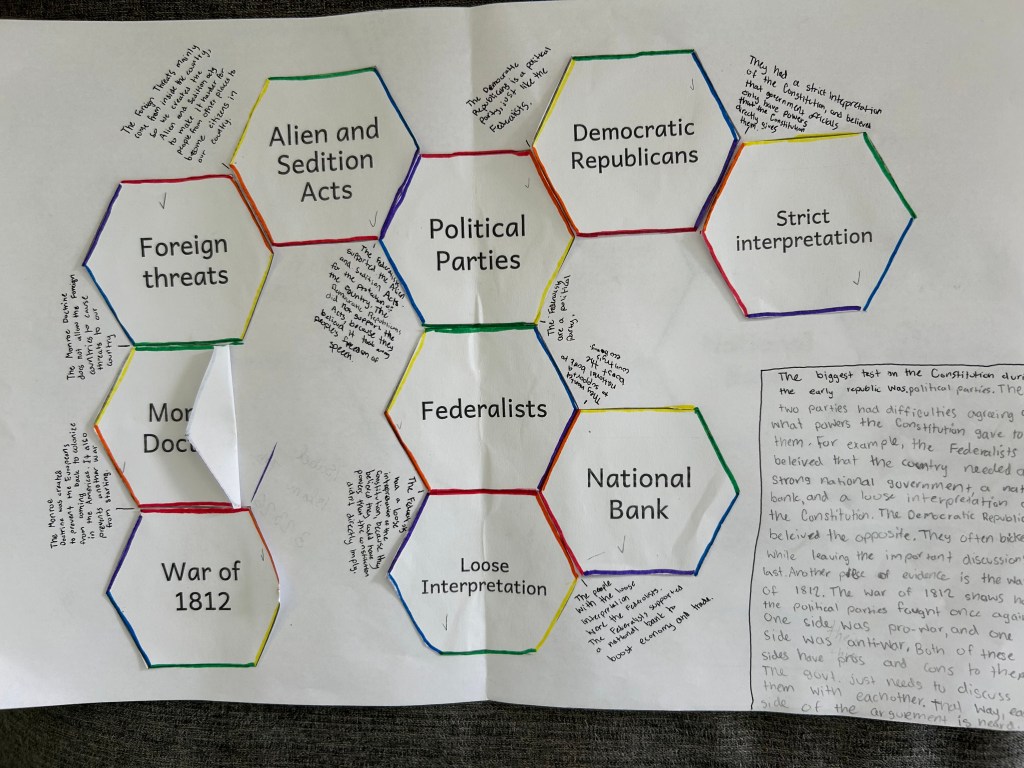
The unit question was simple: How was the Constitution tested in the early republic?
Instead of an essay or a traditional multiple choice test, students did a hexagonal thinking activity. They chose 10 hexagons from a set of people, events, and ideas from the period. Then they had to make 9 to 10 connections, adding specific detail to each edge that explained why those two things belonged together. Finally, they chose what they believed was the biggest test to the Constitution and had to justify that argument.
You cannot prompt your way through that. The connections require students to actually understand the relationships between ideas, not just identify the ideas themselves. The justification requires a claim that is theirs, not generated. And the physical act of choosing, connecting, and repositioning is iterative in a way that resists shortcuts.
What I saw was students debating which hexagon should go in the center. Students changing their minds about their biggest test and having to explain why. Students working through something instead of around it.
Thin Slides and Snorkl
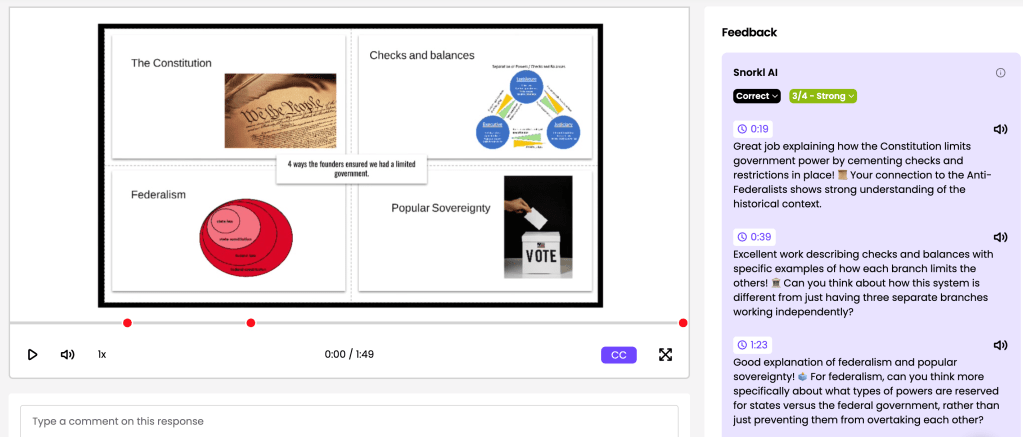
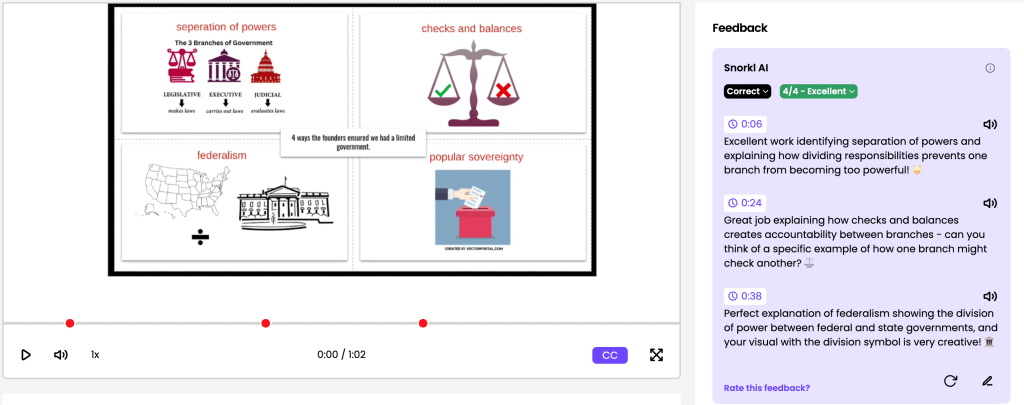
For the unit on how the Constitution limits government power, I wanted students to demonstrate understanding, not recall it. I also wanted them to get feedback before the final product ever landed in my hands.
Students chose 4 ways the Constitution limits government power. For each one, they built a thin slide — one image, one word or short phrase. No paragraphs. No copying. Just a visual and a label that forced a decision about what mattered most. Then they recorded themselves on Snorkl’s whiteboard for at least one minute per slide, explaining what their image and word actually meant and why it connected to the concept. Snorkl gave them AI feedback on their explanation immediately. They could re-record as many times as they wanted until they were satisfied.
The voice is the assessment. A student cannot hand that off. They have to speak, and what comes out either shows understanding or it doesn’t. The feedback loop made it low stakes enough that students were willing to try again, and again, and again.
One student re-recorded five times. Not because I made them. Because they heard their own explanation, knew something was missing, and wanted to fix it. Another told me afterward that it was the first time they actually understood what checks and balances meant, because explaining it out loud forced them to work through it.
That is the thing. The iteration didn’t happen because I designed a rubric for it. It happened because the structure made the thinking visible to the student themselves.
What This Is Really About
Neither of these assessments is complicated. There is no trick. They work because they require something a chatbot cannot do for you: think, decide, connect, and speak as yourself.
That shifted how I design assessments now. I stopped asking how do I prevent AI from being used. I started asking something simpler…Does this require my students to actually think? If yes, I am not worried. If no, I have work to do.
When Amit Sevak, the CEO of ETS (Educational Testing Services), says that “the days of testing rote knowledge are probably over,” he is not describing a future problem. He is describing right now. And if that is true, the real question is not how we respond to AI. It is what we were actually measuring before it showed up.
The tools, the structures, and the methods can evolve. They should. But students still need to think through hard problems. They still need to explain their reasoning. They still need to make decisions about what matters and defend them.
If that stays at the center, everything else can shift.
That is the goal. Not to resist the change. To be clear about what is worth holding onto as everything else moves.

 Moler's Musings