
Monday: Making Thinking Visible
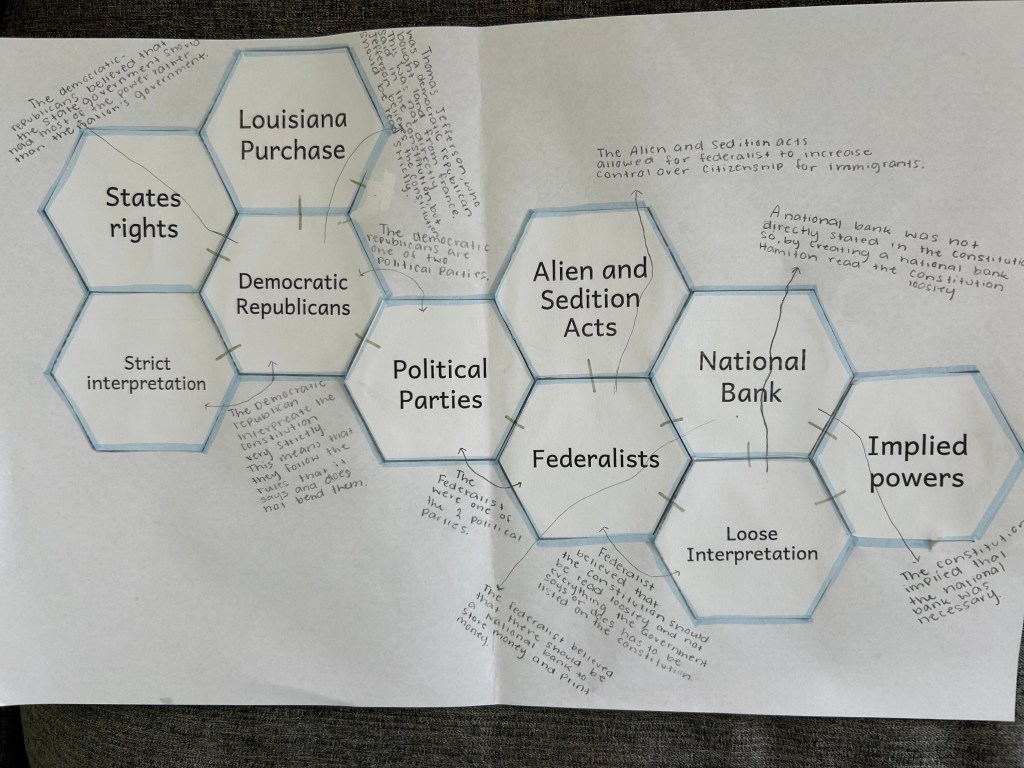
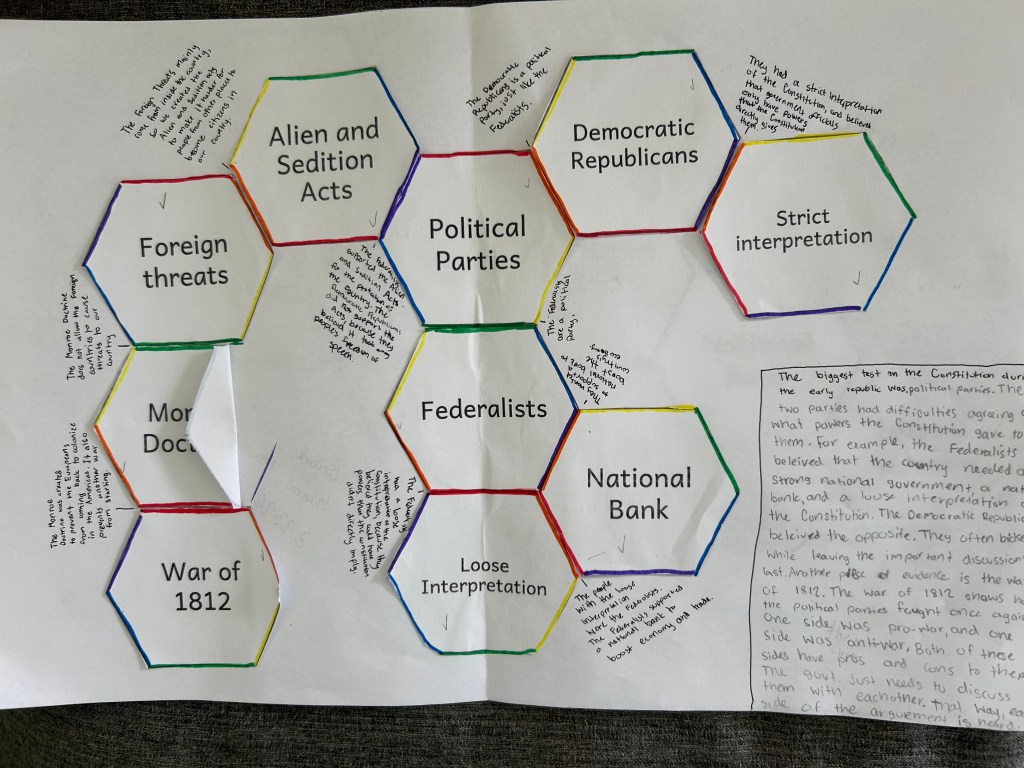
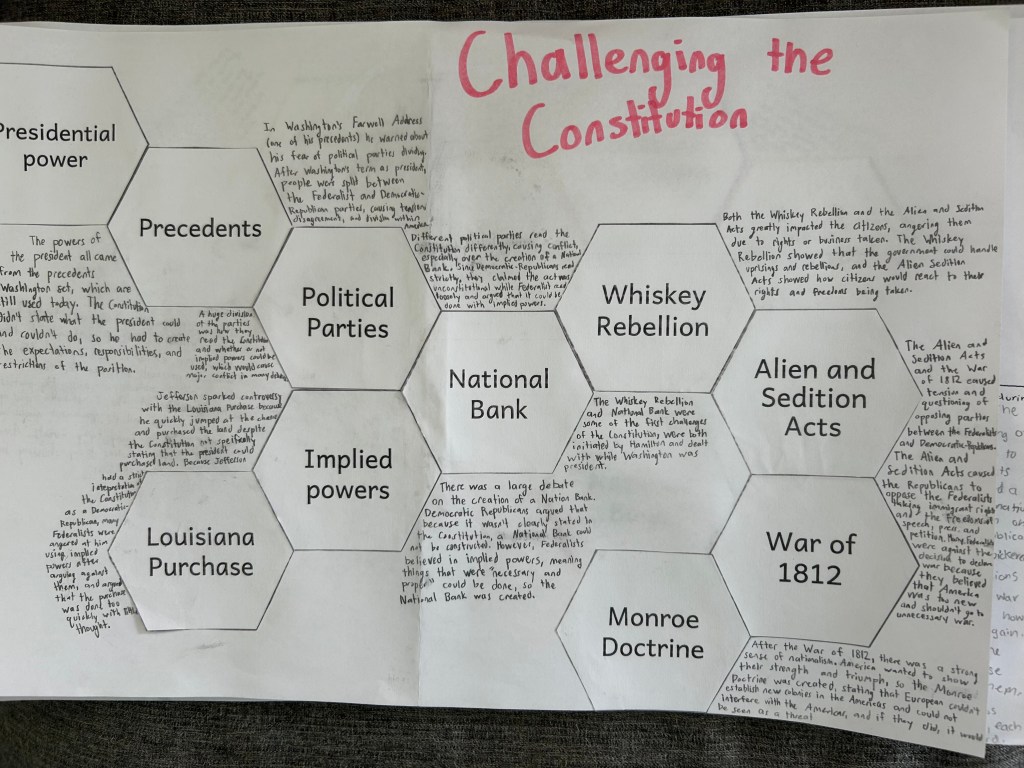
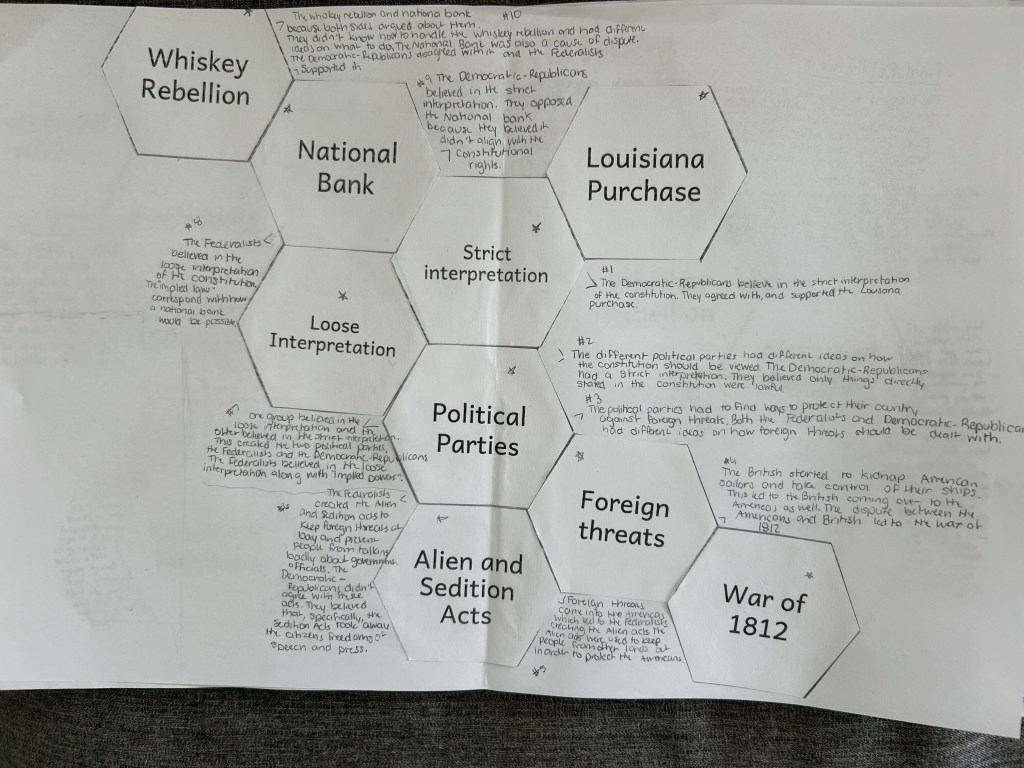
We finished our unit on the early republic with hexagonal thinking, and it turned into one of those moments where you can really see student thinking come to life.
Students connected hexagons across topics like the Whiskey Rebellion, the National Bank, political parties, and foreign policy, each one representing a different test of the Constitution and the new government. What stood out wasn’t just the connections, but how different each group’s thinking was. There wasn’t one “right” answer, and that’s exactly the point.
To wrap it up, students had to decide: what was the biggest test of the Constitution?
That final move shifted the task from organizing knowledge to making a claim and backing it with evidence. To me, this is where assessment needs to live right now. In a world with AI, the goal isn’t picking the correct answer, it’s building an argument, defending it, and making sense of complex ideas. There were multiple ways to be right, but no way to get there without thinking.
Tuesday: Starting Something New (and Leaning Into It)
We kicked off a new unit, and I’ll be honest, I’m running out of days. But that pressure has been a good thing. It’s forced me to simplify, focus, and build around big ideas instead of trying to cover everything.
This new unit centers on the question:
How did expansion and changes in the early 1800s unite and divide the United States?
We’re diving into Jacksonian democracy, Indian removal, and the market, transportation, and industrial revolutions. Big topics, but all tied together through that lens of unity and division.
To start, I used a lesson inspired by Kevin Roughton that immediately hooked students.
We looked at six images of Andrew Jackson. That was it. No background, no lecture. The only thing students knew going in was, “He’s on money.”
Alongside the images, I gave them four statements that historians commonly use to describe Jackson. As students analyzed each image, they wrote down what they observed and what they inferred, then matched the image to one of the statements.
The images showed different versions of Jackson, a young boy standing up to a British soldier, a war hero, a political leader. What emerged was a layered, sometimes conflicting picture of who he was.
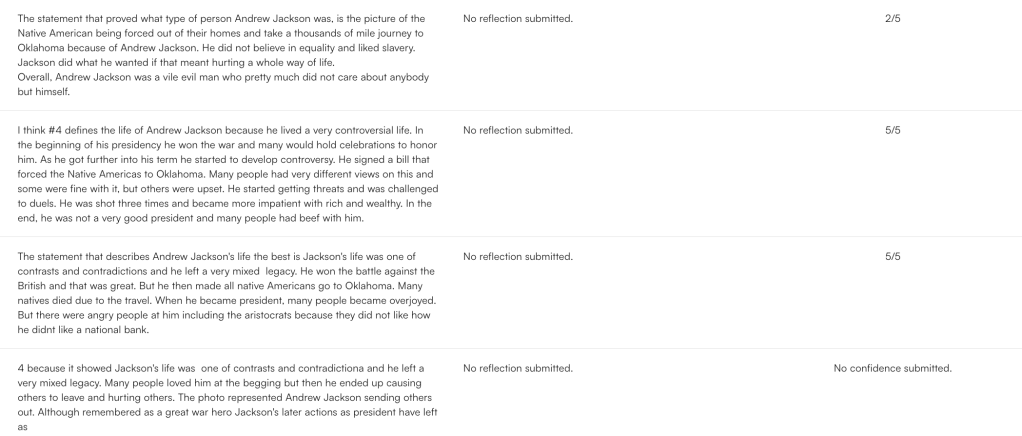
After working through all six, we used MyShortAnswer to answer one question: which historian’s statement best describes Andrew Jackson?
No notes. No script. Just their thinking.
Wednesday: Short Time, High Tempo
We had shortened classes, down to 30 minutes, so everything had to move with purpose.
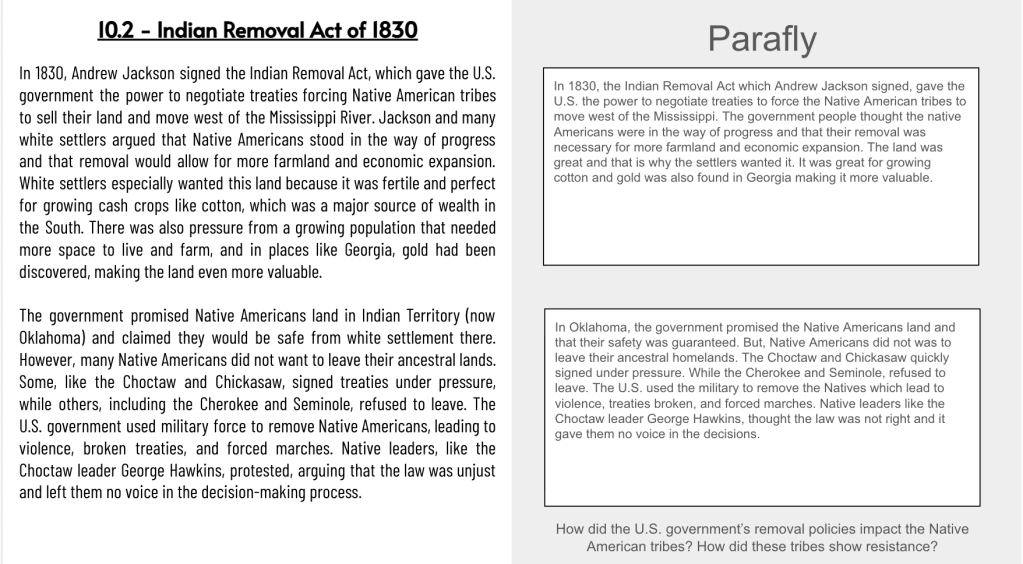
We jumped into our first lesson on Jacksonian Democracy, but instead of starting with notes or a lecture, I introduced ParaFly using Socrative.
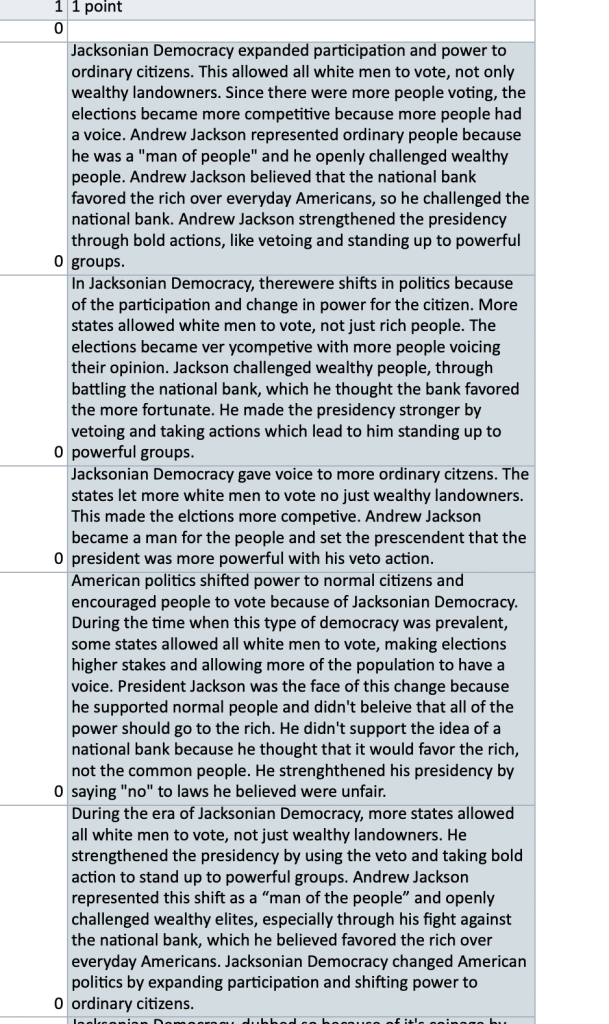
We started simple. Students paraphrased 1-sentence facts about presidents. Then we moved to 2 sentences. Then 3. It was rapid fire for about 15 minutes.
After each round, I paused and gave feedback. I didn’t show names, but I zoomed in on responses and shared examples of what worked and what needed fixing. That piece mattered. Students could see the difference between copying, slightly changing words, and actually paraphrasing.
Then we leveled it up. I gave them a paragraph on Jacksonian Democracy. Three minutes. Paraphrase it in Socrative. Then I gave them another paragraph. Same task. No overthinking. Just read, process, and put it in your own words.
We ended class with a quick write: What is Jacksonian Democracy?
Short class, but a ton of reps. And that’s really the goal, build the skill through volume, feedback, and quick cycles instead of dragging it out.
Thursday: Building the Mini-Report Together
Thursday was all about introducing the Mini-Report, and since it was our first one, we built it together as a class.
We followed up Jacksonian Democracy with two short sources and the question:
How did Jacksonian Democracy change politics and society?
The first source was a letter from Margaret Bayard Smith describing Jackson’s inauguration. It highlighted the chaotic, almost out of control celebration, people from all walks of life crowding into the White House. It painted a picture of a new kind of politics, where everyday people felt like they belonged.
The second source focused on the spoils system, Jackson rewarding his supporters with government jobs.
We read both sources and started categorizing notes. Since this was new, I didn’t rush it. We paused, discussed, and built understanding together. I had the Mini-Report template up on the board and typed in notes as students shared. It became a live model of what thinking through sources should look like.
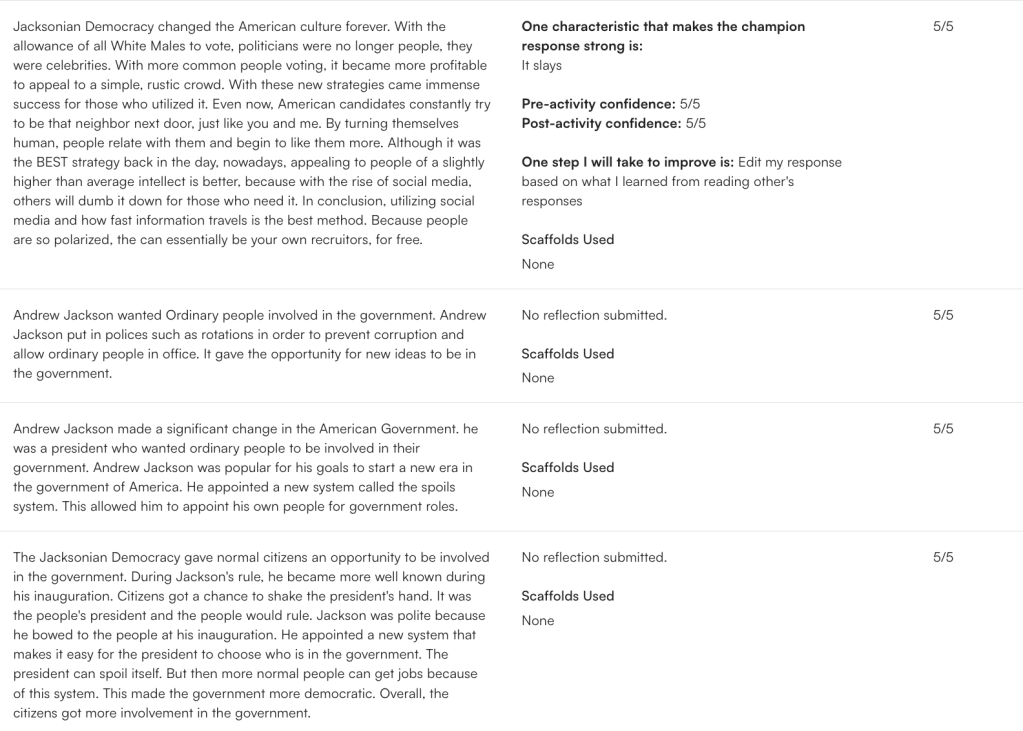
Once we had our categories and notes, we transitioned to MyShortAnswer and turned it into a battle royale.
Students answered the question, responding to each other, building off ideas, and pushing their thinking. It wasn’t just “write your answer and move on,” it was active, competitive, and collaborative.
For a first Mini-Report, it set the tone. Read, think, categorize, and then actually use your thinking to answer a bigger question.
Friday: Parafly + Number Mania
Friday we shifted into Indian Removal and the Trail of Tears—heavy content, so I wanted to build in both context and processing time.
We started with an EdPuzzle video on the Trail of Tears. It gave students a clear foundation with images, maps, and a timeline so they could actually see what was happening, not just read about it.
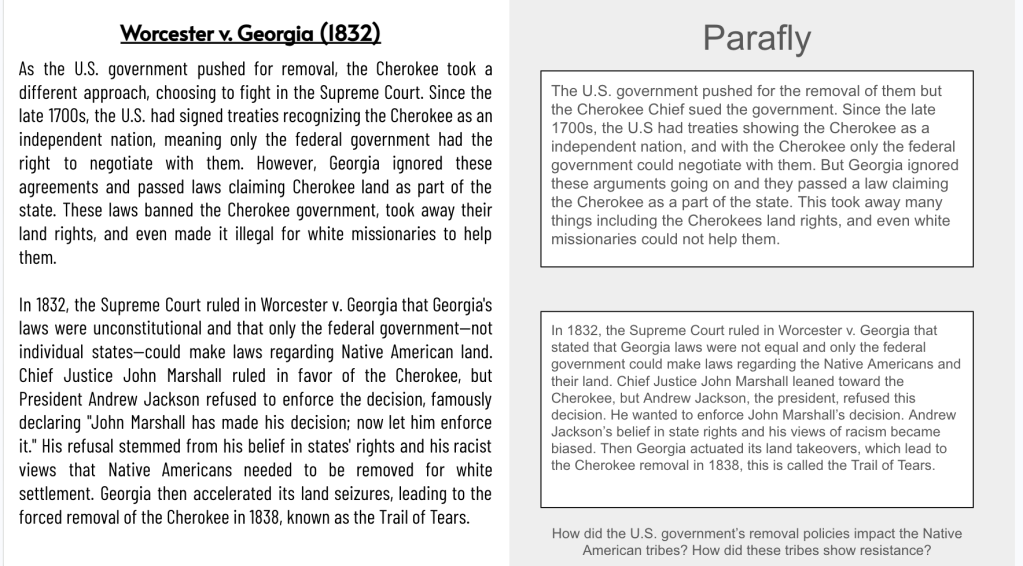
After the 6-minute video, we went right back into ParaFly.
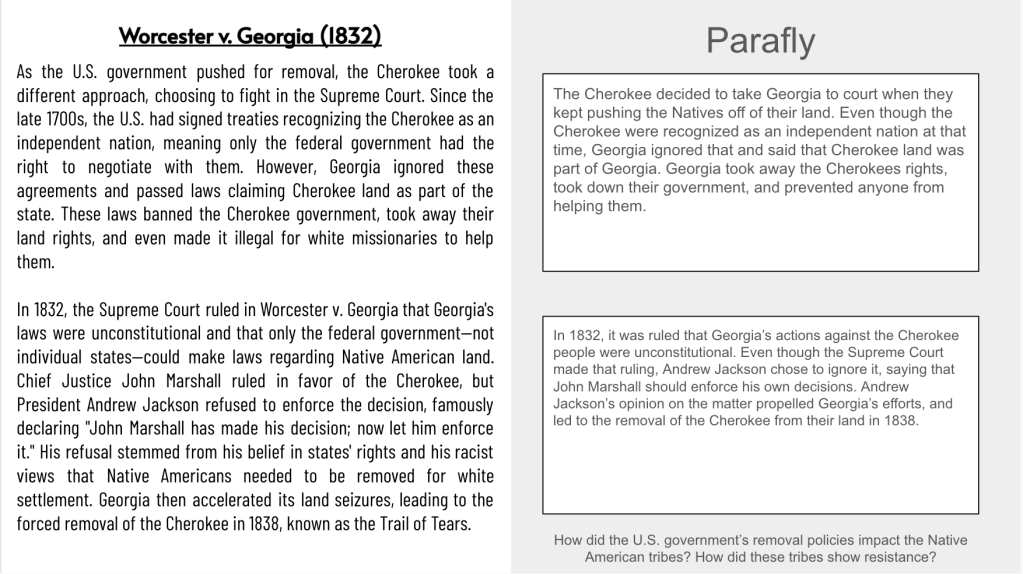
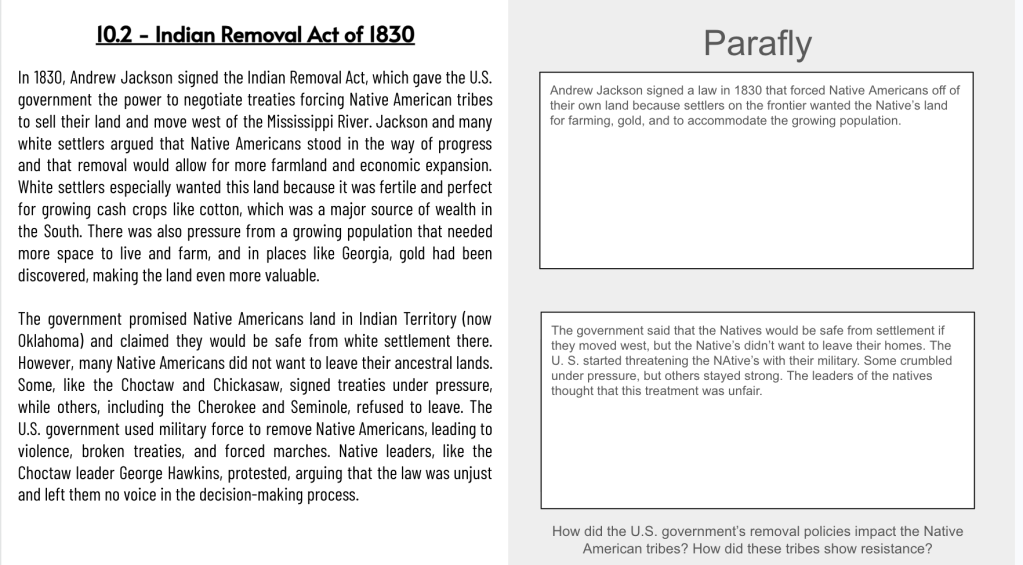
I had Indian Removal broken into two paragraphs, and then a separate slide with Worcester v. Georgia also broken into two paragraphs. I set a visual timer: 3 minutes: read and paraphrase one paragraph. Time hit, reset the timer, move to the next.
It kept the pace high and forced students to focus. No overthinking, just process and put it into their own words. As they worked, I was clicking through their slides, giving quick feedback in the moment.
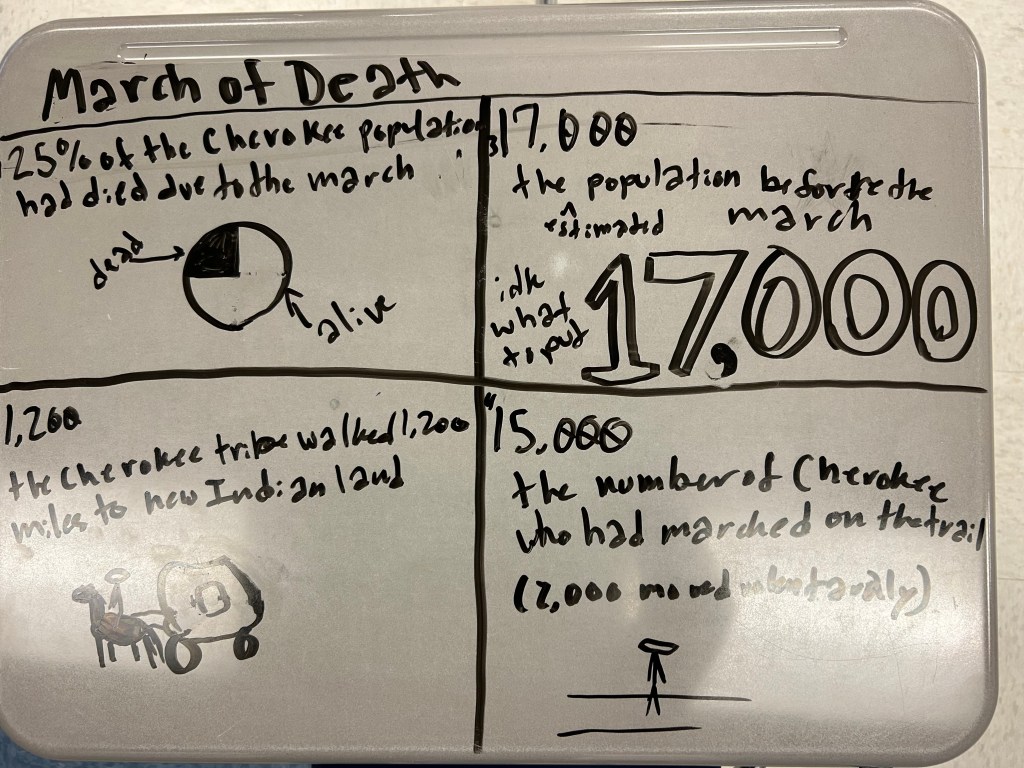
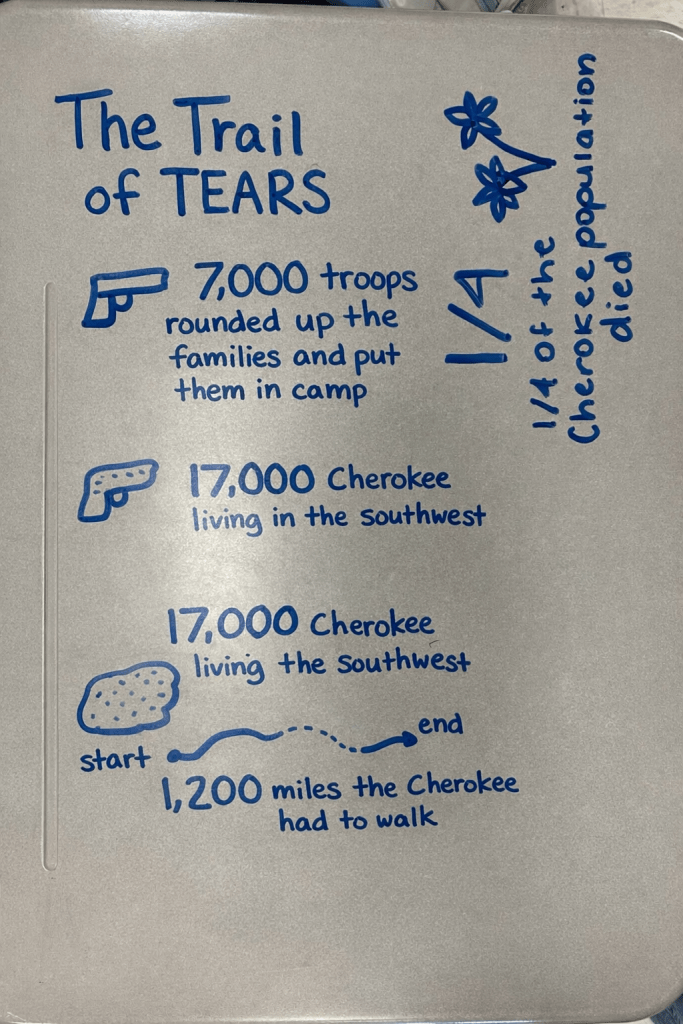
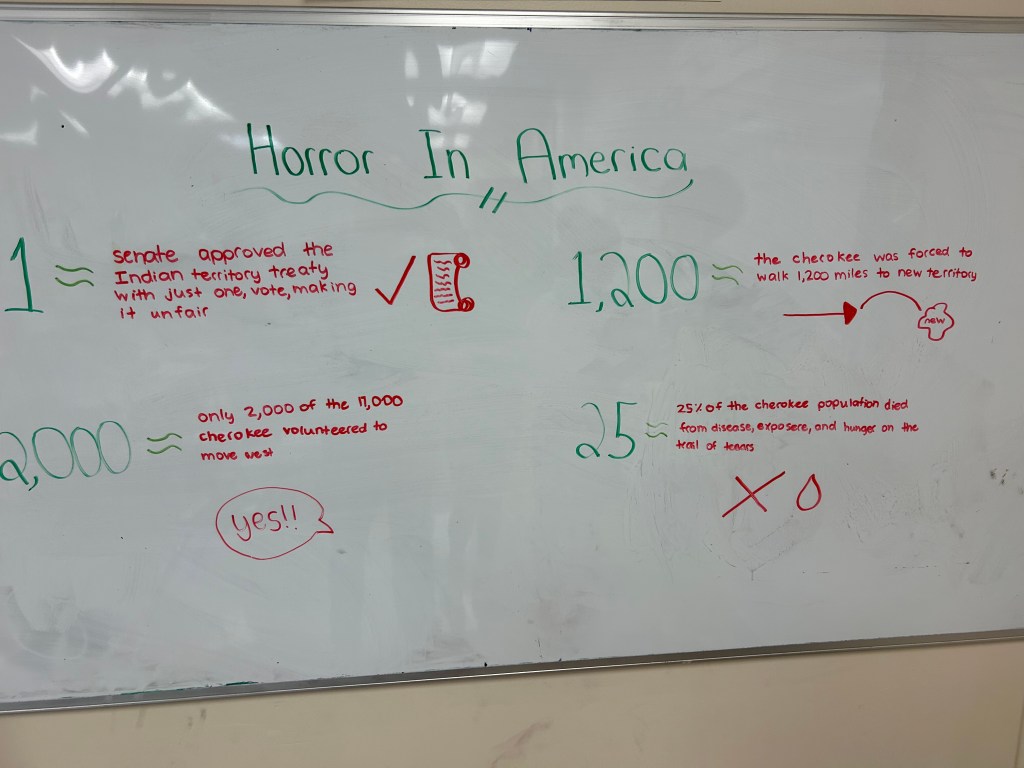
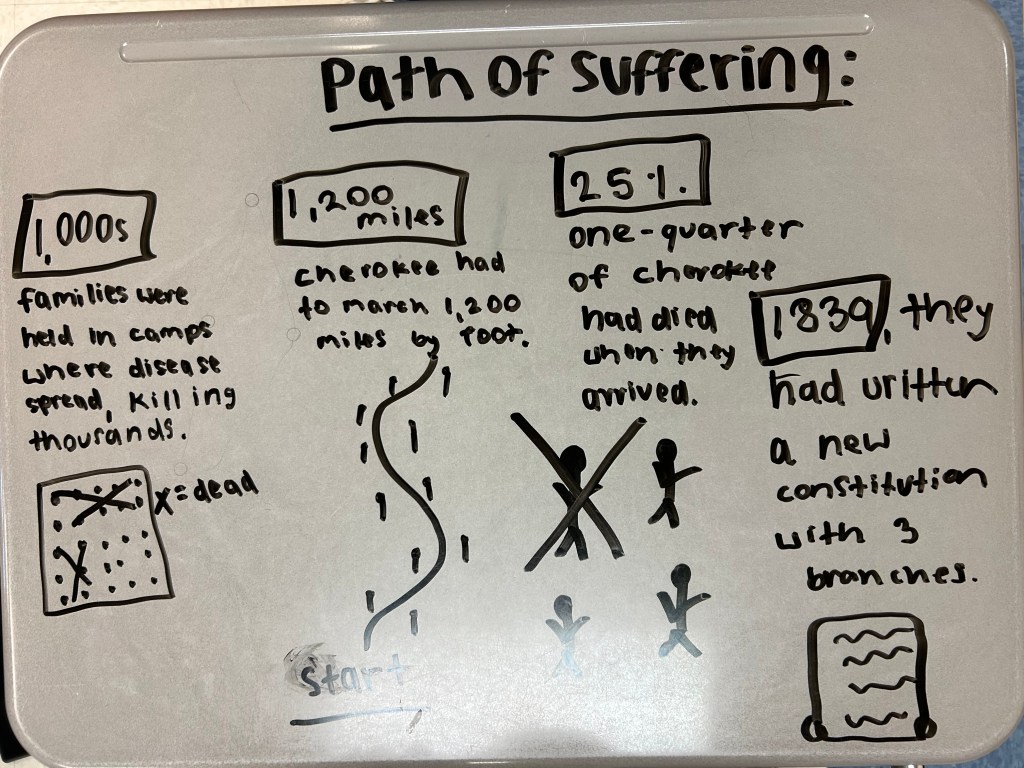
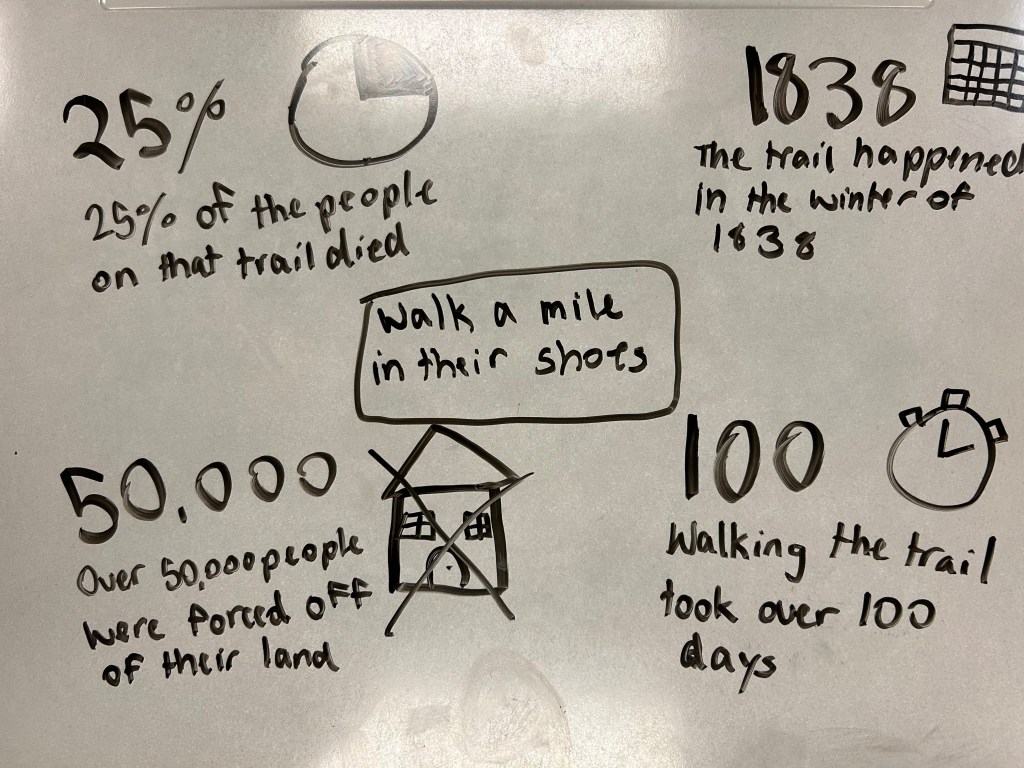
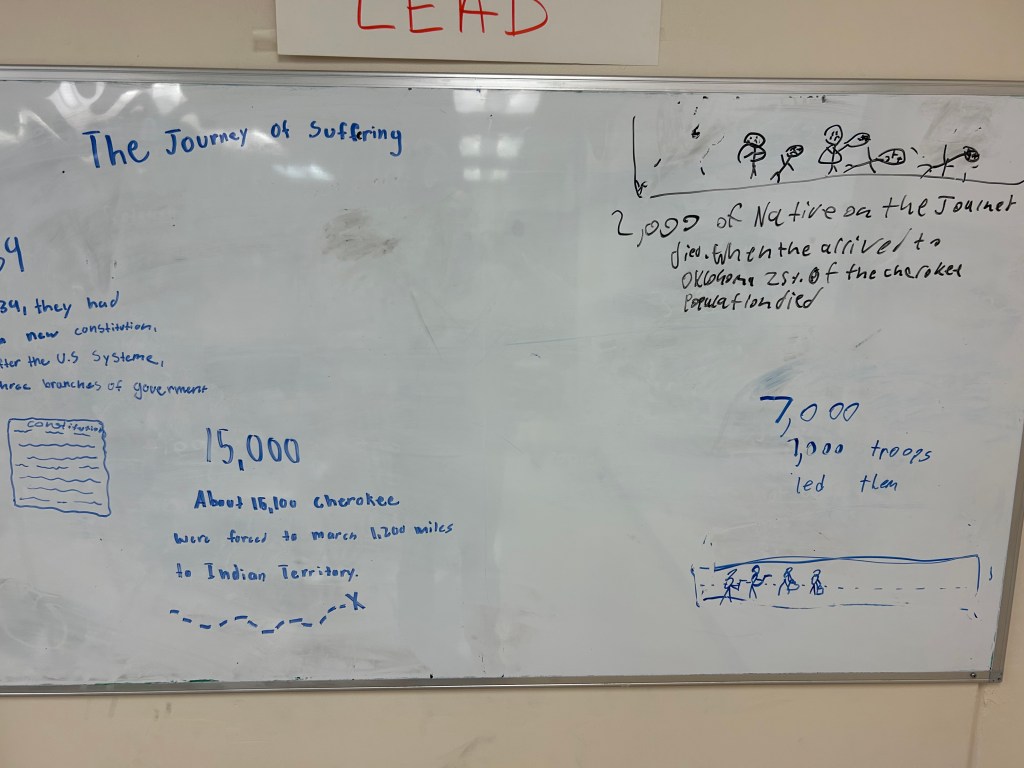
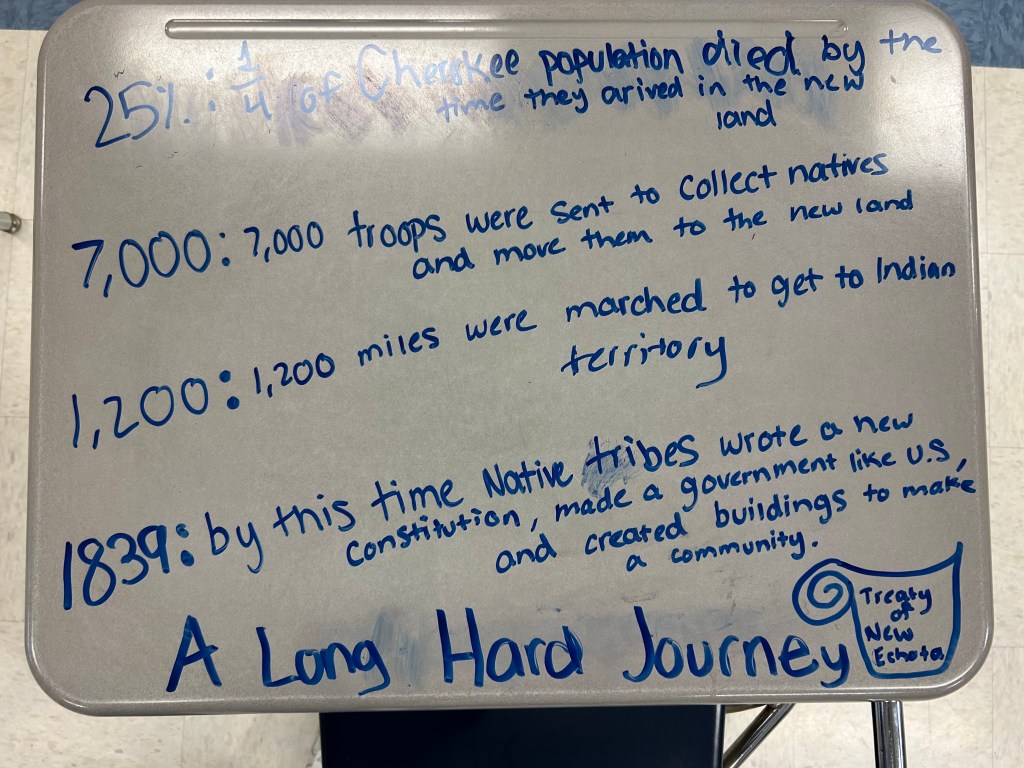
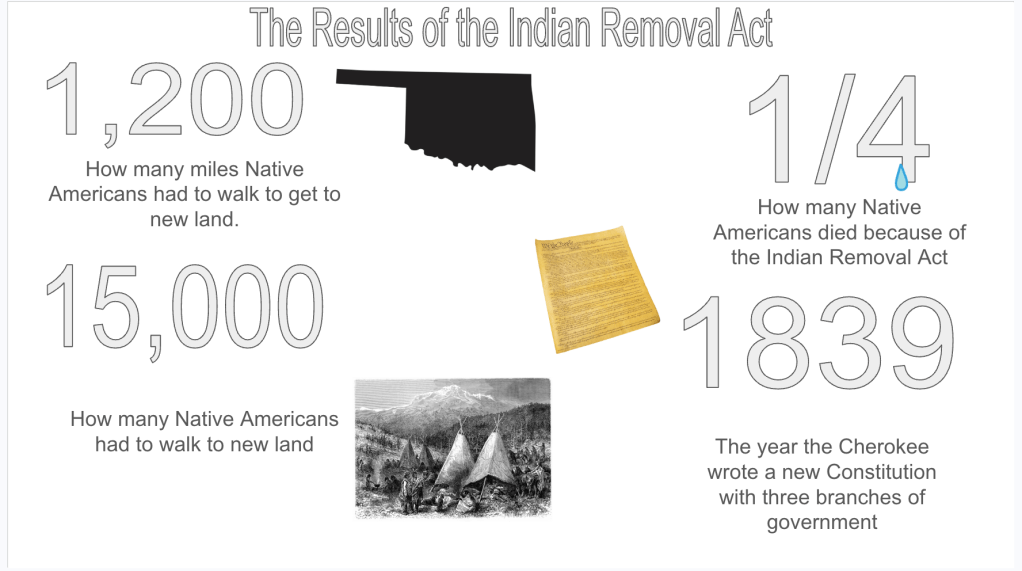
To close, we shifted into Number Mania. Students had 3 minutes to read about the Trail of Tears and pull out four facts or numbers connected to this quote:
“The Trail Where They Cried was not only a physical journey but also a moment that reshaped Cherokee history, causing loss, suffering, and ultimately rebuilding.”
What I liked here was the flexibility. Some students went full BTC style on the whiteboards. Others worked on paper, their desks, or a Google Slide. Same thinking, different entry points.
It was a strong way to end the week with students reading, processing, and then proving their understanding with evidence tied to a bigger idea.
Lessons for the Week
Monday – Hexagonal Learning
Tuesday – Jackson’s Life In Pictures (Mr. Roughton)
Wednesday/Thursday – Jacksonian Democracy MiniReport
Friday – Trail of Tears

 Moler's Musings