
This week in Room 103 felt like a good reminder that not every lesson needs to chase coverage. Sometimes the better move is slowing down and letting one big idea carry the work.
We stayed in the Early Republic all week, but each day asked students to look at the young nation from a different angle. One day it was freedom of speech and constitutional limits under John Adams. Another day it was whether the Louisiana Purchase was as obvious a success in 1803 as it looks now. By Friday, we were already stepping into the tension of whether the United States should go to war again with Britain.
What tied the week together was perspective. Students kept having to ask not just what happened, but why people at the time argued, feared, defended, or criticized the choices being made. That always seems to push the learning a little deeper.
Tuesday – Alien and Sedition Acts
With no school Monday, Tuesday had to matter right away.
We started with quick notes on John Adams. Not a full biography and not a long lecture, just enough context so students could place him in the bigger story of the early republic. We touched on Jay’s Treaty, the tension between Britain and France, and the XYZ Affair. My goal was simple: help students understand why the country felt fragile and why fear shaped so many decisions during Adams’ presidency.
Lately I have been thinking a lot about time. There is always more content than minutes, so I have been trying to make sharper choices and stay focused on one major constitutional challenge at a time rather than trying to cover everything at once. For Adams, that meant centering the lesson on one major issue: the Alien and Sedition Acts.
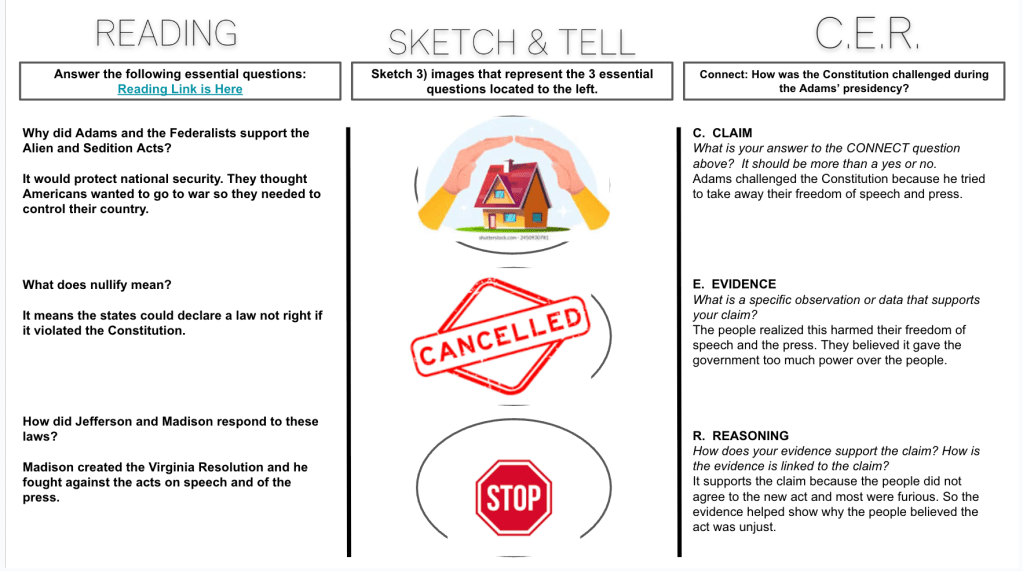
After the quick notes, students moved into a Sketch and Tell and CER activity built around three essential questions. They had to think through how the Constitution was challenged during Adams’ presidency, why Adams and the Federalists supported the Alien and Sedition Acts, and what it meant when Jefferson and Madison argued that states could nullify federal action. Instead of simply answering questions, they first had to sketch three images tied to those ideas. That visual step mattered because it forced them to slow down and decide what each concept actually looked like before writing.
From there, they moved into CER writing. Their claim had to answer whether the Constitution was challenged. Their evidence had to point to something specific from the lesson. Their reasoning had to explain how that evidence actually connected back to the larger constitutional issue.
That reasoning piece still takes the most work. Anyone can point to a fact. The harder move is explaining why that fact matters.
To finish, we turned it into a Battle Royale inside My Short Answer. That changed the energy immediately.
Students were reading one another’s responses, comparing claims, pushing back on evidence, and trying to decide whose answer held up best. Some students who normally rush through writing slowed down because now there was something on the line. Their thinking had to survive against someone else’s. It became less about finishing and more about defending an idea.
What I liked most was that students were not just naming the Alien and Sedition Acts. They were specifically looking for where they believed First Amendment protections were being violated. That gave the writing more purpose because they had to connect the law to freedom of speech and freedom of the press, not just repeat facts.
We also talked about how this became one of the biggest reasons Adams never fully recovered politically. For many Americans, the Sedition Act damaged trust in him and helped ruin his future as a Federalist leader. A law meant to protect order ended up making many people fear the government itself.
Wednesday: Louisiana Purchase
Starting with Numbers Before Opinions
We began the lesson with a short reading on the Louisiana Purchase, but before we discussed whether it was a brilliant move or a risky one, I asked students to spend five minutes reading and highlighting four important numbers.
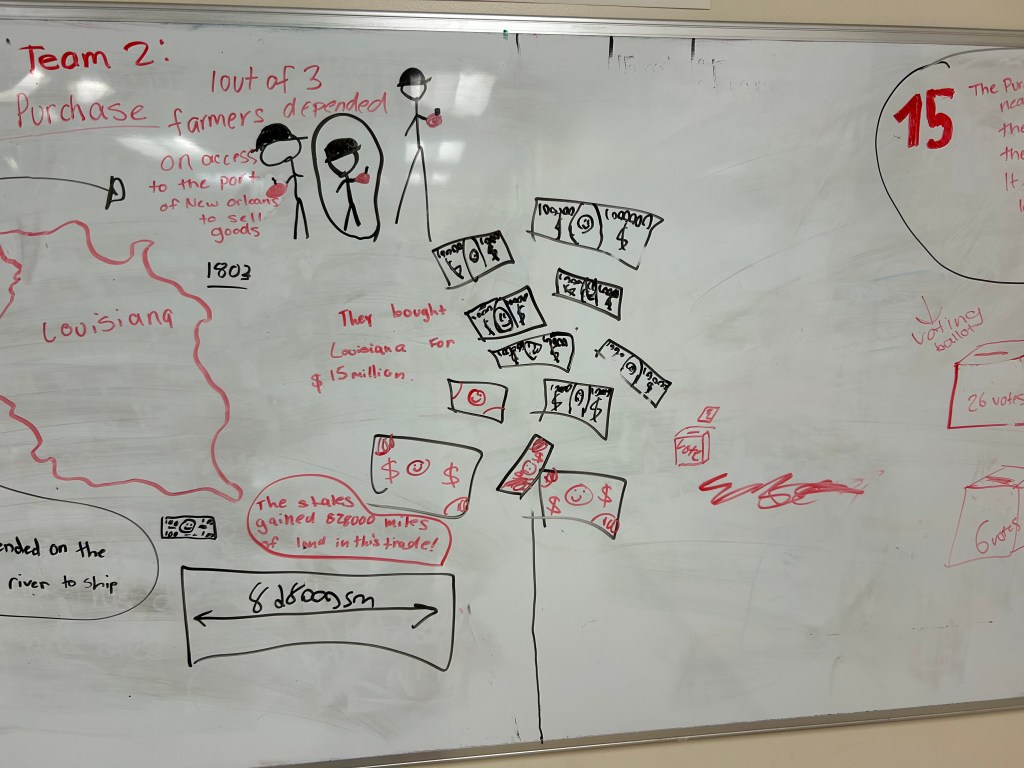
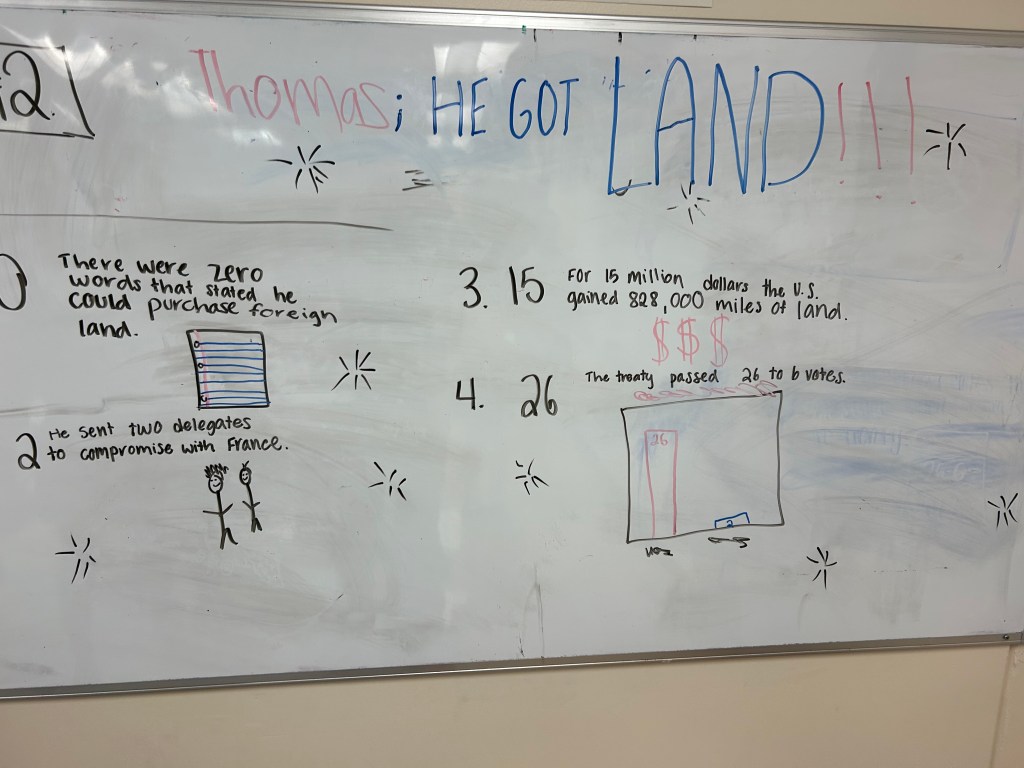
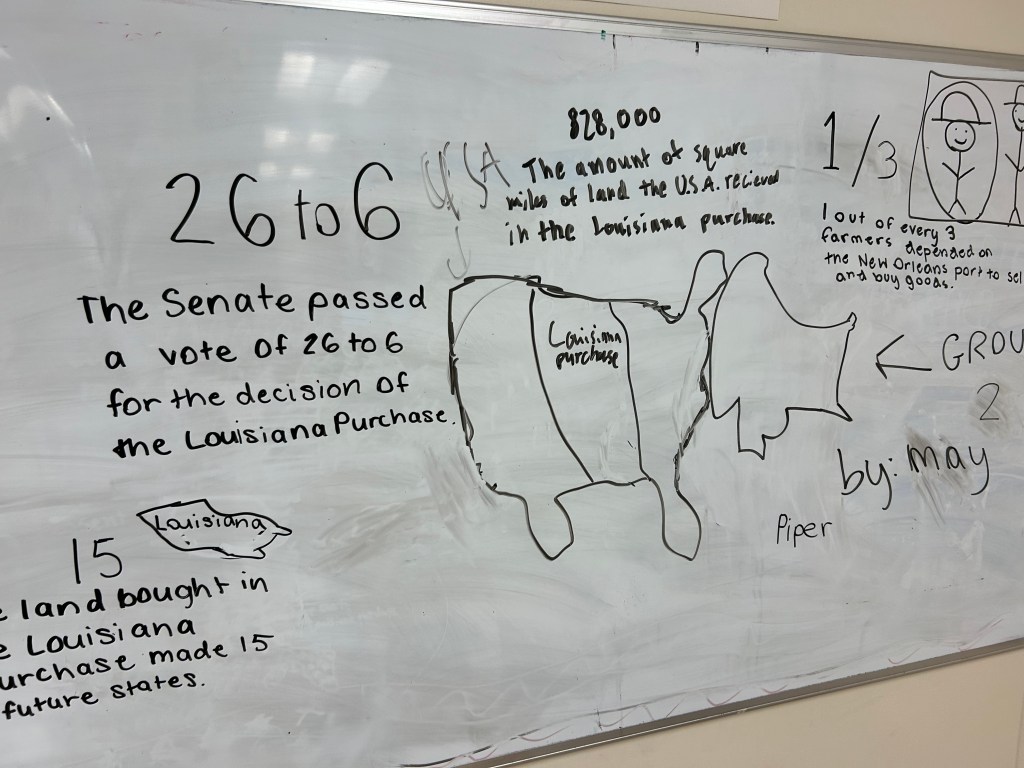
The goal was simple. I wanted them to see that numbers often tell the real story before opinions do. Students pulled out things like $15 million, 828,000 square miles, 4 cents an acre, and the 26–6 Senate vote. Those numbers gave them something concrete to hold onto before we moved into deeper thinking.
Number Mania on the Whiteboards
From there, we paired a Building Thinking Classrooms strategy with an EduProtocol.
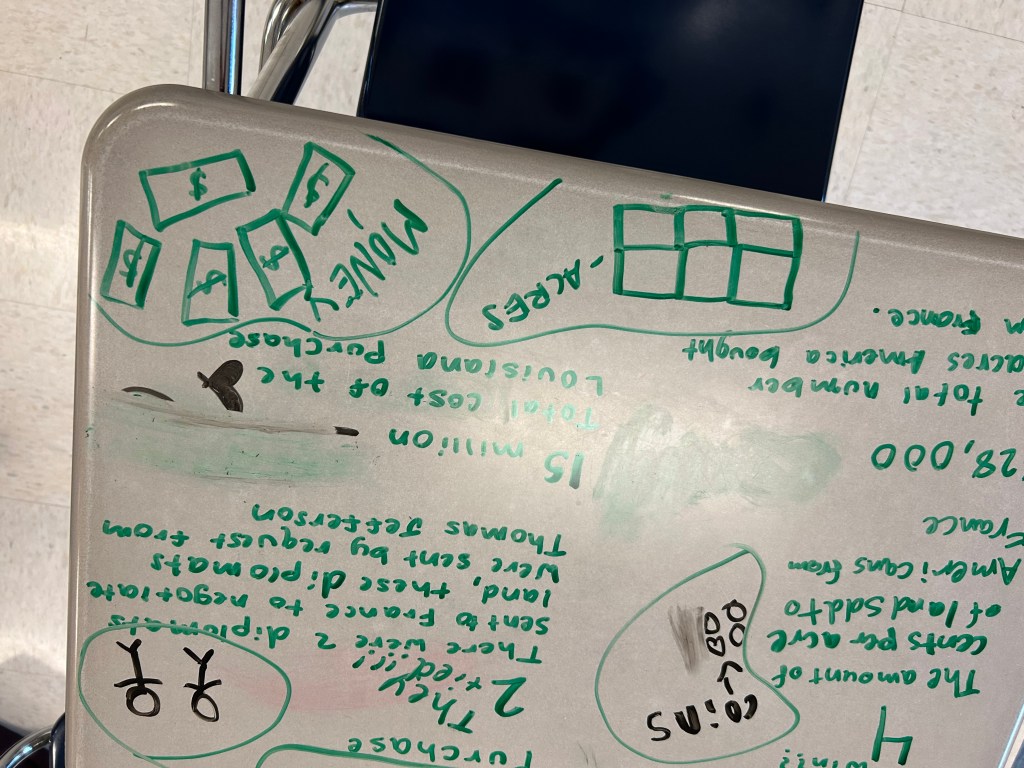
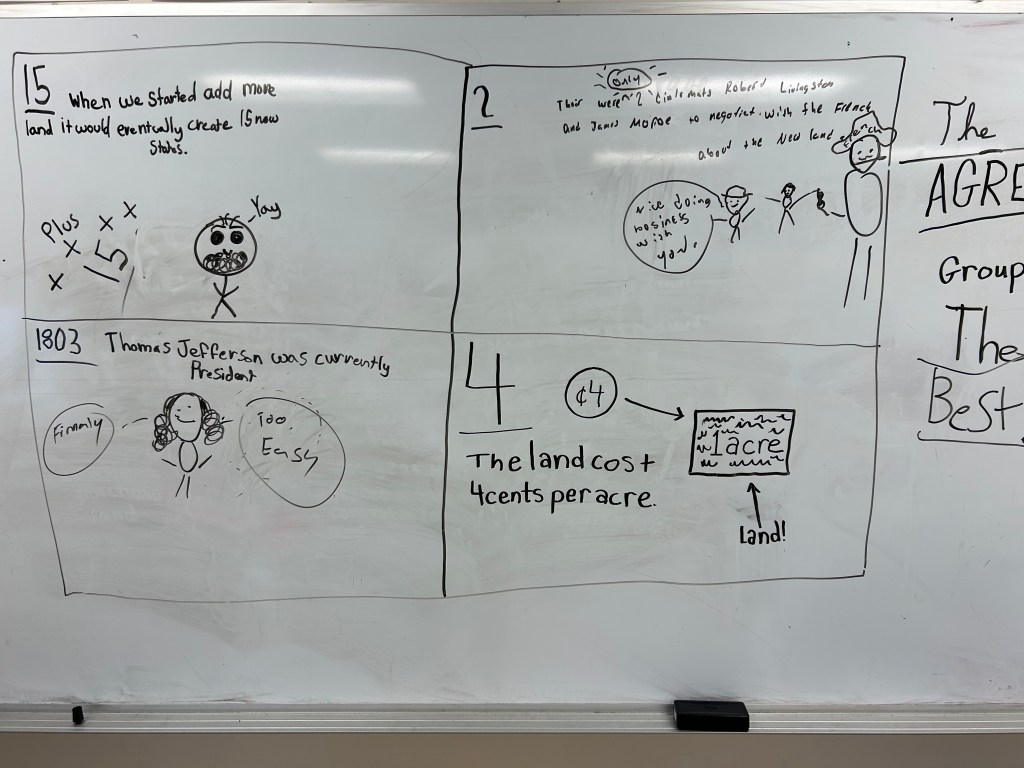
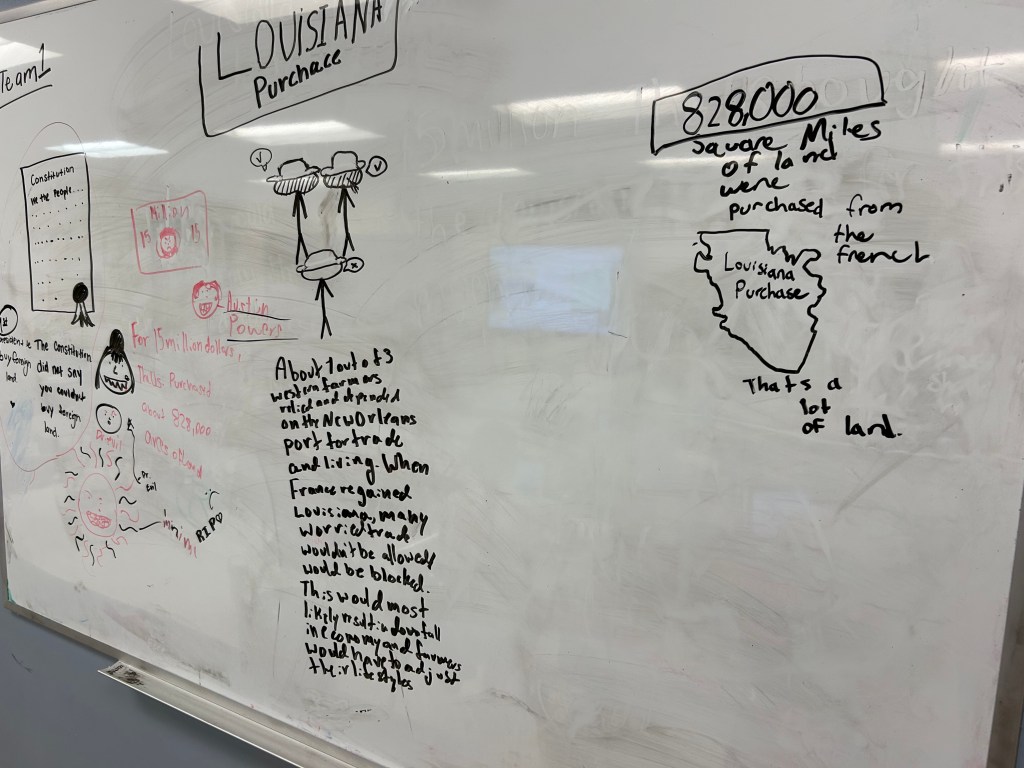
Using Flippity, I created random groups and sent students to vertical whiteboard spaces around the room. Their task was to create a Number Mania that visually explained the Louisiana Purchase using four numbers, four facts, images, and a creative title.
This is where the room came alive. Students were moving, debating, sketching maps, drawing money, and deciding which numbers actually mattered most. Some groups focused on how much land was gained. Others emphasized the cost or how strongly the Senate approved the purchase.
What I liked most was that students were not just listing facts. Many groups naturally started trying to prove why the purchase mattered through the numbers they selected.
Annotate and Tell: Federalist Criticism
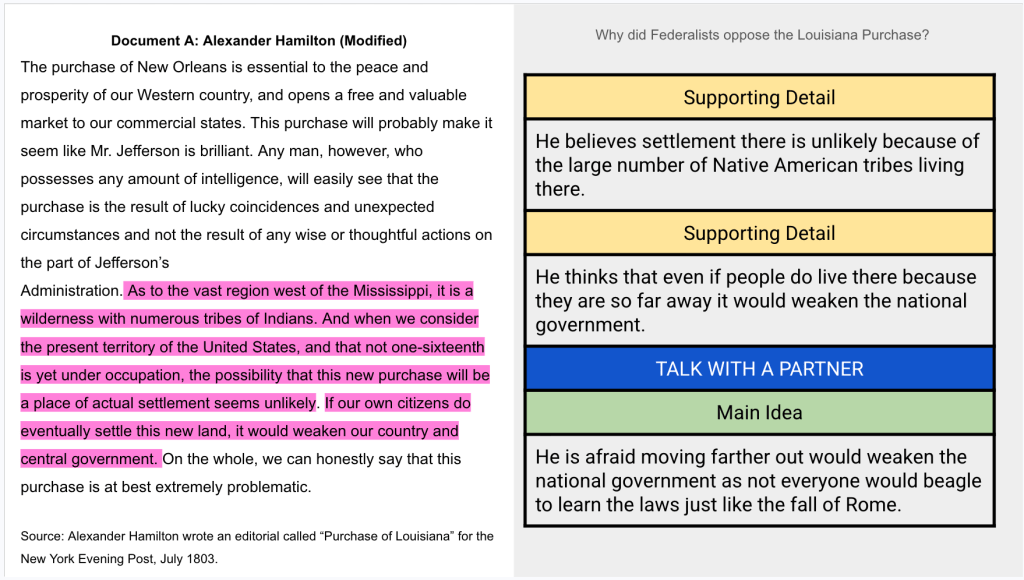
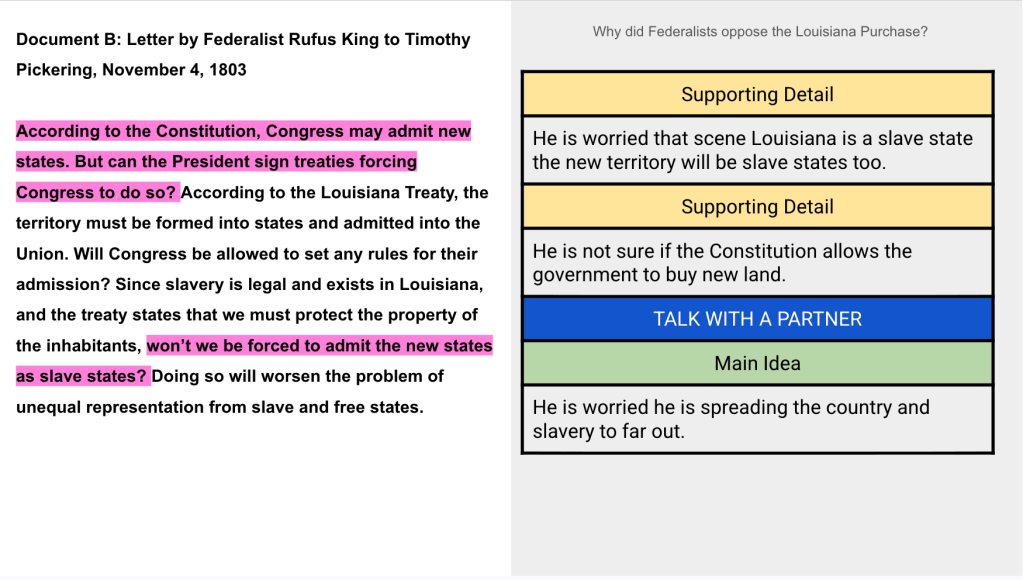
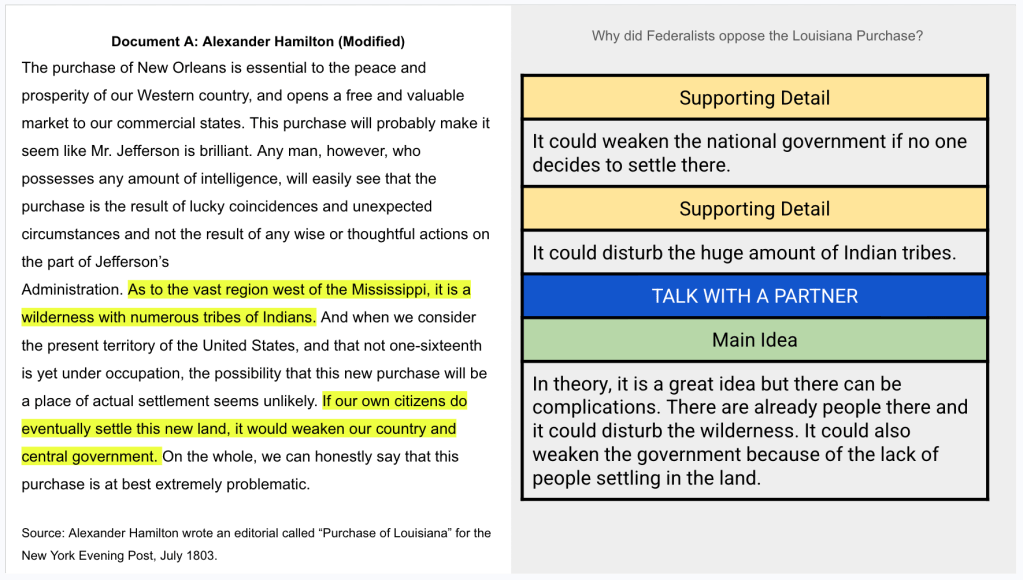
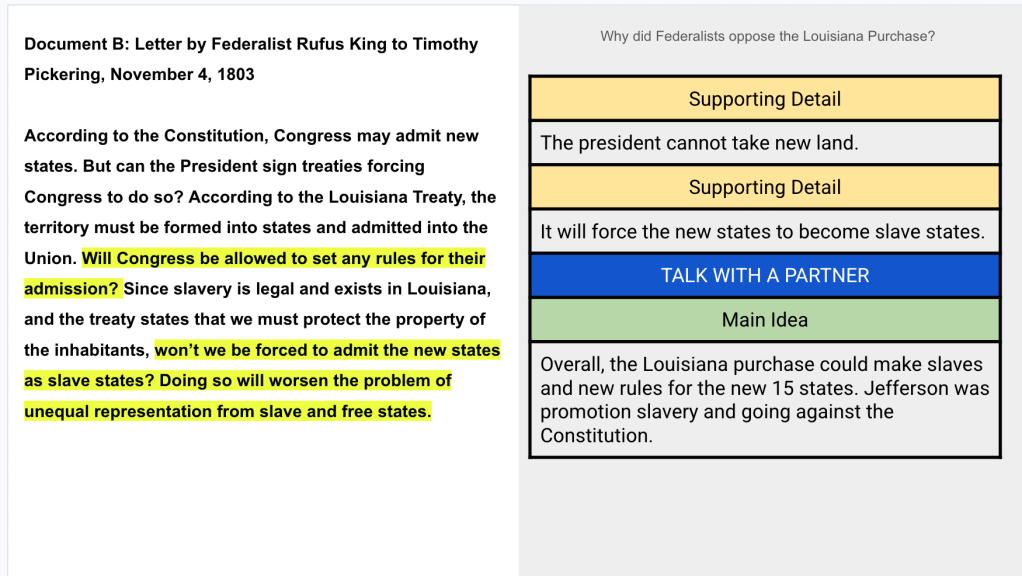
Once the whiteboards were full, we shifted into an Annotate and Tell using Federalist reactions to the Louisiana Purchase.
I wanted students to wrestle with a simple question: the purchase looks obviously great now, but did everyone think that in 1803?
Students read criticisms from Federalists like Alexander Hamilton and Rufus King. They identified concerns about whether Jefferson had constitutional authority to make the purchase, fears that adding too much land would weaken the central government, and worries about how new territory could affect future slave and free state balance.
That changed the tone of the room because students started realizing that even major moments we celebrate today were controversial in their own time.
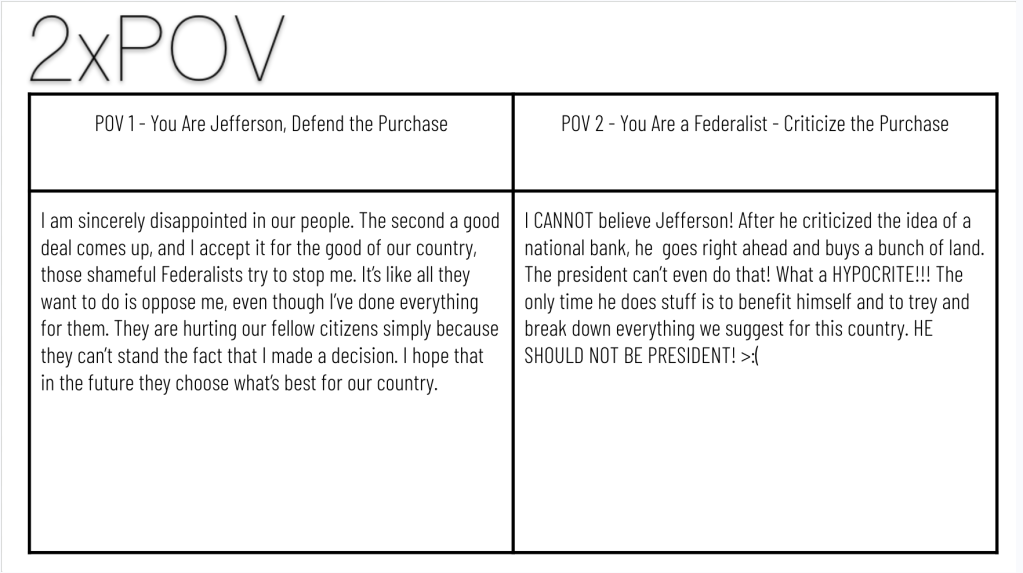
2xPOV with Random Tone
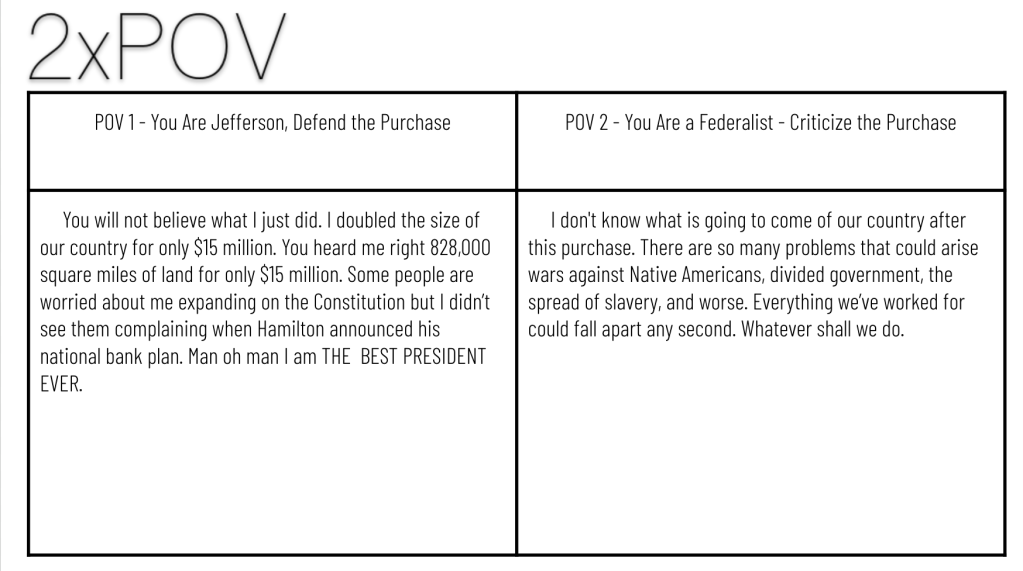
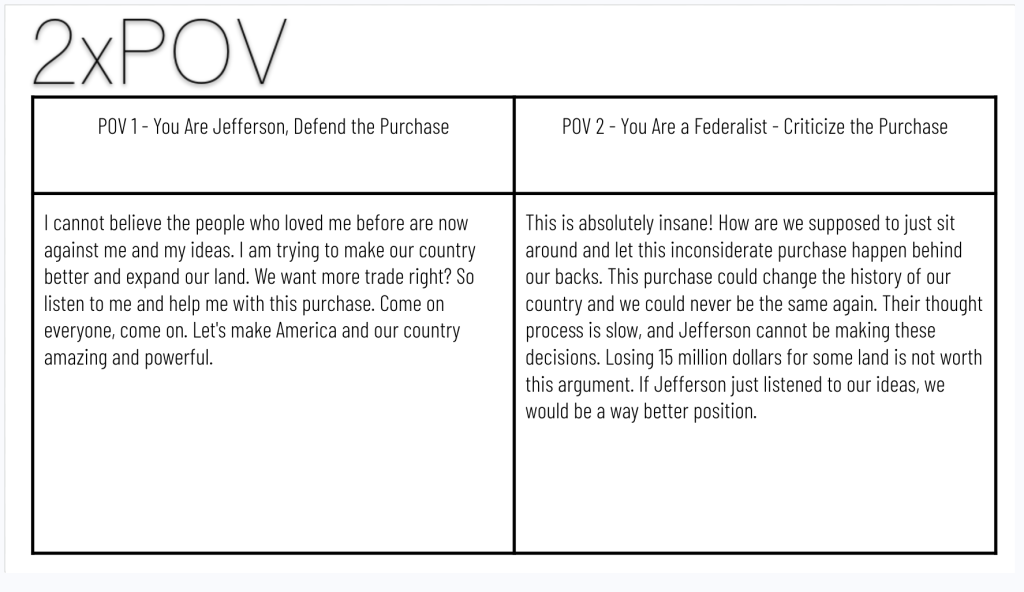
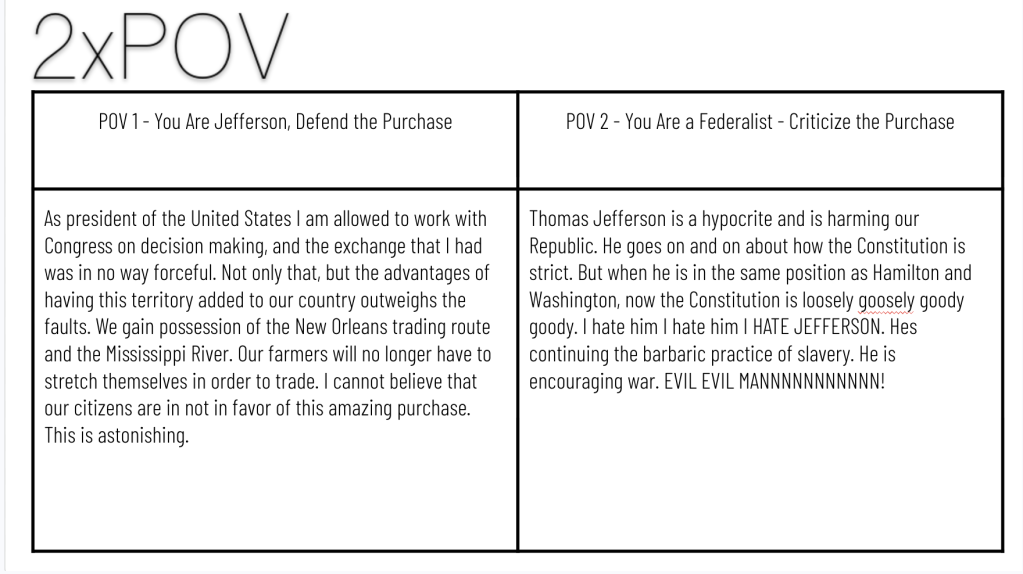
We finished with a 2xPOV.
Again, I used Flippity, but this time to spin for tone. Students had to write either as Jefferson defending the purchase or as a Federalist criticizing it, while also writing in a randomly selected tone such as sarcastic, fearful, angry, happy, or disappointed.
One moment stood out right away. A student got an angry tone for Jefferson and immediately asked, “How can Jefferson be angry? He just purchased Louisiana.” That led to a great discussion.
I told them to think deeper. Yes, it was a major purchase, but not everyone supported it. Critics were attacking the decision, questioning the Constitution, and pushing back hard. Why might Jefferson still feel frustrated?
The best part was that the Number Mania boards were still all around the room, so I encouraged students to use the numbers and evidence from those boards while writing.
That made the responses stronger because students were pulling evidence directly from their own thinking, not starting from scratch.
By the end, the lesson had moved from numbers, to criticism, to perspective, and students could see that the Louisiana Purchase was not just a land deal. It was also a constitutional argument, a political argument, and a question about what kind of country the United States was becoming.
Thursday: A Simple Review with Student Questions
After two heavier days of writing, perspective work, and constitutional thinking, Thursday stayed simple.
We used KitCollab on Gimkit and turned review into something students helped build themselves.
Students Create the Questions
I asked students to submit questions from anything we had learned so far in the early republic. Nothing fancy, just questions they believed mattered. Some focused on Adams, some on the Alien and Sedition Acts, some on Jefferson, and some on the Louisiana Purchase.
As the questions came in, I accepted or rejected them in real time.
That part always matters because students quickly realize what makes a strong question and what does not. If a question is unclear, too easy, or inaccurate, it does not make the cut. That becomes its own kind of review because they start seeing the difference between remembering a fact and asking something worth answering.
Quick Build, Quick Game
We spent about 10 to 15 minutes building the question bank together, and then I turned it into a live game.
That gave the class exactly what it needed. Low key, quick, and useful.
Sometimes a class needs a break from writing and deeper processing, but that does not mean learning stops. This gave them a chance to revisit content, hear questions from classmates, and catch details they may have missed earlier in the week.
It also reminded me that students often reveal what they think matters most by the kinds of questions they write.
Thursday was not complicated, and honestly, that was the point. A little review, a little competition, and a little breathing room before moving on.
Friday: Beginning the War of 1812
Starting with James Madison
Friday we moved into the War of 1812, but before talking about war, I wanted students to first ground themselves in James Madison as a person.
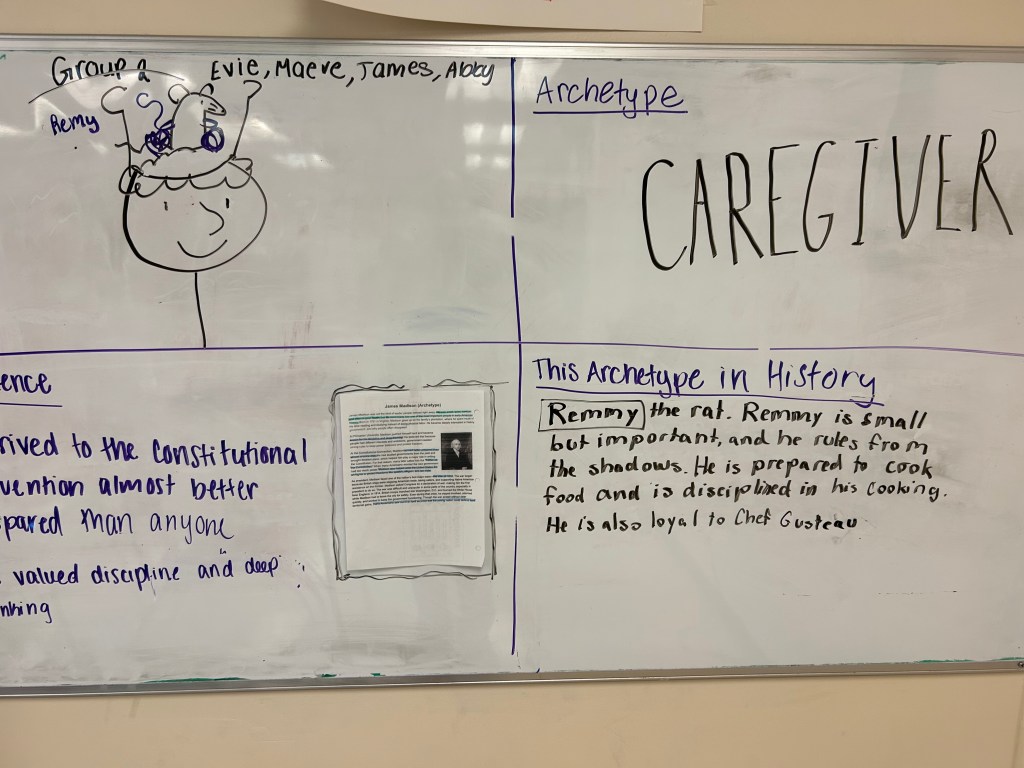
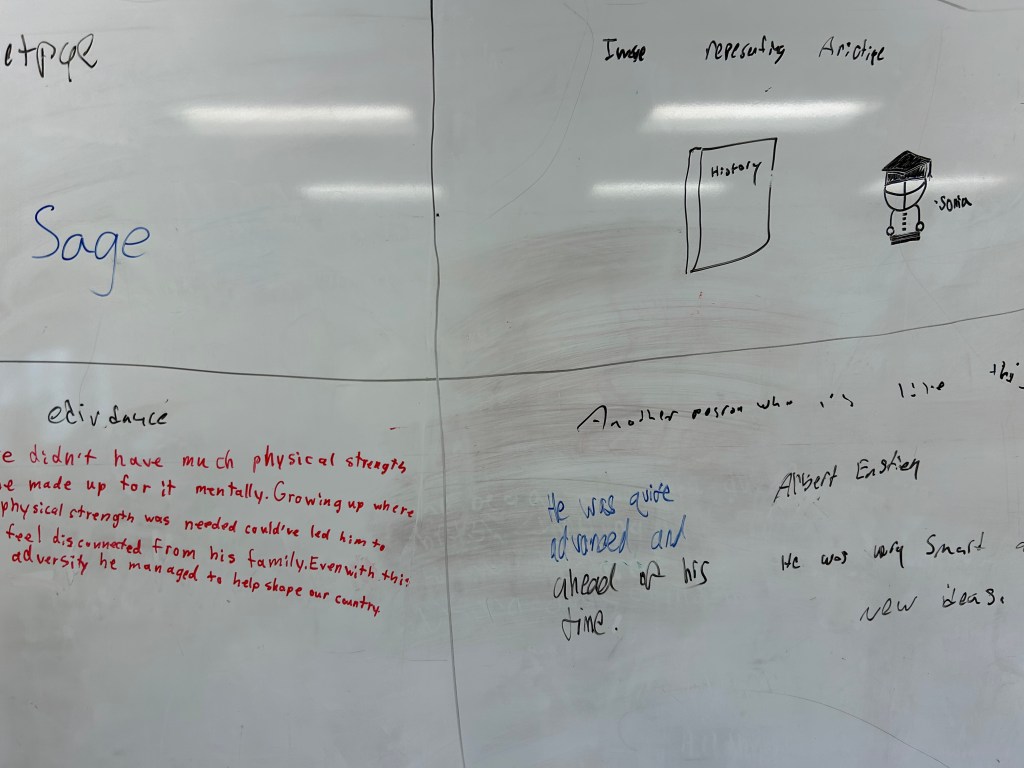
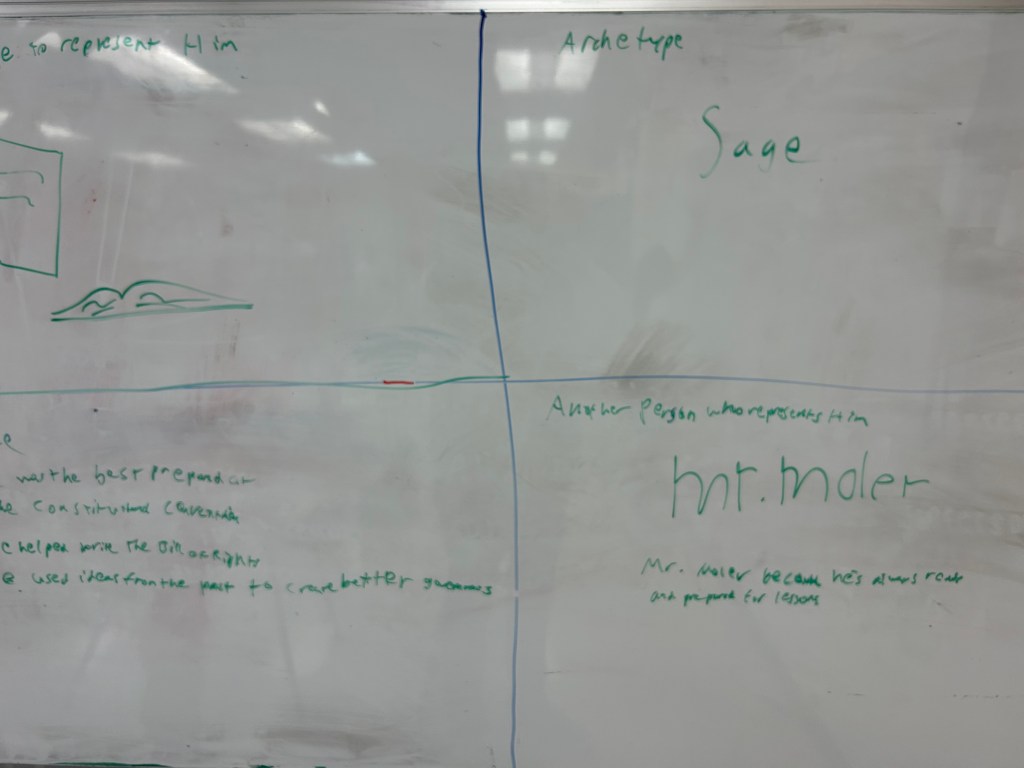
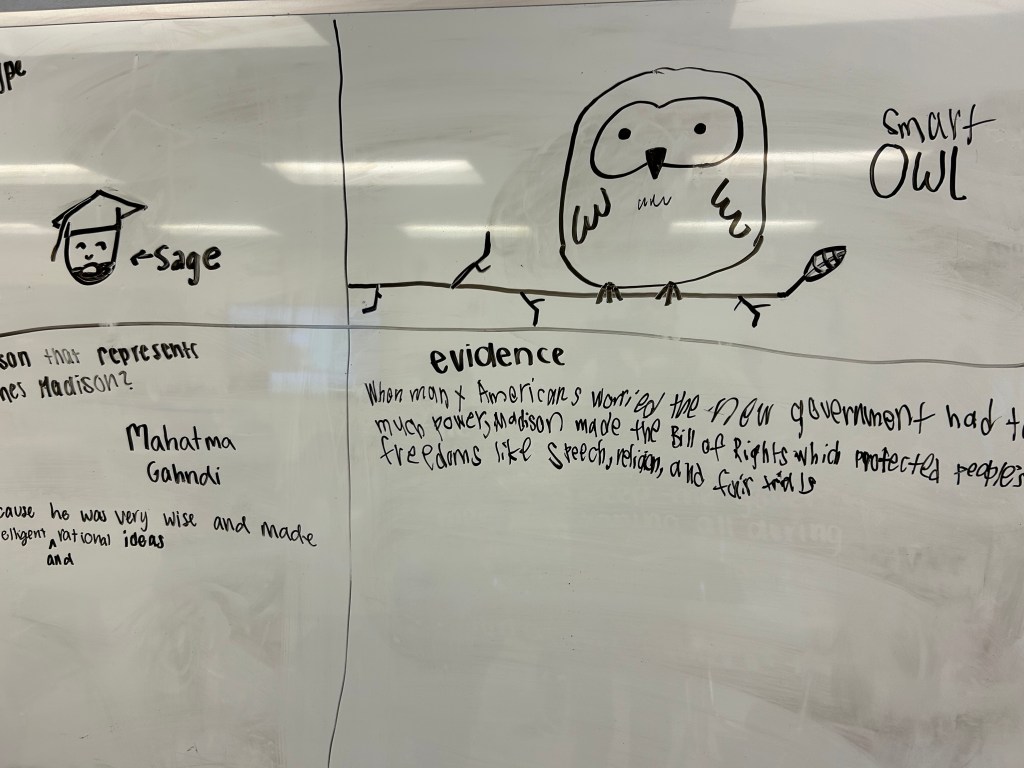
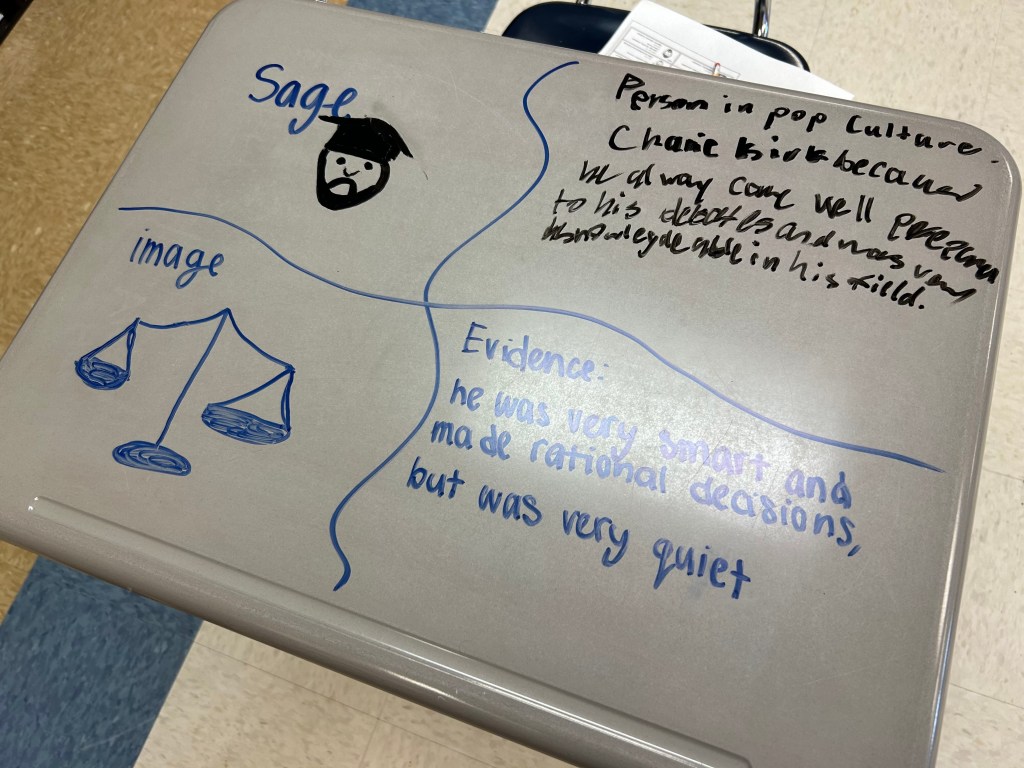
We began with an Archetype Four Square paired with a short Madison biography. Students read quickly, highlighted one fact they felt mattered most, and then had to begin thinking about what kind of historical figure Madison might be. Not just what he did, but what kind of person he seemed to be.
Archetype Four Square on the Whiteboards
From there, I used Flippity to create random groups and sent students to the whiteboards BTC style.
Each group worked through an Archetype Four Square, discussing which archetype best fit Madison and what evidence supported that choice. This always pushes students beyond simple biography because they have to defend why a person fits a larger pattern.
Some groups focused on Madison as a thinker. Others saw him as cautious, strategic, or pulled by events larger than himself. The conversation mattered more than finding one perfect answer.
A Quick Video to Set the Stage
Once we had Madison in place, we watched a short two-minute video to introduce the War of 1812.
It worked well because it connected Jefferson to Madison and showed how problems that began earlier did not simply disappear when presidents changed. The video gave students just enough of the bigger picture without overwhelming them.
Regional Voices Before Declaring War
For the main part of the lesson, I adapted a lesson from Mr. Roughton on the War of 1812.
His version used videos of people connected to the war. I originally tried recreating something similar using Sora, but the clips came out too short to really do what I wanted. So instead, I had ChatGPT generate realistic statements from people living in different parts of the country.
The goal was for students to hear regional voices before hearing official history.
They read statements from people in New England, the South, and the West. Some clearly favored war. Others clearly feared it. Some were worried about trade, others about national honor, and others about British interference.
What I wanted students to notice was that support for war did not look the same everywhere. Sectional thinking was already beginning to shape how Americans saw national decisions.
Reading Tone, Wording, and Perspective
What stood out most was how hard it was for many students to pick up on tone, wording, and context clues.
Even when statements strongly suggested someone was against war or strongly in favor of it, students often had trouble identifying it right away. That actually turned into one of the most valuable parts of the lesson because it slowed them down and forced them to pay attention to how people reveal perspective through language.
By the end of class, we had only finished the first part of the lesson, but that was enough.
We will finish Monday by returning to the same voices and asking one final question: Would you have declared war on Britain in 1812?
Lessons for the Week
Tuesday – John Adams Sketch and Tell-O/CER]
Wednesday – Louisiana Purchase Rack and Stack
Friday – Mr. Roughton’s Site (War of 1812), Video

 Moler's Musings