
Monday: Hamilton, Jefferson, and the Constitution in Real Time
We started the week by continuing our work with Hamilton’s financial plan, which really began last Friday.
On Friday, students watched an EdPuzzle on Alexander Hamilton and paired it with the Archetype Four Square EduProtocol. The video added something important to the lesson because it highlighted Hamilton’s early life, his rise, and the beliefs that shaped how he viewed the future of the United States. It gave students context for why he believed the country needed a stronger economy, a stronger central government, and a greater place in the world. That became a strong compliment to the notes students were taking.
Direct Teaching the Financial Plan
This is one of those lessons where I still rely on direct teaching because there are simply too many connected parts for students to piece together on their own at first.
Hamilton’s financial plan includes tariffs, a national bank, an excise tax, consolidating debt, and the debate over strict versus loose interpretation of the Constitution. Each part matters, but each part also depends on students understanding the bigger purpose behind it. For this lesson, it is easier and more effective if I walk students through the ideas clearly, explain why each part mattered, and keep connecting each piece back to the larger question of federal power.
Throughout the lesson, I kept telling students that I was giving them the history behind the lyrics of Cabinet Battle #1 from Hamilton. That immediately helped frame what they were learning because many of them recognized the song even if they did not fully understand the argument inside it.
Quick Review from Friday
We opened Monday with a short review from Friday’s lesson.
The goal was simply to bring the major pieces back into focus before adding anything new. Students revisited Hamilton’s main ideas and the reasons he believed the country needed a stronger financial foundation.
That review helped because it gave them a place to connect the song and the writing that followed.
Listening to Cabinet Battle #1
After the review, we listened to Cabinet Battle #1.
This shifted the room because students were no longer just hearing information from notes. They were hearing Hamilton and Thomas Jefferson argue directly about the future of the country.
Hamilton’s side became easier to hear because students already understood the structure of his plan. Jefferson’s side also became clearer because they could hear the concern about giving too much power to the national government.
For many students, this helped the disagreement feel more real. It moved beyond isolated facts and became a debate over what the Constitution should allow.
2xPOV: Writing from Two Perspectives
We finished class with a 2xPOV.
Students wrote from two different perspectives about how Hamilton’s plan created challenges for the Constitution.
One perspective focused on why Hamilton believed these policies were necessary for national success. The other perspective focused on why Jefferson believed those same ideas stretched constitutional power too far.
This gave students a chance to sit inside both arguments rather than simply choosing one side.
That mattered because the bigger goal of the unit is helping students see that the Constitution was tested early through disagreement, interpretation, and competing visions of what the country should become.
Hamilton’s plan gave us one of the clearest examples yet of that tension beginning to surface.
Tuesday and Wednesday: Putting Students in Washington’s Chair
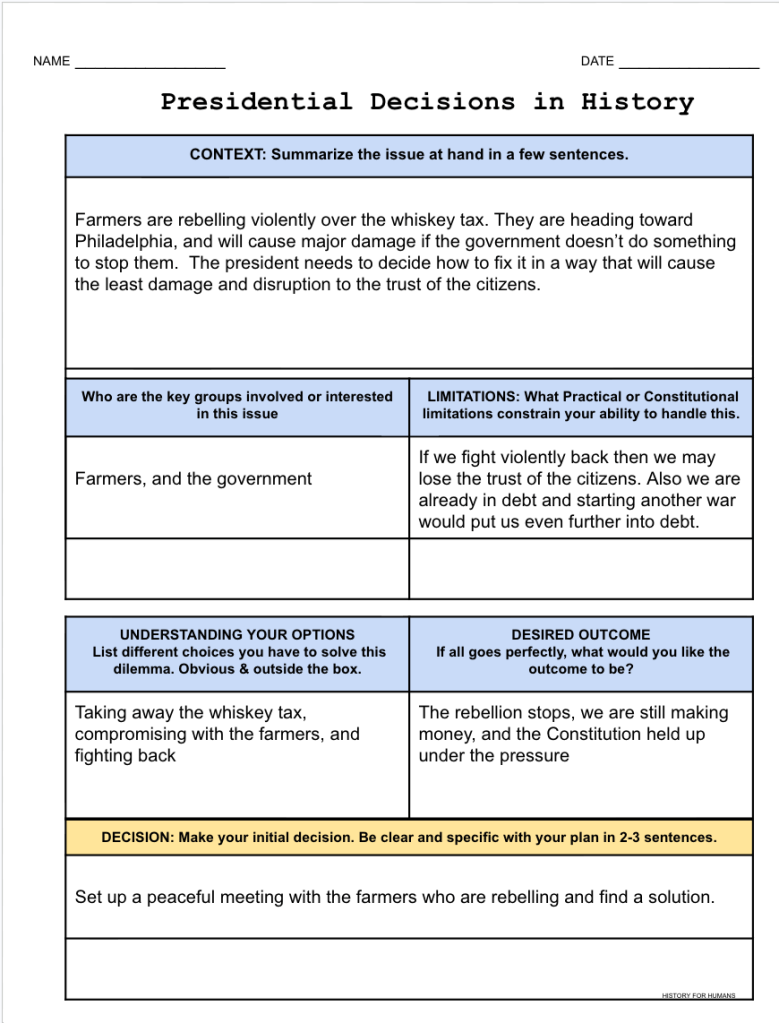
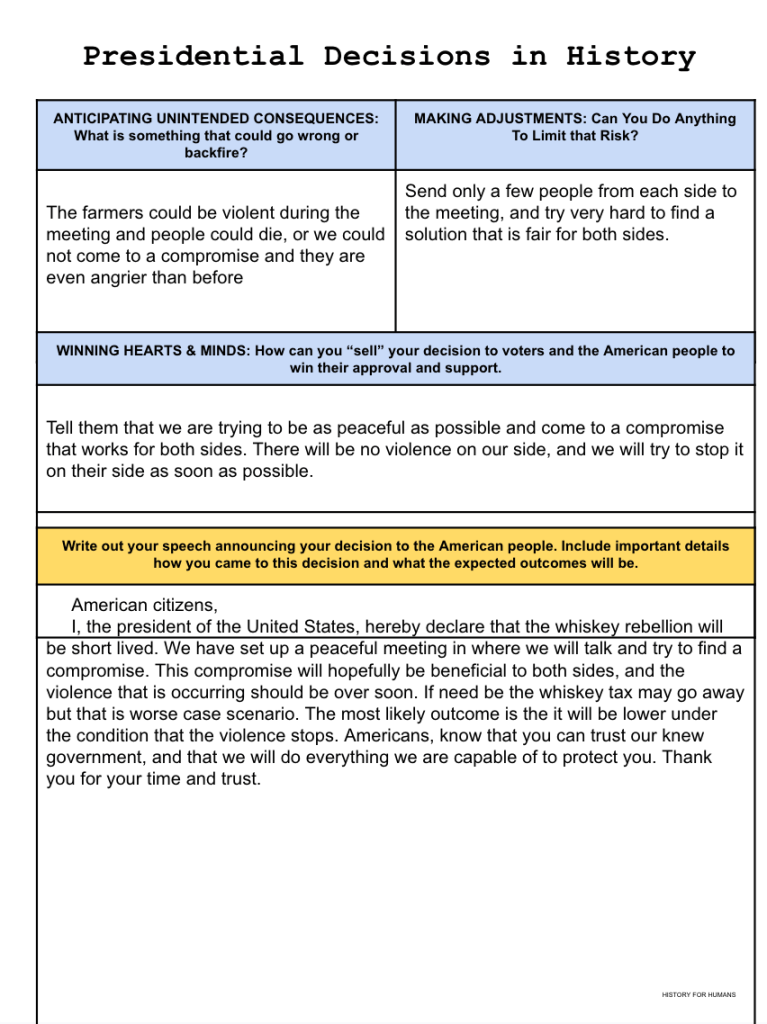
Tuesday and Wednesday centered around one of the strongest activities of the week, a Presidential Decisions lesson on the Whiskey Rebellion created by Dan Lewer. The structure of the activity worked because it forced students to move beyond simply learning what happened and instead placed them inside the pressure of the decision itself.
Before students ever knew what George Washington actually did, they had to operate with the same uncertainty he faced.
Building the Situation First
We began by reviewing the context and timeline that led up to the crisis. Students looked at how quickly this problem developed in a very young nation: independence, the weakness of the Articles of Confederation, Shays’ Rebellion, the ratification of the Constitution, and then the new federal tax on whiskey.
That sequence mattered because it helped students understand why leaders were so sensitive to rebellion only a few years after the Constitution had been written.
The context sheet made the problem immediate. Students learned that western Pennsylvania farmers were not just upset. Tax collectors had already been attacked, violence had broken out, and armed rebels were moving toward Pittsburgh. The federal government had little real control in that region, and for many students that detail became important because they began asking whether the government could afford to look weak so early in its existence.
Reading the Presidential Briefing
From there, students moved into the presidential briefing.
This reading gave them the exact kind of pressure Washington faced. They learned that Hamilton’s whiskey tax was a key part of his economic plan, but also that western farmers depended on whiskey not just for profit but often as currency. The reading also explained how violence escalated after the attack at John Neville’s house and how thousands of armed rebels gathered nearby under their own flag.
The phrase that really caught students was the warning that if citizens could simply resist federal law whenever they disagreed, the republic might not survive.
That line shifted the discussion because students started seeing the rebellion as more than just anger over taxes. They started seeing it as a direct test of whether the Constitution had real authority.
Making the Presidential Decision
Students then had to decide what Washington should do.
They worked through three options: send a peace envoy, raise a militia, or work to repeal the tax. What made the task strong was that none of the options felt easy. Every choice came with risk.
Some students immediately wanted military action because they believed the government had to show strength. Others worried that military force would make the situation worse and create even more rebellion. A few argued that repealing the tax might calm the conflict but could weaken federal authority in the long run.
That is where the real thinking happened. Students had to defend not only what they chose, but why that choice made the most sense for a fragile new nation.
Reflection After the Real Decision
After students committed to their own decisions, we moved into the reflection sheet and looked at what Washington actually did.
The strongest reaction came when students realized Washington did not simply choose one path. He first attempted diplomacy, then confirmed constitutional authority, then raised nearly 13,000 militia troops, and finally pardoned two convicted leaders after the rebellion collapsed.
That sequence surprised many of them because they expected a single clear action, but Washington’s response showed a balance of authority and restraint.
That became the key discussion point.
Washington needed to prove the federal government had power, but he also understood that pushing too hard could deepen division in a nation that was still fragile.
Why This Worked
What I liked most about this activity is that students were not simply learning the Whiskey Rebellion as an event. They were forced to think like decision makers.
By the end, many of them understood why historians often point to this moment as one of the first serious tests of constitutional authority. They could see that this was not just about whiskey or taxes. It was about whether the new government had the ability to enforce law without losing the trust of the people it governed.
Thursday: Making Political Parties Make Sense
This year is a new school, a new pacing guide, and a different textbook, but I still found myself leaning on lesson structures that I trust because they help students organize complicated ideas clearly. Political parties can become abstract very quickly if students only hear definitions. Federalists and Democratic Republicans turn into labels unless students have repeated chances to see what those labels actually meant in practice. So the lesson began with structure.
Map and Tell: Starting with the Election Maps
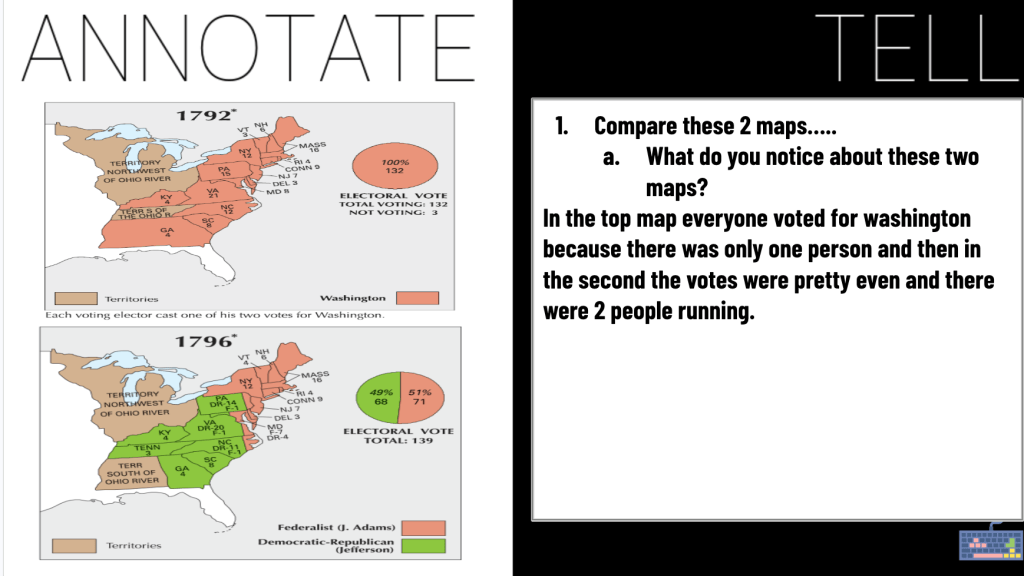
We started with a Map and Tell using the election maps from 1792 and 1796. Beginning there gave students something visual before we ever asked them to define beliefs. They compared the two elections and quickly noticed that 1792 still reflected broad agreement around Washington, while 1796 showed clear political division beginning to emerge. Students saw New England leaning Federalist while the South and western regions showed growing support for Jefferson. That visual immediately gave the lesson a stronger entry point because students could see that division was already forming geographically very early in the nation’s history. It also opened the door for discussion because several students began noticing how regional political patterns can still shape elections today.
Annotate and Tell: Organizing Party Beliefs
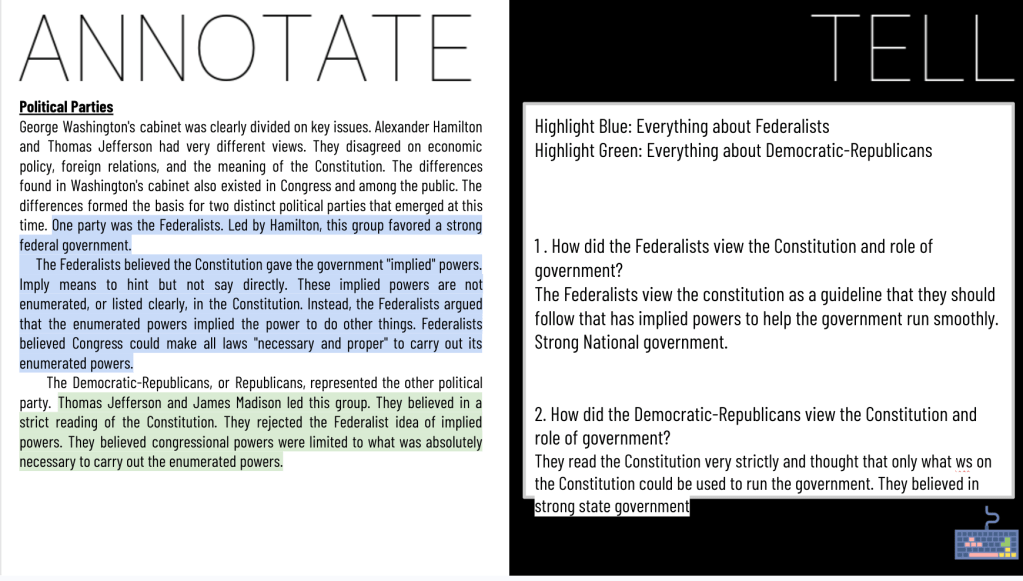
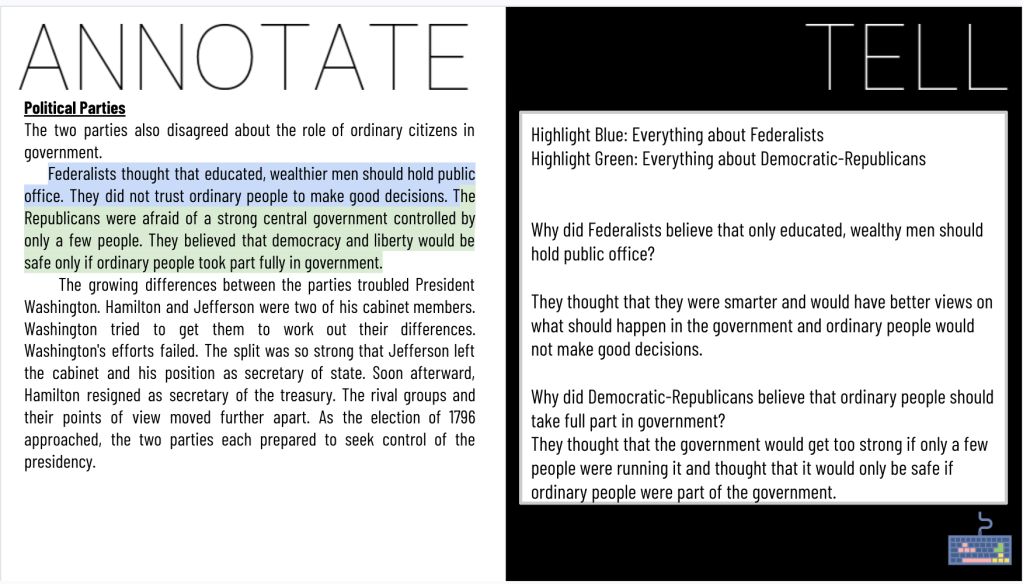
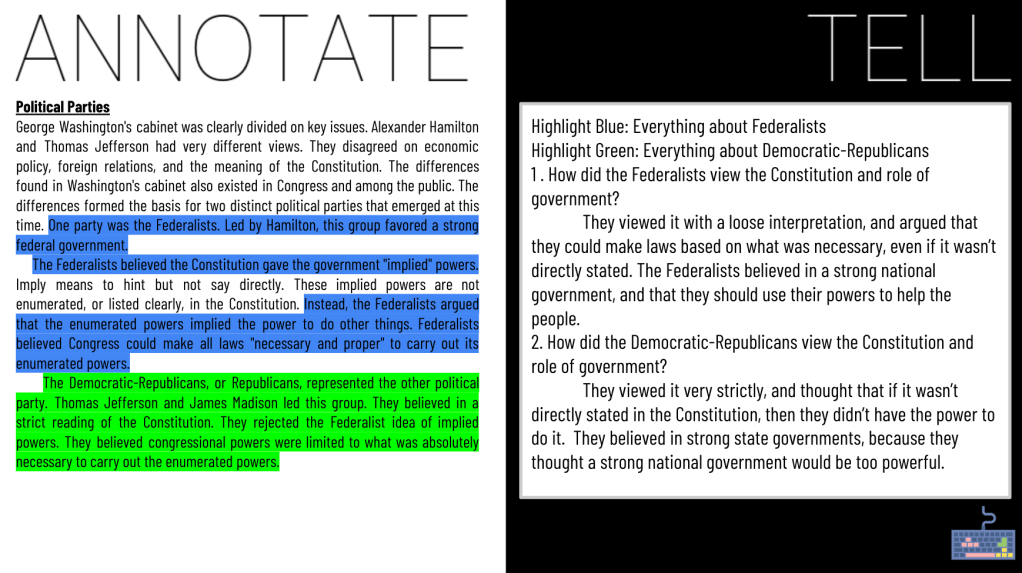
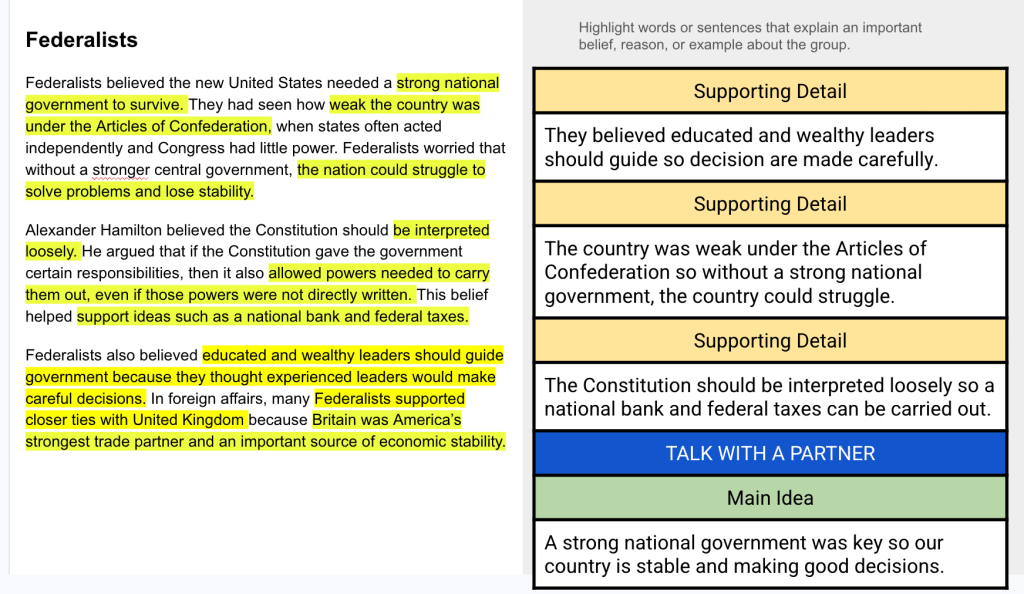
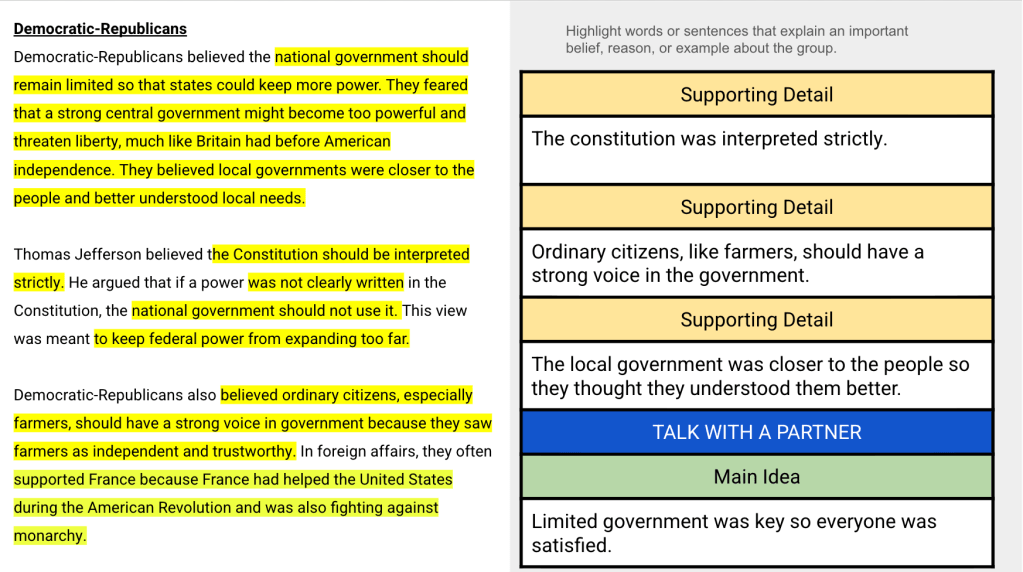
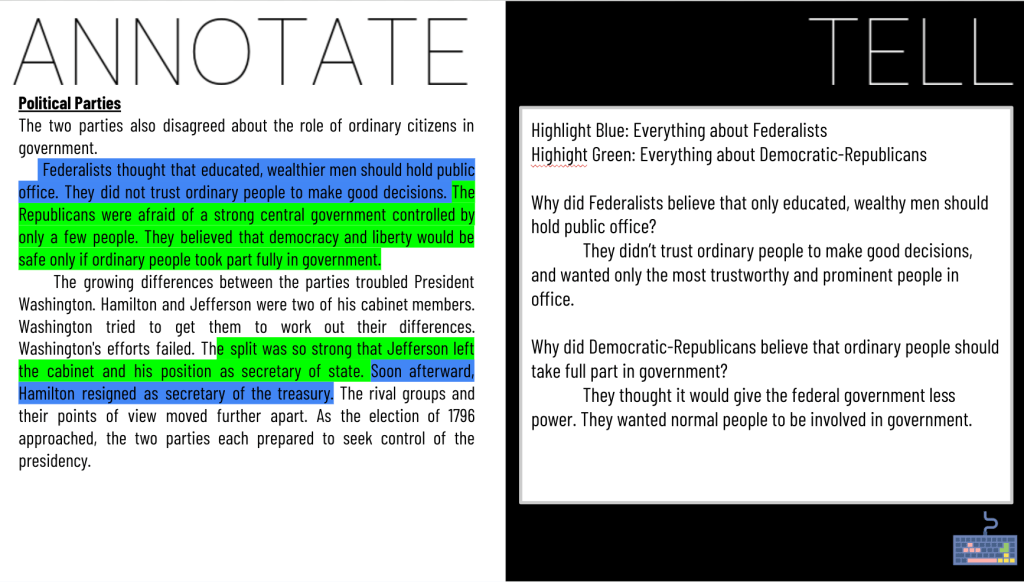
After the maps, students moved into Annotate and Tell. They used color coding to organize the reading, highlighting Federalist beliefs in blue and Democratic Republican beliefs in green. This made the reading far more manageable because students could literally separate the two viewpoints on the page. Federalists became associated with implied powers, stronger federal authority, and trust in educated leadership. Democratic Republicans became tied to strict interpretation, limits on federal power, and broader participation by ordinary citizens. By the end of the reading, students were not just answering questions. They had created a visual record of how the two sides differed.
Quote Sort: Applying the Beliefs
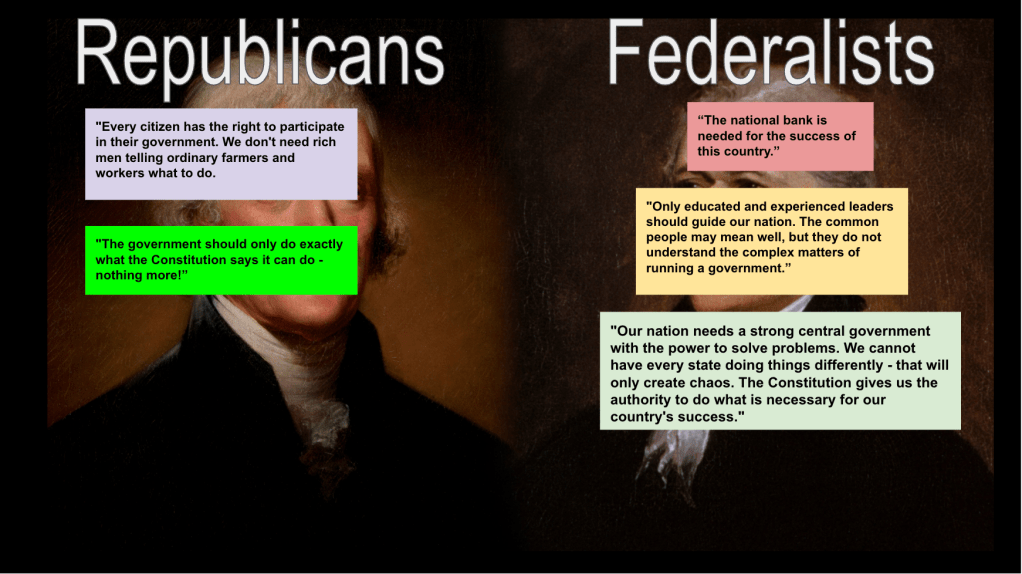
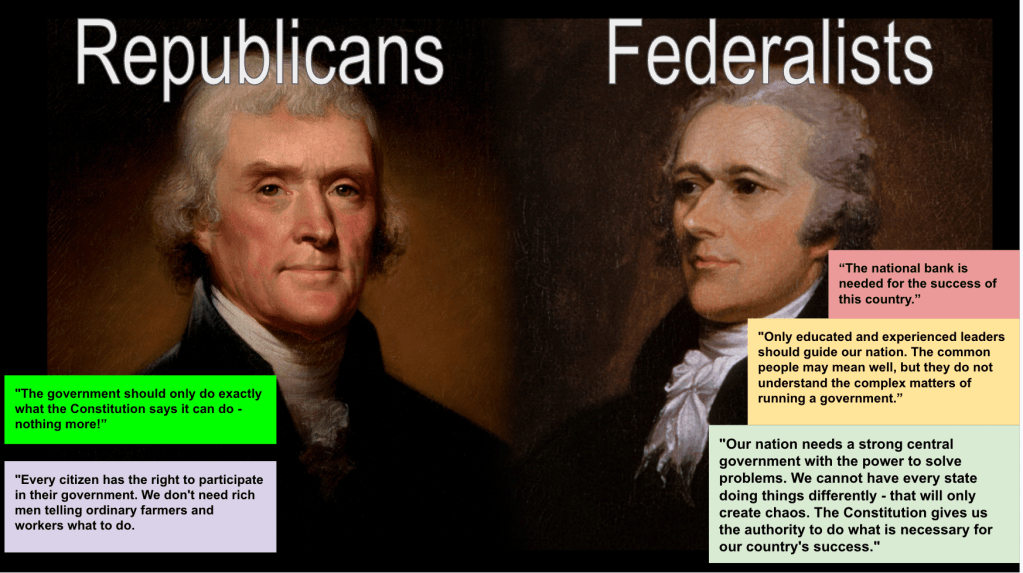
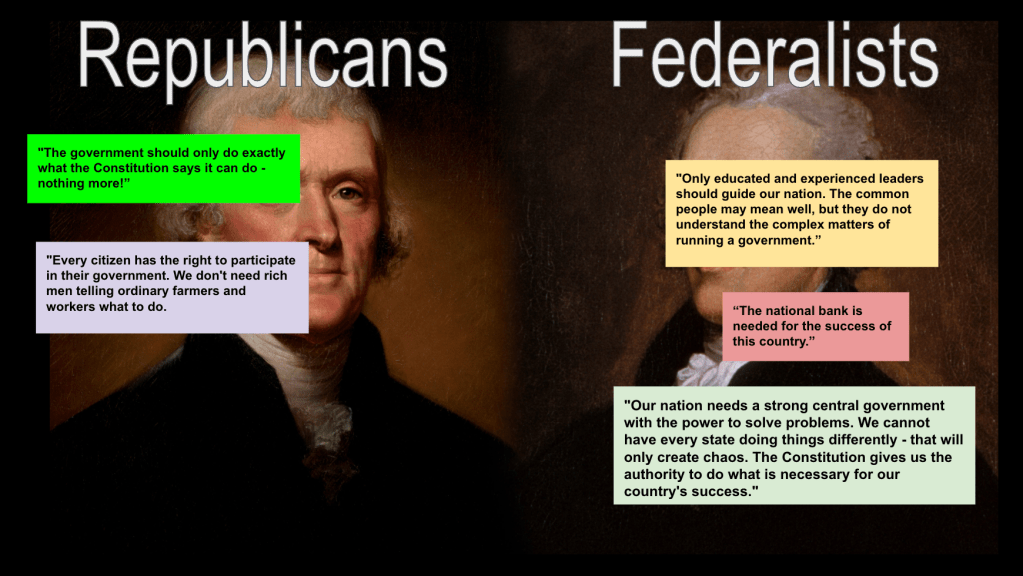
Once students had a clearer understanding of both sides, we moved into a quote sort. Students were given statements and had to place them under Federalists or Democratic Republicans. That forced them to move beyond recognition and into reasoning. They had to think through which side would support stronger national power, which side would trust ordinary citizens more, and which side would argue that government should only do what the Constitution directly allows. The strongest part of this activity was the conversation that happened when students disagreed. They had to justify their choices using the reading they had just completed.
Thick Slide: Bringing It Together
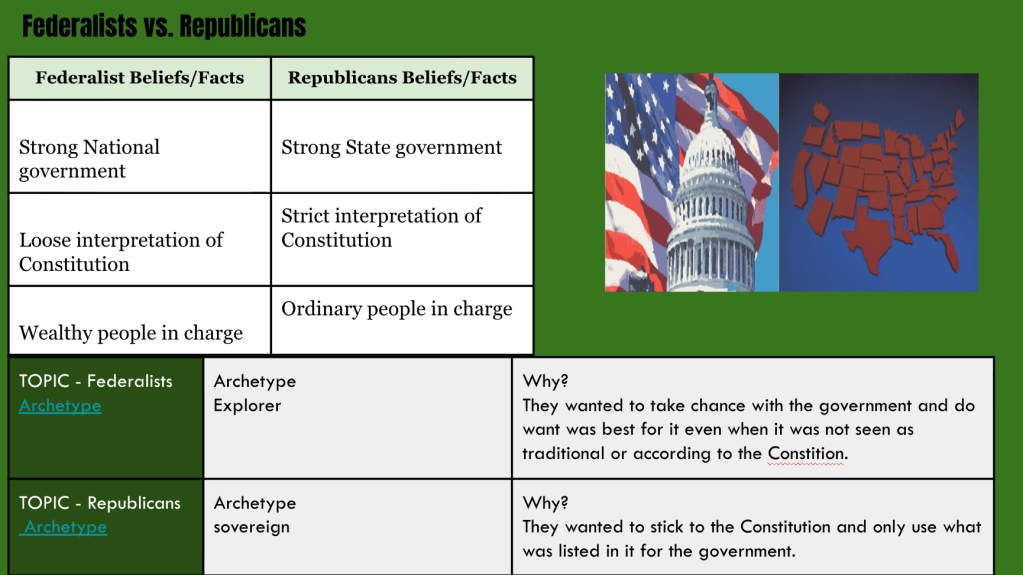
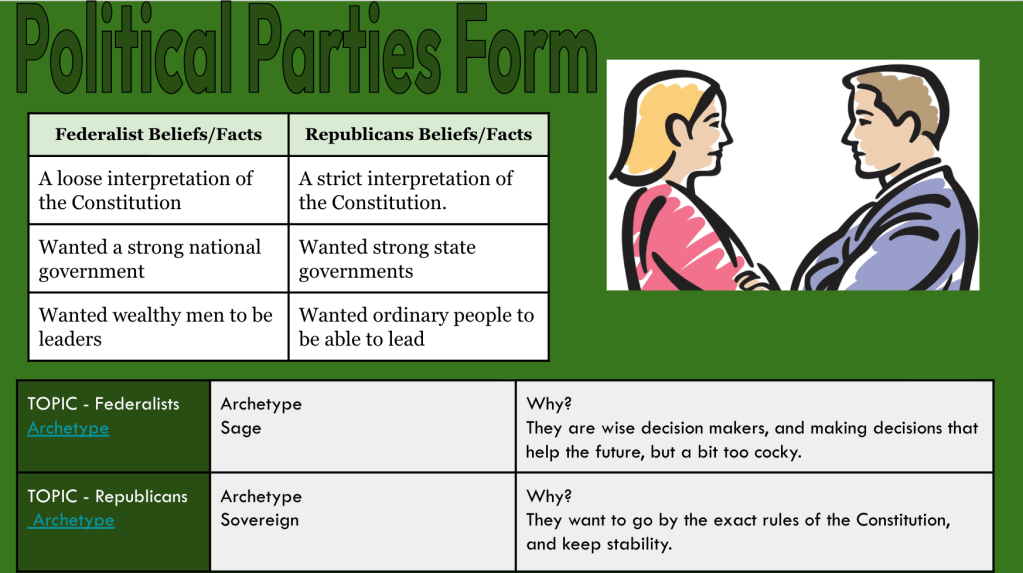
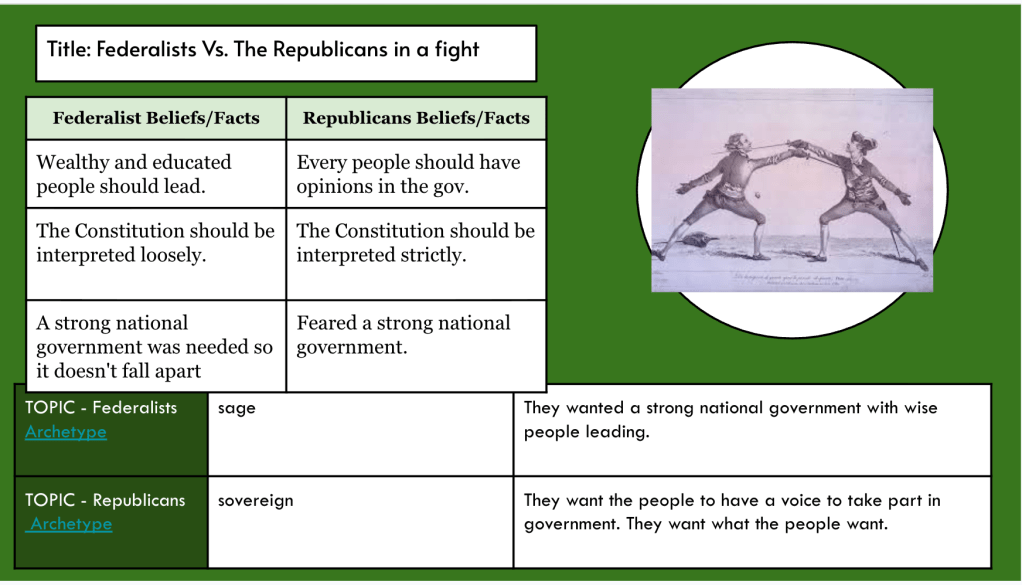
To finish, students completed a Thick Slide. They assigned archetypes to Hamilton and Jefferson, compared Federalist and Democratic Republican beliefs, and selected visuals that represented each side. This final piece helped reveal whether students were seeing larger patterns. They were no longer just listing facts. They were trying to explain the personalities, priorities, and ideas behind each political side. That usually tells me more than a worksheet ever could.
Why the Lesson Worked
Each part of the lesson had a clear role. Map and Tell gave students a visual entry point. Annotate and Tell organized ideas. Quote Sort pushed application. Thick Slides encouraged synthesis. By the end, political parties felt less like a vocabulary section and more like an explanation for why the early republic kept testing the Constitution.
Friday: Prepared, Then Prove It
Friday started with what I called a pop quiz. I added six questions that pulled directly from the week: Washington’s precedents, the Whiskey Rebellion, and political party beliefs. The content itself was not meant to surprise students. In many ways, the quiz was less about catching them off guard and more about reinforcing a point I have been trying to make all year. I do not really believe in pop quizzes in the traditional sense, but I do believe students should understand that preparation matters every day. The opportunities are there constantly. We do Fast and Curious games, reviews are posted, NotebookLM support is available, and class discussions keep circling back to major ideas. Nothing appears out of nowhere. So the larger message was simple: if you are staying engaged with the process, you should not feel anxious when asked to show what you know. That message landed because even though a few students were nervous at first, the results showed that most were ready. About ninety percent of the class performed very well, and most students scored an eight out of eight.
Moving from Recall to Application
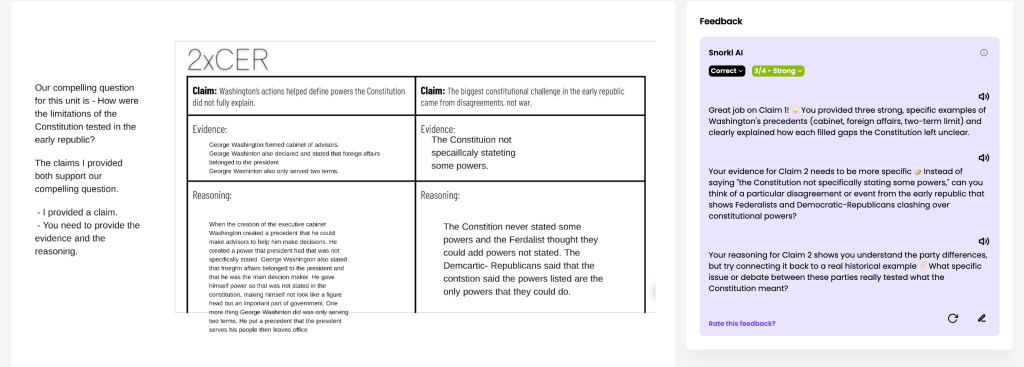
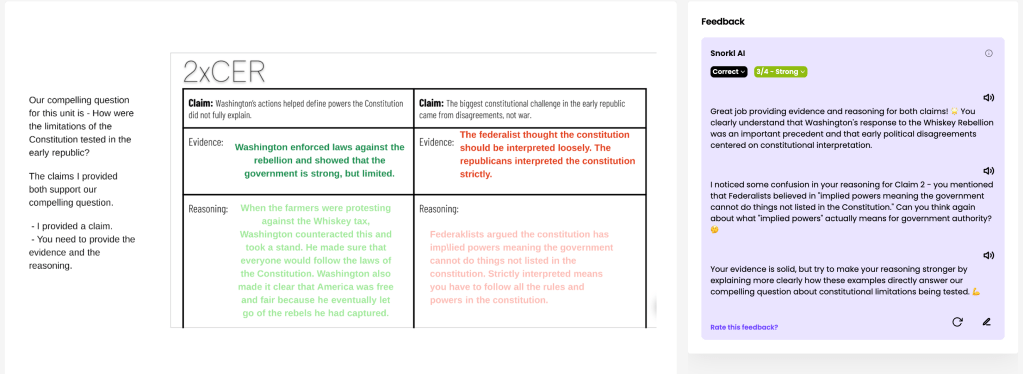
After the quiz, we shifted immediately into application. I posted a Snorkl link tied to a 2xCER. Before students started, I told them something I wanted them to hear clearly: anyone can circle A, B, C, or D, but the real test is what you do when there is no answer bank in front of you. That changed how they approached the task because they understood this was asking something different from recall.
2xCER: Evidence and Reasoning
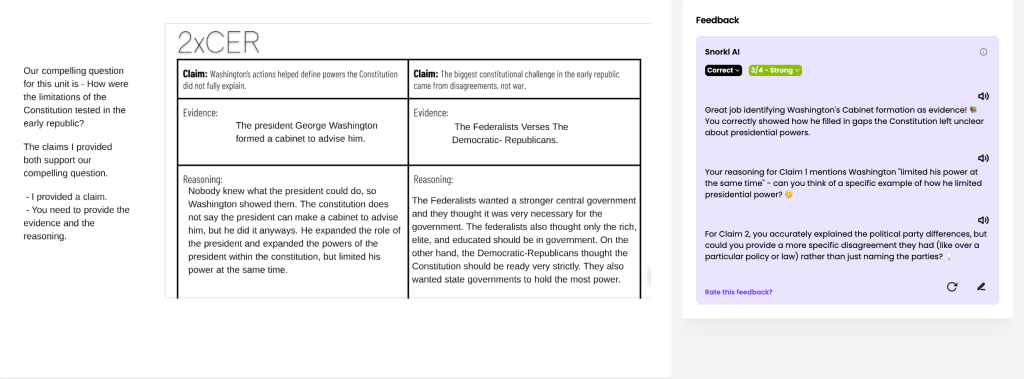
For this activity, I provided the claims and students had to generate the evidence and reasoning. The two claims were built directly around the unit question: how were the limits of the Constitution tested in the early republic? One claim asked students to explain how Washington’s actions helped define powers the Constitution did not fully explain. The other asked them to consider whether the biggest constitutional challenge came from disagreements rather than war. What I liked about this setup is that the claims already pushed students toward interpretation, but the burden of proof stayed with them. They had to decide which examples from class best supported the claim. Some students returned to Washington’s precedents. Others used the Whiskey Rebellion. Some connected Hamilton’s financial plan and political party divisions. That is where the thinking became visible.
Snorkl and Immediate Feedback
Snorkl added another important layer because students received immediate feedback while they were explaining their thinking. I told them that if they scored a three out of four or higher, they were finished. That target worked well because it gave them a clear standard without dragging the activity out unnecessarily. What mattered most, though, was what happened while they worked. Students started asking stronger questions, checking their reasoning with each other, and realizing when their evidence was too general and needed to be tightened. Those moments created some of the best conversations of the day because feedback was happening while thinking was still active.
Why Friday Mattered
Friday felt like a strong close to the week because it moved students through two very different kinds of accountability. First, they had to show they remembered what we had learned. Then they had to prove they could use it. That second step always matters more. Facts matter, but facts only become meaningful when students can pull them into an argument, explain why they matter, and connect them back to a larger historical question.
Lessons for the Week
Monday – Hamilton’s Plan
Tuesday and Wednesday – Whiskey Rebellion – Dan Lewer’s Site
Thursday – Political Parties

 Moler's Musings