The Week That Was in 234

This week was about layering, connecting, and getting students to own the content—not just memorize it. Every protocol, every sequence was designed to move students from basic retrieval to deeper understanding without overwhelming them.

Nothing fancy. Nothing over the top. Just intentional teaching.

Monday – Abolitionist Reformers Thick Slide

Tuesday/Wednesday – Superlatives

Thursday – Abolitionists/Women’s Suffrage Reading and AI Evaluation

Friday – Reform Movements Solo Iron Chef

Monday: Contributive Learning With Abolitionists

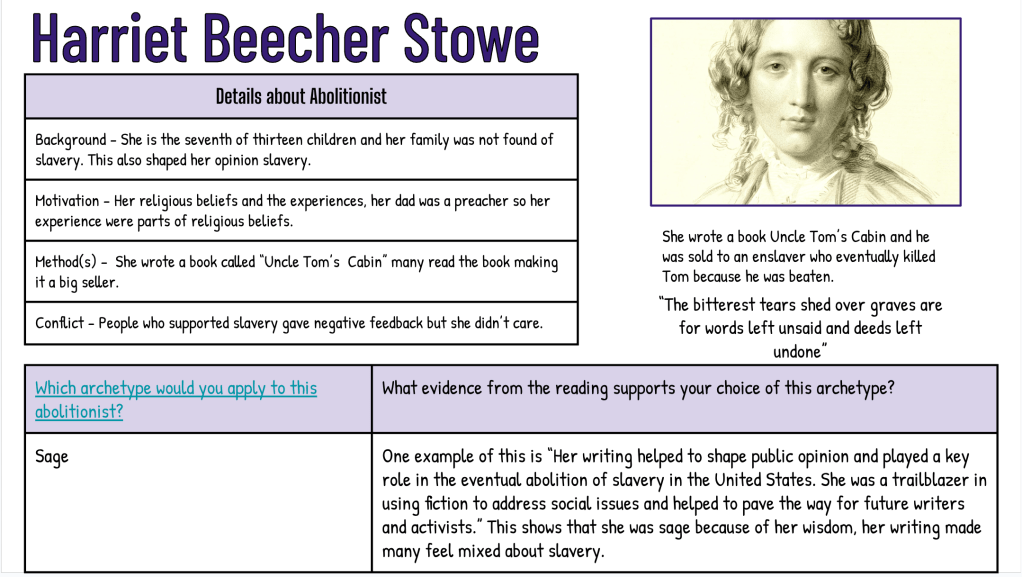
Monday kicked off our Abolitionist Movement work. I always try to bring in local figures like Harriet Beecher Stowe, John Rankin, and James G. Birney alongside Frederick Douglass, Sarah Grimké, and William Lloyd Garrison. Students need to see the local connection—that history didn’t just happen “out there.”

We started with a Thin Slide: “Change begins when someone refuses to stay silent.”
One picture. One word or phrase. Fast. Immediate. It set the tone for the day—thinking about voice, action, and courage.

Then we jumped into a short EdPuzzle. It wasn’t to “teach” the content—it was just to jog memories and fill in some quick context before they picked an abolitionist to dive deeper into.

The Thick Slide was the real meat of the day:
Each student chose one abolitionist and built a slide that included:

  • A short background
  • Their motivations for ending slavery
  • The methods they used (writings, speeches, helping people escape, etc.)
  • One powerful quote or moment that showed who they were

This wasn’t just copying facts—it was asking students to curate what mattered.

After they shared, classmates used a Frayer Model to capture the background, methods, and motivations for four abolitionists.

Why I sequenced it this way:

  • Thin Slide to frame the emotional/critical thinking lens
  • EdPuzzle for quick retrieval
  • Thick Slide to produce and contribute
  • Frayer to actively listen, gather, and process others’ work

Every move had a purpose: students weren’t just learning about abolitionists—they were seeing patterns of activism.

Tuesday: Finishing Abolition With Superlatives

Tuesday was another strange day because of science OST testing.

We opened with a Fast and Curious on Quizizz. Nothing complicated—just another layer of retrieval on the same reform movement content:

  • Words like suffrage, reform, abolitionism, and goals of different movements

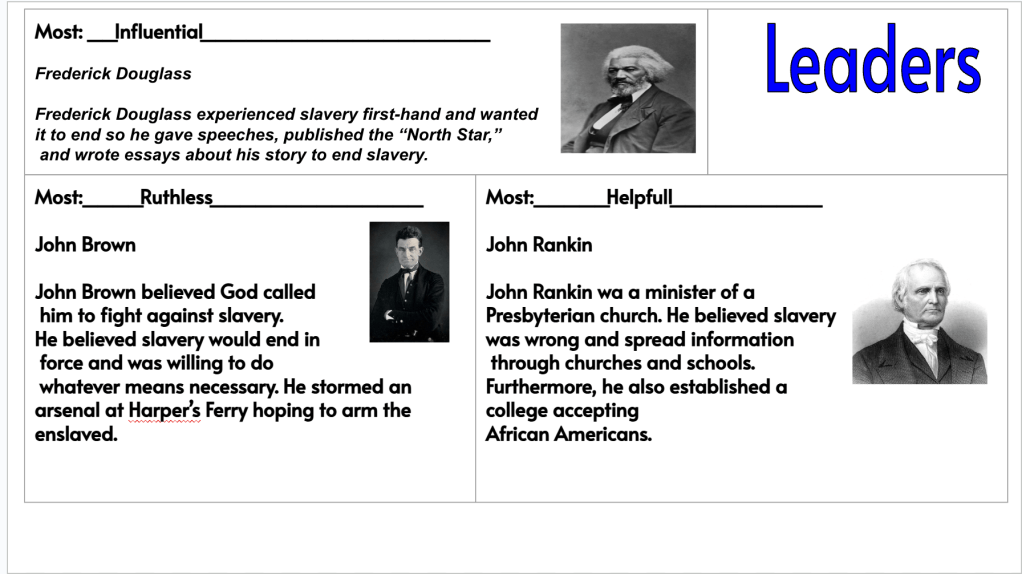
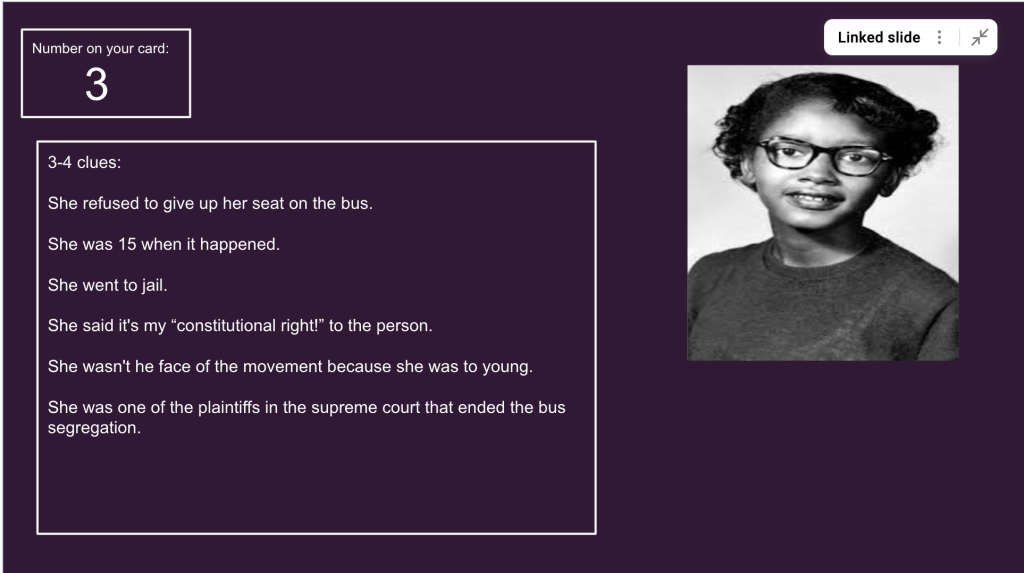
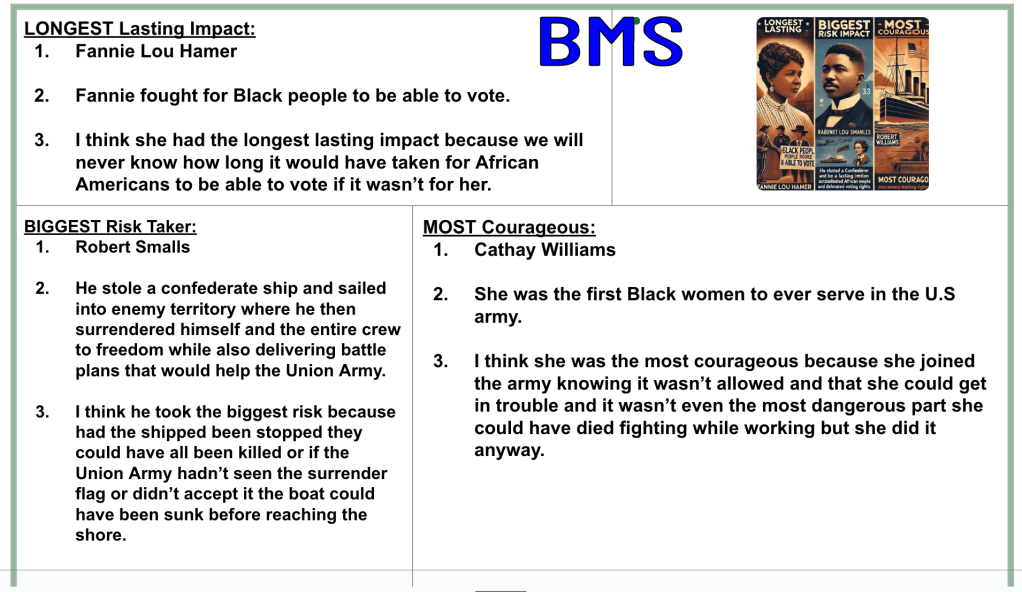
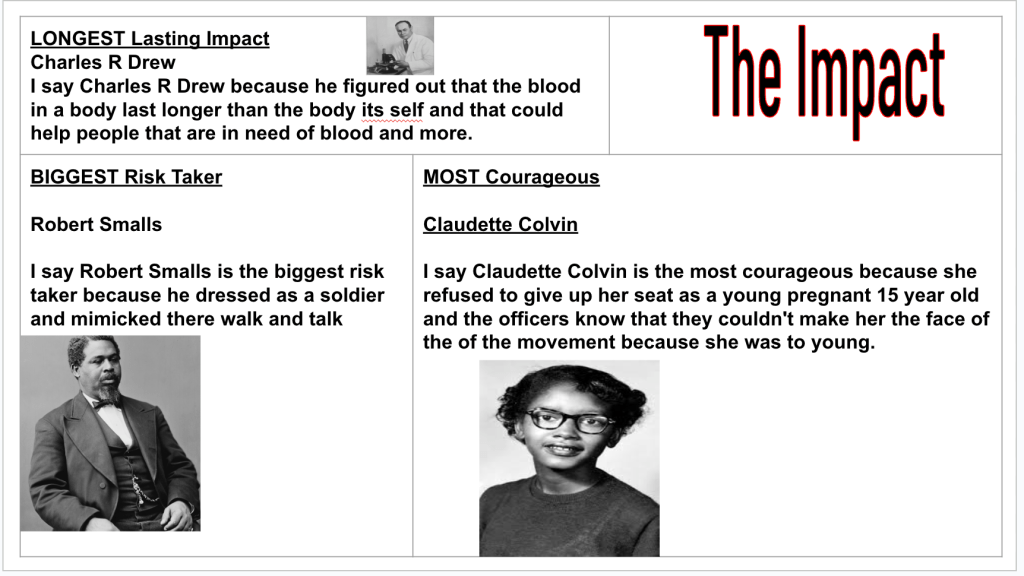
Then we finished Monday’s work with a Superlatives activity (shoutout to Kim Voge). Students had to pick 2–3 abolitionists and apply superlatives like Most Courageous, Most Determined, Most Visionary, etc.

At first, I had them tie it back to the Thin Slide quote from Monday…but after first period, I realized that overwhelmed them. So I pivoted and just let them focus on the superlatives.

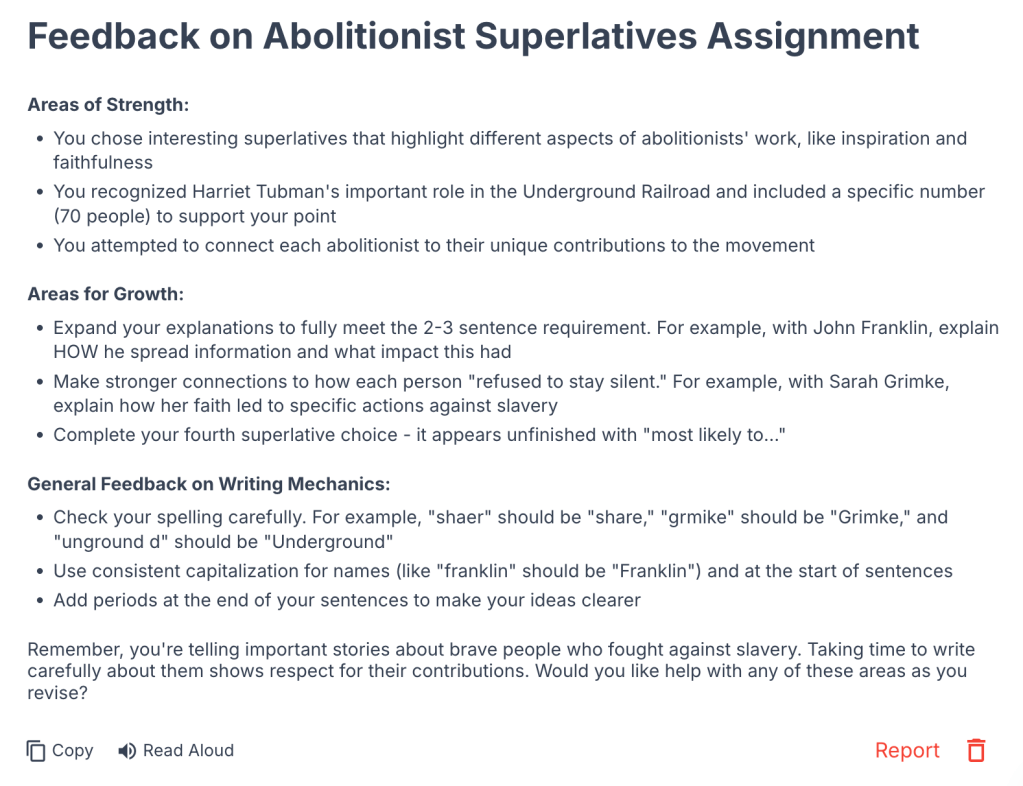
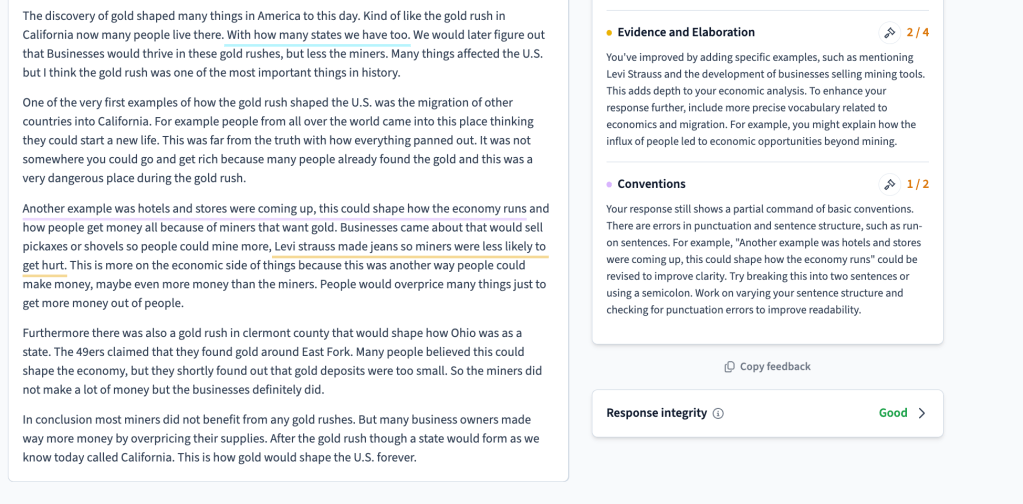
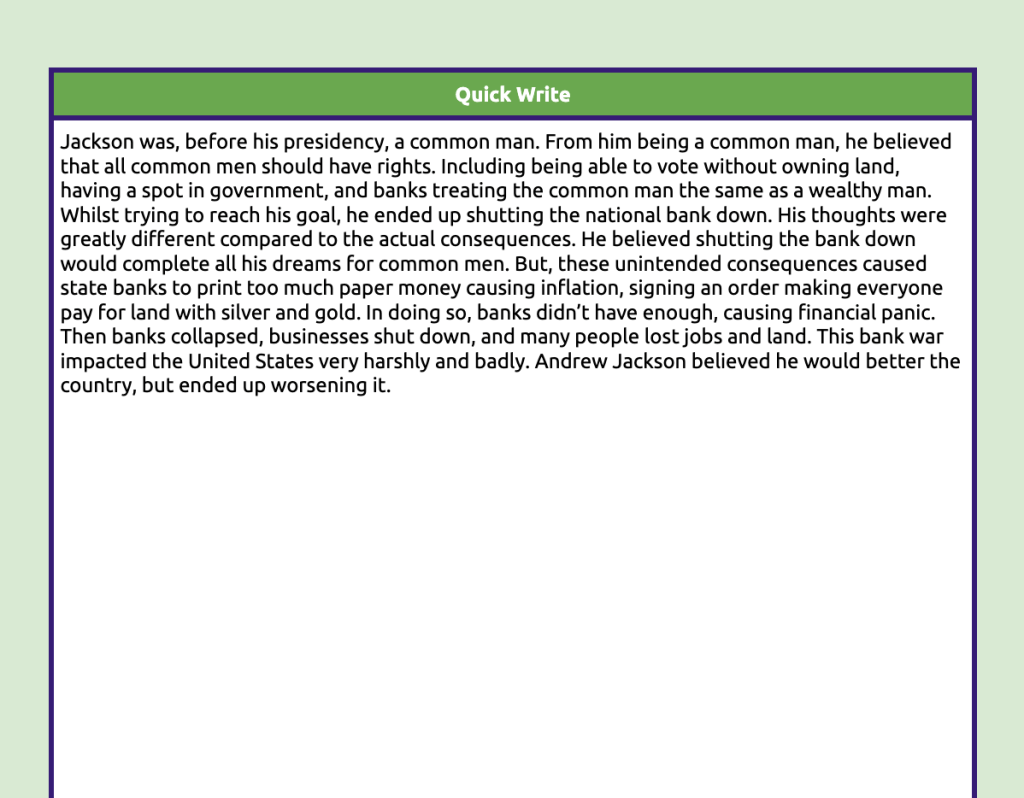
After students completed the Superlatives, they used Magic School’s writing feedback tool to add in ideas. They took a screenshot, attached the screenshot to the feedback tool, and generated feedback. It led to discussions of evaluating feedback and choosing to pay attention to the feedback that matters.

Why this worked:

  • Fast and Curious warmed them up with retrieval
  • Superlatives required them to compare, judge, and defend choices
  • It wasn’t just recalling facts—it was applying understanding

The pivot mattered. Sometimes you have to drop something mid-day when you realize it’s not helping kids think better.

Wednesday: Thinking on My Feet With Real-World Skills

Wednesday was a little chaotic—still on the weird science testing schedule. Some classes finished their superlatives and quizzes early, and I knew I needed something meaningful that wasn’t just busy work.

I thought back to a Friday Check-In I ran months ago:
“If I could teach you anything besides social studies, what would you want to learn?”

The most common answer? – Jobs. Taxes. How to get a job.

So I threw together a quick, no-internet-needed lesson:

  • Started with a Google Form:
    • What’s more important—skills or attitude?
    • Would you hire yourself right now?
  • Number Mania on Padlet:
    • What are two labor laws that surprised you?

I shared a quick story about my first job working clay tennis courts—how doing the little things no one asked for got me better hours and more money.

Why this worked:

  • It was personal.
  • It was relevant.
  • It used EduProtocols (Number Mania + fast reflection) in a real-world context.

The best moments come when you connect content to what actually matters for students’ futures.

Thursday: Connecting Abolition and Women’s Rights (with Purposeful AI)

Thursday was all about tying movements together—and introducing AI not as a shortcut, but as a thinking partner.

Our goal:
Understand how the Abolitionist and Women’s Rights movements were connected—and why they eventually split apart.

The flow:

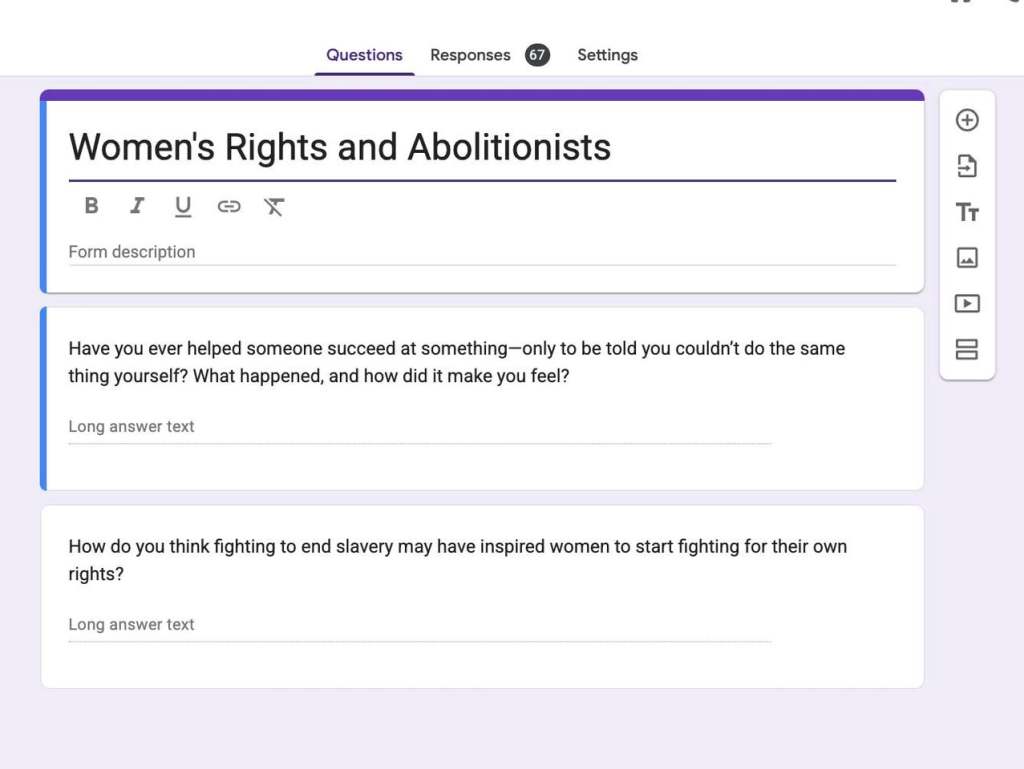
  • Opened with a Google Form to prime thinking: Where do you see connections? Where could you see division?
  • Annotate & Tell: Students read a short article and answered four guiding questions that helped them think about motivations, conflicts, and context.

Then came the AI part—and this was intentional:

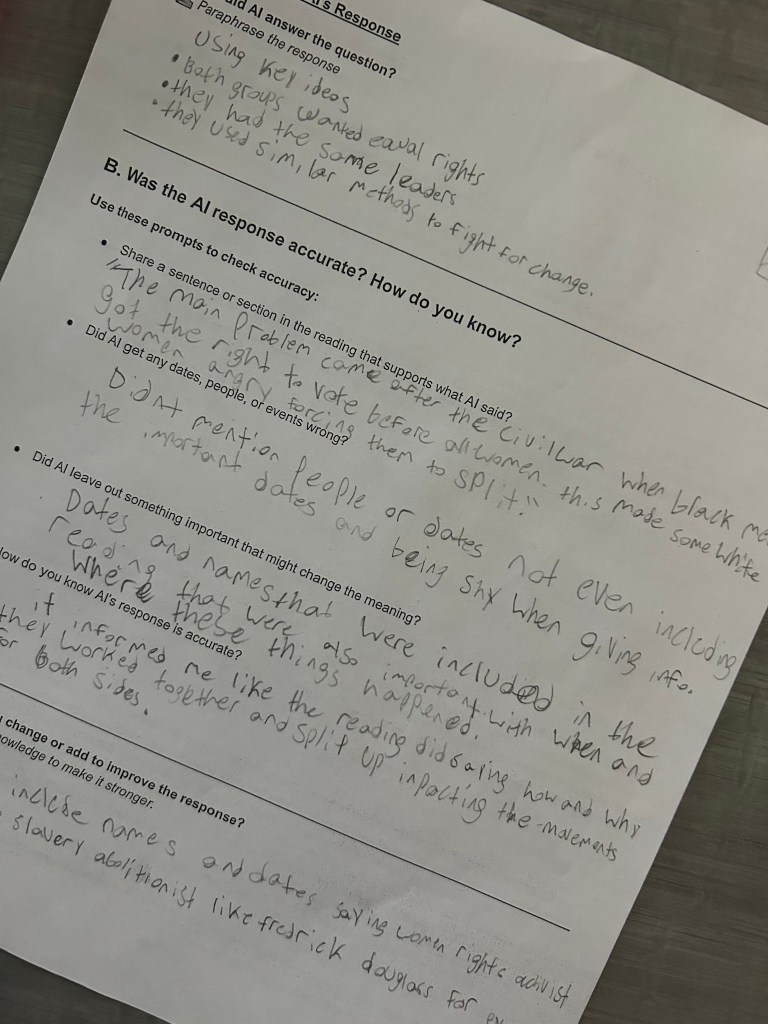
  • Students used MagicSchool ChatBot Raina to ask a question about the reading. I did not preload the ChatBot with any extra information.
  • They had to paraphrase the AI response
  • Then they had to evaluate it:
    • Was it accurate?
    • Was anything missing?
    • How could it have been better?

This wasn’t just “use AI.” This wasn’t generate ideas and copy. It was: engage with AI, challenge it, think critically about it.

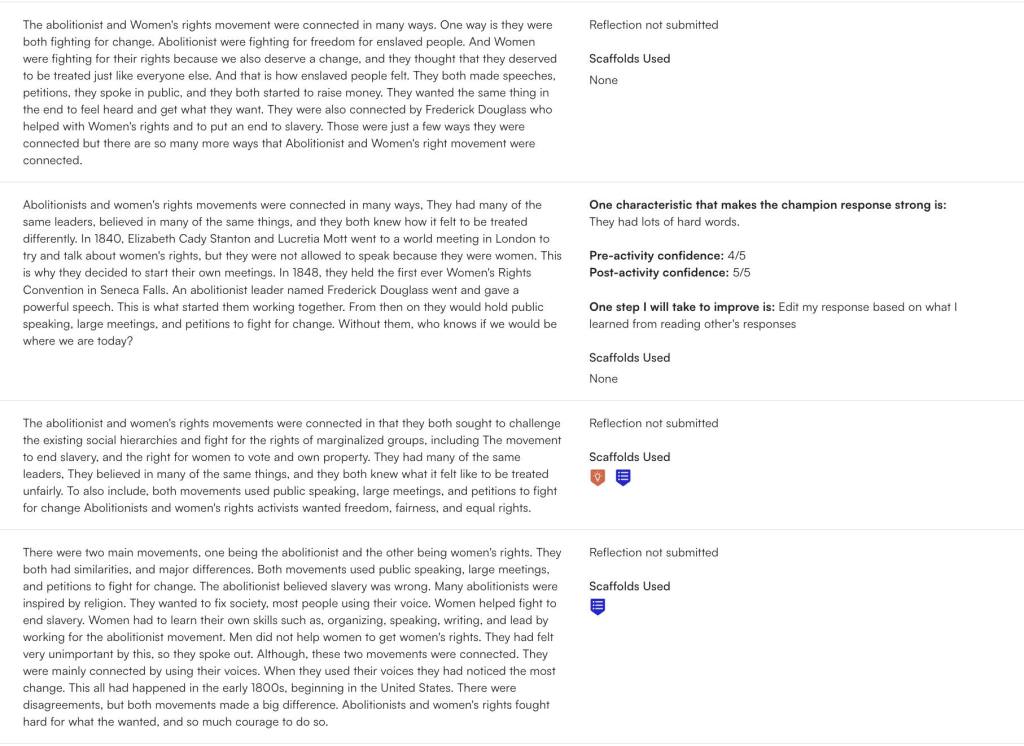
We closed it all with a Short Answer Battle Royale: Explain how the two movements were connected.

Why this worked:

  • The Google Form opened thinking.
  • Annotate & Tell slowed down reading.
  • AI added reflection, metacognition, and sourcing conversations.
  • Short Answer forced a full-sentence, evidence-based response.

AI wasn’t a crutch. It was a springboard for better thinking.

Friday: Wrapping Reform With Solo Iron Chef

Friday was about pulling everything together.

We started with a Fast and Curious on Quizizz (class averages were solid: 83%–90%) to hit key reform concepts one last time.

Then, students completed two Solo Iron Chef slides:

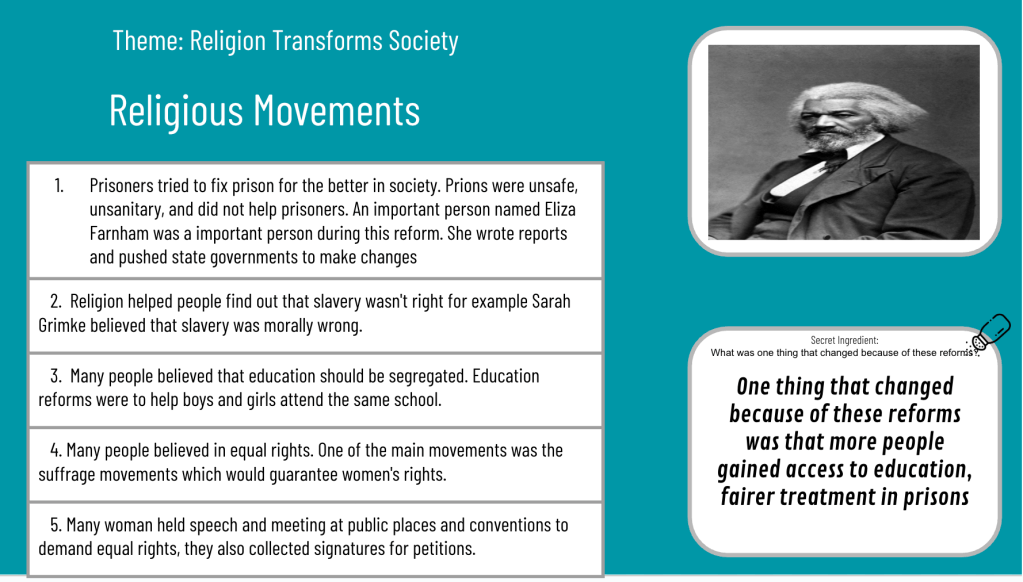
  • Slide 1: Religion Transforms Society (5 details + image + secret ingredient reflection)
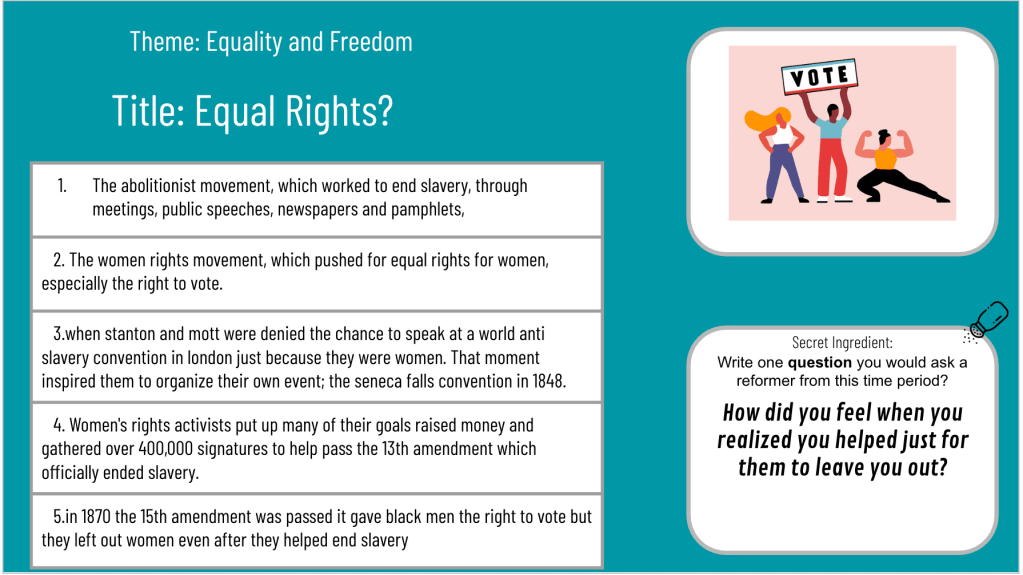
  • Slide 2: Equality and Freedom (5 details + image + secret ingredient question)

I set the timer for 15 minutes per slide. Students had to screenshot their work and use MagicSchool to get AI feedback on it. And again—the feedback conversations were the best part. A student said, “The AI said to change my title but I made mine rhyme and I like it.” I said, “Then why listen to it? It’s a tool—not the truth. You know your purpose better than the AI does.”

Why this worked:

  • Retrieval + creative processing + purposeful reflection
  • AI wasn’t giving answers—it was helping students think about their choices

That’s the mindset we’re trying to build.
Why It All Worked

This week wasn’t about “doing EduProtocols” or “using AI” just because.
It was about intentional layering:

  • Start fast and low-stakes (Quizizz, Thin Slide)
  • Process and reflect (Annotate & Tell, Thick Slide, Frayer)
  • Compare and judge (Superlatives, Battle Royale)
  • Create and apply (Iron Chef, Superlatives)
  • Use AI for feedback, evaluate the answers

Every protocol had a purpose.
Every sequence moved students one step closer to owning their learning—not just memorizing for a test.

That’s how you build real growth. And that’s what made this week work.

The Week That Was In 234

This week was all about keeping the momentum going—connecting reform movements, industrialization, and women’s rights in ways that actually made sense to students. Some lessons flowed just like I hoped. Others forced me to think on the fly (shoutout to the surprise Wi-Fi outage). But through it all, I leaned on purpose-driven protocols, reframing simple tasks to get kids thinking deeper, and using tools—whether AI or no-tech—intentionally.

Monday – Bento Box

Wednesday – Reform Movements, Readings (Stations)

Thursday – Women’s Rights

Monday

I’ve really grown to love the way a well-structured Rack and Stack can turn a test review into something way more meaningful than just a study guide. The trick is keeping it fast, focused, and rooted in retrieval. Monday’s review hit all of those.

Each protocol I used was capped at 5 to 8 minutes. That time limit keeps the pace quick and the energy up. Shoutout to Dominic Helmstetter—this structure is 100% something I borrowed from him, and it just works.

Here’s how we ran it:

  • Annotate and Tell: A quick dive into industrialization sources. Students highlighted key sentences and had to explain what they meant in their own words.
  • Sketch and Tell: We processed key events and concepts visually—simple drawings, one-sentence blurbs. It forced kids to make connections and explain big ideas fast.
  • Frayer Model (Labor Unions): We broke down this concept in four parts—definition, facts, examples, and why it mattered. Took no more than 8 minutes.
  • Cause and Effect (Cotton Gin): Straightforward but powerful. Students made the link between inventions and unintended consequences. This also worked as a setup for Tuesday’s writing.
  • Parafly (Immigration): Students had three paragraphs and rewrote it using clearer language, and discussed how it could be improved. We did it fast, but it stuck.

We ended the day with a Quizizz practice test, and I threw in a little extra credit for any student who scored 100% on their first try. Four students pulled it off. That’s big.

To wrap up the period, I had students begin the Bento Box final—a creative, visual summary showing key differences between life in the North and South. The Bento Box is an Amanda Sandoval creation. They had to use symbols, captions, and organization to demonstrate understanding, not just spit out facts.

Tuesday

Tuesday was test day. No frills. No extras. Just students showing what they’ve learned—and the numbers speak for themselves.

When this unit started, my first-period class had a 35% average on the pretest. By the final test? 85%.

Second period? From 34% to 77%.

Fifth period? 35% to 81%.

Sixth period? 35% to 79%.

You can’t fake that kind of growth. It doesn’t happen by accident. That’s the result of layering protocols, keeping the tasks meaningful, and giving students multiple ways to engage with the content.

After the test, students finished up their Bento Boxes comparing life in the North and South. These were creative, visual, and packed with insight. It’s always a great way to reinforce what we’ve learned without just regurgitating facts.

And if there was still time? We rolled right into the next unit—the Second Great Awakening and Reform Movements. I had an Edpuzzle ready to go as a soft launch into that next wave of content. No wasted minutes.

The transitions were smooth, the growth was real, and the learning kept moving.

Wednesday

Wednesday kicked off the second half of our unit. The first part was focused on life in the North and South—slavery, the cotton gin, immigration, all of it. Now we’re pivoting into reform movements, and based on how heavy the content can feel, I knew I needed to chunk it.

Thin Slide: The Second Great Awakening and Reform

We started class with a Thin Slide about the Second Great Awakening. I gave students a couple paragraphs with the keywords “religion” and “reform” highlighted, and asked them to think about how a religious revival could lead to social change. I also made a local connection to Utopia, Ohio—a small town just down the road from us that people literally named “Utopia” while trying to build a perfect society in the 1840s. That little story gave the kids something to anchor to and brought the big ideas a bit closer to home.

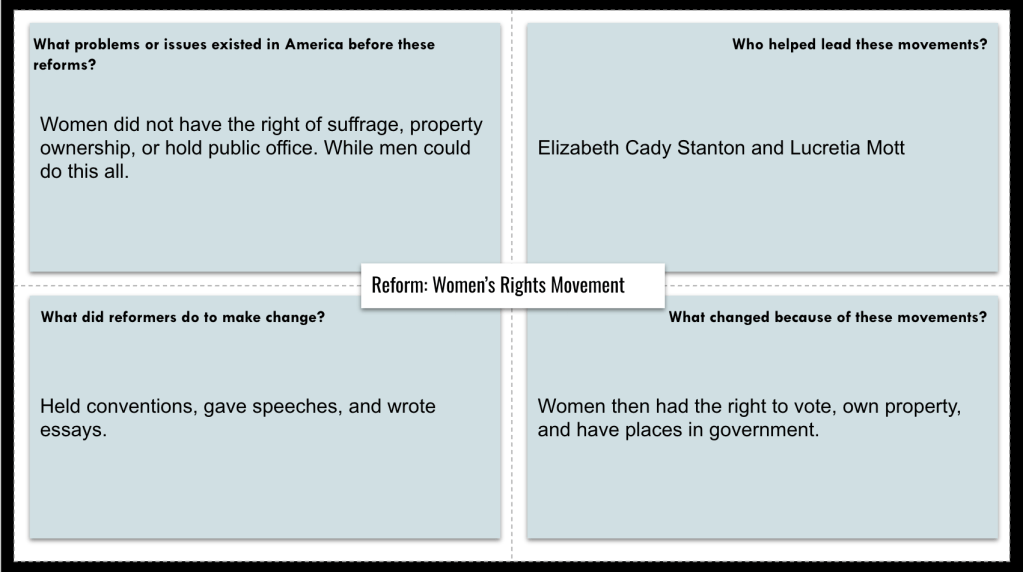
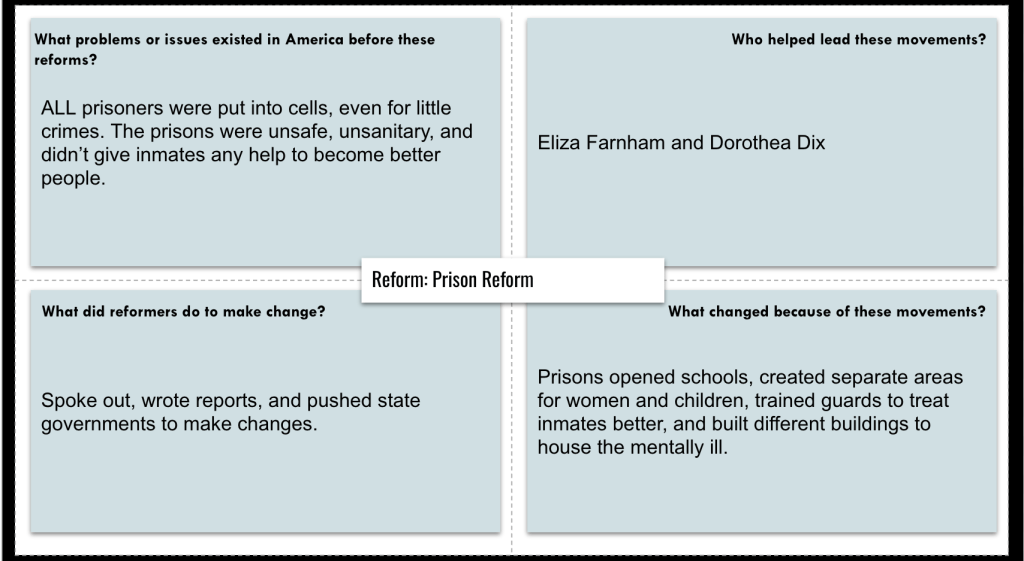
Reform Movement Frayers

Then we jumped into four reform movements: education, prison, temperance, and women’s rights. I gave them one-page readings for each. They had to pick two and fill out a Frayer Model—with prompts like:

  • What were the problems before the reform?
  • Who was involved?
  • How did people push for change?
  • What changed?

It was all about giving them enough structure to make sense of what they read without overwhelming them.

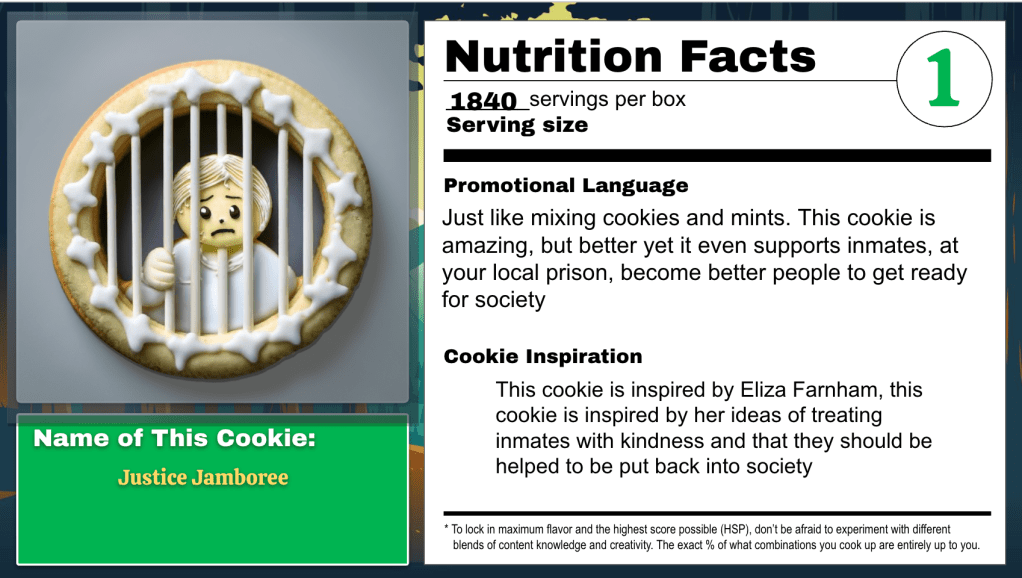
Designing a Reform Movement Cookie

The fun part came next. I had each student pick one reform movement and design a cookie that symbolized it—name, promotional language, and inspiration. Not because I think students should go into advertising, but because it gives them a creative outlet to synthesize what they’ve learned. I didn’t use a fancy template. I just gave them space and a task: connect what you learned to something that feels new and fun.

But I knew this would be a challenge. So I built a MagicSchool Idea Generator for them to use. That’s where the AI came in.

Some kids got it immediately. Others just hit “enter” and copied the first thing that popped up. That led to some awesome conversations about how to prompt AI and how to be more intentional with your thinking. One student said, “It said it couldn’t help me… then gave me a list anyway?” Welcome to AI. That’s how it works sometimes.

We talked about AI literacy without even planning to. We talked about responsible use. About editing. About pushing your thinking. It all came up naturally just by giving students a space to explore and test things out.

Why This Mattered

Some people might ask, “Why let kids use AI for something like this?” And honestly, this is exactly the kind of task where they should.

Because it’s not about copying. It’s about prompting, refining, questioning, and thinking through ideas in real time. These students are growing up in a world where AI isn’t going away. They need practice using it—not just to get an answer, but to develop a thought, build on it, and decide if it’s even worth using.

Watching students try to get the right response from the AI was the best part. Some had to reword their question three or four times before they got something useful. That’s the kind of persistence we want. That’s literacy—not just reading and writing, but digital reasoning, critical thinking, and adaptability.

It wasn’t perfect. But it was meaningful. And it was real.

Thursday

Thursday morning started with one of those classic curveballs—no Wi-Fi. Not ideal, but it forced me to think fast and strip things back to what mattered. I still wanted to build off the reform movement lesson from the day before, but I needed something fully offline that still had purpose.

I knew I wanted the lesson to focus on women’s rights—more specifically, the role suffrage played within that movement. So I kept it simple: what do I want students to understand by the end of class? I wrote that down—“Explain why suffrage was important to the women’s rights movement.”

First, I pulled a section from the textbook about the Seneca Falls Convention and the demands women were fighting for. Then I found a short, 4-minute History Channel video that gave the movement some faces and energy. I was able to play that from my desktop—no internet needed on the student end.

To process all of this, I created a Sketch and Tell-o with three textbook questions and a fourth space that asked:
“Why was suffrage important to the women’s rights movement?”

But even as I was making the copies, I thought to myself—this feels basic. It felt like a worksheet. So I reframed the whole lesson with a challenge.

I started class with this statement:
“Suffrage wasn’t that important to the women’s rights movement—it was just one of many demands.” Change my mind.

That one sentence shifted the tone. Suddenly they weren’t just answering questions—they were preparing a rebuttal. They watched the video, read the section, answered questions, and sketched visuals of what women were fighting for. And at the end, they had to change my mind.

It took some time to click. Some students didn’t totally get what I meant by “change my mind.” I ended up clarifying—I’m asking you to explain why voting was important. Convince me it wasn’t just another demand—it was the demand.

Once I shared an ideal response and modeled what a strong one might look like, the gears started turning. And honestly, the thinking that came out of it was way better than I expected for a no-tech day. The reframing really mattered.

We closed class with a quick Quizizz to check understanding of reform movements, suffrage, and the Seneca Falls Convention. Results were solid—and the engagement? Way better than if I’d just handed them a worksheet.

The Week That Was In 234

This week wasn’t about cramming in new content or racing toward a test—it was about building something that lasted. We used a layered mix of retrieval, reading, analysis, structured writing, and reflection, and each protocol helped us answer a bigger question. Coming off spring break, I knew students would need structure but also some momentum. So I stacked the lessons with intention.

We used Fast & Curious with Quizizz every day, not just to review terms, but to show how retrieval works when it’s spaced out and tied to deeper learning. We layered in Annotate & Tell for close reading and sourcing, and we used Graph & Tell to compare data with perspective. Students analyzed primary sources, revised flawed writing, and built arguments from multiple viewpoints.

We pulled in Archetype Four Square to reframe historical figures like Eli Whitney, then brought it full circle with Class Companion, Thick Slides, and a hands-on word wall review to tie everything together.

It wasn’t flashy, but it was meaningful.

Monday – Primary Sources, Questions

Tuesday – Cotton Gin Rack and Stack

Wednesday – Friday – Life of the Enslaved Rack and Stack

Truth with Sprinkles – Class Companion Link

Monday

We came back from spring break, and I knew better than to pretend everything would pick up right where we left off. After 10 days off, kids needed a ramp—but that didn’t mean the day had to be a throwaway. I wanted to build back some content momentum while still reinforcing writing skills. So I stacked the lesson around a clear essential question and layered the tasks with a mix of retrieval, source analysis, and structured writing.

Quizizz:

We kicked things off with a Quizizz that blended review and preview questions from our industrialization unit. The idea was to warm up their brains without pressure. It gave me a quick read on what stuck over break, what needed refreshing, and where we could push forward.

Primary Source Pack: Framed by a Big Question

The textbook has a set of primary source lessons—usually I tweak or skip them, but this one had potential. The essential question was:
How can changes in work and social life affect a society?

I ran all six sources through AI and had it reword them to be more accessible without losing meaning. I also had AI generate two basic questions per source to give kids a little guidance. After each source, students wrote a 6-word summary that directly tied back to the essential question. That’s what kept the focus. No wandering. Every source came back to that one big idea.

The sources included:

  • A Lowell Mill girl’s journal
  • An immigrant’s first letter home
  • A factory owner’s defense of conditions
  • A political cartoon from the time
  • A protest flyer
  • An anti-immigrant speech

Each gave students a different perspective, and the layering really helped them start to think critically about the intersection of work, immigration, and social change in the 1800s.

Short Answer: Revising a Bad Paragraph

Once we had enough content, I dropped them into a Short Answer task. I gave them a clearly incorrect paragraph that oversimplified everything. Their job was to revise it using evidence from the sources.

Here’s what they had to fix:
Changes in work and population didn’t really affect anything. Most people stayed on farms and worked outside. Immigrants had an easy time finding jobs and were treated fairly. Factory workers only worked a few hours a day, and their jobs were fun and safe. No one complained, and the government made sure everything was perfect.

The responses were solid. Short Answer let them see peer examples and compare their thinking, which always boosts engagement. We weren’t writing full-blown essays—just clean, focused revisions with evidence and reasoning. That’s the kind of writing practice that sticks.

Fast and Curious Again:

To finish class, we went back to Quizizz with a Fast and Curious round. It was the same set as earlier, but now students had background knowledge from the readings and writing. I wanted to see if the scores improved, and they did. Retrieval practice works—especially when the content is layered.

Tuesday

This lesson was all about getting students to see the layers of impact behind Eli Whitney’s invention—not just the praise in textbooks, but the real, complicated ripple effects. We used a mix of protocols to help students analyze, compare, and respond to those consequences.

Quizizz Check – Fast and Curious

We started with a Fast & Curious Quizizz round. The goal was to preview key terms tied to the cotton gin: invention, economy, agriculture, slavery, unintended consequences. I saw right away where the gaps were. Some students had never really connected the cotton gin to slavery. That told me the rest of the lesson needed to go beyond “Eli Whitney invented something helpful.”

Archetype Four Square: Who Was Eli Whitney?

Next, we moved into an Archetype Four Square. After reading a short bio of Eli Whitney, students picked an archetype they felt best represented him. Then we had them support it with evidence from the reading and make a historical or pop culture comparison. It sparked some great thinking. Was he a hero? A sage? A magician?

Annotate & Tell

From there, we jumped into an Annotate & Tell using two primary sources—newspaper articles from 1818 and 1825 celebrating the cotton gin. Students highlighted quotes that showed the invention’s impact: increased cotton production, land value, and Southern prosperity. Then we paused and asked the real question: What’s missing from this praise?

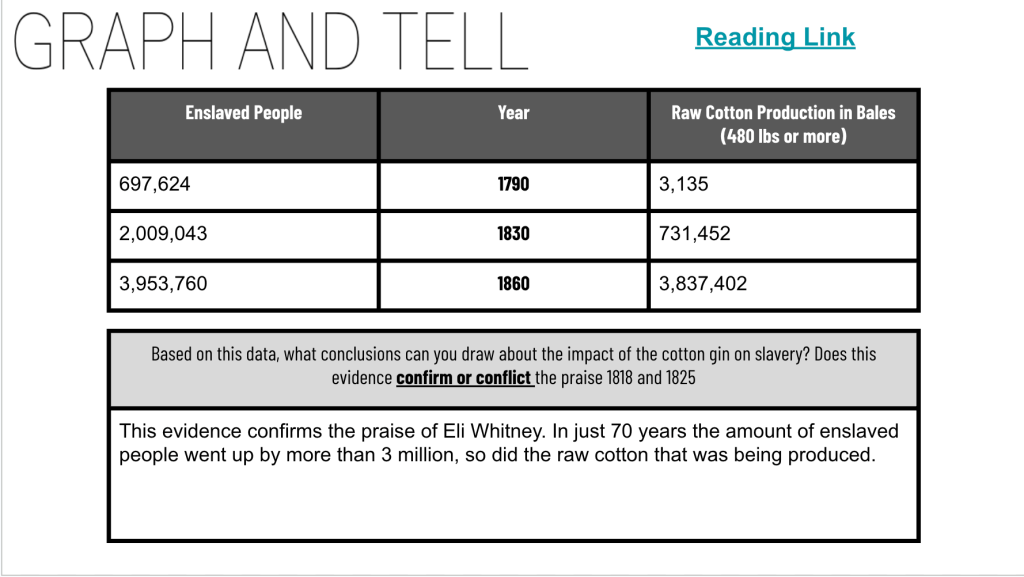
Graph & Tell

To bring in the other side, students examined a chart showing the rise of enslaved persons alongside the rise of cotton production. This was our Graph & Tell moment. They filled in a chart and wrote a short summary of what they noticed: a clear correlation between more cotton and more slavery. Then we pushed further—Does this data support or challenge what the primary sources said? That question changed everything.

Class Companion

To wrap things up, students went to Class Companion and wrote from a chosen point of view: Eli Whitney, a plantation owner, an enslaved person, or a Northern factory worker. Their task was to explain the consequences of the cotton gin from that lens, including both short- and long-term effects.

The AI feedback blew me away. It didn’t just give grammar tips—it recognized their POV and gave specific feedback tied to it. For example, students writing as enslaved people got suggestions on expressing emotion or explaining hardship more clearly. It was targeted, authentic, and helped them revise in real time.

Wednesday – Friday

Wednesday through Friday were choppy. State testing threw off our schedule, kids were in and out, and nothing was consistent. But in some ways, that made the lesson better. We had space to slow down and focus on the people most impacted by what we’d learned earlier in the week—enslaved individuals.

After exploring the unintended consequences of the cotton gin, we shifted into the question: What was life like for the people whose lives were changed by it? It wasn’t about moving on—it was about going deeper.

Starting with Language

We began with a short but important conversation about how we talk about people in history. I introduced person-first language:

  • “enslaved person” instead of “slave”
  • “enslaver” instead of “master”
  • “freedom seeker” instead of “runaway”

I told students these words don’t just sound better—they shift how we see people. They’re human first. Not property, not background characters in someone else’s story. The kids caught on quickly and started using the new terms without being reminded. That one shift helped everything else land better.

Quizizz

Next, we ran a Quizizz. I built it around key vocabulary like abolitionist, resistance, enslaver, overseer, and oppression. I also kept a few questions from earlier in the week to bring back some of the Eli Whitney and cotton gin context. The goal wasn’t a grade—it was to activate thinking, catch misconceptions, and see what needed clearing up before we hit the heavier stuff.

A lot of kids didn’t fully understand “resistance,” so that told me where to lean in next.

EdPuzzle

We watched a high school-level EdPuzzle on slavery and resistance. I picked the 9–12 version on purpose—it talked about the Underground Railroad as a metaphor instead of a literal train line. That helped break a common misconception right away.

More importantly, the video gave a broader definition of resistance. It wasn’t just running away—it was breaking tools, learning to read, preserving family bonds, working slowly on purpose, singing coded messages in songs. It gave them a new way to understand how enslaved people fought back.

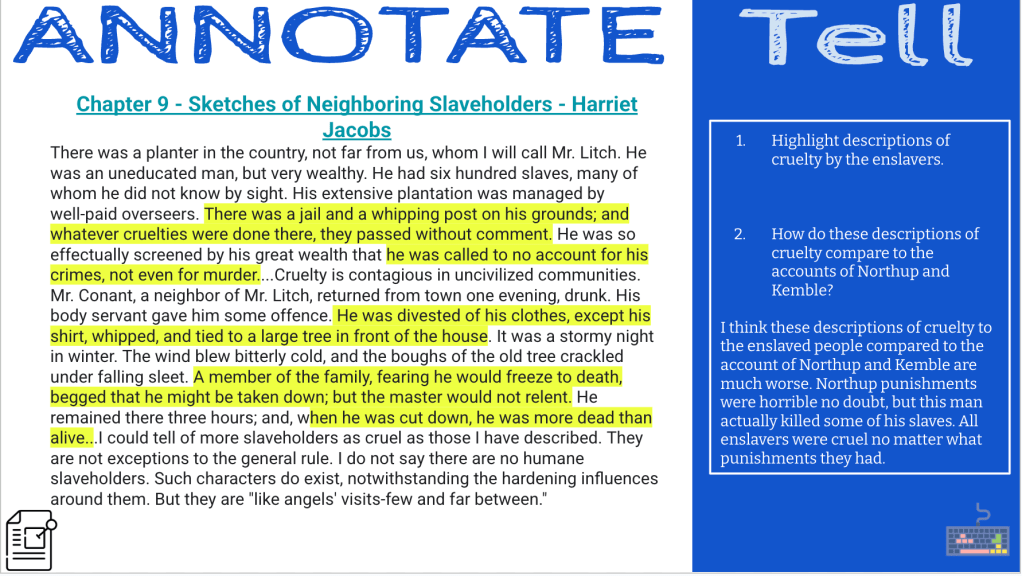
Annotate & Tell

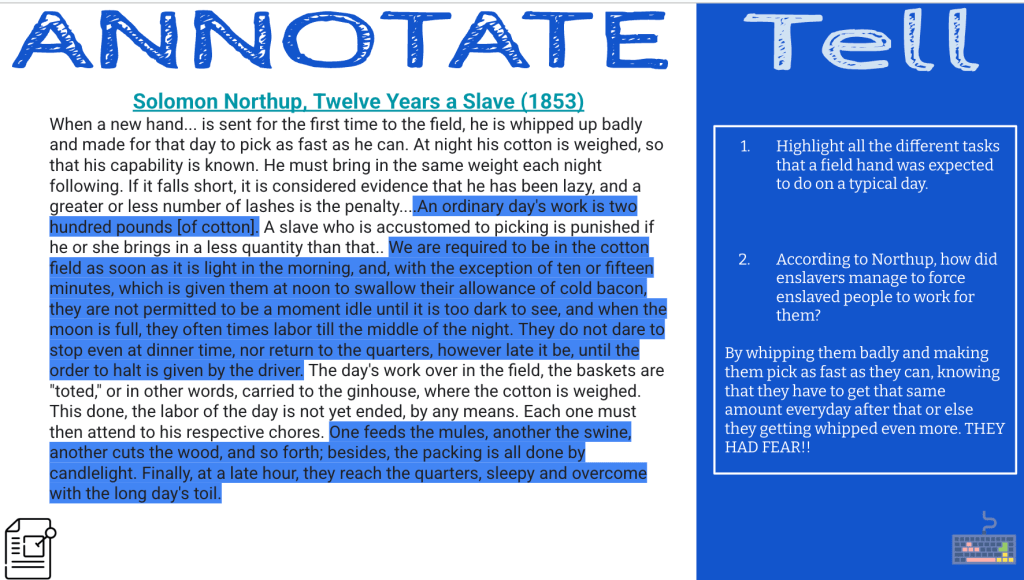
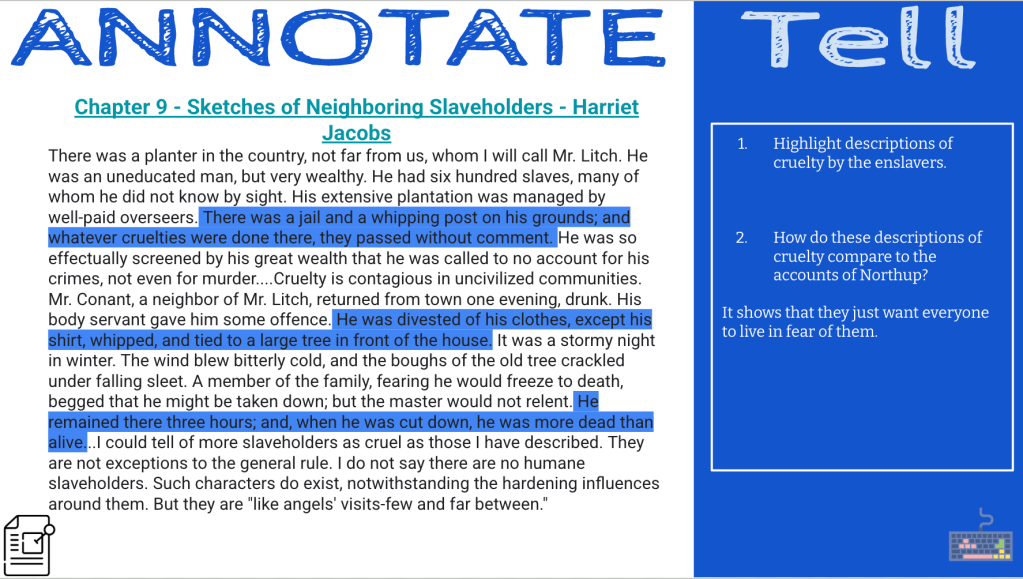
After that, we moved into Annotate and Tell with two powerful excerpts:

  • Solomon Northup from Twelve Years a Slave
  • Harriet Jacobs from Incidents in the Life of a Slave Girl

We started with short background blurbs so students knew who these people were and why their stories mattered. Then we read each passage together, pausing to highlight key phrases and answer focused questions.

Northup described long days in the field, being forced to pick 200 pounds of cotton, being punished if you fell short, and chores that lasted well into the night. Jacobs described the cruelty and control that came with wealth—enslavers who tortured without consequence and normalized abuse.

Thick Slide: Be the Abolitionist

Then it was time to apply what they learned. Students created a Thick Slide from the point of view of an abolitionist trying to convince others that slavery must end. Their slide had to include:

  • Three quotes from the readings that exposed the reality of slavery
  • An explanation of why those quotes mattered
  • One form of resistance from the EdPuzzle and why it was important
  • A Human Spotlight featuring Harriet Jacobs, Solomon Northup, or someone from the video
  • A picture and a short caption telling that person’s story—what they saw, suffered, or stood for

Some students picked quotes that showed the physical brutality. Others focused on how people kept resisting anyway. Their captions were sharp, and a few were honestly emotional. They weren’t just checking boxes—they were making a case.

Teaching the AI Workflow

After they built their slides, I walked them through a quick Chromebook skill:
Ctrl + Shift + Window Switcher = screenshot tool.

Then I showed them how to upload that screenshot into a MagicSchool chatbot I had set up. I modeled how to ask for specific feedback. As I always say, “If you give the AI tool crappy prompts, you’re going to get crap back.”

The whole point was to show them how to use AI after the thinking is done—to reflect, revise, and improve. Not to let AI do it all for them.

Word Wall Review

To wrap everything up, we did a drag-and-drop word wall. Students sorted terms and ideas between North and South—factory, agriculture, slavery, resistance, cotton, railroads, canals, unions, etc. It tied together everything we’ve covered the last two weeks in one quick review. Fast, visual, and a good reset after a deep few days.

Truth With Sprinkles

On Friday, I wanted something new for retrieval practice. I began class with a Class Companion – but with a twist!

I had AI create 2 paragraphs with 4 historical errors. Here is what AI came up with:

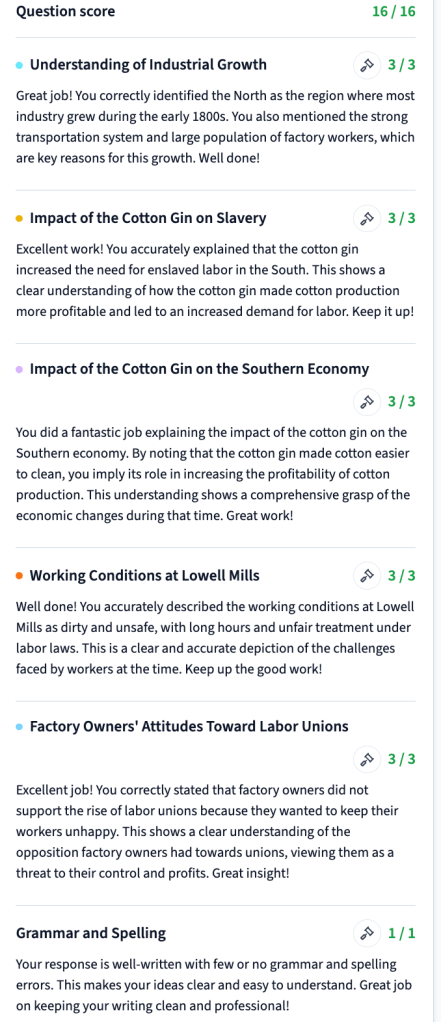
In the early 1800s, the United States began to shift from farming to factory work. Most industry grew in the South because of its strong transportation system and large population of factory workers. One major invention that helped speed up this progress was the cotton gin. Created by Eli Whitney, this machine made cotton easier to clean and reduced the need for enslaved labor in the South.

Meanwhile, in Massachusetts, young women flocked to places like Lowell Mills for clean and safe factory jobs. They worked short hours and were treated fairly under new labor laws. Many factory owners supported the rise of labor unions because they wanted to keep their workers happy. These early unions helped workers demand better conditions with the full support of the people in charge.

I called it “Truth with Sprinkles” – sprinkles of fiction, that is! I brought sprinkled donuts for my 1st period because they worked so damn hard on the state test. It was unbelievable. They wrote their hearts out and gave it everything they had – it was awesome.

So, as they were eating their donuts (some with chocolate frosting and sprinkles) they were finding the sprinkles of fiction in the paragraphs. They were historical detectives.

I set up the Class Companion for only 1 submission – I didn’t want them submitting right away and trying to get the answers. They were discussing, analyzing, and acting as historical detectives fixing the errors. This was an awesome retrieval practice. Class Companion gave them great feedback on each error they tried to correct – it worked out so well!

The Week That Was In 234

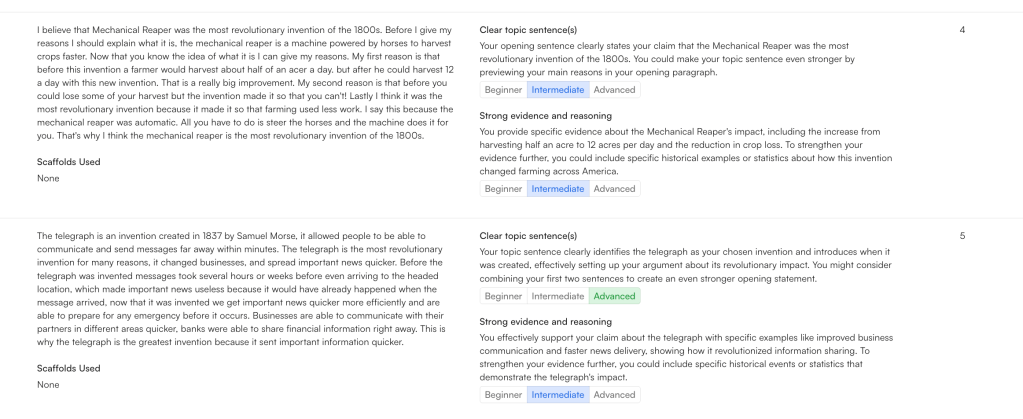
This week was all about variety, structure, and student voice—anchored by a solid lineup of EduProtocols. I leaned on Fast & Curious for foundational vocab, layered in Annotate & Tell to break down complex readings, used Number Mania to push students toward using evidence, and wrapped lessons with Short Answer and Nacho Paragraphs to bring writing and thinking together. We even threw in some creative fun with Thin Slides, Craft-a-Cola, and a few MagicSchool tools to help students prompt and produce in more engaging ways. It wasn’t just about covering content—it was about designing experiences that stuck.

Monday – Industrialization Rack and Stack

Tuesday – Inventions Rack and Stack

Wednesday – Lowell Mills Rack and Stack

Thursday – Labor Unions Reading

Monday

We kicked off the week with a lesson on industrialization and how it changed the northern states—and I tried a Rack and Stack combo I was really happy with. It wasn’t flashy, but it had purpose at every step. Each EduProtocol built on the last, and everything came back to our guiding question: How did industrialization change the northern states?

Fast and Curious: Vocab First

We opened with a Gimkit Fast and Curious using vocabulary that kids were likely to struggle with—rivers, factories, mass production, loom, spinning, sewing machine. A lot of times I assume kids know basic words, but they don’t. After the first round, I gave feedback and cleared up confusion around things like loom and mass production. Then we ran it again. By the second round, scores had gone way up—evidence that repetition and feedback work.

Thin Slide: Why the North?

Next, I used a Thin Slide variation I learned from Justin Unruh. Students were asked to answer the question: Why did industrialization occur more in the North? using the keywords rivers and factories. They found or created an image and gave a one-sentence explanation. They had 8 minutes total—then they shared live, 8 seconds per student. This was a great way to preview the bigger concepts without overwhelming them.

Annotate and Tell: 3 Phases of Industrialization

We moved on to an Annotate and Tell with a short reading on the three phases of industrialization. Students highlighted the three phases in yellow and highlighted any inventions or machines in blue. The reading wasn’t long, but it was packed with information. I asked them two big questions to process:

  • What are the three phases of industrialization, and how did each one change the way goods were made?
  • How did machines like looms and sewing machines change the way people worked in factories?

Kids worked in partners to discuss and respond, and I was impressed with how well they broke it down.

Sketch & Tell Comic Edition: Visualizing the Phases

After the reading, I had students create a 3-frame comic using the Sketch and Tell Comic Edition to show how the three phases changed life and work. I got this idea from Justin Unruh again, and it’s become one of my favorite go-to protocols for visual processing. Instead of just retelling, students visualized each stage and added one sentence of explanation. This helped students slow down and make sense of how the shift happened over time—from breaking down tasks, to building factories, to powering machines.
Padlet Thin Slide: Bringing It Back to the Big Question

To wrap it up, we returned to our original question—How did industrialization change the northern states?—with a final Thin Slide posted on Padlet. I gave them 5 minutes to respond using what they had just learned, and they had to include at least one piece of evidence from the comic or Annotate and Tell. This helped me see who really got it and who might need more support.

It was a solid Rack and Stack, and I loved how each piece of the lesson connected. The goal wasn’t to cover everything—it was to build background, layer the concepts, and give students multiple ways to process. That’s what makes EduProtocols work.

Tuesday

I’ll be honest—Monday didn’t go how I hoped. The engagement across all my classes hovered around 25%, and that’s not something I’m used to. It frustrated me, and it forced me to take a step back. I told the students on Tuesday that I intentionally design lessons to build on familiar ideas. I don’t want them to feel overwhelmed—but I also don’t want them to zone out.

So I had to flip the script.

Fast and Curious: Quizizz Rebound

We opened class with a Fast and Curious on Quizizz using questions tied directly to industrialization in the North. This wasn’t just vocab—it was context-based. Words like steamboat, reaper, plow, and telegraph were sprinkled in. I noticed how often students missed even basic terms. Sometimes we assume students know what words like “petition” or “shift” mean, but they don’t. The data from Quizizz told me exactly where to go next.

Frayer Models With a Twist

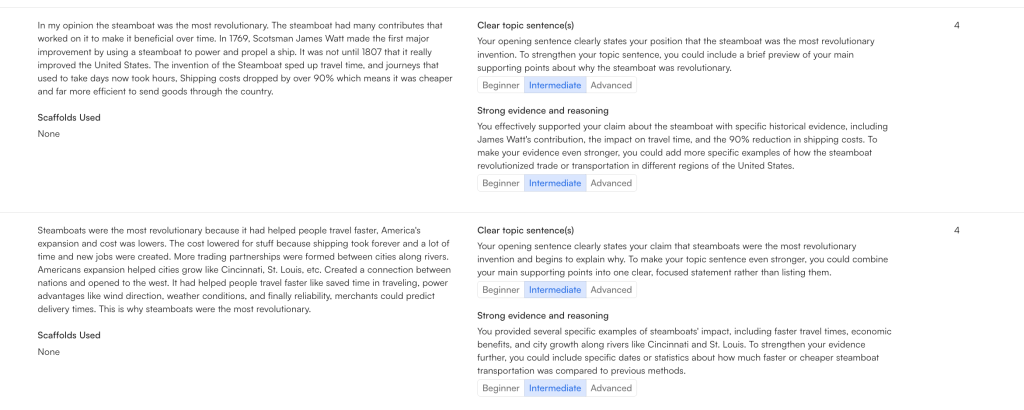
We jumped into a Frayer activity using the textbook reading on four major inventions of the 1800s: the steamboat, the mechanical reaper, the steel plow, and the telegraph. But this wasn’t just a regular Frayer. I added some chaos—two dice rolls per invention. The first determined how many bullet points they had to write, the second decided how many words each bullet needed. This created structure, accountability, and a layer of challenge.

Chatbot Collaboration: Magic School AI

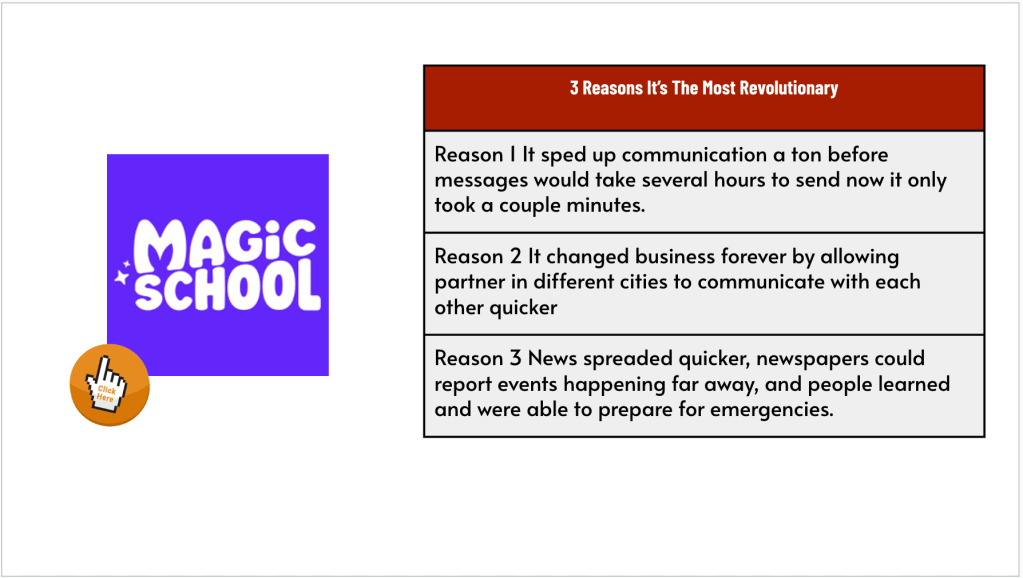
Next, I had students select the invention they thought was the most revolutionary. Using Magic School’s chatbot, they prompted the AI to speak as if it were that invention. They asked follow-up questions and gathered more support. This was one of my favorite moments—watching students debate themselves through the screen, pushing AI for deeper evidence.

Short Answer: Writing With a Purpose

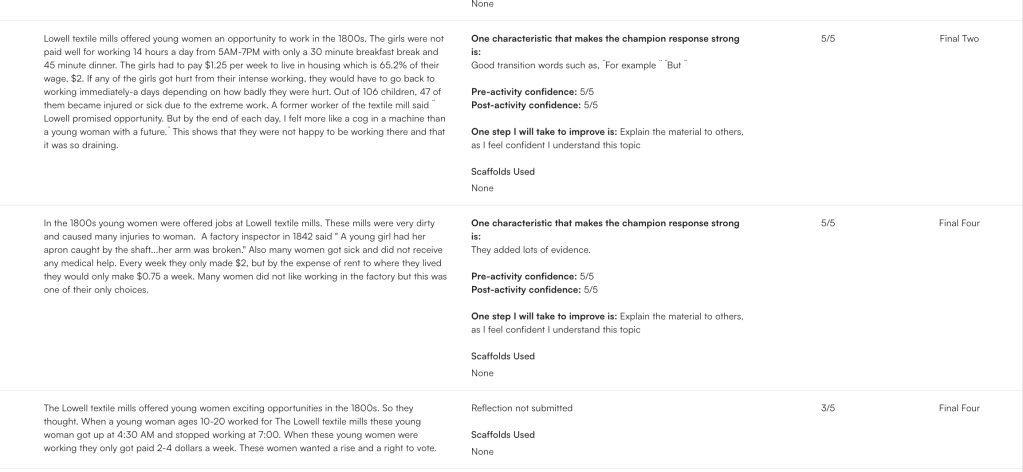
We wrapped up with a Quick Write on ShortAnswer. This tool has been a game-changer. I selected two rubric elements: clear use of evidence and strong conventions. The AI gave instant feedback and categorized responses as beginner, intermediate, or advanced. Then it added up class scores to see if we hit our class goal. Three of my four classes crushed it.

But the best part? I disabled copy and paste. The words they wrote were their own.

I told them if they hit the class goal, I’d wipe away their Monday mess. They locked in and crushed it. Students were writing. For real. Because the task had structure, purpose, and a chance to improve.

Wednesday

Today’s lesson was all about one sentence:
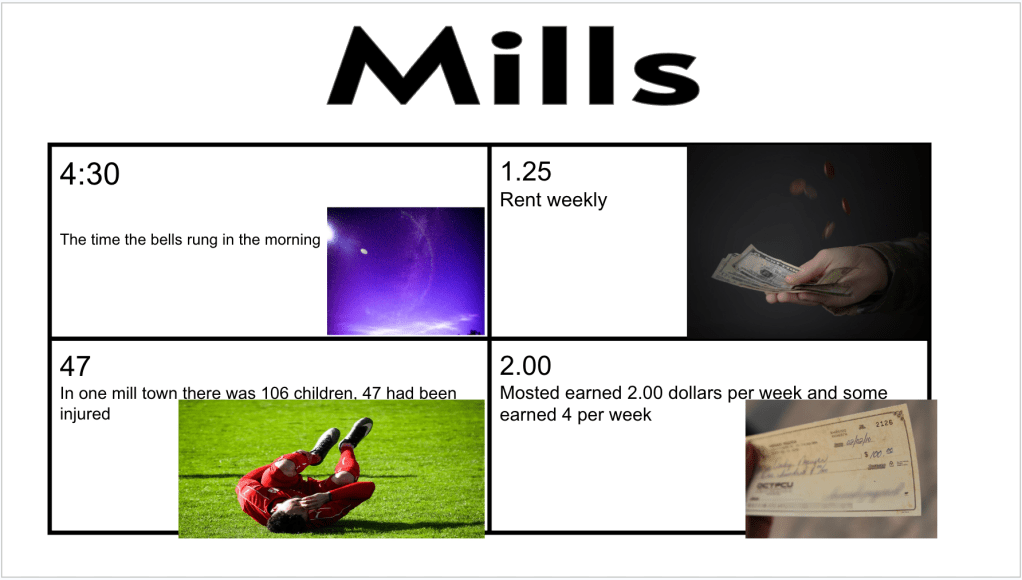
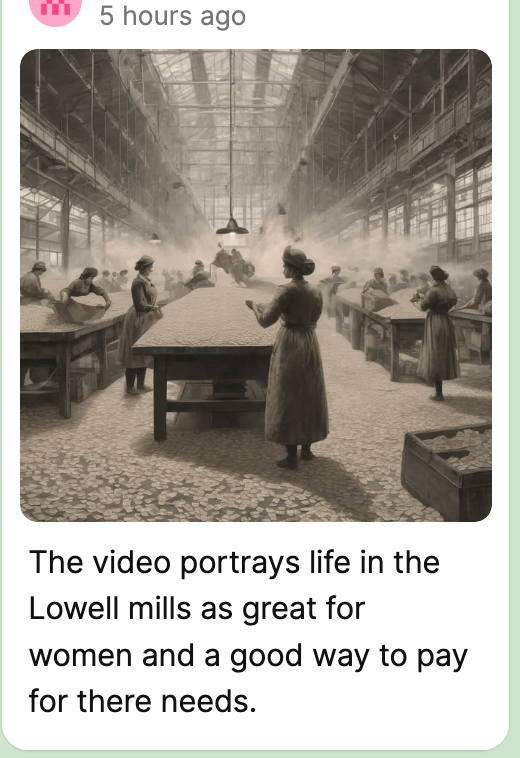
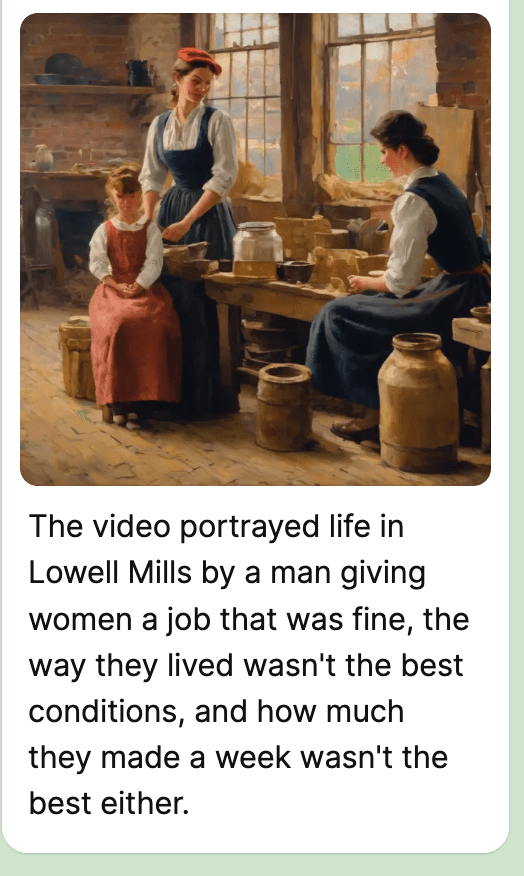
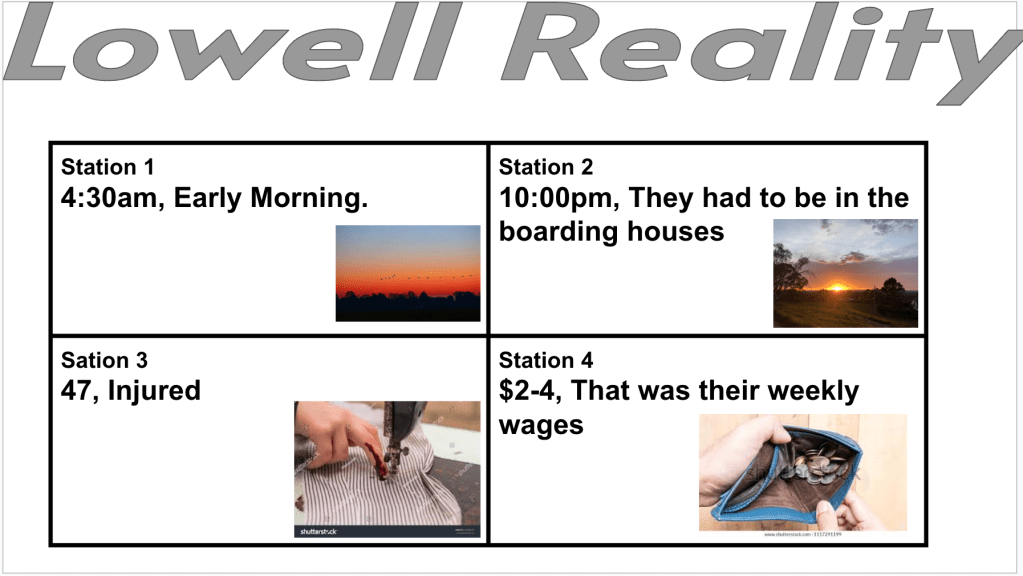
“The Lowell Mill Girls had an extraordinary opportunity.”
That was it. That was the line that carried us through the whole class. My goal? Get students to keep circling back to that claim—support it, refute it, challenge it, reframe it. Think about it, talk about it, write about it.

I used a Rack and Stack of familiar EduProtocols, but I tried to tweak the flow a little to hit a rhythm. And honestly, it worked.

Fast and Curious: Start with What They Don’t Know

We kicked things off with a Fast and Curious using Gimkit. Vocabulary was pulled straight from the lesson:
boardinghouse, wage, petition, strike, shift.
You’d be surprised how many students don’t know what a “shift” is. Or “petition.” Or “boardinghouse.” After one 3-minute round and some direct feedback, we ran it again—and it made a big difference. The repetition and immediate correction helped lock it in. And it gave us a foundation to move forward.

EdPuzzle + Thin Slide = Instant Reflection

Next, we watched a 4-minute EdPuzzle about the Lowell Mill Girls. I embedded a Thin Slide right in the middle and brought the original claim back:
“Did this video support that statement or not?”
Some said yes—they got paid, they had housing. Others said no—the pay was awful, the work was grueling, and the living conditions weren’t great either. It was cool to see students start forming opinions and backing them up with specific parts of the video. The Thin Slide forced them to pick a side and start thinking critically before we even got to the meat of the lesson.

Number Mania: Let the Numbers Talk

Then we moved into Number Mania. Originally, I had six stations planned, each with a short reading—some primary, some secondary. But after thinking about cognitive load (and remembering that part in Blake Harvard’s book), I cut it down to four. Best decision I made all week.

At each station, students had to pick a number from the reading that could be used to refute the original statement. Of course, we had to stop and break down what “refute” actually meant—another word straight off the state test that most students didn’t know.

To make it even more fun (and to fight copy-paste laziness), I rolled dice. The first die told them how many words they had to use. That forced them to be intentional and selective with their evidence. Every station, every round, they got better at it.

Short Answer x Nacho Paragraph: Final Hit

To bring it all together, we used the Nacho Paragraph protocol inside Short Answer. I told students to copy and paste the original statement and revise it. Fix it. Refute it. Use the numbers and facts they just found in the Number Mania.

We ran it Battle Royale style. They saw each other’s answers. They compared. They got feedback. And most importantly, they thought.

They were engaged. They weren’t writing because I told them to. They were writing because they had something to say.

Thursday

After a deep dive into the Lowell Mill Girls earlier in the week, I wanted to extend the conversation—this time with a focus on labor unions and how the legacy of early industrial labor still echoes today.

We kicked things off with a short, one-page reading about the Lowell Mill Girls and labor unions. The reading did a solid job tying the historical context to modern labor movements. Students answered five questions to check comprehension and pull key ideas.

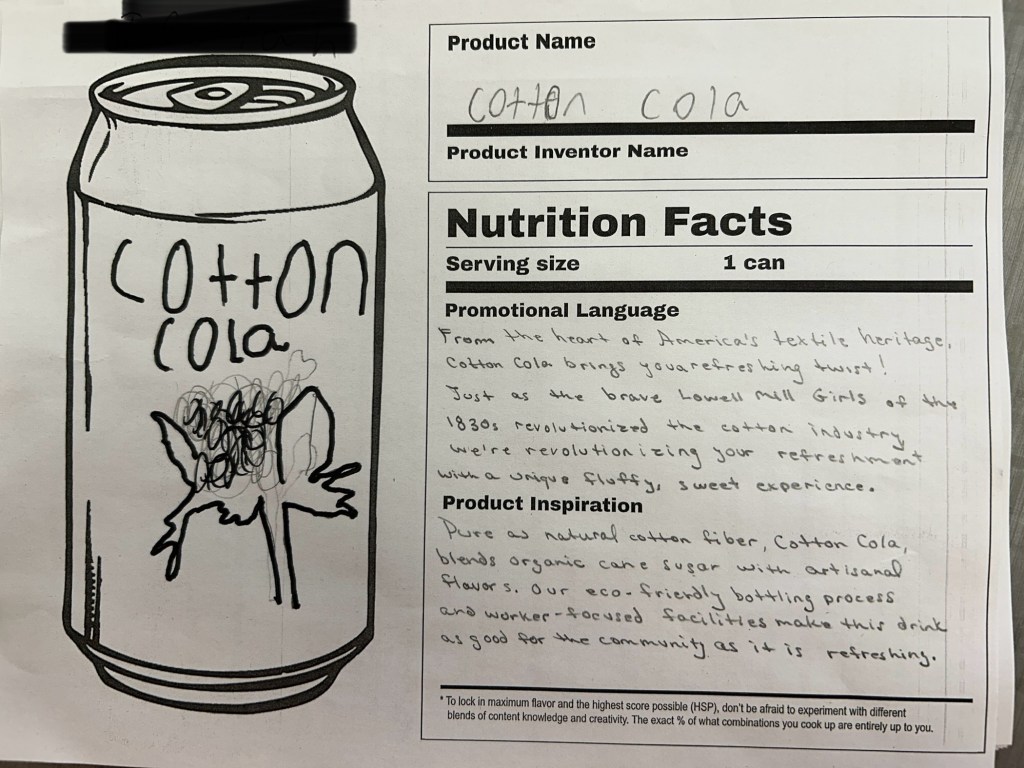
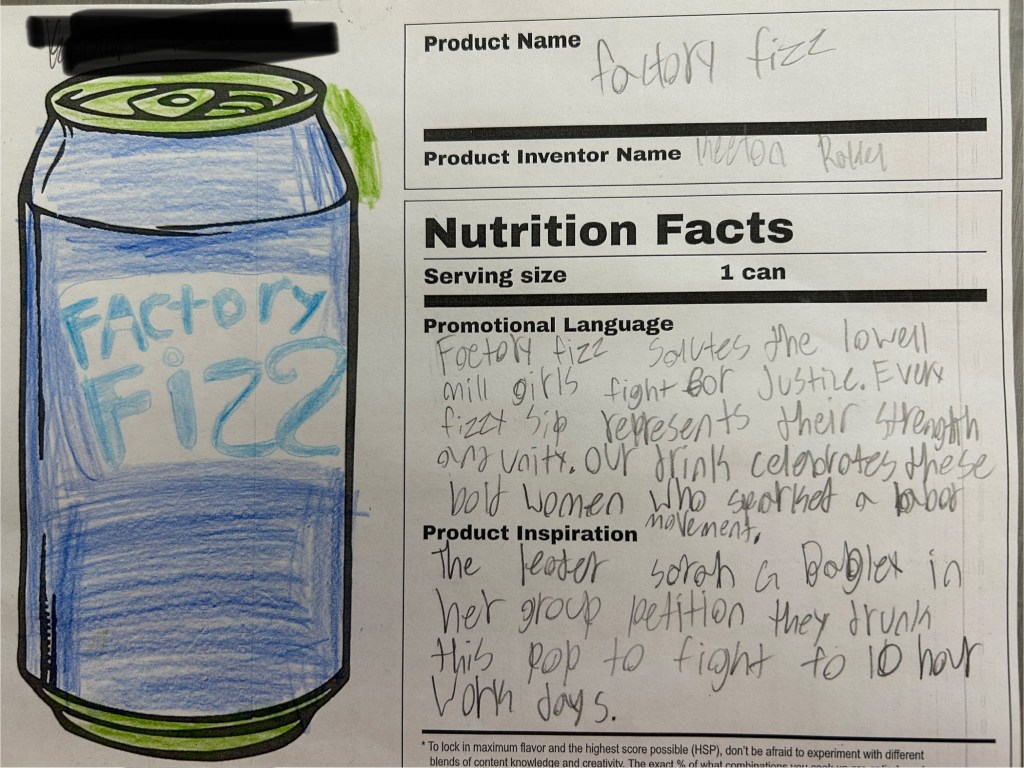
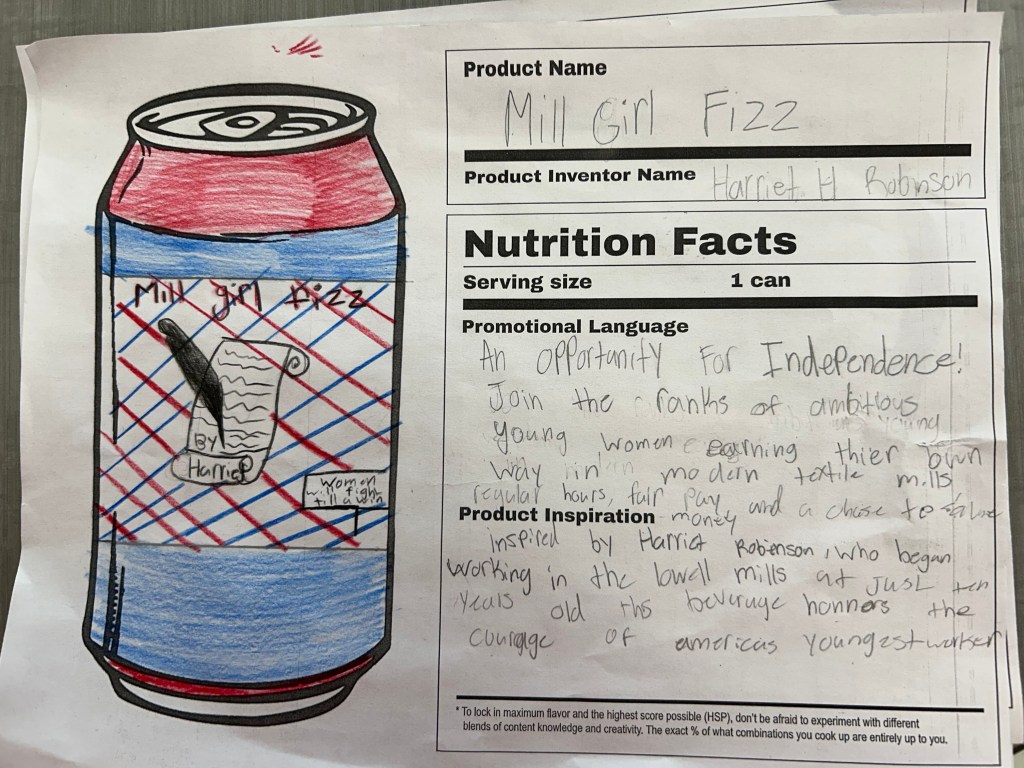
Then we pivoted into something a little more creative: a template from EMC² Learning called Craft-a-Cola.

Here’s the setup:
Students had to design a pop can inspired by the Lowell Mill Girls and the rise of labor unions. Their can needed:

  • A creative soda name
  • A slogan or promotional phrase
  • A short write-up explaining the historical inspiration behind their product

This was a fun twist, but I knew right away some students would struggle with generating ideas. So I built a Magic School classroom with a custom idea generator chatbot. Students used it to brainstorm potential pop names and promotional language.

Here’s what I learned: 8th graders don’t always know how to prompt clearly. At first, a lot of the results were pretty off—or the bot responded with something like “I can’t do that, but here’s a suggestion…” It turned into an unexpected mini-lesson on how to write better prompts.

We took a few minutes to break down what makes a good prompt, rewrote some together, and suddenly the ideas started flowing.

What I liked most about today’s lesson:

  • It gave students a new way to process content they’ve been learning about all week
  • It tied creative thinking to historical understanding
  • It sneakily taught them better AI prompting skills without me planning for that to happen

Some of their designs were pretty awesome.
A few were flat-out hilarious.
But all of them reflected some understanding of how labor unions began and why they mattered—proof that even a pop can can tell a powerful story.

The Week That Was In 234

This week was all about using EduProtocols to deepen understanding and get students thinking critically about history. From Parafly for paraphrasing complex texts to Thick Slides for sequencing and comparing key events, we focused on meaningful engagement. ShortAnswer’s Quick Write gave students real-time AI feedback on their writing, while Map & Tell helped visualize territorial disputes. Sketch & Tell-O and Annotate & Tell made sure students weren’t just memorizing but actually processing history. Layering these protocols together made for a strong week of learning!

Monday – Test Review

Wednesday – Utopia, OH Rack and Stack

Thursday – Margaret Garner Rack and Stack

Friday – US Early Economy Rack and Stack

Monday and Tuesday

Monday was all about preparing for the Westward Expansion test. I originally planned a standard review, but a Sunday afternoon phone call with my friend Dominic Helmstetter changed that. He wanted to share with me what his understanding was of the the Great American Race. His idea—the Great American Race was a rapid-fire series of EduProtocols with Five-minute bursts of Parafly, Thin Slides, Annotate and Tell, and more, followed by a Quizizz mastery check where students had to get 100%. My response? That’s not how I’ve done the Great American Race before… but I love it.

So, I ran with it. I lined up five different EduProtocols, each tied to a major concept in the unit:

  • Parafly → Mormon migration
  • Annotate and Tell → Texas independence
  • Sketch and Tell-O → Oregon Trail
  • Frayer Model → Manifest Destiny
  • Cause & Effect Organizer → Mexican-American War

Each round lasted 6-8 minutes. I encouraged students to complete as much as they could from memory before checking resources. To support them, I had AI generate concise readings summarizing key points from our lessons. We wrapped up the period with a Quizizz practice test, and the class averages landed between 44% and 65%. Not great.

At first, it felt discouraging. But my friend Corbin Moore reminded me—it’s not about achievement, it’s about growth. That shifted my mindset.

Test Day

Tuesday was test day, and I kept my usual grading system:

  • Multiple-choice (content knowledge) → Taken on McGraw Hill’s site
  • Short answer/extended response (writing/critical thinking) → Completed on Class Companion

The results?

  • Multiple-choice averages: 89%, 74%, 85%, and 89%
  • Short answer growth: Huge improvement from the pre-test

It’s easy to get caught up in numbers, but seeing how much my students progressed from struggling with the concepts on Monday to confidently tackling the test on Tuesday was a win.

This version of the Great American Race might not have been the original, but it was an exciting, high-energy way to cycle through multiple ways of processing information—and it’s something I’ll definitely refine and try again.

Wednesday

Wednesday, I wanted to mix things up and bring in local history. There’s a tiny town in Clermont County called Utopia, OH—a place I’ve been fascinated with since I was a kid. It’s right on the river, barely noticeable, but packed with history. Why was it called Utopia? What made people think they could build a perfect society there?

I connected this lesson to westward expansion by framing it around the Panic of 1837. Many Americans were financially struggling and had to make tough choices—head west for a new start, scrape by where they were, or try to create a utopia, a so-called perfect society. That’s exactly what happened in Utopia, OH, where three different groups attempted (and failed) to build their ideal communities.

Thin Slides: Creating a Utopia

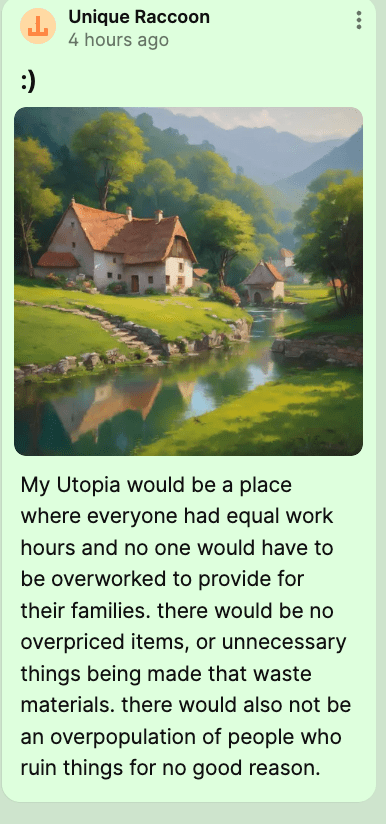
We kicked things off with a Thin Slide on Padlet, where I asked students:

What would your ideal utopia or perfect society look like?

They had to describe it and generate an AI image to represent their vision. The responses were fantastic—some created futuristic cities, others imagined peaceful rural communities, and of course, some just wanted an unlimited pizza society.

Video & Frayer Models: Learning the History of Utopia, OH

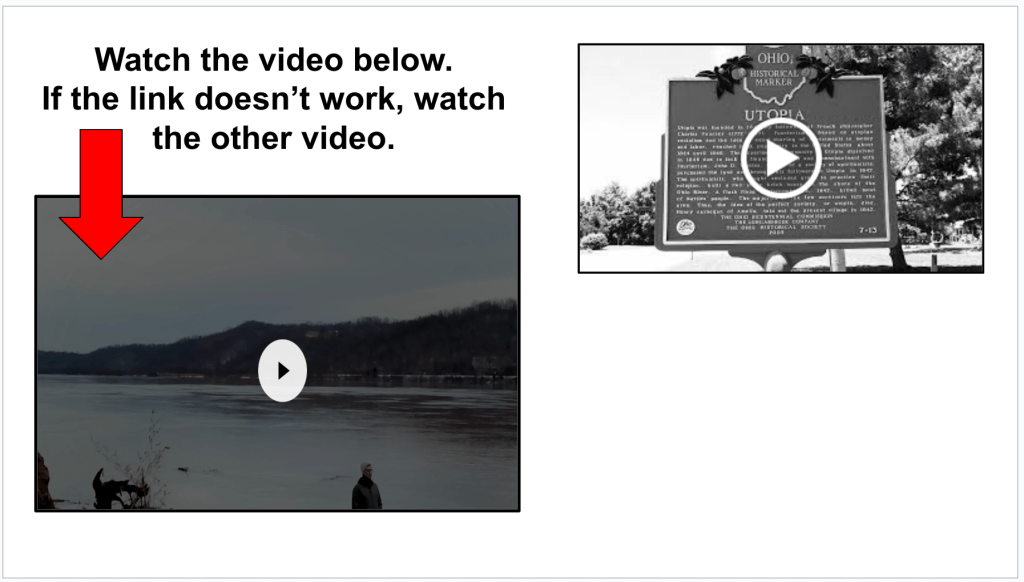
Next, we watched a video about Utopia, OH, which connected the town’s origins to the Declaration of Independence and the pursuit of happiness. The video broke down the three groups who tried (and failed) to build a perfect society in Utopia:

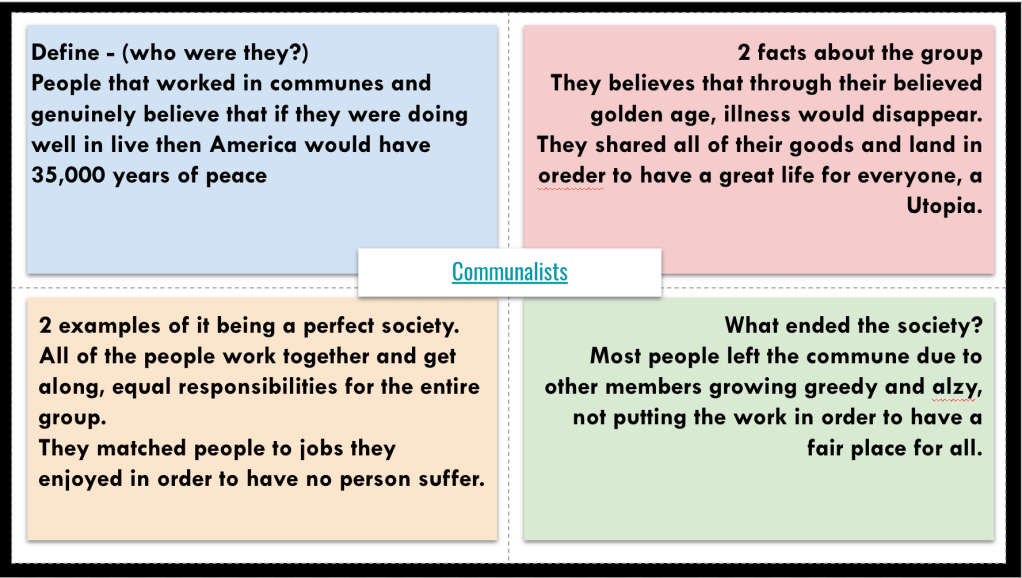
  1. Communalists – A group who shared everything but fell apart due to financial struggles.
  2. Spiritualists – Believed in connecting with spirits but were wiped out in a flood.
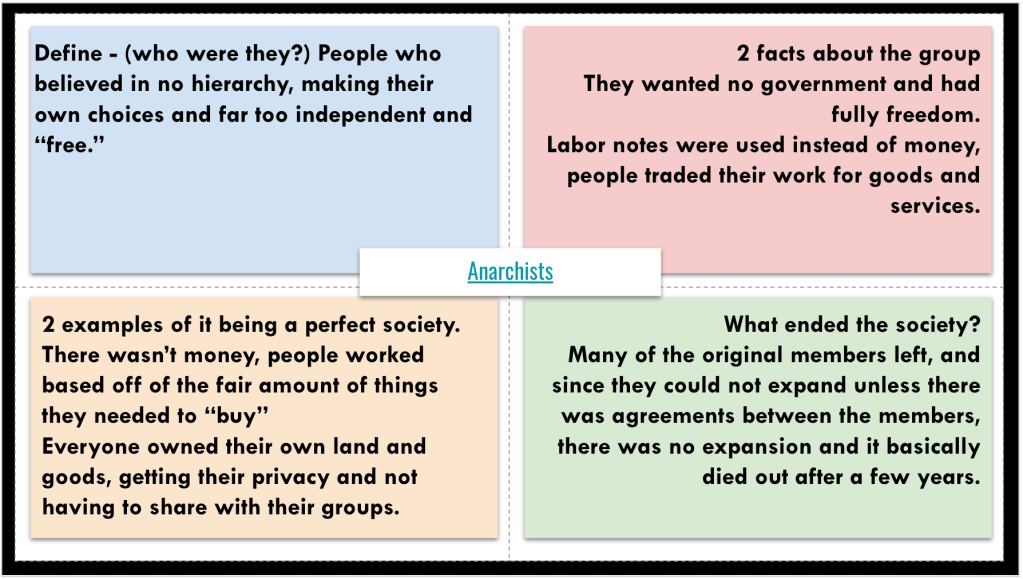
  3. Anarchists – Tried to live without rules, but well… that didn’t work.

Students then read about these groups and took notes using a Frayer Model, categorizing each society’s beliefs, goals, struggles, and ultimate failure.

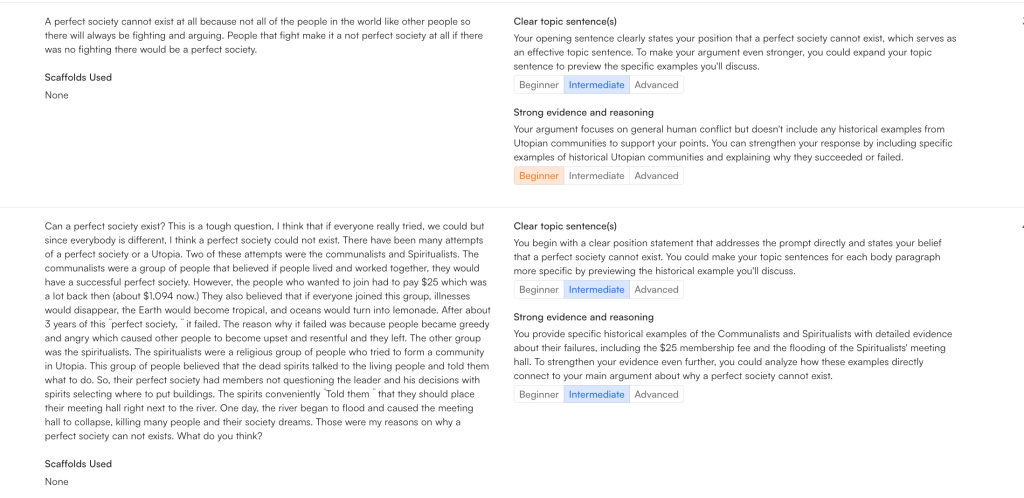
ShortAnswer Quick Write: Can a Perfect Society Exist?

To wrap up the lesson, I had students respond to the question:

Can a perfect society ever exist?

We used ShortAnswer’s Quick Write feature, which is currently in beta. This tool gives AI-generated feedback based on selected writing components—in this case, I chose “use of clear evidence and reasoning.”

  • Students submitted their responses.
  • AI provided instant feedback and a score (1 = Beginner, 2 = Intermediate, 3 = Advanced).
  • The class saw their combined goal score (though I still wish I knew how it was calculated or if I could set it myself).
  • At the end, students reflected on their feedback, making it a true learning experience rather than just another assignment.

I loved seeing how engaged students were with creating their own utopias, analyzing failed ones, and debating whether perfection is even possible. This lesson combined local history, critical thinking, and writing practice in a way that made students care about a little town they had never even heard of before.

Thursday

On Thursday, we kicked off our new unit on the differences between the North and South. I wanted to start with a local history story that powerfully illustrates these divisions—one that is both shocking and deeply revealing. That story was the case of Margaret Garner, an enslaved woman who escaped across the Ohio River to Cincinnati with her family in 1856. When slave catchers arrived to capture them, Margaret made the heartbreaking decision to end her daughter’s life rather than see her forced back into slavery.

This case wasn’t just about one woman—it reflected the moral and legal conflicts between the North and South. Abolitionists argued she should be put on trial for murder, as this would acknowledge her personhood, while pro-slavery forces demanded her return as property. In the end, the Ohio courts ruled in favor of the South, reinforcing how fragile “freedom” really was in free states.

Framing the Lesson

To get students thinking about the significance of this case, I opened with a quote from the story, prompting them to reflect on the thin line between freedom and slavery. I asked: What does Margaret Garner’s story tell us about the differences between North and South?

From there, we moved into a series of activities designed to break down this historical event in ways that encouraged deep thinking.

Thick Slide: Mapping the Story

Students read the Margaret Garner story and summarized the sequence of events using a Thick Slide with the Somebody, Wanted, But, So, Then format. They added:

  • A title summarizing the event
  • Two images representing key aspects of the story
  • A comparison chart between the North and South, based on what they learned

This helped students visualize the story and understand how it reflected broader sectional tensions.

Annotate & Tell: Comparing Perspectives

We then examined two primary sources—one from an abolitionist newspaper and the other from a pro-slavery newspaper. Both presented vastly different takes on Margaret Garner’s actions.

Students highlighted:

  • Abolitionist Source: Phrases that framed Margaret as a victim of slavery, reinforcing how Northern abolitionists viewed her as proof of slavery’s horrors.
  • Pro-Slavery Source: Language that depicted her as a criminal, showing how Southerners justified slavery and the Fugitive Slave Act.

They answered the question: How does this case show that the North and South were no longer just two regions but two completely different societies?

Archetype Four Square: Margaret Garner’s Legacy

To wrap up, students engaged in an Archetype Four Square, deciding how Margaret Garner should be remembered. They had to choose an archetype—Martyr or Murderer—and justify their decision with historical evidence.

Short Answer: Bringing It All Together

Since we had time, students processed their thoughts using ShortAnswer’s Quick Write feature. The AI gave feedback on their use of conventions and explanation of content. This tool allowed students to refine their responses and see how small improvements could strengthen their arguments.

Friday

For Friday’s lesson, we focused on the economic, technological, and social differences that shaped the North and South before the Civil War.

EdPuzzle for Background Knowledge

We started with an EdPuzzle video on sectionalism to provide students with foundational knowledge. This helped set the stage for analyzing the growing divide between the two regions.

Close Read & Annotate and Tell

Students then moved into a Close Read & Annotate and Tell activity. They highlighted key words and phrases from the reading that helped answer questions about the U.S. economy, the expansion of slavery, and the Industrial Revolution. Using guiding questions, students made connections between economic changes and sectionalism.

Padlet Discussion

Next, we took the discussion to Padlet, where students answered the big question: How did economic growth, new technology, and slavery shape the early United States? This allowed them to see and build on each other’s responses, making their thinking more visible.

The Week That Was In 234

This week was all about building depth and complexity while keeping students engaged with a variety of EduProtocols. We wrapped up Westward Expansion with strategies that helped students compare perspectives, analyze sources, and refine their writing skills.

We used Annotate & Tell to break down Texas independence and the Mexican-American War, Map & Tell to visualize territorial disputes, and Thick Slides to connect primary and secondary sources on the Mormon migration. Parafly helped students paraphrase historical texts, while MiniReports with Class Companion pushed them to synthesize information and improve their writing with AI feedback. We even tied in local history by exploring Clermont County’s own Gold Rush in 1868.
Each of these protocols ensured that students weren’t just memorizing facts—they were actively engaging, thinking, and making connections across history.

Tuesday – Texas Independence Rack and Stack

Wednesday – Mexican American War Rack and Stack

Thursday – Mormon Migration Rack and Stack

Friday – Gold Rush Mini Report

Tuesday

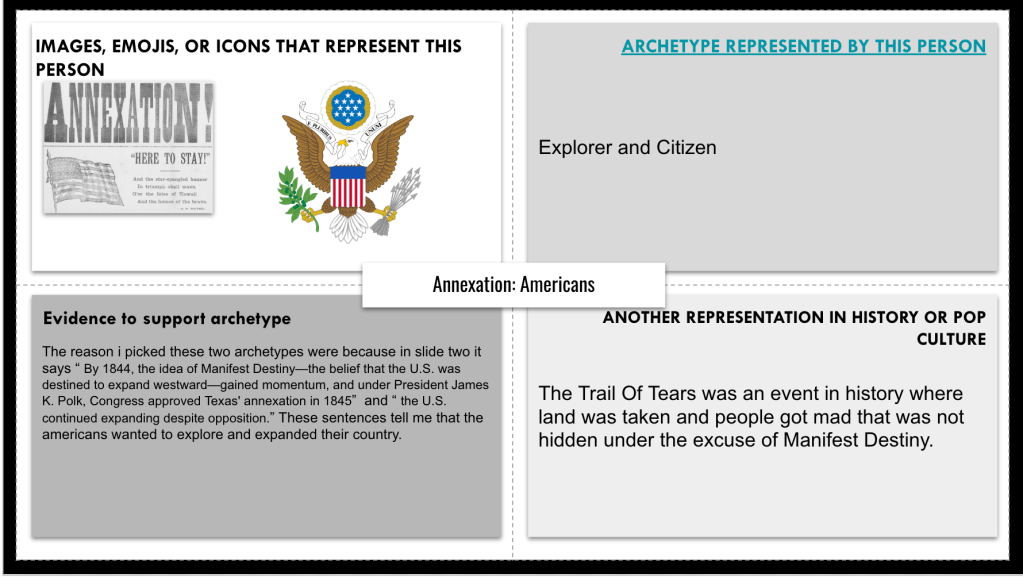
Tuesday’s lesson wasn’t just about reviewing Texas Independence—it was about digging deeper into how Texas annexation shaped American expansion and government policies. Instead of running through surface-level review questions, I stacked Annotate and Tell and Archetype Four Square to help students analyze the political and social consequences of annexation, make connections across history, and examine the perspectives of different groups.

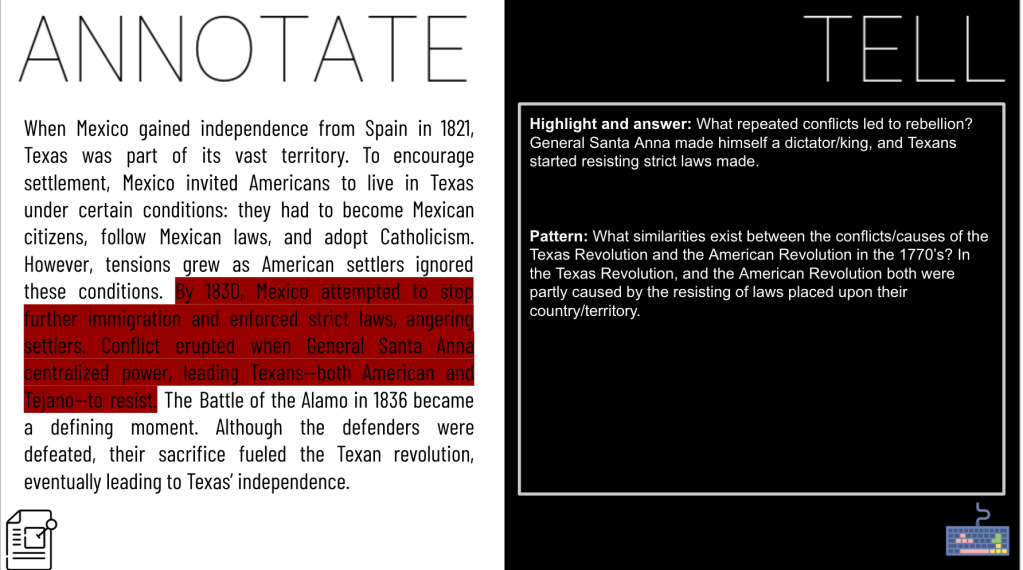
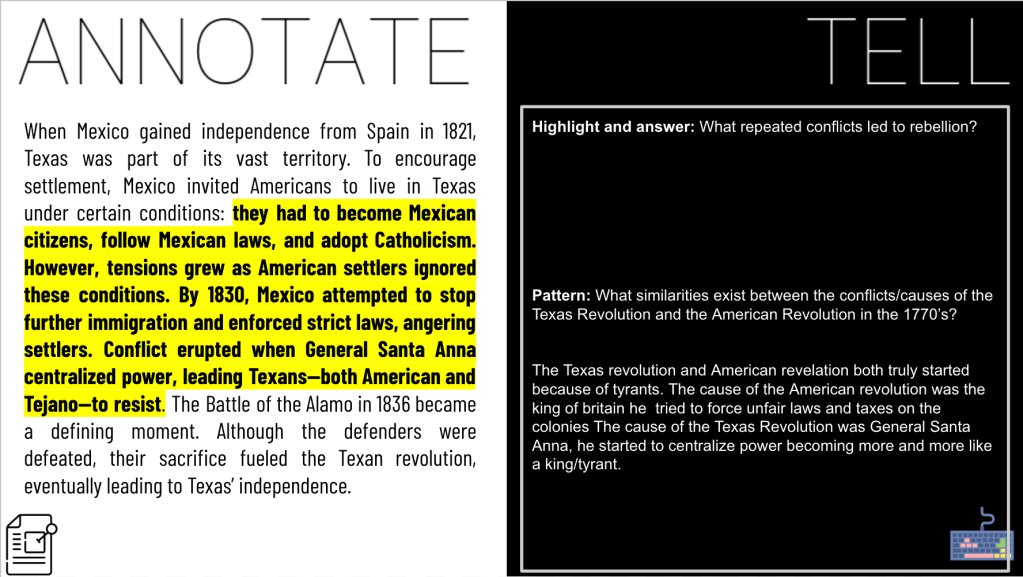
Annotate and Tell: Breaking Down Texas Independence

We started with Annotate and Tell, where students worked through a reading on Texas Independence, highlighting key points and responding to Depth and Complexity-aligned questions. What major conflicts led to rebellion? How did tensions between Texas and Mexico mirror other revolutions in history?

Students identified patterns in why revolutions happen, comparing Texas’s fight for independence to the American Revolution and other independence movements. After annotating, we had a discussion about how perspective shapes historical narratives, particularly in how Texas Independence is viewed by Americans versus how it was seen by Mexico.

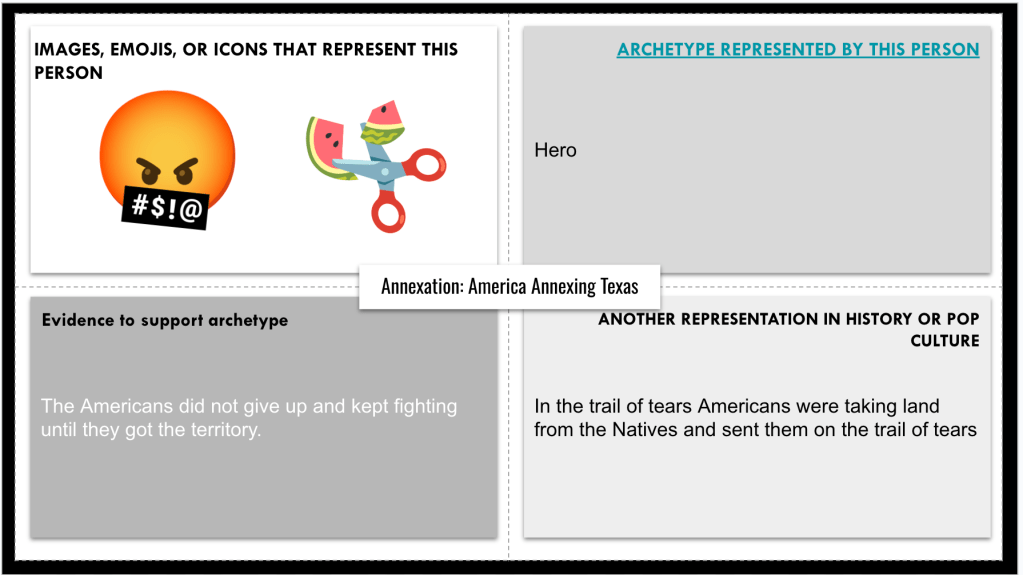
Archetype Four Square: Analyzing Government Post-Texas Annexation

Once students had a solid foundation on Texas Independence, we shifted focus to the role of the U.S. government in Texas annexation. Using Archetype Four Square, students analyzed the U.S. government’s actions through different archetypes. Was the U.S. acting as a Protector, an Opportunist, or an Aggressor in annexing Texas?

The connect piece was built into this activity as well. Students had to relate Texas annexation to another historical event. Many connected it to the Trail of Tears, recognizing that U.S. expansion often came with the displacement of Native American groups. Others linked it to the Louisiana Purchase, seeing it as another example of the U.S. growing its territory at the expense of others. This led to a discussion on whether Manifest Destiny justified these actions or simply provided an excuse for expansion.

Wednesday

Wednesday’s lesson was all about analyzing the causes and outcomes of the U.S.-Mexican War through layered activities that encouraged critical thinking. Using Map & Tell, Annotate & Tell, and Sketch & Tell-O, students built a deeper understanding of how territorial disputes, political decisions, and war shaped the history of the United States and Mexico.

Map & Tell: Setting the Stage

To start, we used Map & Tell to provide a visual representation of the territorial dispute between the U.S. and Mexico. Students labeled key locations, including the Nueces River, Rio Grande, and disputed land. We discussed why both countries claimed the land and how this disagreement escalated tensions.

Annotate & Tell: Analyzing Justifications for War

Next, students examined primary and secondary sources through Annotate & Tell to break down the events that led to war. Using depth and complexity prompts, they highlighted key parts of the text and answered questions that pushed them to think critically:

  • Why did Mexican leaders refuse to discuss John Slidell’s offer, and how did their response influence Polk’s decision to go to war?
    Students highlighted the sentence explaining Mexico’s refusal and discussed how it reinforced Polk’s belief that military action was necessary.
  • Perspective: How might Mexico’s refusal to sell land be viewed differently by American expansionists and Mexican leaders?
    Many students noted that expansionists saw it as an opportunity to fulfill Manifest Destiny, while Mexican leaders saw it as an unjust attempt to take their land.
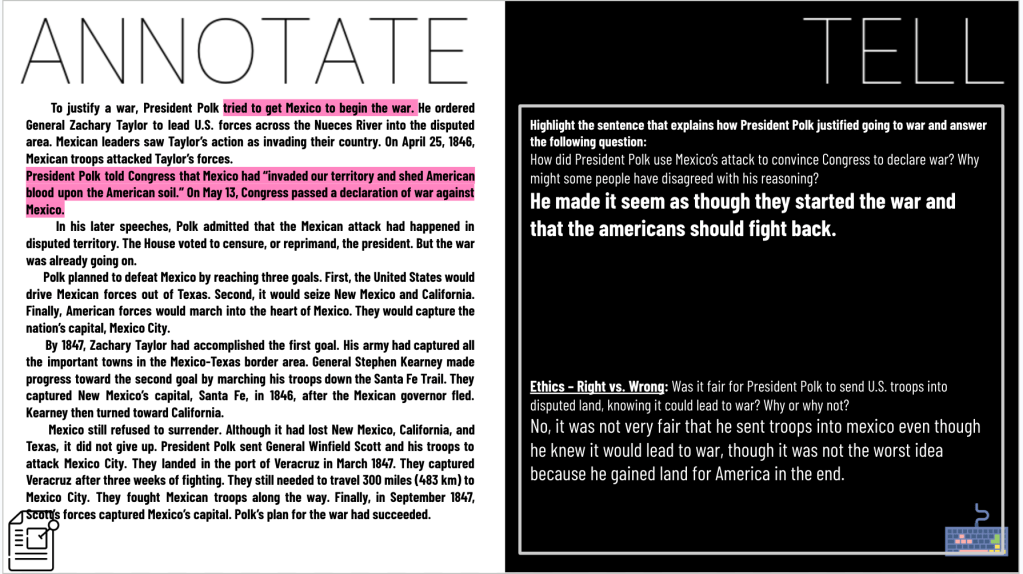
Annotate & Tell: Justifying War

The second Annotate & Tell focused on how President Polk framed the conflict:

  • Highlight the sentence that explains how Polk justified going to war. How did he use Mexico’s attack to convince Congress? Why might some people have disagreed?
    Students highlighted Polk’s statement about “American blood on American soil” and debated whether this was a valid reason for war or a strategic move to gain support for expansion.
  • Ethics – Right vs. Wrong: Was it fair for President Polk to send U.S. troops into disputed land, knowing it could lead to war? Why or why not?
    This question sparked discussions about whether Polk provoked Mexico into war and whether the conflict was avoidable.
Sketch & Tell-O: Understanding the Treaty of Guadalupe Hidalgo

To close out the lesson, students completed a Sketch & Tell-O focused on the Treaty of Guadalupe Hidalgo. Each student created a visual representation of:

  • The land acquired by the U.S.
  • The impact of the treaty on Mexico
  • How the treaty shaped future territorial expansion

They also wrote a short explanation connecting the treaty to previous historical events, with many linking it to the Trail of Tears, recognizing the continued displacement of people as the U.S. expanded westward.

Thursday

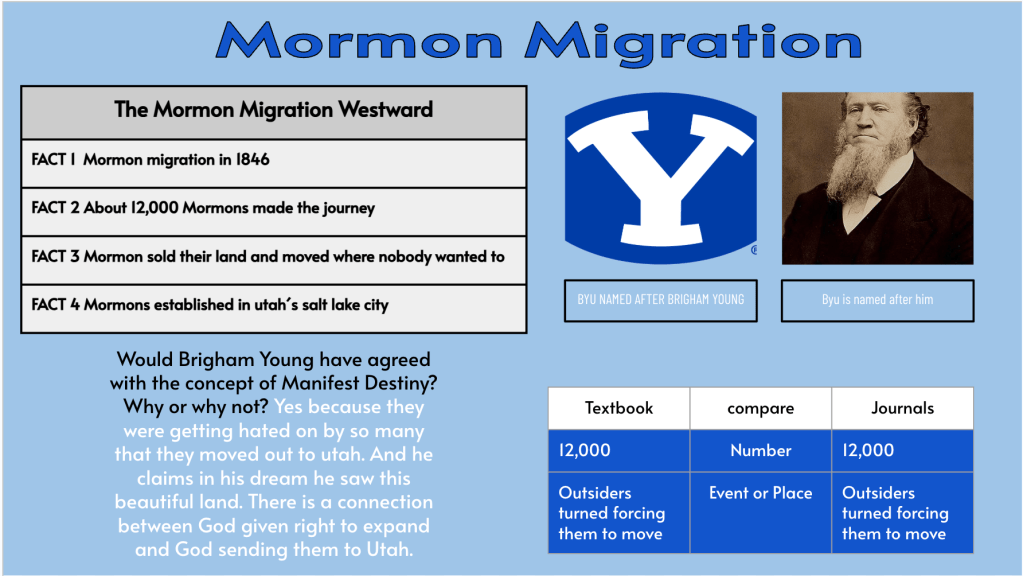
Thursday’s lesson focused on the Mormon migration and the challenges they faced during westward expansion. To make the content engaging and meaningful, I used a mix of EduProtocols, incorporating depth and complexity elements to push students’ thinking beyond just recalling facts.

Wicked Hydra: Generating Inquiry from Primary Sources

We started with a Wicked Hydra, where students analyzed Executive Order 44, also known as the “Extermination Order” issued by Missouri’s governor in 1838. The document stated that Mormons must be treated as enemies and either exterminated or removed from the state.

Students generated questions such as:

  • Who were the Mormons?
  • Why were they hated?
  • What did they do to provoke this response?
  • How could a state issue an extermination order?

These questions helped frame the lesson, setting up historical context and encouraging students to think about discrimination, religious freedom, and government authority.

Number Mania: Proving the Statement with Evidence

Next, we ran a Number Mania to reinforce the scale of the Mormon migration. The statement to prove was:
“The Mormon migration was one of the largest and most significant westward movements in U.S. history, involving thousands of people traveling thousands of miles to settle in Utah, where they established a thriving community despite early challenges.”

Students had to:

  • Find four numbers that proved the statement true.
  • Paraphrase facts from the textbook reading.
  • Add four icons or pictures to visually represent key details.
  • Title their Number Mania creatively to reflect the historical significance.

This protocol pushed students to analyze the numbers behind historical events and justify the migration’s impact with data.

Thick Slide: Memory, Complexity, and Comparison

Students then created a Thick Slide, recalling four important facts about the Mormon migration from memory. But instead of stopping at just listing information, I added a depth and complexity twist:

“Would Brigham Young have agreed with Manifest Destiny? Why or why not?”

This question encouraged students to think critically about how religious groups viewed expansion differently than the U.S. government. Some argued that Young supported expansion for the survival of his people, while others pointed out that Mormons weren’t interested in spreading democracy or territorial claims in the same way as the federal government.

To deepen analysis, students then compared secondary source facts from the textbook with primary source excerpts from Mormon journals. They looked for corroborating details between historical records and personal accounts of migration hardships. This activity helped reinforce sourcing skills and historical interpretation.

Friday

We started the day with a Friday check-in: What seemed like an exciting experience but ended up being a complete letdown or genuinely difficult once you were actually there? I wanted students to connect with the experience of prospectors who traveled west expecting instant riches but faced harsh realities. This helped students build a personal connection to the topic before diving into the content.

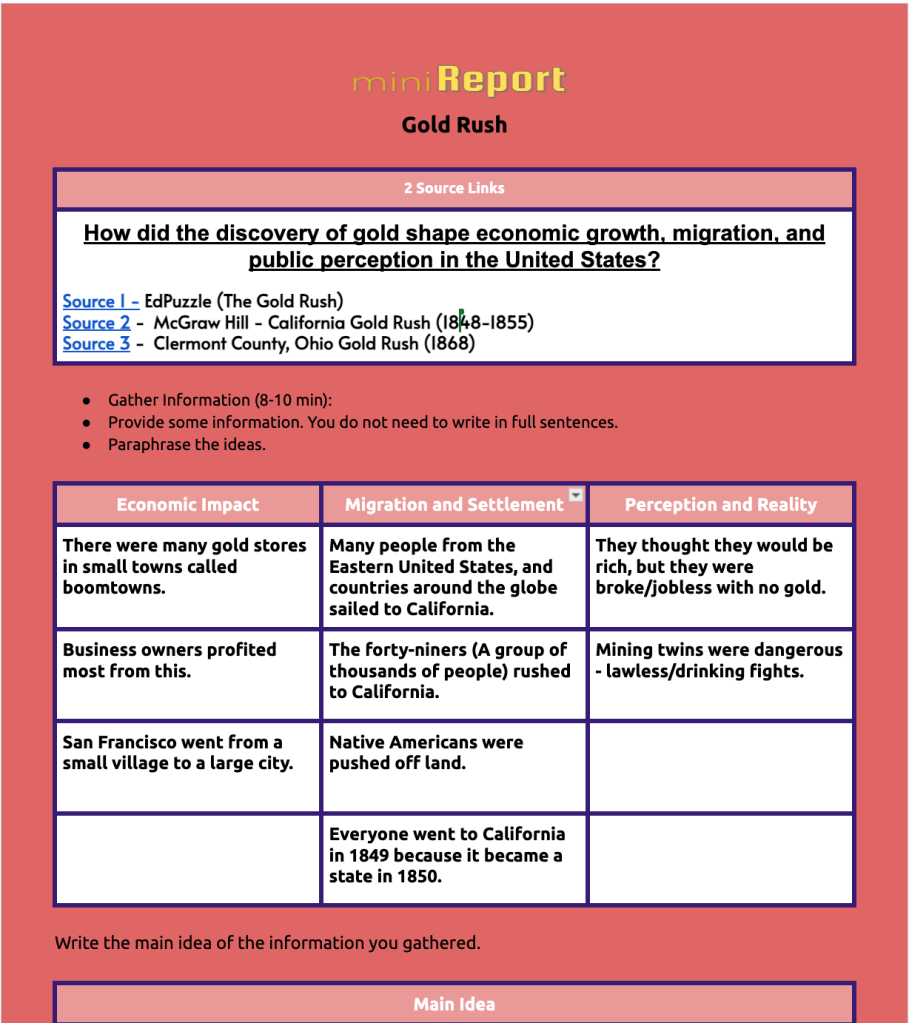
MiniReport: Analyzing the Gold Rush from Multiple Perspectives

To examine the impact of the Gold Rush, we structured our lesson around a MiniReport paired with Class Companion for writing and feedback. The central question for this activity was:
How did the discovery of gold shape economic growth, migration, and public perception in the United States?

Step 1: Gathering Information from Multiple Sources

Students worked with three sources:

  1. An EdPuzzle video on the California Gold Rush, which provided an engaging, visual introduction.
  2. A McGraw Hill textbook reading on the economic and social effects of the Gold Rush.
  3. A local history connection—the 1868 gold rush in Clermont County, Ohio.

Students organized their findings into three categories:

  • Economic Impact: How the rush transformed industries, trade, and the economy.
  • Migration and Settlement: How it spurred mass movement westward.
  • Perception vs. Reality: The myths versus the actual struggles of prospectors.
Step 2: Writing & Feedback with Class Companion

After gathering their evidence, students wrote a structured paragraph in Class Companion, where they received instant AI-driven feedback. I linked the Ohio State Test informative/expository rubric to the assignment, reinforcing the writing expectations they will face on standardized tests.

Students focused on:

  • A clear topic sentence.
  • Supporting details from their sources.
  • A strong concluding statement.

I also used this opportunity to discuss how AI scoring systems on state tests look for specific key phrases, transitions, and evidence-based reasoning—helping students understand how to write for their audience.

The Week That Was in 234

This week was all about making westward expansion more engaging and interactive while reinforcing key historical concepts through EduProtocols. From annotated maps and Thick Slides to Map & Tell and Parafly, students used a variety of strategies to build knowledge, analyze sources, and develop writing skills. We started with a Great American Race to introduce westward territories, followed by a Map & Tell to break down the meaning of “54°40′ or Fight.” Parafly helped students strengthen their paraphrasing skills with key readings on Oregon, and a MiniReport paired with Class Companion gave them practice comparing sources on the Texas Revolution.

Monday/Tuesday/Wednesday – Frayer, Thick Slide

Thursday – Oregon Rack and Stack

Friday – Texas MiniReport

Monday, Tuesday, Wednesday

Monday through Wednesday were a mix of different activities. Some students were completing Restart Readiness ELA tests, which involved reading two passages, answering comprehension questions, and writing an essay. Others were catching up on missed work, either for ELA or social studies. For those working on social studies, I focused on building background knowledge about how the U.S. acquired its western territories.

Mapping Westward Expansion

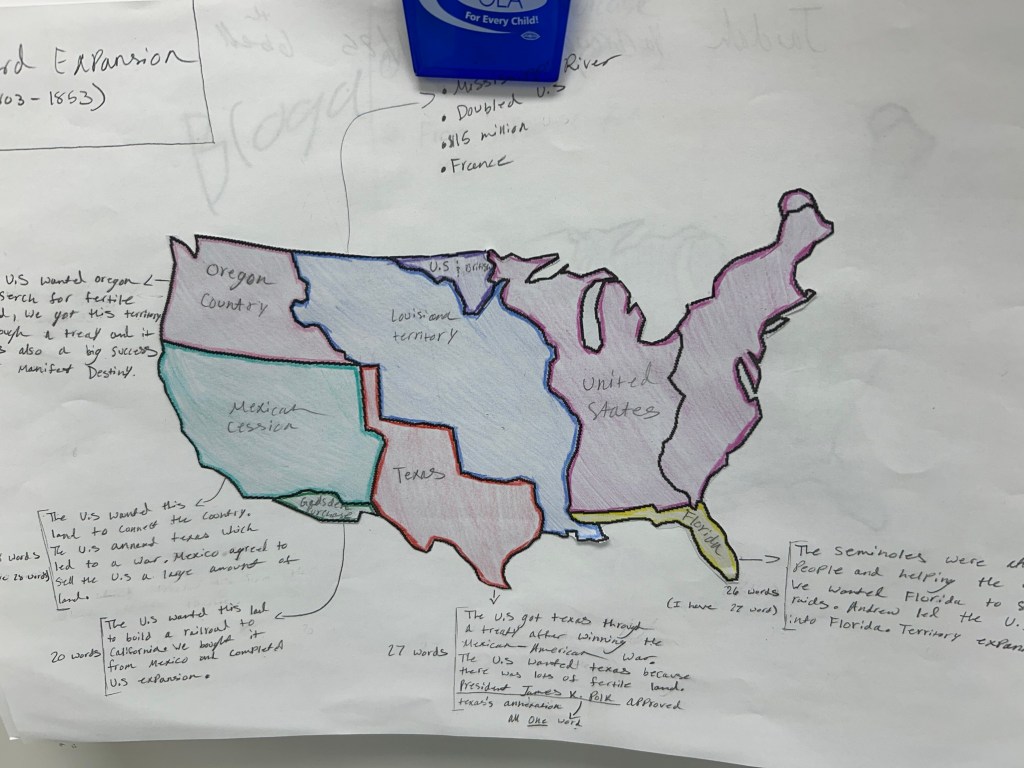
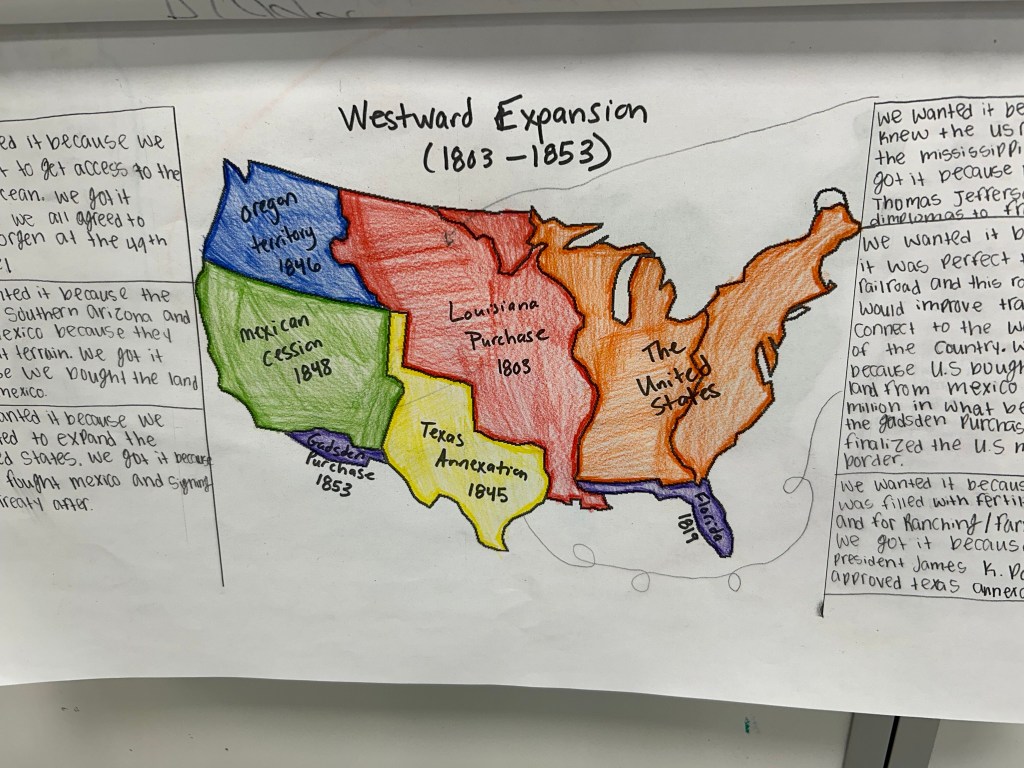
To start, students labeled and colored a map of westward territories, then cut it out and glued it to the center of a giant piece of paper. From there, they chose a specific territory—Louisiana, Texas, Oregon, the Gadsden Purchase, etc.—to analyze in depth.

Frayer Model + Thick Slides

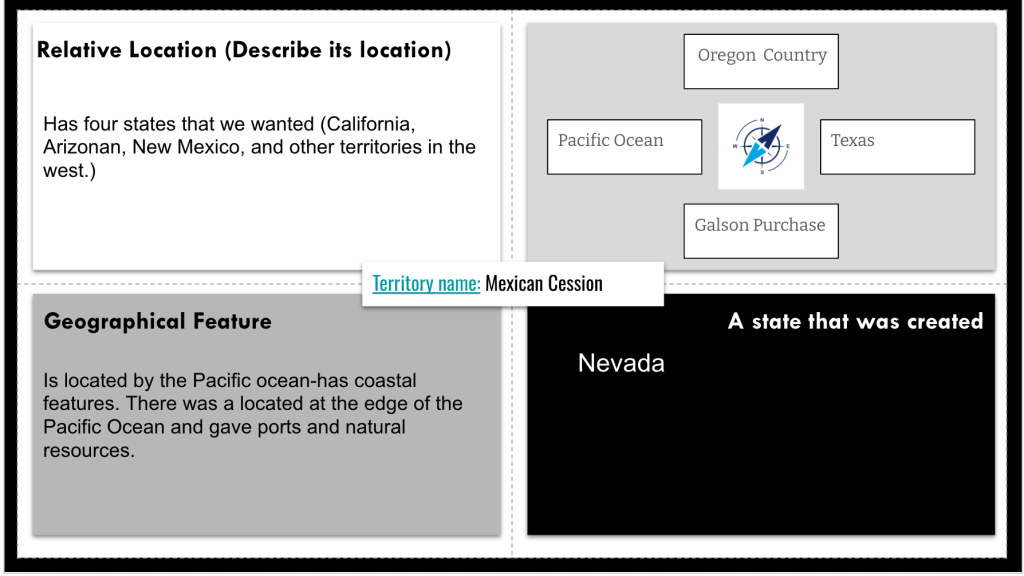
Using a Drew Skeeler template, students created a Frayer Model for their chosen territory:

  • Relative location (what’s north, south, east, and west?)
  • A geographic feature from the territory
  • A state that came from the territory

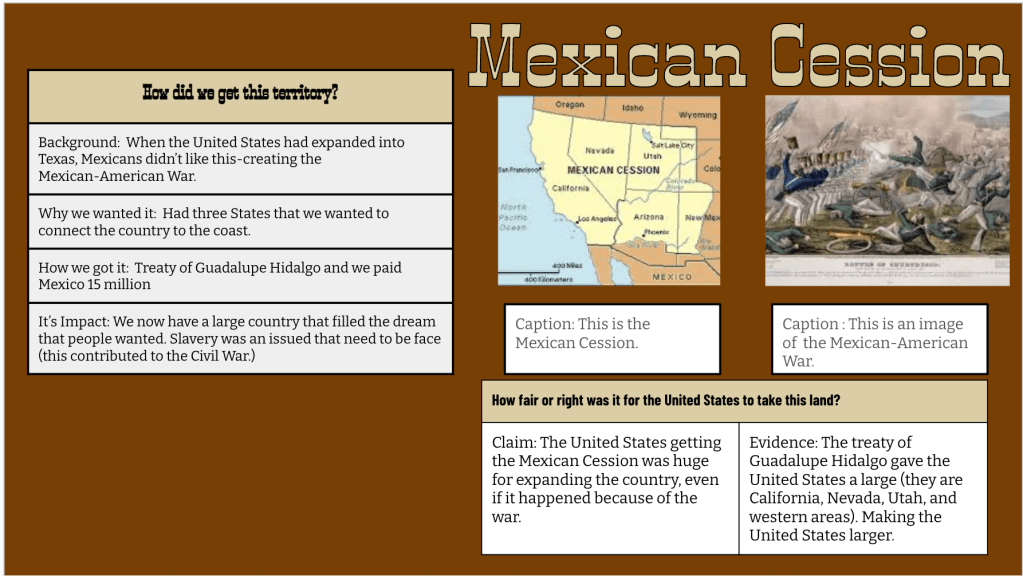
Then, students moved on to a Thick Slide, where they:

  • Provided background information on the territory
  • Explained why and how the U.S. acquired it
  • Discussed its impact
  • Wrote a claim on how justifiable the acquisition was, supported with evidence
  • Added two pictures and a title

Students submitted their Thick Slides through a Google Form, which I compiled into a Google Sheet for reference.

Annotated Maps + Dice Challenge

On Wednesday, students took an initial Quizizz on how the U.S. acquired each territory. The class average across all periods was 49%—clearly, they needed more time with the content.

Enter the Annotated Map—a strategy that helps students apply history to geography the way they would annotate a text. Using the Google Sheet of Thick Slides, students pulled key information and wrote annotations around their maps explaining how and why the U.S. acquired each territory.

To combat copy-pasting, I introduced a dice challenge:
🎲 I rolled three dice—a 20-sided, 12-sided, and 6-sided—and the total determined how many words students had to use for each annotation. Each round, they had to summarize the acquisition using only that many words. This forced them to think critically, be selective with word choice, and paraphrase rather than copy directly.

At the end of class, we took the Quizizz again—this time, class averages jumped to 82%. Huge improvement, and it reinforced why layered, interactive learning beats simple memorization every time.

Thursday

Thursday’s lesson focused on how and why the U.S. acquired Oregon, along with the experiences of those who traveled west.

Gimkit Warm-Up

We started with a 5-question Gimkit about Oregon, running it for three minutes before I gave feedback. Then, we ran it again for two minutes—already, students were improving just from this quick retrieval practice.

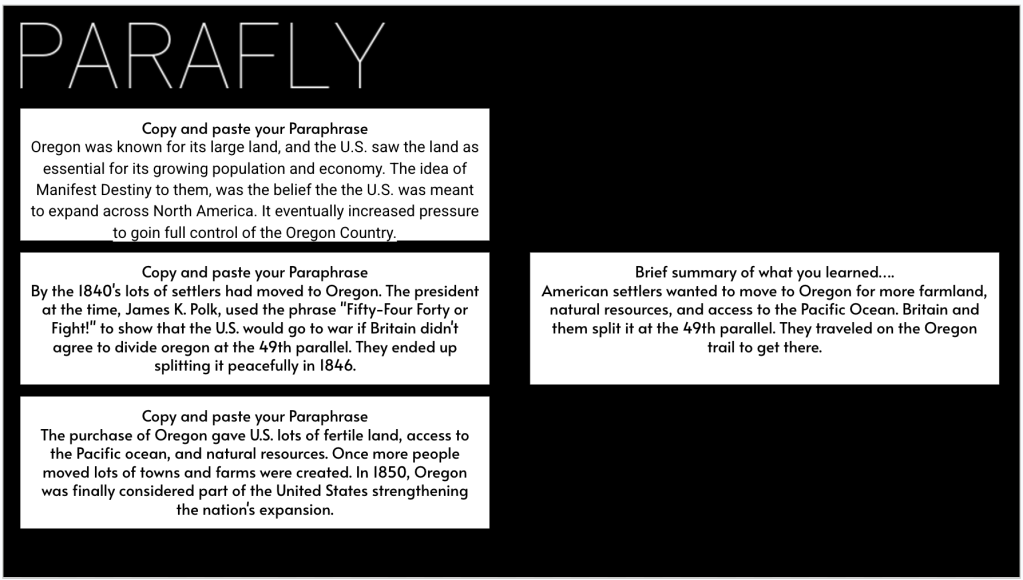
Parafly: Mastering Paraphrasing

Since the textbook’s explanation of Oregon was dense and overly wordy, I had AI break it into three digestible paragraphs. Using Socrative, I shared one paragraph at a time, and students paraphrased and submitted their responses.

  • Round 1: Students had four minutes to paraphrase the first paragraph. To help those who struggled, I provided a cheat sheet (generated with AI) that highlighted key words to keep and suggested substitutions for complex terms.
  • Round 2: I shared the second paragraph, gave quick feedback, and students paraphrased again—this time, they were faster.
  • Round 3: By the third paragraph, students had built confidence and speed in paraphrasing.

After each round, students copied and pasted their paraphrases into a Google Slide, where they also wrote a three-sentence summary of what they learned about Oregon.

Map and Tell

To visualize the territorial dispute, we completed a Map & Tell activity that helped students grasp the meaning behind the slogan “54°40′ or Fight.” Using a historical map, students marked key locations and boundaries to understand the tensions between the U.S. and Britain over Oregon Country. They starred the 54°40′ latitude, which was the northernmost boundary some Americans wanted to claim. Then, they used colored lines to map the dispute, drawing a red line at 54°40′ to represent the aggressive claim and a green line at the 49th parallel, which became the actual U.S.-British border agreement. This hands-on approach reinforced why “54°40′ or Fight” was a powerful rallying cry but ultimately not the reality of the final negotiation.

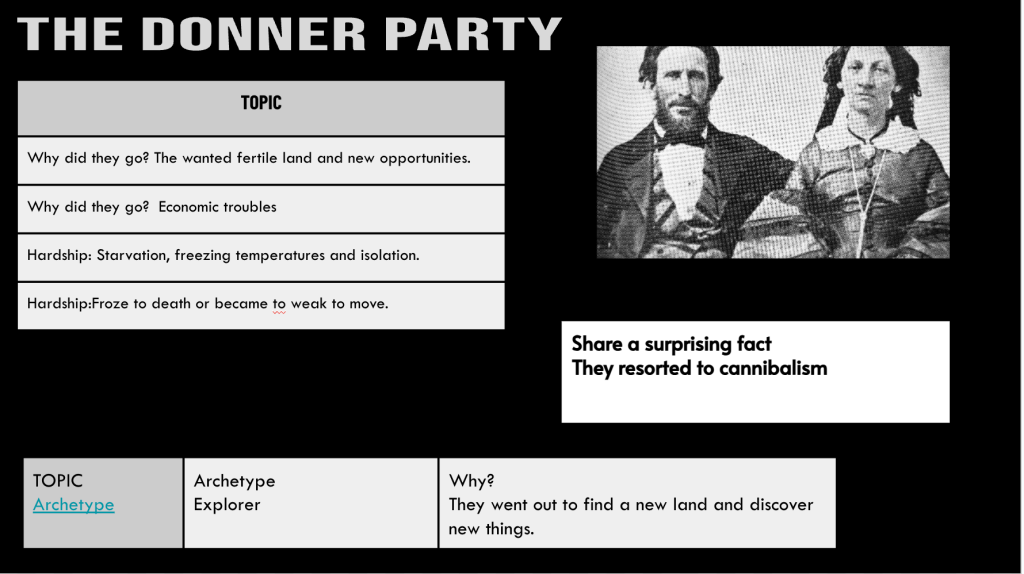
Thick Slide: Life on the Trail

Next, students chose one of two groups that traveled west:

  • The Donner Party
  • Mountain Men

They created a Thick Slide covering:

  • Who they were
  • Why they went west
  • The hardships they faced
Oregon Trail & Final Review

To wrap up, we ran the same Gimkit for two minutes—this time, scores jumped significantly. Then, I shared a link to the classic Oregon Trail game online, letting students explore the challenges of westward expansion in a fun, interactive way.

This lesson balanced retrieval, paraphrasing, and content creation, reinforcing key ideas about why people moved west and the struggles they endured.

Friday

To get students thinking about the Texas Revolution on a personal level, I started class with this question:
“Have you ever agreed to something—only for the rules to suddenly change? Or, maybe you realized it was unfair? How did you react?”
This simple question helped students connect historical events to real-life experiences, making them more engaged from the start.

EdPuzzle for Background Knowledge

Before diving into the details, students watched a 7-8 minute EdPuzzle video about the Texas War for Independence. I use these short videos to provide a visual foundation and background knowledge before we break things down further.

MiniReport and Class Companion

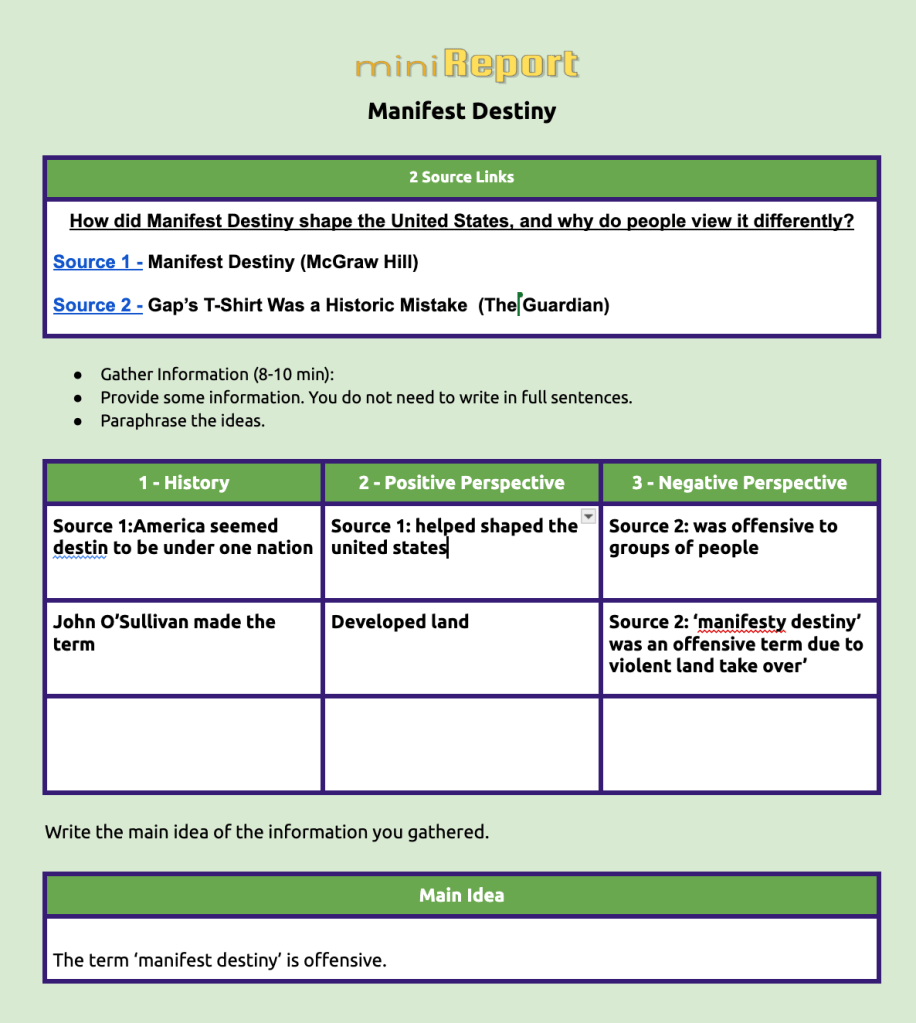
For the main lesson, we used the MiniReport EduProtocol to structure our analysis of Texas’ independence and annexation. I took the textbook sections on Texas and split them into two sources:

  • Source 1: Americans Rebel in Texas
  • Source 2: The Lone Star Republic and Annexation

Students had 8-10 minutes to gather information from both sources. They paraphrased ideas and recorded key points without needing to write in full sentences.
Each student then summarized the main idea of what they gathered in their own words.

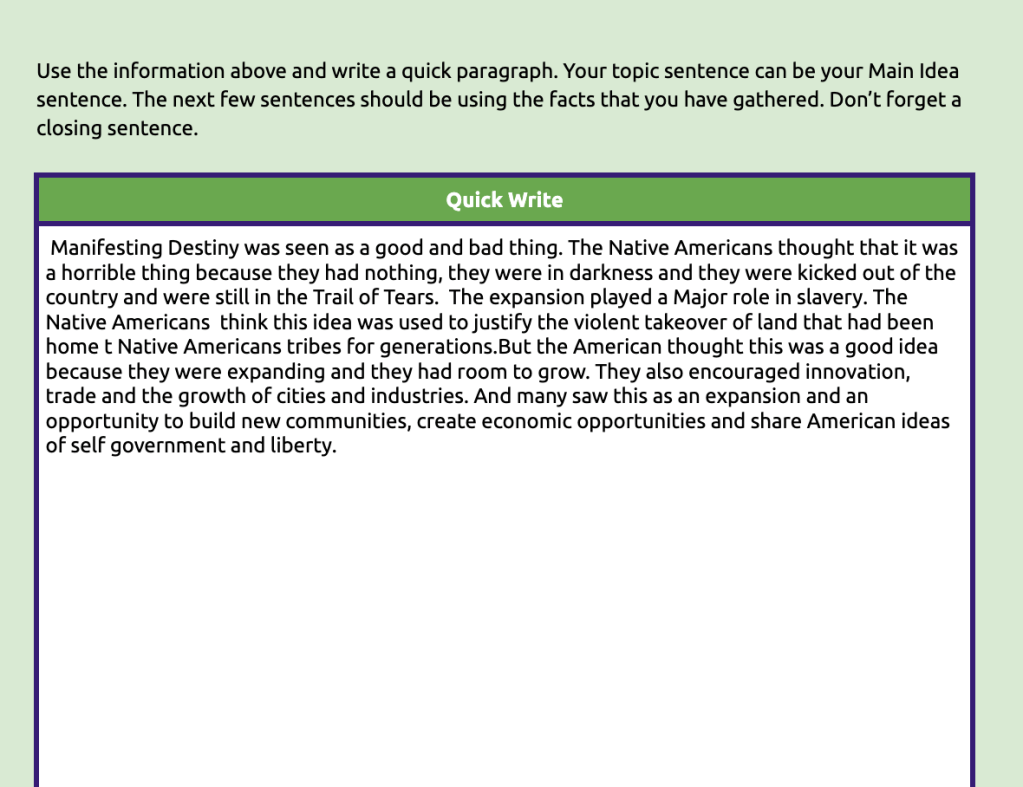
Once their notes were complete, they wrote a quick paragraph about Texas’ fight for independence and its annexation into the United States.

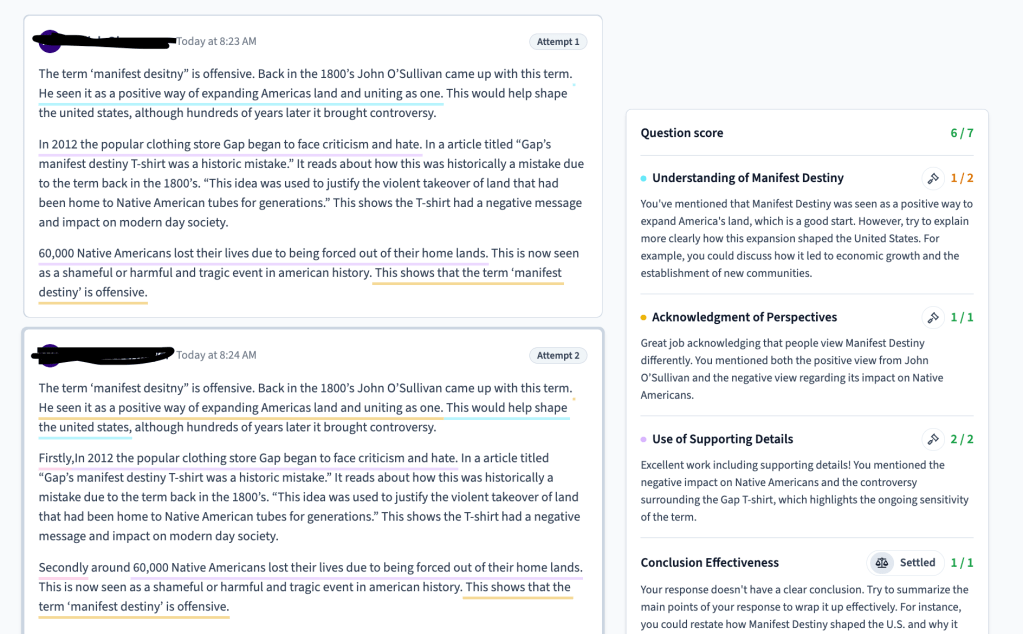
To wrap up, students submitted their writing into Class Companion for immediate AI-generated feedback. Since we ran out of time, we’ll finish refining and improving their responses next week.

The Week That Was in 234

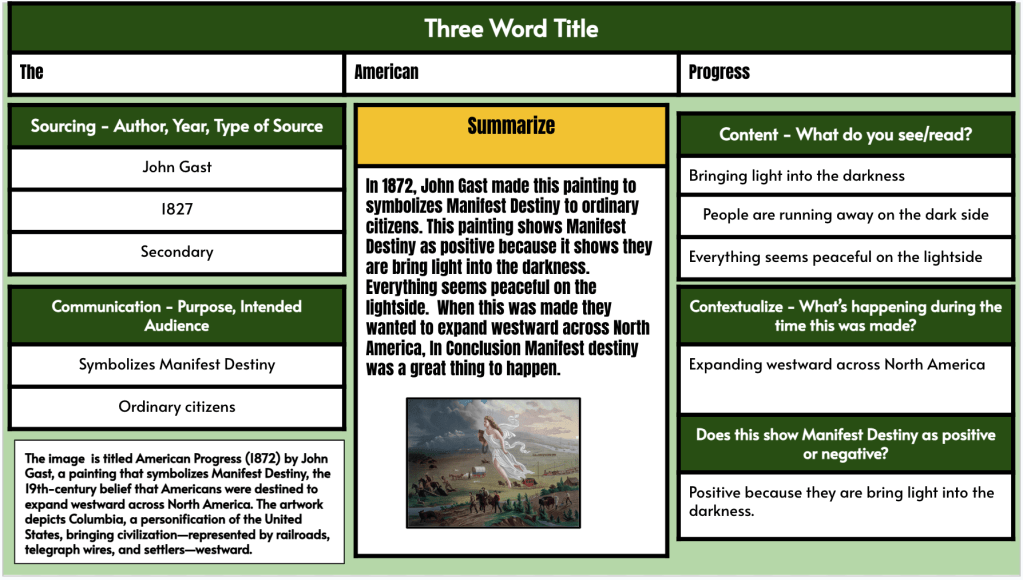
This week was all about using EduProtocols to drive deeper thinking, engagement, and writing practice as we explored westward expansion and Manifest Destiny. Instead of just reading from the textbook and answering questions, students worked through activities that encouraged them to generate their own questions, analyze sources, and compare perspectives. We used Fast & Curious to build vocabulary, Wicked Hydra to spark curiosity, Sourcing Parts to break down historical imagery, and MiniReport to develop writing skills with multiple sources. Class Companion provided immediate feedback on their writing, helping them refine their responses. The combination of these strategies helped students interact with history in meaningful ways while reinforcing critical thinking and writing—exactly the kind of skills they need as we approach testing season.

Wednesday – Introduction to Westward Expansion

Thursday – Rack and Stack Manifest Destiny, MiniReport

Friday – WeWillWrite, ShortAnswer

Monday and Tuesday

Monday and Tuesday were all about finishing the Age of Jackson unit and transitioning into what’s next. It wasn’t the most eventful start to the week, but there were some clear takeaways from how students engaged with the material and performed on the final assessment.

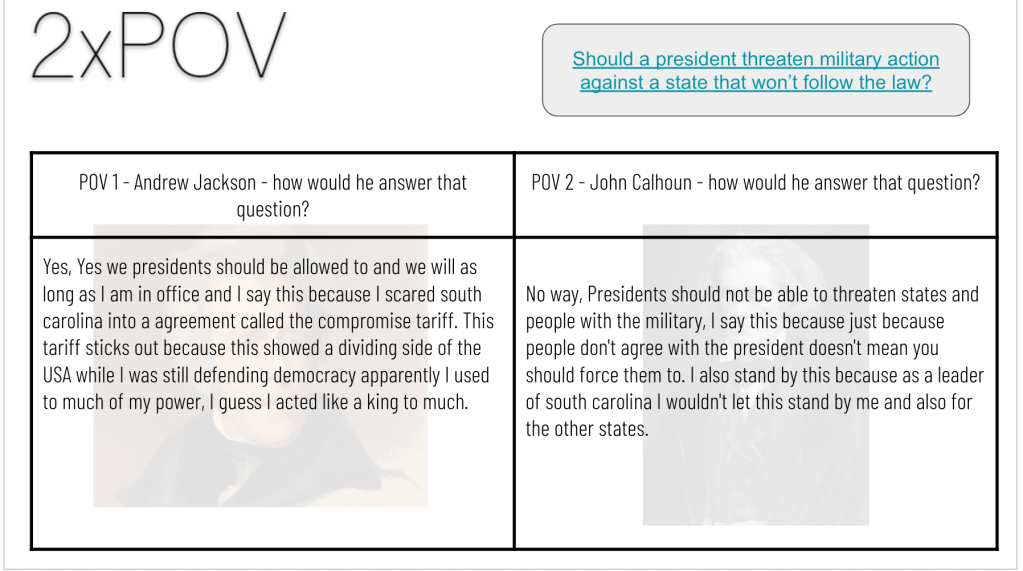
Trail of Tears Number Mania

We closed out the unit with a Number Mania activity focused on the Trail of Tears. Students worked to prove this statement correct using four numbers and supporting facts from the reading:

“The Trail Where They Cried was not only a physical journey but also a moment that reshaped Cherokee history, causing loss, suffering, and ultimately rebuilding.”

This strategy forced them to dig into the reading, prioritize key details, and make connections between the numbers and the broader historical context.

Review Day: Where Did Students Struggle?

After Number Mania, we jumped into a self-assessment review where I encouraged students to answer as many questions as possible without looking at their notes first. I wanted to see what truly stuck.

The results were telling:
✅ Strong understanding of Jacksonian Democracy and the Bank War
❌ Struggled with Nullification and Tariffs

Looking at what worked, the MiniReport EduProtocol (which we used for Jacksonian Democracy and the Bank War) stood out as a clear success. This structured approach to reading, analyzing, and writing about sources helped cement those concepts more effectively than other methods.

Final Test & Class Companion for Writing

Tuesday was test day. To keep the writing portion meaningful, I had students complete their short-answer responses on Class Companion, giving them two attempts this time. The difference was noticeable—students were reading the feedback, revising their responses, and improving their writing in real-time.

At the end of the test, I tallied up the class averages:
📉 Pre-Assessment Scores: 22%, 19%, 22%, 25%
📈 Final Assessment Scores: 82%, 68%, 76%, 80%

In just five class periods, the gains were solid. I wish I had more time to dive deeper into certain topics, but when you’re locked into a common assessment deadline, you make the most of the time you have. The biggest takeaway? The MiniReport works, Class Companion feedback works, and students rise to the challenge when given the right tools.

Wednesday

This week, I kicked off a mini-unit on Westward Expansion, focusing on the big question: How did Manifest Destiny change America’s map and the lives of different groups of people?

I like to break this unit down into three key areas:
✅ The idea of Manifest Destiny
✅ How the U.S. acquired different territories
✅ The people and groups who moved west

To start, I introduced some key vocabulary with a Gimkit Fast & Curious covering terms like Manifest Destiny, expansion, territory, annexation, and more. We ran the Gimkit for 3 minutes, I gave quick feedback, and then we ran it again for another 3 minutes. With students now having some familiarity with the key terms, it was time to move into The Great American Race—a fast-paced, high-engagement EduProtocol that reinforces key concepts through collaboration and research.

How I Run The Great American Race

A few teachers have asked me how I set this up, so here’s my process:

1️⃣ Identify the Key Topics

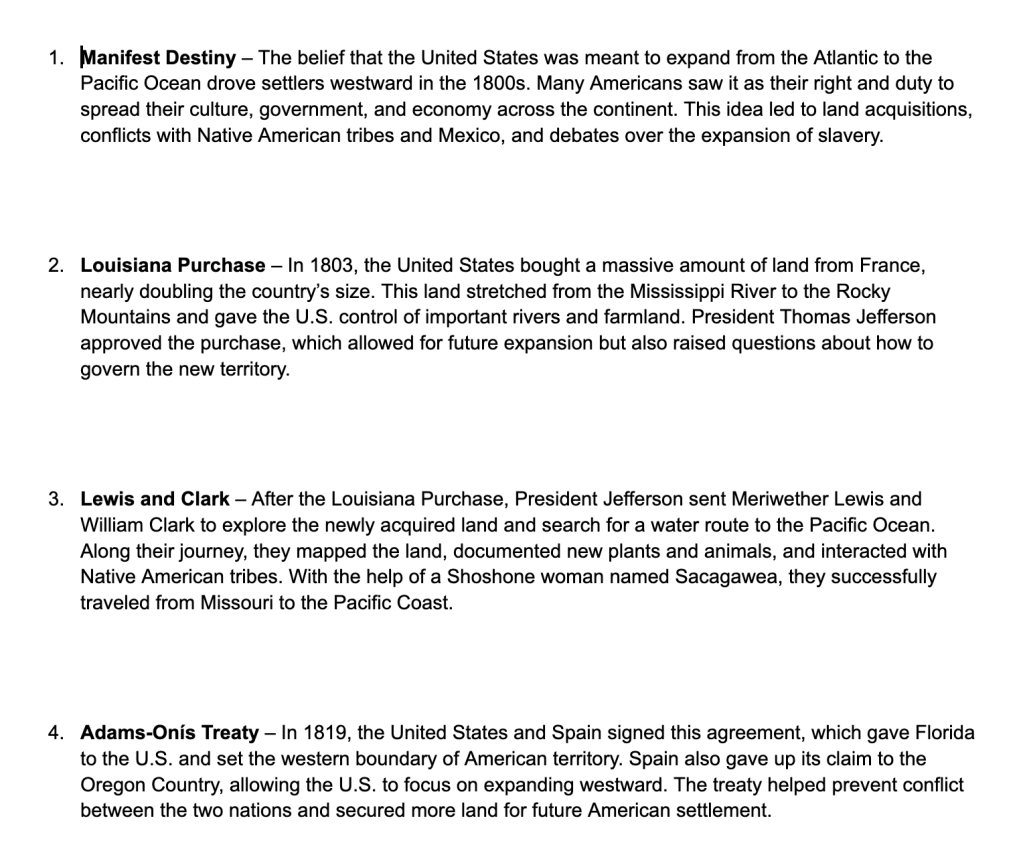
  • I chose 13 major terms from the unit, including the Louisiana Purchase, Lewis and Clark, James K. Polk, and Manifest Destiny.
  • Since I had 26 students, they paired up, with each pair responsible for one term.

2️⃣ Use AI to Generate Content

  • I’ve been using AI to create 4-5 sentence explanations for each term, which students can pull clues from.
  • Each explanation is labeled with a number corresponding to its term.

3️⃣ Set Up the Activity

  • I copy and paste the AI-generated explanations into a Google Doc, print them out, and cut them into individual slips for students.
  • Each pair receives a slip and has 3-4 minutes to create a response on Padlet using the timeline format.

4️⃣ Creating the Clues

  • On their Padlet post, students enter their term’s number in the subject line.
  • They write 3 clues and add a related image.
  • This should take 3-4 minutes, but my students usually take about 6-8 minutes.

5️⃣ Approving and Freezing Posts

  • I set Padlet so that I approve all posts before they go live.
  • Once time is up, I approve the posts, and students are ready to start the race.
  • Why I freeze the Padlet: This prevents students from copying and pasting answers directly into Google. They have to use key terms and context clues to research.

6️⃣ The Race Begins!

  • Students work with their partner, number their paper 1-13, and get 15 minutes to identify as many terms as possible using the clues from their classmates’ posts.
  • They can use their notes, their knowledge, and Google—just not copy-paste answers directly.
  • When time is up, we go over the answers and discuss any misconceptions.

Padlet makes this whole process smooth, especially with the timeline format, which keeps everything organized. The students love the competitive element, and I love that they’re engaged and thinking critically.

Wrapping Up with Big-Picture Questions

To close the lesson, I handed out an introductory reading on Westward Expansion. On the back, I included three deeper-thinking questions to get them thinking beyond just dates and facts:

📌 Evaluating Perspectives: How might an American settler and an Indigenous person have viewed westward expansion differently?

📌 Connecting to Today: Do you think Manifest Destiny still influences how Americans view expansion and progress today? Why or why not?

📌 Comparing Motivations: What were the different reasons people moved westward, and how did those reasons create tensions among settlers, Native Americans, and the U.S. government?

Students had 10 minutes to read and answer the questions. This served as a preview for deeper discussions and activities later in the unit.

Thursday

Fast & Curious: Building Vocabulary

We started class with a Fast & Curious using Gimkit to review key vocabulary related to westward expansion. Students played for three minutes, received feedback, and then played again to reinforce terms like Manifest Destiny, annexation, expansion, and acquisition. This quick repetition helped them solidify essential vocabulary before moving into deeper analysis.

Wicked Hydra: Generating Questions

Next, we transitioned into a Wicked Hydra using the headline, “Gap’s T-Shirt Was a Historic Mistake.” The goal was to get students asking as many questions as possible about what the headline might mean. Originally, we used Padlet for this, but after accidentally deleting the responses, we switched to paper, and students continued writing down their questions. Some of the best questions that came from this activity included:

  • Why would a T-shirt about Manifest Destiny be controversial?
  • Who was upset by this, and why?
  • What does this headline tell us about how history is remembered?

These questions set the stage for students to engage critically with Manifest Destiny as both a historical event and a modern controversy.

Sourcing Parts: Analyzing “American Progress”

To further analyze the idea of Manifest Destiny, students used the Sourcing Parts protocol to break down the painting American Progress by John Gast. The goal was to help them understand how imagery can be used to justify expansion. They examined the source by identifying who created it, what message was being conveyed, and who was included or left out of the image. The discussion that followed centered on how paintings like this one helped promote the idea of Manifest Destiny as a positive force while ignoring the consequences for Indigenous people and others affected by westward expansion.

MiniReport: Comparing Perspectives

After this, we moved into a MiniReport comparing two different perspectives on Manifest Destiny. The first source was adapted from the McGraw Hill textbook and explained Manifest Destiny as a natural and necessary part of American expansion. The second source was an article about the backlash to the Gap T-shirt, highlighting the modern-day criticism of the idea.

Students took notes on the key ideas from both sources, categorized them into three sections—historical context, positive perspectives, and negative perspectives—then wrote a main idea sentence. They combined all of this information into a paragraph response and submitted their writing in Class Companion. Since the Ohio state test includes a two-source reading and writing essay, this activity was designed to mirror that format and give students practice organizing their thoughts and using evidence.

Why This Worked

This lesson reinforced a lot of important skills beyond just memorizing historical facts. Students generated their own questions, analyzed visual sources, compared perspectives, and practiced structured writing. The writing in Class Companion showed improvement—students were getting better at organizing information, crafting arguments, and responding to feedback. The next step in the unit will focus on westward expansion’s impact on different groups, continuing to build historical analysis, writing, and connections to the present.

Friday

Gamifying POV Writing: WeWillWrite & ShortAnswer

We started Friday by wrapping up unfinished work from Thursday. Some students needed to complete their Class Companion writing on Manifest Destiny, while others who had finished moved on to labeling and coloring a map of westward expansion territories. Once that was taken care of, we shifted into a creative writing activity, using WeWillWrite and ShortAnswer to explore point of view (POV) writing in a gamified way.

WeWillWrite: POV Writing with Columbia, Natives, Farmers, & Buffalo

For most classes, I used WeWillWrite, a platform that gamifies writing in a way that engages all students. Back in December, I used it for general writing practice, but now you can create custom sets—a feature I didn’t know about until Lucas George mentioned it. I jumped on the chance to create a POV set based on the painting American Progress by John Gast. Students wrote from the perspective of Columbia, Native Americans, Farmers, or the Buffalo, responding to a timed prompt.

Here’s how it worked:
✅ Students logged in with a random pseudonym (just like Gimkit).
✅ They were placed into teams and given three minutes to respond to the prompt.
✅ They could see hints and teammate responses to refine their writing.
✅ Each team voted on their strongest response.
✅ The top four responses battled it out for class-wide voting and points!
✅ We repeated the process for two more rounds, deepening their engagement with perspective writing.

The energy in the room was fantastic—students were thinking critically about how Manifest Destiny impacted different groups, but in a way that felt like a game.

ShortAnswer: Live POV Battle Royale

For 6th period, I decided to switch things up and use ShortAnswer instead. This tool is similar to WeWillWrite but allowed me to create POV questions on the spot. One thing I loved was the built-in voice typing feature, which helped several of my students, especially those with IEPs.

Here’s how the ShortAnswer Battle Royale worked:
✅ I set up a POV question (e.g., “How would a Native American describe Manifest Destiny?”).
✅ Students had five minutes to respond.
✅ After the timer ended, I hid student names (lesson learned—forgot at first, and it became a popularity contest).
✅ Responses were randomly grouped into quadrants, and students voted on the best one.
✅ The top four moved on to a semifinal vote.
✅ The final two battled it out for the top spot.

The hidden names made a huge difference. Suddenly, students who rarely get recognized for their writing were winning! One student on an IEP finished in the top three twice, and after his second win, he threw his arms up and said, “I never win anything!” Absolute highlight of the day.

I also liked how AI-generated sentence stems and outlines helped guide students in their POV writing. Students who typically struggle to write were producing full paragraphs and competing to win. The ability to attach readings and pictures to questions made it even stronger.

The Week That Was In 234

This past week, EduProtocols made Andrew Jackson’s presidency more interactive and engaging, helping students analyze his impact through Fast & Curious, Annotate & Tell, MiniReports, Somebody-Wanted-But-So-Then, Thin Slides, and Number Mania. We started each day with Gimkit vocabulary practice, reinforcing key terms before diving into content. The Nullification Crisis worked well with Somebody-Wanted-But-So-Then, helping students break down key perspectives, while the Bank War MiniReport with Class Companion pushed them to strengthen historical writing using AI feedback.

For Indian Removal, we layered Edpuzzle, Annotate & Tell, Thin Slides, and Number Mania, making connections between the Seminole Wars, Indian Removal Act, Worcester v. Georgia, and the Trail of Tears. In Number Mania, students had to justify a quote using numerical evidence, reinforcing cause-and-effect thinking. Some students were testing Class Companion to outsmart AI, while others were pushing themselves to write more, but either way, they were improving. Using EduProtocols helped students engage deeply with Jackson’s presidency, making complex historical topics more meaningful and accessible.

Tuesday – Jacksonian Democracy Rack and Stack, Jackson MiniReport

Wednesday – Nullification Rack and Stack

Thursday – Bank War Rack and Stack, Bank War MiniReport

Friday – Native Removal Rack and Stack

Tuesday: Kicking Off the Andrew Jackson Unit

We started our new unit on Andrew Jackson with the central guiding question:
Should Andrew Jackson be considered a good president or a bad president?

To establish a baseline understanding, students took a pre-assessment, and as expected, the class averages were low—ranging from 19% to 25%. These results weren’t surprising since many students had little prior knowledge of Jackson beyond his presence on the $20 bill.

From there, we jumped into Jacksonian Democracy, starting with a Gimkit Fast & Curious to introduce key vocabulary terms like Jacksonian Democracy, democracy, spoils system, suffrage, and nominating conventions. We ran one round for two minutes, reviewed the words, and ran it again for another two minutes. This strategy paid off—every class improved their average score by at least 35% after just two rounds.

Building Understanding Through Multiple Lenses
Frayer Model: Breaking Down Jacksonian Democracy

After locking in vocabulary, students created Frayer Models for Jacksonian Democracy, helping them explore:
✔ Definition
✔ Characteristics
✔ Examples
✔ Non-examples

This was crucial because Jacksonian Democracy is not just about Andrew Jackson—it’s about a shift in political power and voting rights for the “common man.”

Map & Tell: Geography & Political Shifts

Next, we tied Jackson’s election to geographic and political changes through a Map & Tell activity. Students analyzed maps of voter participation in 1824 vs. 1828 to answer:
🔹 Where did voter turnout increase the most?
🔹 Which regions supported Jackson?
🔹 What does this suggest about democracy in the early 1800s?

Seeing how voting patterns shifted helped students visualize how Jackson’s presidency was fueled by an increase in voter participation among everyday Americans—one of the defining elements of Jacksonian Democracy.

MiniReport: Expanding Democracy vs. Controversy

Students then worked through a MiniReport to gather information from two sources:
1️⃣ The Election of 1828 – A Victory for the Common Man
2️⃣ The Spoils System

They had 8-10 minutes to collect key information on how Jacksonian Democracy expanded political participation while also bringing controversy through shifts in power. This helped them paraphrase key ideas and prepare for a structured quick write summarizing their findings.

After drafting their paragraphs, we used Class Companion to provide AI-generated feedback on their responses. I’m starting small with the MiniReport to help students build skills in comparing sources and developing structured paragraphs. The goal is to strengthen their ability to synthesize information, support their claims with evidence, and refine their writing with targeted feedback.

2xPOV: Seeing Jackson From Different Angles

To wrap up, students engaged in a 2xPOV activity where they analyzed Jackson’s impact from two perspectives:
1️⃣ A common man who benefited from his policies
2️⃣ A government official who saw issues with his leadership

This exercise helped students recognize how historical figures and policies aren’t just good or bad—they affect people differently based on their circumstances.

This structured approach ensures students aren’t just memorizing facts—they’re analyzing how Jacksonian Democracy shaped American politics, making it easier to answer our big guiding question in the weeks ahead:
➡️ Should Andrew Jackson be considered a good or bad president?

Wednesday – Continuing Our Exploration of Andrew Jackson

We continued exploring Andrew Jackson by focusing on the Tariff of Abominations and the Nullification Crisis. I started with some quick notes to provide background on tariffs and their impact, then we jumped into another Gimkit with new vocabulary words—tariff, abomination, nullification, and states’ rights.

Fast & Curious – Vocabulary Review

We ran a Gimkit for two minutes, paused for quick feedback, and then ran it again for another two minutes. Every class raised their average by 38% or higher, showing solid growth in understanding key terms. This quick retrieval practice helped students solidify their understanding before diving into deeper analysis.

Frayer Model – Clarifying Key Terms

I told students that if any question scored below 80% accuracy, we would Frayer it. The most commonly missed words were Union and secede, so we used the Frayer Model to break them down. Students worked together to define each term, provide examples, and illustrate their meaning, ensuring a stronger grasp of these key ideas before moving forward.

Somebody-Wanted-But-So-Then – Breaking Down the Crisis

We kept coming back to our main unit question, using it to frame our discussion on how tariffs and nullification created tension between the federal government and the states. To break things down, we used a Somebody-Wanted-But-So-Then chart to map out key players and their perspectives. This led us into a discussion about Andrew Jackson’s response to South Carolina’s threat to nullify the tariff and John C. Calhoun’s argument for states’ rights.

POV Analysis – Jackson vs. Calhoun

To take it a step further, students examined the point of view (POV) of both Jackson and Calhoun by answering:
“Should a president threaten military action against a state that refuses to follow federal law?”

This activity pushed students to think critically about federal vs. state power, a growing issue leading up to the Civil War.

🚀 By layering Fast & Curious, the Frayer Model, Somebody-Wanted-But-So-Then, POV Analysis, and Sketch & Tell, students engaged with history in multiple ways, making the complexities of the Nullification Crisis more accessible and meaningful!

Thursday – Jackson’s Bank War

We continued our exploration of Andrew Jackson by focusing on the Bank War and its effects on the U.S. economy. To kick things off, we ran a Gimkit with key vocabulary terms—inflation, depression, banknotes, economy, and others. The first round lasted two minutes, followed by quick feedback, and then another two-minute round. As with previous days, every class raised their average by 38% or higher, reinforcing key concepts before diving into the content.

Originally, I planned to incorporate a Frayer MiniReport and 2xPOV, but due to a two-hour delay, I adjusted the plan to focus on the MiniReport with Class Companion to make the best use of our time. With a test coming up on Tuesday, I wanted to keep things streamlined while still reinforcing key ideas.

MiniReport – Understanding the Bank War

Students worked through the Bank War MiniReport, using two sources—one primary and one secondary—to answer three key questions:

  • Why did Jackson hate the bank?
  • What were the intended consequences of his decision?
  • What were the unintended consequences?

After gathering their information, students wrote a quick paragraph summary, ensuring they could explain Jackson’s motivations, the impact of his veto, and how closing the National Bank affected the economy.

Class Companion – Writing Growth in Action

This is where things got interesting. Some students are writing more than they ever have, growing in confidence as they refine their responses with AI feedback. Others? They’re determined to outwit and outsmart the AI, testing how much they can push its limits. Either way, the result is the same—they’re writing more and getting better.

🚀 Even with the schedule adjustment, students engaged with the Bank War in a meaningful way, using historical sources and AI feedback to analyze Jackson’s choices and their lasting impact.

Friday – Native Removal

Friday was all about bringing together multiple aspects of Indian Removal—the Seminole Wars, Indian Removal Act, Worcester v. Georgia, and the Trail of Tears—and making them fit into one class period. With so many connected historical events, I had to be intentional about how each piece flowed together while keeping students engaged.

Fast & Curious – Vocabulary Review

We started with a Gimkit focused on key vocabulary—removal, treaty, sovereignty, resistance, forced migration—running the game in two two-minute rounds with quick feedback in between. This ensured students had a foundation before diving into content.

Edpuzzle – The Seminole Wars

To kick off our discussion on Native resistance, we watched an Edpuzzle covering Osceola and the Seminole Wars. As they watched, students answered embedded questions about why the Seminole resisted removal, how they fought back, and how their response was different from other tribes. This set up an early comparison between military resistance (Seminole) and legal resistance (Cherokee in Worcester v. Georgia).

Annotate & Tell – Indian Removal Act & Worcester v. Georgia

Next, we used Annotate & Tell to break down two key readings:

  1. The Indian Removal Act – Students highlighted government actions in yellow and Native American responses in green, analyzing how Jackson justified removal and how different tribes reacted.
  2. Worcester v. Georgia – Students did the same with this case, focusing on how the Cherokee used legal resistance and how Jackson refused to enforce the Supreme Court ruling.

After annotating, students paired up to explain one key takeaway before we discussed as a class.

Number Mania – Justifying a Quote with Data

For the activity, I gave students a quote:

“The Trail Where They Cried was not only a physical journey but also a moment that reshaped Cherokee history, causing loss, suffering, and ultimately resilience.”

Their task was to justify this quote using numerical evidence from the reading. They worked in pairs to pull at least four key numbers that supported the quote. Some of the most commonly cited numbers included:

  • 1,200 miles – Representing the physical journey of forced removal.
  • ¼ (25%) – The portion of the Cherokee population that died, proving suffering and loss.
  • 2,000 died in camps – Highlighting the harsh conditions even before the journey began.
  • 1839 – The Cherokee wrote a new constitution – Demonstrating their resilience and ability to rebuild.

Once they collected their numbers, students added them to a Number Mania poster, writing a brief explanation of how each number connected to the quote. A few students even challenged themselves by finding additional numbers beyond the reading to reinforce their argument.

Thin Slide

To bring everything together, students created a Thin Slide on the Trail of Tears, following the one word, one image format. They had three minutes to choose an image that captured the impact of the Trail of Tears and one word that summed up its historical significance (e.g., suffering, survival, injustice, displacement, resilience).

After creating their slides, students did a rapid-fire share, explaining why they chose their word and image in one sentence.

Quizizz Assessment

I ended class with a Quizizz assessment over everything we learned this week about Andrew Jackson. The class averages were as follows: 70%, 55%, 76%, and 55%.(87%). The last class of the day, I stopped part way through after looking at some of the scores and we had a heart to heart, life lesson talk and we tried again. I knew they could do better because they were rocking it this week – so they finished at an 87% class average. These scores were good considering we began with 19% to 25% pre-assessment averages.

The Week That Was In 234

This week was all about making learning meaningful, engaging, and interactive. We started with a retest—one that actually reflected what students had learned rather than tripping them up with ridiculous wording. Then, we dove into a Black History Month lesson that highlighted lesser-known historical figures using The Great American Race and Superlatives, leading to some of the best discussions we’ve had all year. We wrapped up the week with Game of Quotes, where students turned a Grimm’s fairy tale into a hilarious, text-based competition. This week was a reminder that when students are engaged, they learn—and they actually enjoy the process.

Thursday – Superlatives Template, 25 Stories for the Great American Race

Monday

On Tuesday, I sat down to rewrite the Early Republic unit test—not just to make it easier, but to make it make sense.

The original test was full of college-level questions that buried key concepts under overly complex wording. I want my students to be challenged, but I also want them to engage with history—not feel defeated by it.

So, I kept some of the previous test questions but reworded them to align with how 8th graders actually talk and think. I also added new questions focused on what we actually covered in class—things that reflected the way we analyzed history, not just the way the textbook framed it.

The biggest change was the short answer section. Instead of a vague prompt that left students unsure of where to start, I shifted to a clear, structured writing task:

  • Choose from multiple prompts (giving students ownership)
  • Construct a basic paragraph with a topic sentence, supporting details, and a conclusion
  • Focus on historical thinking, not just memorization

And then came the results.

Before the unit, students took a pre-assessment to gauge what they knew coming in:

  • 22%, 22%, 24%, 27%

No surprises there—most students walked in without much prior knowledge.

The first round of testing, using the original assessment, had some improvement:

  • Multiple choice only: 63%, 57%, 60%, 65%
  • With writing prompts included: 55%, 45%, 52%, 55%

That writing section killed their scores, but it wasn’t because they didn’t understand the content—it was because the original prompts didn’t give them the structure they needed.

Then, after using the revised test, which kept rigor while focusing on clarity and student success, here’s what happened:

  • New test with structured writing prompts: 74%, 65%, 74%, 76%

That’s growth. That’s students showing what they actually learned. That’s a test that measures understanding instead of tricking them with wording gymnastics.

Thursday

With Black History Month underway, I wanted to do something different—something that highlighted Black Americans who don’t always make the history books but who played incredible roles in shaping the country.

The inspiration? My daughter’s book, Good Night Stories for Rebel Girls: 100 Tales of Extraordinary Women.

That book does an amazing job of telling engaging, digestible stories about historical figures. So, I took a screenshot of one story, dropped it into ChatGPT, and asked it to analyze the tone, wording, and style. Then, I had it generate a list of lesser-known Black Americans who made significant contributions to history.

The list was incredible—people like:

  • Claudette Colvin – The teen who refused to give up her seat before Rosa Parks.
  • Robert Smalls – An enslaved man who stole a Confederate ship and became a U.S. congressman.
  • Bass Reeves – The first Black U.S. Marshal, believed to have inspired the Lone Ranger.
  • Marie Bolden – The first Black national spelling bee champion in 1908.
  • Henrietta Lacks – The woman whose cells were used for groundbreaking medical research.

Next, I had ChatGPT craft mini-biographies in the same tone and style as my daughter’s book—and it nailed it. These weren’t just fact dumps; they were narrative-driven, engaging, and built for middle schoolers.

The Great American Race: A Fast-Paced EduProtocol

Now, I had 25 powerful stories, and I wanted to make them interactive. So, I turned to one of my go-to EduProtocols—The Great American Race.

Here’s how it worked:

1️⃣ Each student received a numbered biography—a unique story about one of the Black historical figures.
2️⃣ They created a slide with 3-4 clues about their assigned person, but without revealing the name.
3️⃣ They had 10-12 minutes to create their slide.
4️⃣ Once all slides were arranged and shared, students paired up and raced to guess the correct historical figure based on the clues.

It was fast-paced, fun, and packed with learning. Students were highly engaged, trying to decipher the clues and connect historical achievements to the figures they might have never heard of before.

Superlatives EduProtocol: Evaluating Impact

After The Great American Race, I wanted to push students to think critically about these historical figures. That’s where the Superlatives EduProtocol, developed by Kim Voge, came in.

Students paired up and had to discuss, debate, and decide on the following categories:

🏆 Longest Lasting Impact – Which historical figure’s actions had effects that are still felt today?
💡 Biggest Risk Taker – Who made the boldest, most dangerous moves in pursuit of change?
🔥 Most Courageous – Who faced the biggest obstacles and showed the most bravery?

Once they made their choices, they:

Created a title for their slide
Added images to represent their chosen figures
Wrote clear explanations justifying their selections

This was an awesome wrap-up activity. It wasn’t just about listing facts—students had to synthesize information, make comparisons, and justify their reasoning. The discussions were rich, with students arguing for their choices, challenging each other’s reasoning, and making real connections to history.

Why This Works
  • Students drive the learning. Instead of me telling them the information, they explored it, synthesized it, and shared it in a collaborative and interactive way.
  • It made Black history personal. By focusing on lesser-known figures, students realized history isn’t just about distant heroes—it’s full of overlooked individuals who changed the world.
  • The EduProtocol structure made it stick. Instead of a worksheet or textbook reading, students built something, analyzed clues, and worked together—which means they’ll actually remember these figures.
  • It deepened understanding. The Superlatives had students evaluate the impact and significance, not just memorize facts.
  • It encouraged discussion and critical thinking. Students had to justify their choices with evidence, building argumentation skills.

Friday: Game of Quotes – Valentine’s Day Edition

Friday was one of those weird reward days, so I decided to try out the Game of Quotes EduProtocol with a Valentine’s twist. Since it was a more relaxed day, I wanted to keep students engaged while still working on reading, writing, and critical thinking.

Choosing the Right Story

I asked Claude AI for Grimm’s fairy tales that would work for 8th graders, and it suggested Clever Elsie. I skimmed through it, made a Google Doc, and shared it with students.

Before diving in, I gave students two minutes to skim the text. Then, I gave them a quick summary of Clever Elsie:

Clever Elsie is a character from a Grimm’s fairy tale also known as Clever Else or Clever Elisabeth. In the story, she is a young woman who overthinks everything to an absurd degree. The most famous part of the tale involves her becoming paralyzed with worry about a potential future scenario: while in her cellar, she sees a pickaxe hanging on the wall and becomes consumed with anxiety that if she marries and has a child, the pickaxe might fall and kill the child. This leads to a chain of events where others join her in crying over this hypothetical tragedy that hasn’t (and may never) happen.

The tale is often interpreted as a satire about overthinking and creating problems out of nothing.

Game of Quotes with Socrative

Once students had a basic understanding of the story, I introduced Game of Quotes—an EduProtocol where students find evidence from the text to match creative prompts.

We used Socrative to submit responses, and I used pre-made Valentine’s-related prompts from Martha Klein Conway (found in the EduProtocols Facebook Group).

Here’s how it worked:

  1. I posted a prompt in Socrative.
  2. As soon as one student submitted a response, everyone else had one minute to add their own.
  3. Once time was up, I hit “Start Vote,” and students voted on the best or funniest response.
  4. Laughter, discussion, and a whole lot of engagement followed.

This was awesome. Students were skimming the text, finding evidence, laughing, reading, and rereading—all while competing in a friendly, creative game.

Valentine’s Day Prompts We Used
  • Something you never want your crush to say to you:
    • “if she’s not actually clever, I won’t marry her.”
    • “future child?”
  • What Cupid said when his arrow missed the target:
    • “…if only someone would want to marry her!”
    • “take a nap”
  • Title of a Valentine’s Day song
    • “Possible Future Tragedy”
    • “…future disaster.”
  • A saying you would be surprised to see on a conversation candy heart (must be one or two words)
    • “Watch out!”
    • “…get away”
    • “kill them!
    • “Die”
Why This Works

Students had to engage with the text—even if they didn’t realize it. They had to think critically about how to connect a quote to a humorous, creative prompt. The competition element kept them invested. Laughter equals engagement. They weren’t just reading—they were enjoying the process.

This was a perfect way to wrap up the week—a low-stakes, high-engagement activity that still reinforced text analysis, comprehension, and creative thinking. I’ll definitely use Game of Quotes again.